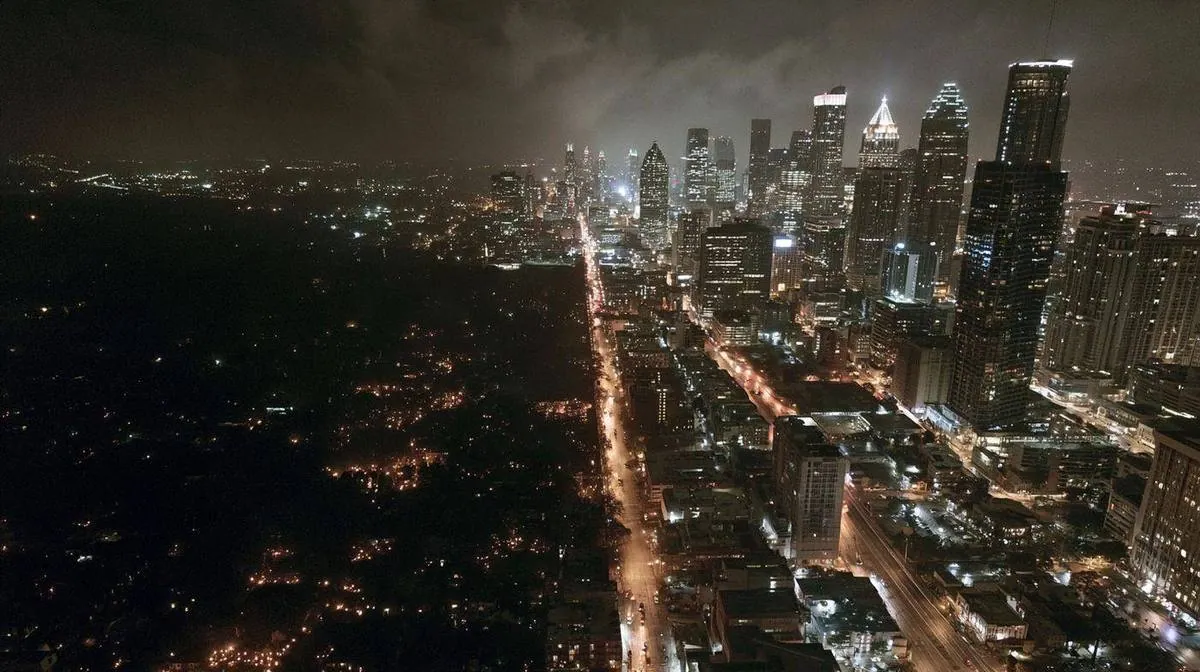
What the Pentagon Actually Decided
On October 25, 2026, Fox News Digital reported on internal Pentagon documents. According to those documents, major military bases in the continental United States are expected to keep their essential operations running for at least 90 days without outside support — meaning their own electricity, water, fuel and communications.
The program is called FORTRESS America. Secretary Hegseth announced it at Quantico. The public memo says every major installation should generate its own power, so that bases stay online even if the civilian grid is taken down by cyberattack or sabotage.
Three details are worth keeping straight, because the story will get retold with less care than this:
- The 90-day figure comes from the documents Fox reviewed, not from the public memo.
- No completion date has been published. Nobody has said when the bases are supposed to get there.
- About 500 installations are involved.
Pentagon spokesman Sean Parnell called reliance on civilian infrastructure an “intolerable risk,” and summed it up in four words: “Power is combat now.” The options being studied include portable nuclear reactors, large battery storage and microgrids — a microgrid being a small, self-contained power system that can cut itself loose from the main grid and keep running.
Why 90 is a big number
The Army’s previous standard, Army Directive 2020-03, told installations to plan for a minimum of 14 days of energy and water. Going from two weeks to three months is not a tweak. It is the military deciding that a long outage is a thing it has to be able to sit through, not wait out.
What It Does Mean, and What It Doesn’t
Let’s take the worry out of it first. This is contingency planning. It is not a prediction of an attack on any date. Nobody at the Pentagon has said something is coming in March. Armies plan for bad days the way insurance companies do — on paper, years ahead, mostly so the bad day stays on paper. There is no secret knowledge hiding in this story, and anyone who tells you otherwise is selling something, usually freeze-dried.
Here is what it does mean. The people with the most resources in the country, and the most practice thinking about what can go wrong, have looked at the civilian grid and decided they cannot count on it through a long outage. They are not saying the grid is bad. They are saying it is somebody else’s, and that “somebody else will fix it soon” is not a plan they are willing to bet a base on.
The plain takeaway: if the military no longer trusts the grid to come back quickly after a serious hit, a household should not build its plans on that assumption either. That is not panic. That is just borrowing somebody else’s homework.
It also does not mean you need to match the Pentagon. A base has to keep a mission running. You have to keep yourself fed, watered, medicated, at a safe temperature and in touch with someone. That is a much smaller job, and most of it can be done a little at a time.
Why a Long Outage Hits People Over 50 Harder
A twenty-five-year-old in a blackout is inconvenienced. Past fifty, more of what keeps us comfortable — and some of what keeps us alive — plugs into the wall. Take an honest inventory of your own house against this list.
Medicine that has to stay cold
Insulin and a number of other prescriptions need refrigeration. When the refrigerator stops, the clock starts. Know which of your medicines are on that list and how long each one can safely sit out — the medication cold storage calculator and the refrigerated medication plan walk through it.
Oxygen, CPAP and other powered medical equipment
An oxygen concentrator or a CPAP machine does not care why the power went out. If you depend on one, backup power for that single device comes before anything else in this guide. The CPAP battery calculator sizes it, and She Had Three Days of Oxygen Left shows what happens when nobody did the arithmetic.
Well pumps
If your water comes from a well, your water comes from an electric pump. No power, no water — not for drinking, not for washing, not for the toilet. See well pumps and sump pumps on a generator.
Heat and cooling
The body gets worse at holding its own temperature as it ages, and it does not send a memo first. Winter cold and summer heat both become medical problems sooner than they used to. The answer in both seasons is the same idea: make one room safe instead of the whole house. See Heating One Warm Room and One Cool Room.
Getting around
Elevators stop. Lift chairs, stair lifts and power wheelchairs run on batteries that eventually need a charge. If you live on an upper floor or depend on a powered chair, the question is not only “do I have power” but “can I get out, and can I get back in.”
Staying in touch
Cell towers carry backup power, but not forever, and many home phone lines now depend on power inside the house. A long outage can quietly cut you off from family and from help at the same time. See The Landline Shutdown and Starlink.
The Ladder: 3 Days, Then 14, Then 90
Nobody gets to ninety days in one weekend, and nobody should try. Climb it a rung at a time. Three days is what every household should already have. Fourteen days matches the Army’s old floor and covers most bad storms. Ninety days is the Pentagon’s new number — and at that length the job changes from storing things to producing them.
| Need | 3 Days | 14 Days | 90 Days |
|---|---|---|---|
| 💧 Water | About a gallon per person per day, the usual guidance — stored jugs, plus some for pets. | Two weeks of jugs, plus a way to treat more: a gravity filter. Well owners: a plan to run the pump. | You cannot store ninety days in jugs. You need a source — rain barrels, a nearby supply — and a reliable way to treat it. |
| 🥫 Food | What is already in the pantry, eaten without cooking. | Two weeks of shelf-stable food you actually like, and a safe way to cook without power — outdoors only for camp stoves and grills. | A rotated deep pantry, a garden, canning, and arrangements with neighbors. |
| 💊 Medicines | At least a week of every prescription on hand, always. | Ask about 90-day fills. A cold-storage plan for anything refrigerated. | A written list of every medicine and dose, a talk with your doctor about long-outage options, and a cooler plan that does not depend on ice deliveries. |
| ⚡ Power | Charged power banks; a battery for the CPAP or concentrator. | A portable power station plus a small generator to refill it, or a standby generator — with fuel stored safely. | Fuel becomes the limit. Solar recharging, a larger propane supply, and running only what truly matters. |
| 🔥 Heat & cooling | One warm room in winter, one cool room in summer. Battery CO alarm. | A safe way to heat or cool that one room for two weeks. | A heat source that does not need the grid — a properly installed wood stove and seasoned firewood — or a place to go. |
| 🔦 Light | Flashlights and headlamps in known places, spare batteries. | Lanterns and rechargeable lights. | Solar-rechargeable lights, so light stops depending on a battery supply. |
| 📻 Communication | Charged phone, battery or crank radio, contacts written on paper. | A check-in plan with neighbors and family; Starlink standby if you rely on internet. | A neighborhood meeting point, regular check-ins, and a radio for news when nothing else works. |
| 💵 Cash | Small bills for a few days of essentials. | Enough small bills for two weeks of essentials. | Card readers and ATMs need power. Keep a modest cash reserve you can store safely — do not empty the bank. |
Read across any row and you will see the pattern. The first rung is stuff. The second rung is more stuff plus a way to refill it. The third rung is a way to make it yourself — water you can treat, food you can grow or put up, power you can recharge from the sun, and neighbors you can count on. That last part is the one the Pentagon cannot buy, and the one you can get for the price of a pot of coffee.
The Lantern Your Grandparents Used
Before anybody sold a lantern with a USB port, every farmhouse and most town houses kept a kerosene “hurricane” lantern: a flat wick, a glass globe, and a wire bail to hang it by. Plenty of homes also had a mantle lamp, which throws a good deal more light than a plain wick ever did.
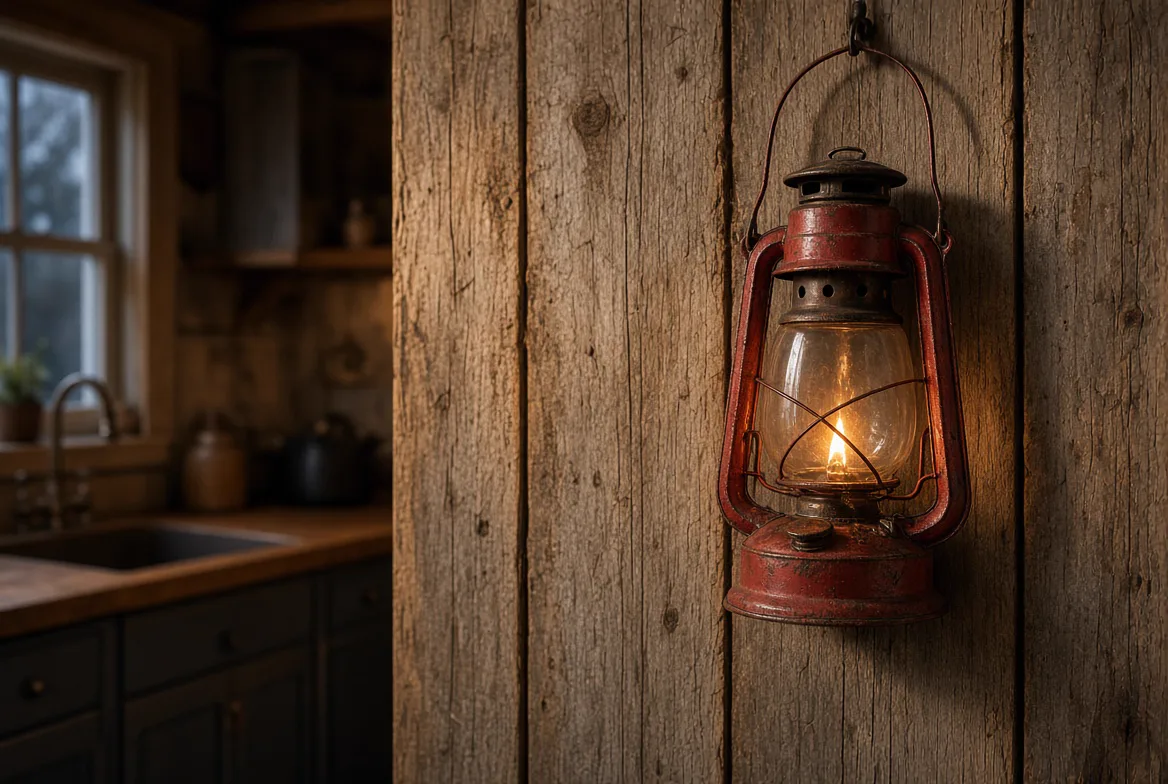
These days battery and rechargeable LED lanterns have mostly put them out of work, and indoors that is the right call for most of us: no flame, no fumes, nothing for a grandchild or the dog to knock over. But the old lanterns never stopped being made. Hardware stores, farm supply stores and online sellers still carry them, and for a long outage they have one honest advantage: a can of fuel keeps for years and never asks for a charger or a battery. Some people keep one on the shelf behind the LEDs, which is about where it belongs.
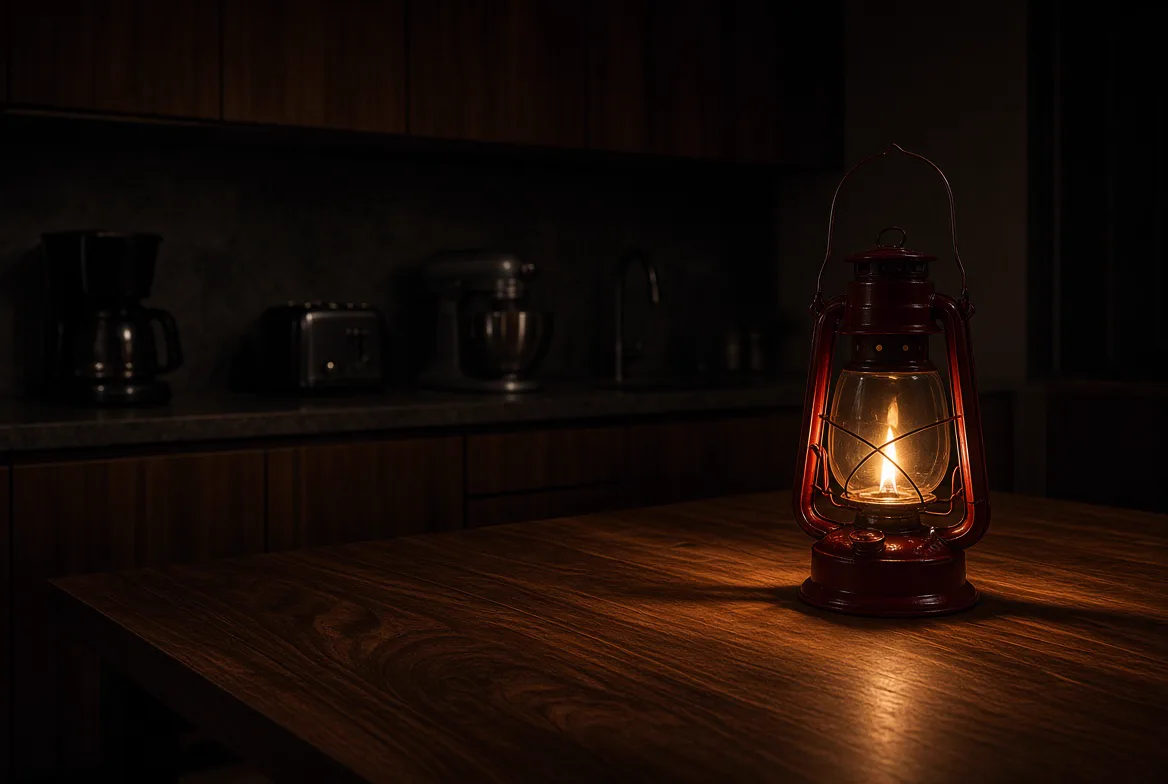
If you use a fuel lantern
- Use only the fuel the lantern is made for: clear K-1 kerosene or lamp oil. Never gasoline or camp fuel in a wick lantern.
- Fill it outdoors, and only when it is out and cool.
- Any flame indoors burns oxygen and gives off fumes. Crack a window, and have a working carbon monoxide alarm.
- Set it on a steady surface away from curtains, paper, children and pets. Never leave it burning when you leave the room or go to sleep.
- Store the fuel outside the living space, in its original labeled container.
Make Changes While There’s Still Time
“Still time” does not mean the clock is running out. It means the best time to get ready is a calm Tuesday, when the stores are full, the prices are normal and your knees are in a good mood. Here is what to start this month.
- Walk the house with a notepad. Write down everything that plugs in and that you truly depend on — medical gear, the refrigerator, the well pump, the lift chair, the phone. That list is your power plan.
- Finish the three-day rung. Water, food you can eat cold, flashlights, a battery radio, a little cash. If you already have it, check the dates.
- Ask your pharmacist about a 90-day supply of your regular prescriptions, and whether your plan allows it. Sort out how you would keep the cold ones cold.
- Solve the one device you cannot live without first. A CPAP or oxygen concentrator gets its own battery before anything gets a generator.
- Ask your utility whether it keeps a medical-needs list for customers who depend on powered equipment, and get on it if it does. It will not bring the power back sooner, but it may mean someone knows to check.
- Put the important things on paper. Medicines and doses, doctors, family contacts. A dead phone holds nothing. The medical information card is a good start.
- Talk to two neighbors. Who has a generator, who has a well, who lives alone, who checks on whom. A plan that includes the house next door outlasts any pantry.
- Pick your fourteen-day project — water storage, a power station, a warm-room setup — and give it a date before winter instead of “someday.”
None of this is expensive all at once, and none of it is wasted if nothing ever happens. Every item on this list earns its keep in an ordinary ice storm.
The Bases Are Making Their Own Power. You Can Too, on a Smaller Scale.
You do not need a portable reactor. You need to know what your house actually draws, which few things have to stay on, and how long your fuel or battery will last. The calculator does that in a couple of minutes.
⚡ Calculate My Generator Size → Battery + Small Generator PlanFrequently Asked Questions
Is the Pentagon expecting the power grid to go down?
No date and no specific threat has been announced. The 90-day requirement is contingency planning — the military deciding its major bases should be able to keep essential operations running without outside power, water, fuel or communications, in case the civilian grid is taken down by cyberattack or sabotage.
What is FORTRESS America?
It is the program Secretary Hegseth announced at Quantico. The public memo says every major military installation should generate its own power so bases stay online even if the civilian grid fails. The 90-day figure comes from internal documents reported by Fox News Digital on October 25, 2026, not from the public memo. About 500 installations are involved, and no completion date has been published.
How long did the military plan for before?
The previous Army standard, Army Directive 2020-03, called for planning for a minimum of 14 days of energy and water. Ninety days is a large step up.
Do I need to prepare for 90 days without power?
Start smaller. Make sure you can handle three days, then build toward fourteen. Ninety days is a goal you work toward a little at a time, and past a few weeks the job shifts from storing supplies to having ways to make them — treating water, growing or preserving food, recharging power from the sun, and relying on neighbors.
Why are people over 50 more affected by a long outage?
More of what keeps older adults safe depends on electricity: refrigerated medicines, oxygen and CPAP machines, well pumps, heating and cooling, elevators and lift chairs, and the phones used to stay in touch. The body also handles heat and cold less well with age.
📚 Sources
- • The Dallas Express — report on the Pentagon’s 90-day base self-sufficiency plan
- • International Business Times UK — Pentagon 90-day self-sufficiency for US military bases
- • International Business Times UK — “It’s an intolerable risk”: Pentagon reportedly prepares bases for 90 days without civilian power
- • Energy News Beat — coverage of the FORTRESS America base power plan
Page last reviewed: October 2026 | Author: Franklyn Galusha