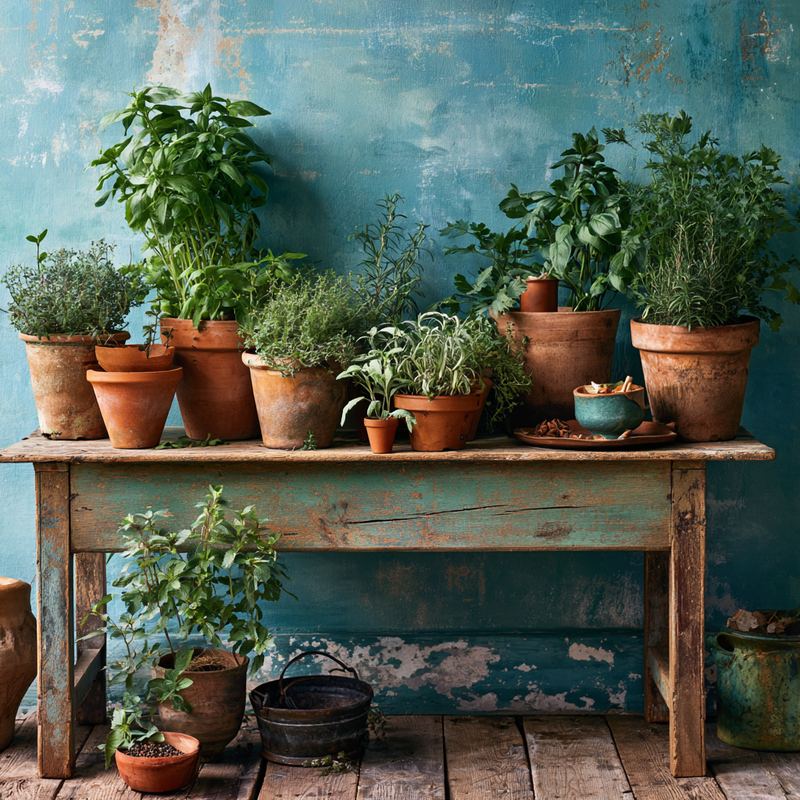

📏 How Much Space Herbs Actually Need
This is where most people are surprised. Herbs are among the most space-efficient edible plants you can grow — and most of them require far less room than a vegetable bed.
Clemson Extension puts it plainly: a 4×4 raised bed divided into 1-square-foot sections can hold up to 16 different herbs. You won't need all 16 — but the point is that even a very small dedicated patch handles a genuinely useful herb garden. Many gardeners also tuck herbs between vegetables in the main garden bed, where they take up no extra space at all and serve double duty as companion plants that deter pests.
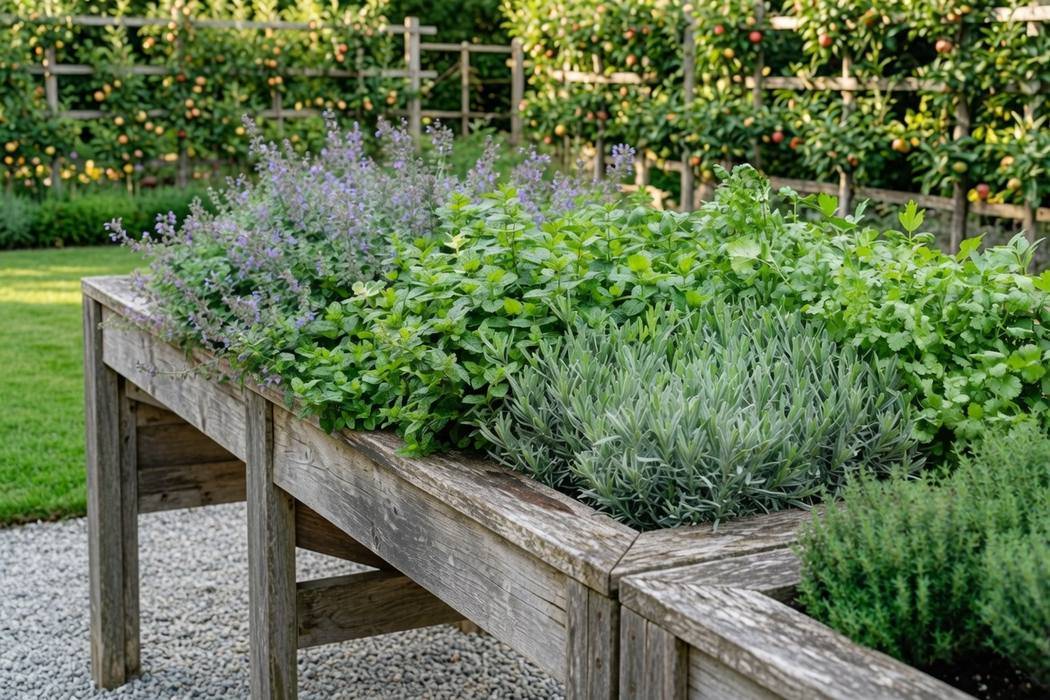
⚠️ Two herbs that need their own container: Mint and lemon balm are vigorous spreaders that will take over any bed you put them in. Both are wonderful herbs — keep them in their own pot and they're no trouble at all. Every other herb on this page can grow together without this issue.
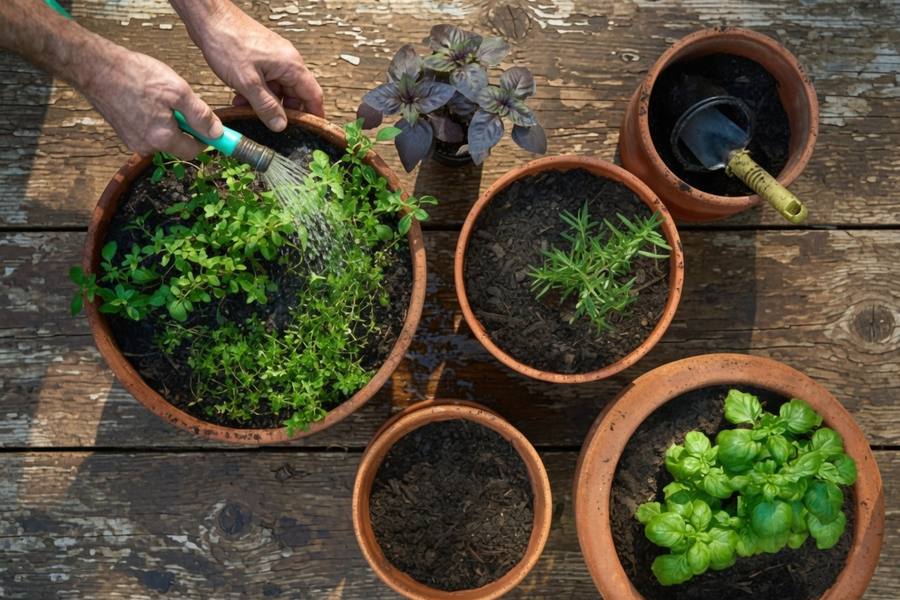
♾️ Plant Once, Come Back Every Year
These are the backbone of any home herb garden — perennials that return from their roots each spring without replanting. Most need six or more hours of sun and well-drained soil, and once established, very little attention. Plant them in a dedicated spot you won't disturb, and they'll be there a decade from now.
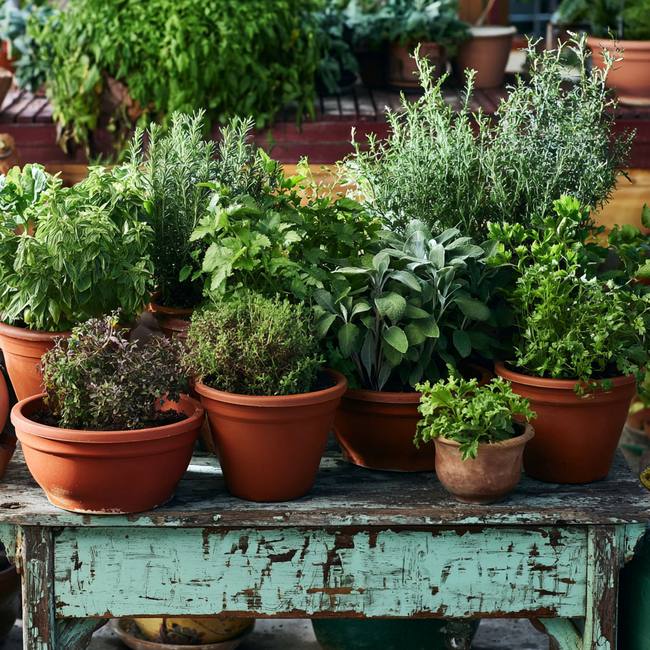
Rosemary
| Space | 12–18 in (1 per sq ft) |
| Sun | Full sun, well-drained |
| Zone | Hardy Zones 7–10; pot and bring in for colder climates |
| Use fresh | Roasted meats, potatoes, bread, olive oil |
| Dries | Excellently — one of the best herbs for air drying |
Thyme
| Space | 9–12 in (1 per sq ft) |
| Sun | Full sun, tolerates dry soil |
| Zone | Hardy Zones 4–9 |
| Use fresh | Soups, stews, chicken, eggs |
| Dries | Excellently — flavor concentrates when dried |
Oregano
| Space | 9–12 in (1 per sq ft) |
| Sun | Full sun |
| Zone | Hardy Zones 4–9 |
| Use fresh | Pizza, pasta sauce, salad dressings |
| Dries | Exceptionally — often more flavorful dry than fresh |
Sage
| Space | 12–18 in (1 per sq ft) |
| Sun | Full sun, dry soil preferred |
| Zone | Hardy Zones 4–8 |
| Use fresh | Pork, poultry stuffing, butter sauces |
| Dries | Very well — bundles hang-dry easily |
Chives
| Space | 6–12 in (1–4 per sq ft) |
| Sun | Full sun to partial shade |
| Zone | Hardy Zones 3–9; among the first plants up in spring |
| Use fresh | Eggs, potatoes, dips, soups — use scissors, not a knife |
| Dries | Adequately; best used fresh or frozen |
Mint (Pot Only)
| Space | Contain in its own pot — invasive in open ground |
| Sun | Full sun to partial shade |
| Zone | Hardy Zones 3–9 |
| Use fresh | Tea, lamb, salads, desserts, mojitos |
| Dries | Well — excellent for tea blends |
Tarragon (French)
| Space | 18–24 in |
| Sun | Full sun, very well-drained soil |
| Zone | Zones 4–8 (can be variable) |
| Use fresh | Chicken, fish, vinaigrettes, eggs |
| Dries | Best dried on the stem, stripped after |
Lemon Balm (Pot Only)
| Space | Container preferred — spreads from seed |
| Sun | Full sun to partial shade |
| Zone | Zones 3–7 |
| Use fresh | Tea, salads, fish; mild lemon flavor |
| Dries | Well — classic for homemade tea blends |
✅ The "buy once" advantage: A healthy rosemary, thyme, or oregano plant purchased for $4–$6 at a nursery will produce usable herbs for a decade or more. The math on these plants is dramatically better than the vegetable seeds people think of as cheap — you pay once, you harvest indefinitely.
📅 Replant Each Season — Worth It Anyway
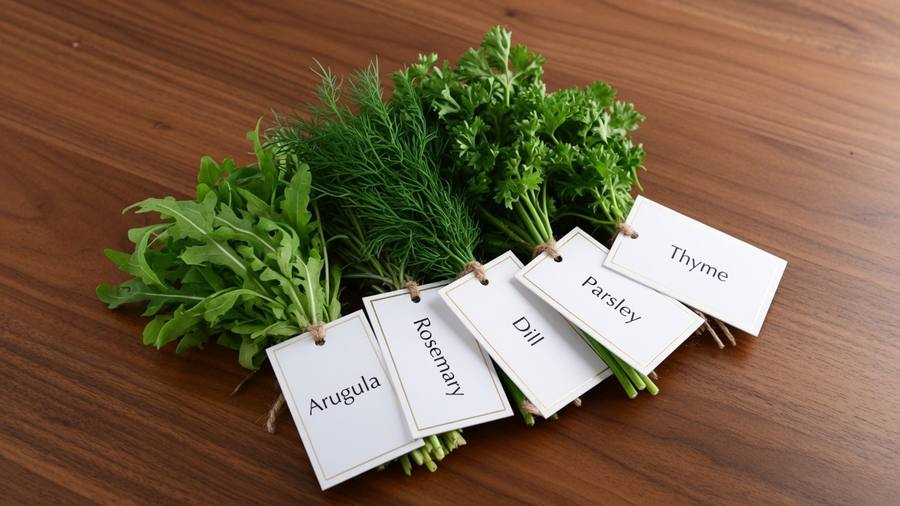
These herbs complete their full life cycle in one season — you'll replant them each spring. Some self-seed so readily (dill, cilantro) that they essentially come back on their own without you doing anything. Others, like basil, need intentional planting but are so productive and useful that the effort is minimal for the return.
Basil
| Space | 12 in |
| Season | Warm season only; dies at first frost |
| Use fresh | Tomatoes, pasta, pesto, salads — flavor degrades when cooked |
| Tip | Pinch off flower buds to extend harvest season by weeks |
| Dries | Use a dehydrator — high moisture; air drying often molds |
Cilantro
| Space | 6–9 in; plant in succession every 3 weeks |
| Season | Cool season — bolts in summer heat; plant spring and fall |
| Use fresh | Mexican and Asian dishes; flavor disappears when cooked |
| Seeds | Coriander seeds (when it bolts) are their own spice worth keeping |
| Dries | Poorly — freeze instead for best flavor preservation |
Dill
| Space | 12 in |
| Season | Prefers cool; will self-seed prolifically if you let it flower |
| Use fresh | Fish, pickles, eggs, potato salad |
| Seeds | Dried dill seed has different but useful flavor from dried leaves |
| Dries | Well — air dry in paper bags |
Parsley
| Space | 6–9 in (4 per sq ft) |
| Season | Biennial but grown as annual; very productive in year one |
| Use fresh | Nearly everything — most widely used garnish and ingredient herb |
| Dries | Well in a dehydrator; loses some flavor compared to fresh |
🌿 Getting the Most Out of Fresh Herbs
A few practices make a big difference in how much you get from a small herb planting.
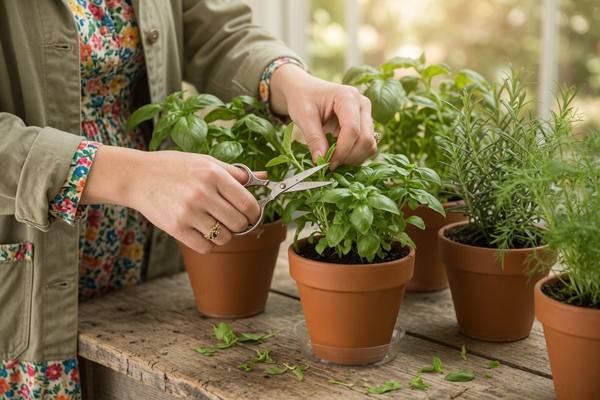
- Harvest in the morning after the dew dries — this is when essential oils are most concentrated. The flavor you taste in a fresh herb is those oils; the morning is when they're at their peak.
- Harvest just before the plant flowers (the "bursting bud" stage). Once a plant flowers, it shifts its energy from leaf production to seed production and the leaves become less flavorful. Pinching off flower buds on basil, thyme, and oregano extends productive harvest by weeks.
- Never take more than one-third of the plant at once. Leave at least two-thirds of the growth so the plant can continue producing.
- Cut above a leaf node or pair of leaves, not mid-stem. This signals dormant buds to grow at that point, creating a bushier, more productive plant rather than a sparse, leggy one.
💰 What fresh herbs actually cost at the store: A small clam-shell of fresh basil or cilantro runs $3–$4 at most grocery stores and wilts within a few days. A single established basil plant or cilantro succession in a 12-inch space produces more than most households use all summer long. The economics are straightforward and immediate, not theoretical.
☀️ How to Dry Herbs at Home
Drying is the simplest way to preserve a harvest surplus. The USDA's National Center for Home Food Preservation puts it plainly: drying is the easiest method of preserving herbs. A few principles govern everything: avoid direct sunlight (it strips color and flavor), use low temperatures, ensure good air circulation, and don't package until leaves are completely crispy dry.
Air Drying in Bundles — The Easiest Method
Tie small bundles (no thicker than 1 inch — too thick traps moisture and causes mold) with twine and hang them upside down in a cool, dark, well-ventilated room. An interior closet, a spare room, or a dry pantry all work. Keep them away from the kitchen's cooking steam. Low-moisture, woody-stemmed herbs like rosemary, thyme, sage, and oregano are fully dry in 1 to 2 weeks. Penn State Extension recommends putting the bundle in a paper bag with holes punched in the sides — the bag catches falling leaves and protects from dust while allowing air flow.
Food Dehydrator — The Most Reliable Method
High-moisture herbs like basil, parsley, and mint will mold before they air-dry if humidity is above about 35%. A food dehydrator solves this by combining controlled low heat with consistent airflow. Set temperature between 95°F and 115°F (the NCHFP and MSU Extension are in agreement on this range). Lay herbs in a single layer on the trays — touching side by side is fine, but not piled on top of each other. Most herbs finish in 1 to 4 hours. Check at 90 minutes and in hourly intervals after. If you live in Florida, the Gulf Coast, the Southeast, or the Pacific Northwest, a dehydrator is genuinely worth owning for herbs alone, plus it handles drying fruit, tomatoes, and vegetables from the same garden.
Oven Drying — The Backup Method
Set the oven at its absolute lowest temperature (ideally 170°F or below; the oven light or pilot light alone generates enough heat for overnight drying on some ovens). Spread herbs in a single layer on a baking sheet, leave the door slightly cracked for airflow, and check every 30 minutes. Oven drying is faster than air drying but removes more volatile flavor oils because even "low" oven temperatures are higher than ideal. Penn State Extension recommends it only when air drying isn't practical due to humidity conditions.
✅ The only test that matters — and it's simple: Herbs are fully dry when the leaves crumble to a powder between your fingers and stems snap cleanly rather than bending. If a leaf bends rather than crumbles, it needs more time. Store herbs before they're fully dry and you'll get mold. Wait until they're truly brittle and you'll get herbs that last a year or more.
🫙 Storing Dried Herbs
Dried herbs are best stored whole and crumbled only when you use them — breaking the leaf releases the volatile oils, which means crumbling the whole batch in advance slowly dissipates the flavor. The same mason jar setup that works for seeds works equally well for herbs.
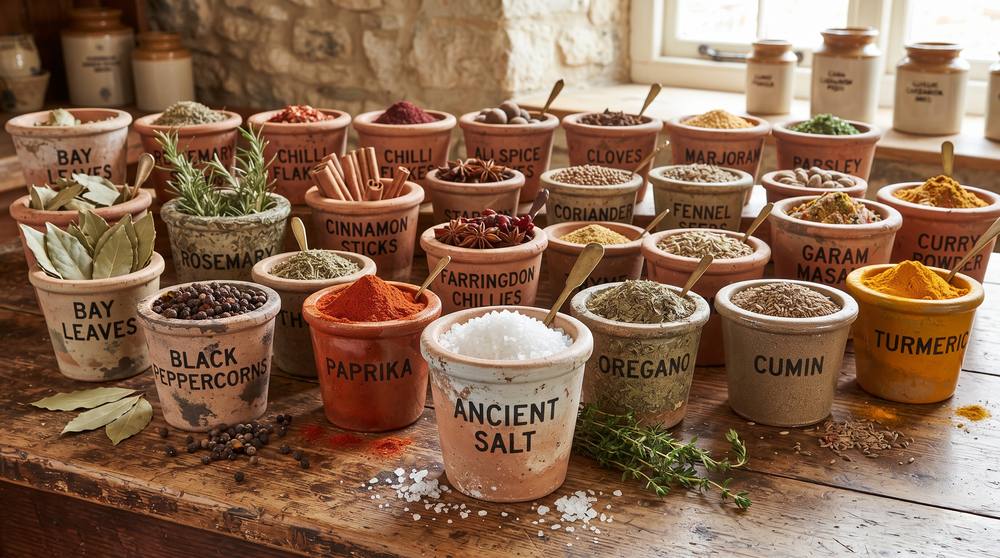
- Airtight glass jars — mason jars with tight-fitting lids are ideal. You can also clean out and reuse commercial spice jars, which are the right size for small batches.
- Cool, dark, dry location — a cabinet away from the stove and away from windows. Heat, light, and moisture all degrade dried herb flavor.
- Label with herb name and date — dried herbs look similar once they're in jars. The date tells you when to replace them.
- Store whole, crumble as you use — rub dried herbs between your palms as you add them to a dish to release the oils just before use, not before storage.
One practical note on the twice-as-potent point: when a recipe calls for 1 tablespoon of fresh herbs and you're using dried, use about 1 teaspoon instead. The flavor is more concentrated because moisture has been removed, not because the herb itself is different.
💬 What People Say Once They’ve Done This for a While
These are the kinds of things herb gardeners say once they’ve been at it for a few seasons. The details differ. The shape of the story is usually the same.
“My doctor told me to cut sodium at 64. I went home and read the labels on everything in my spice cabinet. That was the day I bought a rosemary plant. Three years later I have twelve pots on my screened lanai in Tampa. I haven’t bought a spice jar since early 2023. The food tastes better than it did with salt.”
— Retired nurse, Tampa, FL — Read her full story →
“Ice storm knocked out power for a week in February. I had canned goods, shelf-stable stuff, all of it. What I did not have was anything fresh. Except I had a rosemary pot that had been on my covered porch for four years. I used it every single day of that outage. It changed how I think about what ‘prepared’ means. The generator is important. The rosemary is also important.”
— Jim, 59, rural Tennessee
“I have had the same rosemary plant for eleven years. I planted it the year I turned 61. I have not bought a jar of dried rosemary since that year. When I think about what that plant has given me, it is genuinely hard to calculate. I know it is worth far more than the six dollars I paid for it at a nursery in Asheville in 2015.”
— Margaret, 72, Asheville, NC
“I live in a second-floor apartment. I have no yard. I have four pots on a west-facing balcony — basil, thyme, chives, and a pot of mint I keep very contained. That is enough. I use fresh herbs almost every day. People act like you need a garden to do this. You need four pots and four hours of afternoon sun.”
— Carol, 64, Phoenix, AZ
“My husband thought it was a hobby. Then he looked at what I used to spend on herbs and spice packets in a month at the grocery store. He built me a second raised bed the following spring.”
— Community member, rural Georgia
The reader accounts on this page are composite voices drawn from common, real experiences — the names are not those of real individuals, and these are not customer testimonials. Individual results vary.
🎓 What the Extension Service Says About Herbs
University Cooperative Extension offices have published specific, research-based guidance on herbs that goes beyond what most gardening sites cover. A few things worth knowing directly from those publications:
Harvesting — the Details That Change Your Results
University of Minnesota Extension is specific on timing: mid-morning is the best time to pick herbs because oil content is highest just after the dew dries and before the heat of the day begins. That oil is the flavor and fragrance — harvesting in afternoon heat or at night means less of it in every leaf you cut.
For mint-family herbs (basil, oregano, thyme, rosemary, sage, mint), UMN Extension recommends cutting a few inches down the stem just above a set of leaves, not at the tip. New buds form at those leaf junctions, and the plant responds by branching into a fuller, more productive shape. Cutting anywhere else produces a sparse, leggy plant.
NC State Extension adds a specific caution: annual herbs like basil and marjoram become woody, less productive, and somewhat bitter if allowed to go to seed. Seed production signals the plant to stop producing flavorful leaves. Pinching flower buds off basil isn't optional if you want a full season's harvest — it's how you keep getting good leaf production through summer.
When to Add Herbs in Cooking
🌿 NC State Extension rule — easy to remember:
Delicate herbs (basil, chives, cilantro, dill, mint, parsley) — add in the last 1 to 2 minutes of cooking, or sprinkle on just before serving. Heat destroys their volatile oils quickly.
Sturdy herbs (oregano, rosemary, sage, thyme) — add in the last 20 minutes of cooking. They need time for the flavor to develop and release, and they hold up to heat.
The substitution rule: A recipe calling for 1 teaspoon of dried herbs needs 3 teaspoons (1 tablespoon) of fresh to match the same flavor strength. Dried herbs are concentrated; fresh herbs contain most of their weight in water.
What to Buy as Plants vs. What to Start from Seed
NC State Extension Franklin County makes a distinction that saves a lot of frustration: some herbs simply don't come reliably true from seed and should always be purchased as transplants. Oregano, rosemary, thyme, and tarragon fall into this category — buy plants. On the other side, cilantro, dill, anise, and fennel don't transplant well and should always be direct-seeded where you want them to grow. Starting cilantro or dill as transplants and then moving them usually ends in the plant bolting immediately.
Winter Care — What Extension Says to Avoid
NC State Extension's winterizing guidance has two specific cautions most gardeners don't know. First: don't do hard pruning in August — any new growth stimulated by heavy cutting won't have time to mature before the first frost and will be the most vulnerable part of the plant going into winter. Second: don't severely prune in late fall either, because winter hardiness is reduced until cuts have healed. The window for the last significant cutting on sage, lavender, and oregano in most of the South is before early September.
For Mediterranean herbs like rosemary, thyme, and French tarragon: wet soil in winter is more dangerous than cold. These plants are adapted to dry climates and root rot from waterlogged winter soil kills them more reliably than frost. Raised beds or beds amended with pine bark mulch to improve drainage make a real difference in overwinter survival.
Free Extension Publications on Herbs
💰 What This Actually Saves
The grocery math on herbs is among the most favorable of any home-grown food. A four-inch rosemary transplant that costs $5 at a nursery produces usable rosemary continuously for 10 or more years — dozens of harvests from one $5 purchase. Thyme and oregano follow the same pattern. A single small pot of chives costs $3 to $4 and produces spring through fall for years in a row.
The annuals are a different calculation but still compelling: one cilantro succession or basil plant in 12 inches of space produces more herb than the average household uses in a month, for a seed cost of well under $1. A clamshell of fresh cilantro at the grocery store runs $3 to $4 and lasts about a week. The math is not subtle.
Dried herbs from the store run $4 to $8 for a small jar. A season's worth of home-dried thyme, oregano, or sage from a single established plant costs nothing after the initial planting. If you have a dehydrator, basil at grocery-store prices is one of the most expensive pantry herbs — and one of the easiest to grow and dry at home for practically nothing.
Frequently Asked Questions
How much space does an herb garden actually need?
A 4x4 foot raised bed (16 square feet) can comfortably hold 9 to 12 different herbs with room for each to grow. A single window box or container on a patio can hold 3 to 5 herbs. Many herbs need only 6 to 12 inches of space per plant, meaning even a few square feet of sunny space can support a genuinely useful herb collection.
Which herbs come back every year without replanting?
Rosemary, thyme, oregano, sage, chives, mint, tarragon, and lemon balm are all perennials that return year after year in most U.S. climates. Some, like rosemary, may not survive harsh winters above Zone 6 without protection or container growing. Basil, cilantro, and dill are annuals that need to be replanted each season.
What is the best way to dry herbs at home?
For sturdy, low-moisture herbs like rosemary, thyme, oregano, and sage, air drying in small bundled bunches hung upside down in a cool, dark, well-ventilated space is the easiest and least damaging method. For high-moisture herbs like basil, mint, and parsley, a food dehydrator at 95–115°F is the most reliable method. The key test in every case: herbs are fully dry when they crumble to a powder and stems snap cleanly.
How long do home-dried herbs stay flavorful?
Properly dried herbs stored in airtight glass jars in a cool, dark location stay at their best for about a year and remain usable for 1 to 3 years total. Flavor fades over time but doesn't disappear abruptly. Label each jar with a date so you know when a batch was dried and can replace it when it starts to taste flat rather than fragrant.
Can I grow herbs in containers if I have no garden bed?
Yes, and some herbs actually prefer containers. A 10 to 18 inch pot handles one larger herb like rosemary or multiple small ones like thyme and chives together. A kitchen windowsill with good light supports basil, parsley, and chives year-round. Mint and lemon balm do better in containers anyway since they spread aggressively in open ground.
📚 Primary Sources
- • USDA National Center for Home Food Preservation — Drying Herbs
- • Penn State Extension — Let's Preserve: Drying Herbs
- • Clemson Extension (HGIC) — Small-Scale Gardening
- • Gardening Know How — Herb Spacing Guidelines
- • Find your county Extension office →
Page last reviewed: June 2026 | Author: Franklyn Galusha