Enter Your Household
Water is the one thing you cannot improvise. Tell us about your household and we'll calculate exactly how much water you need to store — broken down by drinking, cooking, hygiene, and pets.
Your Water Storage Estimate
Breakdown by use:
Planning estimate only. Based on FEMA and Red Cross water storage guidelines. Actual needs vary by activity level, health conditions, and climate. In extreme heat, water needs can increase significantly — older adults are especially vulnerable to dehydration. Always store more than the minimum. Rotate stored water every 6–12 months.
Common Questions
How much water does a person need per day in an emergency?
FEMA recommends a minimum of 1 gallon per person per day — half for drinking, half for sanitation. In hot weather or for physically active people, drinking needs can double to 1 gallon just for drinking. For seniors in summer heat in Florida or the Southwest, plan for 2+ gallons per person per day.
What is the best way to store emergency water?
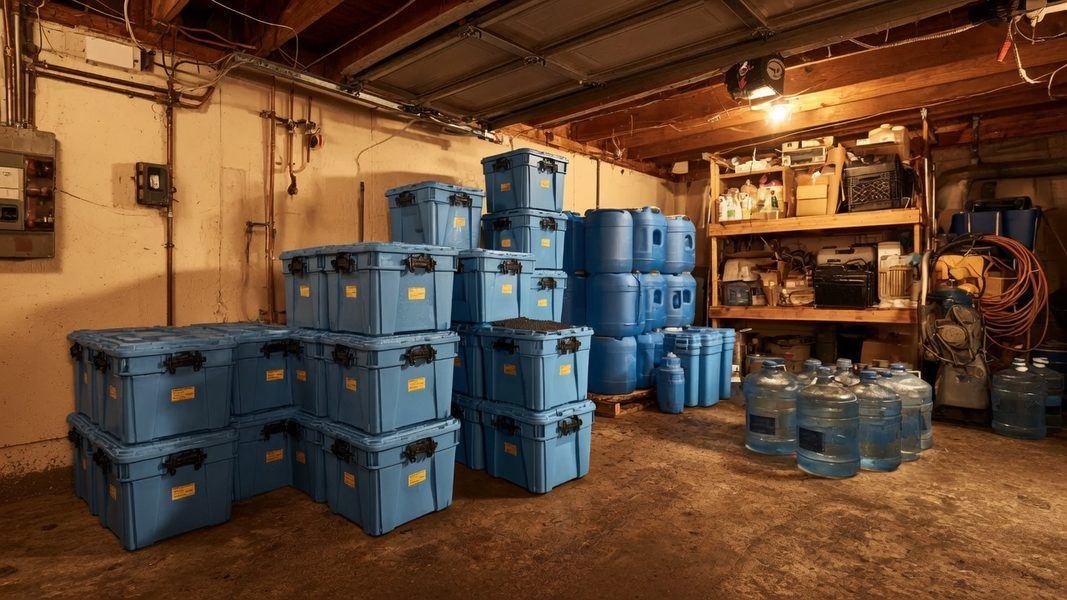
Commercially bottled water is the safest and simplest option. For larger quantities, use food-grade plastic containers (look for HDPE with recycling code 2) or dedicated water storage barrels. Store in a cool, dark location away from direct sunlight and chemicals. Never use containers that held non-food products. Rotate every 6–12 months.
Can I use tap water to fill storage containers?
Yes. Municipal tap water is safe to store in clean, food-grade containers and will remain safe for 6–12 months. Add 1/8 teaspoon of unscented household bleach (6% sodium hypochlorite) per gallon if you want extra protection for longer storage. Well water should be filtered and treated before storage.
How do I store water for my pets during an emergency?
FEMA recommends 1 quart (0.25 gallon) per day for small pets and up to 1 gallon per day for large dogs. Store pet water separately and use the same rotation schedule as your human water supply. In extreme heat, pets need more water — watch for signs of dehydration: lethargy, dry gums, sunken eyes.