🚽 The Hardest Chair in the House — Lecanto, Florida
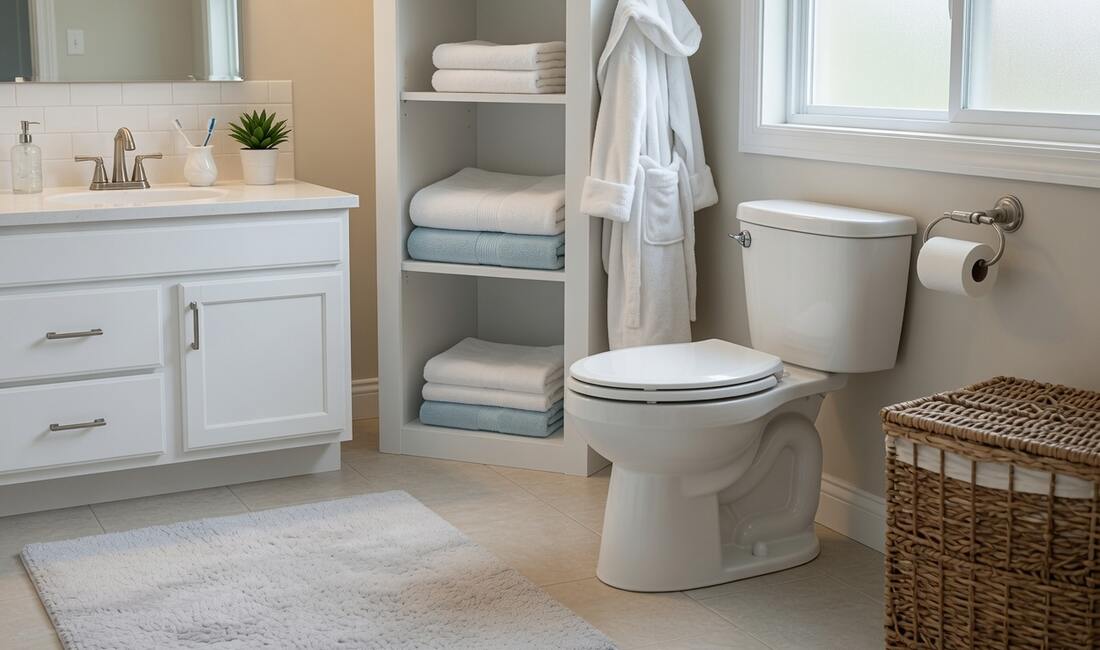
“After my knee replacement, the surgeon’s office sent me home with a list of what would be hard for six weeks. What the list did not say was that the hardest chair in my house would be the toilet. I am six foot two, and a standard bowl sits fifteen inches off the floor — getting up off that thing with one good knee was the low point of every single day. My physical therapist measured it, laughed, and said I was doing a deep squat twelve times a day whether I liked it or not.
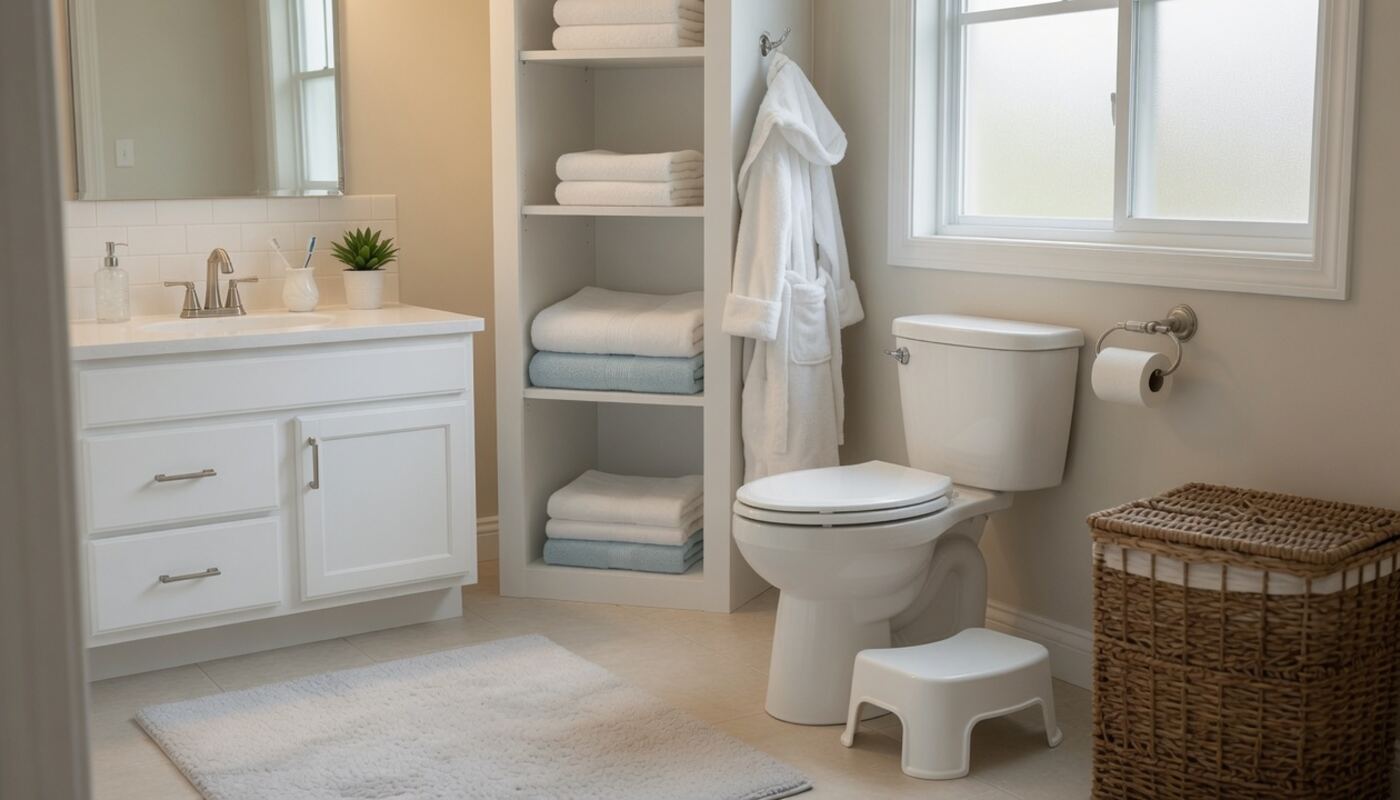
We put in a nineteen-inch tall toilet. For me it is the difference between a squat and simply standing up out of a chair. Here is the part worth knowing: my wife is five foot three, and on the tall bowl her feet swung like a kid on a dock. Fifteen-dollar footstool, problem solved — and she will tell you her feet-up arrangement works better than the old setup ever did. One toilet, two very different bodies, both happy. That is why you match the height to the people, not to the plumbing aisle.”
— Retired surveyor, 69, Lecanto, Florida
📋 From the record — the stories here are composites; the falls are not. The CDC’s own numbers: more than one in four adults 65 and older falls every year — over 14 million people — yet fewer than half ever tell their doctor, and falling once doubles the chance of falling again. The yearly toll: about 3 million emergency room visits, 1 million hospitalizations, and nearly 319,000 hip-fracture hospitalizations, with falls also the most common cause of traumatic brain injury. And the geography is exactly what this page assumes: national ED data puts the bedroom, bathroom, and stairs as the most common in-home fall locations — and research on high-risk older adults found a bathroom fall more than twice as likely to cause injury as a fall anywhere else in the house: hard surfaces, no soft landings, nothing safe to grab — unless you have put it there. That is the entire case for this page, made by the record.
🚽 Find Your Toilet Height
Four questions. The recommendation follows the physical therapy rule: feet flat on the floor, knees at or slightly below hip level, and the least work possible for your knees on the way up.
🪜 The Step Stool Truth — The $15 Fix Nobody Explains
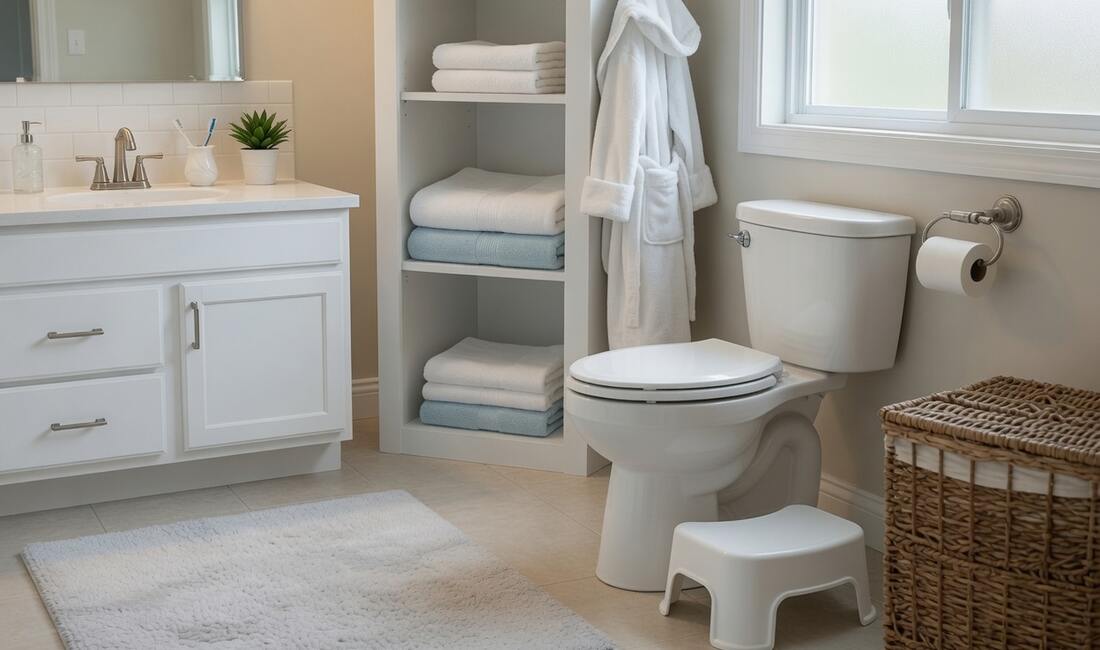
Here is the piece of this subject that gets skipped in every plumbing aisle: the right sitting position is feet flat, knees at or slightly below your hips. That position keeps circulation moving in your legs and lets you push up with your whole leg instead of hauling with your arms. It is why toilet height should match the person — and why a household with a tall husband and a shorter wife is not actually a problem.
A simple bathroom step stool solves the mixed-height household completely: the taller person gets the 19-inch bowl their knees need, and the shorter person rests their feet on the stool and gets flat-footed comfort back. About $15, tucks against the base of the toilet, done.
And the stool earns its keep a second way. Raising the feet so the knees sit above the hips moves the body toward a natural squat — the position human plumbing was designed around — which is why footstools at the toilet have quietly become a standard recommendation for anyone dealing with sluggish digestion. Your grandmother’s outhouse never needed the explanation; your comfort-height toilet occasionally does. One stool, both jobs.
Renters and not-ready-to-remodel households: you can change the height without changing the toilet. A raised toilet seat adds 2–4 inches in minutes with no tools — the good ones include handles — and toilet safety rails add sturdy push-up armrests to any standard bowl. Both are standard issue after hip and knee surgery for a reason, both come with you when you move, and both cost less than dinner out.
📏 Before You Buy — Two Measurements That Prevent a Bad Day
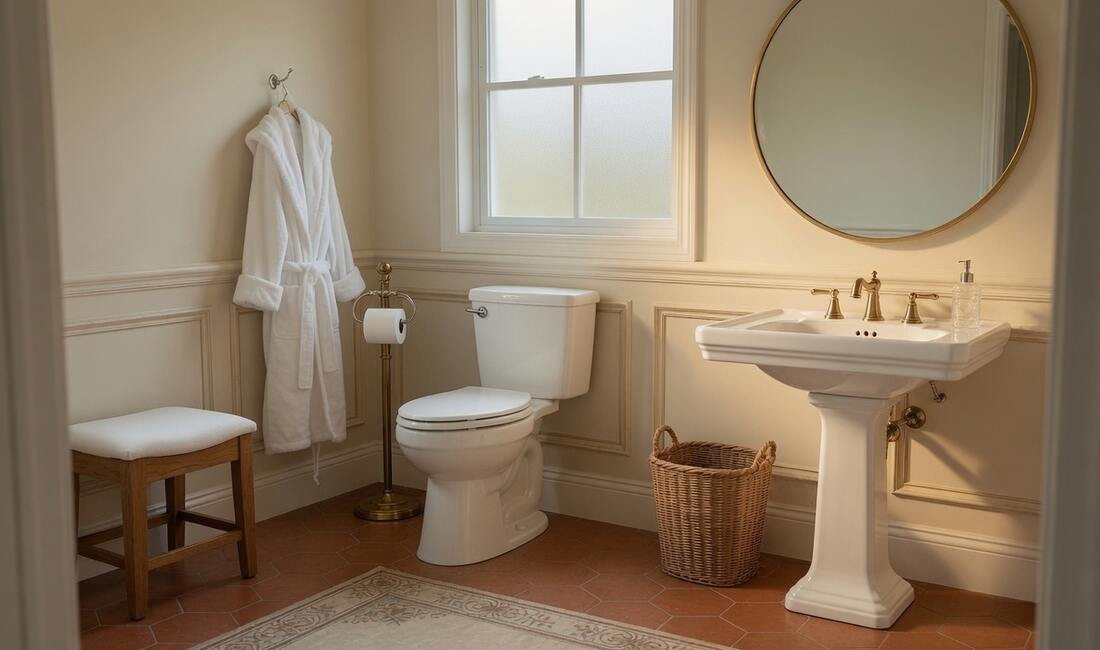
- Seat height: floor to the top of the seat. Manufacturers list “bowl height” without the seat, which adds about an inch — a “17-inch bowl” sits you at roughly 18. Compare seats to seats.
- Rough-in: the distance from the finished wall to the center of the toilet’s floor bolts. Most American homes are 12 inches, but 10- and 14-inch rough-ins exist, especially in older houses. Thirty seconds with a tape measure saves you from a toilet that will not sit against the wall.
One more choice while you are shopping: elongated bowls are a couple of inches longer front-to-back and most adults find them meaningfully more comfortable and easier to rise from; round bowls exist for small bathrooms where the door needs the clearance. If your bathroom has the room, elongated is the default. And while the wrench is out — this is the perfect day to put a grab bar on the wall beside it.