💬 Steel Has a Memory
🔧 The Toolbox in the Will — Beverly Hills, Florida
“My father did not leave much. He left a house with a mortgage, a car with a note, and a steel toolbox that weighed more than I did. I was annoyed hauling it home, if I am honest. That was thirty-one years ago, and I have used something out of that box every single week since. The wrenches are older than I am. The screwdrivers have his initials filed into the handles. Last month my grandson used the 9/16 to fix his bicycle, which means that wrench has now turned bolts for four generations of us. It cost my father maybe two dollars in 1958. Show me anything else in this world with that arithmetic.”
— Retired electrician, 74, Beverly Hills, Florida
🔩 The Bolt That Taught Him — Dunnellon, Florida
“I learned the difference between cheap and quality on one bolt. Lawn tractor blade bolt, rusted solid. My bargain-bin wrench flexed, slipped, rounded the corners right off that bolt head, and put my knuckles into the deck hard enough to need a bandage. A rounded bolt is a small disaster — now nothing grips it. My neighbor came over with his old drop-forged wrench and a hammer, tapped the wrench handle twice, and that bolt gave up like it was embarrassed. The cheap wrench flexes and slips. The good one bites and holds. My knuckles have opinions about which one belongs in a 70-year-old’s hands.”
— Retired postmaster, 71, Dunnellon, Florida
👜 Her Own Toolbox — Lecanto, Florida
“My father had four daughters and no sons, so I got the education a boy would have gotten in 1962: how to read the stamp on a wrench, why the good ones say drop-forged, and why a lady never lends her tools without writing down who took them. He gave me my own toolbox at fourteen — real ones, chrome vanadium, not toys — and I have carried it through two marriages, five houses, and sixty years. My sons-in-law borrow from me.
“Becoming a homeowner taught me the part his lessons had not covered: a house needs more than tools meant for fixing machines. A home asks for its own kit — the hinges and faucets and drywall of it, the toilet that runs and the door that sticks. I learned some of those skills from my father, and I will admit I have learned even more from YouTube than I ever expected to. But the most important lesson was his, and it has never once needed updating: good tools are worth the money — and the ability to use them is what saves you money. One without the other is only half an inheritance.
“Here is what I tell my granddaughters, because somebody sells women short in every hardware aisle in America: skip anything with pink handles and a flower on the package — those are priced like gifts and built like party favors. Buy the same drop-forged steel the men buy; it does not know who is holding it. Better yet, buy it used — a woman at a garage sale who knows to look for the stamp gets treated like she is buying a casserole dish, and walks off with ninety-year steel for two dollars. My whole box did not cost what one ‘ladies’ tool kit’ costs new, and every piece in it will outlive everyone who has ever teased me about it.”
— Retired bookkeeper, 76, Lecanto, Florida
🔨 Drop-Forged, Explained in One Minute
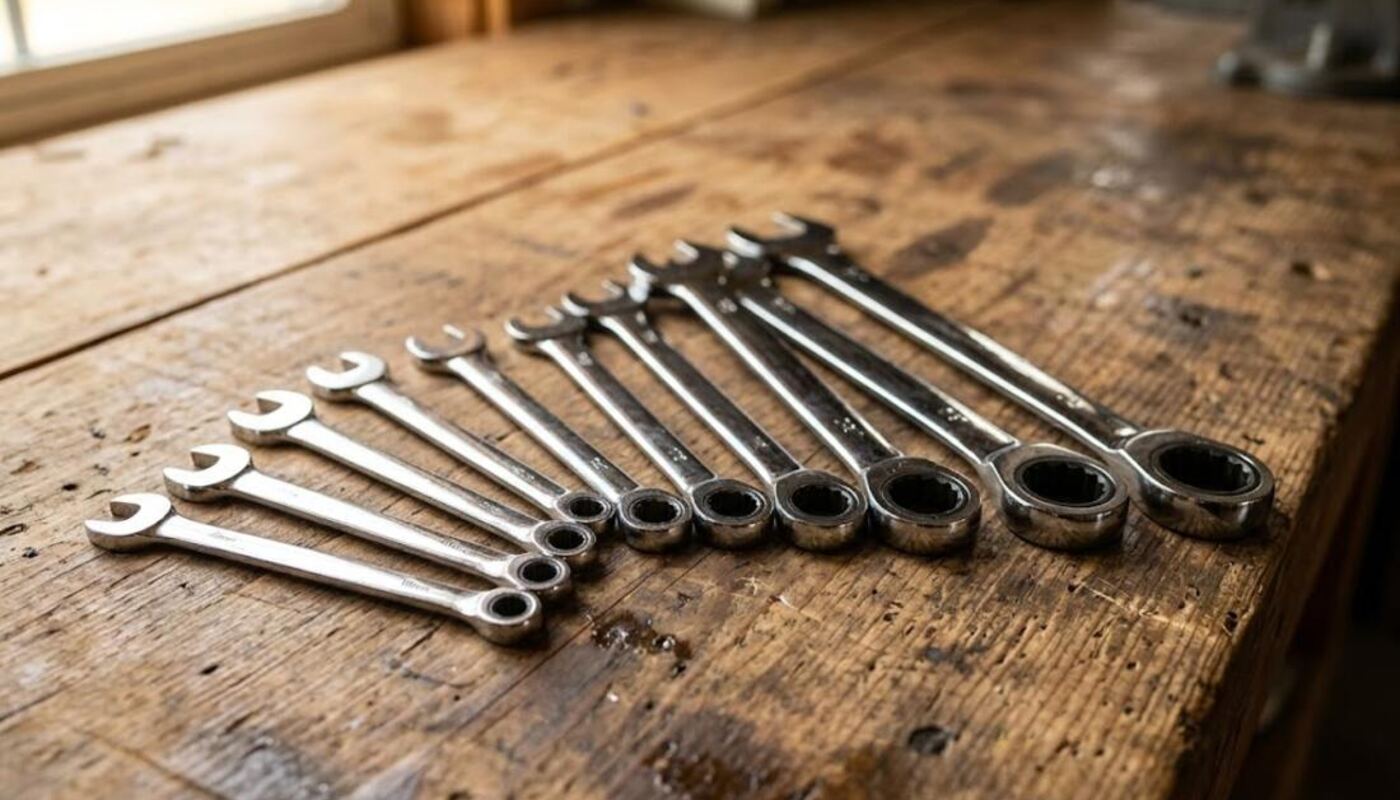
Two ways to make a wrench. Cast: pour molten metal into a mold — fast, cheap, and the metal’s internal grain sits random and loose, like particle board. Drop-forged: hammer a hot billet of steel into shape under enormous force — the grain compresses and flows along the tool’s shape, like the grain in solid oak. That grain is why a drop-forged wrench bites a bolt instead of flexing off it, and why it survives the oldest trick in the book: a gentle tap of a hammer on the wrench handle to break a stubborn bolt loose — force your hands no longer need to supply. Look for the words “drop-forged” and “chrome vanadium” stamped on the tool, and a lifetime warranty on the package — a company that expects its wrench back in ninety years prices the steel accordingly.
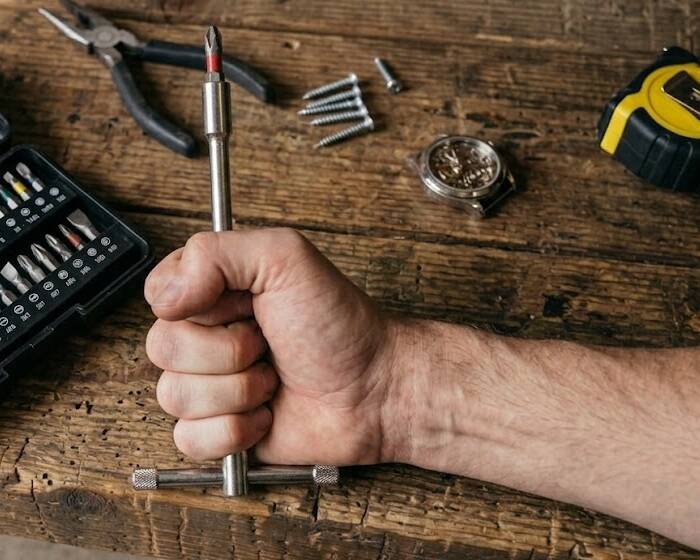
The grip-strength angle, since this is our site: quality hand tools are grip aids in disguise. Drop-forged jaws that do not flex mean less squeeze required from you. Ratcheting mechanisms mean never re-gripping mid-turn. Locking pliers clamp so your hand does not have to. Every dollar of quality is a dollar your hands do not have to make up in strength.
🧰 The Core Kit — Five Tools, Bought Once
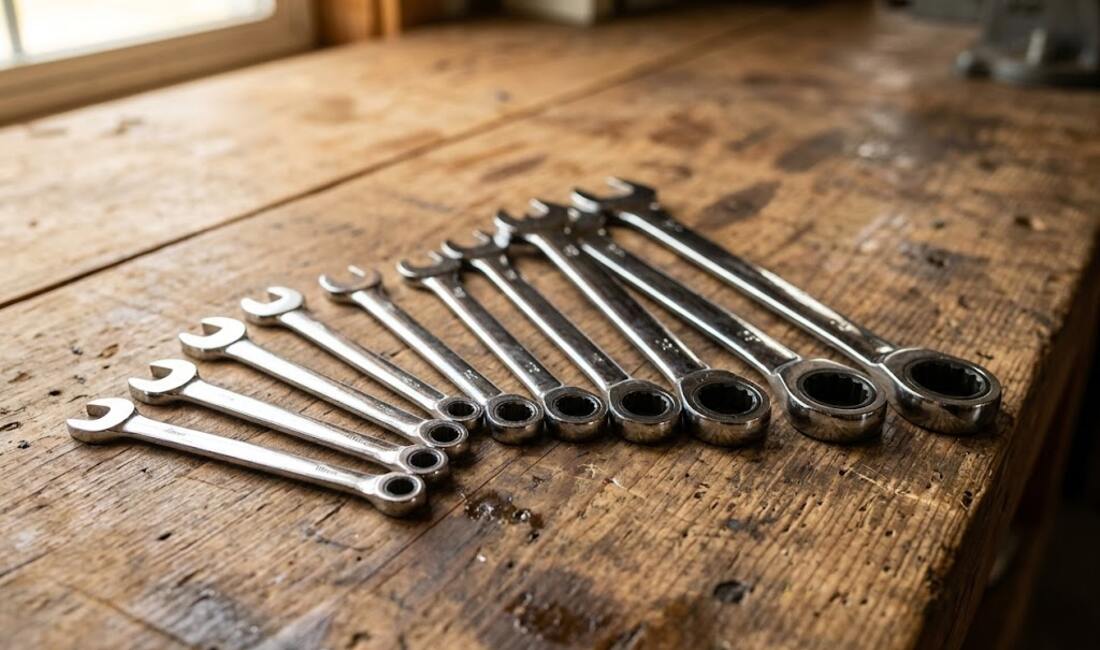
- Combination wrench set (drop-forged, standard + metric) — the backbone. Ratcheting versions never need re-gripping mid-turn — a genuine gift to stiff hands. Shop Wrench Sets →
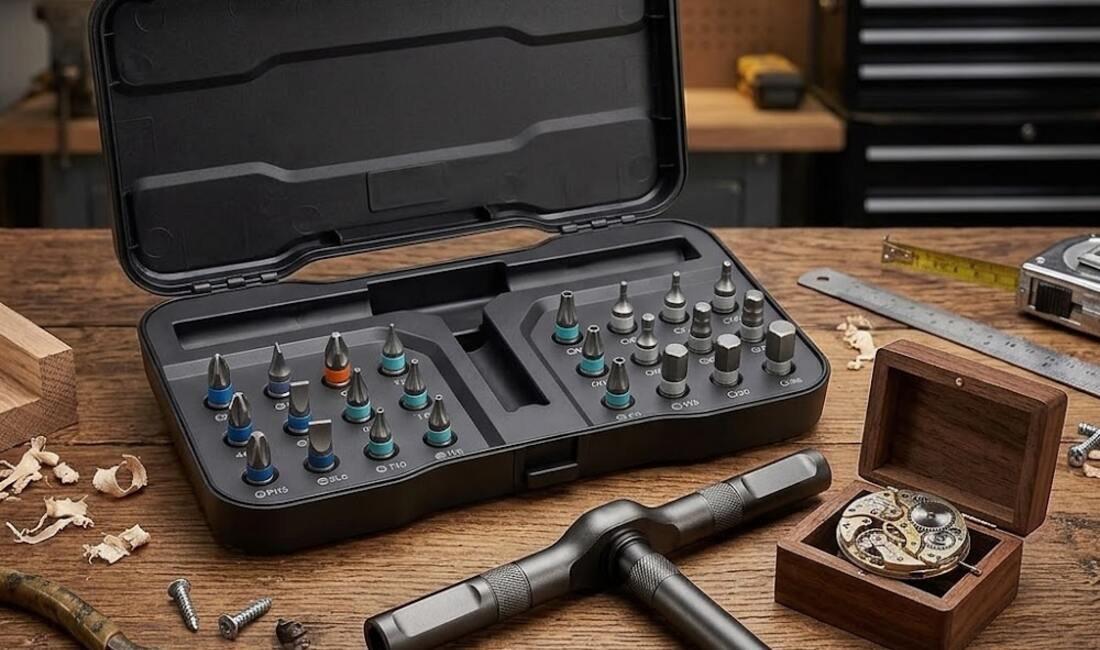
- Ratcheting multi-bit screwdriver — one handle, every tip, and the ratchet does the re-gripping for you. Shop Ratcheting Screwdrivers →
- Locking pliers — clamp on, lock, and the tool grips while both of your hands work. Grip strength becomes irrelevant. Shop Locking Pliers →
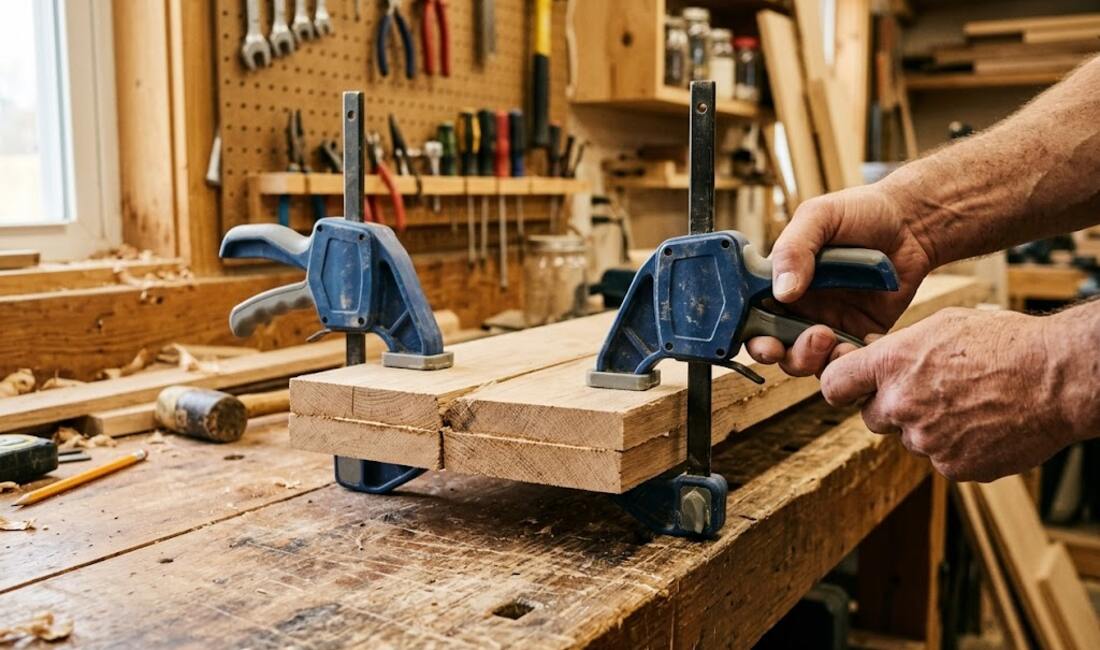
- Quick-grip trigger clamps — a one-handed squeeze holds boards, pipes, and repairs steadier than any helper. Shop Quick-Grip Clamps →
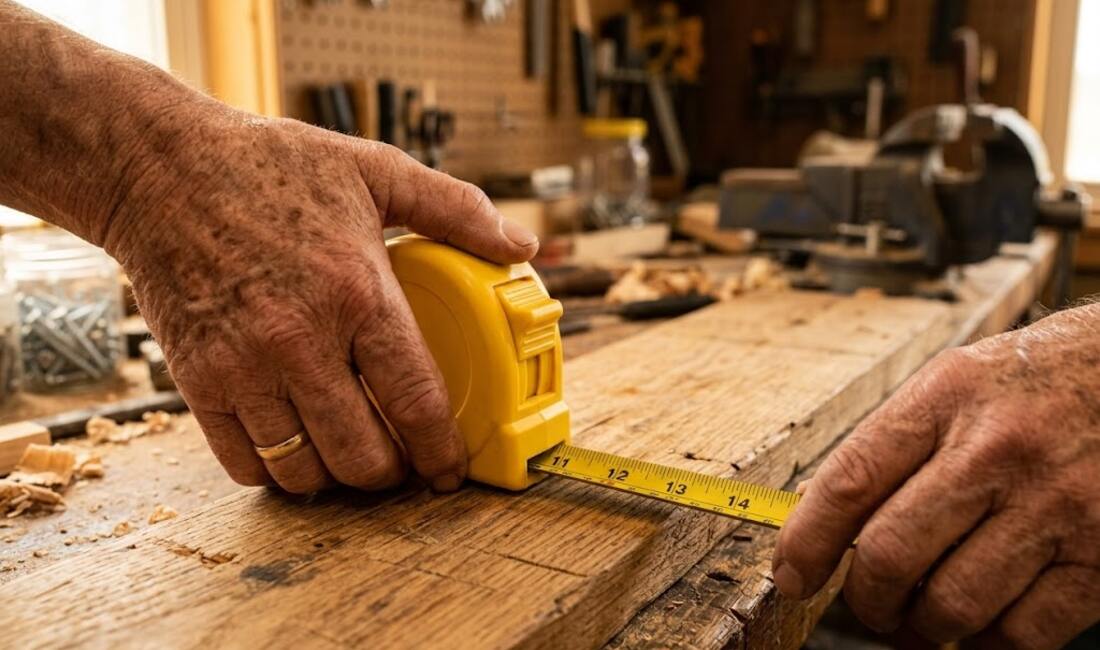
- Locking tape measure — a big lock lever means the tape holds itself while you mark. Shop Tape Measures →
🗜️ The Bench Vise — The Third Hand That Never Tires
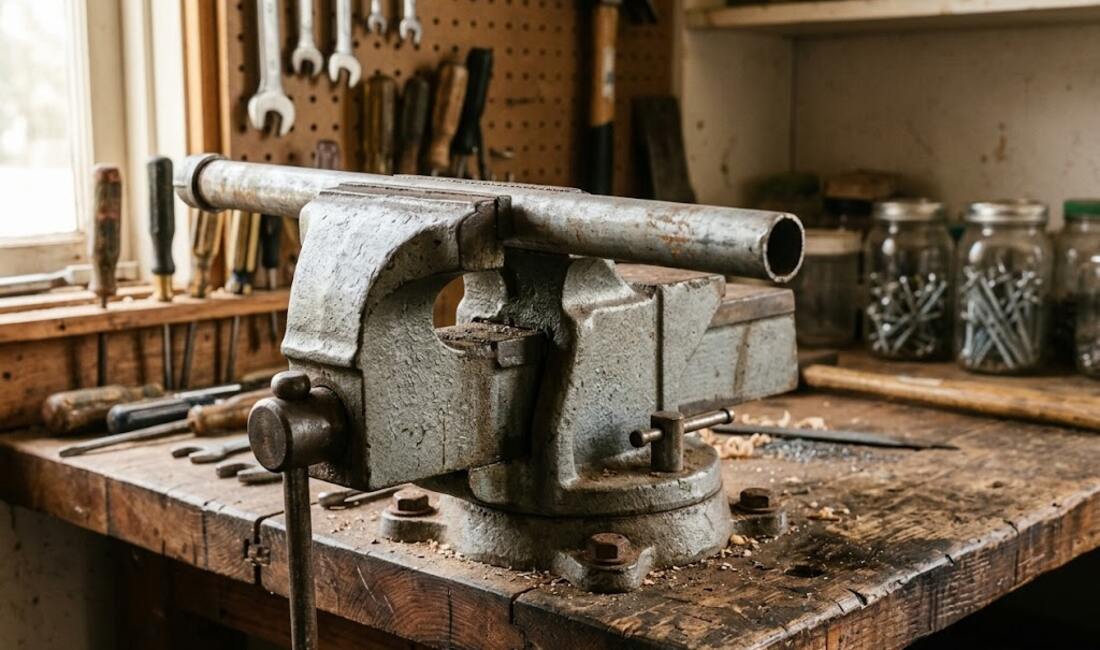
If this page could sell you one thing, it is this. A bench vise is a hand that never gets tired, never aches, and grips at two hundred pounds while yours rest. Everything that fights a weaker grip — holding a pipe to cut it, a hinge to file it, a stuck fitting to work on it — the vise holds instead. Bolt it to the bench once (four lag bolts, thirty minutes) and it serves for the rest of the house’s life. Buy by weight: a heavier vise is a better vise, and the garage-sale ones from the last century are often the best steel in the county. Shop Bench Vises →
💵 Garage Sale Wisdom — Old Quality Beats New Cheap
Here is the open secret of hand tools: they do not wear out, so the used market is full of ninety-year tools at yard-sale prices. A rusty drop-forged wrench cleans up with an evening and some oil into a better tool than anything on the bargain shelf new. What to grab when you see it: anything stamped drop-forged or chrome vanadium, any vise heavier than you want to carry, and any wooden-handled tool where the wood is tight. What to skip: anything bent, any wrench with spread jaws, and any cast tool pretending otherwise. Wipe your tools with an oily rag once a season and your grandchildren will argue over the box.
Looking for the corded side of the workshop? Motors are their own philosophy — and their own page: Corded Tools — The Ones You’ll Hand Down. And the complete room-by-room kit lives at the Grandfather Toolkit. And the reason all of it matters — the retirement case for fixing it yourself — is told in full at Fix It Yourself at 70.