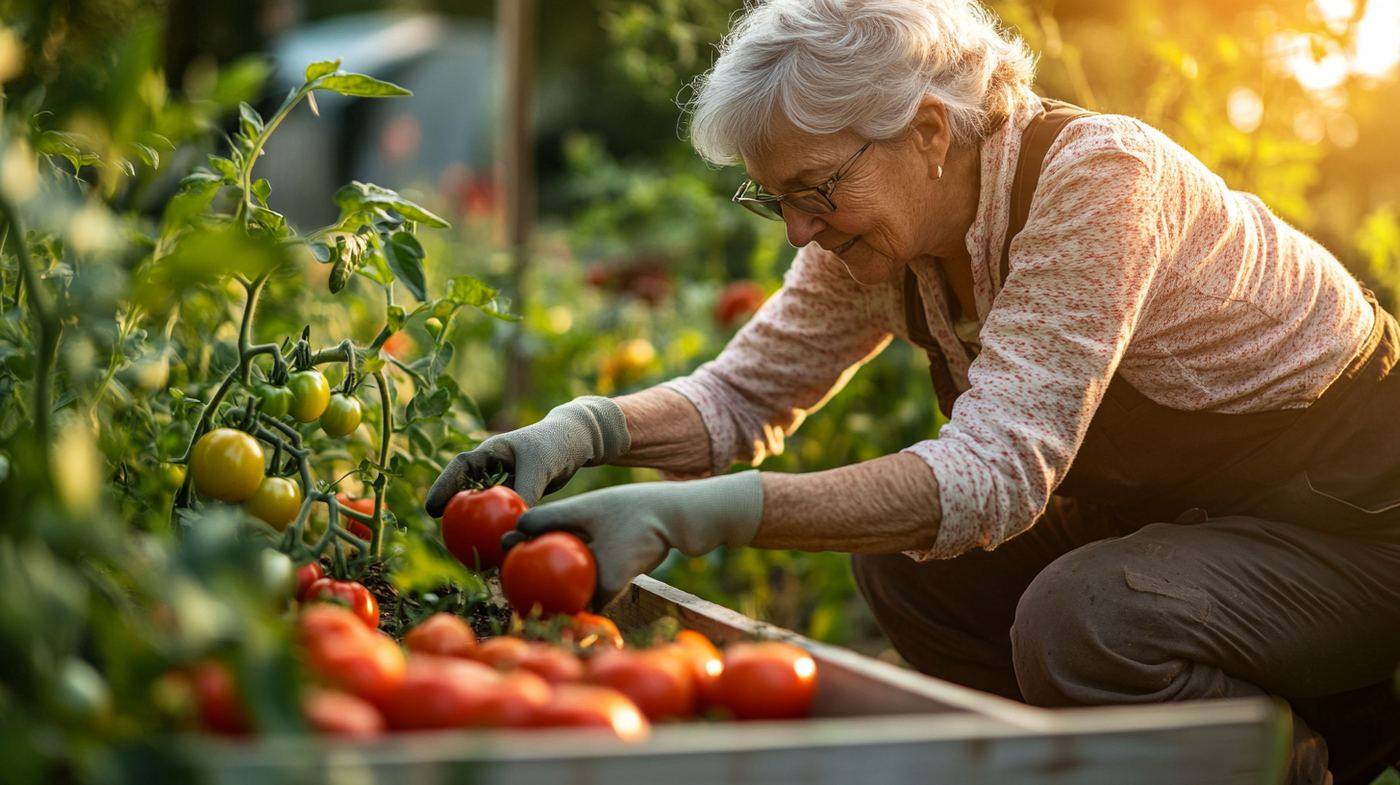
💬 Here’s Why People Do This
“My granddaughter lives with me. Has for three years now, since she was seven. Her mother is my daughter and things got hard in ways I will not go into. What I will say is that I am 64 years old raising a ten-year-old on a retirement income that was designed for one person. I will not pretend that is easy. But I started growing vegetables six years ago, before any of this happened, because I read that a garden could save a retired person several hundred dollars a year and I believed it. That garden is the reason my granddaughter has eaten fresh vegetables every single day since she came to live with me. It is the reason I have not had to choose between her food and my medication. I planted it thinking about my own retirement. It turned out to be for her.”
— Donna, 64, suburban Tennessee
“My son-in-law looked at what I grew last summer and asked me to write down a number. I kept track all season — every tomato, every pepper, every zucchini, every bean. I compared it to what those things would have cost at the grocery store that week. The number was six hundred and forty dollars. From a 10×12 raised bed in my backyard. He stared at that number for a minute and then said, ‘I need to build my wife a garden.’ I told him I would help him. We built it the following spring. He called me in July to say they had not bought a single tomato since June. That is what this is.”
— Walter, 67, suburban Cleveland
The Real Numbers on Senior Gardening and Food Costs
Food insecurity among older Americans is not a fringe issue. According to AARP Public Policy Institute data, 10.4% of adults age 50 and older — about 12.7 million people — faced food insecurity in 2024, and that share has risen each year since 2022. Separately, the National Council on Aging reports that more than 17 million adults age 65 and older are economically insecure, living on incomes below 200% of the federal poverty level. For a large share of this population, grocery spending is one of the few household costs that can flex month to month — which also means it is one of the first places a tight budget gets squeezed.
Growing your own vegetables will not replace a full grocery budget, but it makes a real, recurring dent in it. The National Gardening Association reports that 35% of U.S. households — roughly 1 in 3 — now grow some of their own food, and the average home vegetable garden yields approximately $600 worth of produce per year against a typical setup and seasonal cost of a few hundred dollars once a bed is established. For a senior on a fixed Social Security income averaging around $2,000 a month, several hundred dollars a year in reduced produce spending is not symbolic — it is real money back in a tight budget.
There is also a documented health case beyond the dollars. A meta-analysis of 13 randomized clinical trials and cohort studies covering more than 1,000 older adults found that gardening was associated with improved physical functioning, increased physical activity, reduced body mass index, and improved quality of life. A separate randomized trial of older cancer survivors in Alabama found that a vegetable gardening program significantly improved physical performance and increased fruit and vegetable intake compared to a waitlisted control group. Gardening is one of the few activities that simultaneously addresses grocery cost, nutrition, and physical conditioning — which is part of why it shows up so often in senior community programs nationwide.
Why This Matters Specifically Between 50 and 70
This is the window where two things are true at once: most people still have the mobility to set up and maintain a garden properly, and most people are also starting to feel the early financial pressure of fixed or reduced income that makes a few hundred dollars a year in grocery savings genuinely meaningful. Waiting until 75 or 80 to start a garden means starting after joint flexibility, balance, and stamina have already declined — all things gardening itself helps preserve if you start while you still have them. The same logic applies to the equipment, not just the garden: buy the kneeler bench, the raised bed, the knee pads now, while you have the mobility to assemble them, learn how they fit your body, and break them in — not at 70 when you need them most but have the least energy left to set them up for the first time.
The barrier most seniors cite for not gardening is not interest — it is the physical strain of traditional ground-level gardening: getting down to soil level, staying there for any length of time, and getting back up repeatedly. That barrier is solvable with inexpensive equipment, most of it under $50, and it is the entire focus of the rest of this page.
There is also a quieter version of this story that plays out in backyards across the country: the raised bed that was built years ago and has sat empty ever since. Many people in their late 50s and 60s already own raised garden beds — built during a more energetic season of life, used for a year or two, and then left dormant once a full-time job, caregiving responsibilities, or simply the demands of a busy working life made consistent gardening impossible to keep up. The bed did not disappear. It just sat there, gradually overtaken by weeds, while the household's time and energy went elsewhere.
Retirement changes that equation in a way that is worth naming directly. The time that working life consumed is suddenly available again. At the same time, the calorie and grocery needs that a paycheck used to cover comfortably now have to stretch across a fixed income. The raised bed sitting dormant in the backyard is not a sunk cost — it is already-built infrastructure, fully paid for years ago, waiting for exactly the season of life that just arrived. If you have a bed like this, the work to bring it back is far less than building one from scratch: clear what has grown in, refresh the soil with a layer of compost, and you are growing again within a weekend rather than starting over completely.
The Basic Tool Kit — Nothing Fancy, Just What You Need
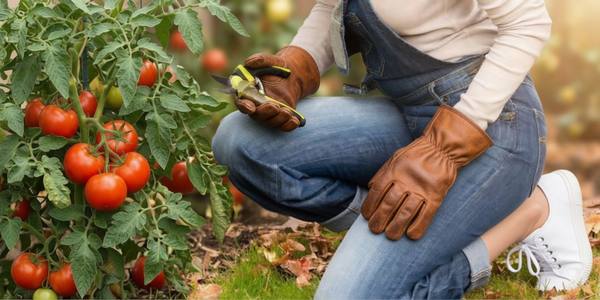
You do not need a shed full of specialty equipment to grow a meaningful amount of food. A handful of well-chosen basic tools covers the vast majority of vegetable gardening tasks.
⚠️ Don't cheap out on tools. A well-made trowel, pruner, or kneeler bench can last 20+ years — long enough to buy once at 50 and still be using the same tool at 70. Cheap, flimsy versions save a few dollars up front but tend to snap, bend, or fall apart within a season or two — usually right when you're leaning on them the most. Spend a little more for solid metal, riveted joints, and a real warranty; it's the cheaper option in the long run.
🔧 Names worth knowing: You don't need the most expensive option, just a reliable one. The tell is the warranty: established garden-tool makers back their trowels, cultivators, and pruners with lifetime warranties — a company that expects its tool back in thirty years builds it accordingly. Look also for forged construction over stamped metal, and pruners designed to be repaired rather than replaced, with replacement springs and blades sold individually. A lifetime-warranty tool is a safe bet over the unbranded bargain-bin option at nearly the same price.
Budget options on Amazon → · Top-rated on Amazon →
Budget options on Amazon → · Top-rated on Amazon →
Watering cans on Amazon → · Soaker hoses + timer →
Budget options on Amazon → · Easy-grip top-rated →
Budget options on Amazon → · Top-rated on Amazon →
Budget options on Amazon → · Top-rated on Amazon →
✅ You do not have to buy these new. Garage sales and estate sales are one of the best sources of secondhand garden tools, and they are usually priced at a dollar or two per item rather than $15–$30 retail. Here is the trick most people miss: garden tools are rarely laid out on the tables where you can see them. They are often still in a garage, a shed, or a box that never made it outside. Ask the homeowner or whoever is running the sale directly: "Do you happen to have any extra gardening tools you're not putting out?" More often than people expect, the answer is yes — and you will frequently walk away with a trowel, pruners, and a cultivator for less than the cost of one new tool.
📱 A real story worth knowing: One retired woman on a very tight fixed income wanted to start a small vegetable garden but could not afford even basic secondhand tools that month. She posted on her local Facebook Marketplace and neighborhood groups simply explaining her situation — that she wanted to grow her own food to help her budget, and was looking for any spare hand tools someone might be willing to part with. Within days, several neighbors dropped off trowels, gloves, a hand cultivator, and even a small kneeler bench they no longer used — donated, no charge. If buying tools, even secondhand, is not in your budget right now, posting honestly in a local community group is a real option many seniors have used successfully. People who garden tend to have more tools than they need, and most are glad to see them go to someone who will actually use them.
What Actually Saves Your Knees and Back
📅 Buy it now, at 50. Use it for 20 years, until 70 and beyond. Every item below is cheap, durable, and lasts for decades of seasonal use. The cost of buying late — after a bad knee or a sore back has already made gardening painful — is far higher than the $20–$45 it costs to buy a kneeler bench or knee pads today, while you're still able to set them up, get used to them, and make them a habit.
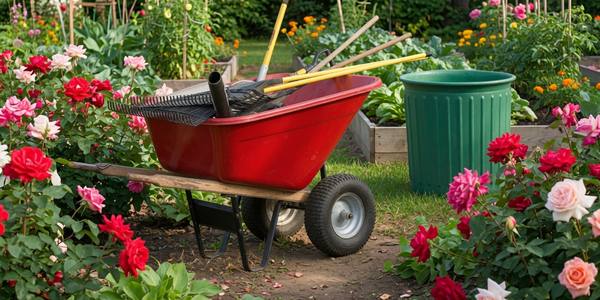
This is the part that determines whether gardening becomes a sustainable habit or a one-season experiment that ends with a sore back. The good news: the equipment that solves this is simple, widely available, and inexpensive.
1. Garden Kneeler Bench — The Single Most Important Purchase
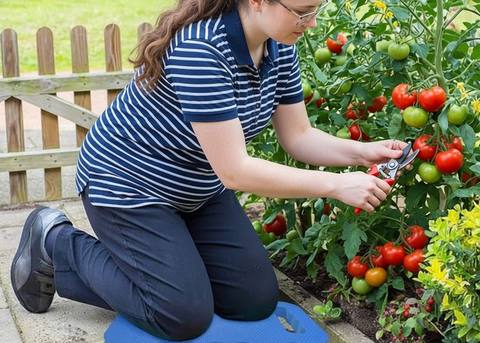 A simple folding frame with a thick foam pad that flips between two positions: kneeling pad at ground level, or stable bench seat at about 18 inches high. Most have side handles you can push against to help yourself up — this single feature is what makes repeated up-and-down motion sustainable instead of exhausting. This is widely considered the most important piece of equipment for any older gardener, because it solves the core physical barrier directly: the strain of repeatedly getting down to soil level and back up again.
Budget options on Amazon → · Top-rated on Amazon →
Also worth checking Facebook Marketplace, neighborhood groups, and local garage sales — kneeler benches are common secondhand finds since many gardeners upgrade or stop using theirs.
✅ How to use it: Flip it over as a seat for any task you can reach while sitting — weeding the edges of a bed, harvesting low crops, potting. Flip it back to a kneeling pad for closer ground work, using the side handles to lower yourself down and push yourself back up rather than relying on your knees and lower back to do all the work.
2. Knee Pads — For When You Need to Be Right at Ground Level
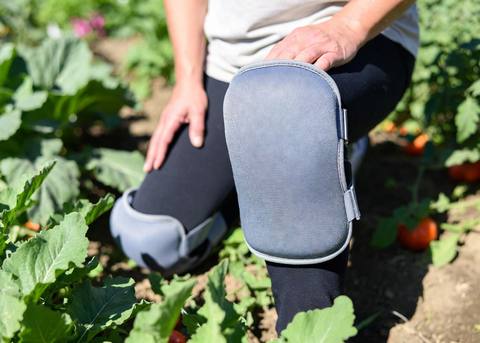 Even with a kneeler bench, some tasks put you closer to the ground than the bench allows — working in a low bed, reaching under foliage, or planting directly in ground-level soil rather than a raised bed. A pair of thick gel or foam knee pads, the kind used by flooring installers, cushions joints directly against hard or uneven ground and reduces the pressure that causes knee pain after even short kneeling sessions.
Budget options on Amazon → · Top-rated on Amazon →
Knee pads also turn up often at garage sales and on Facebook Marketplace, usually bundled with other secondhand garden gear for a few dollars.
3. Raised Garden Beds — Eliminates Ground-Level Work Entirely
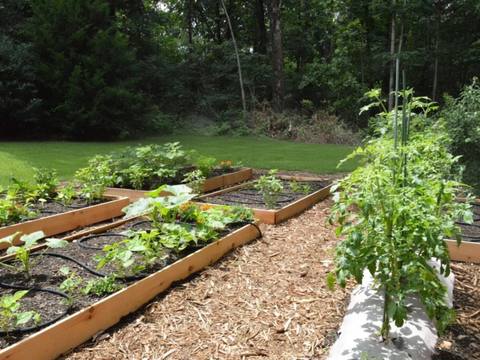 For anyone with significant knee, hip, or back limitations, a raised bed built to 24–36 inches in height removes ground-level bending and kneeling from the equation almost completely. Most tasks — planting, weeding, watering, harvesting — can be done standing or from a regular chair pulled up to the bed's edge. Raised beds at this height are also the standard accommodation used in senior and accessible community gardens specifically because they work for wheelchairs and walkers as well as standing gardeners with limited mobility. A basic cedar or galvanized steel raised bed kit costs $80–$200 and typically takes under an hour to assemble.
Budget options on Amazon → · Top-rated on Amazon →
Used raised bed kits and even pre-built wooden beds show up on Facebook Marketplace and at garage or moving sales fairly often — worth a look before buying new.
4. Long-Handled Tools — Reduce Bending for Everything Else
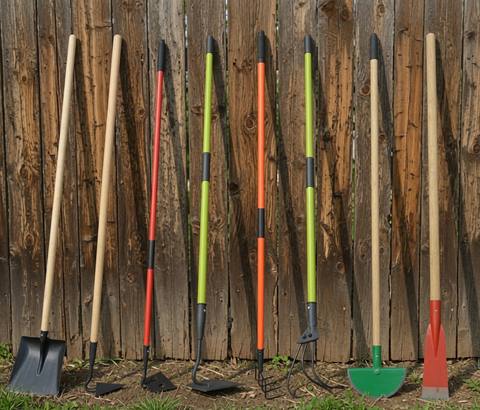 A long-handled trowel, weeder, and cultivator — essentially the same basic tools listed above, but with extended handles — let you do ground-level tasks from a standing position. These pair especially well with raised beds, where the extra height already does most of the work, but are also useful for in-ground beds when you want to avoid kneeling for a quick task.
Budget options on Amazon → · Top-rated on Amazon →
Long-handled tools are a garage sale staple — they're bulky to store, so people tend to sell them off cheap. Facebook Marketplace and neighborhood groups are also good places to ask.
5. Stool or Rolling Garden Seat — For Longer Sessions
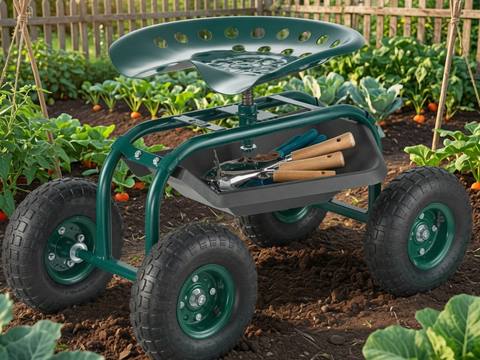 For extended work — weeding a long row, harvesting a full bed — a low rolling garden stool with wheels lets you scoot along a row at seated height instead of repeatedly standing and re-kneeling every few feet. Look for one with a wide, stable base; the lightweight three-legged versions tip easily on uneven ground.
Budget options on Amazon → · Top-rated on Amazon →
Rolling garden seats are another item that's easy to find secondhand — check Facebook Marketplace, neighborhood groups, and garage sales before buying new.
💰 The full ergonomic starter kit: Kneeler bench ($25–$45), knee pads ($15–$25), one 4x8 raised bed kit ($100–$180), one long-handled trowel-and-cultivator set ($20–$30). Total: roughly $160–$280 — less than half of what the average garden yields in produce value in a single year. Buy the sturdier option in each category, not the cheapest one; this is gear you'll be putting your body weight on, and good versions of all four last well past 20 years.
6. No-Till (No-Dig) Gardening — The Method That Saves Backs and Knees Every Season, Not Just Once
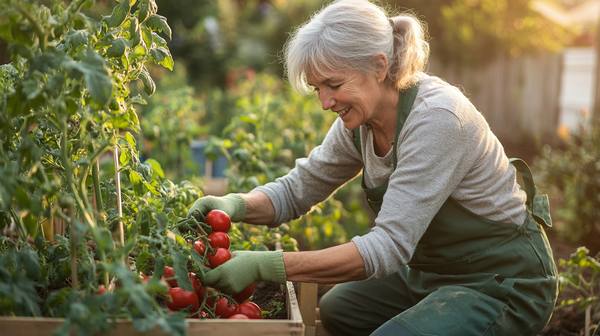
Everything above addresses the physical strain of a single gardening session. No-till gardening addresses the strain that comes back every single year: the digging, tilling, and turning of soil that traditional gardening requires at the start of each season. With a no-till method, you never dig the soil at all. Instead, you layer organic material — cardboard or newspaper, compost, mulch, straw — directly on top of the existing soil or bed, and let the soil's own biology break it down and aerate itself over time, the way a forest floor naturally builds soil without anyone turning it over.
For an older gardener, this matters because tilling and double-digging are some of the most physically demanding tasks in gardening — repetitive, full-body, lower-back-loading work that is hardest precisely on the joints gardening is supposed to be gentle on. A no-till bed, once established, is simply topped with a fresh layer of compost and mulch each season rather than dug up and reworked. The ongoing maintenance is lighter every single year, not just at setup.
✅ How to start a no-till bed: Lay flattened cardboard or several layers of newspaper directly over grass or bare soil to smother weeds. Add 4–6 inches of compost on top. Add 2–3 inches of mulch (straw, shredded leaves, or wood chips) over that. Water thoroughly. Plant directly into the compost layer. Each new season, simply add a fresh layer of compost and mulch on top — no digging required, ever again.
💧 Water It Once — The Drip System That Retires the Watering Can
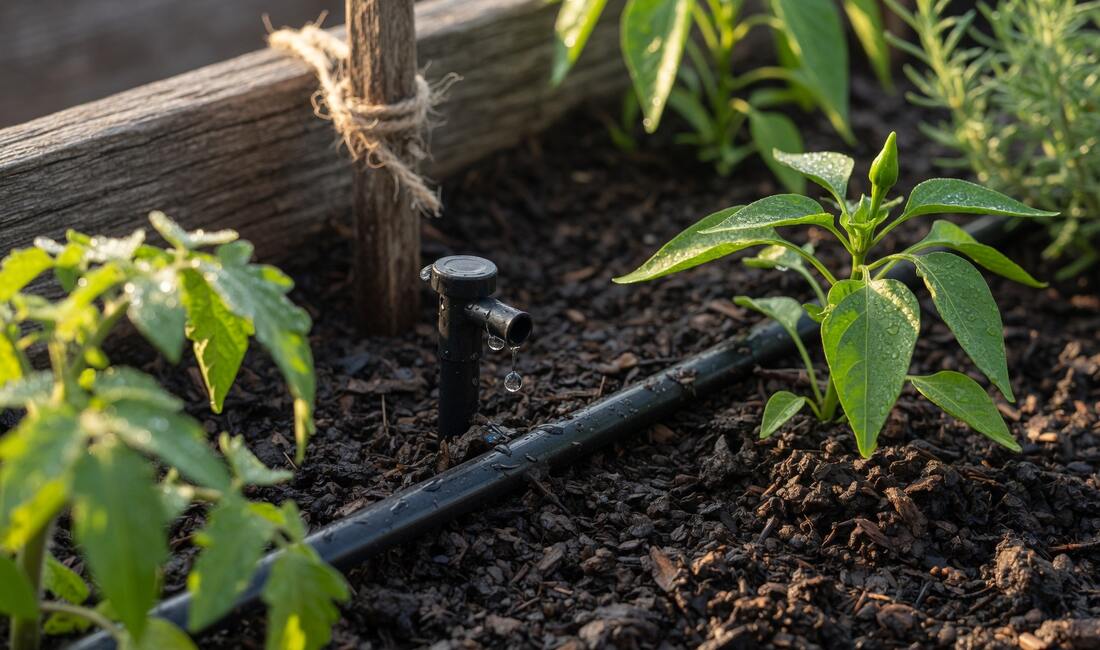
Here is the chore nobody counts when they plan a garden: watering it, by hand, every day, through a Florida summer. Twenty to thirty minutes outside in the worst heat of the day — or the still-sweltering evening — hauling cans or dragging hoses over wet ground. Everything this site says about heat applies double to a chore that repeats daily from June to September. A drip system deletes that chore from your life: you install it on one pleasant spring morning, and it waters the garden at the roots all season long — better than you could by hand — while you drink your coffee in the air conditioning.
“The garden was my joy and July was trying to take it from me. I am not being dramatic — I got lightheaded hauling the second watering can across the yard at four in the afternoon last summer, and I sat down on the bed frame and thought, this is how it ends, over tomatoes. My son heard about it and showed up the next Saturday with sixty dollars of parts from the garden aisle: skinny black tubing, little drippers for each plant, and a battery timer that screws onto the spigot. One Saturday. Now the garden waters itself at six in the morning, slow and deep, right at the roots, whether it is 96 degrees or whether I am at my sister’s for two weeks. I still go out every morning — with my coffee, in the cool, to pick and to look. My son says I have been promoted from staff to management. The tomatoes have never been better and neither has July.”
Three ways in, from simplest to smartest — all from Amazon or any big box garden aisle:
- The soaker hose ($15–25). Zero skill required: snake it through the bed, cover it with mulch, connect the garden hose, turn the spigot. The whole hose weeps water slowly along its length. Fifteen minutes to install, and it is the right answer for anyone who wants exactly one decision to make.
- The ¼-inch drip kit ($25–40). The little black tubing with a dripper placed at each plant — the version in the photos. More precise, sips less water, covers several beds from one kit, and the only tool it needs is scissors. An hour on a nice morning does a whole garden.
- Either one + a battery hose timer ($25–35). This is the piece that changes your life: it screws on between the spigot and the line and waters on a schedule — 6 AM, slow and deep, every day or every other day. The garden no longer cares whether there is a heat wave, whether your knees are having a bad week, or whether you are visiting the grandkids. Under $75 for the whole system, fully automatic, no plumber, no tools beyond scissors.
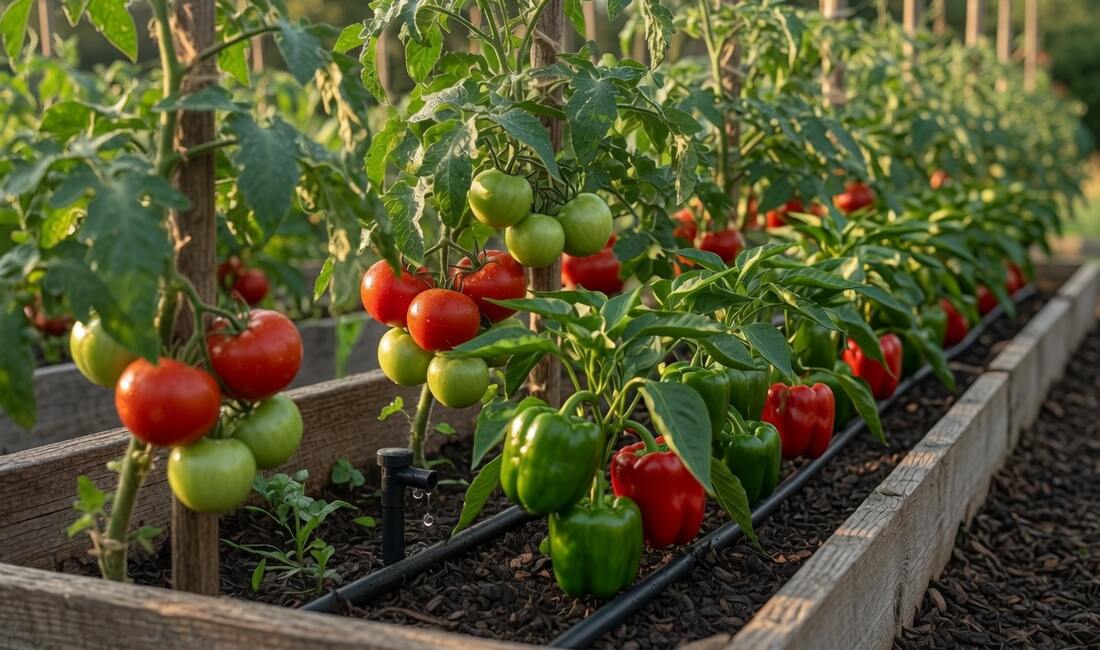
And the plants prefer it. Slow, deep watering at the soil line grows deeper roots than the daily sprinkle ever will, and it keeps the leaves dry — which, in Florida humidity, means noticeably less fungus and blight on tomatoes. The system that saves your body is also simply better gardening.
The honest maintenance list, in full: flush the lines for a minute at the start of each season, walk the bed once a month to see that every dripper is dripping (minerals can clog one occasionally — a pin fixes it), and keep mulch over the tubing to protect it from the sun. That is the entire job. Compare it to ninety days of watering cans and take the Saturday.
Shop Soaker Hoses → Shop Drip Irrigation Kits → Shop Hose Timers →
🌱 Seed Saving — Next Year’s Garden Is Already Free
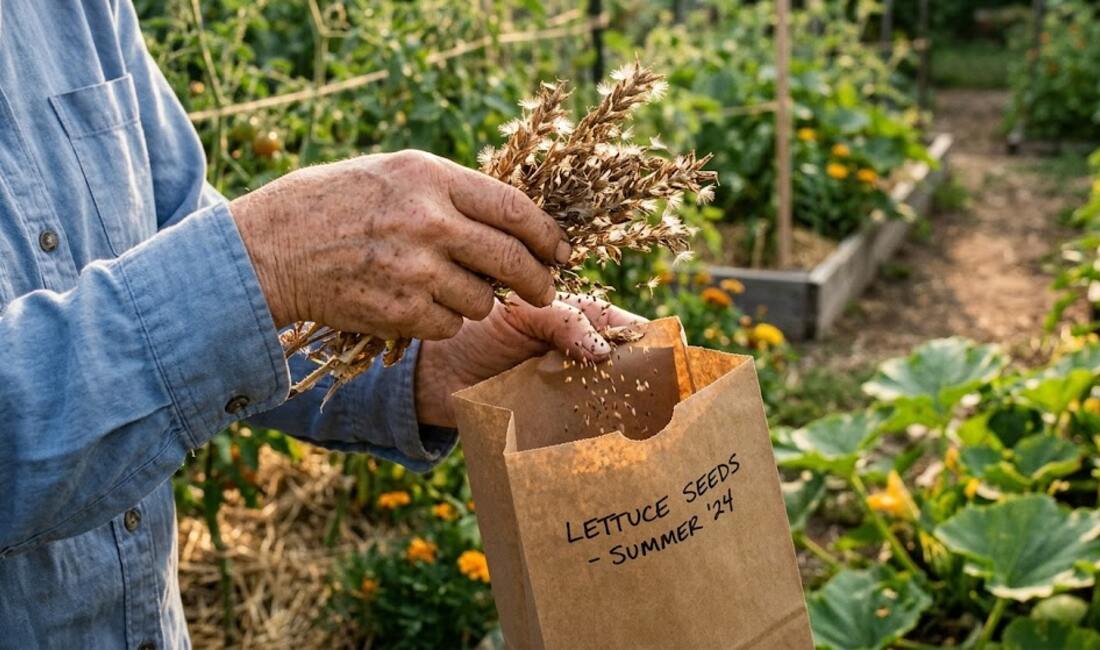
Here is the quietest line item in the whole garden budget: a garden that saves its own seeds never buys them again. Seed packets run three to five dollars apiece now, and a serious bed wants a dozen varieties — call it $40–60 every spring, forever. Or: zero, forever, plus one pleasant hour each fall. For a fixed-income garden, seed saving is not a hobby skill. It is the difference between a garden that costs money every year and one that only cost money once.
Start with the easy three — they practically save themselves:
- Beans and peas: let a few pods dry brown and rattly right on the plant, shell them, done. If you can shell a pea, you can save a seed.
- Lettuce: let one plant bolt and go to fluff, then shake the dry seed heads into a paper bag — exactly like the picture above. One plant gives you more seed than you will plant in five years.
- Peppers: scrape the seeds from a fully ripe (red, not green) pepper onto a paper plate, dry a week, envelope. Done.
The two rules that make it work: First, label everything with variety and year — every saved-seed disappointment in history starts with “I’ll remember which these are.” Second, store in paper envelopes, never plastic (paper breathes; plastic traps moisture and molds the seed), in a cool, dark, dry spot — a jar of envelopes in a closet beats the garage in Florida. Most vegetable seed keeps 3–5 years stored this way.
One honest heads-up: save seeds from plants marked heirloom or open-pollinated. Seeds from a hybrid (the packet says “F1”) will grow, but the children rarely match the parent — you might get something wonderful or something woody. Heirlooms come true, year after year, which is the entire point — and it is why the same tomato has stayed in some families longer than the china has.
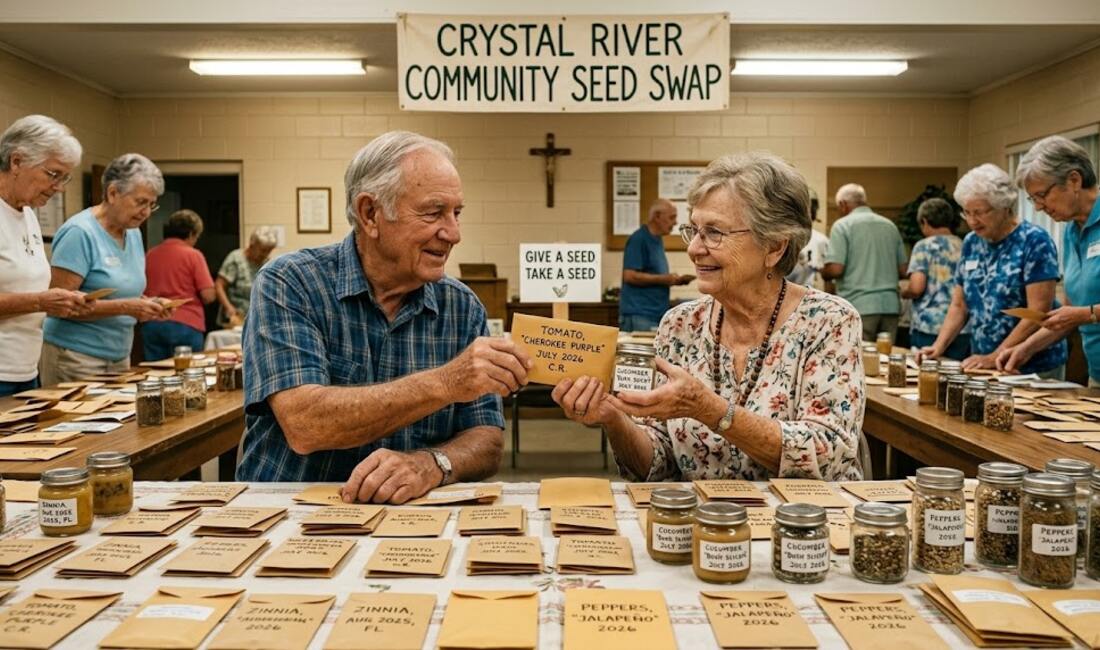
And then there is the best part: the seed swap. Libraries, garden clubs, churches, and county extension offices host them — tables of hand-labeled envelopes, give a seed, take a seed, no money anywhere in the room. It is the cheapest plant shopping on earth, the varieties on those tables are the ones already proven in your county’s heat and soil, and every envelope comes with the neighbor who grew it and will happily tell you how. A gardener with saved seed never arrives empty-handed and never leaves without something new to try. That is the abundance economy this whole page believes in, running at full speed on folding tables. This site covers the whole subject in depth: the Heirloom Seed Saving Guide, the crop-by-crop seed instructions, and Seed Communities — how swaps, seed libraries, and giving gardens work.
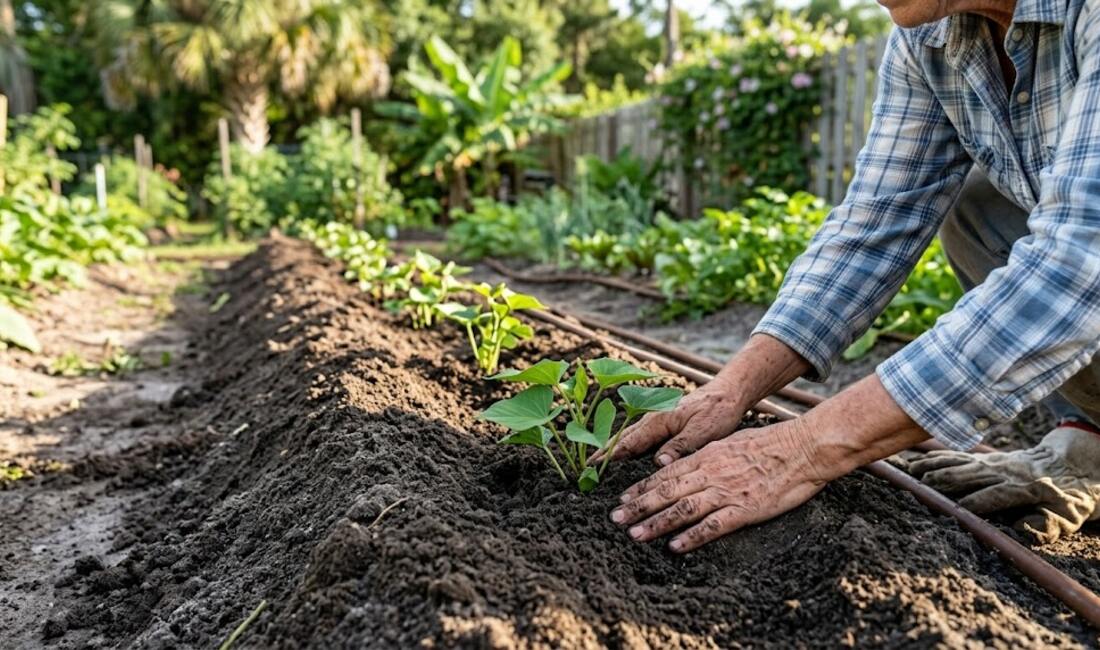
Come spring, the circle closes: last summer’s envelope goes into this year’s dirt, the drip line does the watering, and the garden pays for itself before it grows an inch. Shop Seed Envelopes →Shop Seed Storage Boxes →
🖨️ Printable Shopping & Garage Sale Checklist
Print this and take it with you — to the store, to a garage sale, or browsing Facebook Marketplace. Check items off as you find them. Remember: buy the sturdier option, not the cheapest one — this is gear that should last from 50 to 70 and beyond.
Basic Tool Kit
Ergonomic Knee & Back Savers
No-Till Bed Setup
Before You Buy
Getting Started Without Overdoing It
The most common mistake is starting too big. A single 4x8 foot raised bed — about 32 square feet — is enough to grow a meaningful rotation of tomatoes, peppers, leafy greens, herbs, and a few other staples for one or two people. That is a far more sustainable starting point than an in-ground plot that requires tilling, weeding across a much larger area, and far more physical effort before you have even planted anything.
- Start with one raised bed, not a full garden plot. Expand in future seasons once you know how much time and effort you actually want to commit.
- Choose high-yield, low-effort crops first. Tomatoes, peppers, zucchini, lettuce and other greens, and herbs like basil and parsley give a strong return for relatively little ongoing maintenance compared to crops requiring more intensive care.
- Set up watering before you need it. A simple soaker hose on a $15–$25 mechanical timer removes daily watering from your task list entirely and prevents the single most common reason new gardens fail — missed watering during a hot stretch.
- Garden in the cool part of the day. Morning or early evening, especially in warmer climates, reduces heat strain considerably compared to midday gardening.
- Buy good tools, not cheap ones. It bears repeating — a solid trowel, pruner, or kneeler bench bought now is the same one you'll still be using at 70. Cheap versions tend to fail right when you're leaning on them hardest.
Many counties also run free or low-cost gardening programs specifically for seniors through Cooperative Extension offices and Area Agencies on Aging — some provide free raised bed construction, soil, and seedlings for qualifying low-income seniors, similar to programs run through USDA SNAP-Ed in several states. A phone call to your local Extension office is worth making before you buy anything.
💬 What a Garden Actually Means at 65
“I retired at 66 with a pension that sounded fine when I accepted it twenty years ago. It does not sound as fine now. Last spring I kept a notebook of everything I grew and what it would have cost me at the grocery store. My 4x8 raised bed saved me forty-seven dollars in May alone. My electric bill had gone up forty-three dollars that month. I looked at those two numbers for a long time. The garden paid for my electric bill. That is not nothing. That is not a hobby. That is four dollars in the other direction after a year of inflation that had taken more from me than I wanted to admit. I put in a second bed in June.”
“My granddaughter is ten. She came over last summer and I was picking tomatoes and she asked if she could help. We picked tomatoes for an hour. Then I showed her how to make a sauce. She stood on a step stool and stirred that pot and watched the tomatoes she had just picked turn into something. We put it on pasta for dinner. She ate two bowls and then looked at me and said ‘Grandma, this is the best thing I have ever eaten.’ I have eaten in restaurants that cost a hundred dollars a plate. That ten-year-old standing on a step stool telling me my pasta sauce was the best thing she had ever eaten is something no restaurant has ever given me. That garden gave me that afternoon.”
“After my husband died I did not cook much. There was no point in cooking for one person. I ate a lot of crackers and cereal and things I am not proud of. My doctor was concerned about my nutrition. A woman at church invited me to her community garden plot. I watched her for about ten minutes and thought: I could do that. I started with a single 4x4 raised bed in my side yard. That was three years ago. I cook every day now. Not because I have to. Because I have things worth cooking. Last month I made soup from scratch for the first time in four years — vegetables I grew, broth I made from a chicken carcass, real food. I ate two bowls and cried a little. Good crying. I had forgotten what it felt like to feed myself properly.”
“I grew up poor. Not struggling — poor. My mother kept a garden because we needed it, not because it was trendy. When I retired I started one for the same reason. My Social Security covers the bills but leaves almost nothing. What the garden covers is the margin — the fresh vegetables, the herbs, the things I was skipping at the grocery store because the price had gotten too high. My neighbor is 81 and lives alone and I bring her things from the garden every week. Tomatoes when they come in. Peppers. A bag of green beans. She told me last fall that the food I bring her is the only fresh food she gets most weeks. I think about my mother every time I walk out to that garden. She would understand exactly what I am doing and why.”
“My granddaughter lives with me. Has for three years now, since she was seven. Her mother is my daughter and things got hard in ways I will not go into. What I will say is that I am 64 years old raising a ten-year-old on a retirement income that was designed for one person. I will not pretend that is easy. But I started growing vegetables six years ago, before any of this happened, because I read that a garden could save a retired person several hundred dollars a year and I believed it. That garden is the reason my granddaughter has eaten fresh vegetables every single day since she came to live with me. It is the reason I have not had to choose between her food and my medication. I planted it thinking about my own retirement. It turned out to be for her.”
“My grandchildren are seven, nine, and twelve. Their parents work two jobs between them and money is very tight. When they visit me on weekends I feed them. That is not a small thing. A growing twelve-year-old eats. A seven-year-old who is at Grandma’s house eats. I have a garden and I have hens and I have three blueberry bushes that produce more than I can use. Those kids eat real food when they are with me — eggs from my yard, vegetables from my beds, blueberries they pick themselves. Their mother told me last spring that Sunday night at Grandma’s is the best meal they get all week. I have thought about that sentence every day since she said it. I am not going to stop growing food.”
The average home vegetable garden in the United States yields approximately $600 worth of produce per year, against a typical investment of a few hundred dollars in seeds, soil, and basic supplies for an established bed. For a senior managing a tight monthly budget, several hundred dollars a year in reduced grocery spending on produce is a meaningful, recurring saving.
What is the single most important tool for a senior who wants to start a vegetable garden?
A garden kneeler bench is widely considered the most important piece of equipment for an older gardener, because it solves the single biggest physical barrier to gardening: repeatedly kneeling down to and standing up from ground level. A good kneeler bench flips between a padded kneeling pad and a stable seat, with side handles to assist standing.
Do raised garden beds really make a difference for older adults?
Yes. Raised beds built at 24 to 36 inches in height allow most gardening tasks to be performed from a standing or seated position without bending or kneeling at all. They are widely used in senior community gardens specifically because they accommodate wheelchairs, walkers, and limited mobility while still allowing full participation in growing food.
Are there free or low-cost gardening programs for low-income seniors?
Many counties offer free or subsidized raised bed construction, soil, and seedlings for qualifying low-income seniors through USDA SNAP-Ed programs, Cooperative Extension offices, and Area Agencies on Aging. Availability varies by county and state — call your local Cooperative Extension office to ask what is available in your area before purchasing materials yourself.
What is no-till gardening and why is it recommended for seniors?
No-till (or no-dig) gardening builds soil by layering compost, mulch, and organic material on top of the ground instead of digging or tilling it. For older gardeners, this matters because it eliminates the most physically demanding task in traditional gardening — tilling and turning soil — every single season, not just once. It also reduces weeding and watering frequency, since undisturbed mulched soil suppresses weeds and retains moisture better than regularly tilled ground.
Is it worth spending more on good quality garden tools instead of cheap ones?
Yes. A well-made kneeler bench, trowel, or pair of pruners with solid metal construction and riveted joints can easily last 20 years or more — meaning a tool bought at 50 is often still the same tool in use at 70. Cheap, lightweight versions usually save only a few dollars up front but tend to bend, crack, or fall apart within a season or two of regular use, often failing at the exact moment they are needed most — mid-task, with no backup on hand. Established garden-tool makers have built their reputations specifically on hand tools that hold up to decades of regular use, backed by real lifetime warranties — the goal is reliability, not the highest price tag. For equipment that is meant to hold up someone's full body weight, like a kneeler bench or rolling seat, this matters even more.
📚 Primary Sources & Official Data
- • AARP Public Policy Institute — Food Insecurity Among Adults 50+
- • National Council on Aging — Senior Economic Security Facts
- • National Gardening Association — Annual Gardening Survey
Page last reviewed: June 2026 | Author: Franklyn Galusha