Nine Substations Could Black Out the Entire Continental United States for 18 Months.
The Federal Energy Regulatory Commission has publicly stated that destroying just nine specific substations could collapse the US electrical grid for up to 18 months. Physical attacks on electrical infrastructure are documented, increasing, and effective. For a senior on oxygen, insulin, or a CPAP machine, an 18-month outage is not a scenario. It is a death sentence without backup power.
Every cause on this page ends the same way: your lights out. These three steps work against all of them.
🚨 Moore County, North Carolina — December 3, 2022
Two Rifles. Four Substations. Forty-Five Thousand Homes Without Power in December. Thousands of Seniors in Warming Shelters.
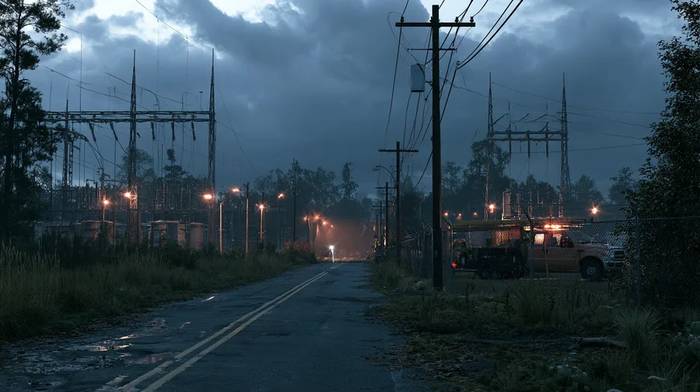
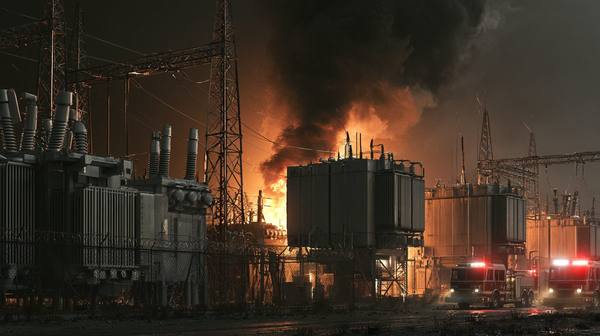
A chain-link fence and a country road. That is very nearly the whole of the physical security on most substations in this country, and there are thousands of them — the one in Moore County took forty-five thousand homes off the grid.Two people drove to four electrical substations in rural Moore County, North Carolina on the night of December 3, 2022, and fired rifles at transformer equipment. The attack was coordinated and effective. Duke Energy’s grid lost 45,000 customers within minutes. The outdoor temperature was dropping toward the low 20s Fahrenheit.
Moore County is home to Pinehurst — a retirement community and golf resort destination with a population significantly older than the national average. Warming shelters opened immediately. Emergency management personnel went door to door checking on elderly residents. Some customers were without power for nearly three days. In December. In homes dropping toward freezing temperatures.
The perpetrators have not been publicly identified or charged. The attack required minimal sophistication: knowledge of where the substations were, two firearms, and willingness to act. The consequences for tens of thousands of elderly residents were immediate and serious. This was not a theoretical exercise. It was a Tuesday night in a retirement community in North Carolina.
✅ What neighbors with generators experienced: Residents of Moore County’s retirement communities who had whole-home standby generators — installed in prior years for hurricane preparedness — never lost heat. Never dropped below comfortable temperature. Watched the news about the attack from their warm living rooms while neighbors were transported to warming shelters. Same attack. Same outage. Opposite outcomes.
9
Substations FERC says could black out the continental US if destroyed simultaneously
18mo
Potential recovery time for a coordinated attack on critical grid infrastructure
45K
Moore County customers lost power from four substation shootings in 2022
⬆️
FBI reports attacks on electrical infrastructure increased significantly after 2020
The FERC Warning: Nine Substations, 18 Months
In 2013, the Federal Energy Regulatory Commission conducted an analyzis of the vulnerability of the US electrical grid to physical attack. The findings were alarming enough that the full report was classified. But in 2014, The Wall Street Journal reported on the key finding, which FERC officials subsequently confirmed in congressional testimony: destroying just nine specific high-voltage substations — three in the eastern US, three in the western US, and three in the Texas interconnection — could cascade into a blackout affecting the entire continental United States.
The 18-month recovery estimate was not arbitrary. It reflects the time required to manufacture replacement large power transformers. These units are custom-built, weigh up to 800,000 pounds, and are manufactured at a small number of facilities worldwide. The US has no meaningful domestic manufacturing capacity. A coordinated attack that destroyed the nine critical substations would require manufacturing and installing units in a sequence that rebuilds the grid progressively — a process that takes well over a year even with maximum global industrial effort.
For a senior without backup power, an 18-month grid outage is not survivable at home. It is not a storm you wait out. It is a fundamental change in how life must be organized, requiring either a fuel-supplied generator system or relocation to a facility with independent power. The time to have made the generator decision is decades before the attack occurs.
Metcalf 2013: The Attack That Revealed the Vulnerability
On April 16, 2013, one month before the FERC analyzis was conducted, snipers attacked PG&E’s Metcalf transmission substation in California. They cut underground communication lines to delay response, then fired over 100 rounds of .30-caliber rifle fire at transformer cooling systems. The attack lasted 19 minutes. The snipers escaped before law enforcement arrived. No arrests have been made more than a decade later.
The attack caused $15 million in damage to 17 transformers and took 27 days to fully repair, even with PG&E deploying maximum resources. It did not cause a widespread blackout because the grid was able to reroute power around the damaged substation. But it demonstrated conclusively that a single motivated actor with a common rifle could cause tens of millions of dollars of damage to critical infrastructure and evade law enforcement.
Jon Wellinghoff, who was FERC Chairman at the time, later called the Metcalf attack “the most significant incident of domestic terrorism involving the grid that has ever occurred.” He noted that a coordinated version of the same attack on multiple substations could have had catastrophically different results.
The Trend Is Getting Worse, Not Better
Physical attacks on US electrical infrastructure increased significantly after 2020. In addition to Moore County in 2022, similar attacks were documented in Washington state, Oregon, Nevada, and Texas in 2022 and 2023. FBI and DHS have noted that online communities have circulated detailed guides to attacking electrical infrastructure, lowering the knowledge threshold for potential attackers.
Federal regulators have moved to strengthen security requirements for the most critical substations. But the regulatory process is slow, implementation is gradual, and distribution substations serving individual neighborhoods — like the four in Moore County — largely fall outside the scope of federal physical security mandates. The gap between the infrastructure’s vulnerability and its protection is not closing quickly.
The 50–70 Math: You Cannot Harden the Substations. You Can Harden Your Home.
Illustration. Look at the floor beside the chair. The candles are the least of what is wrong in this picture — the concentrator is not running, and that is the failure a warming shelter opening across town does nothing about.You cannot control whether the substations serving your region are attacked. You cannot control the sophistication of the attackers or the priority your address receives in restoration. What you can control is whether your home requires the utility grid to sustain your life and health.
A whole-home standby generator powered by propane is as close to grid-independent as a residential home can get. The propane is stored on your property. The generator is on your property. The control system is on your property. None of it depends on substations, transmission lines, or the decisions of grid operators under attack. When the grid fails for any reason — including physical attack — your generator starts automatically and your home continues operating.
The window to make this decision is before you need it. In the weeks after a major grid attack, generator installers are overloaded. Equipment may be in short supply. Propane delivery schedules may be disrupted. The decision made at 55 on a normal Tuesday is the one that protects you at 75 during the Tuesday that is not normal.
The Grid Has a Vulnerability. Your Home Doesn’t Have to.
A generator powered by propane stored on your property operates independently of every substation, every transmission line, and every grid management decision made by utilities under attack. It is not a luxury item. For a senior on medical equipment, it is the infrastructure that keeps you home instead of in a shelter.
Is a coordinated 9-substation attack actually likely?
FERC considers it a credible enough scenario to drive grid security policy. The Metcalf attack demonstrated that one or two motivated people with common rifles can damage critical infrastructure effectively. Scaling that to nine coordinated locations requires planning and coordination, but is not technically sophisticated. Law enforcement officials describe it as a serious threat requiring active countermeasures.
How would FEMA respond to an 18-month national blackout?
There is no FEMA plan designed for an 18-month nationwide blackout. Existing emergency management plans assume shorter durations. Congressional and academic research on this scenario consistently concludes that the scale would exceed government response capacity by orders of magnitude. Self-sufficiency through backup power is the only realiztic individual protection.
Are there areas of the country at higher risk from physical grid attacks?
FERC identifies the nine most critical substations by their position in the grid topology — locations where failure cannot be routed around. These locations are not publicly disclosed for security reasons. But the Moore County attack demonstrated that local distribution substations anywhere in the country are vulnerable to determined attackers regardless of their critical classification.
Has anyone actually attacked US electrical infrastructure?
Yes. There have been dozens of documented physical attacks on US electrical infrastructure in the past decade, including the 2013 Metcalf substation sniper attack in California, the 2022 Moore County substation shootings in North Carolina, and attacks in Washington, Oregon, and Nevada. The FBI reports that attacks on electrical infrastructure increased significantly after 2020.
Could the entire US grid actually go down for 18 months?
According to FERC analyzis and congressional testimony, a coordinated attack on nine specific high-voltage substations could prevent power from being rerouted around the damage, causing cascading failures across the interconnected grid. Recovery would require manufacturing and installing replacement large transformers, which takes 12 to 18 months. The scenario is considered credible enough that it drives federal grid security policy.
How does a generator help if the entire grid is down?
A generator operates independently of the utility grid using stored fuel — typically propane or natural gas. If the grid is down for an extended period, a generator with adequate fuel supply can power a home indefinitely. Propane suppliers have established emergency delivery protocols. A buried 500-gallon tank provides approximately a week of continuous operation and can be refilled by truck even during extended grid failures.
Founder, Franklyns Bay LLC — Florida resident since 1984 — 25+ years SEO & web publishing — Nature Coast homeowner & 40+ hurricane seasons lived through. Full bio →
Now you know why it happens.
Be the house on the street that barely notices. Start with the generator calculator — it takes two minutes.
General Information Disclaimer: Content on this site is provided for general educational and informational purposes only and does not constitute medical, legal, or financial advice. Statistics cited are drawn from public domain government sources including FEMA, NOAA, CDC, EIA, NERC, DOE, and FERC. Composite narratives represent documented conditions across many real events; no specific living individuals are identified. In any emergency, follow guidance from local authorities and FEMA Ready.gov. Amazon links are affiliate links. Some content on this Site is produced with the assistance of AI tools and is reviewed by a person before publication; see our Editorial Standards and Corrections policy. Full disclaimer →
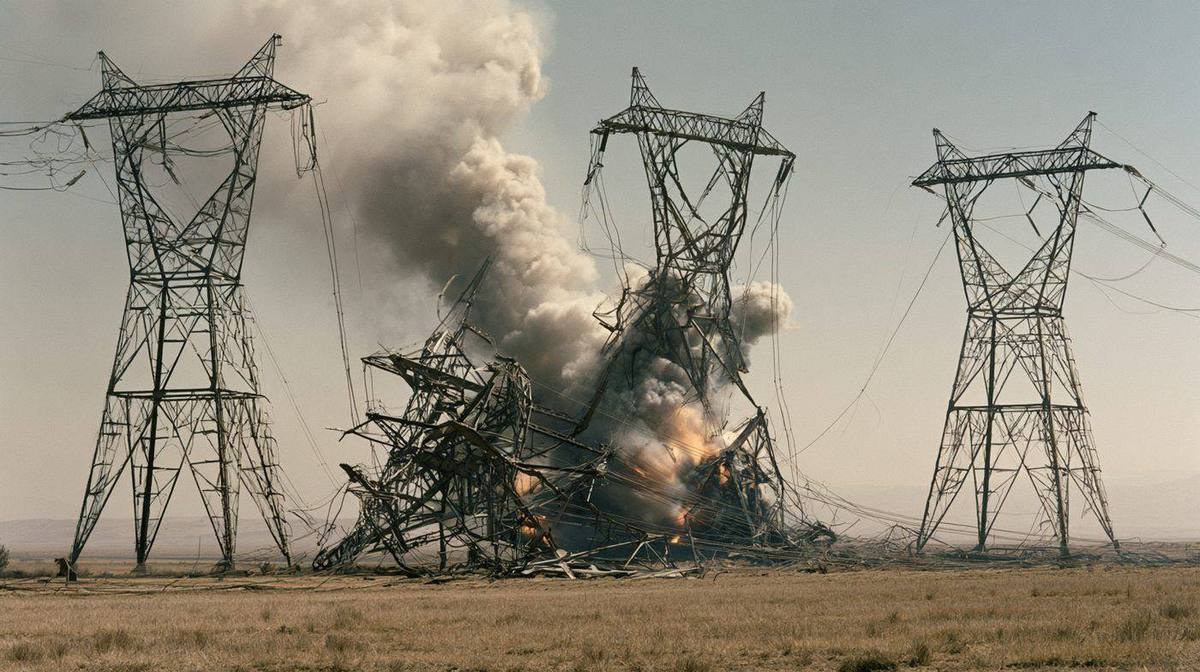


 On April 16, 2013, one month before the FERC analyzis was conducted, snipers attacked PG&E’s Metcalf transmission substation in California. They cut underground communication lines to delay response, then fired over 100 rounds of .30-caliber rifle fire at transformer cooling systems. The attack lasted 19 minutes. The snipers escaped before law enforcement arrived. No arrests have been made more than a decade later.
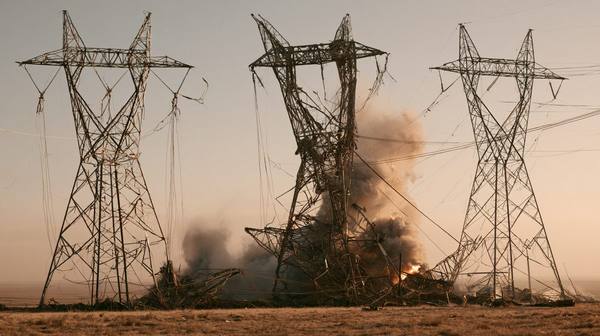 Physical attacks on US electrical infrastructure increased significantly after 2020. In addition to Moore County in 2022, similar attacks were documented in Washington state, Oregon, Nevada, and Texas in 2022 and 2023. FBI and DHS have noted that online communities have circulated detailed guides to attacking electrical infrastructure, lowering the knowledge threshold for potential attackers.