A Backhoe Cut Through a Cable Two Miles Away. You Lost Power for 11 Hours.
Underground cable strikes, construction crew errors, and human mistakes cause thousands of power outages every year across America. No storm. No accident near your home. A contractor drilling a fiber optic line three miles away cuts through an underground power cable. Your power goes out at 10 AM on a beautiful spring morning. For a senior who depends on powered medical equipment, the beauty of the morning is irrelevant.
A Fiber Optic Contractor Cut Through the Wrong Cable. 6,000 Homes Lost Power. One Was Running a Home Dialysis Machine.
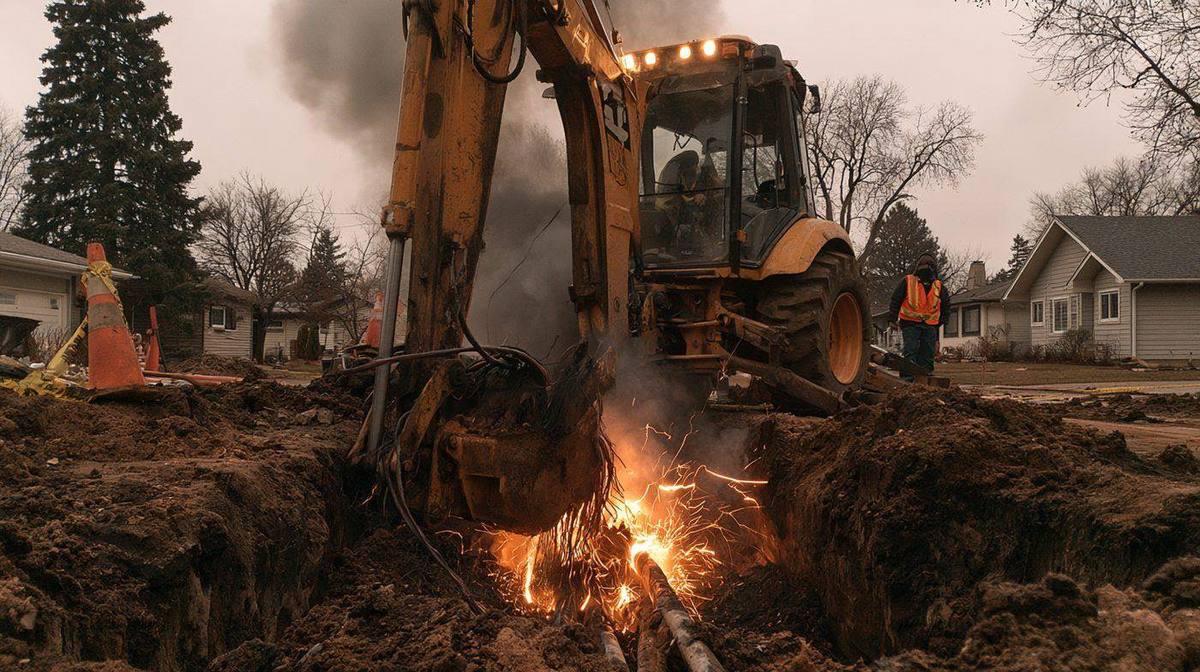
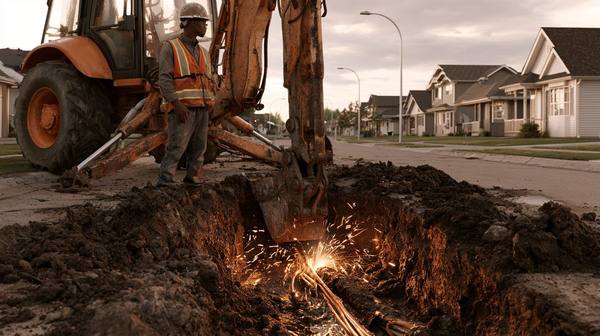
On a Tuesday morning in April 2021, a fiber optic installation crew in a suburban Atlanta subdivision did not call 811 before drilling. Their boring equipment cut through an underground power cable. Power to approximately 6,000 homes went out at 10:22 AM. Weather: clear skies, 72 degrees, no weather event of any kind.
A contractor two miles from somebody’s house, on an ordinary weekday, in good weather. Nothing about this outage was seasonal, predictable or forecast — and the crew standing at the edge of that hole is the whole of the warning anybody got.
Among the affected households was a 68-year-old man who performed home peritoneal dialysis four times per day. His machine was in the middle of a treatment cycle when the power failed. Home dialysis requires continuous power during treatment sessions. His machine stopped. He completed the cycle manually using gravity drainage, which his nephrologist had trained him on as an emergency procedure. But he had to reach his equipment storage in a darkening house, execute a procedure he had only practiced twice, and wait nearly 11 hours for power to be restored.
He was fine. He was prepared enough to know the manual procedure. But he told his nephrologist afterward: “I keep thinking about what would have happened if I hadn’t been home. Or if I’d been ten years older and couldn’t move as fast.” The fiber optic crew drove away without stopping. They may not have known what they cut.
✅ What a generator would have meant: An automatic standby generator would have transferred power within 11 seconds. His dialysis machine would never have stopped. He would not have had to execute an emergency manual procedure in a darkening house. He would have finished his treatment cycle, eaten lunch, and called the utility to report the outage for his neighbors.
Top 5
Underground cable strikes are among the top five causes of US power outages (EIA)
100K+
Underground utility damage incidents reported annually in the US (Common Ground Alliance)
40%
Of underground utility strikes occur when excavators do not call 811 first (CGA data)
11 hrs
Duration of the Atlanta outage from one construction error
The Many Ways Human Error Takes Your Power
Underground cable strikes
The most common human-error cause. Contractors, homeowners, and utility workers digging, drilling, or boring without confirming the location of underground utilities strike power cables thousands of times per year. The Common Ground Alliance estimates that 40 percent of underground utility damages occur when the excavator did not call 811 (the national “call before you dig” number) before starting work. The other 60 percent occur when 811 was called but marks were misread, shifted over time, or were incomplete.
Overhead line contact by equipment
Crane operators, tree trimming crews, truck drivers with tall loads, and farm equipment operators contact overhead power lines regularly. A crane that touches a distribution line can cause immediate outages affecting thousands of homes. Equipment operators are not always aware of line locations or clearance requirements.
Utility worker error
Utility crews performing planned maintenance sometimes cause unplanned outages through switching errors, improper equipment handling, or work on the wrong circuit. These events are infrequent but occur across every utility in the country as a documented category of outage cause.
Vegetation management failures
Utilities are required to maintain clearance zones around power lines to prevent tree contact. When vegetation management is deferred — common due to budget pressures — trees grow into clearance zones and contact lines during wind events or under their own weight. This is human error of omission rather than commission, but the result is the same.
Call Before You Dig: 811
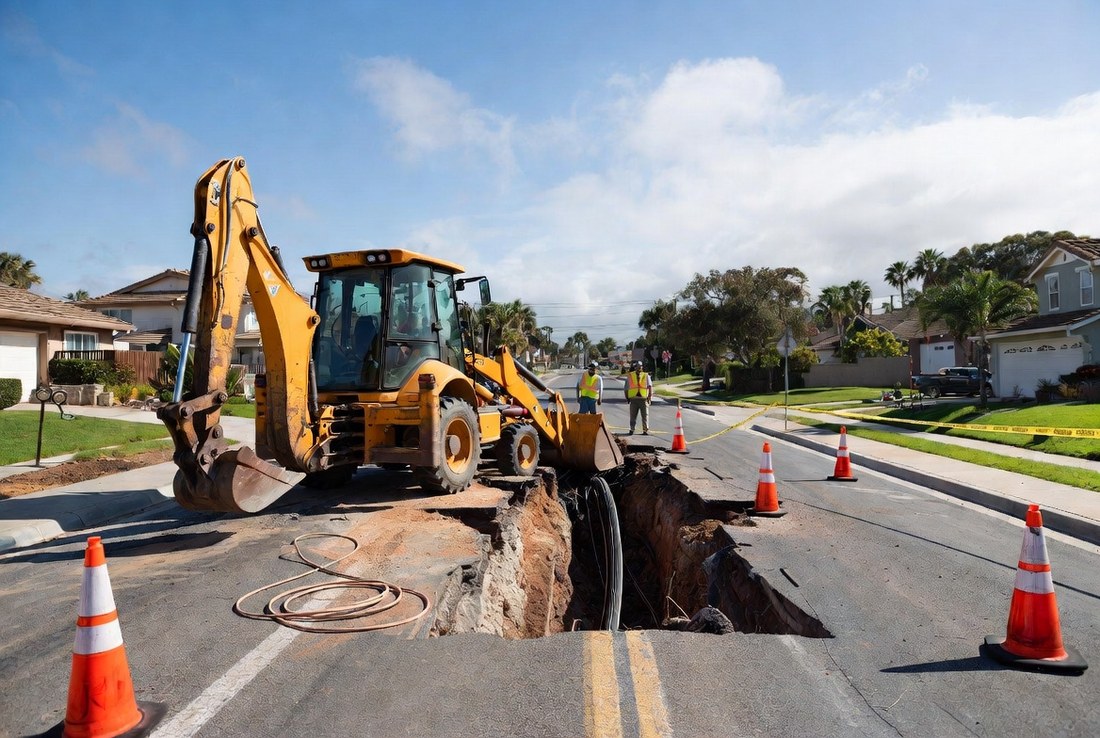
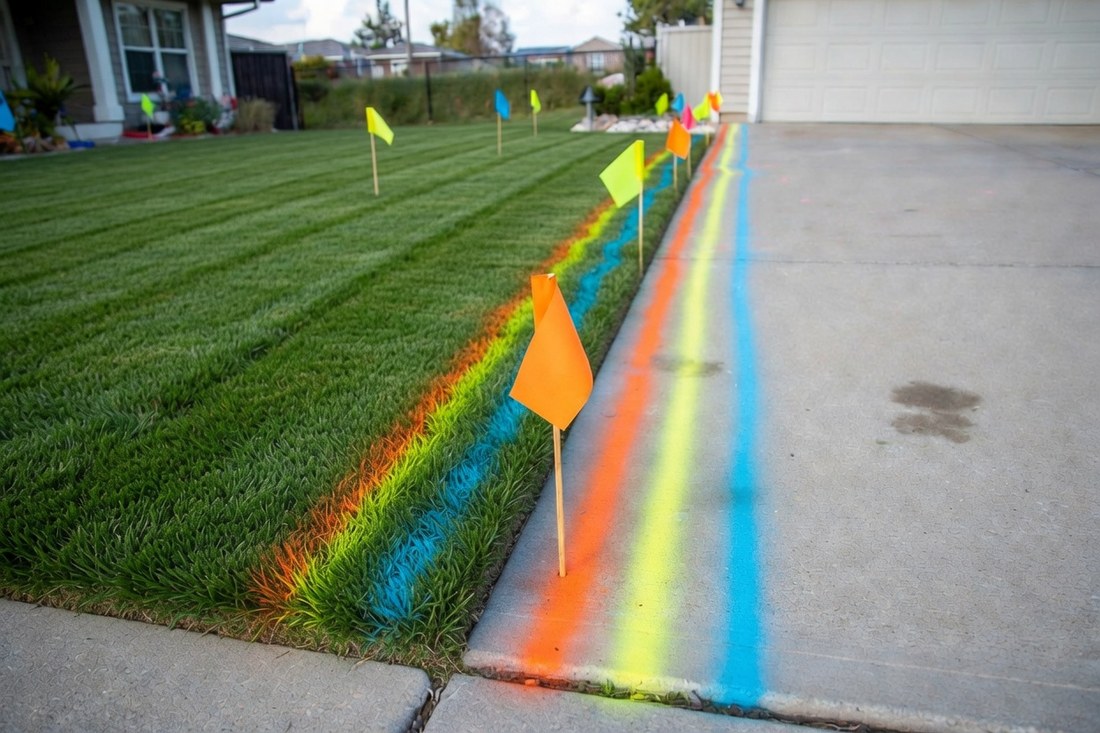
The national “call before you dig” system requires excavators to call 811 (or submit a request online) before any digging deeper than 12 inches. Utility companies then mark the location of underground facilities with color-coded flags or paint. Red marks indicate electrical. Despite this system, underground damage incidents remain in the hundreds of thousands per year because the system depends on everyone using it — and not everyone does.
Orange for communications, yellow for gas, blue for water. The call is free, it is required by law in every state, and it takes about three minutes — these marks are here because somebody made it before a shovel went into the ground.
If you are having work done on your property that involves any digging, ask your contractor if they have called 811 and received marks. If they have not, require it. You have no control over contractors on other properties near your home — but you can ensure that work on your own property follows the law and protects the infrastructure serving your neighbors.
The 50–70 Math: Human Error Outages Happen on the Best Days
Construction crews work in good weather. Drilling and boring contracts are scheduled for spring and fall, when conditions are ideal. The outage that results from their error reaches you on a Tuesday morning when the weather is fine, you were not watching the news, and nothing about the day suggested you needed to have your backup battery charged.
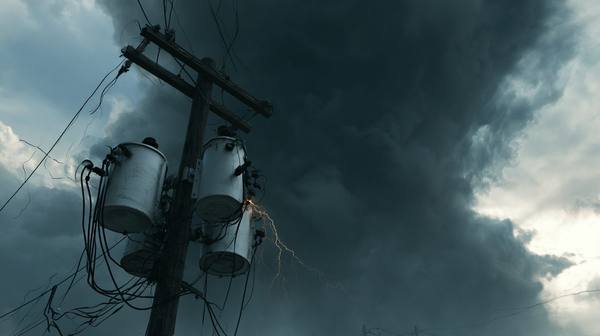
This is why the “charge the battery when a storm is coming” strategy fails for 10 to 20 percent or more of actual outage events. The storm gives you warning. The backhoe does not. The squirrel does not. The aging transformer does not. The only preparation that works for all categories of outage is automatic, continuous backup power that requires no advance decision.
At 55, a whole-home standby generator is a 20-year investment in not having to make emergency decisions in a darkening house. At 68, like the dialysis patient in Atlanta, you are executing emergency manual procedures and wondering what happens if you are ten years older. At 75, the Atlanta scenario plays out very differently.
You Cannot Control What Contractors Do Two Miles Away. You Can Control Your Backup Power.
A whole-home standby generator starts automatically within seconds of any power failure — whether a contractor cut a cable, a squirrel contacted a transformer, or a storm took down a transmission line. The cause is irrelevant to your generator. It just starts. Your medical equipment keeps running. You keep living your life.
What should I do if someone cuts a power line near my home?
Stay away from any downed lines — assume they are energized even if they appear dead. Call 911 immediately. Call your utility to report the outage and the location of any downed lines. Do not attempt to approach or move any fallen power lines under any circumstances.
How do I find out if utility work is planned near my home?
Utilities post planned outage notifications on their websites and apps and often send email or text notifications to affected customers. For unplanned outages caused by accidents, there is no advance notice. Subscribing to your utility’s notification system ensures you receive planned outage information as soon as it is available.
Who is responsible if a contractor cuts power to my home?
The contractor who caused the damage is potentially liable. However, pursuing a claim requires demonstrating specific damages, identifying the responsible party, and potentially litigating. Your utility is not liable for outages caused by third parties. For questions about recovering food spoilage or equipment damage costs, contact your own insurer directly — we are not qualified to advise on coverage.
How common are underground cable strikes?
Underground cable strikes by excavation equipment are among the top five causes of power outages in the United States, according to EIA data. The Common Ground Alliance, which tracks underground damage prevention, reports hundreds of thousands of underground utility damage incidents annually in the US, a significant portion of which affect electrical cables.
How long do human accident outages typically last?
Human accident outages vary widely. A utility pole knocked down by a vehicle can be replaced in 4 to 8 hours if crews and materials are available. An underground cable strike may require specialized equipment and take 12 to 48 hours to repair. The repair timeline depends on the severity of damage, access to the repair location, and availability of crews and materials.
Can I receive any compensation for a human-accident outage?
Liability for human-accident outages typically falls on the party that caused the damage — the contractor who struck the cable, for example. In practice, receiving compensation requires filing a claim, demonstrating damages, and potentially litigating. Some people find it simpler to ask their own insurer or agent what, if anything, is claimable under their policy than to pursue the liable party directly. Policies differ and we cannot tell you what yours covers.
Founder, Franklyns Bay LLC — Florida resident since 1984 — 25+ years SEO & web publishing — Nature Coast homeowner & 40+ hurricane seasons lived through. Full bio →
Now you know why it happens.
Be the house on the street that barely notices. Start with the generator calculator — it takes two minutes.
General Information Disclaimer: Content on this site is provided for general educational and informational purposes only and does not constitute medical, legal, or financial advice. Statistics cited are drawn from public domain government sources including FEMA, NOAA, CDC, EIA, NERC, DOE, and FERC. Composite narratives represent documented conditions across many real events; no specific living individuals are identified. In any emergency, follow guidance from local authorities and FEMA Ready.gov. Amazon links are affiliate links. Some content on this Site is produced with the assistance of AI tools and is reviewed by a person before publication; see our Editorial Standards and Corrections policy. Do not undertake any physical effort described or implied here — lifting, pushing, pulling, carrying, climbing, kneeling, or assisting somebody else — without first discussing it with your own doctor, who alone knows your medications, your bone density, your cardiac fitness, the condition of your back and joints, your grip strength and your balance, and whether such activity is appropriate for you. A pushing or pulling task can pull a muscle or injure a joint just as a lifting task can, and nothing on this site should be read as encouragement to attempt physical work you have not cleared with your doctor first. This site does not recommend that any reader attempt to move, tip or shift any tall or top-heavy item, alone or with equipment — those tasks belong to able helpers or to professional movers. Full disclaimer →