The Outage Was Supposed to Last 48 Hours. It Lasted Eighteen Days. She Ran Out of Insulin on Day Three.
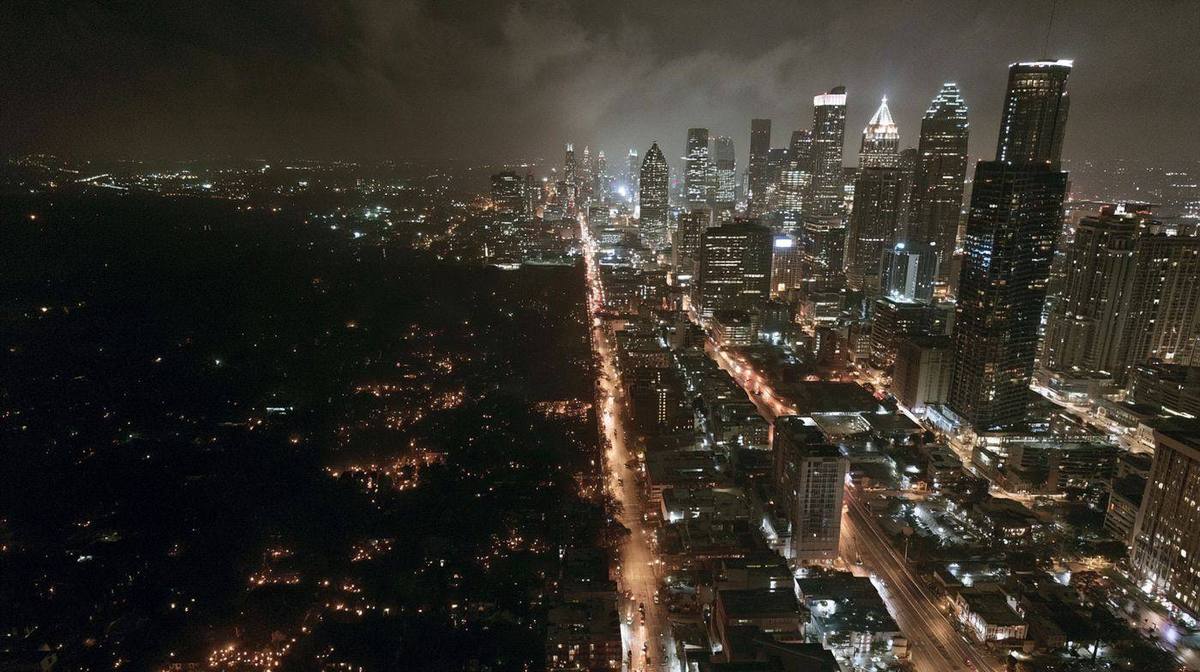
Every major power outage involves a gap between when power goes out and when it comes back. What makes that gap dangerous for seniors is the set of factors that extend it beyond initial estimates: restoration priority queues that put seniors at the end, transformer shortages that create multi-week waits, mutual aid crews that come from five states away, and bureaucratic complications that delay what should be straightforward repairs. Understanding why outages last as long as they do is the first step to preparing for them accurately.
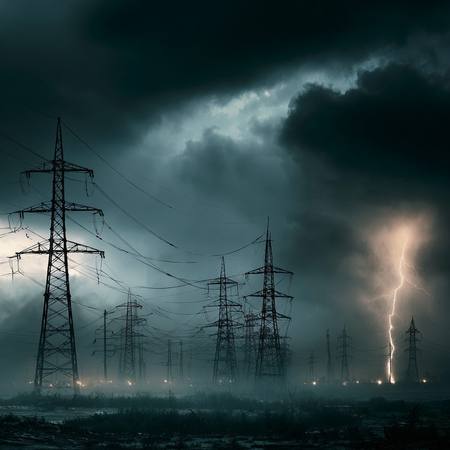
Every cause on this page ends the same way: your lights out. These three steps work against all of them.
🚨 Southwest Florida — September 2022 — Hurricane Ian Aftermath
The Utility Said 48 to 72 Hours. It Was 18 Days. Every Day Was a Medical Decision.
When Hurricane Ian made landfall on September 28, 2022, Florida Power & Light’s initial estimates suggested most customers would be restored within 48 to 72 hours. For millions of Floridians, that estimate was accurate. For tens of thousands of customers in the hardest-hit areas — particularly in Charlotte and Lee Counties — it was not.
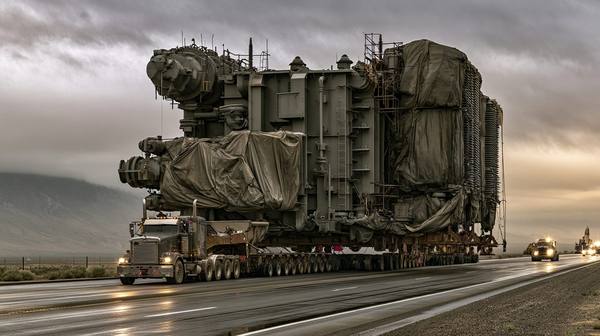
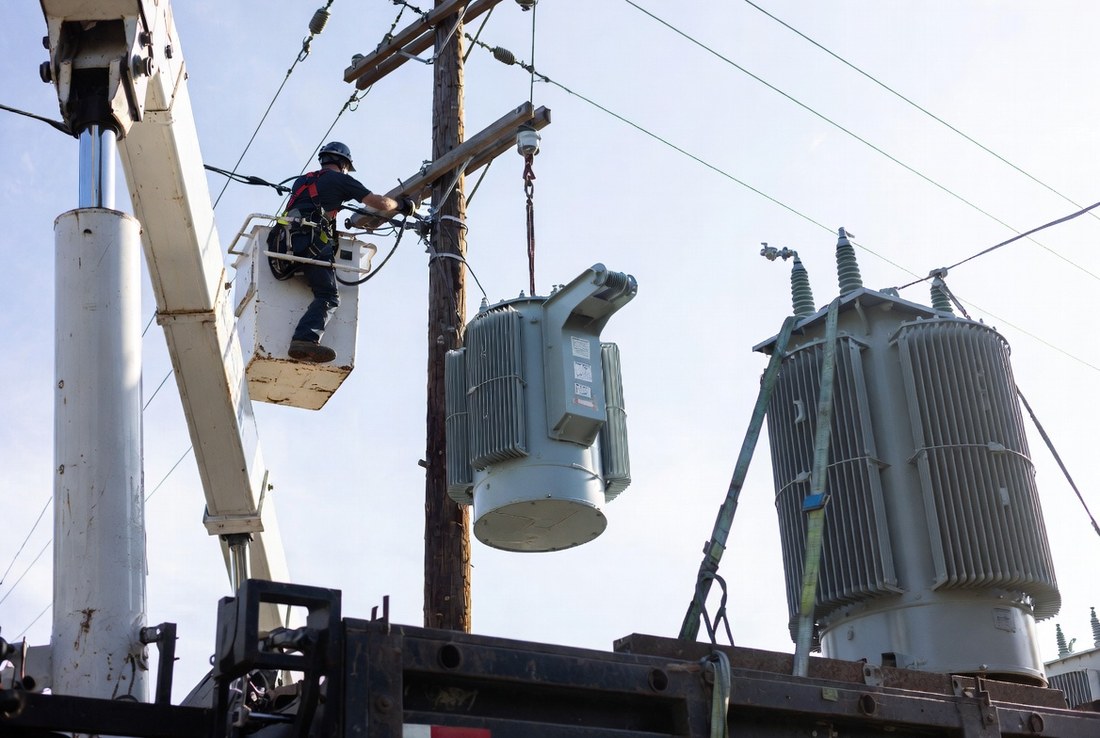
Two replacements on the flatbed and one already going up. The utility said forty-eight to seventy-two hours and it ran eighteen days — and most of the difference between those two numbers is the wait for parts like these.
Eleanor was 74 years old and lived in a Charlotte County neighborhood that took significant infrastructure damage. She had Type 1 diabetes requiring continuous insulin, a blood pressure monitor, and a home oxygen concentrator she used at night. She had prepared for 72 hours without power: she had insulin in a small cooler with ice blocks, battery lighting, and a charged cell phone. She had not prepared for 18 days.
By day three, her ice was gone and her insulin cooler had warmed. She was rationing injections. By day five, she was in medical difficulty and was taken by a neighbor to a FEMA distribution point that had a medical aid station. She received replacement insulin. She managed. But every day after day three was a medical calculation about how much insulin was left, how warm her remaining supply had gotten, and whether it was still effective.
The 18-day outage was not a worst case. It was an average case for the hardest-hit areas of Ian’s direct impact zone. Some areas waited three weeks. The utility’s 72-hour estimate was based on the kind of damage that can be repaired with equipment from inventory. The actual damage required sourcing specialized equipment, bringing crews from distant states, and rebuilding infrastructure that could not simply be repaired — it had to be replaced.
✅ Eleanor’s neighbor with the generator: Retired two years earlier at 66. Had installed a whole-home propane standby generator as part of settling into their retirement home. Eleanor’s neighbor ran her refrigerator, air conditioning, and medical equipment for the entire 18 days without any adjustment to her life. She drove Eleanor to the FEMA point and back. She said afterward: “I bought the generator because I knew I was getting older and I wanted to be comfortable if we had a hurricane. I didn’t know I was buying Eleanor’s life insurance.”
18
Days some Charlotte County, FL residents waited for power after Hurricane Ian
72 hrs
FPL’s initial restoration estimate — the estimate that left Eleanor planning for the wrong duration
18mo
Time to manufacture and deliver a large replacement transformer if one must be ordered from overseas
500+
Miles that mutual aid crews can travel from to assist with major restoration events
The Restoration Priority Queue: Why Seniors Wait Longest
After any major outage, utilities follow a restoration sequence that prioritizes infrastructure with the highest impact per hour of repair work: transmission lines first, then substations, then high-density commercial and residential feeders, then lower-density residential. Hospitals, emergency services, and 911 centers receive explicit priority restoration regardless of their place in the geographic sequence.
A senior living alone in a single-family home at the end of a cul-de-sac in a low-density subdivision is at the bottom of this priority queue. Their home represents one customer at the end of a circuit that may serve only a dozen homes. The crew-hours required to restore their specific location serve the fewest customers per hour of the entire restoration effort. Utilities are not indifferent to these customers. They are following a rational priority system that, unavoidably, places low-density residential customers last.
This is not a failure of the utility system. It is how triage works when resources are limited and damage is widespread. What it means for seniors who depend on power for medical equipment is that the restoration sequence guarantees they will wait longer than anyone else in an affected area — and that they must plan accordingly.
The Transformer Shortage That Turns Days Into Weeks
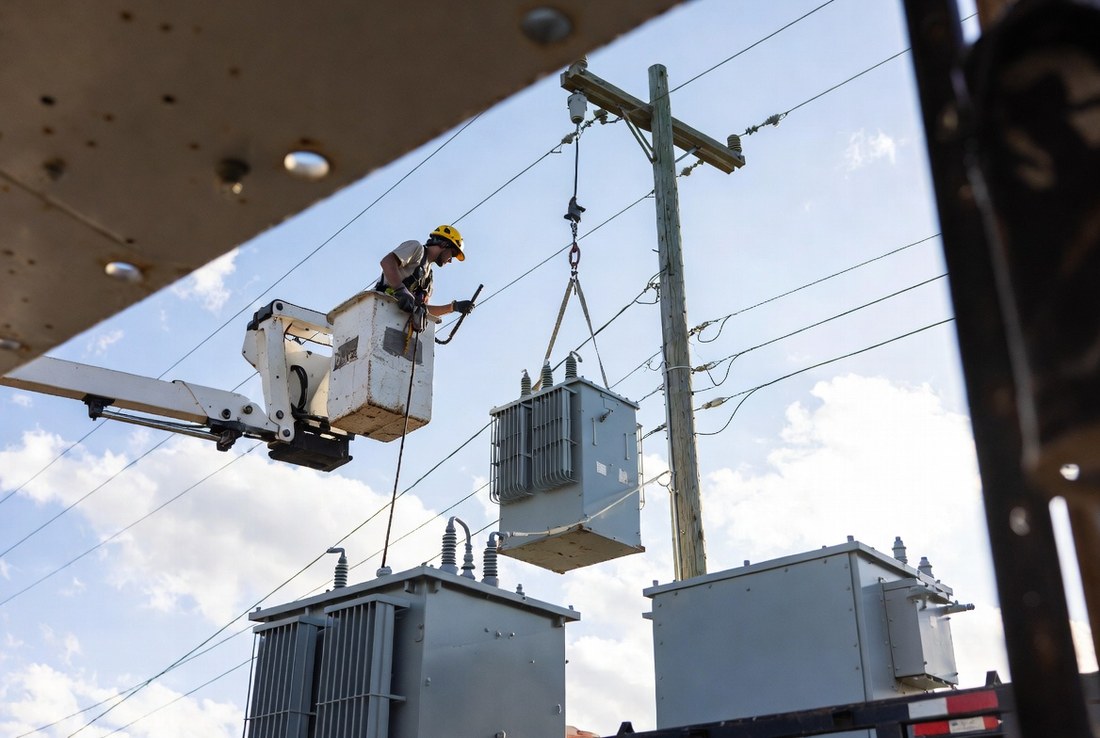
When a distribution transformer — the equipment on the pole at the end of your street — fails under normal conditions, utilities typically replace it from warehouse inventory within hours. When a major storm damages hundreds of transformers simultaneously across a service territory, utilities must draw from regional mutual aid stockpiles, compete with other affected utilities for available inventory, and sometimes wait for additional units to be manufactured.
One pole-top transformer, swinging on a strap. These used to be a few weeks out and are now routinely many months, sometimes past a year — which is how a storm that takes down a hundred of them turns a days-long outage into a seasons-long one for whoever is at the back of the queue.
Large power transformers present a more severe version of the same problem. These units cannot be carried in a utility truck. They require specialized heavy transport. They may need to be ordered from overseas manufacturers with existing order backlogs. A neighborhood whose power depends on a large transformer that was destroyed — not merely damaged — may wait not days but weeks or months.
FEMA’s Hurricane Ian after-action report documented that transformer availability was a significant factor in extended restoration timelines in the hardest-hit areas. This is not unique to Ian. After Katrina in 2005, after Ike in 2008, after Sandy in 2012, transformer shortages consistently contributed to extended restoration for the customers who waited longest.
Mutual Aid Crews: Why the People Fixing Your Power May Be From Minnesota
No single utility maintains enough crews and equipment to restore power quickly after a major regional event. The mutual aid system allows utilities to call for help from utilities in other states — crew members who travel hundreds of miles, sometimes crossing state lines, to assist with restoration. After major hurricanes, mutual aid convoys from Texas, Tennessee, Ohio, and even New England states have driven to Florida to assist with restoration.
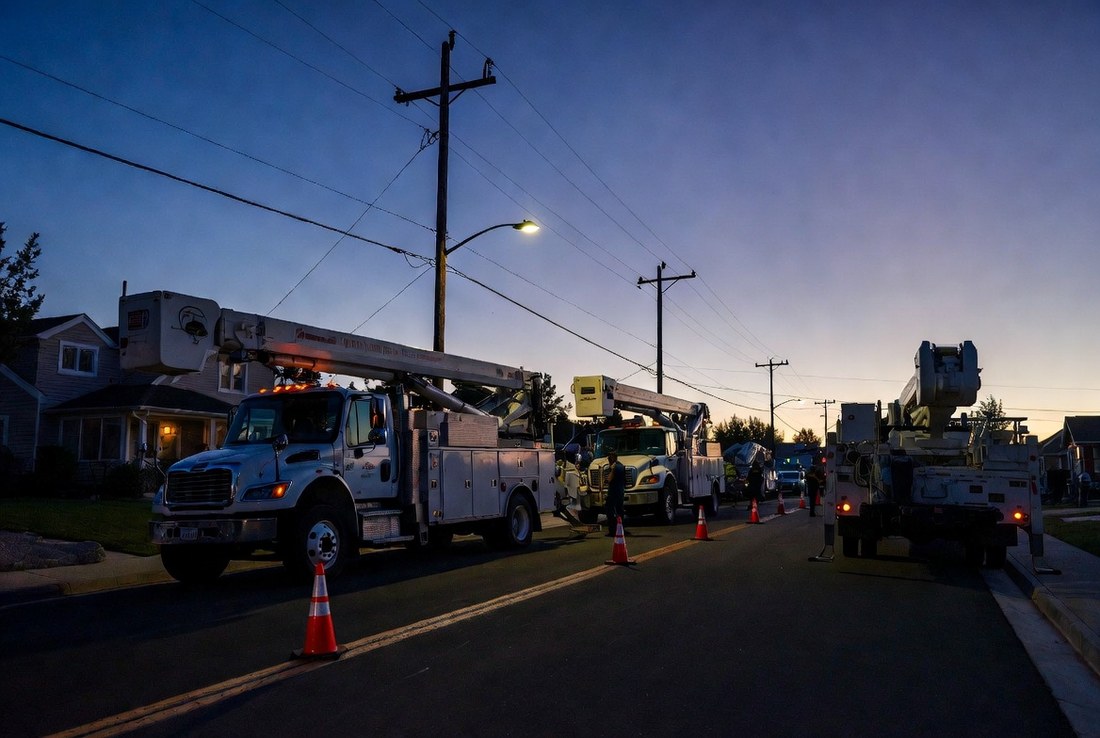
Three trucks nose to tail on a residential street at dusk, and not one of them local. Mutual aid crews drive in from other states and work the list they are handed — which is why the street restored first is rarely the one that complained loudest.
Mutual aid is essential to eventual recovery. But it takes time. Crews must be mobilized, travel to the affected area, be staged and briefed on local grid configurations, and assigned to specific work areas. The delay between an event and the arrival of out-of-state mutual aid crews is typically 24 to 96 hours — time during which local crews work alone on the most critical repairs and most customers simply wait.
For Eleanor, the 72-hour estimate represented a world where only local damage existed and local crews could restore quickly. The 18-day reality represented a world where regional damage required hundreds of out-of-state crews working in unfamiliar territory on damaged infrastructure that had to be rebuilt, not repaired.
The 50–70 Math: Plan for How Long Outages Actually Last, Not How Long They Are Estimated to Last
The single most dangerous thing Eleanor did was plan for 72 hours based on a utility estimate that was accurate for most customers but not for her specific location and damage level. Her 72-hour preparation — ice blocks, charged phone, battery lighting — was reasonable for a minor outage. It was catastrophically insufficient for an 18-day event.
FEMA’s current guidance for seniors in hurricane zones is a minimum of 14 days of preparation. Not 72 hours. After major hurricane events — Katrina, Maria, Ian — 14 days was still insufficient for the customers who waited longest. The right planning duration is not the utility’s estimate. It is the worst-case historical outcome for your region’s last major event.
A whole-home propane standby generator with a 500-gallon buried tank provides approximately 7 to 10 days of continuous operation at typical residential loads. With propane delivery during extended events — which suppliers maintain as essential service capability — a generator can sustain a home for weeks or months. This is the only solution that addresses Eleanor’s scenario: an event whose duration was unknowable in advance and exceeded every reasonable estimate.
At 55, you can install this system, establish a propane supplier relationship, and set up automatic delivery. At 74, like Eleanor, with ice blocks melting in a cooler on day three of an 18-day event, those decisions cannot be made retroactively.
Plan for How Long Outages Last. Not How Long Utilities Estimate.
After Hurricane Ian: 18 days for some. After Katrina: 3 weeks for many. After Maria: 11 months for some. The utility estimate at the beginning of an event is based on the best available information and is almost always wrong for the hardest-hit customers. A generator with adequate fuel supply sustains you regardless of how wrong the estimate turns out to be. Use our calculator to find the right size and start planning before the next event makes the question urgent.
How can I find out the restoration timeline for my specific address during an outage?
Most utilities maintain a real-time outage map accessible through their website and mobile app that shows estimated restoration times by geographic area. These estimates are updated as crews assess damage and complete repairs. They are more accurate for urban and suburban areas early in the event and become less reliable for rural and hard-hit areas as the scope of damage is better understood. Sign up for utility text and email alerts to receive restoration time updates automatically.
How long should a senior plan to sustain themselves during a major power outage?
The commonest planning mistake on this page, in a sentence: she prepared for the utility’s estimate rather than her region’s historical worst — seventy-two hours, because seventy-two hours is what she was told, in a place where the record ran a good deal longer.FEMA’s current guidance is 14 days for seniors in hurricane zones. For seniors with medical equipment dependencies, insulin, or other time-critical needs, 14 days should be considered a minimum. After reviewing the historical record of major outage events in your region — available through FEMA after-action reports and state emergency management agencies — you can determine the appropriate planning duration for your specific location and risk profile.
What is the most common mistake seniors make when preparing for power outages?
Planning for the utility’s estimated restoration time rather than the actual historical maximum for their region. Eleanor planned for 72 hours because that is what the utility estimated. The historical maximum for her area after a direct hurricane hit was three weeks. Preparation that does not account for the worst historically documented outcome in your region is not adequate preparation — it is optimistic assumption.
Can propane generators be refueled during an extended power outage?
Yes. Propane delivery is classified as an essential service in most states and propane suppliers maintain emergency delivery capabilities during and after major disasters. A buried 500-gallon propane tank connected to a whole-home generator can typically be refilled by a propane delivery truck even during extended grid outages. Establish a relationship with a local propane supplier before an event and confirm their emergency delivery capabilities and scheduling.
Why do utilities restore power to some areas faster than others?
Utilities follow a restoration priority sequence after major outages: transmission infrastructure first, then substations, then high-density commercial and residential areas, then lower-density residential. Hospitals, emergency services, and critical facilities receive priority restoration. A senior living alone in a single-family home in a low-density area may wait days after urban and commercial areas have been restored, because restoring fewer customers per crew-hour makes them lower priority in the utility's logistics.
Why do large power transformers take so long to replace?
Large power transformers are custom-built to specific specifications, weigh up to 800,000 pounds, and are manufactured by a small number of companies worldwide, most of them overseas. The US has essentially no domestic manufacturing capacity for these units. Ordering a replacement requires engineering a custom unit, placing the order with an overseas manufacturer with existing commitments, waiting for production, shipping the unit (which requires specialized heavy transport), and installing it. The total process takes 12 to 18 months.
What does FEMA recommend for senior outage preparedness duration?
FEMA recommends that all households — and especially those with medical equipment dependencies — prepare for a minimum of 72 hours without outside assistance for typical disasters, and specifically recommends 14 days for seniors in hurricane zones. After major hurricanes like Katrina, Maria, and Ian, actual restoration times in hard-hit areas consistently exceeded 14 days, with some areas waiting weeks or months. FEMA's 14-day guidance should be considered a minimum, not a ceiling.
Founder, Franklyns Bay LLC — Florida resident since 1984 — 25+ years SEO & web publishing — Nature Coast homeowner & 40+ hurricane seasons lived through. Full bio →
Now you know why it happens.
Be the house on the street that barely notices. Start with the generator calculator — it takes two minutes.
General Information Disclaimer: Content on this site is provided for general educational and informational purposes only and does not constitute medical, legal, or financial advice. Statistics cited are drawn from public domain government sources including FEMA, NOAA, CDC, EIA, NERC, DOE, and FERC. Composite narratives represent documented conditions across many real events; no specific living individuals are identified. In any emergency, follow guidance from local authorities and FEMA Ready.gov. Amazon links are affiliate links. Some content on this Site is produced with the assistance of AI tools and is reviewed by a person before publication; see our Editorial Standards and Corrections policy. Full disclaimer →