🛏️ The Bed That Is Not an Admission
First, what this page is. A plain explanation of the difference between hospital inpatient status and outpatient observation, why it decides who pays for rehab afterwards, and what to ask. It is not medical, legal or insurance advice, it was not written by a doctor, a lawyer or a Medicare adviser, and nothing here tells you what your own claim will do. Every figure is the published 2026 figure and they change annually. Check anything here with 1-800-MEDICARE, your State Health Insurance Assistance Program, or the hospital’s own case manager.
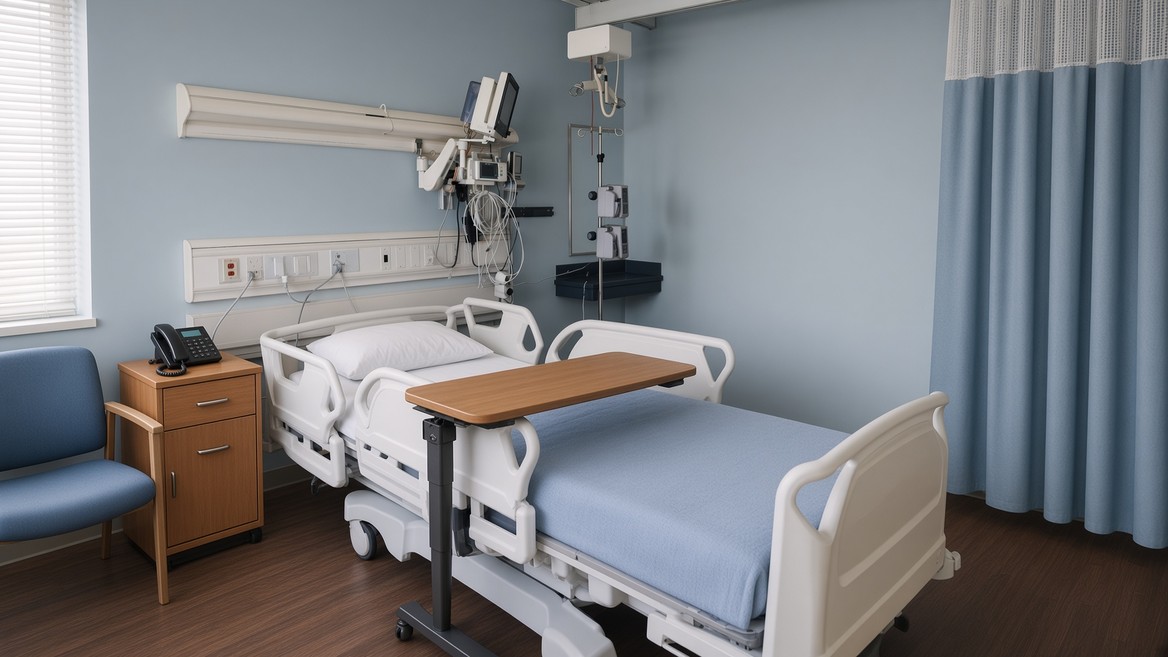
A man goes into hospital on a Friday with chest pain. He is put in a bed on the fourth floor. He is given a gown, a wristband, meals, a drip and a monitor. Nurses come and go. On Monday he is well enough to leave, but not steady enough to go home, so he is discharged to a nursing home for two weeks of rehabilitation.
Three weeks later the family gets a bill for the whole of it.
Nothing went wrong medically. What happened is that he was never admitted. He was an outpatient the entire time, receiving what the hospital calls observation services — and observation is billed under Medicare Part B, not Part A.

This is the part people find hard to believe, so it is worth being blunt about it. The two look identical from the bed. Same floor, same nurses, same wristband, same equipment. The difference is a billing decision made by the doctor and the hospital, and unless somebody tells you or you ask, it is invisible.
What drives the decision is the two-midnight rule, which the Centers for Medicare & Medicaid Services introduced in 2013. If the physician expects that the patient will need medically necessary hospital care spanning at least two midnights, an inpatient admission is generally appropriate. If the expectation is shorter, the stay is usually billed as outpatient observation. What matters is the expectation at the moment the call is made — not how long the patient actually ends up staying.
And here is the sentence that does the most damage. A patient can be in that bed for four nights and still have zero countable inpatient days. Time in the emergency room does not count. Time under observation does not count. Counting nights tells you nothing. What counts is inpatient days, beginning with the day a doctor wrote an admission order.
💰 What It Actually Costs
Original Medicare will generally only cover a stay in a skilled nursing facility if it follows a qualifying inpatient hospital stay of at least three consecutive days — counted from the day the admission order was written, and not counting the day of discharge.
Miss it and Medicare pays nothing toward the nursing facility. Not a reduced share. Nothing.
Look at that third figure for a moment, because it is the one that surprises people who think they are covered. Even when everything goes right — three inpatient days, Medicare paying — the patient still owes $217 a day from day twenty-one. A ten-week stay that Medicare covers correctly still runs past twelve thousand dollars out of pocket.
Now take the coverage away entirely and the same stay is the whole daily rate, which in most of the country runs several hundred dollars a day.
There is a smaller sting in the same wound. During an observation stay you are an outpatient, so the drugs you take are treated as self-administered — and Medicare Part B does not cover them. That is where the stories about being billed a startling amount for ordinary pills come from. It is not a mistake on the bill. It is what outpatient status means.
📜 The Notice That Got Shorter in 2026
Congress noticed this problem. The NOTICE Act of 2015 requires that a hospital tell you when you are an outpatient under observation, and since March 2017 that has meant a specific document: the Medicare Outpatient Observation Notice, known as the MOON.
It must be given when observation passes 24 hours and no later than 36 hours, in writing and with a spoken explanation, and somebody signs to say they received it.

Which sounds like the problem is solved, and it is not, for two reasons.
The first is that the MOON arrives in the middle of a hospital stay, handed to a frightened person or an exhausted relative, in a stack of other paper. It is signed the way everything in a hospital is signed.
The second is more recent and worth knowing. CMS redesigned the MOON in 2026, and hospitals had to be using the new version by 20 April. The redesign is easier to read. But the Center for Medicare Advocacy — the organization that litigated most of the case law in this area — points out that the new notice no longer explains that Part A will not cover a skilled nursing stay unless the patient was an inpatient for three consecutive days. It says only that Medicare may not pay if you go to a nursing facility. It also dropped the point about medications, and says nothing about how any of this works under a Medicare Advantage plan.
So the official warning about the most expensive trap in senior healthcare got shorter and vaguer this year. Which means the burden of understanding it moved further onto the patient — and the patient is, by definition, the person in the bed.
❓ The Question to Ask, and When to Ask It
Everything above is why. This is the part that actually changes an outcome, and it takes about eleven seconds.
Ask this, out loud, on the first day
Eleven seconds“Has he been admitted as an inpatient, or is he an outpatient under observation?”
Then, whatever the answer: “If he needs rehab afterwards, will Medicare cover it?”
Ask the doctor. If the doctor is not there, ask the case manager or the discharge planner — they know these rules cold, it is their job, and they are usually glad somebody asked early rather than late.
Write down the answer, with the date and the time, and who said it. Do the same every day the stay continues, because status can change during a stay, and it sometimes changes after discharge.
The reason to ask on day one rather than day three is that on day one it is still a live clinical question. A physician who is told the family is worried about rehab coverage may look again at whether an inpatient admission is warranted. On the day of discharge, nobody can go back and change what the record says.
And ask this one too, because the three-day rule is not as absolute as everybody assumes. Some doctors practice within an Accountable Care Organization that holds a Skilled Nursing Facility 3-Day Rule Waiver, which lets a patient go straight to rehab without it. Many Medicare Advantage plans waive the rule as well. And CMS is running a demonstration from January 2026 through 2030 that waives it for patients having one of five surgical procedures. Medicare’s own guidance is simply to always ask your doctor or the hospital staff whether Medicare will cover the nursing facility stay. Nobody volunteers a waiver you did not ask about.
⚖️ The Appeal That Did Not Exist Until Last Year
For thirty years there was no way to challenge this. A hospital changed your status, Part A coverage vanished, and there was no door to knock on. Patients sued over it in 2011, and the case took fourteen years to arrive.
It arrived. In Alexander v. Azar, a federal court in Connecticut ruled for a nationwide class of Medicare patients, and the Second Circuit affirmed. CMS issued the final rule in October 2024 and there are now two appeal routes that did not exist before.

The two routes
Original Medicare- The expedited appeal, available since 14 February 2025. Filed before the patient leaves the hospital, while the status can still matter.
- The standard appeal, available since 1 January 2025. Filed afterwards, against the denial of Part A coverage for the hospital stay and for certain nursing facility services that followed it.
And the part that is worth reading twice: eligible patients can appeal hospital stays going back to 1 January 2009. A bill paid in 2014 is not necessarily closed. Late requests need good cause, but the door is open, and Medicare says so on its own website.
One limit, stated plainly, because getting this wrong wastes somebody’s hope. The appeal right covers patients who were initially admitted as an inpatient and then reclassified to outpatient observation. It does not cover somebody who was placed in observation from the start and stayed there — the court specifically declined to create appeal rights for that. So the question that decides whether you have an appeal is not “was he in observation?” It is “was he admitted first, and then changed?”
If that is what happened, the route is on Medicare’s own site under hospital appeals for change of inpatient status. Two free sources of help exist and neither sells anything: your State Health Insurance Assistance Program, which is staffed by trained counselors in every state, and 1-800-MEDICARE. Ask the treating physician for a letter saying why inpatient care was medically necessary and why the stay was expected to span two midnights. That letter is the strongest single document in the file.
📈 The Other Thing They Will Tell You: “She Has Plateaued”
Once rehabilitation is under way, a second sentence arrives in a great many families, and it is wrong more often than not.
Medicare is going to stop paying, because she is not improving any more.
There is no such rule. There never was.
In Jimmo v. Sebelius, settled in January 2013, CMS agreed to revise the Medicare Benefit Policy Manual to state it explicitly: no “Improvement Standard” is to be applied in determining Medicare coverage for maintenance claims where skilled care is required. Coverage turns on whether skilled care is needed — not on whether the patient has the potential to get better. Skilled nursing and therapy to maintain a condition, or to slow its decline, are covered. It applies to nursing facilities, home health and outpatient therapy alike.
Thirteen years on, it is still misapplied constantly, usually by people who are repeating what they were told rather than reading the manual. A lack of restoration potential is not a lawful reason to end coverage, and the words to say back are plain enough: this is a maintenance claim, and under Jimmo the improvement standard does not apply.
It also means that when a facility issues a notice that coverage is ending, that notice comes with appeal rights and a deadline printed on it. Read it the day it arrives rather than the day it expires.
💳 If It Is a Medicare Advantage Plan
Most of the above describes Original Medicare. If the coverage is a Medicare Advantage plan, the shape is similar but the doors are different, and it is worth knowing which building you are in before you start knocking.
Appeals go through the plan rather than through Medicare, and if rehab is needed now, ask for an expedited appeal rather than a standard one — the timelines are entirely different. Many Advantage plans waive the three-day inpatient requirement, which is a genuine advantage and one worth confirming in writing rather than assuming. And a 2026 rule bars Advantage plans from retroactively reversing an inpatient admission they had already approved, except in cases of fraud or clear error.
What does not change between the two is the first move. Ask on day one whether the patient has been admitted, and ask whether rehab afterwards will be covered.
And if a nursing home stay is where this is heading, read the next page before you get there. The admission agreement is handed over in a corridor at the end of the worst day of the month, and somewhere in it is a clause asking a family member to become personally liable for the bill — which federal law forbids the facility from even requesting. The Papers You Sign in the Hallway →
⚡ Why This One Is on the Fifty List
Everything on this website is something better learned early than late. This one is the sharpest example of it, because there is a specific hour when the knowledge is worth money and it is an hour when nobody can learn anything.
The moment you need this page is the moment somebody you love is in a bed with a monitor on and you are standing in a corridor trying to remember whether you turned the stove off. Nobody reads about Medicare billing categories that afternoon. Nobody is capable of it.
So the whole value of it sits in reading it now, when nothing is happening, and carrying away one sentence: ask whether he has been admitted or is under observation, ask on the first day, and write down who told you and when.
That is the entire trick. Eleven seconds, on the right day, to a person who is standing right there. And it is worth more than most of the insurance decisions people agonize over for weeks.
❓ Plain Answers
The short version of this page, one question at a time — the answer is always the first line.
Does Medicare pay for rehab after observation status?
Original Medicare will generally only cover a skilled nursing facility stay after a qualifying inpatient hospital stay of at least three consecutive days, and observation days do not count. Miss it and Medicare pays nothing toward the nursing facility.
What is the difference between inpatient and observation status?
An inpatient has been formally admitted by a doctor's order, while a patient under observation is an outpatient billed under Medicare Part B, even in the same bed. The two look identical from the bed.
What should I ask the hospital on the first day?
Ask, out loud, on the first day: has he been admitted as an inpatient, or is he an outpatient under observation? Then ask whether Medicare will cover rehab afterwards, and write down who answered and when.
What is the two-midnight rule?
The two-midnight rule says an inpatient admission is generally appropriate if the doctor expects medically necessary hospital care spanning at least two midnights. If the expectation is shorter, the stay is usually billed as outpatient observation.
Can I appeal being changed from inpatient to observation?
Patients first admitted as an inpatient and then reclassified to outpatient observation can now appeal, under rules that followed Alexander v. Azar. Eligible patients can appeal stays back to 1 January 2009, but the right does not cover someone placed in observation from the start.
Can Medicare stop paying for rehab because my mother has plateaued?
No, there is no rule that Medicare stops paying because a patient is no longer improving. Under Jimmo v. Sebelius, coverage turns on whether skilled care is needed, not on whether the patient can get better.