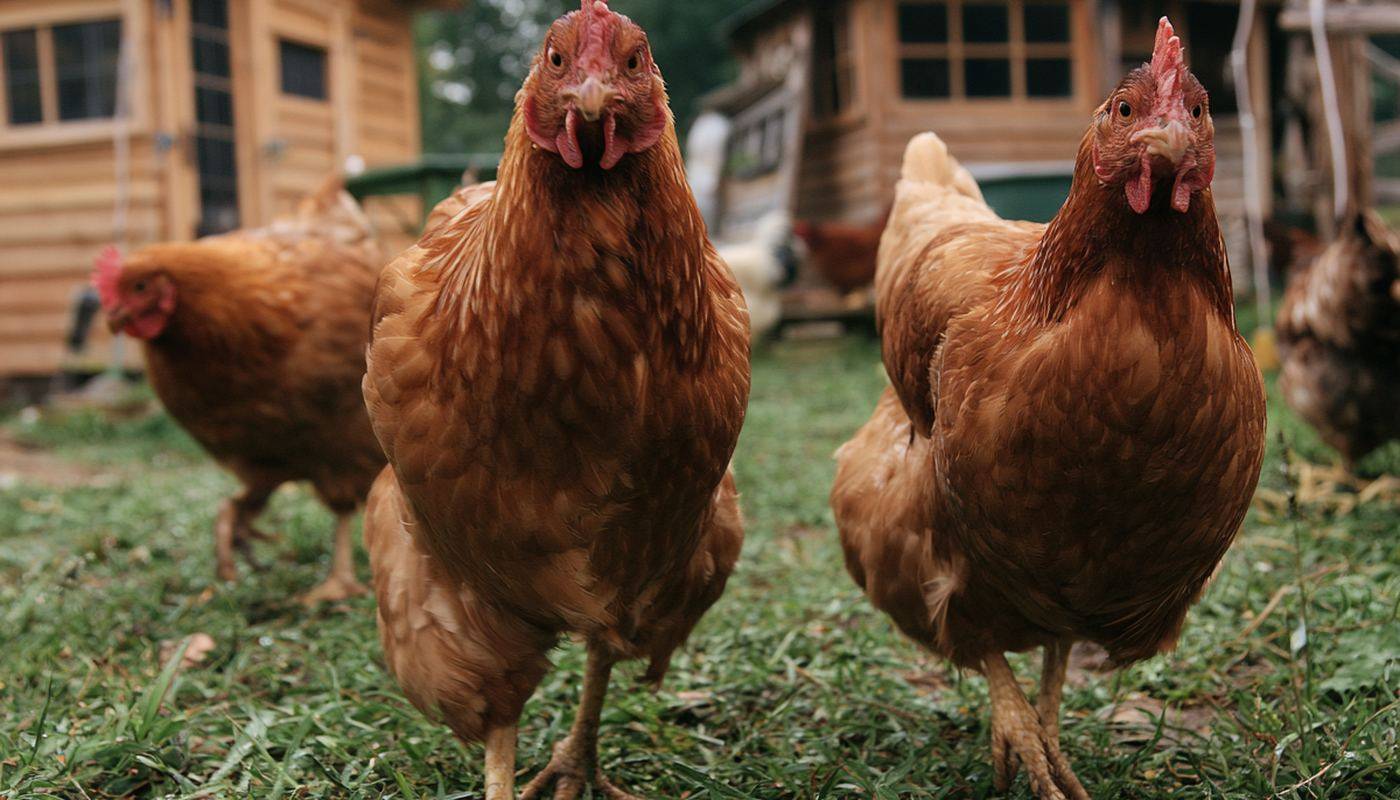

💬 Here’s Why People Do This
The accounts on this page are composites drawn from common experiences of backyard keepers — the names are not those of real individuals. The costs, egg counts, and feed figures are real and are sourced below.
“I have three grandchildren under the age of ten. Their parents are working people doing their best but eggs are expensive and children eat a lot of them. I have five hens. Five hens produce more eggs than my husband and I can use in a week — usually thirty to thirty-five. I keep a dozen, give my neighbor a dozen, and send a dozen home with my grandchildren’s parents every Sunday when they pick them up.
That is a dozen eggs every week that family does not have to buy. At four dollars a dozen that is over two hundred dollars a year. From five hens that cost me nine dollars a month to feed. My daughter-in-law told me once that she budgets for eggs every week and when I give them a dozen she moves that money to something else. I thought about what that means for a young family stretched thin. I got two more hens the following spring.”
— Ruth, 65, central Ohio
“I spent thirty-one years as a school cafeteria manager. I know what food costs. When I retired I watched my food bill the way I used to watch the school budget. Eggs went to four dollars a dozen and I thought, that cannot be right. I built a coop over a long weekend with my son-in-law. Four hens. The feed runs me about nine dollars a month.
They give me twenty to twenty-four eggs a week. I have not bought a carton of eggs in fourteen months. My son-in-law has started building his own coop. I told him I would have done this in my forties if I had known it was this simple. He said, ‘Why didn’t anyone tell us?’ I did not have a good answer for that.”
— Eileen, 67, rural Georgia
The Real Numbers on Backyard Hens
Backyard chicken keeping has moved from rural hobby to mainstream household practice. According to the American Pet Products Association, roughly 11 million U.S. households now keep backyard chickens, making them the third most common pet in the country — nearly double the 5.8 million households that kept them in 2018. A separate widely-cited estimate puts the total backyard flock at more than 85 million chickens nationwide, spread across an estimated 13% of U.S. households.
The legal picture has shifted just as fast. A review of the 150 most populated U.S. cities found that 93% allow backyard poultry in some form — almost always hens, almost never roosters. Typical city ordinances cap flocks somewhere between 4 and 12 hens depending on lot size, often require a simple registration rather than a costly permit, and set a coop setback of 10–25 feet from a neighbor's dwelling. Rules vary block by block in some cases, so this page is a starting point, not a substitute for checking with your own city or county.
Egg prices have been a major driver of this growth — the average U.S. price for a dozen Grade A eggs jumped 65% in a single year amid avian flu disruptions to commercial supply, pushing more households toward producing their own. Even outside of price spikes, a small hens-only flock remains one of the lowest-cost, lowest-effort ways to put fresh protein on the table every single day.
🐓 It Was Not Homesteading. It Was Normal.
Everything written about backyard chickens today frames it as a movement — going back to the land, reclaiming something, a lifestyle. I want to put a different picture in front of you, because I grew up inside it.
My earliest memories are of a house in the San Fernando Valley, in Los Angeles. Eleven hundred square feet. Two bedrooms, one bath. A front porch big enough for three or four people to sit out on of an evening, and a back patio my grandfather laid himself out of red brick, two one way and two the other, because he could not afford to have concrete poured.
In that back yard there were five or six chickens and three or four ducks. There were two peach trees and two apricot trees and a small vegetable garden. My grandfather had dug a little duck pond by hand and lined the edges with concrete like a bowl, and he topped it up every so often to keep the ducks happy. The birds had the run of the yard most of the day and he shut them away in the evening.
Nobody thought any of that was remarkable. It was a working man’s back yard in a city of two million people.
And the history backs it up. Before it was suburbia, the San Fernando Valley was farmland — poultry and dairy farms concentrated around Reseda, Mission Acres, North Hollywood and Van Nuys, and orchards of apricots, peaches and walnuts across the flats. Valley agriculture peaked around 1930 and faded from about 1940 as the population swelled and the groves went under tract housing. By the 1950s the Valley was the postwar suburb everyone pictures — but the coops and the fruit trees behind those little houses were the residue of what that exact ground had been ten years earlier. Source: PBS SoCal, Lost LA.
So when somebody tells you that keeping a few hens is a return to something, understand what is actually being returned to. Not a farm. A back yard, behind an ordinary house, belonging to people who had one income and no money to waste. That is the whole tradition, and it is a good deal more within reach than the magazines make it sound.
The Lesson I Learned at Four Years Old
Here is the part the cheerful guides leave out, and I would rather you heard it from someone it happened to.
I was four, maybe five. My grandfather had brought home new chicks — the previous hens having gone into a frying pan, which I did not understand at the time and which the adults were careful to keep me from seeing.
I knew ducklings could swim. So I put four of the chicks in the duck pond.
They drowned. All four. I was as upset as a small boy can be, and I have remembered it for close to seventy years.
Chicks are not ducklings. They have no waterproofing and they chill fast and they cannot get themselves out. But that is not really the lesson. The lesson is that living things in your care will die of something you did not know yet — and the only way to know less of it is to learn from somebody who has already lost some.
So take this as your warning, given in advance. Something will get into the run. Something will get sick and you will not catch it in time. Something will die of weather, or of a mistake, or of nothing you can name. That is not a reason to skip it — the eggs and the company and the sheer ordinary pleasure are worth it. It is a reason to go in with your eyes open, and to keep the ducks and the chicks apart.
Hens, Not Roosters — Why That Distinction Matters
 Almost every city, county, and HOA that allows backyard chickens allows hens only. Roosters are banned in the overwhelming majority of residential ordinances nationwide, and the reason is simple and consistent everywhere: noise. A rooster crows loudly, repeatedly, and unpredictably — including well before sunrise — and that single behavior generates more neighbor complaints than every other aspect of backyard poultry keeping combined. Hens, by contrast, make a brief, soft cackle after laying an egg and are otherwise quiet enough that many keepers report neighbors don't realize chickens are next door at all.
This works heavily in your favor: you do not need a rooster to get eggs. Hens lay eggs on their own laying cycle regardless of whether a rooster is present — a rooster is only required if you want the eggs to be fertilized and hatch into chicks. For a senior keeping a small flock purely for eggs and a quiet hobby, a hens-only flock is not a compromise; it is the correct setup, and it is also the one nearly every local ordinance already requires.
✅ Before you buy a single chick or hen: Call your city or county zoning/animal control office, or check their website, for three things — the maximum number of hens allowed on your lot size, the required coop setback distance from neighboring homes, and whether a permit or simple registration is needed. If you're in an HOA, check the covenants separately; many HOAs restrict poultry even where the city allows it. For a closer look at how rules differ by region, with real city examples, see the dedicated Backyard Chicken Laws by State guide →
🎓 Your local Cooperative Extension office is a free, research-based resource — use it. Every state has a university-run Cooperative Extension service with free publications, and often free in-person classes, specifically on backyard poultry. The national Cooperative Extension poultry portal links out to your state's equivalent guides no matter where you live. Florida readers can go straight to UF/IFAS Extension's "Raising Backyard Chickens for Eggs" guide, and several Florida counties also run hands-on classes that satisfy local backyard-hen permit requirements — but the same kind of free resource exists through your own state's land-grant university, wherever you are. A phone call to your county Extension office, the same one that helps with the vegetable garden, is worth making before you build anything.
Most hatcheries and farm stores also sell only female chicks for laying breeds, or guarantee a refund/exchange if a chick turns out to be a rooster (sexing chicks is not 100% accurate). Buying started pullets — young hens already a few months old and confirmed female — removes this uncertainty entirely and is often the simplest path for a first-time keeper.
Choosing a Breed — Match It to Your Climate, Not Just the Picture
One thing worth knowing before you start reading breed charts. The hens in my grandfather’s yard were Rhode Island Reds, and they gave us roughly an egg a day each, with some variation. I collected them with my mother because the gate latch was too high for me to work on my own. I did not know there was more than one kind of chicken until I was a good deal older — and honestly, a small flock of a hardy, common, dual-purpose breed is still the right answer for most people. The charts below matter. They matter less than starting.
This site reaches readers everywhere from Minnesota winters to Arizona summers to humid Gulf Coast heat, and breed selection is the one place where “what’s popular” and “what’s right for your climate” can genuinely diverge. Chickens as a species tolerate cold far better than heat, so a breed mismatch in a cold climate is more forgiving than the same mistake in extreme summer heat. A few minutes matching breed to region saves real trouble either way.
If You're in a Cold Climate
Look for breeds with small combs (single, pea, or walnut combs resist frostbite better than the large floppy combs on heat-bred breeds), heavy feathering, and larger body size, which retains heat more efficiently. Buff Orpington, Black Australorp, Plymouth Rock, Wyandotte, and Brahma are all well-suited to northern winters, cold-hardy, and reliable layers. Brahmas in particular are known to lay through the winter when many other breeds slow down.
If You're in a Hot, Humid Climate
Look for the opposite traits: large combs and wattles (these act as a cooling radiator), lighter, less dense feathering, and a smaller, lighter body. Leghorn, Rhode Island Red, Minorca, and Easter Egger all handle heat well. Leghorns in particular are bred for hot, dry conditions and remain prolific layers even in summer heat — though they tend to be flightier and less cuddly than dual-purpose breeds like Orpingtons.
If You Want One Breed That Does Reasonably Well Everywhere
Rhode Island Red is the most commonly recommended all-climate breed for a reason: cold-hardy, heat-tolerant, a strong layer (up to 250–300 eggs a year), docile, and widely available almost everywhere in the country. For a retired couple wanting one low-drama breed rather than a mixed flock, it's a reasonable default if you're unsure which category your climate falls into.
✅ A simple rule of thumb: Big comb and wattles, lighter body, lighter feathering — built for heat. Small comb, heavy body, dense feathering — built for cold. If a breed's described as a "dual-purpose, all-climate" bird like the Rhode Island Red or Plymouth Rock, it'll do acceptably almost anywhere, just not optimally in either extreme.
Chickens, Ducks, Quail & Small Poultry — Which Bird Fits Your Backyard?
Chickens are the default choice, and for most people they are the right one. But they are not the only bird that earns its keep in a backyard, and depending on your yard, your neighbors, and what you actually want out of the birds, one of the others may suit you better. Here is an honest look at the four most common options, followed by a side-by-side comparison.
🐔 Chickens — The All-Rounder
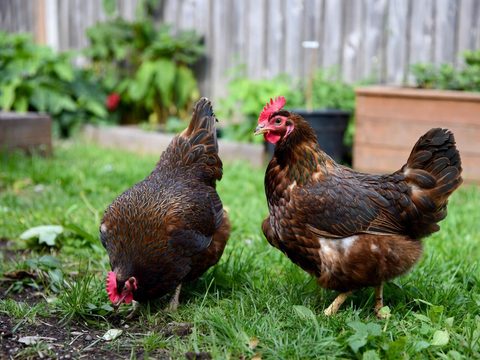 A good laying hen gives you 250–300 large, familiar eggs a year, and everything about keeping chickens is well-documented, widely supported, and easy to buy locally. Hens are quiet enough for most neighborhoods — it is the rooster, which you do not need for eggs and which most towns ban anyway, that makes the noise. They forage for bugs and kitchen scraps, and their manure is garden gold once composted.
The honest downside: chickens scratch, and they scratch hard — a small flock can strip a vegetable bed to bare dirt in an afternoon if you let them in. They tolerate cold better than heat, so in hot country they need real shade and constant water. And of all these birds, they are the ones predators want most. For most people, none of that outweighs how easy and productive they are — but it is worth knowing going in.
🦆 Ducks — The Hardy, Heat-Loving Layer
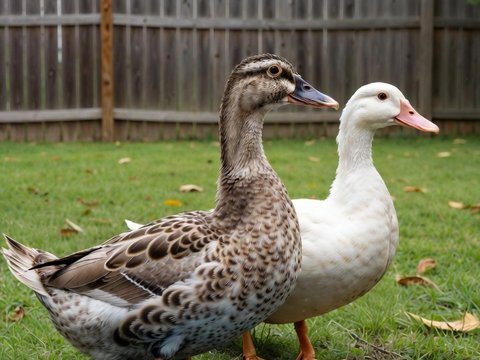 Ducks are the backyard bird most people overlook, and in a hot, wet climate they often out-perform chickens. The heavy-laying breeds — Khaki Campbell and Indian Runner especially — lay 200–300 eggs a year, and duck eggs are larger, richer, and prized by anyone who bakes. Ducks shrug off heat, humidity, rain, and cold far better than chickens, rarely get the same illnesses, and are ferocious slug, snail, and mosquito-larvae eaters — and they do it without shredding your garden the way a chicken does, since they dabble rather than scratch.
The honest downside: water and mess. Ducks do not need a pond, but they must be able to dip their whole head to stay healthy, so a cheap kiddie pool is mandatory — and they will turn the area around it to mud. The females also quack, loudly, which can be a real neighbor problem where hens would go unnoticed. They are heavier to handle, too. Duck feed on Amazon → · Duck pools on Amazon →
🐣 Quail — The Tiny, Quiet Option
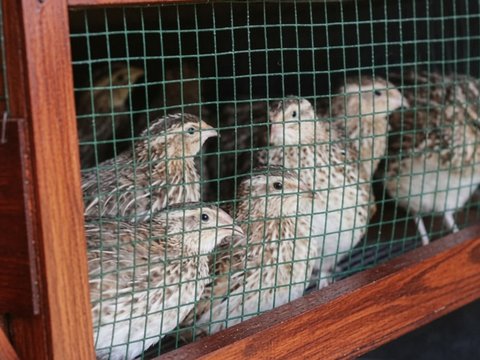 Coturnix quail are the answer for anyone short on space or hemmed in by an HOA. They live comfortably in a rabbit-hutch-sized cage — roughly one square foot per bird — start laying at just six to eight weeks (chickens take five to six months), and give 200–300 eggs a year. The eggs are tiny; it takes three or four to equal one chicken egg, but they are considered a delicacy. Best of all, quail are nearly silent — the male’s call is a soft chirp, not a crow — so they slip under noise rules and cranky neighbors alike.
The honest downside: quail are livestock, not pets. They are flighty, do not like being handled, and are almost always kept caged rather than free-ranging, so you lose the bug-and-pest patrol the other birds provide. They also burn bright and short — most lay heavily for only a year or two. Their small bodies mean they need shelter from wind and shade in the heat. Quail hutches on Amazon →
🦚 Guinea Fowl — The Tick Patrol (and the Loudest Bird You Can Own)
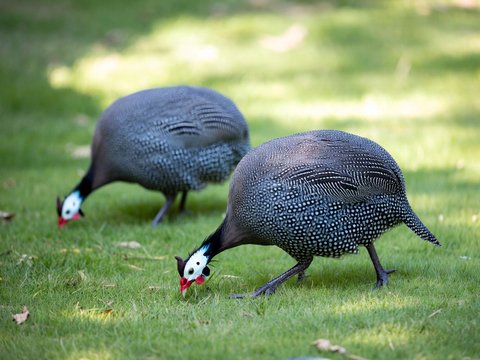
Guinea fowl are kept less for eggs than for what they do: they are relentless tick, grasshopper, and pest eaters, and they double as a living alarm system — nothing crosses the yard without the whole flock sounding off. They are tough, nearly disease-proof, and mostly feed themselves by free-ranging. They lay a seasonal batch of small, rich eggs in spring and summer, around a hundred a year.
🔈 Before anything else, understand the noise — it is the whole decision. Guinea fowl are, with no exaggeration, the loudest poultry you can keep. Their alarm call is a harsh, metallic, repeating screech that can top 90 decibels — about as loud as a running lawn mower — and they blast it at everything: a passing car, a hawk overhead, a leaf blowing across the yard, the neighbor's dog, or nothing you can see at all. They start at first light and keep at it, over and over, minute after minute, all day long. There is no training it out of them; it is simply what they do. On open acreage with distant neighbors, that racket is a genuinely useful watchdog. On an ordinary suburban lot it is a near-guaranteed source of complaints — people are regularly forced to give up their flock over it, sometimes after a visit from county code enforcement. If your neighbors are close enough to hear you shut a car door, guineas are the wrong bird. Full stop.
The rest of the honest picture: beyond the noise, guineas roam far and roost high in trees rather than staying put, so they are hard to fence in and truly belong on open land where they can range. Give them that room and tolerant (or far-off) neighbors, and nothing on this page beats them for clearing ticks and garden pests. But make no mistake — the noise is the deciding factor for almost everyone, and for most backyards it rules them out.
🐤 Bantams — Miniature Chickens for Small Yards
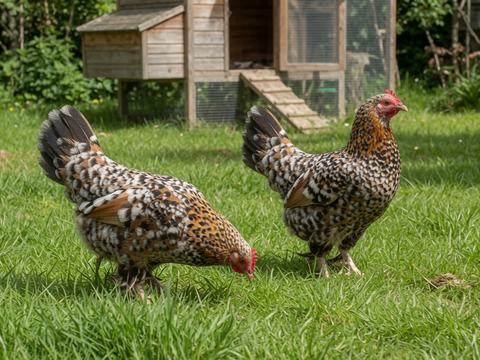 Bantams are simply miniature chickens — roughly a quarter to a third the size of a standard hen. Some breeds (Silkies, Cochins, Sebrights) are true bantams with no full-sized version, while others are shrunk-down copies of familiar breeds. For anyone with a small yard, a tight budget, or grandchildren who want to help out, they are worth a serious look: they need less space, eat far less feed, and the gentle breeds are famously calm and easy to hold — genuine pets that will sit in your lap. They also make wonderful mothers, going broody readily and happily hatching their own chicks — or a clutch of standard eggs you slip under them — with no incubator required.
The honest downside: the eggs are small, about half the size of a standard egg, and you get fewer of them — count on two bantam eggs standing in for one regular egg in a recipe. Because they are so light, many bantams can actually fly, so a low fence won't always hold them and a covered run is the safe choice.
Their small size also makes them easy pickings for hawks, cats, and other predators, so they need the same secure, predator-proof coop and run as any full-sized flock. And a bantam rooster still crows — higher-pitched than a big one, but just as early in the morning — so stick to hens unless roosters are allowed where you live.
Side by Side
| Bird | Eggs / Year | Egg Size | Space & Setup | Noise | Heat & Humidity | Best For |
|---|---|---|---|---|---|---|
| 🐔 Chickens | 250–300 | Large | Coop + run, 4–10 sq ft/bird | Low (hens) | OK with shade & water | The easy, all-around default |
| 🦆 Ducks | 200–300 | Extra-large, rich | Ground pen + a kiddie pool | Loud (females quack) | Excellent — thrive in it | Wet yards, bakers, slug control |
| 🐣 Quail | 200–300 | Tiny (3–4 = 1 egg) | One hutch/cage, ~1 sq ft/bird | Very quiet | Needs shade, out of wind | Tiny lots, HOAs, fast payoff |
| 🦚 Guinea Fowl | ~100 (seasonal) | Small, rich | Free range + a coop to roost | Extreme — constant screech | Very hardy | Acreage only — tick & pest patrol |
| 🐤 Bantams | ~150 (breed-dependent) | Small (½ of large) | Small coop + covered run | Low (hens) | OK with shade & water | Small yards, pets, kids, brooding |
✅ The short version — which one should you pick?
Chickens for almost everyone: easiest to start, easiest to get help with, and the eggs everyone already knows how to cook. Ducks if your yard is wet, your summers are brutal, you bake, or slugs are eating your garden — just be sure a little quacking won’t rile the neighbors. Quail if space is tight, you’re under an HOA, or you want eggs fast and silent. Bantams if you want the chicken experience in a smaller, gentler package — a little yard, a calm pet for the grandkids, fewer and smaller eggs in trade. Guinea fowl only if you have real acreage and neighbors far enough off that a lawn-mower-loud screech all day long won’t cause trouble — on that kind of land nothing beats them for ticks and pests, but almost everywhere else the noise alone rules them out.
Why a Small Hen Flock Fits the 50–70 Window So Well
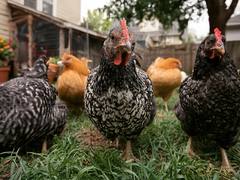 Compared to a full vegetable garden, a small backyard flock asks for far less physical labor per day — no digging, no kneeling for extended stretches, no heavy watering routine. The daily chores are short: open the coop in the morning, scatter feed, check water, collect eggs, close the coop at dusk to keep predators out. Most keepers report 10–15 minutes of hands-on time per day for a small flock of 3–6 hens, plus a heavier coop cleaning once every few weeks.
The protein math is also hard to beat. A single large egg provides about 6 grams of complete protein along with vitamin D, B12, and choline — nutrients that become more important, not less, in the 50–70 window for maintaining muscle mass and bone density. Eggs are one of the few foods that supply all nine essential amino acids in the ratios the body uses most efficiently, which is part of why dietitians classify them as a "complete protein" alongside meat, fish, and dairy — something most plant proteins can't claim on their own.
Eggs from hens that spend time outdoors foraging also tend to run higher in omega-3 fatty acids and vitamin D than typical store-bought eggs from caged hens. A small flock that reliably produces a dozen or more eggs a week puts a steady, low-cost protein source on the table without a grocery run, and without the price swings that have made store-bought eggs unpredictable in recent years.
🍖 Meat is expensive. Eggs from your own hens are the best protein investment you can make. Ground beef in 2026 runs roughly $6.74 for about 78 grams of protein — close to 9 cents per gram. A flock you feed yourself, at around 15 cents per egg, delivers that same gram of protein for closer to 2–3 cents — a fraction of the cost of any meat, and cheaper than even store-bought eggs at today's prices. Eggs are also a complete protein on their own, delicious in dozens of simple preparations, and require no cooking skill beyond a frying pan. Paired with a vegetable garden, a small hen flock rounds out the other half of the plate — produce from the beds, protein from the coop — for a fraction of what either would cost at the grocery store.
There is also a quieter case worth naming directly, the same one that applies to a raised garden bed: the coop and run are infrastructure you build once and use for years. A solid coop, properly predator-proofed, lasts well over a decade with basic maintenance. Buy it and set it up at 50, while the work of assembly and the early learning curve are easiest to manage, and you're simply maintaining a working system — not starting from scratch — by the time you're leaning on it most at 70.
The Basic Setup — Buy It Once, Use It for Years
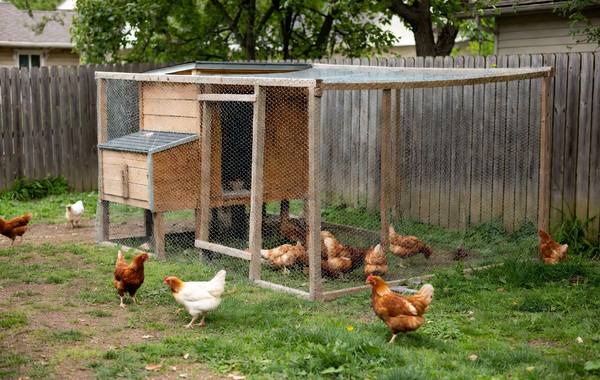
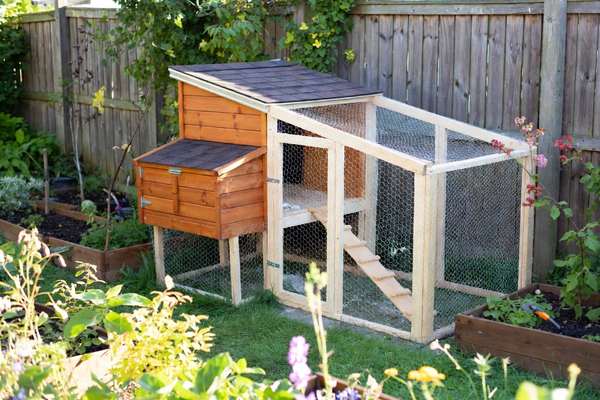
📅 Buy it now, at 50. Use it for 10–15 years, until 70 and beyond. A well-built coop and run is the single biggest cost in backyard chickens, but it is also the part that lasts the longest with almost no ongoing expense. Don't cheap out here — a flimsy coop is a predator's easiest meal, and a failure here means losing the whole flock overnight, not just a broken tool.
🥚 The real-world picture for a retired couple: Most city ordinances cap hens at 4–12 anyway, but the honest answer is that two people don't need anywhere near the maximum. 3–4 hens is plenty — that's a dozen or more eggs a week, more than enough for two people with extra to share with neighbors or family, all from a coop and run that fits comfortably in a corner of an average backyard. There's no need to build bigger or buy more than that just because the ordinance allows it.
1. Coop & Run — The One-Time Investment
Budget options on Amazon → · Top-rated on Amazon →
Coops and runs also show up secondhand on Facebook Marketplace fairly often — check there and at local garage sales before buying new, but inspect the hardware cloth and latches carefully on anything used.
2. Nesting Boxes — One Box Per 3–4 Hens
Hens share nesting boxes well, so one 12x12-inch box per 3–4 hens is plenty. Line with straw or pine shavings, and place boxes slightly darker and more enclosed than the rest of the coop — hens prefer a private spot to lay.
Budget options on Amazon → · Top-rated on Amazon →
3. Feeder & Waterer — Automate What You Can
A gravity or treadle-style feeder (chickens step on a lid to access feed) holds several days of feed at once and keeps rodents out between fillings — worth the extra cost over an open dish. A poultry nipple waterer or gravity waterer keeps water cleaner than an open bowl and needs refilling far less often. Both reduce daily chores to a quick visual check rather than a hands-on task every day.
Feeders on Amazon → · Waterers →
4. Layer Feed — The Only Ongoing Cost
A complete layer feed (16–18% protein, with added calcium for eggshell strength) is the only recurring expense once the coop is built. A 50-pound bag runs roughly $18–$20 and feeds three hens for about two months.
Layer feed on Amazon →
🔧 Don't cheap out on the coop or the latch. Brands like Omlet and Producer's Pride are well known for predator-resistant coop construction, and a galvanized steel design holds up far longer than painted plywood in humid or coastal climates. A coop is the one item on this page where a cheap version doesn't just wear out — it can fail catastrophically overnight and cost you the entire flock to a raccoon or fox. Spend the extra money here.
✅ Build the coop now. Add the chickens last. If you're still working, this is the part to knock out while you have a steady paycheck, weekends, and the energy for a building project — not after you've retired and want to start enjoying it. Get the coop built, the run fenced and predator-proofed, the feeder and waterer set up, and let it sit ready and waiting. When you're actually ready to start — whether that's next month or three years from now — the only thing left to do is buy a few started pullets and put them in. All the work is already done.
Predator-Proofing — The Real Picture, Not the Scare Stories
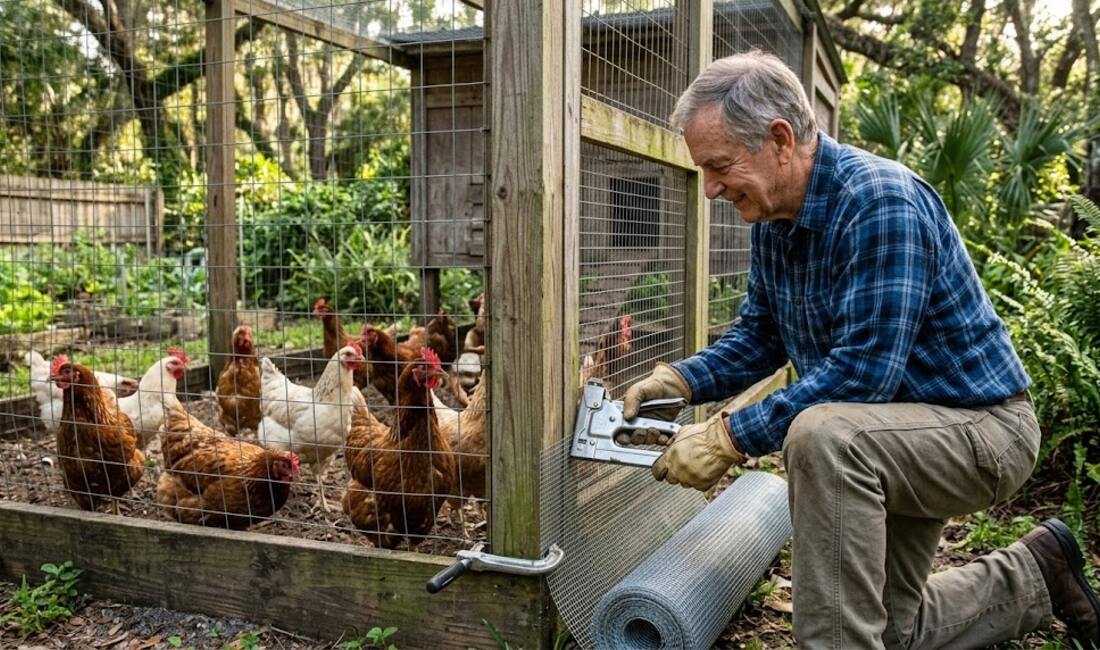
This is the one part of backyard chickens worth taking seriously, because it's the one place a cheap shortcut doesn't just mean a broken tool — it can mean losing the whole flock in a single night. The good news: predator-proofing a small coop for 3–4 hens is a one-time setup job, not an ongoing chore, and once it's done correctly it stays done for the life of the coop.
What Actually Gets In
Raccoons are the most common problem nationwide — they're strong, persistent, and have hand-like paws that can open simple hook latches and reach through standard chicken wire to grab a bird without ever fully entering the coop. Hawks and owls strike from above, usually at dawn, dusk, or during the day if the run has no roof. Foxes and dogs are diggers, going for the soft edge where the run meets the ground. Snakes and rats exploit any gap larger than a quarter inch, usually after eggs rather than the birds themselves.
The Four Fixes That Actually Stop Them
- Hardware cloth, never chicken wire. Chicken wire keeps hens in; it does not keep raccoons out. A raccoon can tear chicken wire open like paper and reach through the gaps to grab a bird. Use ½-inch hardware cloth on every wall, window, and vent, attached with screws and washers — not staples, which a raccoon can pull free.
- A buried or staked-down apron around the perimeter. Extend hardware cloth 12–18 inches outward from the base of the run, flat on the ground and pinned down with landscape staples, or bend it into an L-shape and bury it 12 inches deep. This stops foxes and dogs from simply digging under the fence line, which a determined animal can otherwise do in a single night.
- A two-step latch on every door. A simple slide bolt or hook-and-eye is a puzzle a raccoon will solve, often the first night. Use a spring-loaded latch, a carabiner clip added to a simple latch, or a keyed padlock — anything that takes two separate motions to open.
- A covered run. Hardware cloth or solid roofing over the top of the run is the only reliable defense against hawks and owls. Loose bird netting helps somewhat but climbing predators like raccoons can still get through or over it.
🌙 Close the coop at dusk, every single night. Nearly every predator on this list hunts between dusk and dawn, and chickens are nearly defenseless once they've gone to roost. A simple habit of closing and latching the coop door at sunset — or a $40–$80 automatic solar coop door that does it on a timer — closes the single biggest gap in an otherwise predator-proof setup.
Done right, these four fixes are a weekend project during the building phase, not a recurring expense or chore. A coop built this way from the start is something you check periodically — after a hard storm, once or twice a year — rather than something you have to actively defend.
The Real Cost Per Egg
The number that never shows up in a cost-per-egg calculation. Years later, on a farmstead in Maryland, I kept a garden and a flock and I traded surplus eggs with the neighbors — fresh corn, peas, string beans, whatever was coming in. It is amazing what people will trade for eggs. A dozen eggs opens a door that money somehow does not, and the value of that is real even though no spreadsheet will hold it.
I also, in that same place, raised a hundred birds strictly for meat and butchered them with my family’s help and put them in the freezer. That is a different undertaking from three hens in a suburban yard, and I would not talk anybody into it who is not ready for it. But it is worth saying plainly that both things sit on the same shelf: a few hens for eggs is the small end of something people have always done.
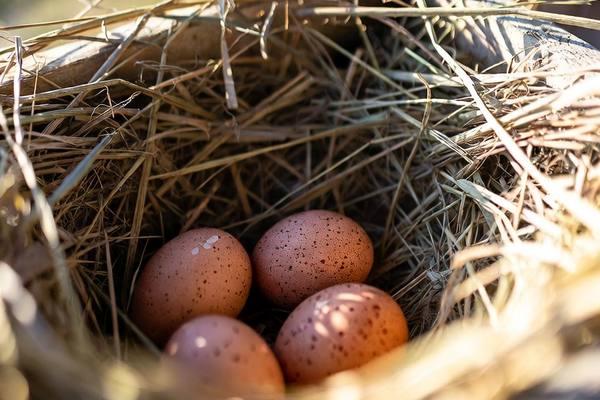
A 50-pound bag of layer feed at roughly $18–$20 feeds three hens for about two months — call it $9–$10 a month, or about $3 per hen per month. A healthy hen in peak laying age (roughly 5 months to 2–3 years old) typically lays 4 to 6 eggs per week. Three hens at that rate produce 12–18 eggs per week, or roughly 50–75 eggs per month, for that same $9–$10 in feed.
That works out to somewhere around 13–20 cents per egg in feed cost alone during peak laying months — close enough to "pennies a dozen" that the comparison holds up, even before counting that the eggs are fresher and the hens also handle a meaningful amount of garden pest control and produce nitrogen-rich manure that composts well for a vegetable bed. Production slows in winter without supplemental coop lighting and tapers as hens age past 2–3 years, but a small flock with staggered ages keeps a steady supply coming for most of the year.
Severe Weather & Power Outage Prep for the Coop
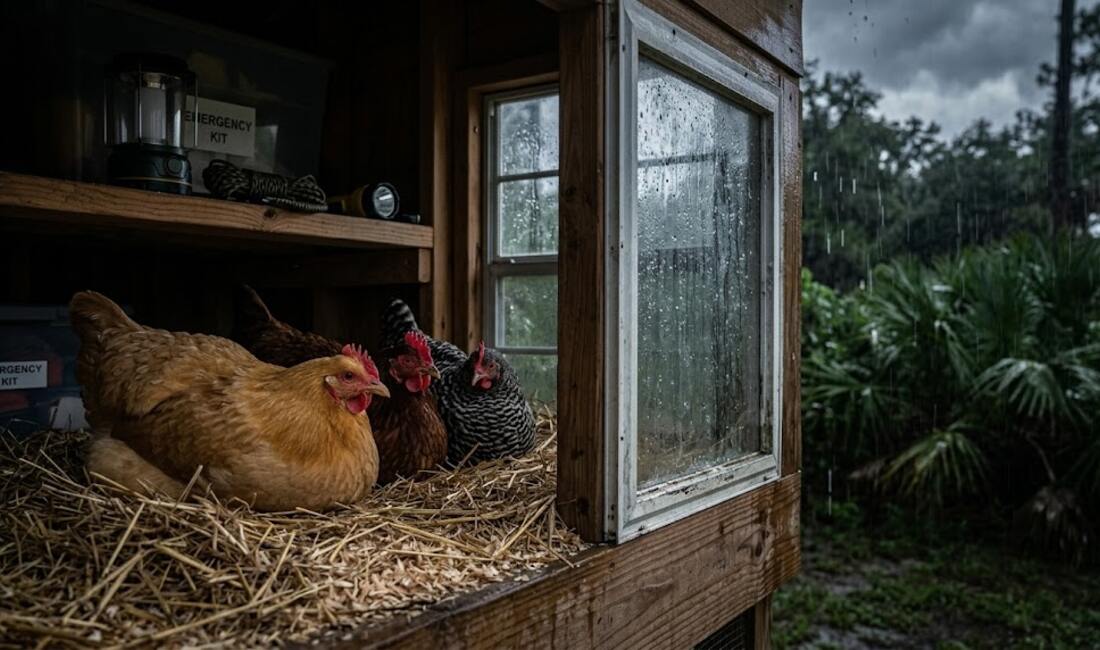
This is the section that fits a site built around outage and storm preparedness, and it's worth covering directly: chickens themselves are surprisingly storm-hardy animals, but the coop and your routine around it need a plan, whether that's a hurricane on the Gulf Coast, a tornado warning in the Midwest, or an ice storm anywhere in between.
Chickens Handle Storms Better Than You'd Expect
A hen's instinct in severe weather is to get into the coop and stay there — they don't need to be herded or coaxed once wind and rain pick up. The real risks aren't the storm itself but secondary effects: a coop or run getting physically damaged by wind or falling branches, flooding inside a low-set coop, or predators taking advantage of a damaged enclosure afterward.
Before a Storm
- Secure or store anything loose in the run — loose panels, tarps, feeders, and especially anything that could become flying debris in high wind.
- Lock the coop and run early, well before the worst of the weather hits, rather than waiting until conditions are already dangerous to go out and check on the flock.
- Stock several days of feed and bedding in a dry location, the same way you'd stock supplies for yourself — treat the coop as part of your household preparedness, not separate from it.
- Fill backup waterers in case municipal water or a well pump is affected; chickens drink more water per pound of body weight than most people expect, and dehydration is a faster threat than hunger.
If the Power Goes Out
A basic backyard coop for 3–4 hens needs no electricity to function — no heat lamp, no powered ventilation, no automatic door is strictly required. If you've added conveniences like an automatic coop door or supplemental winter lighting, have a manual backup plan: know how to open and close the door by hand, and don't worry about lost laying time from missing supplemental light during a short outage. This is one more place where the gear covered on this site's power and generator pages can help, if you've already got backup power for the house, the coop's modest needs (a heated waterer in freezing climates, for example) are a trivial add-on to an existing system.
After the Storm
Check the coop structure, hardware cloth, and latches for damage before letting the flock back into the run — storm damage to fencing or roofing is exactly the kind of opening a predator exploits in the days afterward. Check for standing water in the run and coop floor, and don't be surprised if egg production drops for a week or two after a major weather event; stress temporarily reduces laying, and it recovers on its own once routine returns.
Chicken Manure — Free Fertilizer for the Garden
The eggs aren't the only thing a small flock produces. A coop of 3–4 hens generates a steady supply of nitrogen-rich manure every week — effectively a free fertilizer byproduct of keeping the flock at all, and the piece that closes the loop between the coop and a vegetable garden. Chicken manure is considered one of the richest manures available for garden use, higher in nitrogen than cow, horse, or rabbit manure, which is exactly what leafy greens, tomatoes, and most vegetable crops need most.

⚠️ Never apply fresh chicken manure directly to a garden bed. Fresh manure is "hot" — high enough in ammonia and nitrogen that it will burn plant roots and can scorch or kill seedlings outright. It can also carry pathogens like salmonella that haven't had time to break down. Fresh manure needs to be composted first; this is not optional.
How to Turn Coop Waste Into Garden Fertilizer
- Collect it with the bedding. If the coop uses the deep litter method (straw or pine shavings that build up over weeks rather than being removed daily), the bedding and manure can be cleared out together every few weeks and moved straight into a compost pile.
- Compost it for 3–6 months before use. Mix the manure and bedding with carbon-rich material — dry leaves, straw, shredded cardboard — at roughly equal parts to balance the high nitrogen content. Turn the pile occasionally and keep it slightly damp. The composting process generates enough heat to break down pathogens and converts the "hot" ammonia into stable, plant-available nitrogen.
- Use finished compost as a soil amendment, not a surface dressing. Once it looks and smells like dark, crumbly garden soil rather than manure, work it into a bed before planting or use it as a top layer in a no-till bed, the same method covered on the vegetable gardening page.
- Run is fine raw, beds are not. Manure that falls directly in the chicken run breaks down naturally underfoot over time and isn't a concern there — the rule against using it fresh applies specifically to vegetable beds where edible crops are growing.
♻️ The coop and the garden are one system. Garden scraps and weeds can go to the hens as treats, the hens turn part of that into eggs and the rest into manure, and the composted manure goes back into the garden beds to grow more food. A senior running both a small flock and a vegetable garden isn't running two separate projects — it's running one closed loop that lowers the cost of both.
Chickens and Tick & Insect Control — What the Research Actually Shows
This one deserves an honest answer rather than the popular claim, because the two aren't quite the same thing. Chickens are genuinely excellent at general garden pest control: free-ranging hens actively hunt and eat grubs, beetles, slugs, snails, mosquito larvae, and a wide range of other insects that damage vegetable beds, and they'll do it for free every day they're let out to forage. On general garden pests, the benefit is real and well documented.
Ticks specifically are a more mixed picture. Chickens do eat ticks when they encounter them — a frequently cited 1991 study found individual birds with anywhere from 3 to 331 ticks in their crop after foraging. But that research came from chickens foraging directly on tick-infested cattle in Africa, a very different setup from a backyard flock in North America.
Penn State Extension, reviewing the available research directly, concluded that chickens and guinea fowl do feed on ticks but don't eat enough of them under normal backyard conditions to meaningfully reduce the overall tick population on a property. The oft-repeated claim that a single chicken can eat "80 ticks an hour" traces back to anecdotal sources rather than controlled research, and should be treated with the same skepticism as any unverified social-media statistic.
✅ The realiztic takeaway: A free-ranging flock is a genuinely useful part of an integrated approach to garden pests — expect real help with grubs, beetles, slugs, and other insects that damage vegetable beds. For ticks specifically, treat chickens as a small bonus rather than a control strategy, and pair them with proven tick-reduction steps: keeping grass mowed short, clearing leaf litter and brush from areas you spend time in, and creating a gravel or mulch barrier between lawn and wooded edges.
Avian Flu & Basic Biosecurity — What's Actually Worth Doing
Highly pathogenic avian influenza (HPAI) has affected backyard flocks in nearly every state since 2022, with continued detections into 2026. This isn't meant to be alarming — the steps that actually matter for a small home flock are simple, free or cheap, and mostly things you'd be doing anyway as part of good coop management. USDA's Defend the Flock program is the authoritative source if you want to go deeper.
The Basics That Matter Most for a Small Flock
- Keep wild birds, especially waterfowl, away from your flock's food, water, and space. HPAI spreads primarily through contact with wild birds and their droppings, particularly ducks, geese, and gulls. A covered run (already recommended for predator-proofing) does double duty here.
- Store feed in sealed containers and clean up spills promptly, so wild birds and rodents aren't drawn to the coop area.
- Don't share tools, equipment, or egg cartons with other bird owners without cleaning them first, and keep a dedicated pair of shoes for coop visits if you can.
- Isolate any new birds for at least 30 days before introducing them to an existing flock, including birds coming home from a swap, sale, or show.
- Watch for warning signs — sudden death without prior illness, a sharp drop in water intake, ruffled feathers, or a sudden stop in egg production across multiple birds at once. A single sick bird is usually something else; sudden illness or death across the flock warrants a call.
📞 If you see signs of serious illness, call — don't wait. Contact your state veterinarian or the USDA's toll-free sick bird hotline at 1-866-536-7593. Reporting is free, fast, and exactly what the system is there for; early reporting is what keeps a single sick bird from becoming a bigger problem for your flock or neighboring ones.
What Happens When the Eggs Slow Down
This is the question beginner guides tend to skip, and it's worth thinking through before you start, not after. Hens lay best in their first 1–2 years (often 250–280 eggs in year one alone), production declines noticeably by year 2–3, and most hens are laying only occasionally by age 5–7 — while typically living another several years beyond that, often to 8–10 years old. A hen that stops laying is not sick; she's simply moved past her productive years, the same as any aging animal.
Backyard keepers handle this differently, and there's no single right answer for a retired couple to land on. Many simply keep older hens as part of the flock — they still forage, still help with garden pests, still keep younger hens company, and the cost of feeding a non-laying hen alongside a few productive ones is modest.
Others stagger flock ages, adding a couple of new pullets every few years so there's always at least one or two hens in peak production while older ones wind down gradually rather than all retiring at once. A smaller number choose to rehome older hens to keepers specifically looking for calm, established birds rather than chicks. There's no obligation to decide this now — it's simply worth knowing the timeline going in, rather than being surprised by it in year three.
Molting — Why Laying Pauses Even in Healthy Hens
Once a year, usually in fall as daylight hours shorten, hens go through a molt: they lose and regrow their feathers, and egg laying pauses for 8–12 weeks while the bird's energy goes into feather regrowth instead. This is completely normal, not a sign of illness, and doesn't require any special intervention beyond ensuring access to a higher-protein feed during the molt if you want to support faster feather regrowth. A hen that abruptly stops laying every fall, then resumes in winter or spring, is simply on a normal molt cycle.
A Few More Practical Basics
- Egg storage: Unwashed fresh eggs can sit at room temperature for about a week thanks to their natural protective coating, but refrigeration extends that to several weeks and is the simpler default once you're collecting daily. Once washed, refrigerate immediately.
- Water needs: Hens drink roughly twice their feed weight in water daily, more in hot weather, and access to clean water matters as much as feed for steady laying. In hot climates, keep waterers shaded and check them more than once a day in peak summer heat.
- Calcium: Crushed oyster shell offered free-choice alongside layer feed keeps shells strong and is a cheap, simple addition regardless of where you live.
🖨️ Printable Setup & Shopping Checklist
Print this and take it with you — to the farm store, to a garage sale, or browsing Facebook Marketplace for a used coop. Check items off as you find them. Remember: don't cheap out on the coop or the latch — that's the one place a failure costs you the whole flock.
Before You Buy Anything
Coop & Run
Daily-Use Supplies
Getting Hens
Manure & Composting
Storm & Biosecurity Basics
💬 What Happens When You Actually Do This
Composite accounts, not real individuals — the situations and the numbers behind them are drawn from what backyard keepers actually report.
“I started with three hens the summer I turned 62. My Social Security had just kicked in and I had done the math — I was going to be about $190 short every month once my car was paid off. I was not panicking, but I was paying attention. The eggs were not the point at first. I just wanted something alive in the yard. But three hens lay a dozen eggs a week when they’re happy.
I stopped buying eggs in September. Then I started giving a dozen a week to my daughter. Then I started making things I hadn’t made in years — quiches, frittatas, pound cakes. Last Christmas I brought two pound cakes and a dozen eggs to a neighbor who had lost her husband in October. She cried. That is not something I could have done when I was worried about my grocery bill.”
“My grandchildren are nine and eleven. They started coming over on Saturday mornings to collect eggs. This was not planned. They just asked if they could do it, and then it became the thing they wanted to do every week. They know which hen lays which color egg. They name new ones. They argue about whose job it is to refill the water. There is nothing I have ever bought for them — no toy, no game system, nothing — that has given them what those three chickens give them on a Saturday morning. My daughter says they talk about Grandma’s chickens at school. I did not know I needed that until I had it.”
“I live alone. My husband died four years ago. The first winter after he was gone was very hard in ways I did not expect — not just grief, but the quiet. The house was too quiet. I got two hens in the spring thinking I would try it. They are not quiet. They have opinions about everything. When I come out in the morning they make noise at me and I make noise back. I know that sounds strange. But I wake up in the morning and there is something out there that needs me to show up. That has mattered more than I could have predicted. The eggs are a bonus. The not-quiet is the thing.”
“My grandkids started calling my hens by name before I did. The oldest one, who is eleven, declared that the dark brown one was named Maple and that was that. They come over on Saturday mornings now specifically to collect eggs. Not to see me — to collect eggs. I am secondary to the chickens and I have made my peace with that. But here is what I want people to understand: those children are eating eggs from a yard they know.
They know which hen laid which egg. They have watched those hens since they were chicks. When they eat scrambled eggs at my kitchen table they are not eating something from a factory somewhere. They know exactly where it came from because they went out and got it themselves. I did not plan for that to be a lesson. It turned out to be the most important one I have given them.”
Frequently Asked Questions
Do most cities really allow backyard chickens now?
A widely cited review of the 150 most populated U.S. cities found that 93% allow backyard poultry in some form, almost always hens only, usually capped between 4 and 12 birds depending on lot size, with roosters banned in nearly every urban and suburban ordinance due to noise. Rules vary significantly by city, county, and HOA, so always verify with your local zoning or animal control office before acquiring birds.
Why are roosters banned almost everywhere hens are allowed?
Roosters crow loudly and unpredictably, including before sunrise, which generates far more noise complaints than any other aspect of backyard poultry keeping. Hens, by contrast, make a brief, quiet announcement after laying an egg but are otherwise nearly silent. This noise difference is the primary reason almost every municipal ordinance that permits backyard chickens explicitly prohibits roosters in residential zones, and it is also why a hens-only flock is rarely a problem for neighbors.
How much does it actually cost to feed a small backyard flock?
A 50-pound bag of layer feed costs roughly $18-$20 and feeds three hens for about two months, putting feed costs at around $3 per hen per month. A healthy hen in peak laying age produces roughly 4-6 eggs per week, so three hens can produce 12-18 eggs per week, or 50-75 eggs per month, for that same $9-10 in feed — working out to well under 20 cents per egg in feed cost alone during peak laying months.
How many eggs does a backyard hen actually lay?
A healthy laying hen in a productive breed typically lays 4 to 6 eggs per week during her prime laying years, which run from about 5 months to 2-3 years of age. Production slows in winter without supplemental light and gradually declines as a hen ages, but a small flock of 3-4 hens reliably produces a dozen or more eggs per week for several years.
Are eggs really cheaper than meat as a protein source?
Yes, especially from a home flock. Store-bought ground beef runs roughly 9 cents per gram of protein at 2026 prices, while eggs produced by a backyard flock work out to closer to 2-3 cents per gram of protein once feed cost is factored in, since a 50-pound bag of layer feed costing $18-$20 produces 50-75 eggs over two months. Eggs are also a complete protein, containing all nine essential amino acids, along with vitamin D, B12, and choline. For a senior pairing a vegetable garden with a small hen flock, the two together cover both halves of the plate — produce and protein — for a fraction of grocery store prices.
What actually keeps a small backyard flock safe from predators?
Four things matter most: half-inch hardware cloth (never chicken wire) on every wall, window, and vent; a buried or staked-down wire apron extending 12-18 inches around the run to stop digging predators; a two-step latch on every door, since raccoons can open simple hook latches; and a covered run to block hawks and owls. Closing and latching the coop at dusk every night is the single most important habit, since nearly all common predators hunt between dusk and dawn. Done correctly during the building phase, predator-proofing is a one-time setup, not an ongoing chore.
Can I put chicken manure straight on my garden?
No — fresh chicken manure should never be applied directly to a vegetable garden. It is high in ammonia and nitrogen, often called "hot" manure, which will burn plant roots and can kill seedlings, and it can carry pathogens like salmonella that haven't had time to break down. Fresh manure needs to be composted for 3 to 6 months, mixed with carbon-rich material like dry leaves or straw, before it's safe and effective as a garden soil amendment. Once composted, chicken manure is one of the richest, most nitrogen-dense fertilizers available for vegetable beds.
Do chickens actually control ticks?
Chickens do eat ticks when they come across them while foraging, but research reviewed by Penn State Extension found that chickens and guinea fowl don't eat enough ticks under typical backyard conditions to meaningfully reduce the overall tick population on a property. The widely shared claim that a chicken eats 80 ticks an hour is anecdotal, not research-backed. Chickens are genuinely effective against other garden pests, including grubs, beetles, slugs, and mosquito larvae — for ticks specifically, they're best treated as a small bonus alongside proven steps like mowing grass short and clearing leaf litter, not a primary control method.
What breed of chicken should I get for my climate?
Cold climates do best with small-combed, heavy-bodied, densely feathered breeds like Buff Orpington, Black Australorp, Plymouth Rock, Wyandotte, or Brahma, since small combs resist frostbite and larger bodies retain heat. Hot, humid climates do better with large-combed, lighter-bodied, lighter-feathered breeds like Leghorn, Rhode Island Red, Minorca, or Easter Egger, since large combs dissipate heat and lighter bodies stay cooler. Rhode Island Red is the most commonly recommended breed for keepers unsure which category applies, since it tolerates both heat and cold reasonably well and is a strong, reliable layer.
How does severe weather affect a backyard flock?
Chickens are more storm-hardy than most new keepers expect — their instinct is to take shelter in the coop on their own once weather turns bad. The real risks are secondary: physical damage to the coop or run from wind, flooding in a low-set coop, and predators exploiting storm damage afterward. A basic coop needs no electricity to function, so power outages alone aren't a major concern unless supplemental heating or an automatic door has been added, in which case a manual backup plan is worth having.
What basic biosecurity steps protect a backyard flock from avian flu?
The steps that matter most for a small home flock are keeping wild birds and waterfowl away from feed, water, and coop space (a covered run helps significantly), storing feed in sealed containers, not sharing tools or equipment with other bird owners without cleaning them, and isolating any new birds for at least 30 days before adding them to the flock. Watch for sudden death without prior illness, a sharp drop in water intake, or a sudden stop in egg production across multiple birds at once, and report suspected illness to a state veterinarian or USDA's sick bird hotline (1-866-536-7593) right away.
What happens when a hen stops laying eggs?
Hens lay most prolifically in their first 1-2 years, decline noticeably by year 2-3, and are typically laying only occasionally by age 5-7, while often living several more years beyond that to a total lifespan of 8-10 years. A hen that stops laying isn't sick; she's simply past her productive years. Backyard keepers vary in how they handle this: many simply keep older hens as flock members for pest control and companionship, others stagger flock ages so new pullets are always coming into production as older hens wind down, and some rehome retired hens to keepers specifically looking for calm, established birds.
📚 Primary Sources & Official Data
- • American Pet Products Association — U.S. Pet Ownership Statistics
- • USDA — Backyard Poultry & Avian Influenza Resources
- • UF/IFAS Extension — Raising Backyard Chickens for Eggs (AN239)
- • Cooperative Extension Poultry Portal (poultry.extension.org)
- • Penn State Extension — Do Chickens, Guinea Fowl, or Opossums Control Ticks?
- • USDA APHIS — Defend the Flock Biosecurity Program
- • Review of municipal poultry ordinances across the 150 most populated U.S. cities
Page last reviewed: June 2026 | Author: Franklyn Galusha