
Some links on this page are affiliate links, and we may earn a commission if you buy through one. It costs you nothing extra and it does not decide what goes on the page. The programs named further down are free and earn us nothing at all.
Ears, eyes and teeth are the same gap three times over. The dental one carries the largest bill and the one trap the other two do not — a waiting period, which means the cover cannot be bought once something has broken. That is on the dental page.
The eyes have a gap of exactly the same shape, and most people meet it the same way — at a counter, holding a card, being told this part is not covered. That one is on the vision page.
📅 The Law Changed in 2022 and Nobody Sent a Letter
A man will replace his eyeglasses the same week he cannot read a menu.
He will go twenty years on his hearing.
Some of that is price, and we will come to the price directly. But a good part of it is that until recently you could not simply go and buy the thing. You needed an appointment, and an examination, and a fitting, and a professional to sell it to you — for a device which, when you get down underneath all of that, makes sounds louder.
Reading glasses have been on a wire rack by the till since anybody can remember. Hearing aids were kept behind a desk.
That ended on the seventeenth of October, 2022.
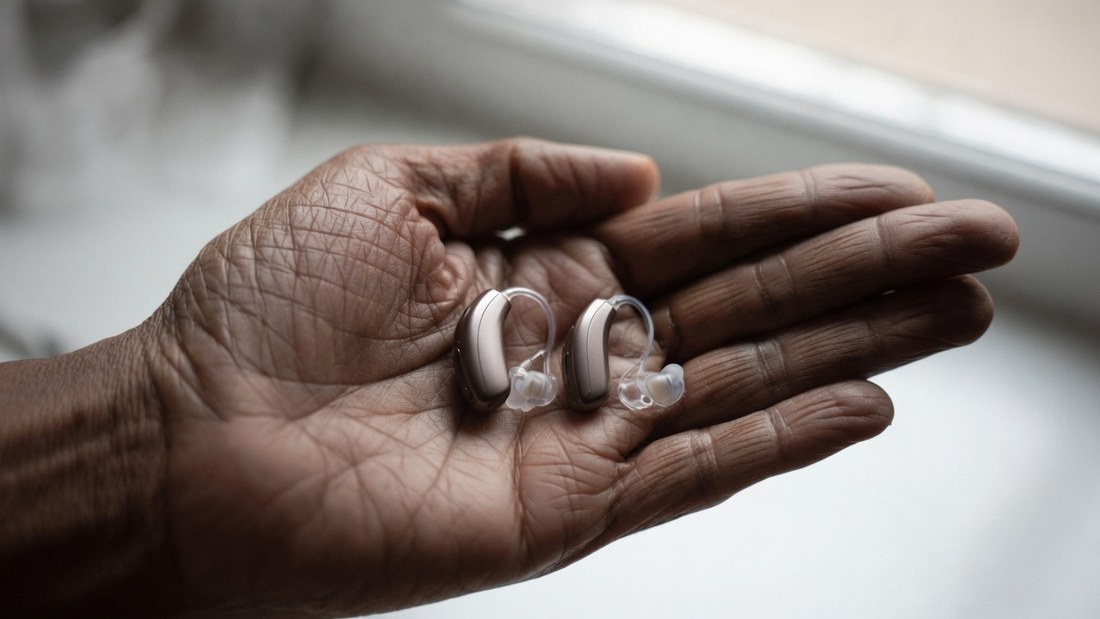
The Food and Drug Administration created a new category that day: the over-the-counter hearing aid, for adults with what the rule calls perceived mild to moderate hearing loss. You can buy one in a shop or online. No medical examination. No prescription. No audiologist to fit it. Congress had told the FDA to do it back in 2017, and it took five years to arrive, which is about the ordinary pace of these things.
The price it walked away from is the part worth sitting with. A prescription hearing aid has averaged around two thousand dollars. Not for the pair. For one ear.
Nobody put out an announcement. There was no advertising campaign, and there is a plain reason for that: the people who had been selling them at two thousand dollars an ear had no particular enthusiasm for the news.
What over-the-counter actually means. The FDA also capped how loud an over-the-counter device is allowed to go. That is a safety limit, and it is the reason the category is written for mild to moderate loss rather than for everybody. If your loss is past that, these are not your answer, and the next section but one says so plainly.
📊 The Numbers, and the One That Ought to Stop You
I am going to be flat for a paragraph or two. These figures are the whole reason this page exists and I would rather hand them over straight than be clever at you about them.
About forty per cent of Americans aged sixty and over have hearing loss. Fewer than one in five of them uses a hearing aid.
It climbs with the years, the way these things do. Something near forty-five per cent of people in their sixties. Close to two-thirds of everybody past seventy. The National Institutes of Health put the number of Americans who would benefit from a hearing aid at 28.8 million, and fewer than a third of the people over seventy who would benefit have ever worn one.
Now here is the one that ought to stop you, and it is the reason this page sits on a website about staying in your own house instead of on a medical website.
Hearing loss keeps company with falling.
The research finds it running alongside falls and fractures, and alongside isolation, low spirits and a quicker slide in thinking. I am not going to tell you that the one causes the other, because that is not what the evidence says and this site does not oversell. What it says is that they travel together, and often enough that anybody who has worked through our fall-risk audit or screwed a bar to a bathroom wall has already been thinking about half of this problem without knowing there was another half.
Which makes sense if you stand in the room and picture it. A great deal of what keeps a person upright is knowing where things are — the dog, the step, the grandchild, the person speaking behind you. Take away a share of that and you have taken away something that was doing a job.
And there is a quieter cost that never turns up in a statistic. A man who cannot follow the table stops coming to the table. He is not lonely on any particular evening. He gets lonely a little at a time, across about four years, and every step of it looked like a preference.
🧭 Which One Are You?
Over-the-counter is not a cheaper version of the same thing. It is a different thing, written for a particular band of people, and the whole business only works if you know which side of the line you are standing on.
It is for adults with perceived mild to moderate hearing loss. Those are the FDA's own words and they are worth keeping. Perceived means you have noticed. Mild to moderate means the television has crept up and restaurants have turned into work — not that a doorbell goes by unheard.
Now I am going to be completely dull for a moment, and there will not be a joke anywhere in it, because this is the one part of the page where a charming sentence could cost somebody something that does not grow back.
See a Doctor First — Do Not Start With an Over-the-Counter Device
Hearing that dropped suddenly, over days or weeks. Hearing that is clearly worse in one ear than the other. Pain in the ear. Fluid or drainage. Ringing in one ear only. Dizziness, or any new trouble with balance. A history of ear surgery, or an ear that is misshapen. Any sense that the canal is blocked. Every one of these is a reason to be looked at by a physician or an audiologist before you buy anything at all. Several of them are treatable. One or two of them are urgent.
Right. Back to talking like people.
If none of that describes you, an over-the-counter device is a fair place to start, and starting is most of the battle. If it turns out not to be enough, you will have learned something real for a few hundred dollars instead of wondering about it for another six years.
🔍 What to Look For
There are a great many of these on sale now, and most of the differences between them do not matter. Four of them do.
Rechargeable, not batteries
We give this its own section below, because it is the one that decides whether the thing is still being worn at seventy-eight. The short version: you want a case you drop them into at night, not a door you open with a fingernail.
Self-fitting, if you can
The category allows two sorts. One arrives with preset programs you choose between. The other runs a hearing check through an app on your telephone and shapes itself to the result. The second is nearer to what the audiologist was doing for the two thousand dollars, and for most people it is the better buy.
Both ears
Buy two unless a doctor has told you otherwise. Hearing with one ear is how you lose track of which direction a sound came from, and direction is the part that matters when you are on a ladder or crossing a parking lot.
The return window — and what it costs to use it
This is the one people skip and the one I would read twice. Find out how many days you have, and find out whether sending them back costs you a restocking fee. Hearing aids take some getting used to. Your own voice sounds peculiar for a while and a newspaper sounds like a small fire, and the first week is a poor time to reach a verdict. A generous return window is worth more than a longer list of features.
One honest warning about the shopping. This is a new market with money in it, and the internet has filled up with sound amplifiers dressed as hearing aids. If a listing steers around the words FDA and over-the-counter hearing aid and talks instead about “sound enhancement,” it is very likely not a regulated hearing aid at all. That does not make it useless. It does mean nobody has checked it.
🤚 The Battery Door Is Smaller Than a Shirt Button
Here is the argument this whole site was built on, turning up in a place nobody expects it.
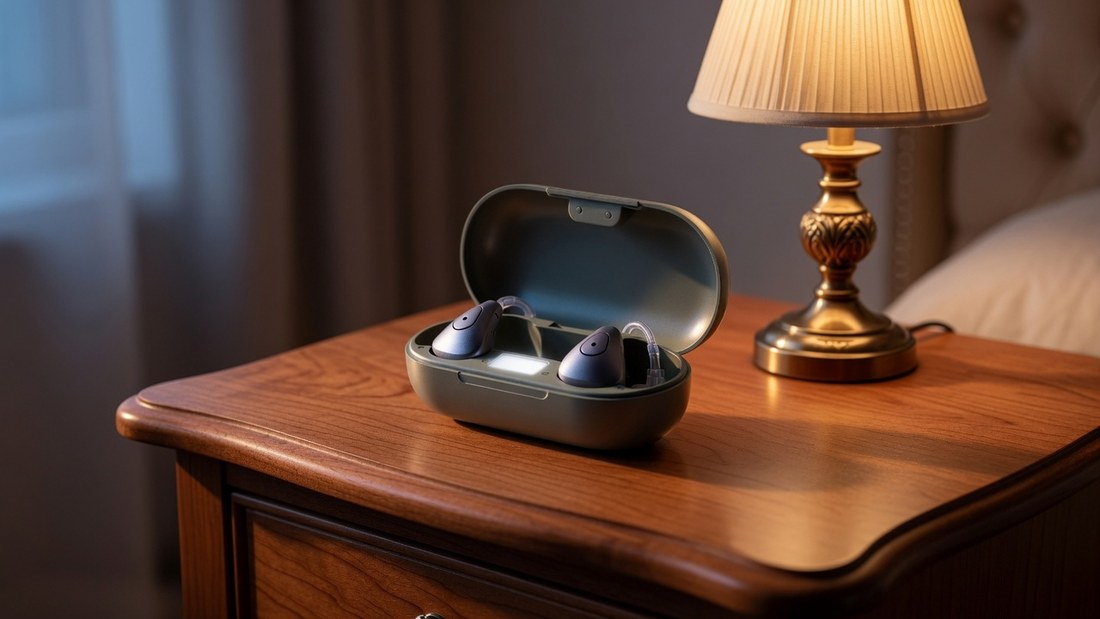
A conventional hearing aid runs on a little round battery. When it dies you slide open a door about the size of a fingernail clipping, tip the old one out, peel a sticky tab off the new one, work out which way up it goes, and set it in. It is fiddly at fifty. And it does not come around once a year — it comes around in days, again and again, for as long as you own them.
We have written elsewhere on this site about what happens to a grip, and it is worth knowing before you choose: grip is the first thing to go, and it starts at fifty. Twenty years before balance. Thirty before gait. Nobody warns you about it, and nobody has ever designed a battery door with it in mind.
So buy the rechargeable pair. It is the same argument as the can opener, and the same argument as a lever handle instead of a round doorknob. The device that gets used is the one that does not ask anything of your hands.
🏠 It Is Not Always an Aid You Need
A hearing aid is a general answer. Some of the trouble in a house is not general at all — it is one particular thing in one particular room, and there is a cheaper fix pointed straight at it.
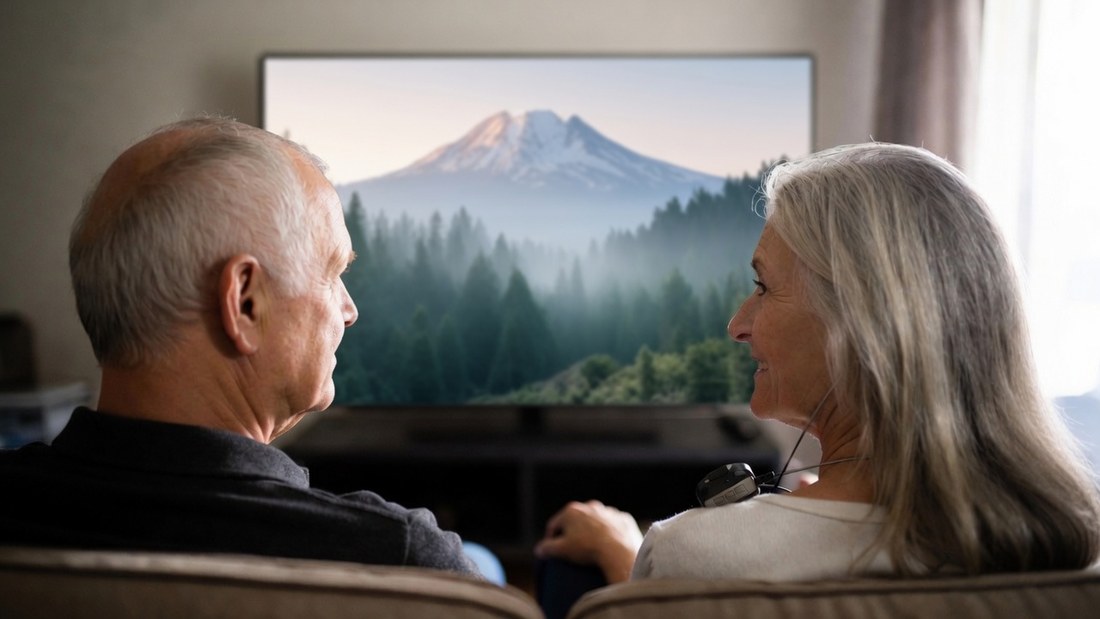
The television. This is the commonest quarrel in the country and it has a thirty-dollar end to it. A wireless listener sends the sound to a headset or to a loop worn round the neck, and the set itself goes back down to a volume the rest of the room can live with.
The telephone. Two sorts, and they are not the same thing. An amplified phone is simply louder. A captioned phone prints what the other person is saying on a screen while you listen to them.
The doorbell, and the smoke alarm. There are alerting kits that flash a lamp, set a light going, or shake a bed when something in the house is making a noise at you. The doorbell is a convenience. The smoke alarm is not.
The One on This Page That Is Not Optional
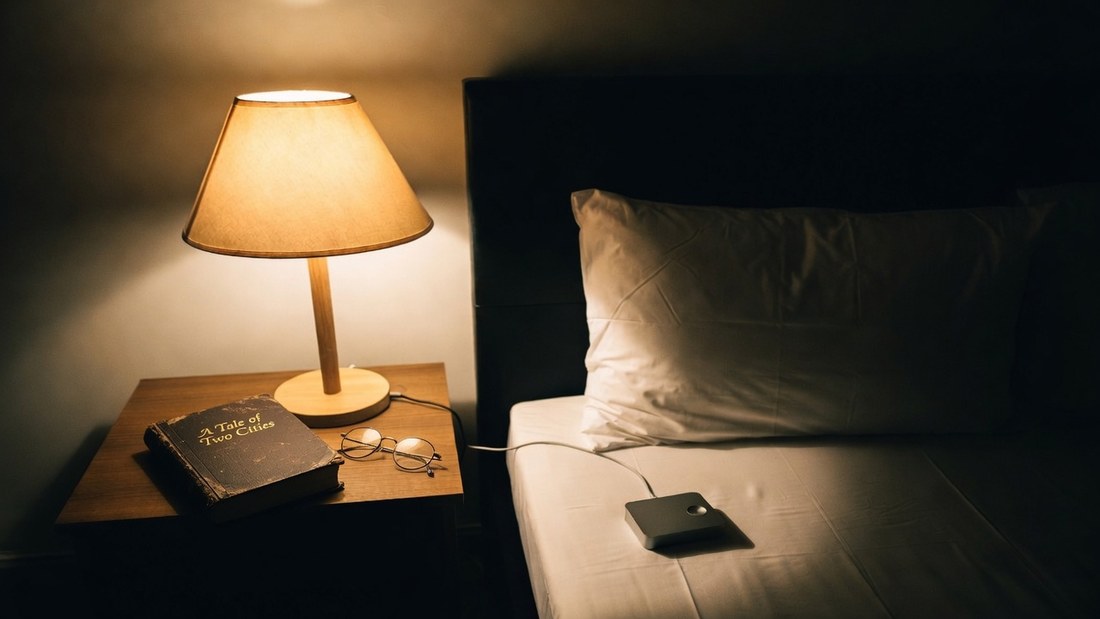
Hearing aids come out at night. If your hearing is poor enough that you would not wake to a standard smoke alarm without them, then a standard smoke alarm is not protecting you while you are asleep — which is precisely when house fires kill people. There are alarms built for this: units with a strobe light, and units with a shaker that goes under the pillow or the mattress. Fit them in the bedroom. This is not a comfort purchase.
And a good deal of this is already paid for
This is the part almost nobody knows, and it has the same shape as the wood banks and senior food programs we wrote about: help that exists already, is funded already, and goes unclaimed because nobody ever advertised it.
Captioned telephone service is free to the user. Not discounted — free, the telephone and the captioning both. It comes out of a fund the Federal Communications Commission administers, financed by small surcharges that have been sitting on everybody's telephone bill for years, yours included. You register with a provider and certify that you need it; a doctor, audiologist or hearing specializt can sign that off, and in some circumstances you may certify it yourself. There is no age requirement anywhere in it.
Most states also run an equipment distribution program — amplified telephones, captioned telephones, ring signallers and alerting gear, handed out at no charge to residents with documented hearing loss. They carry a different name in every state, they are funded the same way, and a good many of them have no income limit at all. The association that coordinates them is TEDPA, and your state commission for the deaf and hard of hearing will know what the local one is called.
Sources disagree on how many states run one — we have seen it put at around forty-one and we have seen it put at all of them, which tells you this is a telephone call rather than a search. And veterans should ask the VA before buying anything at all: hearing aids and assistive telephone equipment come through VA audiology as part of medical benefits.
⚡ The Thing on Your Nightstand That Needs Electricity
The rest of this website has been circling round to this, so we may as well say it out loud.
A rechargeable hearing aid is an appliance. A small one, and a quiet one, and one you will not think about for a single second when the lights go out — and then on the second evening you will think about very little else.
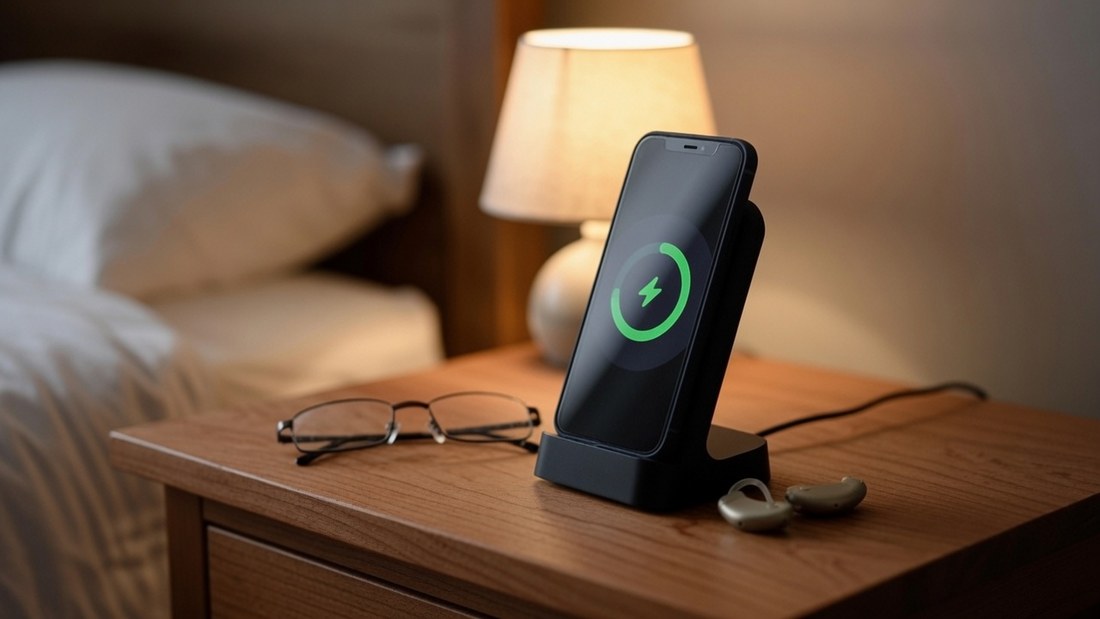
The fix is the same fix as everywhere else on this site, and you very likely own most of it already. A battery bank of the sort that charges a telephone will fill a hearing-aid case many times over, because they draw almost nothing. Keep it charged, keep it where the aids live, and top it up whenever you top up the phone.
If you have gone further and own a generator or a power station, this belongs on the list beside the CPAP and the refrigerated medicine — and it is far and away the cheapest thing on that list.
Keep a packet of disposable batteries in the drawer as well, if your model will take them. Some will. Most will not, and the week you need to know is a poor week to find out which you bought.
A small thing worth doing on an ordinary afternoon. Find out how long your case holds a charge with no wall power behind it. Not by reading the box — by unplugging it on a Saturday and watching. That number is the one you will be doing arithmetic with sooner or later, and a Saturday is a far better day to learn it than the second night of an ice storm.
💰 Why This Is a Fifty-Year-Old's Errand

Hardly anybody buys their first hearing aid at fifty. People wait years after they first notice, and by then the thing they have lost is not only hearing.
They have lost the habit of the table. They have got out of the way of the telephone. They have learned a hundred small dodges — sitting with the good ear to the room, laughing a beat behind everybody else, saying oh, nothing important when they ask what was said. None of that comes back on the day the aid arrives. It has to be unlearned, and unlearning is slower work at seventy-five than at fifty-five.
The device will not be cheaper in fifteen years, and neither will anything else. What will have changed by then is your income, your hands, and whether you had any say at all in the timing.
So the errand at fifty is not to go and buy a hearing aid. It is smaller than that, and it is free. Get a baseline — a proper hearing test taken while nothing much is wrong, so that in ten years somebody has something to measure against. Notice which rooms have got harder. And know that the rule changed in 2022, so that when the day arrives you are not starting the whole business cold with a two-thousand-dollar number in your head that has not been true for years.
Before You Close This Page
Go and stand in the room with the television in it, and turn it down four notches.
If everybody else in the house is comfortable there and you are not, you have your answer, and it cost you nothing but four notches. If you live on your own, ring somebody instead and ask them plainly whether you have been making them repeat things.
Nobody has to decide a thing tonight. But that is a real fact about your own house, and you can have it before supper.
This page is about equipment and about where to find help. It is not medical advice, it is not a diagnosis, and nobody here is an audiologist. Hearing loss has a good many causes and some of them are treatable — if anything in the red box above sounds like you, go to a physician or an audiologist rather than to a shopping page.