🚫 The Door That Is Shut, and the One Nobody Mentions
First, what this page is. It is a list of work that a person over sixty can actually get, sorted by what the body can do and by whether the work forgives a bad week. It is not career advice, it is not financial advice, and nobody here is a recruiter or a counselor. Every program named is checkable and linked. Everything moves — check before you act.
A man of twenty-four can walk into a plumbing shop or a union hall and ask to be taught, and somebody will teach him. He will be paid while he learns. The trade takes him because he will pay it back over forty years.
Nobody is going to start a sixty-eight-year-old on a four-year apprenticeship. That door is shut, and this page is not going to pretend otherwise, because pretending would waste your afternoon and insult you at the same time.
Both of you are getting the same layoff email. Only one of you has a way back in through the front.
But there is a second door into the same building, and the forty years is the key to it rather than the obstacle. The young man goes in as the apprentice. You can go in as the person who teaches him. That is a real, funded, structured role and it is described further down under the other door.
What follows is everything I could stand up. It is sorted two ways, because two things decide what actually works at seventy: what the body will still do, and what a bad week costs you.
That second one is the part nobody writes about and it matters more than the first. Take a shift at a store, call in sick twice, and you are finished. Sharpen knives on a bench and the knives simply wait. Nobody is harmed by Tuesday becoming Thursday. For a body that is unpredictable, or a house with somebody in it who needs you, forgiveness is worth more than wages.
🧭 The Test: What Survives the Next Ten Years
Half the lists on the internet telling older people how to earn money are copied from 2019. They still recommend transcription, data entry and home customer service. Those are precisely the jobs being automated first, and the government says so plainly.
The Bureau of Labor Statistics writes that the use of automated systems, including AI, is expected to contribute to declining employment of office and administrative support workers, and that customer service representatives will decline five percent between 2024 and 2034 as their tasks continue to be automated.
So everything on this page had to pass a test. Work holds up when at least one of these five things is true:
If a job passes none of those, it is not on this page, and there is a list further down of what not to start with the reasons attached.
👥 If You Did Not Have a Trade
Everything above this point assumes you spent forty years becoming good at one nameable thing. A lot of people did not, and they are the people most likely to be reading this, because they are the ones the arithmetic catches first.
You raised five children and cleaned other people’s houses. You stood on a line for thirty years doing one motion nobody ever wrote down. You waited tables, drove, stocked shelves, cared for somebody at home for a decade. Nobody handed you a certificate for any of it and there is no professional body that will vouch for you.
Here is the part that gets left out of every list like this one, including my first draft of it. A good half of the best work on this page asks for no previous career at all. It asks for hands, reliability and a willingness to learn one narrow thing properly — and it pays the same whoever turns up with it.
Learnable in a weekend, on equipment that costs little
- Sharpening. Not a trade anybody had to have had. A stone, a jig and a fortnight of practice on your own kitchen knives, and you are better at it than everyone you know. This is the single best cold start on the page.
- Window screen re-meshing. Twenty minutes a frame once you have done four, and every house in the county has eight of them.
- Chair caning and rush seating — slow, seated, taught free on video, and there is almost nobody left doing it.
- Lamp rewiring, once somebody has shown you how, which is a two-hour job to learn.
- Mending and hemming, if you can already sew a straight seam. Most people who raised a family can.

Where being reliable IS the qualification
- Poll worker and census enumerator — the training is provided and the job is showing up and following the rules exactly.
- Test proctoring. They are hiring your steadiness, not your resume.
- Notary public. A short course and a state commission; no degree, no prior career.
- Foster Grandparent and Senior Companion — and here the thirty years of raising and caring for people is not a substitute for a qualification, it is the qualification. There is no other kind.
- Market vending and cottage food, where the skill is what you already cook on a Sunday.
- SCSEP, which exists precisely to train people who were never trained.
And one thing said plainly, because it is true and it does not get said. A woman who ran a household on nothing for thirty years has done cash-flow management, procurement, scheduling, negotiation and crisis handling continuously, without a title and without a single day off. That is not a metaphor and it is not a compliment. The reason it was never worth money is that nobody was paying for it, not that it was not work.
🔨 At the Bench: Work That Waits For You
This is the safest category on the page and the one most people already have the equipment for. It is seated, it is at home, the customer comes to you, and none of it is going anywhere, because there is no machine on earth that can rewire an arbitrary table lamp.

Sharp edges and small motors
- Sharpening — kitchen knives, scissors, chisels, plane irons, mower blades, clipper blades. Seated work, repeat customers twice a year forever, and the stone was bought once.
- Lamp rewiring and small appliance repair — the ninety-dollar lamp fixed for eleven dollars in parts.
- Bicycle tune-ups in spring, and small engine service if the mower can get onto the bench somehow.
- Clock and watch repair, jewellery repair and restringing — the fiddliest work on the list and the least crowded.
Cloth, wood, leather and paper
- Alterations and mending — hems, zips, seams, buttons. Dry cleaners farm this out constantly and never have enough people.
- Quilt repair and small upholstery; chair caning and rush seating; knitting and crochet commissions.
- Shoe and leather repair, book repair and rebinding, picture framing.
- Window screen re-meshing — twenty minutes a frame and every house in the county has eight of them.
- Toy, doll, model and small furniture repair, and furniture touch-up.
- Woodturning and small woodwork; fly tying.
The kitchen and the yard
- Jam, jelly, bread, candy and dry mixes under your state’s cottage food law — see selling what you make, because the rules are not the same in any two states.
- Plant starts, seed saving, cut herbs, eggs and honey.
- Boarding one dog or minding plants and houses for people who travel.
And the arithmetic that beats all of it. The repair you do not pay somebody else for is worth more than the same money earned, because earned money is taxed and counted against benefits and saved money is invisible to every formula in the system. Sixty dollars saved beats sixty dollars earned. That is the whole argument of this website, and it applies before you take a single paying job.
📝 From the Desk: What Forty Years in an Office Is Still Worth
This section is shorter than it would have been five years ago, and it is shorter honestly. A great deal of clerical work is being automated and I am not going to send you into it. What is left is the part where somebody has to be responsible, and that part is not going anywhere.

- Bookkeeping for small trades and shops. Not volume processing — the plumber, the landscaper, the two-chair salon who want one trusted person on their books. Reputation travels between them faster than any advertisement.
- Payroll for very small employers, where the value is that somebody double-checks it before it goes out.
- Grant writing for churches, food banks and small nonprofits. The drafting is commodity now. The local knowledge, the relationships and the compliance detail are not, and the organizations that need it most cannot afford a firm.
- Live interpreting — medical, legal, courtroom, over the phone or on video. Note that this is a different job from translating documents, and it holds up far better, because a certified human is in the room and accountable.
- The complicated phone call. Not routine enquiries, which the chatbot took. The escalation, the disputed bill, the insurance appeal — the calls that get handed to a person, which is exactly what forty years of dealing with the public is for.

- Title abstracting and deed research, where county records are still a patchwork and somebody has to go and look.
- Estate paperwork and downsizing help for families clearing a house, which is half administration and half knowing what things are.
📅 One Day a Week Out of the House
For people who can leave the house but cannot commit to a schedule that punishes them for missing it. Most of these are a day here and a day there, arranged in advance, and several of them exist because the law requires an actual human being.
- Substitute teaching. Shortages are chronic almost everywhere and requirements are lower than people assume — in many districts a retired anything with a clean background check can be in a classroom. You pick your days.
- Test proctoring at colleges and testing centers, and exam supervision.
- Notary public, and loan signing agent for the version that pays properly. A commission is cheap and the law will not let a machine hold one.
- Poll worker. Paid, a handful of days a year, and every county is short.
- Census and survey enumeration, periodic and paid.
- Seasonal tax preparation from January to April.
- Church, lodge, club and cemetery association administration — small stipends, enormous gratitude, and almost always vacant.
- Estate sales, appraisal and auction cataloguing — a genuine second career for anybody who knows what old things are.
- Long-Term Care Ombudsman — a statutory role under the Older Americans Act, and one that only a person can hold.
- Farmers market and craft fair vending, one morning a week in season.
- Consulting, estimating, punch-list walking, code consulting and expert witness work in the trade you came out of. All on-site, all judgment, none of it automatable, and the fee is a multiple of anything else on this page.
🎓 The Other Door: Teach the Apprentice
Here is the answer to the shut door at the top of this page, and it is a better answer than most people expect.
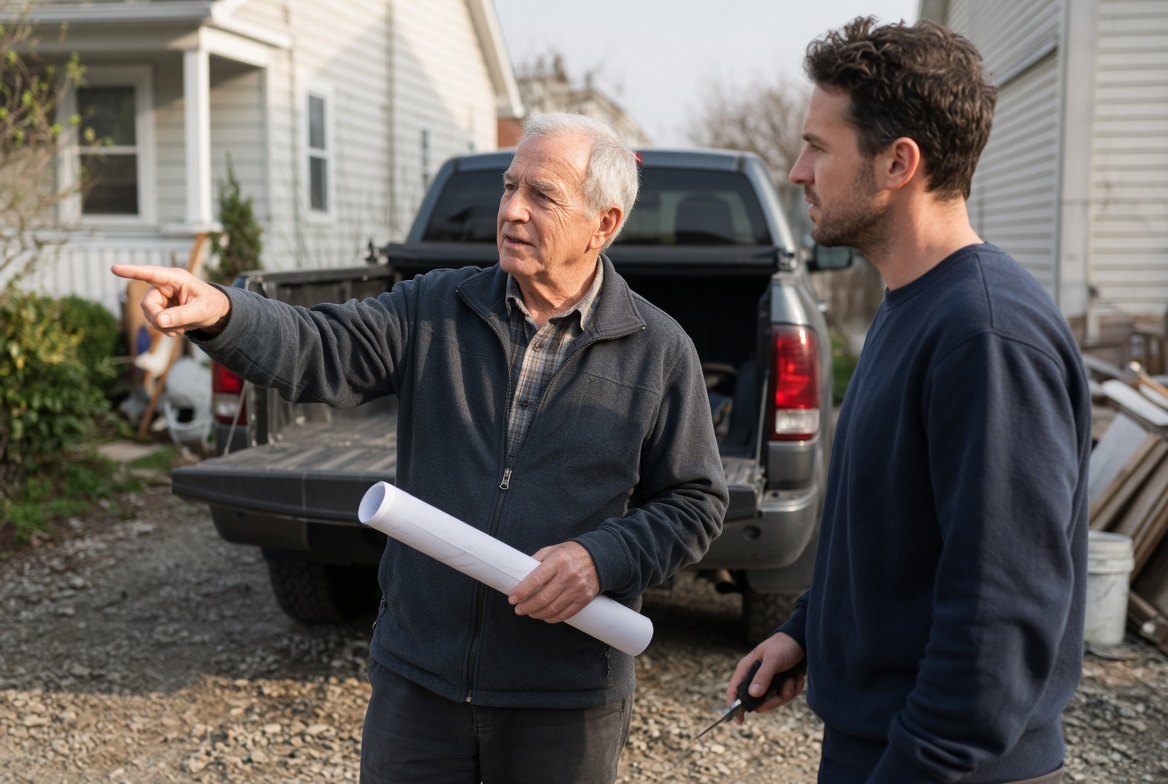
Look again at the photograph at the top of this page. He is carrying paper and the younger man is carrying the tool. That is not a demotion — it is the whole business model. The trade is the knowledge, and the knowledge does not have a back, a shoulder or a set of knees.
Registered Apprenticeship is not only the on-the-job part. Apprentices also receive related instruction that complements the on-the-job learning, and it can be delivered by a community college, a technical school, an apprenticeship training school, or by the business itself. Somebody has to stand up and teach that, every term, in every trade, in every state.
And the qualification is your working life rather than a degree. Under federal regulation a journeyworker is a worker who has mastered the skills of an occupation — and the term also covers a mentor, technician or specialist who has documented sufficient skills, whether through formal apprenticeship or through practical on-the-job experience.
States are practical about the teaching side too. Wisconsin’s rule, as one example, allows an apprenticeship instructor to be a subject matter expert recognized within the industry, with training in teaching techniques that may occur before or after they have started providing the instruction. In plain words: you are not required to become a teacher before you are allowed to teach.
Where to ask, in this order: your old local or union hall; the apprenticeship coordinator at the nearest technical or community college; your state apprenticeship agency; and the trade association for your craft. The sentence that gets you to the right desk is “I have thirty-eight years in the trade and I want to teach related instruction.”
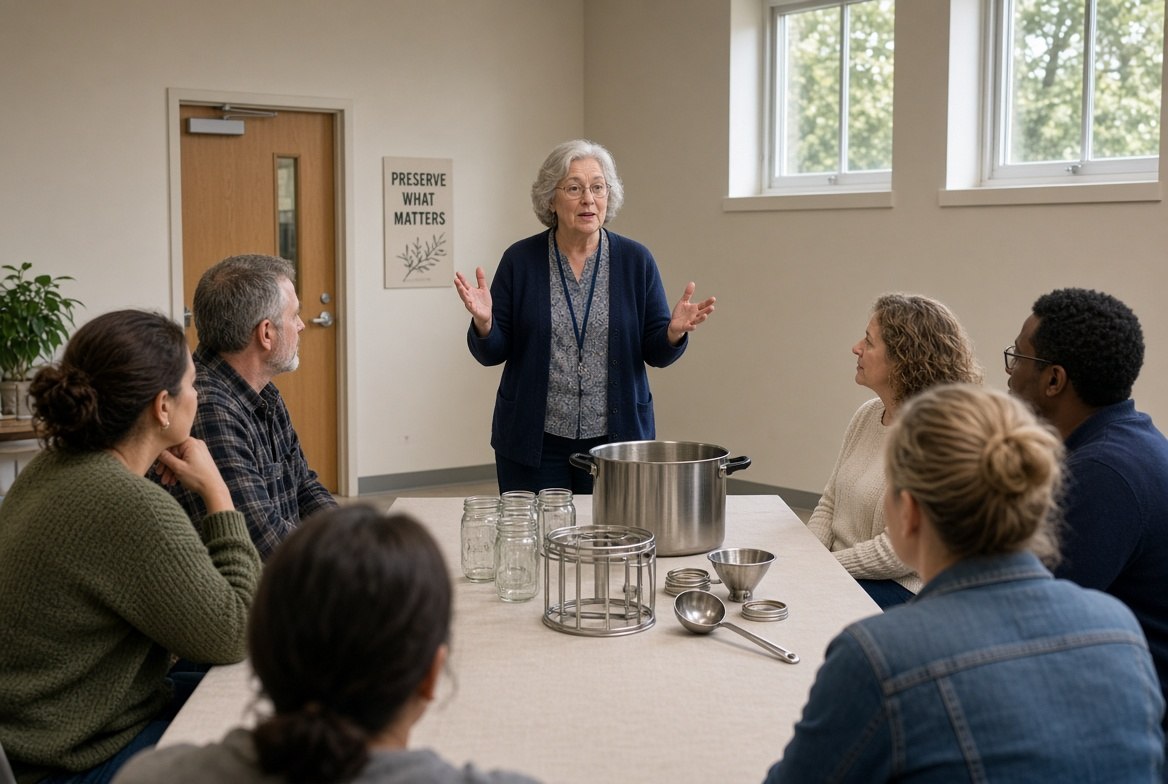
The same door exists outside the trades. Adult education, vocational programs, OSHA outreach training, CPR and first aid instruction, community college adjunct teaching, and tutoring apprentices who are sitting licensing exams — code, math, blueprint reading — which can be done from a kitchen table.
🤖 Checking the Machine: The Job That Grows
This one will look daunting from the outside and it is the most important section on the page, so give it five minutes before you decide it is not for you.

Every industry now produces written material, drawings, procedures and instructions faster and cheaper than it ever has. Fluent, confident, well-formatted material, in volume.
And some of it is wrong. Wrong in a way that fails an inspection, voids a warranty, breaches a code, or hurts somebody. The supply of that output is effectively infinite now. The supply of people who can look at it and say “that is wrong, and here is why” is exactly what it was in 1985 — and shrinking, because they are retiring.
That is not a job the machines take. It is a job they create, and the qualification is the same forty years the front door will not credit.
What the work actually is
- Reviewing technical material in your own trade for publishers, training companies, safety departments and manufacturers — catching what is wrong before it is printed.
- Writing and editing in your industry where the machine drafts and you supply the judgment, the exceptions and the war stories.
- Local business work — procedures, manuals, job descriptions, safety documentation, flyers and signage for firms in your own town, where you are not competing with the whole world because you are the one who can walk in.
- Teaching this to other people your own age, which is the least crowded corner of all of it.
The workflow — how to use it without being used by it
1. Never one machine. Ask two or three the same question. Where they agree it is probably ordinary knowledge. Where they disagree, that is not a nuisance — that is the flag telling you exactly which sentence to go and check.
2. Make it name the source, then open the source. A claim with nothing behind it is a claim you have not verified. If it names something, go and read the actual page.
3. Prefer the primary. The agency, the statute, the standard, the manufacturer’s own manual. Not a summary of a summary.
4. Your forty years is the last filter, and it is the product. Read the output for what is wrong before anybody else sees it. That reading is what the client is paying for.
5. Never paste anything confidential — client names, medical details, account numbers — into any of these tools.
6. Say what you used if a client asks. Most are fine with it. The ones who are not, you want to know about early.
Two hard limits, before anybody spends a dollar
You cannot own what you merely prompted. The Copyright Office holds that copyright protects only material that is the product of human creativity, and where the machine determines the expressive elements, the output is not the product of human authorship — though works can be protected where a person creatively arranges or modifies the material, and the AI-generated parts must be identified and disclaimed when registering. Practical translation: sell the judgment, the writing and the fixing. Do not build a business on owning pictures you typed a sentence to get.
And this is the single most heavily targeted scam pitch aimed at people your age. The Federal Trade Commission’s Operation AI Comply brought actions against multiple companies claiming they could use AI to help people make money through online storefronts, with a court halting one scheme and putting it under a receiver. The FTC’s own rule of thumb: scammers promise big money for little effort, and they pressure you. If the outfit makes its money selling you the course rather than paying you for work, you are the customer and not the earner. Legitimate work never asks you for money up front.
None of this needs an expensive computer. It needs an internet connection, a machine that opens a browser, and the willingness to be a beginner for a fortnight. The free instruction available is bottomless. What is scarce is the forty years, and you already have that.
⛔ Do Not Start Here — and Why
Every other list will tell you to do these. They were good advice once. They are not now, and starting into a shrinking trade at sixty-eight means falling rates and the entry rungs disappearing underneath you first.
- Document translation. BLS: interpreters and translators have become more productive as AI translation improves, reducing their employment demand. Live interpreting is a different and healthier job.
- Technical writing as a trade to enter. Same source: documentation is now produced more efficiently, and the technology is expected to limit employment demand. Reviewing it is the part that holds.
- Home customer service and appointment setting. Projected to decline five percent through 2034 as tasks continue to be automated.
- General transcription, data entry, proofreading and resume writing. All squarely inside the office and administrative support group that BLS expects to decline as automated systems including AI spread.
- Medical billing and coding as a fresh start. Under heavy automation pressure and a poor bet to train into now.
One honest qualification: a declining occupation is not an empty one. There are still hundreds of thousands of openings a year in customer service alone, almost all from people leaving. There is work there. It is simply the worst place on earth to begin at sixty-eight, because you would be starting at the bottom of something that is being taken apart from the bottom up.
🏢 Two Federal Programs Almost Nobody Uses
SCSEP — paid work training, and it does not cost you your benefits
The Senior Community Service Employment Program is the only Department of Labor program authorised by the Older Americans Act. Participants must be at least 55, unemployed, and have a family income no more than 125 percent of the federal poverty level. They work an average of twenty hours a week and are paid the highest of the federal, state or local minimum wage, placed with non-profits and public agencies, as a bridge to unsubsidised work.
And here is the part local offices get wrong, so take the paperwork with you. Federal law at 42 U.S.C. § 3056g says funds received from SCSEP shall not be considered income when determining eligibility for any federally funded housing program, or for any income determination under the Food and Nutrition Act — that is SNAP. The Department of Labor issued guidance letter TEGL 17-13 precisely because local officials may be unaware of the exemption and treat the wages as ordinary earnings, and it says in terms that participants can use it as documentation. Print it. Take it with you. It is the difference between a job and losing your voucher.
Waiting lists are common and participation is time-limited in most states. Ask early rather than at the point of crisis.
AmeriCorps Seniors — a stipend for being present
The Foster Grandparent Program is open to people 55 and over, with a modest stipend for qualified low-income volunteers, plus accident and liability insurance, and the Senior Companion Program runs alongside it for people supporting other older adults at home. Local sponsors commonly describe the stipend as tax-free and as not counting against other benefits under the Domestic Volunteer Service Act — confirm that with your own sponsor before you rely on it, because it is the detail that decides whether this helps you or costs you.
What makes these two worth naming above everything else: the product is a human being in a room, and there is no version of the future in which that is automated.
🌱 Selling What You Make

Every state permits some version of selling food made in a home kitchen, and no two of them agree on the details. According to the Institute for Justice, which tracks these laws nationally, 26 states cap annual homemade-food revenue — from $3,000 a year for pickled foods in Virginia to $250,000 in Florida and Wyoming — and among the states with caps, half sit at $50,000 or below. Eight states prohibit selling online and fifteen ban mail delivery, though every state allows direct sales at farmers markets.
One disclosure about that source: the Institute for Justice litigates in favour of loosening these laws, so they are an advocate rather than a referee. What they publish is a count of what the statutes say, which is checkable, and it is the best national picture available. For your own state, ring your state department of agriculture before you sell anything. That is the only answer that binds.
Where to start, for nothing
- Your state department of agriculture for the cottage food rules, the label wording and the list of what you may and may not sell.
- Cooperative Extension — the land-grant university service in every state, which runs low-cost courses on exactly this. Texas A&M AgriLife, as one example, runs a one-hour course on the rules and permits for selling produce, eggs and baked goods at farmers markets, alongside a short course on turning a home kitchen into a legal cottage food business. Find your office through the USDA extension locator.
- The USDA National Farmers Market Directory to find the markets near you, their operating times and what forms of payment they take.
- SCORE and your Small Business Development Center. SCORE offers free mentoring through more than 300 chapters and online by video, with over 10,000 volunteers, and the SBA’s local assistance tool finds your nearest SBDC by zip code. Worth knowing that SCORE mentors are largely retired business people — so for some readers it is the resource, and for others it is the job.
The customers the market already has
There is federal money that can only be spent at approved markets. The Senior Farmers Market Nutrition Program gives low-income seniors — generally 60 or older with household income no more than 185 percent of the poverty guidelines — benefits for locally grown fruit, vegetables, honey and herbs, redeemable at approved farmers markets, roadside stands and CSAs.
The honest catch, so you are not disappointed on the day: it buys produce, herbs and honey. It does not buy cakes. Nobody can spend it on your muffins. What it does is bring people through the gate with money in their hand who would otherwise have stayed home — and it is worth claiming as a shopper whether or not you ever sell anything. Apply through your Area Agency on Aging.
💰 Before the First Dollar: What It Does to Your Benefits
Earned money is not free money when you are on benefits, and this is the part that can cost more than the work brings in.
Past full retirement age there is no earnings limit at all. None. You can earn what you like and your Social Security check does not move. Most people doing bench work are in this group and have no idea (SSA).
Drawing early, below full retirement age, the 2026 limit is $24,480 and above it Social Security holds back a dollar for every two. In the year you reach full retirement age the limit rises to $65,160 for the months before your birthday, at a dollar for every three. And the money held back is not lost — your benefit is recalculated afterwards to credit the months withheld.
SSI is much tighter, and the trap is not the earnings. The first $65 of monthly earnings is ignored and half of the rest counts against your payment (SSA). But SSI also caps what you may hold at $2,000 for one person and $3,000 for a couple (CMS, 2026). A good summer at the bench can break eligibility not because you earned too much, but because you saved it.
But your tools are safe, and almost nobody knows it. Federal regulation at 20 CFR § 416.1220 excludes property essential to self-support from countable resources — and that expressly includes equipment, supplies, motor vehicles and tools used in a trade or business. Social Security’s own guidance excludes business property of this kind regardless of its value.
In plain words: the bench, the stone, the sewing machine, the stock and the van do not count against the $2,000. What still counts is cash sitting in the bank — the regulation says liquid resources are not excluded unless they are used as part of the trade or business. So the danger was never the equipment and never really the earning. It is money piling up unspent. Talk to a benefits counsellor through your Area Agency on Aging before it does.
On tax: net self-employment earnings of $400 trigger a Schedule SE, and income is reportable from the first dollar whether or not any form ever arrives. On the forms themselves, the IRS confirmed in October 2025 that payment platforms do not file a Form 1099-K unless payments exceed $20,000 and transactions exceed 200.
The fuller version of all of this, including the housing and health-care arithmetic it sits inside, is on Surviving on Social Security.
🇺🇸 If You Served
There is a whole second set of doors that only opens for veterans, and a great many people who are entitled to walk through them never do. This section is short on inspiration and long on where to ring, because that is what is actually useful.
Start with the one that is money rather than work
Before any of the employment material, check this, because for a low-income wartime veteran over sixty-five it can be worth more than any part-time job on this page and it does not require you to lift anything.
The VA Veterans Pension is a needs-based, tax-free monthly payment for wartime veterans who are 65 or older, or permanently and totally disabled. It is not the same thing as disability compensation and it does not require a service-connected condition. VA pays the difference between your income for VA purposes and a ceiling Congress sets called the Maximum Annual Pension Rate (VA). From December 1 2025 to November 30 2026 the net worth limit is $163,699, and unreimbursed medical expenses can reduce the income that counts against you.
Two things people get wrong and talk themselves out of it. Wartime service means at least one day of active duty during a wartime period — it does not mean you were in combat or overseas. And the home you live in is not part of the net worth calculation. If you are a wartime veteran over sixty-five living on a small check, apply. The worst outcome is a no.
Get an accredited representative, and never pay for one
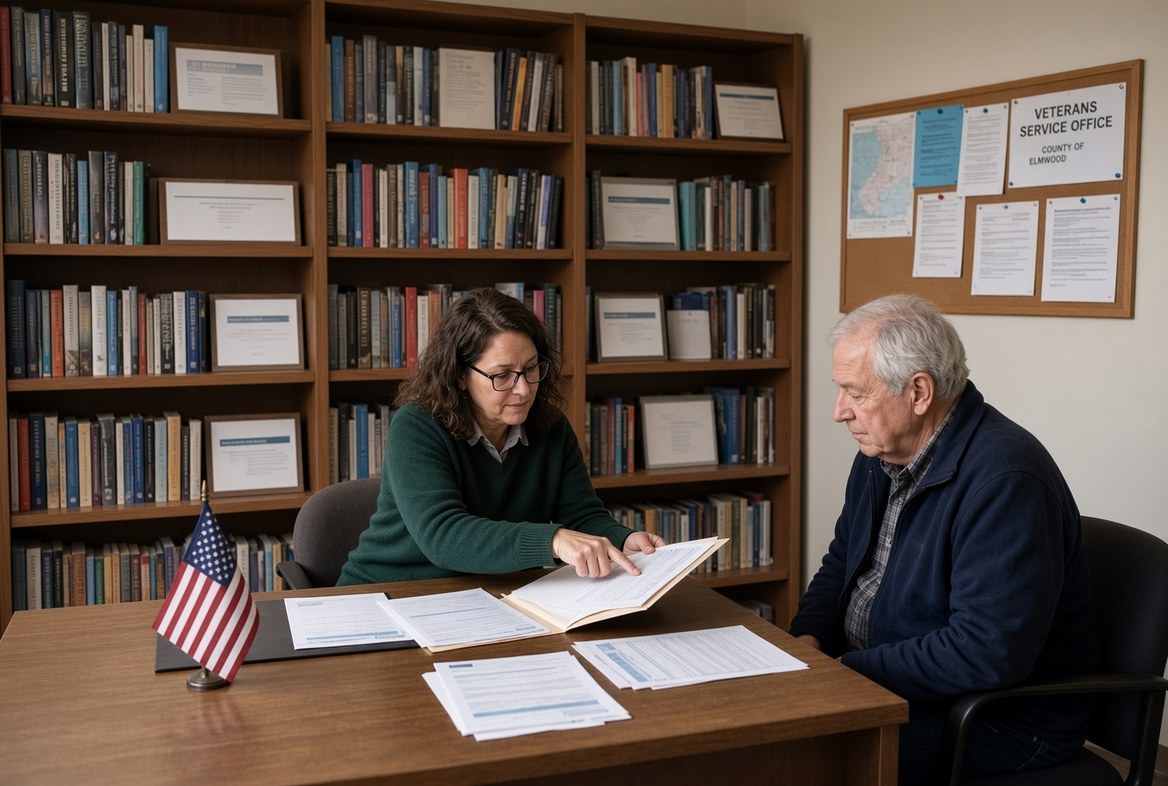
Do not fill in a VA claim alone and do not pay a company to do it. Veterans service organizations and county and state veterans service officers will prepare and file a claim with you for free, they are accredited to do it, and they do it every day. Your county veterans service office is the first phone call. Anybody charging you a percentage of a benefit you have not received yet is not the route.
Employment help that is specifically yours
- The veterans specialist at your American Job Center. Under the Jobs for Veterans State Grants program every state has Disabled Veterans’ Outreach Program specialists and Local Veterans’ Employment Representatives — staff whose entire job is veterans, sitting inside the same building as everyone else’s services. Ask for them by name of role. It is a different and better conversation than the general queue.
- Priority of service. Veterans and eligible spouses get priority in Department of Labor-funded employment and training programs. That includes many of the programs on this page. Say you are a veteran at the start rather than the end.
- If housing is the problem, not the job. The Homeless Veterans’ Reintegration Program is the only federal grant focused exclusively on competitive employment for veterans experiencing homelessness, and it is for veterans who are homeless or at risk of becoming homeless, with case management and supportive services alongside the job side. At risk of is doing real work in that sentence — it is not only for people already out. If the rent is going one way and the check is going the other, that is the phone call, and it is better made three months early than three months late.
If you want to work for yourself
The training here is genuinely free and there is no reason to pay a private outfit for access to any of it.
- Veterans Business Outreach Centers. SBA funds 31 of them nationwide, offering workshops, training, counselling and mentoring to service members, veterans, Guard and Reserve members, military spouses and family members starting or growing a small business. You do not have to be starting from scratch to use one.
- Boots to Business Reboot — and note the word Reboot, because that is the version for you. It extends the Boots to Business course to veterans of all eras in their own communities, including National Guard and Reserve members. All eras means all eras. Nobody is going to ask when you got out.
- Federal contracting, if the work you do could be sold to a government buyer. Veteran-owned and service-disabled veteran-owned certification opens set-aside contracts, and the SBA runs the certification and the training around it.
The order I would do it in. County veterans service officer first, because they check everything at once and it costs nothing. Then the VA pension application if you are a wartime veteran over sixty-five. Then the veterans specialist at the job center. Then the VBOC, only if you actually want to work for yourself. Four calls, and the first one often answers the other three.
One last thing, said plainly because it is true and it is rarely written down. Losing work, or a house, or years of your life is not always a matter of skills or effort. Sometimes something you carried home did the deciding for you, and there is nothing about that worth being ashamed of. The programs above exist precisely because that happens, and they were paid for on the understanding that people would use them. Using what you are owed is not taking charity. It is collecting.
⚠ Four Things to Settle Before the First Job
None of these are exciting and every one of them is the reason somebody’s good idea turned into a bad year.
1. Who is liable when it goes wrong
You sharpen a mower blade and a month later somebody loses a finger. You rewire a lamp and there is a fire. You were the last person who touched it, and being seventy-four and charging twelve dollars does not change that.
Do not assume your homeowner’s policy covers it. Business activity conducted at home is commonly excluded, and finding out afterwards is the worst possible time. Ring your own insurance agent, describe exactly what you intend to do, and ask two questions: is this excluded, and what would it cost to add. For most bench work the answer is a small endorsement or an inexpensive general liability policy. For anything involving cutting edges, wiring, ladders or other people’s children, get the answer in writing before the first job rather than after it.

2. Whether you are allowed to do it where you live
Home occupation rules are real and vary by town: customers coming to the house, a sign at the road, deliveries, parking, equipment noise. Most residential zoning permits quiet home work and restricts the visible kind. If you are in an association, check the covenants as well — they are frequently stricter than the county and they are enforced by neighbors. One phone call to your city or county zoning office settles it, and it is a five-minute call.
3. How you take the money — and the one rule that never bends
Cash, a check, or a phone payment app are all fine. Keep a simple book: date, customer, what you did, what you charged. You will need it at tax time and you will want it the first time somebody disputes a job.
And this one is worth more than everything else in this section put together. The Federal Trade Commission’s rule on fake checks: a person you do not know sends a check — usually for more than they owe you — and asks you to send some of it back. They always have a good story. Fake checks look like real checks even to bank employees, and by law your bank must make the funds available quickly, so seeing the money in your account does not mean the check is good. It can take weeks for the bank to work out it is fake, and then it takes the money back.
So: if anybody ever pays you more than you charged and asks for the difference back, it is a scam. Every single time. There are no exceptions and there is no version of it that is real. Return the check, keep nothing, and report it at ReportFraud.ftc.gov.
4. What to charge
This is where more of these ventures die than any other cause, and the failure is always the same one: charging 1994 prices in 2026 because that is the number in your head. Then working twice as hard to make it up, then quitting tired and out of pocket, and concluding the work was not there. The work was there. The price was wrong.
- Find out what it actually costs now. Ring two shops in the next county and ask their price as a customer. That is your market rate, not what you remember.
- Count materials, wear and travel before you decide what is left over.
- Charge a minimum for anything that makes you set up. The setup costs the same for a small job as a big one.
- Do not discount because you feel awkward about your age. You are faster and more careful than whoever they would otherwise use, and cheapness attracts exactly the customers who will waste your afternoon.
- Raise it once a year. Everybody who forgets to do this is working for less every year without noticing.
Free help with all four of these exists and costs nothing: SCORE and your local Small Business Development Center will sit down with you on pricing, bookkeeping and whether you need a license, and the mentors are mostly people who ran businesses themselves.
📋 Why This One Is on the Fifty List
Almost everything on this page is easier to arrange at fifty-eight than at seventy-four, and one thing on it is nearly impossible to arrange late.
The network. Tools keep. Skills keep. Phone numbers do not. The foreman who would hire you back, the supplier who would refer you, the shop that would send you overflow — those relationships decay quietly from the day you stop turning up, and at seventy-four half of them have retired or died. The single most valuable thing you can do at fifty-five is stay findable to the people you worked with, because that is the asset that cannot be rebuilt afterwards at any price.
The second is the license, the card and the commission. A license kept current, an OSHA trainer card, a notary commission, an inactive professional registration — every one of them costs a little each year and reopens a door that is expensive or impossible to reopen cold.
And here is where the argument stops, and I would rather say it than let you think it. For a great many people reading this, none of it will be enough, and that is not a verdict on how hard you tried. A plant closed. A diagnosis landed. A husband or wife died and half the income stopped the same week. Being caught by arithmetic that was always going to catch somebody is not a failure of character. If that is where you are, the money nobody claims is the section written for you, and there is no shame anywhere in it.
What is left for the rest of us is smaller and more ordinary. Keep the tools. Keep the card current. Stay findable. And understand that forty years of knowing how a thing is actually done has not stopped being valuable — it has only stopped being advertised.
📚 Where These Numbers Come From
Every figure on this page traces to a federal agency or an established non-profit, and each is linked where it appears. Nothing here comes from a site that earns a commission on what it tells you. All of it moves — check the source before you act.
- Occupational decline and automation — Bureau of Labor Statistics, Occupational Outlook Handbook and the 2024–34 employment projections.
- SCSEP — U.S. Department of Labor; the income exemption at 42 U.S.C. § 3056g and DOL guidance letter TEGL 17-13.
- Apprenticeship instruction — Apprenticeship.gov and the U.S. DOL Office of Apprenticeship.
- AmeriCorps Seniors — AmeriCorps.
- Farmers markets and the Senior Farmers Market Nutrition Program — USDA Agricultural Marketing Service and USDA Food and Nutrition Service.
- Homemade food laws by state — Institute for Justice, an advocacy organization on this issue; verify your own state with its department of agriculture.
- Free business mentoring — U.S. Small Business Administration and SCORE.
- Copyright in AI-assisted work — U.S. Copyright Office.
- Scams — Federal Trade Commission.
- Earnings limits, SSI rules and resource limits — Social Security Administration and CMS.
❓ Plain Answers
The short version of this page, one question at a time — the answer is always the first line.
What are good part-time jobs for retirees?
Good part-time work for retirees includes bench work like sharpening and lamp rewiring, poll work, test proctoring, notary work, substitute teaching and bookkeeping for small trades. These hold up because a person has to be in the room or accountable.
Can I earn money and still collect Social Security?
Past full retirement age there is no earnings limit at all, and your Social Security check does not move. Below full retirement age, the 2026 limit is $24,480, and above it Social Security holds back a dollar for every two.
What is SCSEP?
SCSEP, the Senior Community Service Employment Program, is a Department of Labor paid work training program for people 55 and older. Participants must be unemployed, with family income no more than 125 percent of the federal poverty level, and work an average of twenty hours a week.
Do SCSEP wages count against housing assistance or SNAP?
No, federal law at 42 U.S.C. § 3056g says SCSEP funds shall not be considered income for federally funded housing programs or SNAP. Print Department of Labor guidance letter TEGL 17-13 and take it with you, since local offices may not know.
What jobs should retirees avoid starting?
Retirees should avoid starting in transcription, data entry, home customer service, document translation or medical billing and coding. The Bureau of Labor Statistics expects these to shrink as automated systems, including AI, spread.
Can a retired tradesman teach apprentices?
Yes, a retired tradesman can teach the related instruction that Registered Apprenticeship requires, and practical on-the-job experience can count as the qualification. Ask your old union hall, the nearest technical college's apprenticeship coordinator, or your state apprenticeship agency.