A support system is a thing you build, not a thing you inherit. Family is wonderful when it shows up and it is not a structure you can stand on. The five things below are.
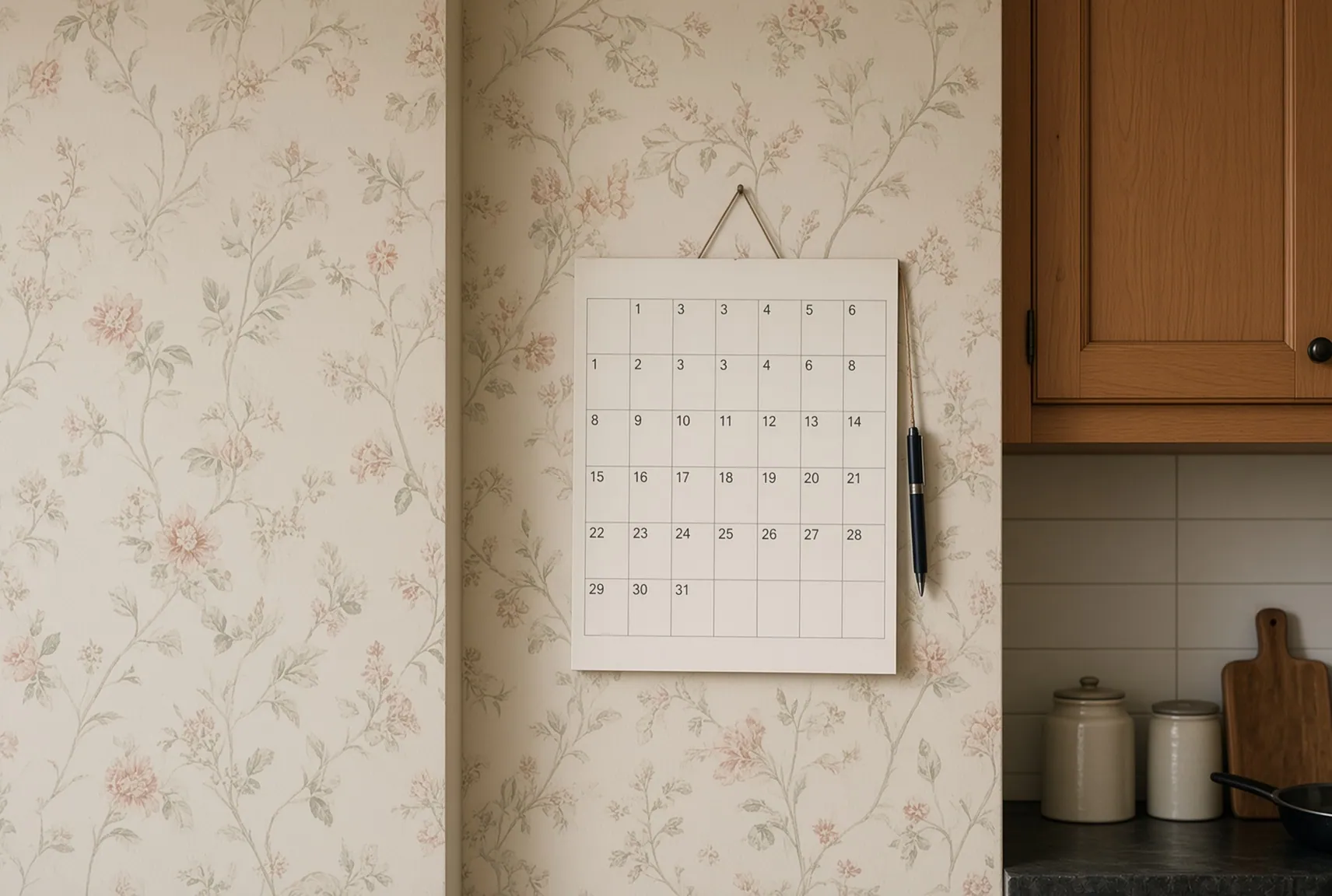
The single most useful move is to put one thing on the calendar that repeats. Not a resolution. A Tuesday. Somewhere that expects you and notices when you are not there.
If the hard part is grief, and grief has quietly become a bottle, that is on this page too — without any sermon attached. Skip to that section if it is the one you came for.
🏠 The Man Across the Road
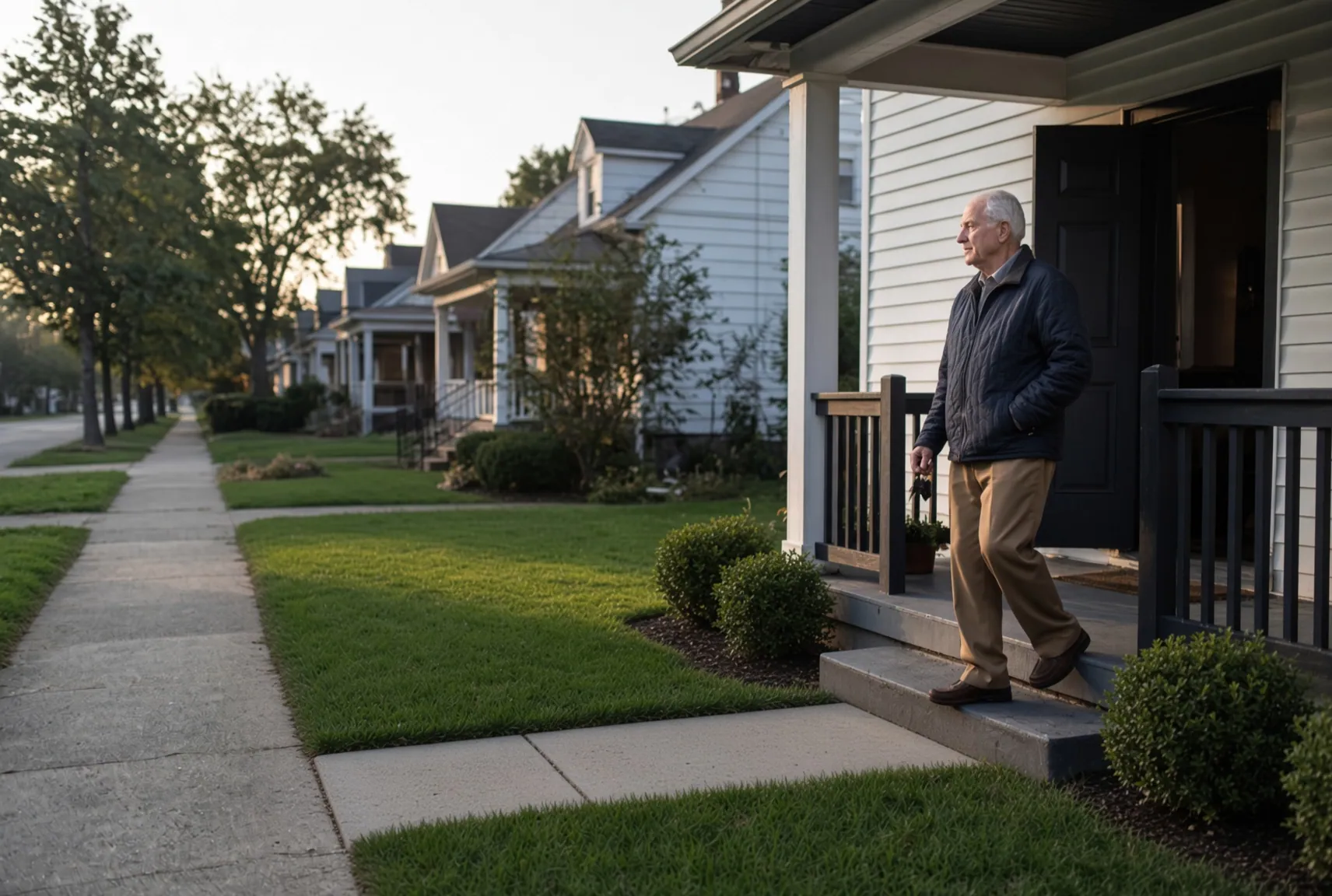
There is a man I will call Ed.
Ed is a composite. He is put together out of a neighbor of mine, out of two men I knew in the trades, and out of what the research says happens to widowed men in the first two years — which turns out to be the same story often enough that it has been measured. I have blurred him on purpose. You do not write a man’s troubles down with his address attached. But there is not a thing in what follows that I have invented, and if you have a street, you have an Ed on it.
Ed is somewhere in his sixties. He lost his wife. He will tell you that is when the drinking started, and he says it the way a man says a thing he has said many times, in the same words, with the same small shrug at the end.
He still gets up. He still gets the mail. He mows, slowly, in two goes with a sit-down in the middle. He is what people call functional, which is a word that means the wheels have not come off yet in a way the neighbors can see. He cannot lift much any more — five or ten pounds and his arms are done. Some of that is age. Some of it is that a man who gets a third of his calories out of a bottle stops building muscle and starts spending it.
Here is the part I want you to sit with. Ed is not a man who failed at life. He worked. He was married a long time. He was, by every account, decent. What happened to Ed is that his entire social world ran through one person, and that person died, and there was no second structure underneath.
His wife made the phone calls. She remembered the birthdays. She knew which neighbor had a new grandbaby and which one had gone into the hospital. She was the one who said we should have them over. When she died, Ed did not just lose his wife. He lost the whole apparatus by which he was connected to other human beings, all at once, in a single afternoon.
And nobody handed him a new one. There is no agency for that. No one comes to the door with a form.
The research says this is not one man’s bad luck, it is a pattern. A large study out of Boston University School of Public Health and Chiba University, published in early 2026, followed thousands of older adults through spousal loss. Widowed men showed higher risk of dementia and death, more depression and hopelessness in the first year, and increased alcohol consumption. Widowed women, on the whole, did not. Both sexes became more socially active after the loss — but only the men experienced a drop in social support. They were out among people and still not held by anybody.
That last finding is the whole problem in one sentence. Being around people is not the same as being connected to them. Ed goes to the store. Ed is not connected to anything.
An older study looked specifically at recently widowed older men and found hazardous drinking was common among them — and, oddly, that it did not track with how much grief they reported feeling. The researchers suggested it was not sorrow doing it so much as the sudden removal of the person who had quietly regulated the man’s life. Nobody now to notice. Nobody to say that’s enough.
Ed will tell you the drinking is about his wife. He believes it. It might be truer to say the drinking is about the empty structure she left behind, and that a bottle is very good at filling a structure, because it asks nothing and it is there every single evening at the same time, which is more than can be said for most people.
I am not writing this to diagnose my neighbor. I am writing it because I think a great many men reading this are one bad year away from being Ed, and do not know it, because the thing that would protect them is not money or health. It is having more than one leg to stand on.
🧮 Why Family Is Not a Plan — and It Is Not Their Fault
Let me be careful here, because this is where these articles usually go wrong. They turn into a complaint about ungrateful children, and the old people who read them close the page feeling worse and more alone than when they opened it.
That is not what this is. Your family is not the problem. Arithmetic is the problem.
Consider what has actually changed in fifty years. Your daughter works, and so does her husband, because one income does not carry a household any more. Your son moved for a job, because the job was there and not here. Grandchildren need driving to three activities a week. Somebody in that house is likely caring for a parent already — possibly you, possibly the other side’s. And people are living into their late eighties, which is a gift, and which also means the caring years now run twenty and thirty long instead of five.
Your children are not neglecting you. They are rationed. There is a finite amount of them and it is spread across more people than it used to be.
None of which changes your Tuesday afternoon.
So the question is not how do I get my family to do more. That question has no good answer and asking it out loud tends to make everybody feel wretched. The question is what else can hold weight.
The scale of this, since it helps to know you are not peculiar: in May 2023 the U.S. Surgeon General issued a formal public health advisory on loneliness and isolation. About half of American adults reported measurable loneliness. The advisory noted that lacking social connection carries a mortality risk in the same range as smoking up to fifteen cigarettes a day — a comparison drawn from benchmarking effect sizes across studies, not a precise medical equivalence, but the direction and the size of it are not in dispute.
And this figure, which I find the saddest of them: in 1990, 27 percent of Americans said they had three or fewer close friends. By 2021 it was 49 percent. Half the country is down to two friends or fewer. Whatever is happening to you is happening to the man across the road as well, and neither of you has mentioned it.
Here is the thing that ought to be encouraging in that. If half the country is short of company, then the room you are afraid to walk into is full of people in exactly your position. You are not the odd one out at the senior center. You are the median attendee.
5️⃣ The Five Things That Hold Weight
These are not inspirational. They are load-bearing. Each one is a thing that keeps standing when a particular kind of support is knocked out from under you.
1. Emotional resilience — which is not cheerfulness
Resilience gets sold as a sort of relentless good mood, and that is not it at all. Cheerful people snap. Resilience is duller and more useful than that: it is the ability to feel something terrible without needing it to stop immediately.
The reason this matters more after seventy than it did at forty is that the losses stop being occasional. At forty a funeral is an event. At seventy-five it is a season. Friends go. A sister goes. Your own body posts notices. If your only method for handling a hard feeling is to make it go away fast, you will run out of methods, and the fast methods that remain are the bottle, the television, and the closed front door.
What actually builds it, as far as I can tell from watching people who have it:
- Naming the thing out loud to one other human being. Not therapy necessarily, though therapy is not the humiliation your generation was taught it was. Just saying I have been in a hole since March to somebody, once. The saying is most of it.
- Letting a bad afternoon be a bad afternoon without concluding it is the rest of your life. Old grief comes in waves and the wave passes, and men who do not know that mistake the wave for the new permanent weather.
- Keeping one thing on the calendar that happens whether you feel like it or not. This is the quiet trick underneath everything on this page. Feelings are terrible at getting you out of the house. Obligations are excellent at it.
2. Financial simplicity — fewer moving parts, less to go wrong
This one is not about having more money. It is about your money being comprehensible to you on a bad day, and comprehensible to somebody else if you are in the hospital.
The men and women I have watched get into real trouble were rarely poorest. They were the ones with eleven accounts, four cards, two old 401(k)s from jobs that no longer exist, a life insurance policy nobody can find, and three subscriptions renewing on cards that expired. Complexity is a tax you pay in worry, and the bill comes due exactly when you are least able to pay it.
- Consolidate to as few accounts as will do the job. One checking, one savings, one card you actually use. Cancel the rest properly, in writing.
- Write the one page. Where everything is, what the passwords are, who to call. Put it somewhere a person could find it without you. We have a whole page on the documents your family will need and another on what a surviving spouse actually has to do, and both of them exist because this is the single kindest afternoon of work available to a person.
- Kill the small recurring charges. Not because eleven dollars matters. Because eleven dollars a month, times nine things you forgot about, is a thousand dollars a year going out the door for nothing at all.
- Know what you actually have coming in. If Social Security is most of it, our page on surviving on Social Security lays out the real 2026 arithmetic and the programs that quietly exist.
Financial simplicity is a support because money trouble isolates people faster than almost anything else. A man who is embarrassed about money stops going where people are. The savings are secondary. The not-being-ashamed is the point.
3. Physical mobility — the one that decides all the others
I will be blunt about this one because I think it is the most underrated item on the list, and because everything else on this page depends on it.
If you cannot get out of the house, none of the rest of this is available to you. The Tuesday group, the volunteer shift, the new tribe, the coffee — all of it assumes a body that can get from a chair to a car to a door. Mobility is not one of five supports. It is the floor the other four are standing on.
It does not mean the gym. It means:
- Walking, most days, at whatever pace you have. Not for the heart, though it helps the heart. For the legs, and for the fact that walking somewhere is how people accidentally meet people.
- Not losing the stairs. The day a person stops using stairs is usually the day they stopped being able to, and it usually could have been prevented six months earlier.
- Grip and balance, which are the two that go first and quietest. Our easy-grip upgrades page and the tools and aging hands piece deal with the grip side of it directly.
- Fixing the house before the fall, not after. Grab bars and night lights are twenty dollars and an afternoon, and they are the cheapest independence you will ever buy.
Ed cannot lift ten pounds. That is not only the drink. It is that a body which does nothing for two years becomes a body that cannot do anything, and then the world shrinks to the width of the house, and then to the width of one chair in it.
4. A code of your own — so your worth is not up for a vote
This is the one that sounds soft and is not.
Most people spend their working lives with their sense of worth outsourced. You were worth something because you were good at your job, or because the family needed you, or because people asked your opinion. Then you retire and nobody asks. The children are grown and do not need deciding for. The phone does not ring.
And if your worth was in other people’s hands the entire time, it leaves when they do.
A code is just deciding for yourself what you are for, and then doing it whether or not anybody notices. It does not have to be grand. Some of the best ones I have known:
- I do not let a neighbor go without help I could give.
- I keep my word, including the ones I gave myself.
- I fix what can be fixed and I do not make speeches about the rest.
- I am the one who remembers people’s names.
The practical effect of having one is that a week in which nobody calls you stops being evidence about your value. It is just a quiet week. That sounds like a small distinction and it is the difference between a rough patch and a slide.
5. A consistent health routine — boring on purpose
Not a health kick. A routine. Something that happens at the same time in the same way so that it does not require a decision, because decisions are the expensive part.
- The same wake-up time, seven days. The single most stabilizing thing available to a person living alone. The days blur otherwise, and blurred days are where the drinking creeps earlier.
- One real meal you cook, even a plain one. Cooking is a small act of taking yourself seriously.
- Medications in a weekly box you fill on the same day. Sunday, usually. It takes four minutes and it removes an entire category of disaster.
- The appointments you keep even when you feel fine. Eyes, ears and teeth especially, because those three quietly cut people off from the world before anything else does — which is why we wrote about eyesight, hearing and dental costs as three parts of the same problem.
Hearing is worth its own sentence. A man who cannot follow conversation in a room with background noise will stop going into rooms with background noise, and he will tell himself and everybody else that he just does not care for crowds. That is not a preference. That is an untreated hearing loss walking a man out of his own social life, one uncomfortable evening at a time.
🤝 Where the New Tribe Actually Is
Now the hard part, and the part most articles skip, because it is easy to say build a community and considerably harder to say go here, on this day, and ask for this person.
So here is the real list. These are actual organizations that actually exist in actual American towns.
Men’s Sheds — the best idea nobody has heard of
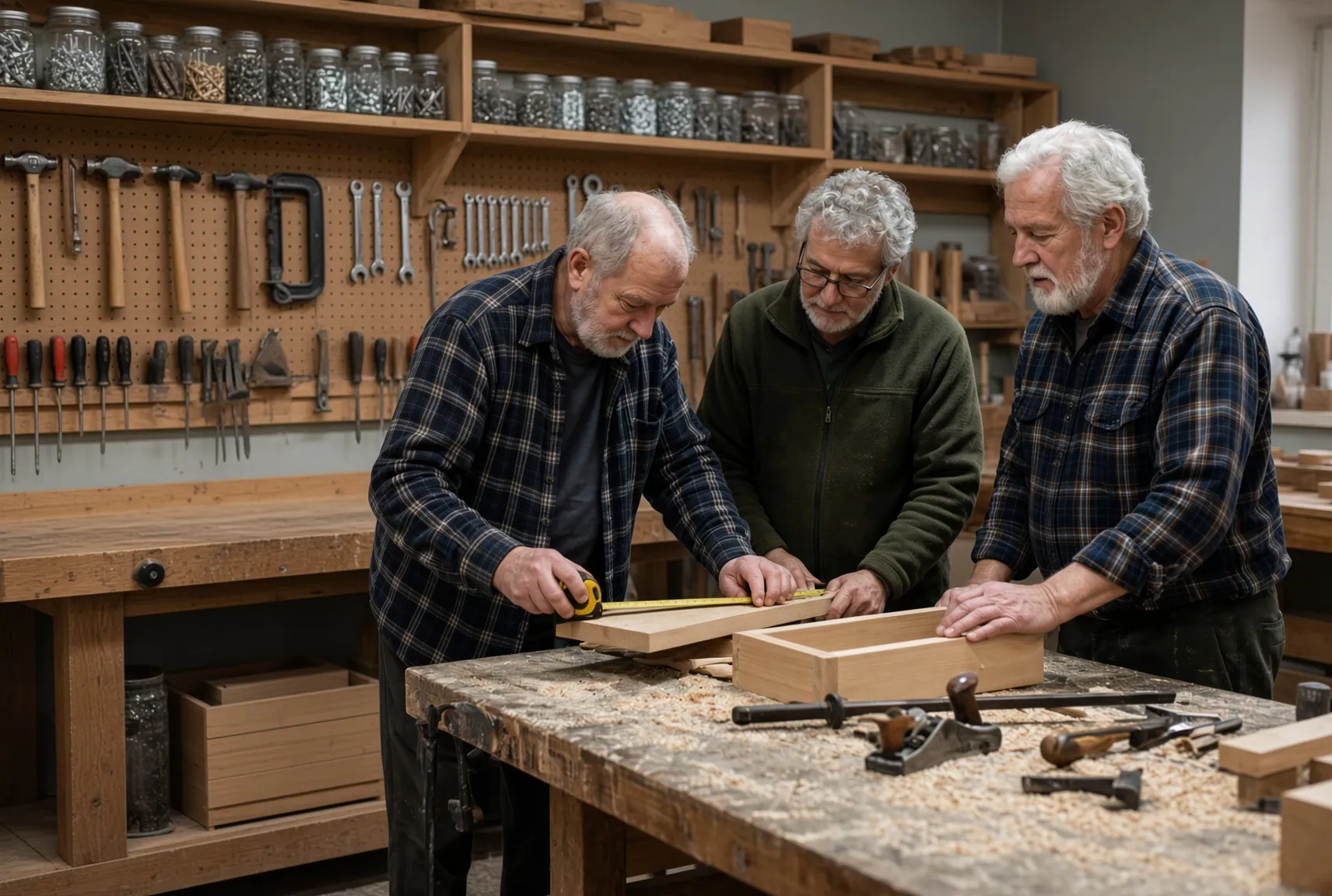
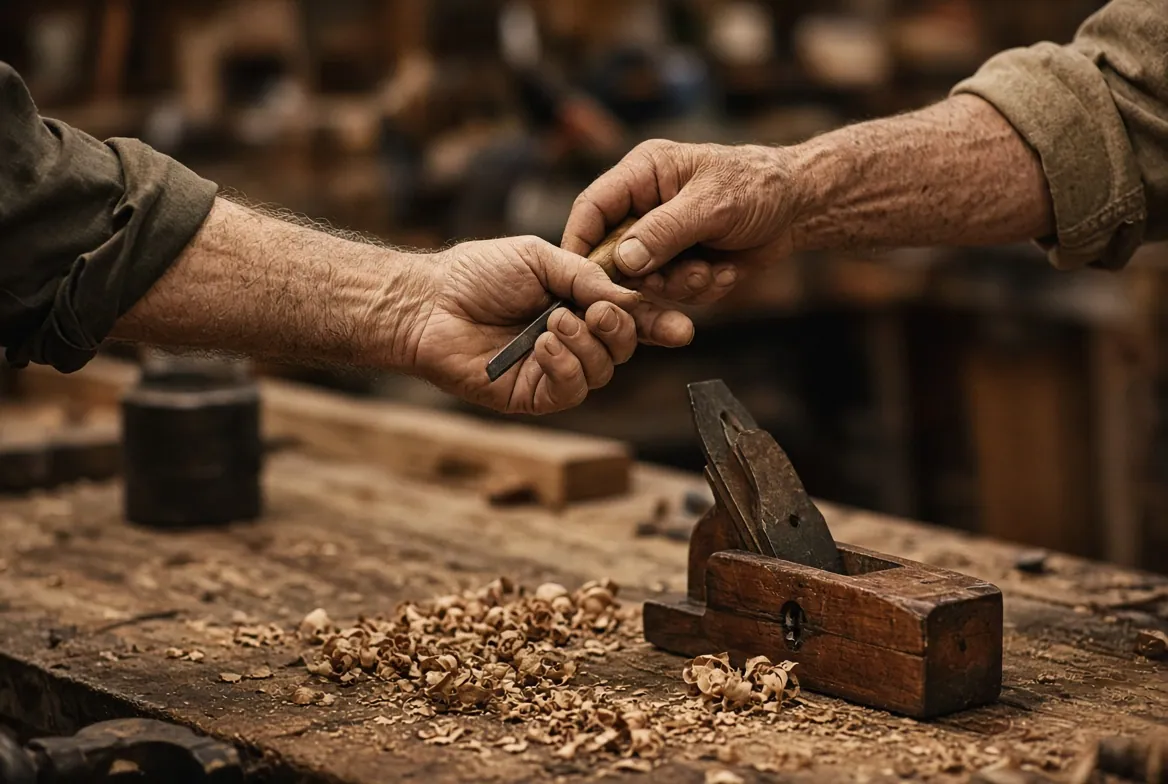
A Men’s Shed is a workshop. That is all it is. Men come, they work on things — woodwork, metalwork, repairs, projects for the community — and in the working, they talk.
The whole premise, and it is a good one, is that men will not sit in a circle and discuss their feelings, but they will stand at a bench beside another man for two hours and say things they have never said to anyone. The movement’s own phrase for it is that men talk shoulder to shoulder rather than face to face. Anybody who has worked a job with another man knows exactly how true that is.
It started in Australia in the 1990s — launched, as it happens, by a woman who noticed that the health services aimed at older people were being used almost entirely by women. There are now roughly two thousand Sheds worldwide. The United States came late and is growing: sheds have been opening in Florida, Texas, Colorado, Louisiana, Mississippi and Minnesota, generally hosted inside an existing senior center or community building.
The U.S. Men’s Sheds Association is the place to look for one near you, and — this is the important part — they will tell you how to start one if there is not. A shed can be set up in a senior center, a church hall, a spare garage. It needs a room, some tools, and four men.
If you have a garage full of tools and no one to use them with, this is your answer, and it may be the single most on-the-nose recommendation on this entire website.
AmeriCorps Seniors RSVP — the one your tax dollars already paid for
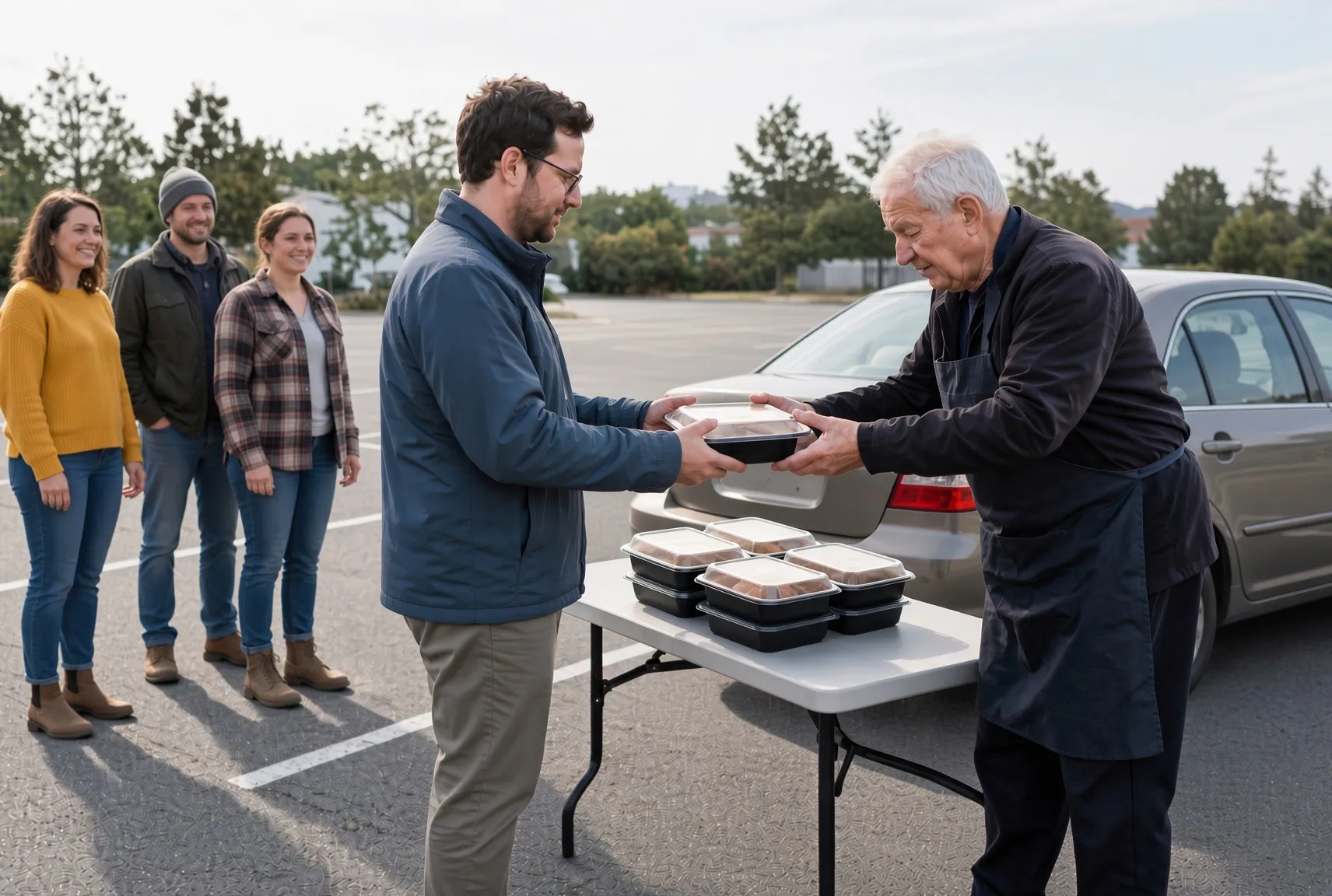
RSVP has been running since 1971 and engages over 108,000 volunteers aged 55 and up, across every state. You choose what you do, where, and how much — anywhere from a couple of hours to forty a week. Volunteers tutor children, help with taxes, deliver food, assist after disasters, check on other seniors by telephone, and a hundred other things.
Two things make it better than generic volunteering. First, somebody expects you on a particular day, which is the whole mechanism. Second, AmeriCorps’ own reporting is that volunteers experience decreased anxiety, depression and loneliness — which is the polite way of saying that the person being helped most is frequently the one doing the helping.
Find it at americorps.gov, or ring your county’s Area Agency on Aging and ask who runs RSVP locally.
If you served — the VFW and the American Legion
I will say this plainly as one veteran to another: if you served and you have never walked into your local post, you are leaving something on the table that was paid for and is owed to you.
Posts vary enormously. Some are mostly a bar, and if drink is your trouble that is worth knowing before you go. But many run breakfasts, honor guards, ride programs, service-officer help with VA claims, and a great deal of quiet checking on each other. And the entry cost is nothing — you do not have to explain yourself, you do not have to make conversation, you already have the only credential that matters.
The public library, which is not what you think it is
The library stopped being about books alone some time ago. Most county systems now run book groups, computer help, genealogy sessions, tax assistance, lectures, film afternoons and craft groups — free, warm, no membership, no one asking why you came.
It is also the easiest door in this entire article to walk through, because nobody has to say hello to you at a library. For a man who has not been anywhere in two years, an hour in a building with other humans and no obligation to speak is an entirely reasonable first step.
Senior centers — and the objection everybody makes
The objection is always the same and I have heard it a hundred times: that’s for old people.
Said, usually, by a man of seventy-four.
Have a look anyway. Modern centers run woodshops, fitness classes, cards, meals, day trips, tax help and legal clinics. Some of them host the Men’s Sheds mentioned above. And the meal programs matter more than they appear to — a congregate meal is company with a plate in front of it, which is much easier than company with nothing to do.
The Village movement — neighbors, organised
Villages are membership organisations, usually neighborhood-sized, where members help each other stay in their homes. Rides to appointments, small repairs, check-in calls, social events. The distinguishing feature is that it runs on reciprocity rather than charity — you give what you can and you take what you need, and nobody is a case. The Village to Village Network keeps a directory of them.
Grief and widowhood, specifically
If the loss is recent, general company may not be what you need first. There are groups built for exactly this. GriefShare runs time-limited groups through churches all over the country, and you do not have to be much of a churchgoer to attend one. The National Widowers’ Organization exists specifically for men, and they are clear-eyed about the drinking risk in a way most bereavement material is not. Most hospices run free bereavement groups open to the whole community, not only to families they served — which almost nobody knows.
The ones that are not organisations at all
- A community garden plot. Outdoor work, a reason to turn up, and a crop at the end of it. See vegetable gardening if the growing side is new to you.
- A weekly breakfast at the same diner at the same time. This is how half the men in America have friends. You sit at the counter, you go back, and after five weeks somebody says your name.
- A church, synagogue or meeting house — including if your faith is thin. Congregations are among the last institutions in American life organised around noticing when somebody is missing.
- Fraternal organisations — Elks, Moose, Kiwanis, Rotary, Lions. Older membership, low bar, and generally delighted to see a new face.
- Teaching what you know. A man who can weld, wire a house, tune an engine or lay tile has something a great many younger people badly want and cannot find. Vocational schools, maker spaces and 4-H groups will take your Tuesday afternoon and thank you for it.
📅 The First Tuesday
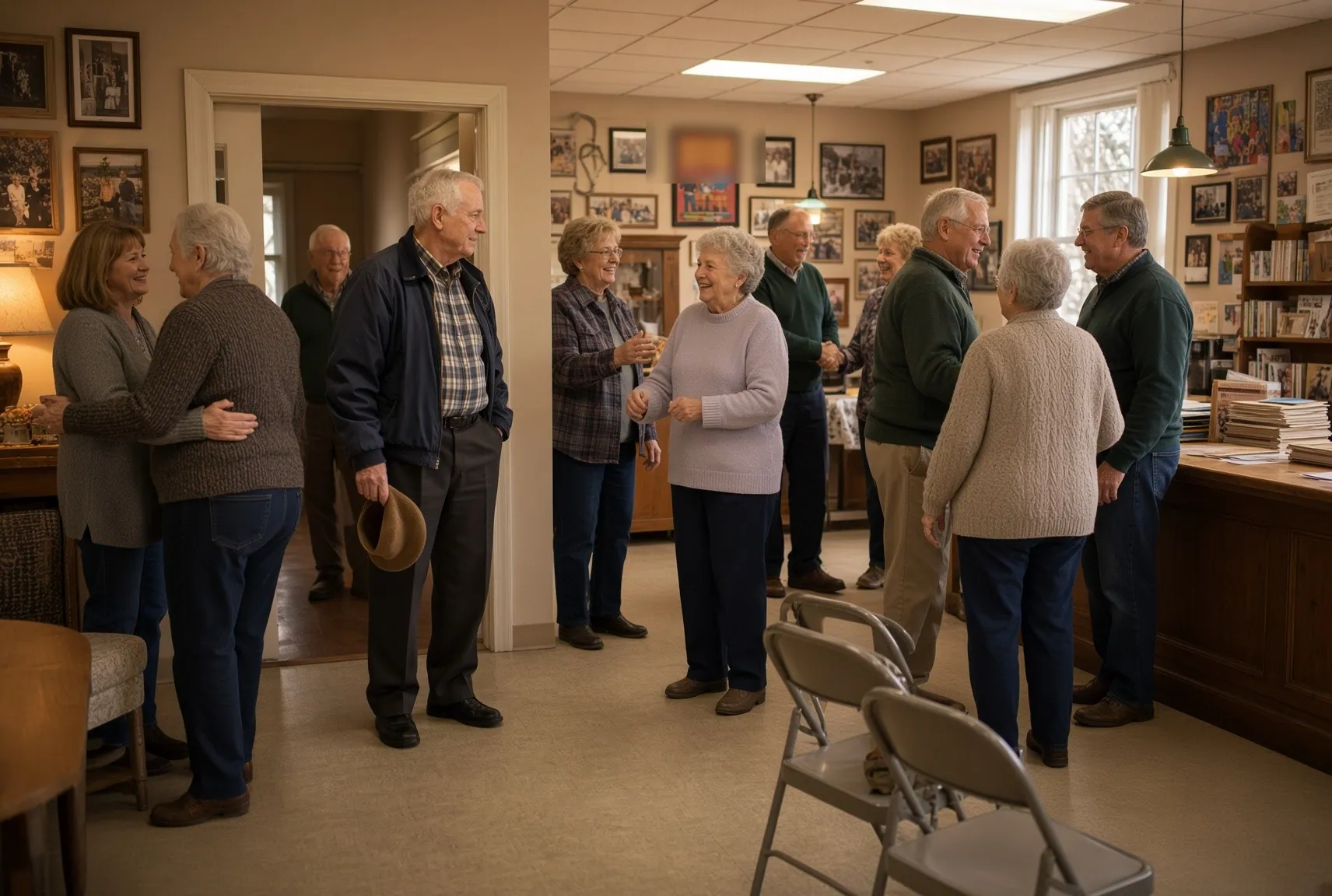
Everything above is a list, and lists are easy to read and easy to do nothing about. So here is the smallest version that actually works.
Pick one thing. Put it on the calendar. Go three times before you decide anything.
Three, because the first time is uncomfortable for everybody, the second time somebody recognises you, and the third time you are a person who goes. Judging a group by the first visit is like judging a house by the front step in the rain.
And a few things that make the first one survivable:
- Go early rather than late. Arriving before a room fills is far easier than walking into one already full.
- Bring a job. Ask if they need help setting up chairs. Having a task removes the entire problem of what to do with your hands.
- Do not go to be interesting. Go to be useful. Useful is much easier and it lasts longer.
- Say what is true if somebody asks. “I lost my wife and I have got out of the habit of people” is a sentence that will be met with more kindness than you expect, in a room where half of them could have said it themselves.
And if you are reading this about somebody else — about your own Ed — the useful thing is not advice. Advice slides off a lonely man like water. The useful thing is an invitation to something specific with a date on it: I’m going Thursday at nine, I’ll pick you up at quarter to. Something to say yes to, not something to think about. We wrote a whole page about the other side of that, being the man who comes and sits down.
🥃 If It Has Become the Drink
I want to handle this without a sermon, because sermons are the reason men do not read past the first line of anything on this subject.
Here is what is true. A great many men drink more after losing a wife. It is common enough that researchers have put numbers on it, and the National Widowers’ Organization treats it as one of the central risks of male bereavement rather than a shameful footnote. Men grieve differently — the research calls it instrumental grieving, which means fixing things and doing things rather than talking. And the death of a wife is the one problem that cannot be fixed by doing. So a man who copes by doing finds himself with nothing to do about the largest thing that has ever happened to him.
Then evening comes. Every evening.
Two things worth knowing, both practical rather than moral:
The body changes what the drink does. The same three whiskies that were unremarkable at forty-five hit differently at seventy. Body water goes down, so blood alcohol goes up for the same amount. It clears more slowly. It interacts with medications — blood pressure drugs, blood thinners, sleeping pills, painkillers — in ways it did not before. A man can be drinking exactly what he always drank and be in genuinely different territory without having changed a thing.
And it makes the original problem worse, on a delay. Alcohol helps for about an hour and then works against you — it deepens depression and anxiety, wrecks sleep architecture so you wake at three, and drains the energy required to do any of the things on this page. It is the one solution that actively removes your ability to find the others.
What actually helps, in order of how easy it is:
- Tell one person the true number. Not a promise to stop. Just the number, said out loud once, to a doctor or a friend or a helpline. A thing stops being a secret at that point, and secrets are where this grows.
- Tell your doctor about the medications specifically. This is an easier conversation than the other one and it is genuinely useful. “I drink most evenings, is that a problem with what I’m taking” is a medical question, not a confession.
- Call SAMHSA’s national helpline: 1-800-662-4357. Free, confidential, twenty-four hours, every day, English and Spanish. They do not lecture and they do not report you anywhere. They tell you what exists near you.
- Consider that the drink may be doing a job. It is filling a slot in the evening that used to hold a person. Nothing about stopping works well until something else moves into that slot — which is the entire reason this section sits at the bottom of a page about building a tribe rather than at the top of a page about willpower.
Ed, in the composite, has not called anybody. That is how these usually go. But I have also watched a man in his seventies walk into a room on a Thursday morning because somebody offered him a lift and he could not think of a polite way out of it, and be a different man inside a year. Not fixed. Different. It is not too late at any of the ages this website is written for.
🗺️ What This Actually Looks Like
Let me put the whole thing back together, because five headings and a list of organisations is not a life.
A man builds this over a year, not a weekend. He starts with the library on a Wednesday because it costs nothing and requires no conversation. Somewhere in month two he takes a flyer off the board about a woodshop at the senior center and does not go for three weeks and then goes. By month four he is driving another fellow there, because that fellow stopped driving at night and it is on the way.
Now look at what he has, without ever having set out to build a support system.
He has a Tuesday and a Thursday that exist whether he feels like it or not. He has three men who would notice within a day if he did not turn up. He has something to be good at in front of people who can tell. He has a reason to be up and dressed by half past eight.
He has somebody who depends on him for a lift, which is worth more to a man than any amount of being helped. And he has, without any of it being the point, become the sort of person who has friends — not because he set out to make them, but because he kept turning up somewhere and friendship is largely a matter of repetition.
His children still live four states away. Nothing about that changed. It just stopped being the only thing holding him up.
That is the whole argument. Not that family does not matter — it matters enormously. But a structure with one leg falls over, and a structure with five does not, and the four extra legs are all things you can build yourself, starting on a Tuesday, at seventy or eighty or beyond.
☎️ The Numbers Worth Writing Down
| Eldercare Locator Connects you to your local Area Agency on Aging — the front door to nearly everything local. | 1-800-677-1116 |
| SAMHSA National Helpline Free, confidential, 24/7, English and Spanish. Alcohol, drugs, mental health. No lecture. | 1-800-662-4357 |
| 988 Suicide & Crisis Lifeline If the night has got very dark. Call or text. Any hour. | 988 |
| Institute on Aging Friendship Line A warmline for people over 60. You may call because you are lonely. That is a good enough reason. | 1-800-971-0016 |
| Where to look online U.S. Men’s Sheds Association · AmeriCorps Seniors (americorps.gov) · Village to Village Network · GriefShare · National Widowers’ Organization · your county library and senior center |
If you only take one number off this page, take the first one. The Eldercare Locator is a real human being who knows what exists in your actual county, and almost nobody uses it.
📚 Related on This Site
- Making Friends After 60 — a pot of coffee, a deck of cards, and what actually happens after you walk into the room.
- Loneliness After 60 — the other side of this page: what it is like when nobody comes, and what it means to be the one who does.
- What She Will Have to Do — the first months after a spouse dies, and what to write down now.
- Documents Your Family Will Need — the one afternoon of paperwork worth more than any other.
- Surviving on Social Security — the real arithmetic, and what quietly exists to help.
- An Active Mind — keeping the machinery between your ears working.
- Part-Time Work for Retirees — sometimes the tribe is simply a job with people in it.
❓ Plain Answers
The short version of this page, one question at a time — the answer is always the first line.
What is a Men's Shed?
A Men's Shed is a workshop where men come to work on woodwork, metalwork, repairs and community projects, and talk while they work. The U.S. Men's Sheds Association can help you find one near you, or tell you how to start one.
How can a retiree find volunteer work?
AmeriCorps Seniors RSVP engages over 108,000 volunteers aged 55 and up across every state, for anywhere from a couple of hours to forty a week. Find it at americorps.gov, or ask your county's Area Agency on Aging who runs RSVP locally.
Is there a phone line for lonely older people to call?
The Institute on Aging Friendship Line, 1-800-971-0016, is a warmline for people over 60, and you may call simply because you are lonely.
How do I find out what services for seniors exist in my county?
The Eldercare Locator, at 1-800-677-1116, connects you to your local Area Agency on Aging, the front door to nearly everything local. It is free, with no sales pitch.
How many times should I go to a new group before deciding about it?
Go to a new group three times before you decide anything about it. The first time is uncomfortable for everybody, the second time somebody recognises you, and the third time you are a person who goes.
Where can I call for help with drinking after losing my wife?
SAMHSA's national helpline, 1-800-662-4357, is free, confidential and open twenty-four hours a day, every day, in English and Spanish. They do not lecture, and they tell you what exists near you. The National Widowers' Organization exists specifically for men.