🕑 The First Forty-Eight Hours
First, what this page is. Nobody here is a lawyer and this page is not about writing any of these documents — that is a conversation with an attorney, and the rules differ in every state. This page is about the far duller problem nobody covers: where the things are, and whether anybody else knows. A perfect set of documents that no one can find is worth exactly as much as no documents at all.
Picture the actual situation, because it is more ordinary than the dramatic version people imagine.
You are in hospital. Not dying — just in, unexpectedly, for a few days, and not in a state to be answering questions. Somebody who loves you is standing in your kitchen, and within about two hours a nurse is going to ask them something they cannot answer.
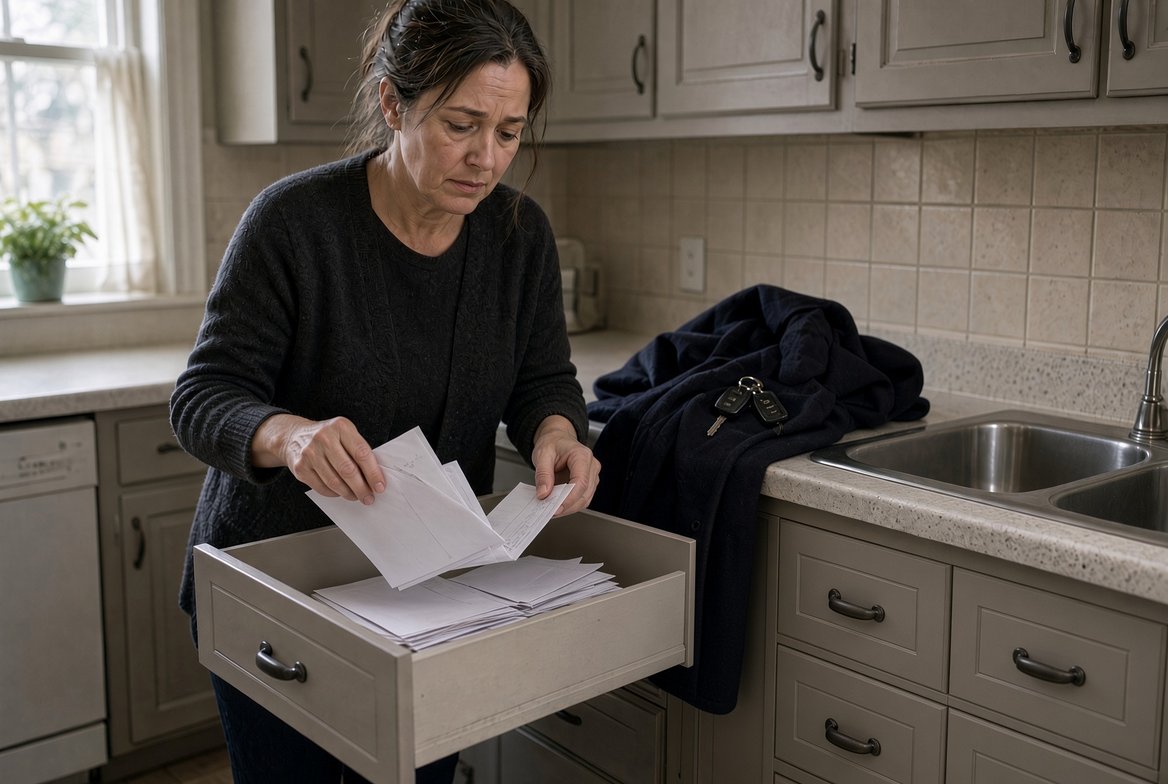
What they need in those first two days is not your will. The will matters enormously later and matters not at all now. What is needed immediately is a much shorter and much duller list:
- Your medication list, with doses. This gets asked first and it gets asked fast.
- Who is allowed to make decisions if you cannot — the health care proxy or durable power of attorney, and the name and number of the person it appoints.
- Your advance directive, if you have one, saying what you do and do not want done.
- Insurance cards and the plan name — Medicare, any Advantage or supplement plan, any long-term care policy.
- The name and number of your doctor, and of anybody else who needs telling today.
- Who feeds the dog, and where the spare key is. Not a joke. It is the thing that goes wrong in the first six hours.
Notice that every one of those is information rather than legal work. None of it requires a lawyer, none of it costs anything, and all of it can be assembled on a Sunday afternoon by somebody who is perfectly well.
🔒 The Safe Deposit Box Trap
Here is the mistake that catches the organized, which is what makes it worth a section of its own.
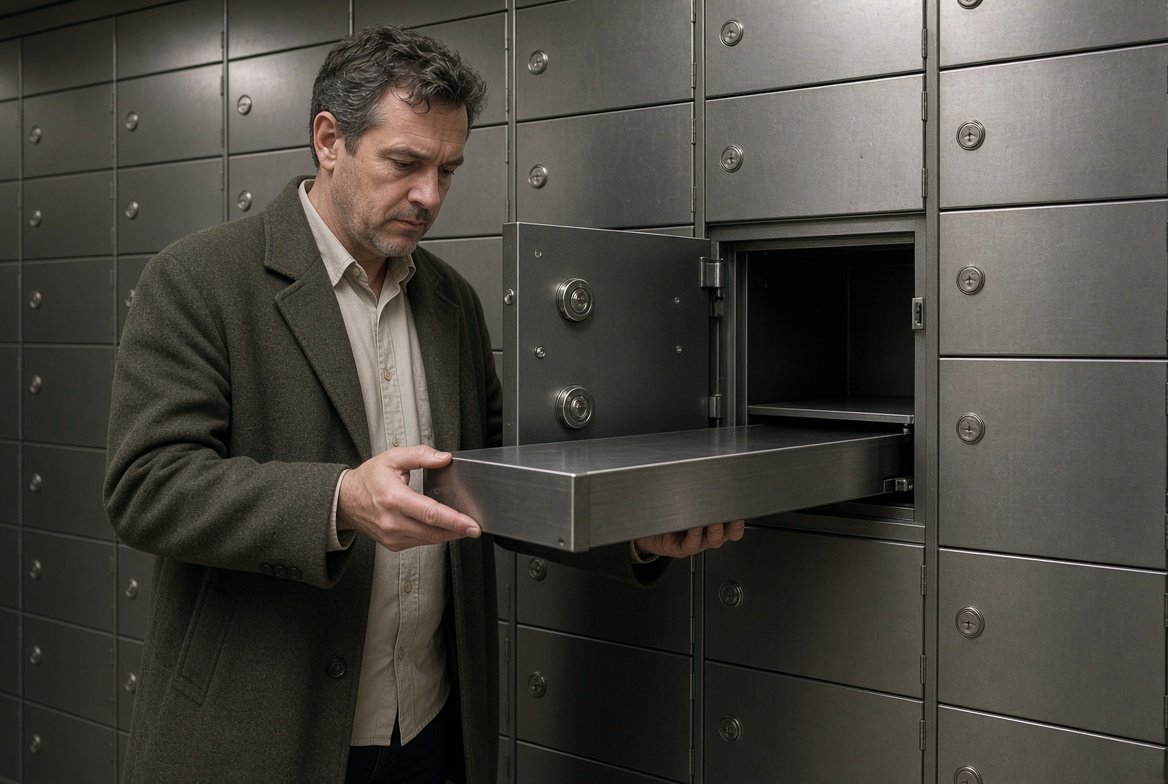
Somebody sensible decides their important papers deserve proper protection, rents a safe deposit box, and puts the will, the power of attorney and the health care directive inside it. It feels like exactly the right thing to have done.
In many states, a safe deposit box is sealed when the renter dies. New York requires an interested party to petition the court before anyone may look inside. Alabama requires the executor to obtain a special probate order. And being appointed executor is itself the slow part — where the appointment is sought informally, it commonly takes six weeks to two months.
Which produces the trap in one sentence. The documents needed to get authority over the box are inside the box.
The rules genuinely vary — some states allow a limited inventory visit with a death certificate, a key and proof of relationship, and some allow a small-estate affidavit for modest estates. But the general shape holds everywhere: a box is a good place for things that can wait, and a bad place for things that cannot.
So split them by how fast they are needed
- Things somebody may need within hours — the health care proxy, the advance directive, the power of attorney, the medication list, the insurance cards. These belong somewhere at home that a named person can reach without permission from anybody: a fireproof document box, a labelled drawer, a folder in the filing cabinet.
- Things that can wait weeks — the deed, the vehicle titles, savings bonds, the original will if your attorney does not hold it. A box is fine for these, or a fireproof safe at home.
And whatever you decide, tell the bank who is allowed in. Adding a co-renter or a deputy while you are alive and well takes fifteen minutes at a counter and removes the entire problem. It is the cheapest legal step on this page and almost nobody takes it.
📋 What Actually Goes In the Folder
One folder, one place, and it does not need to be handsome. An accordion file for eight dollars is entirely sufficient and arguably better than a safe, because the point is that somebody can open it.
The pages you write yourself
- A single sheet at the front: your full legal name, date of birth, Social Security number kept somewhere sensible rather than on the top page, your doctor, your pharmacy, and the two or three people who should be told first.
- The medication list, dated. This one goes out of date faster than anything else in the folder, which is why it wants a date on it and a look at it twice a year.
- The account list — and this is the sheet that saves the most work. Not passwords. Just where things are: which bank, which credit union, which pension, which insurer, which utility, which subscriptions come out monthly. An executor's hardest job is finding out what exists, and a single sheet of paper removes most of it.
- Where the other things are. Which drawer, which bank, which attorney, whether there is a safe and who knows the combination.
The papers that go in with them
- Health care proxy and advance directive.
- Durable power of attorney.
- Insurance cards and policy numbers — health, home, auto, life, long-term care.
- A copy of the will, with a note saying where the original is. Copy in the folder, original wherever it is safest — many attorneys will hold it, and that is usually the easiest answer of all.
- Deeds, titles, and the mortgage or lease.
- Discharge papers if you served, which unlock benefits people frequently do not know they have.
- Funeral wishes, if you have any, in plain language. Nobody wants to be guessing about that on a Tuesday. If you want to go a step further than wishes, the funerals and burial page covers what to price, what to write down, and why the money should sit in your own bank rather than a funeral home’s.

The two-copy rule, and it costs nothing. One folder at home where you can reach it. One duplicate of the short, urgent pages with the person who would actually turn up — the health care proxy, the medication list, the contact sheet. Not the whole thing, and nothing with an account number on it. Just enough that somebody arriving at a hospital at ten at night is not driving to your house first.
🔑 The Half That Did Not Exist Thirty Years Ago
Everything above would have been the whole page in 1990. It is now roughly half of it, because a great deal of what people own and owe lives behind a login.
And here is the part that surprises everybody: knowing the password is not the same as being allowed to use it. Federal privacy law and the terms of service on most platforms mean that an executor with your email password may still have no legal right to log in. That is not a technicality anybody enforces against a grieving family every day, but it is the reason the proper route exists.
That route is a law called RUFADAA — the Revised Uniform Fiduciary Access to Digital Assets Act — which has been adopted in the large majority of states, with the remaining few operating similar rules under different names. It sets out how a person acting for you can be given lawful access.
The single most useful thing on this page, and it takes about ten minutes. Under that law, a setting you make inside the account itself outranks anything written in a will. The big platforms all provide one and hardly anybody uses them:
Apple calls it a Legacy Contact. Google calls it Inactive Account Manager. Facebook calls it a Legacy Contact as well. Each lets you name a person now, from your own settings, without a lawyer and without a fee — and because the platform's own tool takes priority, it is the version that actually works.
Passwords themselves
Do not write a list of passwords on paper in a drawer, and do not put one in the safe deposit box either — the first is a theft risk and the second is locked exactly when it is needed.
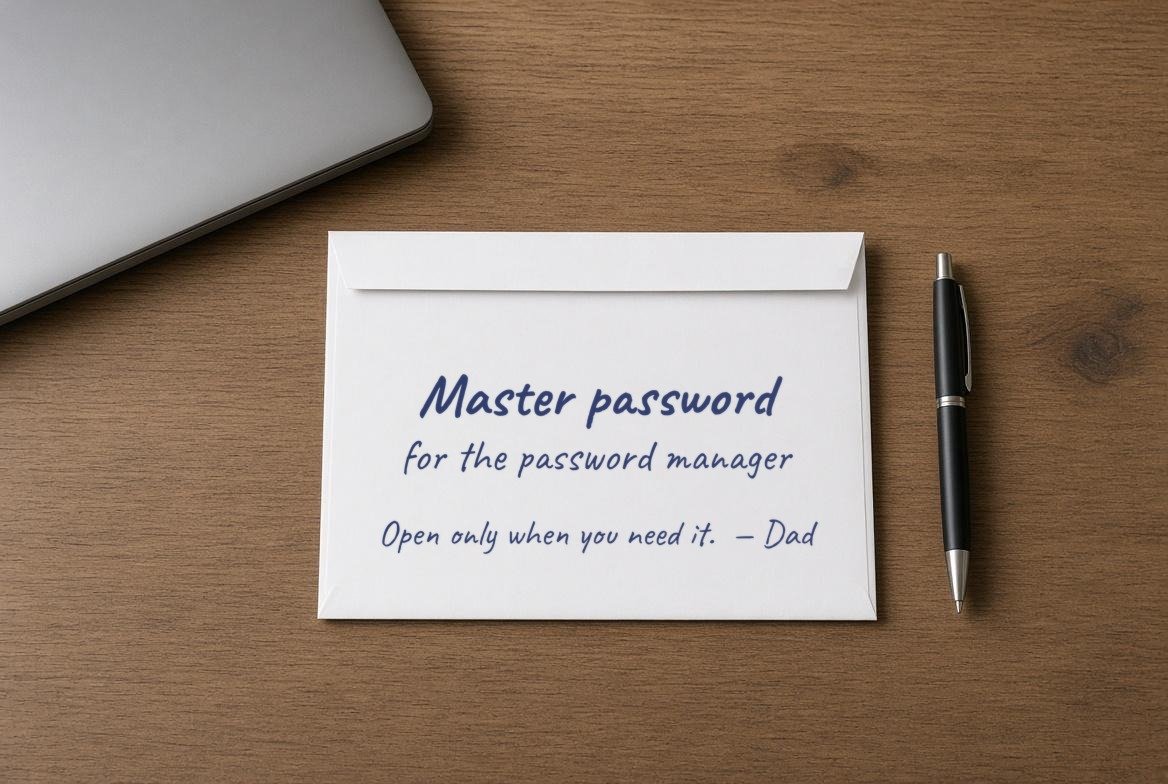
The workable answer is a password manager with one master password, and the master password recorded in the folder, or lodged with the attorney, or held by the person named in your power of attorney. One secret instead of ninety. Most password managers also have their own emergency-access feature, which is worth switching on for the same reason as the legacy contacts.
One more small thing that saves real money: the account list should include the subscriptions. Streaming, storage, memberships, the thing that renews every March. They keep taking money long after anybody is using them, and nobody finds them unless somebody wrote them down.
👥 The Part That Makes It Work
All of the above is useless if it is a secret.
This is the failure that actually happens, and it does not look like carelessness — it looks like privacy. People assemble the folder properly and then say nothing about it, because it feels like a morbid conversation to start and there is never an obvious afternoon for it.
The whole thing turns on one sentence said out loud, once: "If anything happens, the green folder in the bottom drawer of the desk has everything in it."
That is the entire handover. It takes four seconds and it is the difference between a bad week and a genuinely awful one.

Say it to at least two people. One of them may be away, or ill, or the person in the ambulance with you. Two people who both know where the folder is means the system survives one of them being unavailable — which is the whole reason it exists.
And put a date on the front of it. Look at the folder twice a year, on days you will remember anyway — the clocks changing works well. Ten minutes: is the medication list current, has an account closed, has a doctor changed, is the person you named still the right person. A folder from 2019 is not a folder. It is a set of leads.
📋 Why This Belongs on the Fifty List
Because it is the one item here that costs nothing at all and is worth more than most of the things that do.
An accordion file, an afternoon, and one sentence said to two people. No purchase, no professional, no permission. The whole of it can be done between lunch and the evening news, by somebody in perfect health who has no particular reason to be thinking about any of it.
Which is exactly why it does not get done. Everything else on this site has a prompt — the storm is coming, the tooth cracked, the stairs got dark. This one has no prompt at all. Nothing ever happens that makes today the day, right up until the day something does, and by then the person who could have made the folder is the person who cannot.
The rest of this site argues for doing things early because they get more expensive later. This one is different. It does not get more expensive. It stops being possible.
Somebody is going to stand in your kitchen and open a drawer. You get to decide, today, what they find in it.
❓ Plain Answers
The short version of this page, one question at a time — the answer is always the first line.
What papers will my family need first if I go into the hospital?
Family first needs your medication list with doses, your health care proxy or power of attorney, your advance directive, your insurance cards and your doctor's name and number. The will matters later, not in the first two days.
Should I keep my will and power of attorney in a safe deposit box?
Keep urgent papers like the health care proxy and power of attorney at home, because in many states a safe deposit box is sealed when the renter dies. A box is fine for things that can wait, like deeds and titles.
How do I make sure someone can get into my safe deposit box?
Add a co-renter or a deputy at the bank while you are alive and well, which takes about fifteen minutes at a counter. Almost nobody takes this step, and it removes the whole problem.
How do I let my family into my online accounts when I die?
Name a person in each account's own settings: Legacy Contact at Apple and Facebook, and Inactive Account Manager at Google. Under a law called RUFADAA, that setting outranks anything written in a will, and it needs no lawyer and no fee.
Should I write my passwords down for my family?
Use a password manager with one master password, and keep that master password in your document folder or with your attorney. A paper list in a drawer is a theft risk, and one in a safe deposit box is locked when it is needed.
How often should I update my important papers folder?
Look at your important papers folder twice a year, on days you will remember anyway, such as when the clocks change. Check that the medication list is current and the people you named are still the right people.