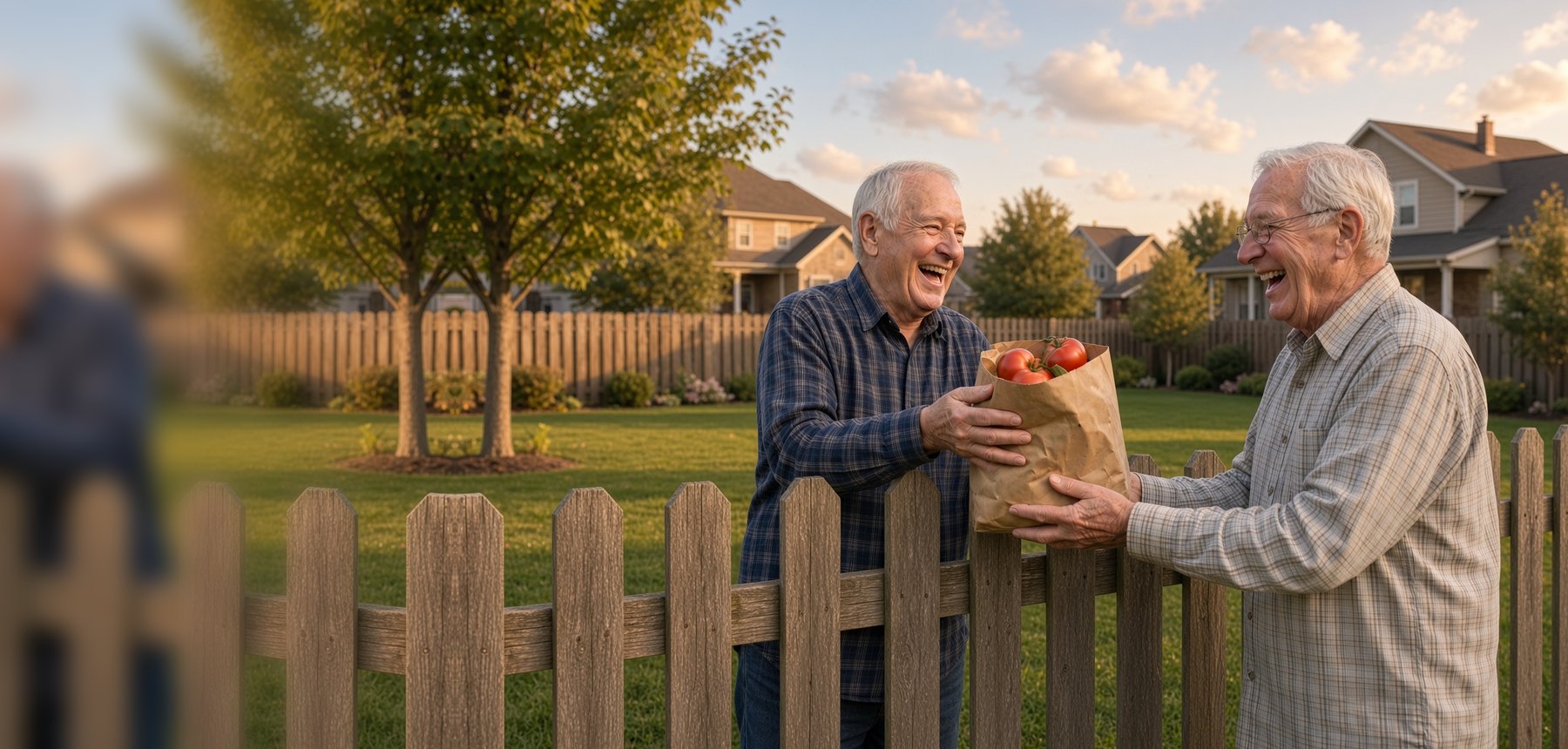
🌅 The Older Crowd Has Been Doing Fine All Along
Plainly, first. This page is for educational purposes only. BuyItAt50 is not a doctor, not a psychologist, not a counselor and not a financial adviser, and it has no connection to any university, researcher or organization named here. It explains published research in plain words. For anything about your own health, your own mood or your own money, talk to your doctor or a qualified professional.
Most of what gets written about getting older reads like bad news arriving in installments.
Here is some news that does not get printed very often.
A research team led by Laura Carstensen of Stanford asked adults of every age how they were feeling at five random moments a day, for a week. Five years later they found the same people and asked again. Five years after that, they did it a third time (Psychology and Aging).
The older the person, the better the answers tended to be. More good feeling overall. Steadier, too, with fewer swings from one hour to the next. The pattern held up after the researchers accounted for personality, physical health and the ordinary differences between people (Psychology and Aging).
It was not a big study. Fewer than two hundred people took part in each round. But it followed the same people for ten years, which is the hard part, and researchers in the field describe the evidence that older adults report higher well-being as robust (Innovation in Aging).
Then in 2025 a study published in PLOS One pooled surveys from 44 countries and found that distress now goes down steadily as age goes up (PLOS One).
That one needs an honest footnote, and here it is. The researchers say the change came from younger people’s mental health getting worse, not from older people getting better (PLOS One). So nobody should read it as proof that birthdays make a person cheerful.
What it does show is that growing older is not the misery the advertisements assume. Across several large surveys of older Americans, the vast majority of retirees say they are satisfied and happy (Center for Retirement Research).
So the question was never whether older people can be happy. Most of them are. The question is what the happy ones have that the others do not.
🤝 A Study Begun in 1938 Came Back With One Answer
In 1938, Harvard began following 724 young men. Two hundred sixty-eight of them were Harvard sophomores. The other 456 were young men from Boston (Harvard Gazette).
They have been asked about their lives ever since. The study has grown to take in their wives and descendants, and it now counts about 2,500 people (Harvard Gazette).
When people spend that many years on one question, you would expect a complicated answer.
It is not complicated.
Robert Waldinger, the Harvard psychiatrist who directs the study, sums up its clearest message this way: good relationships keep people happier and healthier (Harvard Gazette).
One finding from it is worth reading twice. How satisfied people were with their relationships in middle age mattered more to how long they lived than their genes did, or how long their ancestors had lived (Harvard Gazette).
You cannot pick your grandparents. You can pick up the telephone.
It is not the length of the Christmas card list that counts, either. A person’s circle tends to get smaller with age, and it gets smaller selectively. Research from Carstensen’s group has found that this narrowing goes along with better days, not worse ones (Stanford Center on Longevity).
The grandchildren count too. In a 2026 AARP survey of more than 3,300 grandparents, 79 percent called being a grandparent extremely or very fulfilling. The same survey found grandparents giving, on average, more than 500 hours of care a year (AARP).
That is a great deal of fulfillment for a job that pays nothing.
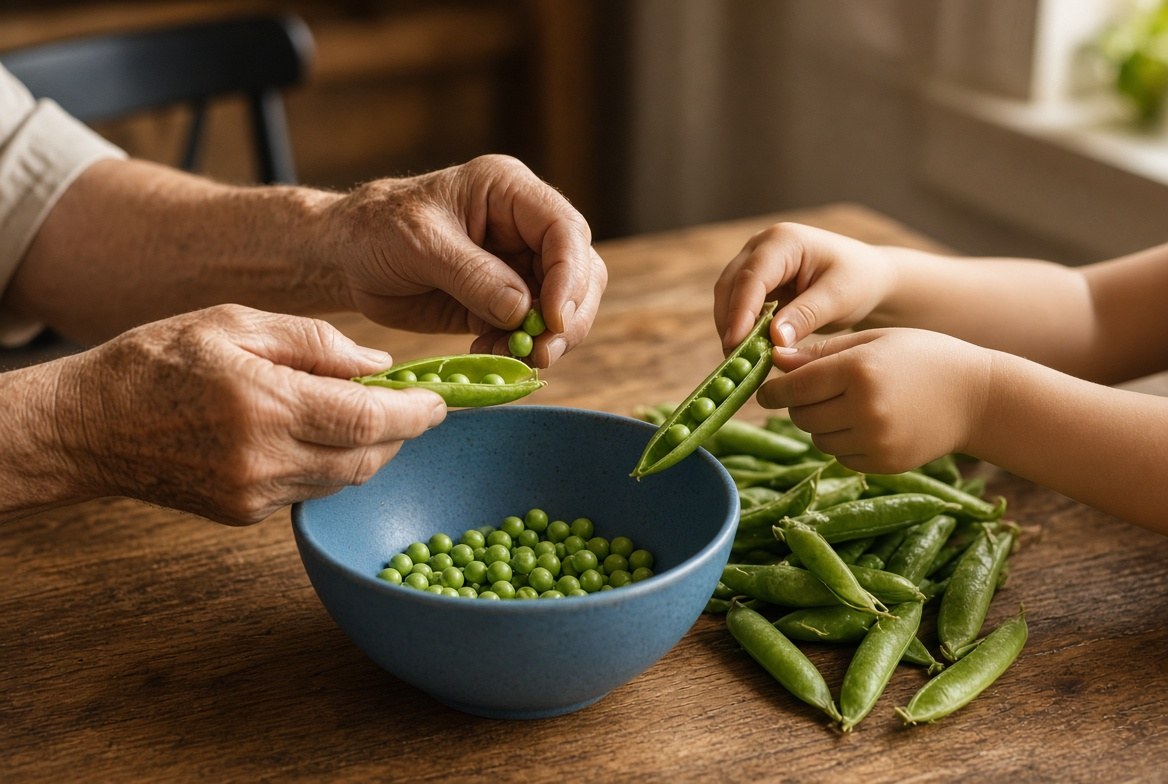
If the people in your life have thinned out, and after sixty they often do through no fault of anybody’s, that has its own page: Loneliness After 60. And if the job is making new friends from a standing start, that page picks up where this one leaves off.
🛠️ Somebody Has to Expect You on Tuesday
Work does a great many things to a person, and most of them get complained about.
The one nobody notices until it stops is that somebody expected you to show up.
Retirement takes that away on a Friday afternoon and does not put anything back.
Now, most research about happiness can only watch people and notice patterns. That can tell you two things tend to go together. It cannot tell you which one caused the other. Happy people might simply be the ones who volunteer.
So researchers in Australia ran a proper trial, the kind that splits people into groups on purpose. They took 445 fully retired people aged 60 and over and divided them in two. One group was asked to volunteer at least an hour a week, for six months. The other group was not (randomized trial, PubMed).
Measured over twelve months, the people who stuck with their volunteering showed measurable improvement in life satisfaction and in their sense of purpose, compared with the people who did no volunteering (PubMed).
One caution about that trial, because it would not be fair to leave it out. The comparison counted only the people who did what their group was asked, which left 73 volunteers and 112 non-volunteers. The ones who dropped out were not part of it (PubMed).
One hour a week. A person can lose that much time deciding what to have for supper.
A second study, this one American, drew on the Health and Retirement Study, which follows older adults over many years. Four years on, the people who gave about 100 hours a year to volunteering, which works out to roughly two hours a week, came out with more optimism, a stronger sense of purpose and less loneliness than the people who gave none (American Journal of Preventive Medicine).
That same study found no difference in overall life satisfaction. The sense of purpose moved. General contentment, measured that way, did not (American Journal of Preventive Medicine). It would not be honest to leave that out.
More is not always better, either. A European study of nearly 20,000 middle-aged and older adults points to earlier research finding some evidence that too much volunteering can work against life satisfaction (PubMed Central).
The point is to be needed. It is not to be used up.

This whole site rests on one idea: the tools and the skills in a house are for whoever turns up. It turns out the person doing the turning up gets something out of it as well. If the question is where to start, finding out what exists in your own town is the first step.
💵 Money Matters, Just Not the Way the Ads Say
A great deal of money gets spent every year telling people what retirement is supposed to cost. So it is worth hearing what the researchers found when they actually checked.
Boston College’s Center for Retirement Research looked across several major surveys of older Americans. The large majority of retirees said they were satisfied with their lives (Center for Retirement Research).
Then the researchers looked at what that satisfaction lined up with.
Household income turned out to be a poor predictor. So did net worth, which is everything a household owns minus everything it owes (Center for Retirement Research).
Two things did slightly better. One was health. The other was debt that is not a mortgage, the kind that arrives as card balances and loans (Center for Retirement Research).
In that data, what a household owed told you a little more than what it owned.
Health is the other half of that finding, and it is a subject for a doctor rather than for this page.
Nothing in this section is financial advice. It reports what one research review found across large groups of people. Decisions about your own debts and your own money belong to you and, if you want one, a qualified adviser.
🌱 A Garden, a Dog, or a Hen House
A thing that needs you in the morning is a reason to get up in the morning.
Researchers in Brisbane, Australia, studied middle-aged and older adults and how much time they spent gardening. Those who gardened at least 150 minutes a week, which is two and a half hours, reported better mental well-being and life satisfaction than those who did not garden at all. The link was stronger for people aged 64 and older (Journal of Environmental Psychology).
That study shows a link, not proof. It cannot tell you which came first, the garden or the good mood.
A larger review, which gathered up the findings of many earlier gardening reviews, found a clear positive effect of gardening on well-being. It also cautioned that the studies varied so much that no firm clinical conclusions should be drawn from them (umbrella review, PubMed).
Still, two and a half hours a week is not much to spend finding out for yourself.
Then there are animals. In September 2025 the University of Michigan’s National Poll on Healthy Aging asked 2,698 adults aged 50 and older about their pets. Seventy percent of the pet owners said having a pet connects them with other people (University of Michigan).
A dog is a reason for a conversation that neither party had to think up.
The same poll had a less cheerful number, and it belongs right beside the good one. Among pet owners aged 50 to 80, 31 percent said the cost of caring for their pet strains their budget, up from 18 percent in 2018 (University of Michigan).
That is worth knowing before an animal comes home, not after.
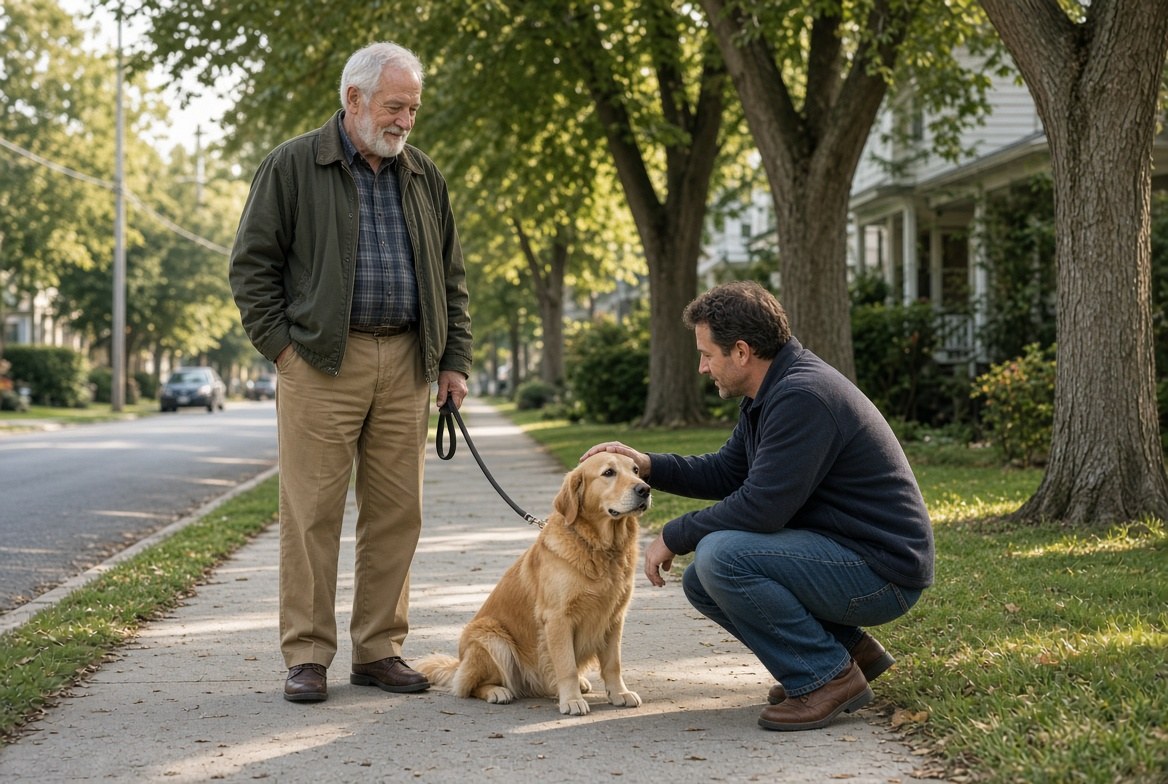
If a garden is the thing you would rather tend, this site has several places to start: vegetable gardening, the herb garden, dwarf fruit trees and berries, the tea garden and, for the ambitious, backyard chickens.
⚖️ What These Studies Cannot Tell You
I promised hard facts, so here are the soft spots too. They are set down plainly and all in one place, because a page that only tells you the good half of the research is selling something.
The limits of this research
Read these too- Most of these studies show that two things go together, not that one causes the other. The Australian volunteering trial is the exception, and even it compared only the people who stayed with their assigned group.
- Some of the studies are small. The Stanford emotion study had fewer than two hundred people in each round.
- Some come from other countries. The volunteering trial and the gardening study were both done in Australia.
- Averages are not promises. None of this research predicts what will happen to any one person.
- This page is not about health, depression or any medical condition. Low mood that lasts for weeks is a matter for a doctor.
⚡ What to Set Up at Fifty
The research is not a shopping list. Most of what it points at cannot be bought at all.
But a few of these things are a great deal easier to set up at fifty than at seventy-five, for the same reason everything else on this site is.
The friends. Call the ones you keep meaning to call. It costs less than anything else on this site, and it keeps better.
The place that expects you. Find one place that will count on you being there on a certain day. Choose it while you have the energy to be choosy, rather than taking whatever is left later.
The card balances. A balance carried into retirement usually gets paid out of a smaller income than the one it was run up on. That is arithmetic, not advice.
The garden. Build the raised bed at a height your back will thank you for later. A garden is a great deal easier to keep going than it is to start.
The skill people come to you for. Sharpening, small repairs, putting up jars. The tools do not care how old you are, and neither does the neighbor with a dull mower blade.
Most of what makes a person happy at seventy was set up years earlier, by somebody who did not know that was what they were doing.
❓ Questions People Actually Ask
Are older adults happier than younger adults?
On average, recent research says yes. Older adults report steadier and more positive emotional lives, and a 2025 study across 44 countries found that distress goes down as age goes up. Part of that shift comes from younger adults doing worse, so it is not proof that aging by itself makes a person happier.
Does volunteering make retirees happier?
The best evidence says it can. In a randomized trial in Australia, retired adults aged 60 and over who volunteered at least an hour a week for six months showed improved life satisfaction and sense of purpose, compared with those who did not volunteer. A U.S. study linked about 100 hours of volunteering a year with more purpose and optimism and less loneliness, though not with higher overall life satisfaction.
Does money make retirees happier?
Less than most people expect. A Boston College review of several major surveys found that income and net worth were poor predictors of older adults’ life satisfaction. Health and non-mortgage debt predicted it slightly better.
How much gardening does it take to make a difference?
One Australian study pointed to about two and a half hours a week. Adults who gardened at least 150 minutes a week reported better well-being and life satisfaction than non-gardeners, and the link was stronger for people aged 64 and older. The study shows a link, not proof that gardening caused it.
What does the Harvard Study of Adult Development say about happiness?
That good relationships keep people happier and healthier. The study began in 1938 with 724 young men and has grown to about 2,500 people, including their wives and descendants. Satisfaction with relationships in middle age mattered more to how long people lived than their genes or long-lived ancestors did.
📚 Where This Comes From
Every figure on this page is linked where it appears, and every source is listed again here. Only universities, peer-reviewed journals and established nonprofits are used.
- Emotional experience and age — Carstensen and colleagues, “Emotional Experience Improves With Age: Evidence Based on Over 10 Years of Experience Sampling,” Psychology and Aging, 2011.
- The strength of the evidence on age and well-being — Gerontological Society of America symposium, Innovation in Aging, 2024.
- Distress declining with age, 44 countries — Blanchflower, Bryson and Xu, “The declining mental health of the young and the global disappearance of the unhappiness hump shape in age,” PLOS One, 2025.
- The Harvard Study of Adult Development — Harvard Gazette, May 2025, February 2023 and April 2017.
- Narrowing social circles — English and Carstensen, “Selective narrowing of social networks across adulthood is associated with improved emotional experience in daily life,” International Journal of Behavioral Development, 2014, as listed by the Stanford Center on Longevity.
- Grandparents — AARP, “Powering Families,” June 2026.
- The volunteering trial — “Longitudinal associations between formal volunteering and well-being among retired older people: follow-up results from a randomized controlled trial,” PubMed.
- Volunteering in the Health and Retirement Study — “Volunteering and Subsequent Health and Well-Being in Older Adults: An Outcome-Wide Longitudinal Approach,” American Journal of Preventive Medicine, 2020.
- Volunteering in Europe — “Longitudinal reciprocal associations between volunteering, health and well-being: evidence for middle-aged and older adults in Europe,” PubMed Central.
- Money and life satisfaction — Center for Retirement Research at Boston College, “A Review of Existing Measures of Retirement Well-being,” March 2025.
- Time spent gardening — “Associations of time spent gardening with mental wellbeing and life satisfaction in mid-to-late adulthood,” Journal of Environmental Psychology, 2023.
- The gardening review — “The impact of gardening on well-being, mental health, and quality of life: an umbrella review and meta-analysis,” PubMed, 2024.
- Pets — University of Michigan National Poll on Healthy Aging, February 2026 release and full report.