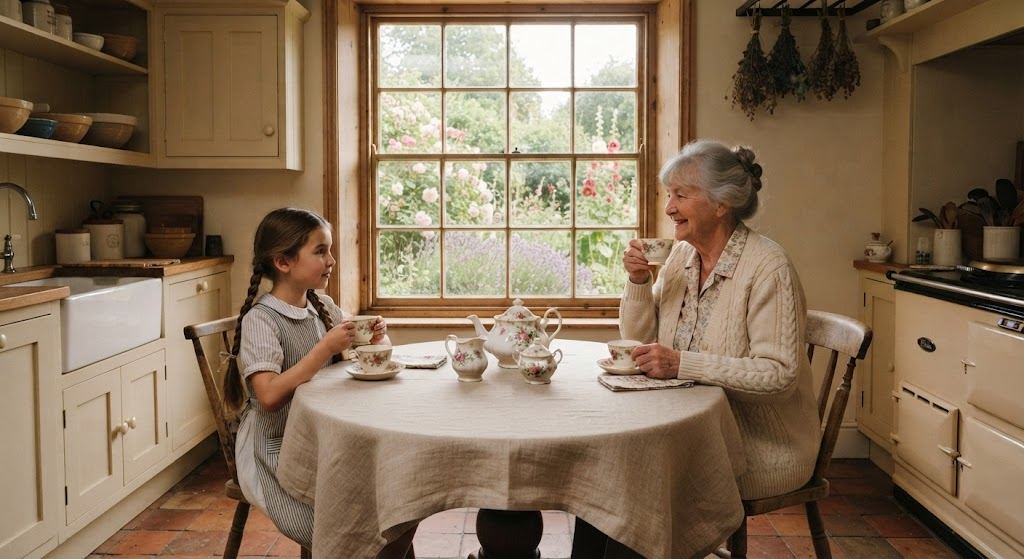

🌱 Camellia sinensis — The Plant Every Tea Bag Comes From
This is probably the most surprising thing most people learn about tea: green tea, black tea, white tea, and oolong are not four different plants. They are four different ways of processing the same leaf. The plant is Camellia sinensis — an evergreen shrub closely related to the ornamental camellias many gardeners already grow for winter color. If you can grow an ornamental camellia, you can grow tea.
🍵 The single most important thing to know: All true tea — every black tea, every green tea, every white tea, every oolong in every store — comes from Camellia sinensis. The flavor, color, and character differences between them are created entirely by what happens to the leaf after it is picked. The plant is the same. How you handle the harvest is what makes the tea.
Growing Zones — Where This Plant Will Live and Where It Will Not

Camellia sinensis grows in USDA zones 7 through 10, which covers a great deal more of the country than people assume — the whole Southeast, the Gulf Coast, the mid-Atlantic, coastal California and the Pacific Northwest. There are two main varieties to know:
- var. sinensis (Chinese variety) — smaller leaves, more cold-hardy, grows to zone 6 with protection. The classic green tea cultivar. More compact, good for containers.
- var. assamica (Assam/Indian variety) — larger leaves, prefers warmth and humidity. Zones 9–11. Grows vigorously wherever summers are long, hot and humid, and produces a richer, more full-bodied leaf. Ideal along the Gulf, in south Texas, the Deep South and central and south Florida.
Charleston, Mobile, Houston, Baton Rouge, Orlando — the whole Gulf and lower Atlantic rim is ideal growing territory. In those zones, Camellia sinensis is an evergreen perennial that comes back year after year without protection.
How to Grow It
- Soil: Acidic, well-draining, pH 5.5 to 6.5 — same requirements as blueberries. Add peat moss or pine bark to lower pH if needed. Never plant in clay without amendment.
- Sun: Full sun to partial shade. Anywhere summer afternoons turn fierce — the South, the Gulf, the low desert, the Central Valley — afternoon shade is beneficial: morning sun, shade from noon on. In the Pacific Northwest and at the cool end of its range, give it all the sun you have.
- Water: Consistent moisture without waterlogging. Drought-tolerant once established but produces better leaves with regular watering. Drip irrigation is ideal.
- Size: Left unpruned, can reach 15 feet or more over decades. For home tea production, prune to 3 to 5 feet, which also encourages the new growth flushes you harvest for tea.
- Containers: Grows very well in large containers (15 gallon or larger). Use acidic potting mix. Container plants need more frequent watering and annual repotting. Perfect for screened lanais and patios in zones where freezes occasionally occur.
- First harvest: Allow the plant to establish for 2 to 3 years before harvesting regularly. Light harvesting can begin in year 2. By year 3 a well-established plant can provide meaningful amounts of tea throughout the growing season.
What to Harvest
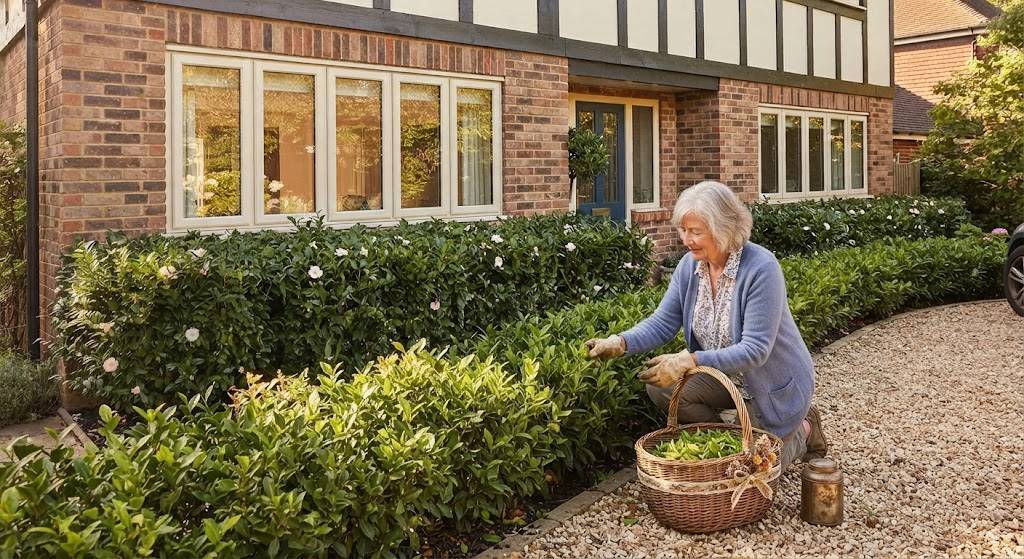
You harvest the flush — the top two new leaves plus the unopened bud at the tip of each growing branch. This is true for all commercial tea production worldwide and for home gardeners as well. The youngest leaves have the highest concentration of flavor compounds and antioxidants. Never harvest old, dark, hardened leaves — those are left on the plant. In active growing season, new flushes form every 7 to 15 days, meaning you can harvest repeatedly all season long.
📅 When it actually grows: In zones 8 and 9 the plant flushes actively from about March through October. In zone 10 and the frost-free strip along the Gulf it never really stops. In zones 7 and the cold edge of 8 the season is shorter — roughly May to September — and the plant will drop its pace sharply once nights turn cold. Prune the plant in late winter to stimulate a strong spring flush.
🍵 One Plant, Four Teas — How Processing Creates the Difference
This is the part that surprises people most. You pick the same leaves off the same bush and make four completely different teas depending on what you do in the next few hours. The key variable is oxidation — whether and how long you allow the enzymes in the leaf to react with oxygen before stopping the process with heat.
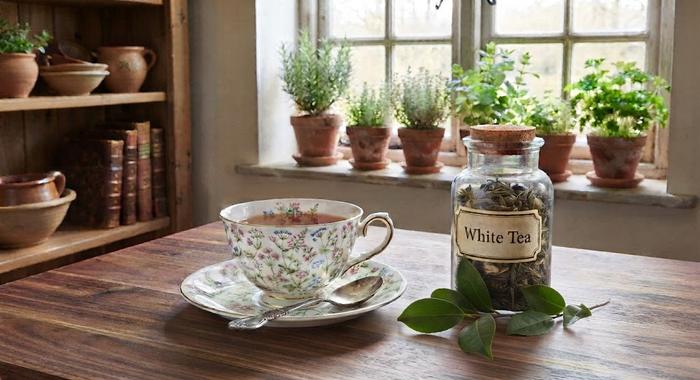
🟢 White Tea
Simplest to make. Harvest only the bud.
- Pick only the unopened bud — before any leaves unfurl
- Spread in a thin single layer on a clean tray or screen
- Air-dry in a warm, shaded spot for 24 to 48 hours, or in oven at 200°F for 45 minutes
- Done. Store in an airtight jar.
Flavor: Delicate, floral, light sweetness. The most subtle of all teas.
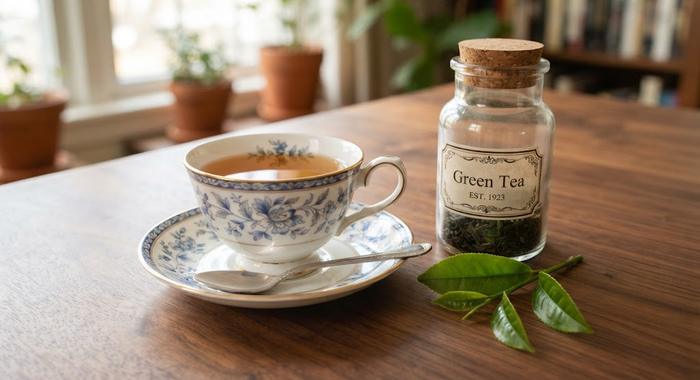
🟢 Green Tea
No oxidation. Heat the leaf immediately.
- Pick the top two leaves and bud
- Within a few hours: steam leaves over boiling water for 45 to 60 seconds, OR pan-fire in a dry skillet over medium heat, stirring constantly for 2 to 3 minutes
- Heat stops all oxidation (this is the key step)
- Spread and air-dry completely, OR finish in oven at 225°F for 20 minutes
- Store in airtight jar away from light
Flavor: Grassy, vegetal, sometimes sweet. Depends heavily on pan-fire vs steam method.
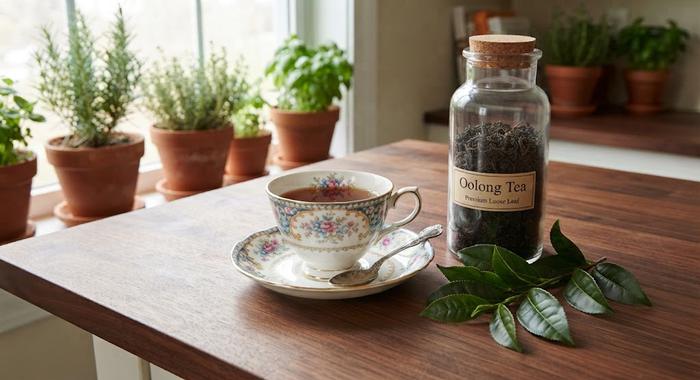
🟠 Oolong Tea
Partial oxidation. Between green and black.
- Pick the top two leaves and bud
- Wither in sun 30 to 60 minutes (lays flat, not piled)
- Shake or toss the leaves in a container every 30 minutes for 2 to 4 hours — this bruises the edges and starts oxidation selectively
- Watch the color: edges turn reddish-brown while center stays green
- When 20 to 40% oxidized, stop with heat: pan-fire or steam
- Roll leaves between palms, then dry completely
Flavor: Complex, floral and fruity at once, more body than green tea.
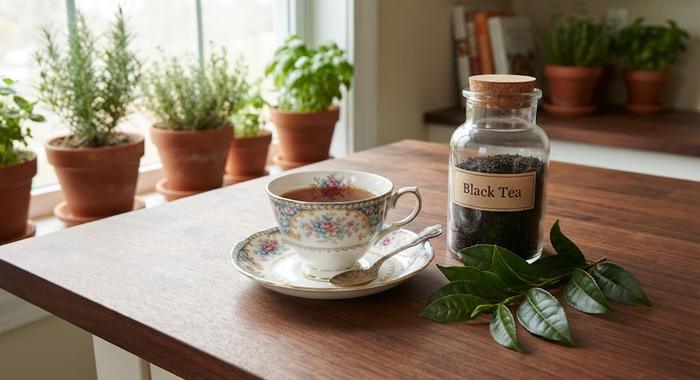
🟤 Black Tea
Full oxidation. Most forgiving to make at home.
- Pick the top two or three leaves (slightly older leaves than for green tea)
- Wither: spread on a clean surface 12 to 18 hours until leaves are limp and leathery
- Roll: roll leaves firmly between your palms to bruise and break cell walls — releases enzymes
- Oxidize: spread rolled leaves in a cool humid spot 2 to 4 hours; leaves turn coppery brown
- Dry: oven at 250°F for 20 minutes, or dehydrator at 140°F for 2 hours
- Store in an airtight jar when fully cool and dry
Flavor: Bold, malty, full-bodied — what most Americans think of as “tea.”
🌿 Herbal Tea Plants — Twelve to Grow at Home
Herbal teas (technically called tisanes) contain no Camellia sinensis at all — they are brewed from the leaves, flowers, roots, or seeds of other plants. Most of the plants on this list are already common in home gardens. The difference between a decorative herb garden and a tea garden is simply knowing which parts to harvest, when, and how to dry them.
One important truth about every plant on this list: a single established plant produces far more than any household can drink. That abundance is the story. It is what turns a tea garden into something you share — jars for the neighbors, bags for church friends, gifts at Christmas that cost almost nothing to make but come from your own hands and your own yard.

🌼 German Chamomile
The foundation of any tea garden. Small white daisy flowers harvested when fully open. Easy from seed, reseeds itself year after year. Timing depends entirely on where you are. In zones 8 and warmer it is a cool-season annual: plant in fall, harvest October through April, and expect it to fade when summer heat arrives. In zones 7 and colder, sow in early spring for a summer crop instead.
Harvest: Pick flowers when petals are flat and fully open, before they begin to droop. Harvest in the morning after dew dries. A single mature plant can produce dozens of flower heads per week at peak bloom.
In the cup: Apple-like sweetness, gentle and soothing. The classic before-bed tea. Excellent for sleep and digestion. Blends beautifully with mint and lemon balm.
“I dry chamomile in paper lunch bags all spring — I cut the flower heads, drop them in, fold the top down, and hang the bags in my laundry room. By November I have a dozen small mason jars full. I give one to every woman in my Sunday school class at the December meeting. It costs me nothing. They ask about it every year starting in September.
One friend told me it is the only thing that helps her sleep. She has a jar on her nightstand year-round. When I gave her this year’s jar she got a little tearful. She said she wanted me to know it had changed how she feels about going to bed. I put a handwritten label on every jar that says ‘Grown with love.’ That is the truth.”
— Ruth, 69, southern Ohio
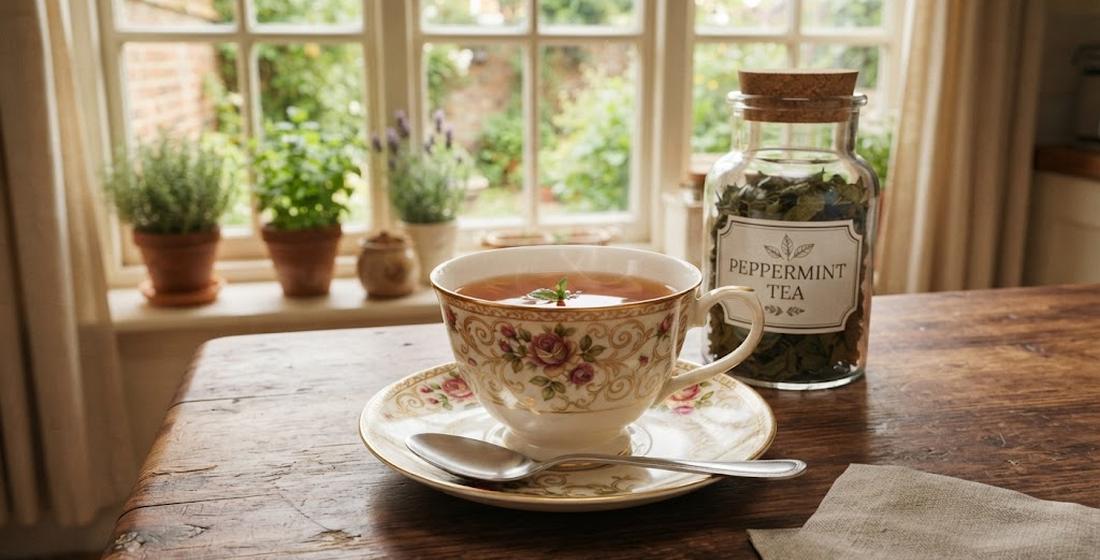
🌿 Peppermint
Grows so vigorously it becomes invasive — always grow in a large container. Harvest stems before flowers appear, when menthol concentration is highest. One large pot provides more than enough dried tea for an entire year, with plenty left to give away.
Harvest: Cut stems to one-third of plant height. Use both leaves and stems. Hang bundles in a warm dry spot. The fragrance tells you when it’s done.
In the cup: Strong, cooling, intensely minty. Naturally caffeine-free. Excellent hot in winter and equally good iced over crushed ice in summer.
“My mint pot is enormous. It takes over the back step every summer no matter what I do to contain it. I cut it back three times a year and hang the bundles on my back porch rail to dry. My daughter takes a bag home every visit without asking anymore — she just goes and gets it.
My neighbor Bette comes over when she has an upset stomach. She doesn’t call first. She knocks and says, “I need some of your mint.” My grandson asks for mint tea when he visits because it is “the one Grandma makes.” Not mint tea. The one Grandma makes. I have never once run out. I have never in my life spent a dollar on mint tea bags.”
— Edith, 71, western Pennsylvania

🌿 Lemon Balm
Member of the mint family, lemon-scented leaves, spreads aggressively. Keep in a container or in a corner where it can take over. Best used fresh — lemon balm loses much of its flavor when dried, but is perfect for summer iced tea.
Harvest: Leaves are most fragrant just before the plant flowers. For the best iced tea, steep a large handful of fresh leaves in cold water overnight in the refrigerator.
In the cup: Bright, clean lemon with no bitterness whatsoever. Mixes beautifully with chamomile and mint. As an iced tea in summer, there is almost nothing better.
“When people come to my house in summer I serve iced lemon balm tea in big glasses over ice with a slice of lemon from my tree. Every single person asks what it is. They think it’s some fancy blend. When I tell them it came from that clump of green leaves next to my back step, they do not believe me at first. I take them out and show them.
I strip a leaf and make them smell it. Then they understand. I have started four new plants from divisions off my one original and given them all away to friends. One of them texted me last July and said her husband drank the whole pitcher before dinner. The plant spreads whether you want it to or not. That means you always have something to give.”
— Carolyn, 65, coastal Oregon
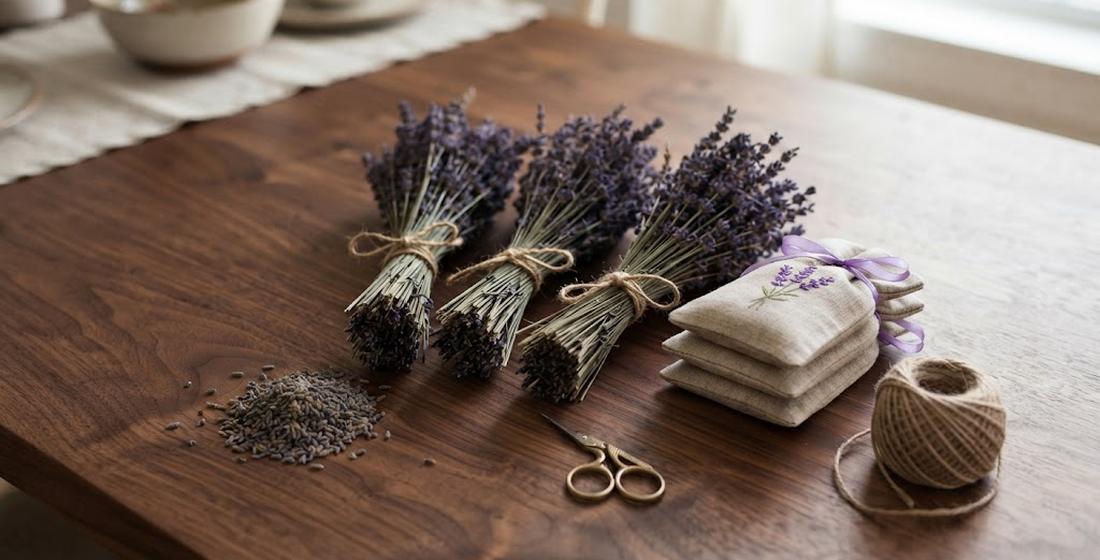
🌸 Lavender
Use culinary varieties only for tea: Hidcote, Vera, or Munstead have the best flavor. Lavender wants dry feet and hates humid summers, so anywhere the air is heavy in July — the South, the Gulf, the Ohio Valley — grow it in containers you can move to partial shade, and give it grit rather than rich soil.
Harvest: Harvest flower buds just as color appears, before they fully open. Gather into bundles and hang upside down to dry in a warm, shaded spot.
In the cup: Floral, slightly sweet, calming. A tablespoon of dried buds is plenty for a cup. Blends beautifully with chamomile.
“I dry lavender bundles every summer and tie them with a piece of ribbon. Some I put in jars for tea. The ones I love giving most are the small sachets I make for my grandchildren’s pillowcases. My granddaughter, who is eight and has sometimes had trouble settling down at night, has had one on her pillow for two years now.
Her mother said she didn’t sleep well the one night it was taken off to wash the case. That sachet cost me the price of a small square of muslin and a piece of ribbon. Everything inside it came from the plant by my front step. Her mother asked at Christmas if I could make some for her friends with young children. I made seven. I sent them home in a little basket.”
— Patricia, 67, eastern Washington
❤️ Roselle Hibiscus
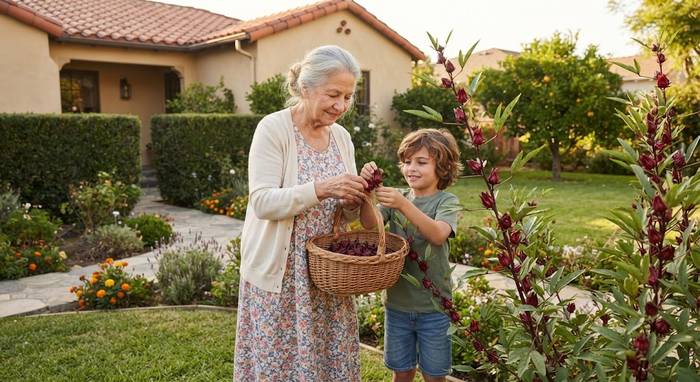
This is the plant behind Red Zinger tea. Grow it for the fleshy red calyces that surround each flower. Roselle wants a long hot summer: full sun, heat, humidity. It needs roughly four to five frost-free months, so the further north you are the earlier you start it indoors. One plant grows 6 to 8 feet tall and produces far more than most people expect.
Harvest: Twist off the fleshy red calyx right after the flower drops. Dry on screens or in a food dehydrator. The dried calyces look like deep ruby gemstones in a jar.
In the cup: Tart and cranberry-like, deep red color, high in vitamin C. Excellent hot with honey, or over ice in summer. Blends beautifully with lemongrass.
“I planted two roselle plants last June not knowing what to expect. By September I had more calyces than I knew what to do with. I filled fourteen half-pint mason jars and gave one to every person in my row at church with a card that said how to brew it. My neighbor mixed hers with lemonade and called me three days later to say it was the best thing she had tasted all summer.
One of the women at church told me her husband — who does not drink anything except sweet tea and coffee — has been drinking it every evening. I had never heard of roselle before last year. One plant. Two plants. That is all it takes to fill a row at church.”
— Gloria, 63, south Texas
🌿 Lemon Verbena
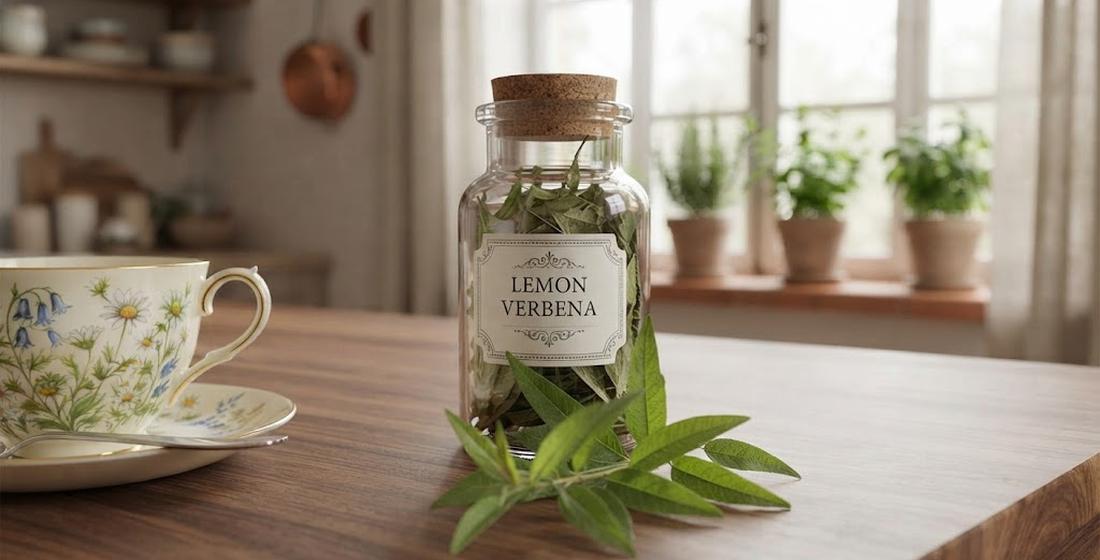
The most intensely lemony plant you can grow. Perennial in zones 9–11, and container-grown further north. Unlike lemon balm, the flavor holds and concentrates when the leaves are dried.
Harvest: Harvest leaves anytime; heaviest harvests before flower buds open. Dry on screens or in a dehydrator at low temperature.
In the cup: Intensely, cleanly lemony with no bitterness and no aftertaste. One of the best teas to give as a gift because the flavor surprises everyone.
“I make all of my Christmas gifts from my garden. Lemon verbena tea in a small mason jar with a handwritten card telling them how to brew it — I give twelve of them every December. I have been doing this for four years and people tell me it is the one gift they look forward to. My daughter-in-law asked me once what brand it was and whether she could order it online.
I told her it was from the bush by my back fence and that I could give her a division in the spring. She looked at me for a moment the way people look at you when you have said something that changes a small thing in how they see the world. She took the division. She has her own plant now.”
— Naomi, 70, the Ozarks
🌿 Rosemary
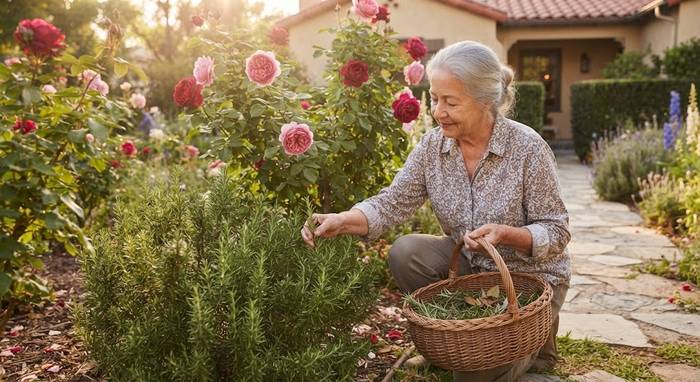
Already growing in a great many herb gardens, and hardy outdoors through about zone 7. Perennial with almost no care required. A single established rosemary bush produces far more than any household can cook with or drink.
Harvest: Snip tender growing tips. Use fresh or dry easily by hanging small bundles in any warm, dry spot. Dries in about a week.
In the cup: Piney, herbal, slightly resinous. Use about one teaspoon of dried leaves per cup. A morning tea more than an evening one.
“My rosemary bush is eight years old and taller than my mailbox. I trim it twice a year. Every time I trim it I bring bags of clippings to anyone who will take them — neighbors, church friends, whoever is at my door. I have given rooted starts to eleven different people. Three of them are now growing rosemary as large as mine.
One woman from Thursday morning Bible study brings me a loaf of rosemary bread every time we meet. She grows her rosemary from a start off my plant. I gave her the first one six years ago. We have been trading from the same bush ever since. She says mine has a different flavor than anything she finds anywhere else. I think it is just that it is hers now.”
— Helen, 73, coastal Alabama
🌼 Echinacea (Coneflower)
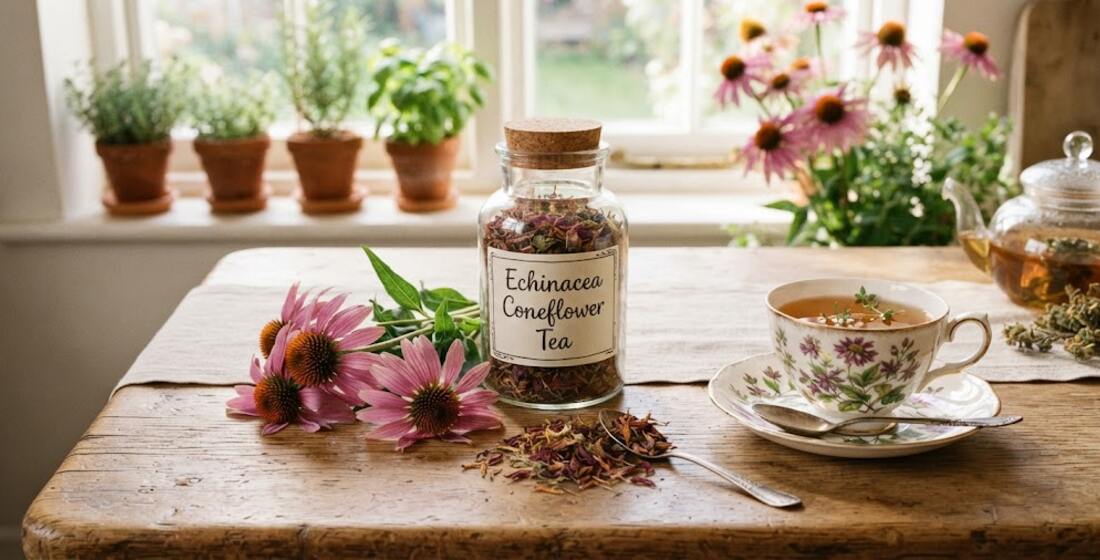
Roots, leaves, and flower petals all used for tea. The same beautiful purple coneflower that attracts beneficial insects. A long-lived perennial that spreads slowly and returns reliably year after year.
Harvest: Petals when flowers fully open. Spread on screens to dry. Roots from 3-year-old plants in fall — dig, wash, slice thin, and dry at low temperature.
In the cup: Mild, slightly earthy, with a gentle tingly sensation on the tongue distinctive to echinacea. Often blended with elderberry or rose hips.
“When cold and flu season starts I bring small jars of dried echinacea to my neighbors. I have four large plants I have divided three times over the years. I do not make medical claims about echinacea — I am not a doctor. What I know is that my neighbors look forward to getting a jar every October and they tell me it helps.
One woman down the street told me I am the only person who has ever given her something she grew herself for her health. She said it meant something different to her than buying something at a store. She keeps the jar on her kitchen counter all winter where she can see it every morning. That is what I think about when I tend those plants in summer.”
— Frances, 68, northern California
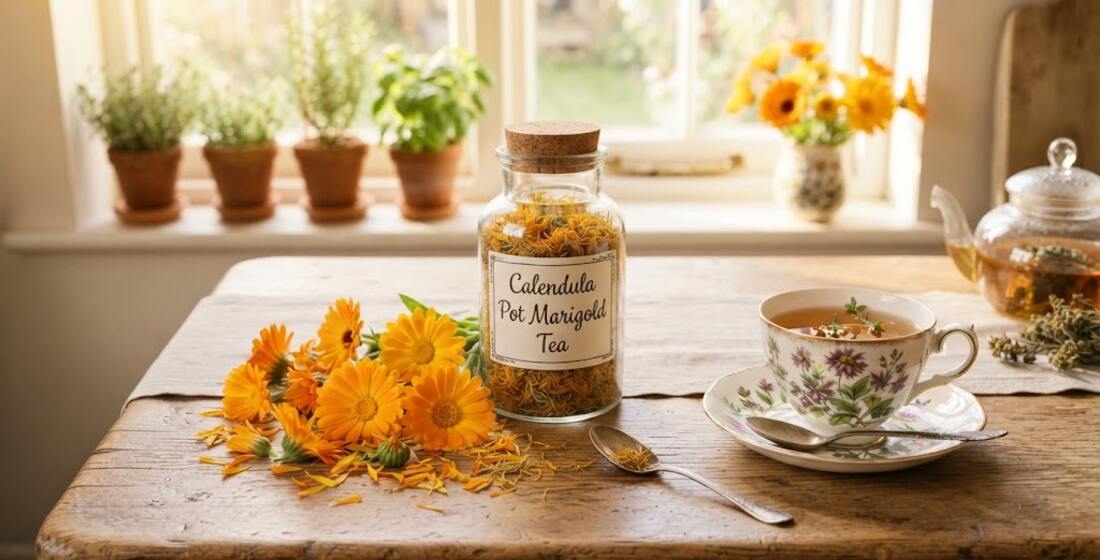
🌼 Calendula (Pot Marigold)
Edible orange and yellow flowers used fresh or dried in tea. In zones 8 and warmer it is a cool-season annual, planted in fall and harvested through spring. In colder zones it is a spring-planted summer annual instead. A prolific bloomer — the more you pick, the more it produces.
Harvest: Harvest flower heads when fully open. Dry face-up on screens or in a dehydrator. The dried petals hold their bright color and are beautiful in a jar.
In the cup: Mild, slightly earthy and floral. Adds beautiful golden color to any blend. A tablespoon of dried petals in a chamomile blend makes the whole jar look like sunshine.
“I grow calendula because I love the color. From November through April my front beds look like they are on fire — orange and yellow everywhere. What I did not know until my neighbor showed me is that I can dry those flowers and use them in tea blends. She showed me, made me a cup of chamomile-calendula blend in her kitchen, and changed how I look at my own garden.
Now I dry a tray of flower heads every week through the season. The dried flowers look like small jewels in a glass jar. Half of what I give away is given because of how beautiful the jar looks before anyone has tasted it. But they drink it because it’s good. Both things can be true.”
— Marge, 64, eastern Nebraska
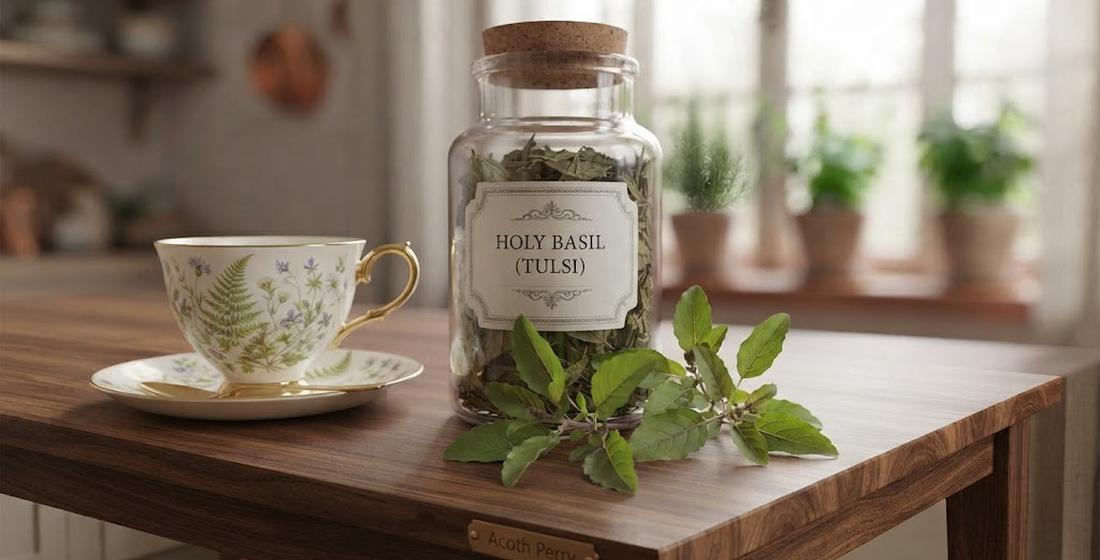
🌿 Holy Basil (Tulsi)
Different from Italian cooking basil. Holy basil has a complex clove-like, spicy flavor grown for thousands of years in Ayurvedic tradition. Easy from seed, extremely fragrant, perennial in zones 9–11.
Harvest: Harvest leaves and stems throughout the growing season. Dry in small bundles or spread on screens. One established plant produces abundantly.
In the cup: Spicy, complex, clove-like — unlike any other tea you have had. Warming and aromatic. A surprising and memorable tea to give to someone who thinks they have tasted everything.
“My neighbor Priya is from India and grew up drinking tulsi tea every morning. She brought me a plant three years ago and explained what it was. I grew it, dried it, made the tea, and sat with it for a while because I needed to understand what I was tasting. It is not like anything else. Now I grow four plants every summer.
I bring Priya dried tulsi regularly because she says mine has better flavor than what she buys at the Indian grocery. I give small bags of it to anyone who mentions stress or trouble sleeping. Nobody in my neighborhood has heard of it before I hand them a bag. Every single one comes back and asks where they can get more. I tell them the same thing every time: you grow it. It is easy. I will give you a seedling in the spring.”
— Beverly, 66, western North Carolina
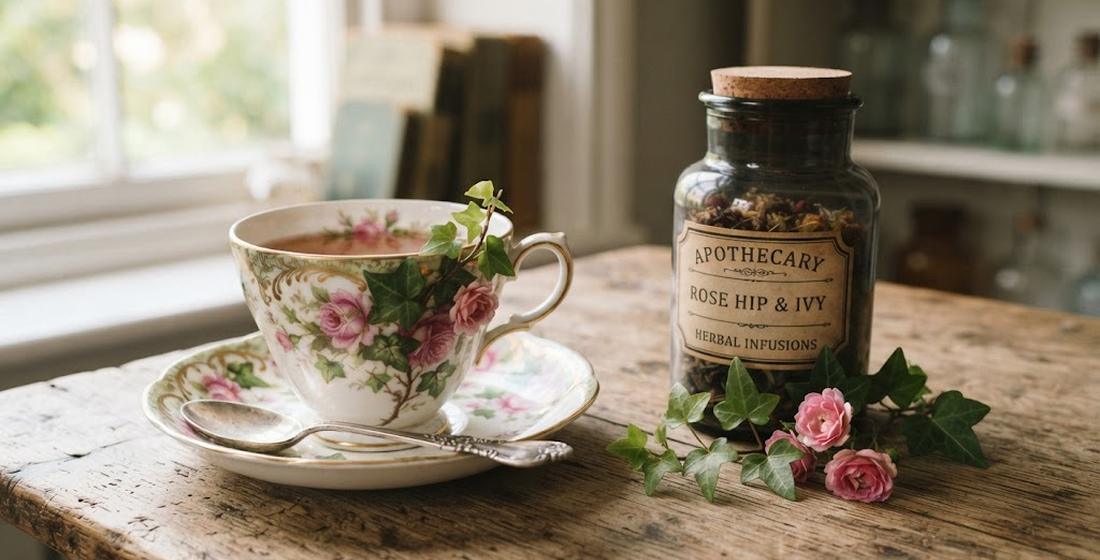
🌹 Rose Petals & Hips
If you grow roses and do not spray them with synthetic pesticides, you have a tea ingredient already in your yard. Petals from fragrant varieties make a delicate floral tea. Rose hips — the fruit after the flower fades — brew into a tart, vitamin-C-rich red tea.
Harvest: Petals: morning, after dew dries, before heat. Spread on screens in the shade. Hips: after first frost, when fully red and slightly soft.
Rose petals: Delicate, floral. Best blended with something stronger. Rose hips: Tart, fruity, bright red. Exceptionally high in vitamin C.
“I have grown roses for forty years. I never knew you could drink them. My granddaughter — she studies herbalism — told me about it two summers ago and showed me how to dry the petals. Now I dry petals from every fragrant bloom the garden produces. Rose petal tea in a small glass jar with a ribbon is the most beautiful thing I have ever given as a gift.
My friend Evelyn at church held hers for a long moment before she said anything. Then she said her grandmother used to dry rose petals and keep them in a tin. She had not thought about that in thirty years. I had no idea I was giving her a memory along with the tea. Now I know that is what I am giving. Every jar.”
— Shirley, 74, southern Indiana
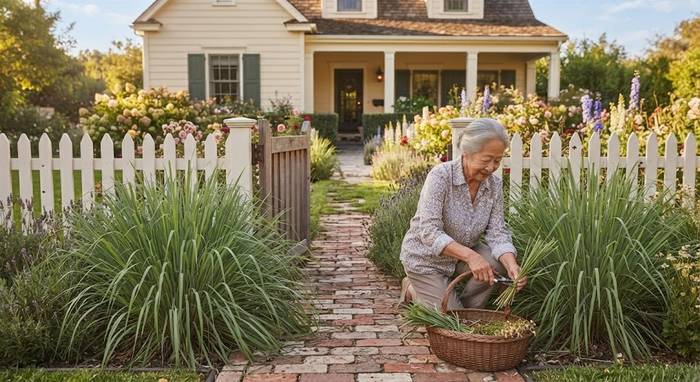
🌿 Lemongrass
A large, ornamental-looking clumping perennial that lives outdoors year-round in zones 9 to 11 and is nearly impossible to kill there. Everywhere colder it is grown as an annual, or potted and brought inside before the first frost, which works perfectly well. Cut a stalk, peel the outer layer, bruise the inner stalk, steep in boiling water 10 minutes. One clump produces more than most families can drink.
Harvest: Cut outer stalks at ground level when they reach 12 inches. The clump keeps producing indefinitely. Divide every 2 to 3 years and give the divisions away.
In the cup: Bright, citrusy, ginger-like warmth without any bite. Excellent hot in any season and extraordinary over ice in summer. Almost everyone who tries it likes it immediately.
“My lemongrass clump is now the size of a small car. I planted it from a division a friend gave me in 2018 — she paid four dollars for the original plant. I have divided my clump every other year and given the divisions to anyone who will take one. I have given away more than twenty divisions. There are now lemongrass plants growing in six yards on my street from that one four-dollar plant.
Every one of those families makes tea from it. In summer I make big pitchers of iced lemongrass tea and leave a pitcher on the porch table when people come by. Last July my neighbor’s daughter visited from Atlanta. She asked what she was drinking. I told her. She went home with three dried stalks in a zip-lock bag and has been growing her own on her apartment balcony ever since. All of that from a four-dollar plant in 2018.”
— Dolores, 67, south Louisiana
🎁 What to Do When You Have More Than You Can Drink
This is the best problem a tea garden creates. A single established lemongrass clump, a mature rosemary bush, a thriving pot of mint, a few roselle plants in a hot summer — any one of them produces more dried tea than a household of two can consume in a year. What you do with that abundance is the part that matters most.
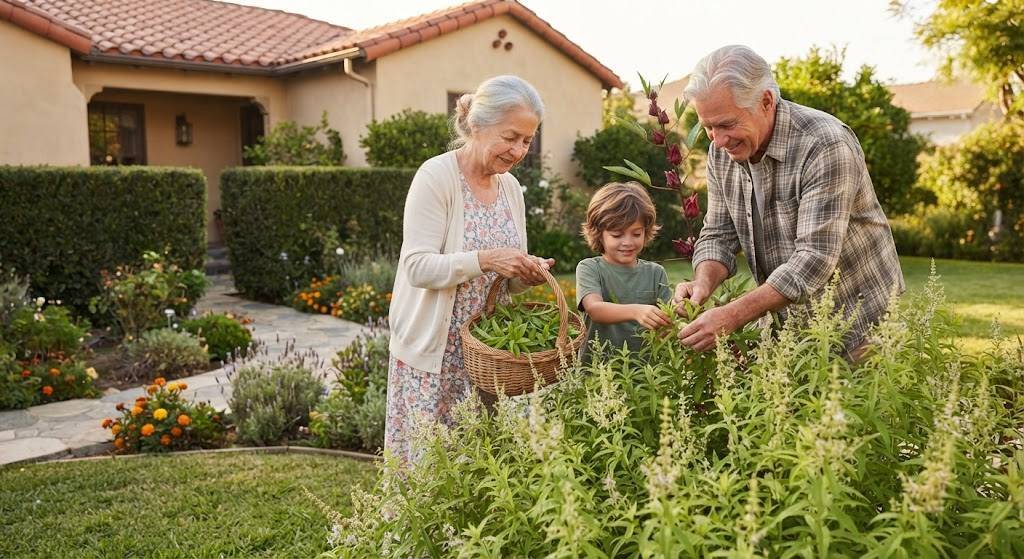
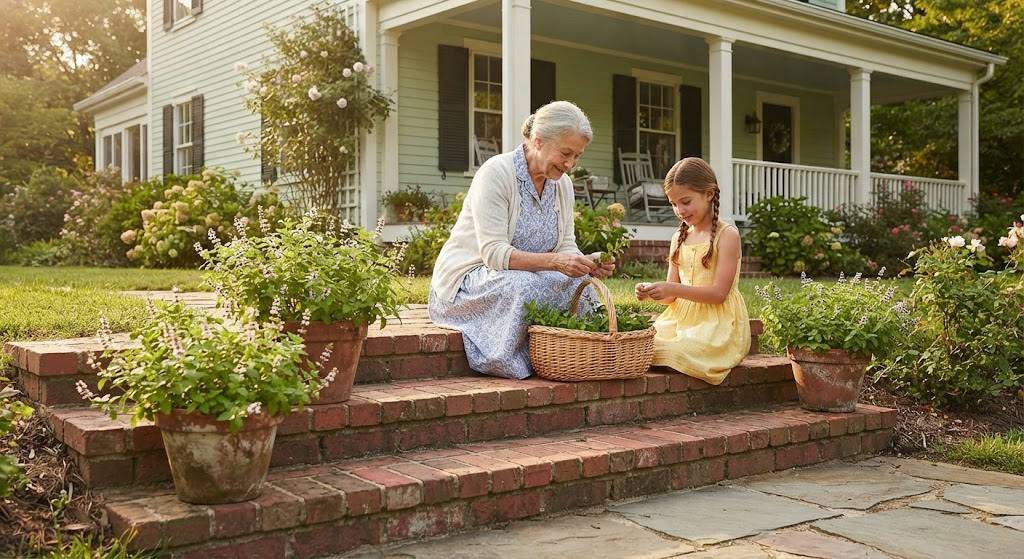
“I started keeping an empty basket on my kitchen counter. Every time I dried something — chamomile, mint, lemon verbena, roselle — I filled a small muslin bag and put it in the basket. By December I had fourteen bags. I labeled each one with what it was and a handwritten note about how to brew it.
I gave them out at my church Christmas party instead of buying gifts. Several women told me later it was the best gift they received that year. Not because of what it cost — it cost almost nothing — but because someone had grown it, dried it, and put their name on it. That matters in a way that a box from a store does not.”
“My neighbor is 84 and lives alone. She cannot drive anymore. She used to love tea — she told me she drank three or four cups a day for most of her life. When she mentioned that the kind she liked had gotten expensive and she had been cutting back, I went home and filled a quart mason jar with a blend I made from my garden — chamomile, lemon verbena, a little calendula for color.
I wrote the brewing instructions on a card and tied it with a ribbon. She has not bought a box of tea since. I bring her a new jar every six weeks. It costs me fifteen minutes and a jar. What it gives her is something she loves every single day.”
“I teach myself one new tea plant every year. The year I grew roselle I had so much I did not know what to do. I looked up how to make hibiscus syrup and hibiscus jelly. I made sixteen jars of jelly from the roselle calyces. I gave them out at Thanksgiving. My son-in-law, who does not care about gardening at all, asked if he could have two jars.
He said it was the best jelly he had ever eaten. He asked where I got the recipe. I told him the calyces came from two plants in the backyard that I had grown from seed. He looked at me for a moment and said, ‘You made this from something you grew?’ Yes. Yes I did. That is entirely the point.”
“My grandchildren are seven, ten, and thirteen. Every summer I make a big pitcher of iced hibiscus lemongrass tea with honey and put it on the porch when they visit. The thirteen-year-old, who thinks she is too old to be interested in anything I do, asked me last summer how to make it. I showed her. She made a second pitcher herself. She told her friends at school that her grandmother grows her own tea. One of her friends asked if she could come over and see the garden. Three twelve-year-olds stood in my backyard learning what lemongrass is. That afternoon was not something I planned. It happened because of two plants I bought for less than ten dollars.”
🧺 Simple ways to give what you grow:
• Small muslin bags — available in bulk on Amazon, fill with dried herb, tie with twine and a handwritten label. Costs pennies per gift.
• Half-pint mason jars — beautiful, reusable, and the herb stays visible inside. Stack several in a basket for a church bazaar or holiday gift.
• Live plant divisions — mint, lemon balm, and lemongrass divide easily. Pot into a 4-inch container, write care instructions on a popsicle stick pressed into the soil. Give someone their own plant to start from yours.
• A blend with a name — mix chamomile, mint, and lemon verbena into a jar and call it something. “Evening Garden”. “Back Porch Tea”. “From My Yard.” People keep the jar. The name matters.
• Iced tea by the pitcher — the most generous thing requires no packaging at all. Make a big pitcher, put it on the table, and let people ask what it is.
☀️ How to Dry Your Tea at Home
The goal of drying is to remove moisture while preserving the volatile essential oils that carry the flavor and aroma. The enemy of good dried herbs is heat that is too high or light exposure during drying — both destroy the oils you are trying to keep. Dry low and slow, away from direct sunlight, in a place with good airflow.
⏰ When to harvest for best flavor: Pick herbs in the morning after the dew has dried but before the sun gets hot. This is when essential oil concentration is at its peak — mid-morning, the sweet spot between moisture and heat. For flowers, harvest when fully open but before they begin to fade.
Method 1 — Air Drying (Best for Stems & Bundles)
The oldest method and still one of the best. Strip leaves from the bottom inch of stem. Gather into small bundles of 5 to 8 stems, tie with twine, and hang upside down in a warm room with good airflow — away from direct sunlight. A covered porch, pantry, or spare room works well. Most herbs are fully dry in 1 to 2 weeks depending on humidity.
How to tell when done: Leaves crumble easily when rubbed between fingers. Stems snap rather than bend. If in doubt, dry a little longer — any remaining moisture in a sealed jar causes mold.
Best for: Mint, lemon balm, rosemary, lemon verbena, lavender stems, holy basil, lemongrass slices.
Method 2 — Dehydrator (Best for Flowers & Flat Leaves)
A food dehydrator gives the most consistent results, and it earns its keep in any humid climate — the Gulf, the Southeast, the Ohio Valley in August — where air drying is slow and things can mold before they dry. Set temperature to 95°F to 115°F (cooler than most dehydrators’ default settings for vegetables). Spread leaves or flower heads in a single layer on trays. Most herbs dry in 1 to 4 hours at these temperatures.
Why low temperature matters: Above 115°F you begin to volatilize the essential oils you are trying to preserve. A well-dried chamomile flower at 95°F will have noticeably better flavor than one dried at 135°F.
Best for: Chamomile flowers, calendula, rose petals, echinacea petals, hibiscus calyces, rose hips. Any flower or loose leaf that cannot hang in bundles.
Method 3 — Oven Drying (Fastest, Good for Larger Quantities)
Preheat oven to 170 to 200°F — the lowest setting most ovens will hold. Spread herbs in a single layer on a baking sheet. Leave oven door slightly ajar to allow moisture to escape. Check every 15 to 20 minutes. Most herbs are done in 45 minutes to 2 hours. Watch carefully — overheating is the main risk.
Camellia sinensis note: For green tea, oven drying at 225°F for 20 minutes after pan-firing is the standard home method. For black tea, a dehydrator at 140°F for 2 hours gives more control.
Best for: Larger batches when you need speed. Not ideal for very delicate flowers.
Storage After Drying
Store dried tea herbs in airtight glass jars — mason jars work perfectly. Keep in a dark, cool location; a pantry shelf or cabinet is ideal. Avoid storing near the stove where heat and steam will degrade quality quickly. Label jars with the herb name and the drying date.
Shelf life: Most properly dried herbs hold full flavor for 1 year. After that they do not become unsafe, but flavor diminishes. If a dried herb has lost its scent when you open the jar, it has also lost most of its tea flavor — use more per cup or replace.
How much to use: 1 to 2 tablespoons dried herbs per cup of water. Steep 5 to 10 minutes covered. Covering the cup keeps the volatile oils from escaping with the steam. Fresh herbs: use about 3 times as much as dried.
🧪 Blending Your Own Tea Combinations
The most enjoyable part of a tea garden is learning to blend. A well-made blend is better than almost anything you can buy in a box, because the herbs are fresher and you can tune it exactly to your own taste. The key is a simple three-part formula.
Base — Mild and Forgiving
Sets the character without dominating. Options: chamomile (apple-sweet), lemon balm (citrus background), mint (cooling), or a green tea base if using Camellia sinensis. A good base is something you would drink on its own.
Star — The Featured Flavor
The distinctive note people taste and remember. Options: hibiscus (tart, red, bold), lavender (floral), rose petals (delicate floral), lemon verbena (intensely lemony), echinacea (earthy, tingly), roselle (fruity). This is what makes your blend different.
Accent — The Finishing Note
Depth, contrast, or brightness. Options: dried citrus peel (lemon, orange, grapefruit — just the zest, dried), calendula (color and mild earthiness), rosemary (piney depth), cinnamon stick (warmth), dried ginger (heat and spice), fennel seed (anise sweetness). Use sparingly.
Three Blends to Start With
- Evening Calm: Chamomile (50%) + lavender buds (30%) + lemon balm (20%). All three are calming, sleep-supporting herbs. Honey and a splash of milk optional.
- Red Porch Afternoon: Hibiscus roselle calyx (50%) + lemongrass (30%) + dried orange peel (20%). Tart, tropical, stunning red color. Excellent as iced tea. Every one of those three can be grown in the same warm-climate yard.
- Morning Garden: Peppermint (50%) + lemon verbena (30%) + calendula petals (20%). Bright, energizing, aromatic. No caffeine, but wakes you up anyway.
💬 What Happens When You Start Growing Your Own
“My husband drinks four cups of tea a day. We spend about sixteen dollars a month on tea bags. I planted chamomile, lemon balm, peppermint, and hibiscus in my backyard in April. By July I had more dried chamomile than I knew what to do with. I blended it with dried mint and some hibiscus from the roselle plant and made him a jar of homemade tea for his birthday. He said it was the best tea he had ever tasted. He asked me where I ordered it from. I told him the backyard. He was quiet for a moment and then said, ‘We should have been doing this the whole time.’ He is correct. We should have.”
“I have a screened lanai with three large containers. I have grown ornamental camellias in containers for years. My daughter told me Camellia sinensis — the tea plant — is in the same family and grows the same way. I ordered a sinensis plant, potted it up in acidic mix, put it in the bright morning corner of the lanai, and watered it the same way I water my ornamentals.
That was two years ago. Last spring I harvested my first flush. Twenty-three little leaf tips. I pan-fired them in a dry skillet for three minutes and dried them. I made exactly one cup of green tea from my own plant. It tasted like nothing I have ever bought in a store. I sat on the lanai and drank it slowly. I am going to get two more plants.”
“I grow lemongrass as a border plant. I have for years. It is enormous and green and gets absolutely no attention from me. I cut it back once a year. What I did not know until my son-in-law told me is that the same stalks I have been throwing in the compost are lemongrass tea. I cut a stalk, peeled it, sliced it thin, and dropped it in boiling water for ten minutes. It tastes exactly like the lemongrass tea at the Thai restaurant we used to go to before everything got so expensive. The whole plant costs me nothing. It has been growing in my yard for six years. I have been throwing away tea.”
“Power was out for five days after the hurricane. No store, no internet, no knowing when things would come back. I had a gas stove and I had water I had stored. What I also had was a large rosemary bush I have grown for eight years and a pot of mint on the back step. Hot rosemary tea in the morning. Mint tea in the evening.
I had been drinking it for years and never thought of it as a resource. During those five days I thought about it differently. My neighbor came over on day three and asked how I was staying so calm. I handed her a mug of mint tea. She sat down and drank it and did not say anything for a few minutes. Then she said, ‘Can I take some of that home?’”
Frequently Asked Questions
Can I really grow actual tea (not just herbal tea) in my own backyard?
Yes — easily. Camellia sinensis var. assamica, the tropical variety, is ideal in zones 9 and 10 — the Gulf Coast, south Texas, central and south Florida. It loves heat, humidity and acidic soil. In zones 7 and 8 grow the hardier sinensis variety instead, and further north grow either one in a large pot that overwinters in a garage or a cold porch. Plant in a spot with morning sun and afternoon shade, water consistently, and keep the soil pH between 5.5 and 6.5. It grows year-round in most of Florida and can be kept at 3 to 5 feet with regular pruning. You can also grow it in a large container on a screened lanai.
The reader accounts on this page are composite voices drawn from common, real experiences — the names are not those of real individuals, and these are not customer testimonials. Individual results vary.
How long before I can harvest from a Camellia sinensis plant?
Allow the plant to establish for 2 years before regular harvesting. Light harvesting — a few flushes — can begin in year 2 without harming the plant. By year 3, a well-maintained plant produces regular flushes every 7 to 15 days through the growing season, giving you meaningful amounts of tea leaves to process and store.
What is the difference between green, black, and white tea if they all come from the same plant?
The difference is entirely in processing after picking. White tea: harvest only the bud, dry immediately — almost no processing. Green tea: pick young leaves and heat immediately (steam or pan-fire) to stop oxidation. Black tea: pick leaves, wither them, roll them to bruise the cells, allow them to oxidize (turn reddish-brown), then dry. Oolong falls between green and black with partial oxidation. The plant and the leaf are the same. What you do with it in the hours after picking determines which tea you have.
Does lemon balm lose its flavor when dried?
Yes — significantly. Lemon balm loses most of its volatile citrus oils when dried, which is why a cup of dried lemon balm tea is much milder than a cup made with fresh leaves. It is best used fresh, or dried and used as a background note blended with stronger herbs. Lemon verbena, by contrast, holds its flavor very well when dried, which is why many gardeners prefer it for a consistent lemony dried tea.
How much dried herb do I use per cup?
The general starting point is 1 to 2 tablespoons of dried herbs per 8-ounce cup. Use 3 times as much fresh herb as dried. Steep covered for 5 to 10 minutes — covering the cup is important because it keeps the volatile oils from escaping with the steam, which is where the flavor and health properties live. Adjust amount and steep time to your personal taste. Stronger flavors like rosemary, lavender, and holy basil need less; milder herbs like chamomile can go longer and heavier.
📚 Sources & Further Reading
- • NC State University Extension Plant Toolbox — Camellia sinensis
- • Gardening Know How — Harvesting Tea Plants
- • Pennsylvania Horticultural Society — Home Tea Gardens (named top garden trend, 2026)
- • Charleston Tea Plantation (Bigelow Tea) — U.S. commercial Camellia sinensis growing
- • Oregon State University Extension — Herbal Tea Plants
Page last reviewed: June 2026 | Author: Franklyn Galusha