
📊 Why the Yield Numbers Are a Big Deal
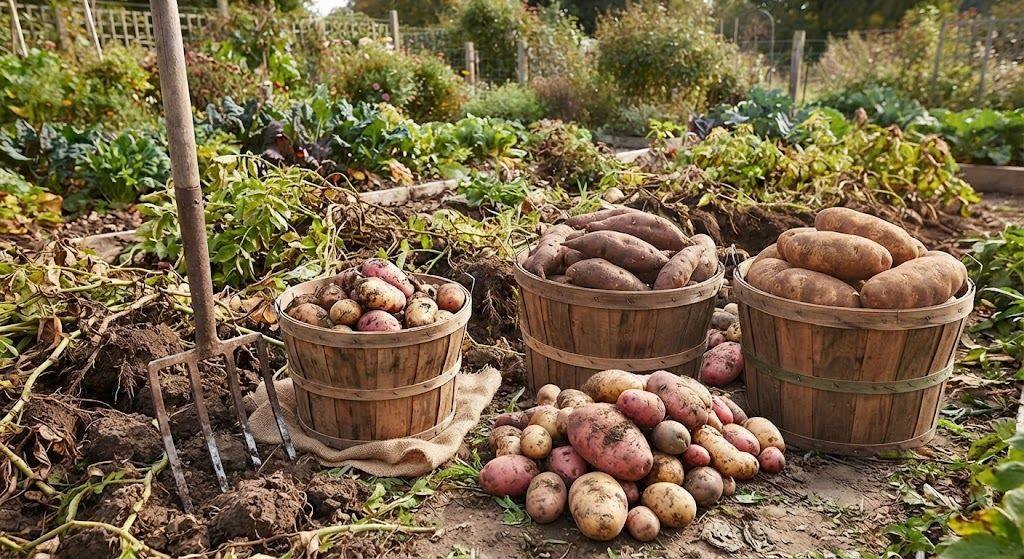
Potatoes produce more calories per square foot of garden space than almost any other crop you can grow. That's not a gardening opinion — it's an agricultural fact that's been driving food security decisions for centuries. The Irish didn't stake their civilization on potatoes because they tasted great. They did it because the yield is extraordinary.
University of Maryland Extension gives 6 to 15 pounds per 10-foot row as a reasonable home garden expectation. University of Maine Extension says to plan on 1 to 2 pounds per foot of row — so a modest 20-foot row yields 20 to 40 pounds. Utah State Extension notes that a 100-foot row requires only 8 to 10 pounds of seed potatoes to plant and returns 75 to 100 pounds minimum, with good conditions yielding significantly more.
⚠️ The preparedness angle: A 50-foot row of potatoes, properly grown, stored, and cured, can provide meaningful caloric backup for a household for months. They store in the dark at 40–45°F for six months or more without electricity. Unlike freeze-dried or canned goods, they’re fresh food you grew yourself. The combination of yield, storage life, and caloric density makes potatoes one of the most practical preparedness crops a home gardener can grow.
🥔 Regular Potato Varieties — What’s Actually Out There
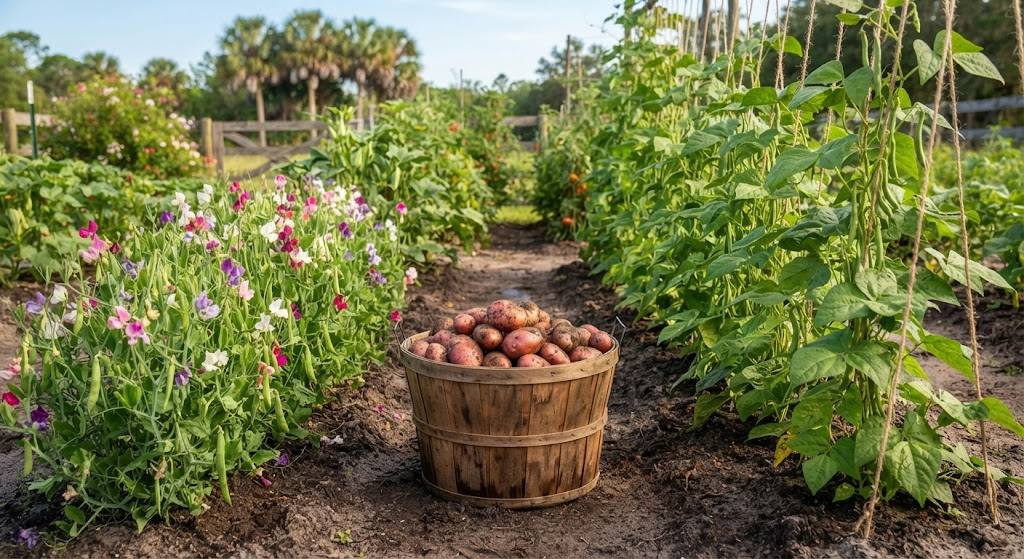
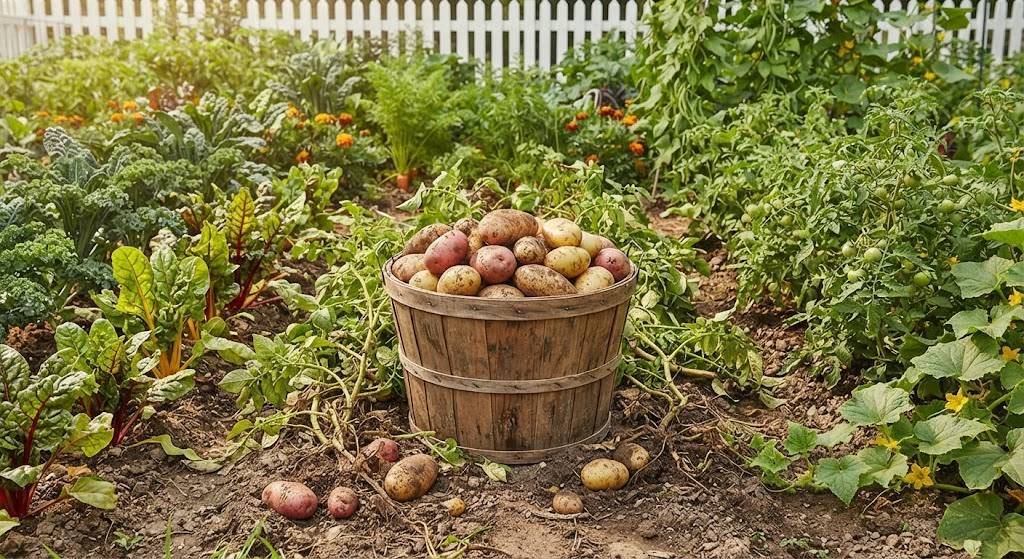
Most people know russets, Yukon Golds, and red potatoes. The actual variety range goes well beyond that — fingerlings, purple-fleshed heirlooms, deeply flavored yellows, and high-yielding whites that most grocery stores never carry. Potatoes are organized into six type categories: russet, yellow, red, white, fingerling, and blue/purple. Here are twelve worth knowing.
🟤 Russet Potatoes
Russet Burbank
| Days | 100–130 days — the classic late-season baking potato |
| Yield | Very high — one of the highest-yielding home garden varieties |
| Flavor | Mild, earthy, fluffy when baked — high starch, low moisture |
| Best for | Baking whole, mashing, french fries — not salads (falls apart) |
| Storage | Excellent — stores months in cool dark conditions |
| Note | The potato that made Idaho famous. Takes the longest but gives the biggest harvest |
🟡 Yellow/Gold Potatoes
Yukon Gold
| Days | 70–90 days — one of the earliest maturing |
| Yield | Good — high yields with proper spacing (caution: too wide spacing can cause hollow heart) |
| Flavor | Buttery, subtly sweet, creamy yellow flesh — thin skin you can leave on |
| Best for | Roasting, mashing, boiling — the true all-purpose variety |
| Storage | Good — stores well for an early variety |
| Note | The most versatile variety you can grow. If you plant one yellow potato, this is the one |
German Butterball
| Days | 100–110 days |
| Yield | High — rewarding late-season producer |
| Flavor | Exceptionally rich and buttery — many consider it the best-flavored yellow |
| Best for | Roasting, baking, mashing — flavor improves in storage |
| Storage | Excellent — one of the best-storing yellows |
| Note | Worth the wait for the flavor alone. Not widely available in stores — home garden is the way to get it |
🔴 Red Potatoes
Red Norland
| Days | 70 days — one of the earliest ready potatoes you can grow |
| Yield | Good for early season — harvested young as new potatoes |
| Flavor | Smooth, waxy flesh — tender and mild when harvested early |
| Best for | New potatoes, boiling, roasting whole, potato salad |
| Storage | Short-term — best eaten fresh; thin skin doesn't store long |
| Note | If you want fresh potatoes by early summer, Red Norland gets there fastest |
Red Pontiac
| Days | 80–100 days |
| Yield | Very high — one of the most productive red varieties |
| Flavor | Waxy white flesh, mild flavor — holds shape when cooked |
| Best for | Potato salad, roasting, soups, stews — does not fall apart |
| Storage | Good — stores longer than most red varieties |
| Note | Adaptable to many soil types and climates. A dependable high-yielder for any garden |
⚪ White Potatoes
Kennebec
| Days | 80–100 days |
| Yield | Very high — one of the most reliably productive home garden varieties |
| Flavor | Mildly sweet, earthy — creamy white flesh |
| Best for | Chips, french fries (cult favorite among high-end restaurants), baking, all-purpose |
| Storage | Excellent — stores very well; good late blight resistance |
| Note | Chefs prize it for the best french fry texture of any variety. University of Maine Extension recommends it specifically for late blight resistance |
Superior
| Days | 70–80 days |
| Yield | High for an early variety |
| Flavor | Creamy, thin-skinned, moderately starchy |
| Best for | Mashing, boiling, all-purpose early-season cooking |
| Storage | Good — thin skin but stores reasonably well |
| Note | Good scab resistance — relevant if scab is a problem in your soil |
🟣 Fingerling Potatoes
Russian Banana
| Days | 90–125 days |
| Yield | Moderate — smaller tubers mean lower weight but excellent quality |
| Flavor | Deeply buttery and rich — yellow flesh, thin skin, firm texture |
| Best for | Roasting whole, potato salad — holds shape beautifully |
| Storage | Moderate — thin skin limits long-term storage; best used within weeks |
| Note | Gourmet potato rarely found at stores. Worth growing specifically because you can’t easily buy it |
French Fingerling
| Days | 90–100 days |
| Yield | Moderate — smaller tubers |
| Flavor | Yellow flesh with striking red veining inside, firm, slightly nutty |
| Best for | Roasting, slicing for salads where the red veining shows beautifully |
| Storage | Moderate |
| Note | One of the prettiest potatoes you can grow — the sliced cross-section is genuinely striking on a plate |
🟣 Blue/Purple Potatoes
All Blue / All Red
| Days | 80–100 days |
| Yield | Good — reliable mid-season producer |
| Flavor | Earthy, slightly nutty; purple-blue color holds reasonably well when cooked |
| Best for | Roasting, steaming, salads where the color matters |
| Storage | Good — stores well for a colored variety |
| Note | The anthocyanins that give the color are the same antioxidants in blueberries. A genuinely nutritional choice, not just visual |
Adirondack Red
| Days | 85–95 days |
| Yield | Good |
| Flavor | Red inside and out — unusually, the color holds better when cooked than most purple varieties |
| Best for | Roasting, potato salad, any dish where the pink-red color matters |
| Storage | Good |
| Note | Bred by Cornell University specifically for home gardeners. High antioxidant content; consistent red flesh even after boiling |
Purple Majesty
| Days | 80–95 days |
| Yield | Good |
| Flavor | Deep purple throughout, mildly earthy, medium starch — versatile |
| Best for | Baking, roasting, mashing — produces striking deep purple mashed potatoes |
| Storage | Good — stores well compared to other purple varieties |
| Note | One of the deepest-colored purple potatoes available. A conversation starter on any plate |
🍠 Sweet Potato Varieties — Eight Worth Knowing
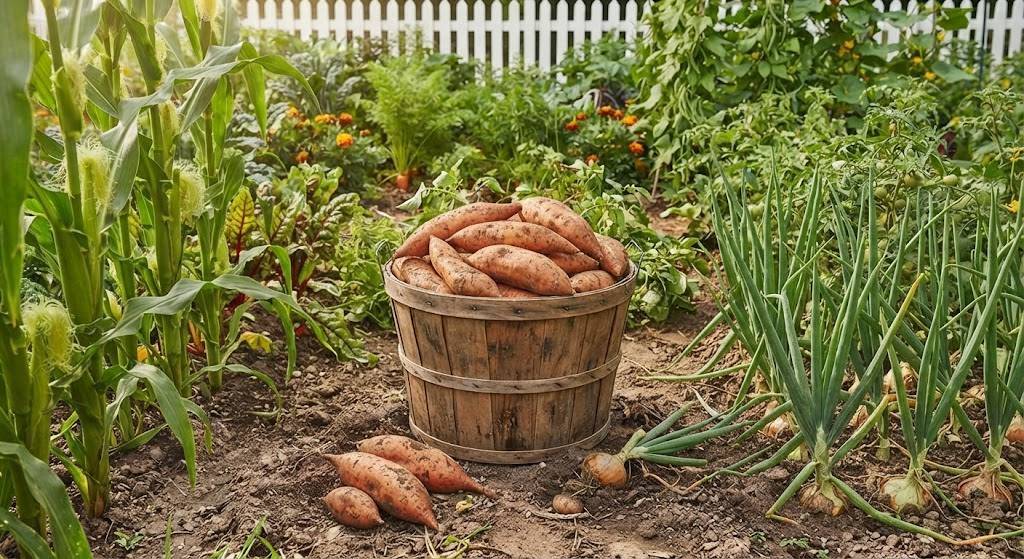
Sweet potatoes are not potatoes. They’re from an entirely different plant family — the morning glory family rather than the nightshade family — and they’re grown completely differently (from rooted slips, not seed pieces). The variety range is genuinely astonishing: orange, white, purple, red-fleshed, dry, moist, mild, sweet, nutty. Most of what you find in stores is Beauregard or Covington. The other six varieties on this list you’ll likely never find in any store.
Beauregard
| Skin | Light rose-red |
| Flesh | Deep orange, moist, very sweet |
| Yield | Very high — the most productive widely available variety |
| Flavor | Classic sweet potato flavor — what most people expect |
| Storage | Good — stores well when properly cured |
| Notes | Most widely available slips; adapts to many soil types; Clemson Extension’s top recommendation for Southern gardens; the benchmark variety every other is measured against |
Covington
| Skin | Copper-rose, smooth |
| Flesh | Orange, moist, excellent sweet flavor |
| Yield | Very high — matches or exceeds Beauregard |
| Flavor | Sweeter and more flavorful than Beauregard — most Extension offices prefer it for taste |
| Storage | Better than Beauregard; very uniform shape |
| Notes | Developed by NC State University; now the variety of choice for growers who want the best flavor. NH Extension calls it “highly recommended.” Resistant to soil rot, Fusarium wilt, and nematodes |
Jewel
| Skin | Deep copper |
| Flesh | Deep orange, high-yielding and consistent |
| Yield | Very high — Clemson notes 15% higher than comparable varieties |
| Flavor | Rich, sweet; excellent for baking and canning |
| Storage | Excellent — one of the best-storing sweet potatoes |
| Notes | Long season but the yield and storage quality reward the wait. Very disease resistant. Good choice if you want maximum storage-quality roots |
Garnet
| Skin | Reddish-purple/garnet |
| Flesh | Deep red-orange — stunning color |
| Yield | Good — not the highest yielder but reliable |
| Flavor | Sweeter than average with a complex, earthy undertone different from standard orange varieties |
| Storage | Good |
| Notes | The color alone makes it worth growing. The flavor complexity is something you won’t get from any grocery store sweet potato. Good choice for diversity in a garden planting |
O’Henry / White Yam
| Skin | Cream/white |
| Flesh | White to cream, moist |
| Yield | High — one of the higher-yielding white-fleshed varieties |
| Flavor | Mild, lightly sweet — more subtle than orange varieties; works in savory dishes where orange sweetness would be too much |
| Storage | Good |
| Notes | NH Extension notes it produces larger roots similar in shape to Beauregard. A genuinely different eating experience from any standard sweet potato |
Murasaki (Japanese)
| Skin | Deep purple |
| Flesh | White/cream, drier texture than orange varieties |
| Yield | Moderate — more variable in shape |
| Flavor | Dry, sweet, distinctly nutty — tastes nothing like American sweet potatoes; closest comparison is a chestnut |
| Storage | Good |
| Notes | Increasingly popular at farmers markets and with home cooks who want something genuinely different. The flavor develops further in storage — sweeter after a few weeks than right after harvest |
Stokes Purple / All-Purple
| Skin | Deep purple |
| Flesh | Vivid purple throughout — holds color when cooked |
| Yield | Moderate |
| Flavor | Dry, mildly sweet — earthy, less sweet than orange varieties |
| Storage | Good |
| Notes | Extremely high in anthocyanins — the antioxidant. The flavor doesn’t appeal to everyone but the color when sliced is extraordinary. Popular with people managing blood sugar because the lower sugar content appeals to them |
Georgia Jet
| Skin | Rose/red |
| Flesh | Orange, moist |
| Yield | High — specifically bred for northern short-season production |
| Flavor | Sweet, good flavor — harvests before the other varieties are ready |
| Storage | Moderate — more susceptible to cracking; use first from storage |
| Notes | The right choice for gardens north of the traditional sweet potato belt. If your season is under 90 frost-free days, Georgia Jet is often the only orange variety that reliably matures |
🌻 How to Plant Regular Potatoes — Step by Step
Regular potatoes are a cool-season crop. They go in the ground 2 to 3 weeks before the last frost date — they tolerate light frost once sprouted but not a hard freeze, and they stop producing tubers when soil temperatures exceed 80°F. Getting them in at the right time is the most important variable for yield.
⚠️ Always use certified seed potatoes. University of Maryland Extension is explicit about this: supermarket potatoes may be infected with diseases that show no symptoms but devastate next year’s crop. They are also typically treated with a sprout inhibitor. Buy certified seed potatoes from a reputable seed company or your county Extension office. This single decision has more impact on yield than almost anything else.
Cut and Cure the Seed Pieces
Each seed potato piece should be approximately egg-sized and contain at least one good eye (sprout point). If your seed potato is large, cut it into pieces 1 to 2 days before planting and let the cut surfaces callus over in a warm, dry place. This reduces rot at planting. Small golf ball-sized seed potatoes can be planted whole. You’ll need 8 to 10 pounds of seed potatoes per 100 feet of row.
Prepare the Soil
Potatoes need loose, well-drained soil with a pH of 5.0 to 6.5. Below 6.0 reduces scab disease risk. Work in compost before planting. Avoid freshly manured ground, which can encourage scab. Raised beds are excellent — the loose, deep soil encourages large, well-formed tubers and makes harvest easier on your back. Apply balanced fertilizer (10-10-10) at about 1 pound per 10 feet of row before planting.
Plant at the Right Depth and Spacing
Dig a furrow 4 to 6 inches deep. Place seed pieces cut-side down, 8 to 12 inches apart in the row. Space rows 30 to 36 inches apart — potatoes need room for the hilling process. Cover with 2 to 3 inches of soil initially (you’ll add more when hilling). Closer spacing produces more numerous smaller tubers; wider spacing produces fewer but larger ones. For new potatoes, 9 inches. For large storage potatoes, up to 18 inches.
Hill When Plants Are 8–12 Inches Tall
Hilling is the practice of mounding soil up around the base of the plants as they grow. This is not optional — it’s how tubers form. Tubers develop on underground stems called stolons; more hilled soil means more room for tubers to form. It also prevents greening — exposure to light causes potato skins to turn green, indicating the development of solanine, a naturally occurring compound that can cause illness if consumed in significant amounts.
Green potatoes should not be eaten; cut away all green portions generously or discard the potato entirely. Hill when plants reach 8 to 12 inches, mounding soil 4 to 6 inches up around each plant. You may hill 2 to 3 times during the growing season. Organic mulch (straw, grass clippings) can be used in place of soil.
Water Consistently — 1 to 2 Inches Per Week
Consistent moisture during tuber development is critical. Irregular watering — dry periods followed by heavy rain or irrigation — causes hollow heart, cracks, and misshapen tubers. Utah State Extension recommends deep, frequent irrigation. Drip irrigation is ideal. Stop watering 2 weeks before planned harvest. Avoid overhead watering (spreads fungal diseases).
Harvest and Cure for Storage
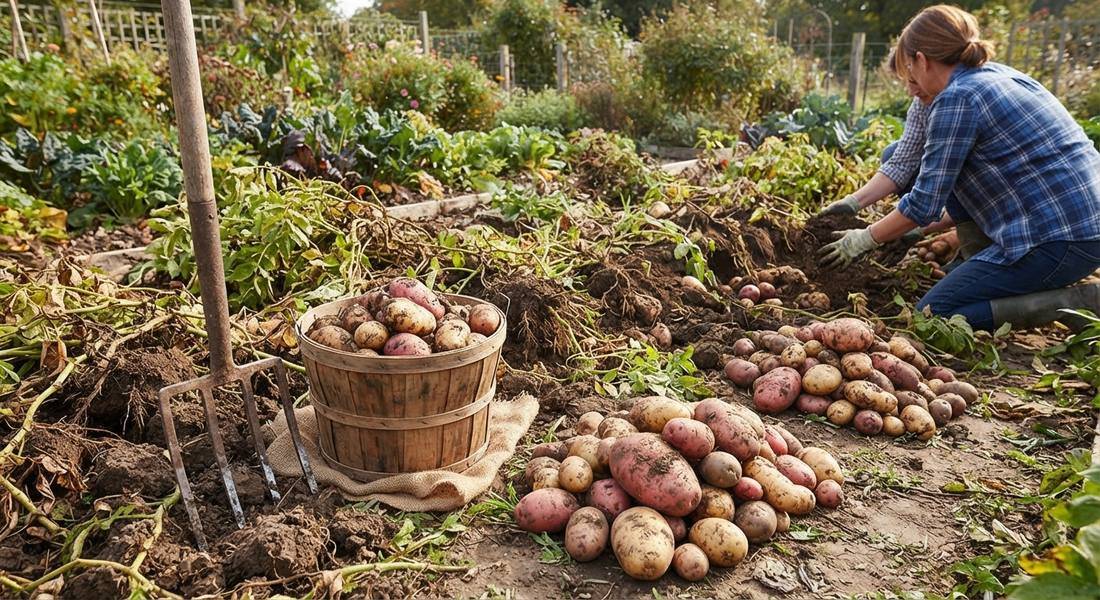
New potatoes can be harvested 6 to 8 weeks after planting once the plants flower. For storage potatoes, wait until the vine dies back completely, then wait another 2 weeks for skins to thicken before digging. Don’t dig in wet soil. After harvest, cure at 50°F to 60°F with high humidity for 10 to 14 days to heal cuts and toughen skins. Then store in darkness at 40 to 45°F — a root cellar, cool basement, or insulated garage. Do not wash before storage. Properly cured storage potatoes keep 6 months or more.
Potatoes attract their own particular set of visitors, and the beetles are the ones people give up over. Hand-picking into a jar of soapy water in the first fortnight is unglamorous and it works better than anything in a bottle. That, and the rest of the no-spray approach, is on the chemical-free pest control page.
🌱 How to Plant Sweet Potatoes — It’s Completely Different
Sweet potatoes are not planted from seed pieces. They are planted from slips — rooted stem cuttings that sprout from a parent root. You can buy slips from seed companies, or grow your own from a stored sweet potato starting in late winter. The whole process is different from regular potatoes, and the timing is different too: sweet potatoes need warm soil, not cool.
🌡️ Temperature is everything with sweet potatoes. NH Extension is direct about this: sweet potatoes need 90 to 120 frost-free days and the soil must be above 65°F before planting. Too cold and slips rot rather than root. Most Extension offices recommend using black plastic mulch to warm the soil, which can dramatically extend the effective growing season in northern areas and boost yields significantly even in the South.
Get or Grow Your Slips (6–8 Weeks Before Planting)
Option A: Buy slips from a seed company (specify ship date for your planting window). Option B: Grow your own. Push 4 toothpicks into the sides of an organic sweet potato about halfway down, place in a jar of water so the bottom half is submerged, and set in a sunny window. In 2 to 4 weeks, sprouts emerge. Once 4 to 6 inches long, twist them off and place in water to root. One sweet potato can produce 8 to 30 slips. Piedmont Master Gardeners recommend organic sweet potatoes since commercial ones are often treated with sprout inhibitors.
Prepare Raised Rows or Ridges
Sweet potatoes prefer slightly raised rows or ridges for drainage and root development. In clay soil, mounding is essential — compact clay produces small, misshapen roots. Work in compost but avoid over-fertilizing with nitrogen: too much nitrogen produces abundant vines and very few roots. Clemson Extension recommends a fertilizer band 5 to 6 inches deep, not broadcast over the surface. LSU AgCenter recommends 6-24-24 or similar (low nitrogen, high phosphorus and potassium).
Plant Slips 12 Inches Apart in Rows 3 Feet Apart
Plant each slip 3 to 4 inches deep, making sure the terminal bud (growing tip) is above ground. Water in with a high-phosphorus starter fertilizer to encourage root establishment. Keep well-watered for the first 2 weeks as slips establish. If using black plastic mulch (highly recommended), lay the plastic tightly before planting and cut holes for each slip. The plastic warms the soil, suppresses weeds, and can increase yields 30 to 40%.
Let the Vines Run — Mostly Hands-Off
Once established, sweet potato vines cover the ground and shade out weeds. Unlike regular potatoes, there is no hilling. The main tasks are watering (1 to 1.5 inches per week) and keeping deer away — deer love sweet potato foliage and will browse it to the ground. NH Extension warns this significantly reduces yield. A lightweight fence or row cover handles this.
Harvest Before First Frost — Then Cure
Harvest 90 to 120 days after planting, or when the vines begin yellowing — but always before the first frost. Sweet potatoes are extremely sensitive to cold; even a light frost can cause damage that shows up as internal rot weeks later in storage. Dig carefully with a fork to avoid cuts.
Curing is not optional for sweet potatoes: hold freshly dug roots at 85°F and 85 to 90% relative humidity for 7 to 10 days. This converts starches to sugars (the sweet potato you ate just after harvest doesn’t taste as sweet as one cured for two weeks) and heals cuts that would otherwise become storage rot. After curing, store at 55 to 60°F in darkness. Well-cured sweet potatoes store 6 to 12 months.
🎓 What the Extension Service Says About Potatoes
Multiple Extension offices across the country have published detailed potato guidance. Here are the most useful things they say that aren’t commonly known.
On Certified Seed Potatoes
University of Maryland Extension and University of Maine Extension both make the same point: saving your own seed potatoes from year to year is generally not worthwhile because viruses and diseases accumulate without showing symptoms and eventually destroy yield. Supermarket potatoes carry the same risk plus are treated with sprout inhibitors. Certified seed potatoes are tested to be virus-free. This is one of the highest-ROI decisions in home potato growing.
On Soil Temperature and Timing
Utah State Extension specifies that potato seed pieces should be planted when soils reach at least 50°F. Below that, seed pieces sit in cold wet soil and are susceptible to rot rather than sprouting. Plant 2 to 3 weeks before the last frost date as a general rule, but use a soil thermometer to confirm. For sweet potatoes, NH Extension requires soil above 65°F — warmer than regular potatoes need by 15 degrees.
On Hilling — Why It’s Not Optional
University of Maryland Extension explains the mechanism: tubers form on underground stolons (lateral stems). Hilling up soil creates more underground stem length, which means more places for tubers to form. Skipping or delaying hilling directly reduces yield. It also prevents greening — potatoes exposed to light through the soil surface produce solanine, a toxin that makes green-tinged potatoes unsafe to eat in quantity. Hill within 4 weeks of planting and again as plants grow.
On Sweet Potato Curing
Clemson Extension and NH Extension both specify the curing requirements: 85°F at 85 to 90% relative humidity for 7 to 10 days. This accomplishes two things — it heals cuts that would become entry points for storage rots, and it converts starches to sugars, which is why a properly cured sweet potato tastes dramatically sweeter than one eaten right out of the ground. Many gardeners skip this step and then wonder why their sweet potatoes don’t taste as good as store-bought ones.
Free Extension Publications
• University of Maine Extension Bulletin #2077 — Potato Facts: Growing Potatoes in the Home Garden
• University of Maryland Extension — Growing Potatoes in a Home Garden
• Utah State Extension — Potatoes in the Garden
• NH Extension — Growing Sweetpotatoes in New Hampshire
💬 What Potato Gardeners Say Once They’ve Done This for a While
“I planted fifty feet of Yukon Gold my first year just to see. I had no idea what I was doing. I hilled them twice, kept them watered, and harvested around sixty pounds. I remember standing there looking at this pile of potatoes and thinking I had made some kind of mistake. That couldn’t be right. A fifty-foot strip of ground I would have otherwise mowed gave me sixty pounds of food.”
“I grew up eating Russet Burbank. That’s all I knew about potatoes. My neighbor gave me a handful of Russian Banana fingerling slips and told me to try them. I roasted them whole with olive oil and rosemary. My wife and I ate the entire tray standing at the kitchen counter. We have grown fingerlings every year since and I will not go back to the grocery store for potatoes.”
“We lost power for eight days after a big derecho storm in July. Our refrigerator died. But I had sweet potatoes cured and stored in the basement from the fall before — still perfect after nine months. We cooked them in cast iron on the gas stove every single day of that outage. They were the centerpiece of every meal. I thought about that for a long time afterward.”
“Sweet potatoes sound complicated until you grow them once. After that they sound exactly as simple as they are. Put the slips in warm ground. Water them. Don’t touch them for three months. Dig them out. Cure them for ten days. Put them in the basement. That’s the whole thing. I got forty-seven pounds from eight plants last year. My wife said I was making it up. I made her come look at the scale.”
“The purple ones. I grew All Blue potatoes this spring and invited my grandchildren to help me harvest them. When we started pulling up purple potatoes, the eight-year-old stopped completely and said ‘Grandpa, those are wrong.’ I made mashed potatoes. They were purple. My grandchildren ate every bite and talked about it for weeks. Growing regular Russets would never have done that.”
Frequently Asked Questions
How many pounds of potatoes can you get from one plant?
A typical home garden potato plant produces 3 to 5 pounds of potatoes under good conditions. University of Maine Extension gives 1 to 2 pounds per foot of row as a useful benchmark. A 100-foot row yields 150 to 300 pounds. Sweet potato plants can yield 5 pounds or more per plant in good conditions — up to 30 pounds per 12-plant bed in documented trials.
What is the difference between planting potatoes and sweet potatoes?
Regular potatoes are planted from certified seed potato pieces with at least one eye, prefer cool soil (50°F minimum), and are hilled as they grow. Sweet potatoes are planted from rooted slips (sprouts from a parent root), need warm soil above 65°F, produce sprawling vines without hilling, and are harvested before first frost. They are completely different plants from different families. The curing process is also different: regular potatoes cure at 50°F for 10 to 14 days; sweet potatoes cure at 85°F for 7 to 10 days.
What potato varieties store best for winter?
Late-season varieties store best: Russet Burbank, Kennebec, German Butterball, and Red Pontiac all hold well for months in cool, dark, humid conditions (40 to 45°F). Among sweet potatoes, Jewel and Covington store exceptionally well after proper curing. Fingerlings and early-season varieties store for weeks, not months — plan to use those first.
Can I grow sweet potatoes in the North?
Yes, with variety selection and technique. Georgia Jet matures in 85 to 90 days and was specifically developed for short-season northern gardens. Black plastic mulch warms soil 2 to 4 weeks earlier, effectively extending the season. NH and Pennsylvania Extension both have publications on growing sweet potatoes successfully in colder regions.
Can I use grocery store potatoes as seed potatoes?
Extension offices uniformly recommend against this. Grocery store potatoes may carry viruses and diseases that show no symptoms but devastate next year’s crop. They are also typically treated with a sprout inhibitor. Buy certified seed potatoes from a reputable seed company. This is one of the most important yield decisions you can make.
What is the difference between growing sweet potatoes and regular potatoes?
Regular potatoes are planted from certified seed potatoes (pieces of potato with at least one eye), prefer cool soil, and are hilled as they grow. Sweet potatoes are planted from rooted slips (sprouts from a parent root), need warm soil above 65°F, and are harvested before the first frost. They are completely different plants from different families.
📚 Primary Sources
- • University of Maine Cooperative Extension Bulletin #2077
- • University of Maryland Extension — Growing Potatoes in a Home Garden
- • Utah State Extension — Potatoes in the Garden
- • University of New Hampshire Extension — Growing Sweetpotatoes
- • Clemson Extension HGIC — Sweet Potato
- • LSU AgCenter — Growing Sweet Potatoes in the Home Garden
- • Piedmont Master Gardeners — Growing a Variety of Sweet Potatoes
Page last reviewed: June 2026 | Author: Franklyn Galusha