
Dial 2-1-1. Three digits, free, twenty-four hours, works in 99 percent of the United States. A trained human being with a database of everything within driving distance of your address. Say what you are looking for. That is the whole thing.
Or dial 1-800-677-1116, the Eldercare Locator, which connects you to your Area Agency on Aging — the outfit whose entire job is knowing what exists for older people in your county.
Both are free. Neither will sell you anything. Between them they will tell you more about your own town in fifteen minutes than you have learned in the last five years.
🗺️ The Local Problem

I wrote a page not long ago about the things that hold a person up when family cannot. It listed the good national outfits — Men’s Sheds, the volunteer programs, the Village movement. Useful, as far as it goes.
And a fellow read it and asked the only question that matters: where is any of that here?
Fair. A national organisation is an abstraction. You do not live in a national organisation. You live on a road, in a county, with a certain amount of money and a certain ability to get around, and the question is not whether Men’s Sheds exist in America. It is whether anything at all is happening within nine miles of your kitchen on a Tuesday.
Here is the encouraging part, and I mean this seriously. There is almost certainly more happening near you than you think, and the reason you do not know about it is that none of it advertises.
Church suppers do not buy billboards. The congregate meal site at the community center is not on television. The quilting group, the coffee club, the Wednesday cards, the shed out back of the Baptist church where four men rebuild lawnmowers — these things run on word of mouth, and if you have been indoors for two years, word of mouth is exactly the thing you have been cut off from.
So you cannot find them by looking. You have to find them by asking somebody whose job it is to know.
There are four such people, and all four are free.
🚪 The Four Doors
Door one: dial 2-1-1
Three digits, like 911, and almost nobody over sixty knows it exists.
2-1-1 is run by United Way and it covers 99 percent of the United States and all of Canada. It is free, it is confidential, and in 2025 it handled about nineteen million requests for help. You are dialing a real person — a trained resource specialist — sitting in front of a database of every service, program, group and agency in your area.
Most people who have heard of it think it is only for emergencies. It is not. You can call 2-1-1 and say you are looking for things to do, or for a group, or for other people your age. That is a perfectly normal call for them to take, and it is the sort they like taking, because most of their day is harder than that.
Many 2-1-1s also take a text. In a good many states you can text your ZIP code and get referrals back on your phone, which suits a man who would rather not have the conversation.
Door two: the Eldercare Locator, and the agency behind it
1-800-677-1116. This is the federal front door to the aging network, and what it does is connect you to your Area Agency on Aging — the local outfit funded under the Older Americans Act whose entire existence is knowing what is available to people over sixty in your particular county.
These agencies are the best-kept secret in American life. They run or know about the meal sites, the senior center, the transportation programs, the benefits counselling, the caregiver support, the home repair help, the legal clinics, and — the part relevant here — the social programs.
Nationally, the Older Americans Act programs served around ten million older people in a recent year. That included 55 million congregate meals and 14.7 million rides to appointments, groceries and activities. That is not a boutique service. That is enormous, and it is running in your county right now.
Door three: the public library
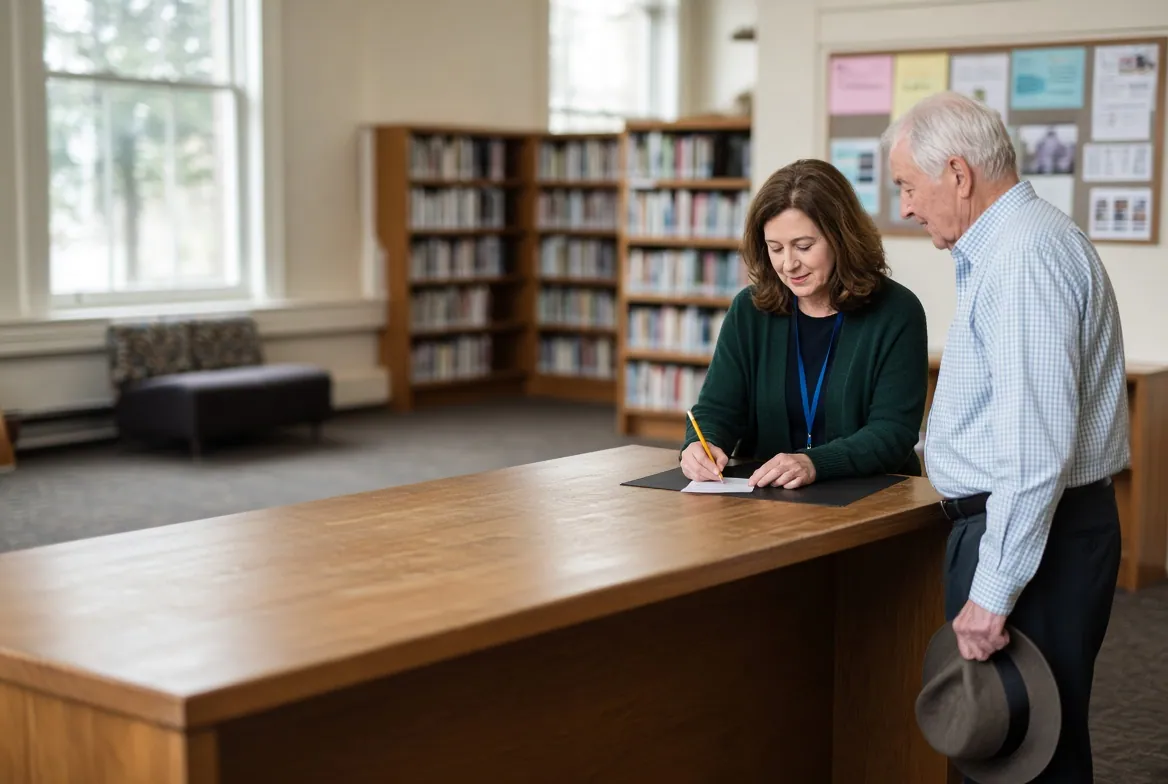
I keep saying this and I will keep saying it: the library is the easiest door in America to walk through, because nobody has to speak to you there.
But there is a second reason it belongs on this list. The bulletin board and the events calendar at a public library are, in most small towns, the single most complete listing of what is going on that exists anywhere. Not because the library organises it. Because everybody who organises anything puts a flyer up.
Ask the librarian at the desk what groups meet in the building. Most libraries host several — book clubs obviously, but also genealogy, knitting, chess, writing, computer help, tax assistance in season, and a good many one-off talks. All free. And a librarian asked that question will nearly always go further than you asked, because that is the sort of person who becomes a librarian.
Door four: the congregate meal
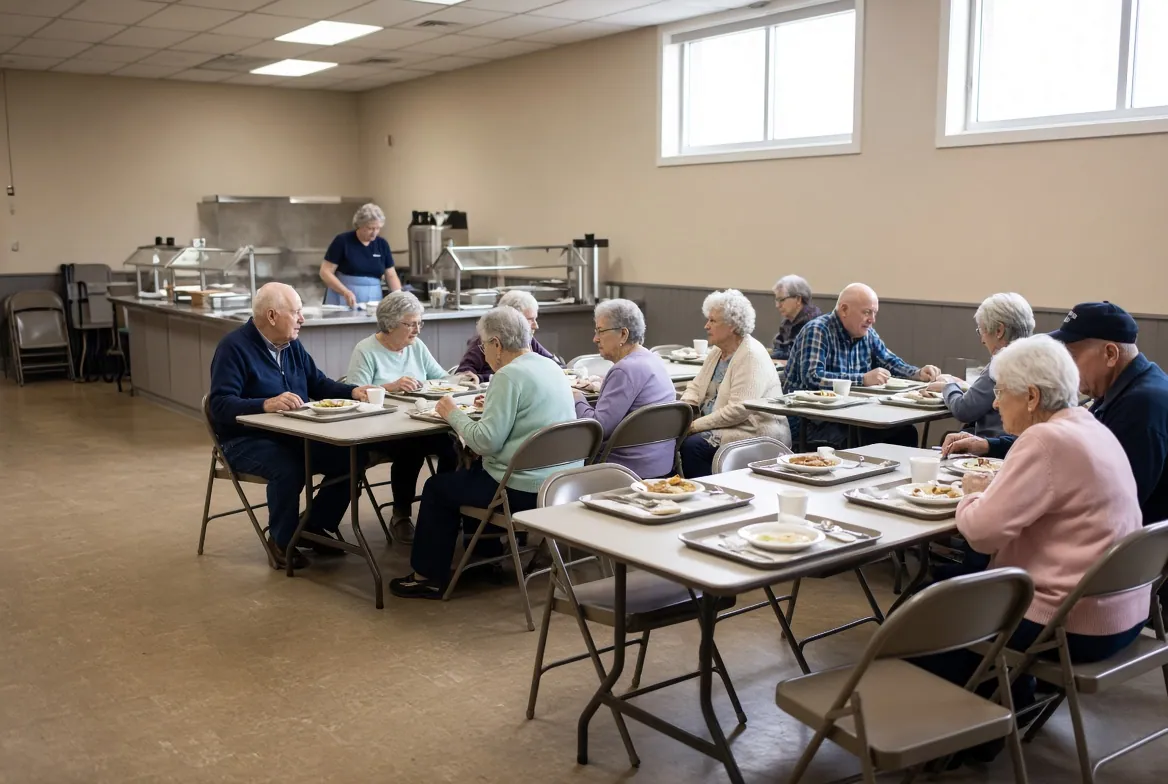
This is the one I would push hardest, and the one most men refuse.
A congregate meal is a hot lunch served in a group setting — senior center, community center, church hall, senior housing block. It is funded federally under the Older Americans Act. Means tests are prohibited by law. There is no set fee. A donation is invited and cannot be required, and you cannot be refused for not giving one.
Now, the part that makes it more than a meal. More than two-thirds of congregate meal sites also run other activities, and more than half of those run twenty-five hours a week of them. People come for the lunch and stay for the cards. In the national survey of participants, 63 percent said their social opportunities had increased and about three-quarters said the program helped them keep living independently.
The objection is always pride. I don’t need a free lunch. And the answer is that the lunch is not the point and never was. The point is that you sat at a table with five people for an hour, and one of them mentioned a thing on Thursday.
Those four doors between them will hand you your whole town. One phone call to 2-1-1, one to the Eldercare Locator, one visit to the library, one lunch. That is the entire research project, it is free, and it can be done inside a week by a man who does not much want to do it.
🗣️ What to Actually Say

Here is where these articles usually leave you standing with a phone in your hand and nothing to say into it. So — words. Use them or change them, but have something ready, because the hard part of the call is the first ten seconds.
Calling 2-1-1
“I’m sixty-eight and I live alone in [town]. I’m not in any trouble. I’m looking for groups or activities for older people around here — anything that meets regular. What have you got?”
The I’m not in any trouble is worth including, because it saves them working out whether this is a crisis call and lets them get straight to the list.
Calling the Eldercare Locator or your Area Agency on Aging
“I’d like to know what the senior center near me runs during the week, where the congregate meal sites are, and whether there’s any transportation for people who don’t drive.”
Three questions, all of which they can answer immediately, and the third one opens up a great deal more than it appears to.
At the library desk
“What groups meet here? Anything that’s mostly older folks?”
Walking into a group for the first time
“First time here. Anything need doing?”
That second sentence is the most useful four words in this entire article. It gives you a job, it gives your hands something to do, and it makes you a person who helps rather than a person being welcomed. Every group on earth needs chairs moving.
And the one for when somebody asks why you came
“I lost my wife a while back and I’ve got out of the habit of people.”
Say it plainly if it is true. You will not be the first man in that room to have said it, and quite often you will not be the first that month.
💵 If You Have No Money
Let me take this one seriously rather than waving at it, because a great deal of advice about staying connected quietly assumes a person with a car, a card and forty dollars spare.
Here is what costs nothing at all.
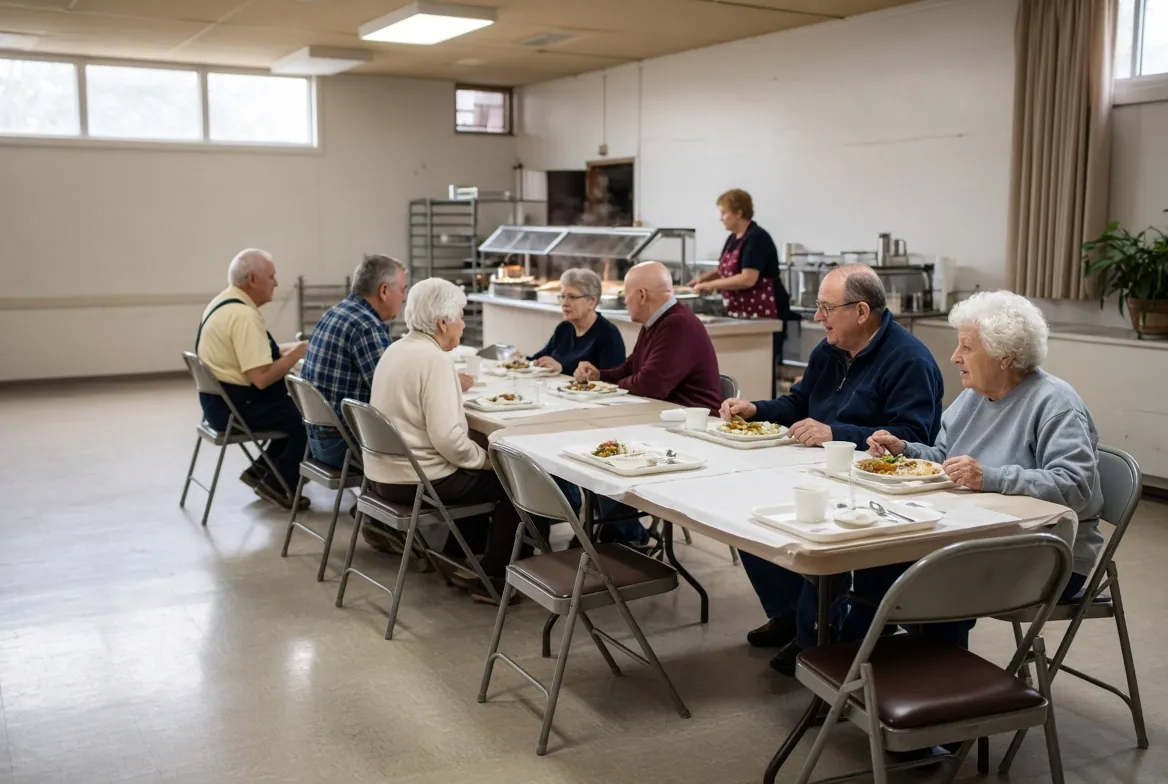
- The congregate meal. As above — no means test, no required fee, hot food and an hour of company. This is the single best value in American public life and it is free by federal statute.
- The library. Everything in it. Books, groups, computers, internet, talks, the warm room in July and the warm room in January.
- The senior center. Most activities are free or a dollar or two. Ask about fee waivers if there is a charge — they exist and are rarely advertised.
- Church. No collection plate is compulsory and no congregation worth the name checks. Coffee hour after the service is company, and suppers, work days and study groups run all week.
- Volunteering, which is company that pays you in usefulness. Food pantries, thrift stores, hospital auxiliaries, animal shelters, Habitat ReStore, school reading programs. A food pantry in particular is worth thinking about twice — a man who uses a pantry can also work at one, and doing both is common and nobody blinks.
- Free college. This one surprises people. Nearly every state has some form of tuition waiver for older residents at public colleges — often at 60, sometimes 65, usually to audit classes on a space-available basis. Ohio, North Carolina, South Carolina, Virginia, Texas, Florida, California, Minnesota and many more. Fees may still apply and the rules vary by school, so ring the registrar and ask about the senior waiver. A community college classroom two mornings a week is company, structure and something to think about, for the price of the gas.
- Parks and recreation departments. Municipal walking groups, fishing clinics, pickleball, community gardens. Usually a token fee, frequently waived for seniors, and city rec departments almost never get mentioned in articles like this one.
- The extension office. Every county has one, tied to the state land-grant university. Master Gardener programs, food preservation classes, farm and homestead workshops. Small fees, often waivable, and the people there are used to helping.
And the honest note about pride, since it is what actually stops people. Every one of these things was paid for out of taxes you contributed to for fifty years. The congregate meal program has been running since 1965. You are not taking charity. You are collecting on a subscription you have already paid.
🚗 If You Have No Car
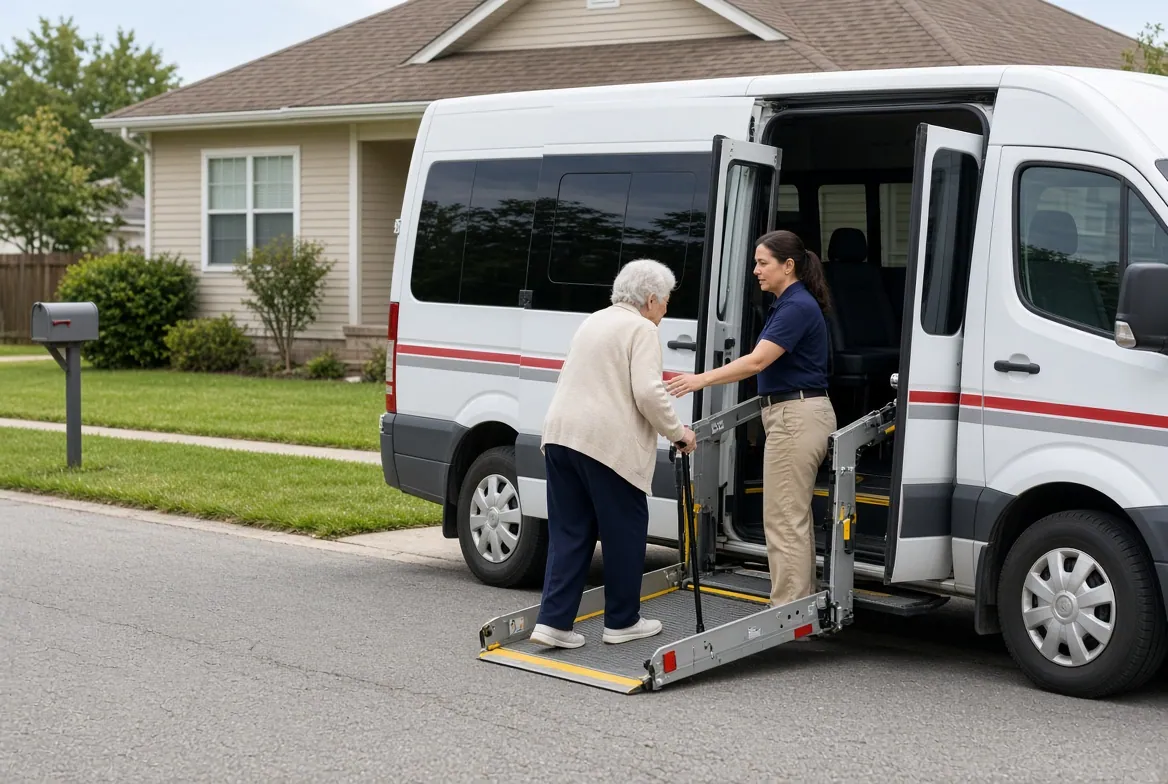
This is the real barrier, and it is the one nobody writes about honestly. All the community in the world is useless if it is four miles away and you stopped driving in March.
Ask about transportation on the very first call. Not at the end, as an afterthought. It changes which options are real.
- Area Agency on Aging transportation. Those 14.7 million rides a year under the Older Americans Act go to medical appointments, groceries and activities. That last word is in the statute and most people never ask about it. Rides to the senior center and the meal site are frequently part of the program.
- ADA paratransit. If your town has any public bus service at all, federal law requires a door-to-door service for people who cannot use the regular buses. You must apply and be certified, and it is not quick, so start now rather than when you need it. Fares are capped at roughly twice the regular bus fare.
- Volunteer driver programs. Enormously common and almost never advertised. Churches run them, AAAs run them, Villages run them, and independent volunteer transportation networks exist in hundreds of counties. Ask 2-1-1 for “volunteer transportation” by name.
- The Ride United program. United Way runs a rides program in partnership with Lyft for people who need to get to appointments, food pantries, veterans’ services and the like. Ask 2-1-1 whether it operates in your area.
- The group itself. This is the one people forget. Ask the group whether anyone comes from your direction. In small towns the answer is very often yes, and somebody will be glad of the company on the drive. It is not an imposition. Half the rides in rural America happen this way.
- Choose walkable first. If something is within half a mile, take that one, even if a better group meets across town. The one you can reach on foot in your own time is the one you will still be attending in a year.
We wrote a whole page about getting around without driving that goes further into this, including what it costs and how to arrange it.
🪶 Birds of a Feather — Matching the Room to the Man
Generic company is better than none, but it is not what you actually want. What you want is a room where you do not have to explain yourself. So here is the sorting, by who you already are.
If you served
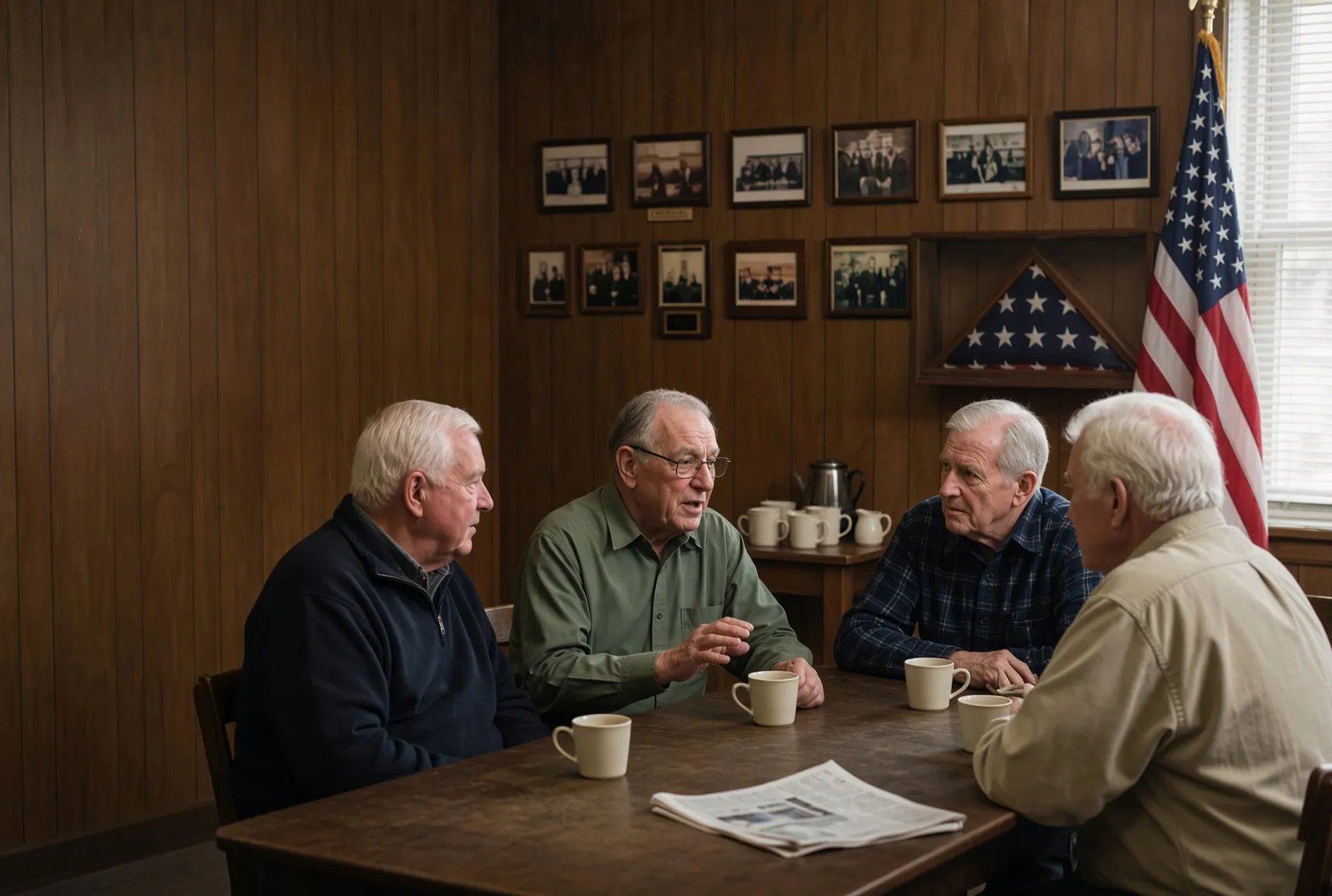
VFW, American Legion, DAV, AMVETS, and the VA’s own programs. The credential is already in your pocket and nobody will ask you to account for yourself. Many posts run breakfasts, ride programs and honor guards. VA medical centers also run veteran peer support groups, and the VA has caregiver and bereavement programs that civilians never hear about.
If you were widowed
GriefShare runs time-limited groups through churches nationwide, and you do not have to be much of a believer to sit in one. The National Widowers’ Organization is built for men specifically. And here is the one hardly anybody knows: most hospices run free bereavement groups that are open to the whole community, not only to families they cared for. Ring any hospice in your county and ask.
If you worked with your hands
Men’s Sheds if there is one. If there is not — makerspaces, woodworking clubs, model railroad clubs, car clubs, Habitat for Humanity builds, and the ReStore, which always needs somebody who can tell a good door from a bad one. Vocational schools and 4-H will take a man who can weld and thank him for it.
If you grew things
Community gardens, Master Gardener through the extension office, the county fair, seed swaps, garden clubs. See vegetable gardening and seed saving if you want a way in.
If your faith is part of you — or was
Congregations remain among the last institutions in American life organised around noticing when somebody is missing. And most will take you back after twenty years away without a single question about where you have been.
If you are caring for somebody
Caregiver support groups run through the Area Agency on Aging under the National Family Caregiver Support Program, and through the Alzheimer’s Association where dementia is involved. These are among the most genuinely useful rooms in this entire article, because everyone in them understands the specific thing.
If the drinking has become the problem
AA is free, it is everywhere, it meets at hours nothing else does, and there is no membership and no fee. If AA is not for you, SMART Recovery is a different approach and also free. And SAMHSA’s helpline — 1-800-662-4357 — will tell you what is near you without any lecture attached. We wrote about this in the piece on building your own support after 60.
If you just want somebody to talk to today
The Institute on Aging Friendship Line, 1-800-971-0016, is a warmline for people over sixty. Loneliness is a good enough reason to call. That is what it is for.
⚠️ Two Things to Watch For
Most of what is out there is honest. Two things are not, and you should know them.
The free lunch that is a sales pitch. If an invitation arrives in the mail offering a free meal at a restaurant to hear about annuities, reverse mortgages, insurance or living trusts, that is a sales seminar, not a community group. The meal is real and so is the pressure. Real senior programs do not recruit by direct mail with a steak dinner attached. See our page on phone and internet scams for the wider pattern.
The group that costs money to belong to. Legitimate fraternal organisations have modest dues, and that is normal. But anything asking for a substantial up-front payment to join a social club, a travel club or a “seniors network” deserves a hard look. The things in this article are free or nearly free, and that is not a coincidence — it is because they are funded to exist rather than needing to sell you something.
☎️ The Numbers, on One Page
| 2-1-1 United Way. Free, confidential, 24/7, 99% of the U.S. A real person with a database of your area. Many locations take texts too. | 211 |
| Eldercare Locator Connects you to your Area Agency on Aging. Meals, transport, benefits, programs. The best number on this page. | 1-800-677-1116 |
| Friendship Line Institute on Aging. For people over 60. Being lonely is a good enough reason to ring. | 1-800-971-0016 |
| SAMHSA Helpline Alcohol, drugs, mental health. Free, confidential, 24/7. Tells you what exists near you. | 1-800-662-4357 |
| 988 Suicide & Crisis Lifeline If the night has got very dark. Call or text, any hour. | 988 |
Cut that out and put it on the refrigerator, or copy the top two onto the inside cover of the phone book. The first two will find you nearly everything.
📋 The Week That Does It
If you want it as a plan rather than a list, here it is, and it takes a week.
- Monday. Dial 2-1-1. Ask the question. Write down what they say.
- Tuesday. Dial 1-800-677-1116. Ask about the senior center, the meal sites, and transportation.
- Wednesday. Go to the library. Look at the board. Ask the person at the desk what meets there.
- Thursday. Pick one thing off those three lists. Just one. The nearest one, not the best one.
- Next week. Go to it. Ask if anything needs doing.
- The two weeks after that. Go again. Twice. Then decide.
That is four phone calls and three visits, and at the end of it you will either have found something or you will know exactly what your county does and does not have — which is more than nearly anybody around you knows.
And the part worth remembering when the room feels hard to walk into. Half of American adults report being lonely, and the share of people with three or fewer close friends went from about a quarter to about half between 1990 and 2021. The room is full of people in your position. You are not the odd one out. You are the median attendee, and the woman pouring the coffee has been hoping somebody new would come.
📚 Related on This Site
- Making Friends After 60 — a pot of coffee, a deck of cards, and what actually happens after you walk into the room.
- When Family Cannot Be the Plan — the five things that hold weight, and why family being busy is arithmetic rather than neglect.
- Loneliness After 60 — what it is like when nobody comes, and what it means to be the one who does.
- Getting Around Without Driving — the transportation side, in detail.
- Help With the Power Bill — another set of programs almost nobody claims.
- Surviving on Social Security — the real arithmetic and what quietly exists.
- Phone and Internet Scams — for the free-lunch seminar and everything like it.
❓ Plain Answers
The short version of this page, one question at a time — the answer is always the first line.
How do I find senior groups near me?
Dial 2-1-1, a free 24-hour line run by United Way, and ask a trained specialist for groups or activities for older people in your area. You do not have to be in an emergency to call.
What is the Eldercare Locator?
The Eldercare Locator, at 1-800-677-1116, is a free line that connects you to your Area Agency on Aging, which knows what exists for people over sixty in your county. Ask about the senior center, meal sites and transportation.
Is there a free lunch program for seniors?
Congregate meals are hot lunches served in group settings like senior centers, funded under the Older Americans Act, with no means test and no set fee. A donation is invited but cannot be required, and more than two-thirds of meal sites also run other activities.
Can seniors take college classes for free?
Nearly every state has some form of tuition waiver for older residents at public colleges, often at 60, sometimes 65, usually to audit classes on a space-available basis. Fees may still apply and rules vary by school, so ring the registrar and ask about the senior waiver.
How can I get to senior activities if I don't drive?
Ask your Area Agency on Aging about transportation, because Older Americans Act rides go to medical appointments, groceries and activities. You can also ask 2-1-1 for volunteer transportation by name, and look into ADA paratransit if your town has bus service.
Is there a phone line for lonely seniors?
The Institute on Aging Friendship Line, 1-800-971-0016, is a warmline for people over sixty, and loneliness is a good enough reason to call.