Affiliate disclosure: Some links on this page go to Amazon. If you buy something through one of them, we earn a small commission — at no extra cost to you. It never changes the price you pay, and it never decides what we recommend. As an Amazon Associate I earn from qualifying purchases.How we make money →
🔗
Affiliate disclosure: Some links on this page go to Amazon. If you buy something
through one of them, we earn a small commission — at no extra cost to you. It never changes the
price you pay, and it never decides what we recommend. How we make money →
Pick the appliance, tell it how long the cord run is, and get the answer — the same numbers as the chart, without reading a table. Remember: with gauge, a lower number means a thicker, stronger cord.
⚠️ Two rules the calculator will not bend: space heaters plug into a wall outlet ONLY — every manufacturer says so, and this tool will never recommend a cord for one. And generators plug into appliances, NEVER into a wall outlet — backfeeding can kill the utility lineman fixing your street.
Where these numbers come from: the recommendations match the gauge chart on the Extension Cord Guide, built on published National Electrical Code ampacity guidance and safety-council (ESFI/UL) recommendations, rounded to the heavier gauge wherever a draw sits near a boundary. Longer runs need thicker cords because voltage drops over distance — a starved motor runs hot and dies young. Your appliance’s label and manufacturer instructions are always the final word. Running several things on one cord? Add their amps together and use the total. Outdoors, the cord jacket must be marked “W”. General educational information only — see the full disclaimer.
Advertisement
❓ Plain Answers
The short version of this page, one question at a time — the answer is always the first line.
Does a lower gauge number mean a thicker extension cord?
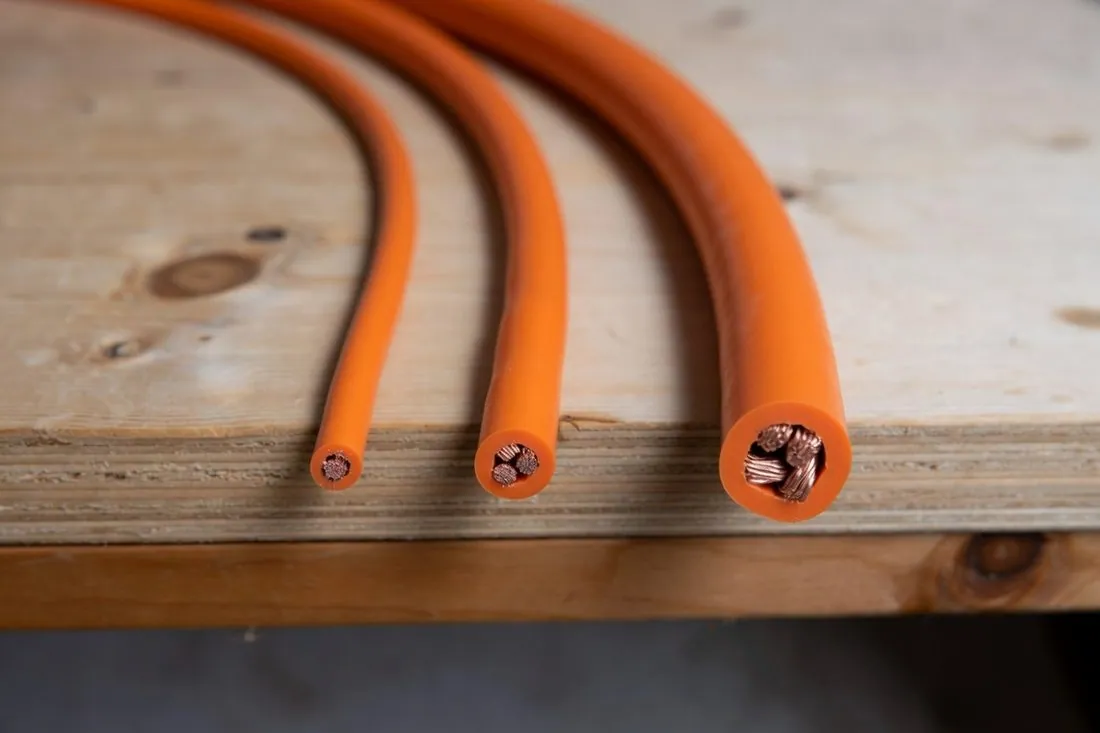
Yes, with extension cords a lower gauge number means a thicker, stronger cord. More copper means a lower gauge number.
Can I plug a space heater into an extension cord?
No, a space heater plugs into a wall outlet only, and every manufacturer says so.
Can I plug a generator into a wall outlet?
No, a generator plugs into appliances and never into a wall outlet, because backfeeding can kill the utility lineman fixing your street.
Why do longer extension cords need to be thicker?
Longer extension cords need to be thicker because voltage drops over distance, and a starved motor runs hot and dies young.
What gauge cord do I need for several things on one extension cord?
Add the amps of everything on the cord together and use the total to pick the gauge. The appliance label and the manufacturer's instructions are always the final word.
What kind of extension cord do I need outdoors?
An extension cord used outdoors must have a jacket marked with the letter W.
What This One Buys You
The right cord, not the one in the garage.
Gauge and length decide whether a cord carries the load or heats up trying, and the answer takes fifteen seconds to get right.
Three cords, and the only part that matters is the copper. The jacket is the same orange on all three and the price tags are closer than you would think — what you are actually buying is the cross-section of metal in the middle. More copper means a lower gauge number, which is the one piece of counting on this page that runs backwards.