🏠 The Man Who Comes and Sits Down
First, what this page is. Nobody writing this is a therapist, and the page does not pretend to be one. It will not tell you what any feeling means and it will not tell you what is wrong with anybody. What it does is set out where a person can actually go, what has quietly closed down, and one or two things about the whole business that are true and are not usually said out loud. If what you are carrying is heavier than lonely, there is a number at the bottom of this page and it is answered around the clock.
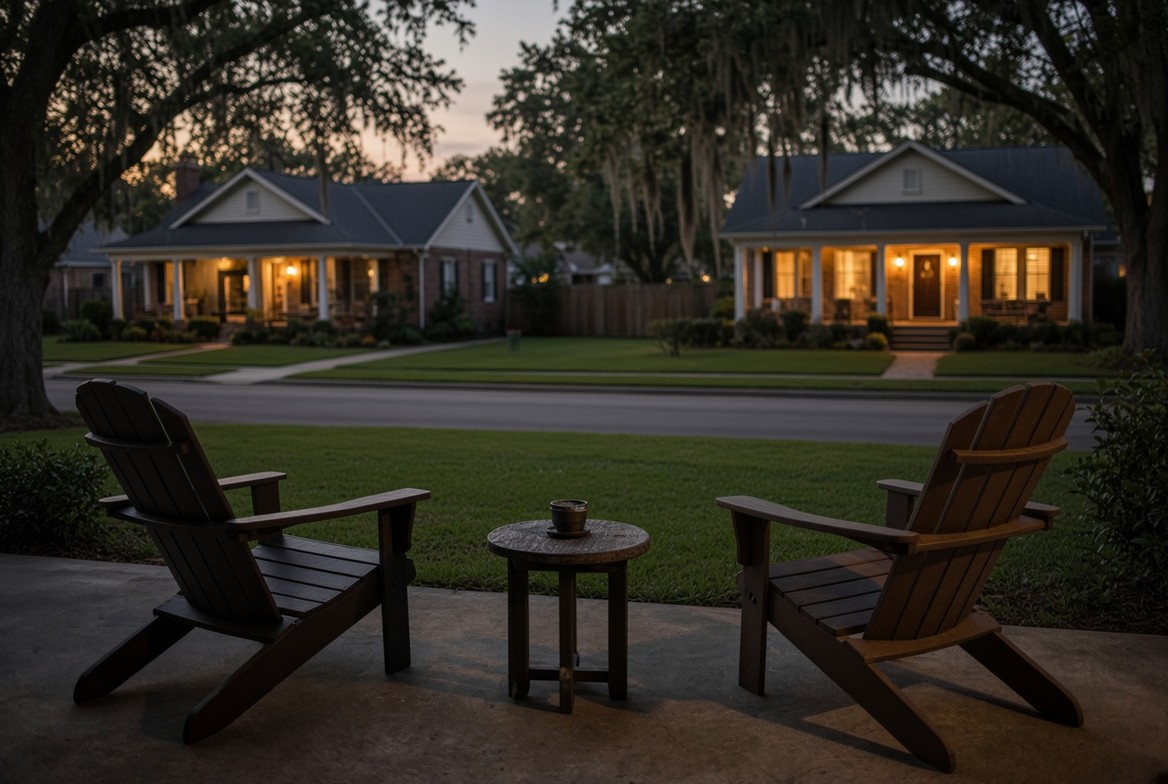
I have a patio. Most houses in this part of Florida do — a square of concrete, room for two chairs and a small table, and in the evenings when the heat finally lets go it is the best place in the house. I sit out there and watch the dog work the yard. He has one rule and he keeps it: he does not step on concrete or asphalt. That single rule hems him into his own grass without a fence, and he has never once tested it.
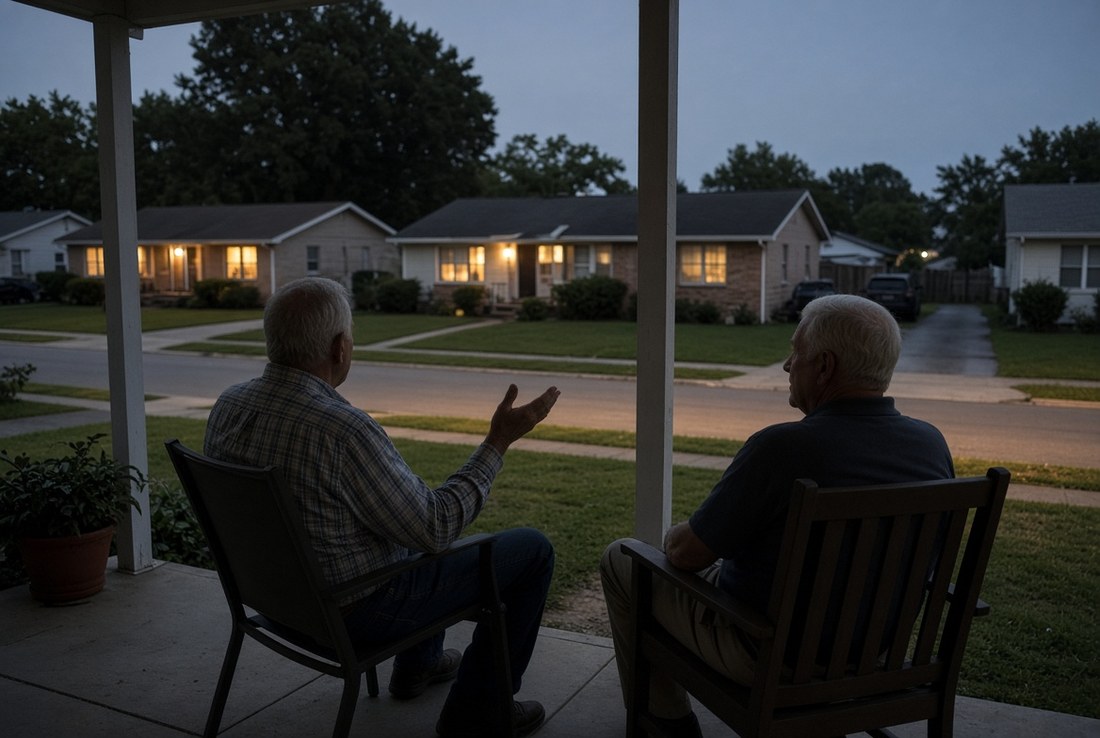
And what I have learned, sitting out there, is this. A man sitting alone on a patio is an invitation, and the neighborhood knows it. They come over. They sit down. They start talking. Mostly I listen, and now and then I put in something of my own — a bit of history, a story about a job I once did — and they take that and go on again.
Here is the part that surprised me and is the reason this page exists. They tell you. Straight out, without much preamble, they tell you they are lonely. Not hinting, not fishing. Saying it. A man of seventy-odd will sit down beside somebody he barely knows and say the thing that a man of forty would go to considerable trouble to avoid saying.
I should be honest about my own end of it, because it changes what this page can usefully claim. I am not lonely. I would be perfectly content to sit on that patio watching the neighborhood go about its business with nobody in the other chair at all. That is not a virtue and it is not a complaint — it is a fact about how I am built, and plenty of people are built the same way. But it means I have spent a good deal of time on the receiving end of other people’s loneliness, and that is a particular view of the thing.
So this page is written from that chair rather than from a clipboard.
🧠 Alone Is Not the Same Word
The two get run together constantly and they are not the same thing at all.

Alone is an arithmetic. It counts how many people are in the house. Some people are alone a great deal and perfectly all right; some are alone very little and not all right in the slightest.
Lonely is a gap — the distance between the company you have and the company you want. Which means a man can be lonely in a full house at Thanksgiving, surrounded by people who love him, if not one of them is talking to him about anything he cares about. It also means a widower who sees three neighbors a week may be doing better than his daughter thinks, and her worrying at him about it may be the least useful thing in his day.
Two things follow from that, and they are worth having straight before anybody starts fixing anything.
You cannot tell from outside. Not by counting visits, not by counting phone calls. The only reliable instrument is asking, and then shutting up long enough to hear the answer. My neighbors volunteer it because I am sitting still and not going anywhere — and stillness, it turns out, is most of the technique.
And the person who is fine is allowed to be fine. There is a whole industry built on telling older people they ought to be joining more things, and a good deal of it is aimed at somebody who is not lonely at all and is simply quiet. If that is you, you have my blessing, for whatever that is worth. Sit on the patio. Watch the yard.
🧺 “I Do Not Want to Be a Burden”
This is the sentence. It comes up more than any other, and it is nearly always said about the children.
Money and this are not separate subjects, and it is dishonest to pretend they are: a great deal of what looks like family coldness is family arithmetic. The money page sets that out plainly.
The standard reply is you are not a burden, said warmly and often, and it does almost nothing. I have watched it fail from four feet away. And it fails for a reason worth understanding, because once you see it the whole problem changes shape.
People do not feel like a burden because they take up time. They feel like a burden because they can sense the exchange only runs one way. There is a difference between being enjoyed and being endured, and nobody on earth is fooled about which one is happening to them. Reassurance does not touch that, because reassurance is aimed at the wrong thing. You are telling a man his arithmetic is wrong when what he has actually noticed is the direction of the traffic.
Which points at the fix, and the fix is not reassurance. It is having something to bring.
A conversation is a trade. It has to be worth something to both people or it is not a conversation, it is a duty visit, and everybody in the room can feel the difference. The thing nobody says to a man of seventy-eight is that he is holding an enormous amount that the other side would genuinely want — and that the reason it never gets traded is that nobody has ever framed it as a trade.
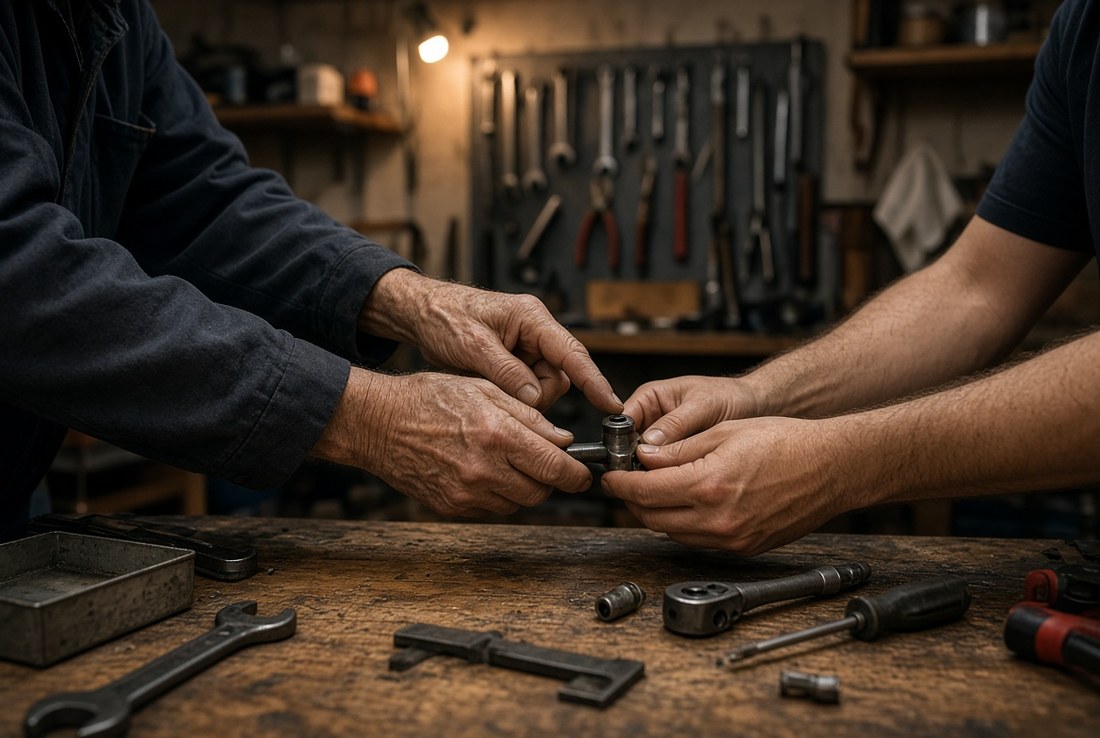
Think about what is actually in there. He knows how a thing was done before there was a machine to do it. He knows what a street looked like sixty years ago and what happened to the people on it. He knows what a job was worth, what a house cost, what it felt like when a particular thing happened that the younger person has only read about. He can fix something. He knows a recipe that is not written down anywhere.
None of that gets asked for, because the visit has been framed as checking on Dad rather than as two adults who might have something for each other.
And that is also the honest answer to the generation gap, which is a real thing and is not solved by the young learning patience. It is solved by finding the overlap. There is always one. It is usually smaller and more specific than either party expects — not “the old days” but one particular trade, one storm, one machine, one song, one place. Find that and the age difference stops being the subject and starts being the interesting part.
📍 Where to Actually Go
Now the practical half, and I have put it in the order a person actually needs it rather than in the order these lists usually run. Everything here is national. Not one of them advertises, which is why they are hard to find precisely when a person has the least energy for searching.

If you want a voice today
The Friendship Line — 1-800-971-0016, twenty-four hours. Run by the Institute on Aging and built specifically for people over sixty and adults with disabilities. The important thing about it, and the thing that gets left out: it is a warmline as well as a crisis line. You are allowed to ring it because you are lonely. That is what it is for. You do not have to be in trouble and you do not have to have a reason ready. They take calls from anywhere in the country; the scheduled call-you-back service is limited to certain funded areas, so ask when you ring.
Friendly Voices — friendlyvoices.org. Free weekly telephone conversations with trained volunteers. You sign up and somebody rings you at a set time each week, which for a lot of people is the whole point — a fixed thing in the week that is yours.
A note on one that has closed, because it is still on half the lists on the internet: AARP’s Friendly Voice program ended in February 2026. If somebody sends you that link, it is not going to answer. AARP still runs other connection programs; the phone-buddy one is finished.
And once you have somewhere to go, there is a second job nobody mentions, which is turning the people there into people you know. We wrote that one separately: a pot of coffee and a deck of cards.
If you want somewhere to be next Tuesday
The Eldercare Locator — 1-800-677-1116, or text the same number, weekdays eight to nine Eastern, at eldercare.acl.gov. This is the one to ring first if you only ring one. It is a federal service and it is free, and what it does is route you by zip code to your local Area Agency on Aging — the outfit that actually knows what is running in your town this month. Every county in the country has one. Most people have never heard of them.
Your senior center. Nearly every county has one, funded under the Older Americans Act, and the reputation they have is thirty years out of date. The lunch program is usually the easiest front door, because eating is a reason to be somewhere and does not require you to have decided anything about yourself.
The public library. Free, warm, open to everybody, nobody asks why you are there, and most run more talks, classes, film afternoons and book groups than anyone realizes. If a senior center feels like admitting something, a library does not.
2-1-1. Three digits, free, around the clock, and it finds what exists near you when you cannot face searching for it yourself. One telephone call does what an afternoon on the internet will not.
If you would rather give than receive
For a lot of people this is the real answer, and it is the one that fixes the burden problem at the root, because you cannot be a burden and a volunteer in the same afternoon.
AmeriCorps Seniors runs national programs for people over fifty-five — the Foster Grandparent Program, Senior Companions, and RSVP, which places people with local organizations that need them. Some of them carry a small stipend.
The Village to Village Network is the neighbor-to-neighbor model — local memberships where the people in a neighborhood help each other stay in their houses. You are on both sides of that arrangement at once, which is exactly the point.
And the thing on your own street. The food bank, the school reading program, the church, the historical society, the shelter that needs somebody who can fix things. None of it advertises and all of it is short-handed.
🤝 The Page Nobody Writes: You Are the Other Chair
Everything above assumes the reader is the lonely one. A good many readers of this site are not. They are the ones being visited — and there is nothing written for them at all, which seems to me a strange gap given how much of the actual work they do.
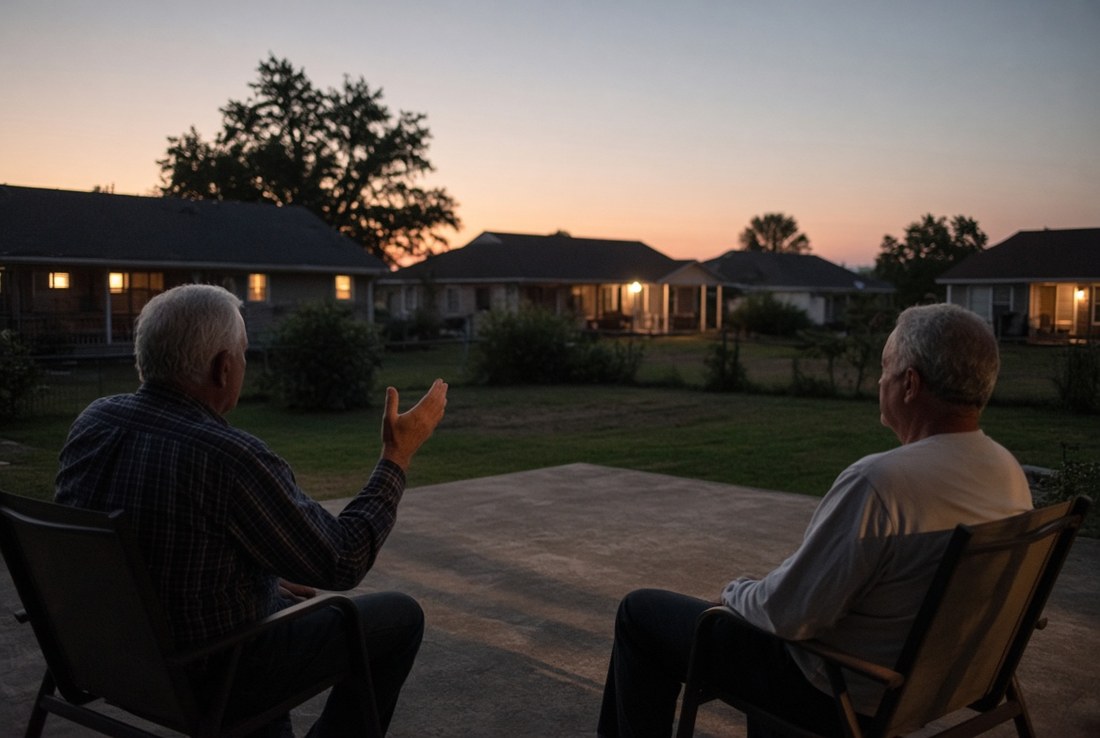
So here is what I have learned in that chair.
Sitting still is most of it. You do not have to be interesting, warm or wise. You have to be visibly not in a hurry. A person who is obviously about to leave gets told about the weather; a person settled in a chair with no plans gets told the truth.
Listening is the job, and it is a real one. Not solving. Most of what gets said does not want fixing and will get worse if you try. Now and then you put something of your own in — a story, a fact, something that happened once — and that is not an interruption, it is the trade. It gives the other person something to take hold of so they are not simply unloading at you, which they will feel bad about afterwards.
You are allowed to have an evening. This matters and it is why so many people quietly stop sitting outside. If every appearance on the patio costs you two hours, you will find reasons not to appear, and then the bench is empty for everybody. Half an hour, honestly given, beats two hours given resentfully — and “I have got about twenty minutes before I have to see to something” said at the start is kinder than an evening spent wanting to get up.
And you do not have to be the answer. You are one chair. If somebody is in a hole deeper than company will reach, the useful thing is not to become their entire week — it is to know the numbers further up this page and say them out loud. Handing a man a phone number is not a rejection. It is the one thing you can do that outlasts the evening.
🤖 The AI Question, Answered Straight
Two people I know have started talking to an AI companion, and they are not embarrassed about it. I think it is going to catch on, and I would rather this page say the honest thing about that than the comfortable thing.

What is genuinely good about it. It is there at three in the morning, which is when the worst of it usually arrives and when there is nobody to ring. It does not get tired of you and it does not get bored, and a person who has spent years managing how much of themselves they let out on other people finds that a considerable relief. It never sighs. For somebody who has stopped ringing their daughter because they can hear her getting tired, that is not nothing. And there is no shame in it whatsoever.
What is honestly wrong with it, and it is the same list. It never gets tired, never disagrees inconveniently, never has a bad day of its own that you have to make room for, and never once says I have to go now. Every one of those is why it soothes, and every one is why it is not the same thing as a person. A friendship has friction in it. Somebody who forgets, somebody who is late, somebody who needs something back from you — that is not the flaw in human company, that is the substance of it. Something that offers all of the comfort and none of the cost can quietly take the place of the harder thing rather than being a bridge to it.
The useful way to hold it: as a good tool and a poor substitute. Fine at three in the morning. Fine for working out what you actually want to say to somebody before you say it. Fine for company on a bad Sunday. Not fine as the only voice in the week — and if it is becoming that, that is worth noticing without beating yourself up about it, because it is a designed effect and not a personal failing.
And some people simply will not want it, which is a perfectly good position and needs no defending. A man who wants a human being wants a human being. The list further up this page is for him.
📋 Why This One Is on the Fifty List
Everything else on this site is a thing you buy early because it is cheaper, easier and entirely your own decision at fifty-five, and none of those three are true at seventy-eight. This one works the same way, except that what you are buying is not for sale.
You build the room before you need it. The neighbors you know, the group you turn up to, the standing Tuesday, the thing you volunteer for, the two or three people who would notice if the lights did not come on — every one of those takes time to make and none of them can be assembled in a hurry. The man who starts looking for company the week after his wife dies is doing the hardest possible version of a job that was easy five years earlier.
And it does not have to be much. One standing thing in the week. One neighbor who knows your name and your dog’s name. One number in the phone that is not family. That is a small enough investment that a person can make it on an ordinary Tuesday when nothing is wrong — which, as with everything else here, is precisely when it is cheapest.
The patio does not cost anything either. Two chairs, one of them empty. It is astonishing what turns up.
If it is heavier than lonely. Loneliness and something darker are not the same thing, and neither one is a character flaw. If you are struggling, the 988 Suicide & Crisis Lifeline is answered day and night — call or text 988. The Friendship Line on 1-800-971-0016 is also answered around the clock and was built for exactly this age group. Talking to somebody about it is an ordinary thing to do, and there is no threshold you have to be past before you are allowed to ring.
❓ Plain Answers
The short version of this page, one question at a time — the answer is always the first line.
Who can I call if I'm lonely and over 60?
The Friendship Line at 1-800-971-0016 is answered twenty-four hours and was built for people over sixty and adults with disabilities. It is a warmline as well as a crisis line, so you are allowed to ring it simply because you are lonely.
How do I find senior activities near me?
Call the Eldercare Locator at 1-800-677-1116, a free federal service that routes you by zip code to your local Area Agency on Aging. That agency knows what is actually running in your town this month.
What is the difference between being alone and being lonely?
Being alone counts how many people are in the house, while being lonely is the gap between the company you have and the company you want. A person can be lonely in a full house, and a person who is alone can be perfectly all right.
Is AARP Friendly Voice still running?
No, AARP's Friendly Voice program ended in February 2026. Friendly Voices, at friendlyvoices.org, still offers free weekly telephone conversations with trained volunteers.
How can an older person stop feeling like a burden?
Having something to bring works better than being told you are not a burden, because the feeling comes from sensing the exchange only runs one way. Volunteering through programs like AmeriCorps Seniors fixes it at the root.
Is it okay to talk to an AI companion when you're lonely?
Talking to an AI companion when you are lonely carries no shame, and it can help at three in the morning. It works best as a good tool and a poor substitute for people, and it is not fine as the only voice in the week.