

💬 The Room Everyone Remembers
Ask anyone who has been through a long summer outage what they remember, and they will not tell you about the house. They will tell you about the room.
🏕️ The Campout — Port Charlotte, Florida
“After the hurricane we were nine days without power, in August, with three kids. Here is what saved us: a window unit my husband bought years ago that lived in the garage, and the little inverter generator. We picked the boys’ bedroom because it was the smallest room with a window, dragged every mattress in the house onto that floor, hung beach towels over the windows, and rolled a bath towel against the door gap. He ran the generator in the evening, and by bedtime that room was 74 degrees while the rest of the house was 89.
We told the kids it was a campout. Five of us on the floor, everybody asleep by nine because there was nothing else to do, and honestly? They still talk about it like it was a vacation. What I knew, that they did not, was what those nights would have looked like without that room. I have heard the stories from neighbors who did not have one. Nobody in my house will ever not have a window unit in the garage again. It cost $150 and it sat there for four years waiting. Best money we ever spent doing nothing.”
— Mother of three, 41, Port Charlotte, Florida
🔆 One Room Is Enough — Zephyrhills, Florida
“Since my wife passed I live alone in the house we raised our family in. On my income, running central air through a Florida summer is a number I do not care to say out loud. So I do what my own father did: I cool the room I live in. A window unit in the bedroom, and from June to September that bedroom is my library, my TV room, and my kingdom. The rest of the house gets fans and gets tolerated.
People hear that and think it is a hardship. It is the opposite — it is the plan. My electric bill stays paid, my medications stay in the fridge, and when the power went out two summers ago, the little generator my son insisted I buy ran that one window unit and the refrigerator and nothing else, and I slept cool while half the county did not. One room. That is all a body actually needs. The trick is deciding which room before the day you need it.”
— Widower, 78, Zephyrhills, Florida
🏥 What Chicago Taught Her — Ocala, Florida
“I was a young ER nurse in Chicago in July of 1995. If you know, you know — that heat wave killed several hundred people in one week, and the ones we lost were overwhelmingly older people, alone, in apartments that never cooled down at night. That is the detail that has never left me in thirty years: it was the nights. Their homes never gave their bodies a break, night after night, until their bodies stopped being able to take it.
I am 72 now and retired to Florida, which people find funny. It is not funny to me — it is why my house has a plan. A window unit for the back bedroom, a generator that can run it, a thermometer on the wall, and a standing agreement with my neighbor Dolores: we check on each other every hot day, no exceptions, and if either house cannot hold a cool room, we share the one that can. I watched what happens without a plan. You will never convince me a $150 machine in the garage is too much trouble.”
— Retired ER nurse, 72, Ocala, Florida
📋 From the record — what Chicago actually taught. The story above stands on the most studied heat disaster in American history: the July 1995 Chicago heat wave, which killed an estimated 739 people in about five days — roughly 73% of them over age 65, most dying alone behind locked doors and sealed windows. The detail this page is built on: the nights never cooled — overnight lows stayed in the upper 70s and low 80s, so bodies that needed the nighttime recovery drop never got it, day after day, until they failed. That is precisely why the One Cool Room strategy aims at the overnight hours, and why the CDC’s report on that week became the foundation of every city heat-emergency plan since. One cool room, one safe night at a time — the whole plan exists because of what happens without it.
📊 The Numbers — Heat Is the One That Kills Quietly
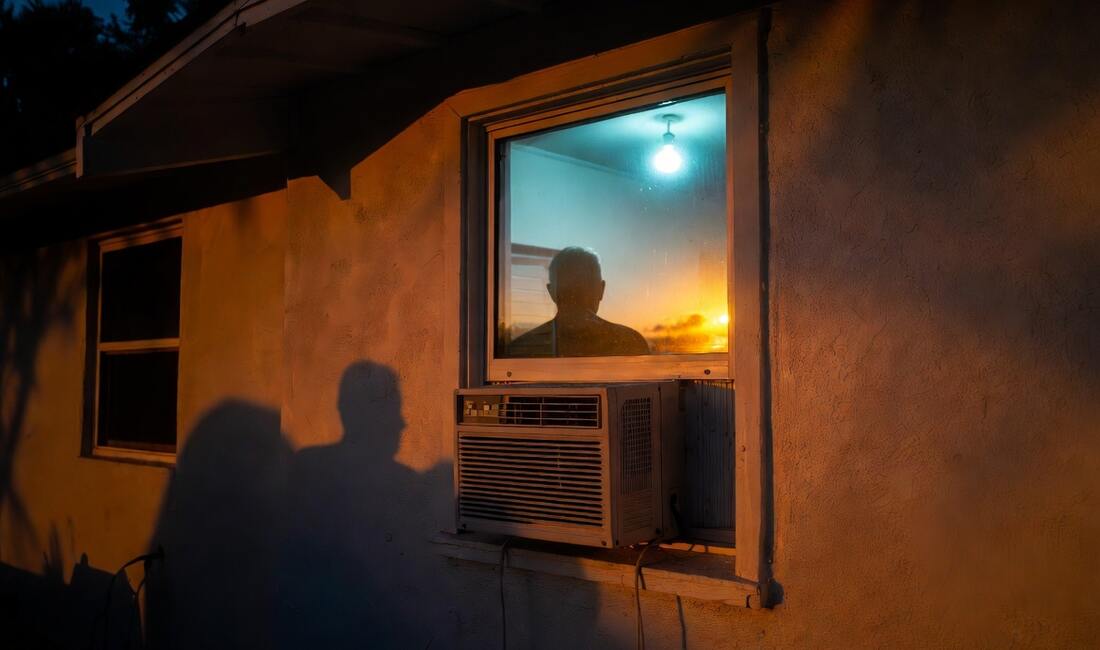
Hurricanes get the news coverage. Heat gets the people. Extreme heat is the deadliest weather hazard in the United States — per National Weather Service statistics it kills more Americans than hurricanes, tornadoes, and floods combined. CDC figures put heat-related deaths at roughly 2,000 Americans a year recently, with 2023 setting the modern record at 2,415 — more than double the toll from just a few years earlier — and public health researchers widely agree even those numbers undercount, because heat deaths are routinely written down as heart attacks and kidney failure instead.
Two more findings matter enormously for this page. First: a Harvard study of more than 73 million Medicare records found that heat waves drive elevated deaths among adults 65 and older — and the researchers’ own definition of a heat wave was not hot afternoons. It was consecutive nights that never cooled down. Second: analyzes of heat mortality consistently identify the lack of air conditioning at home as the single biggest individual risk factor for dying in a heat event. Not age by itself. Not health by itself. Whether the home has a way to make cool air.
Put those together and the strategy writes itself: the goal is not a cool house on a hot afternoon. The goal is one reliably cool room, every night, for as many nights as the heat lasts — with or without the grid.
🧊 The One Cool Room Strategy
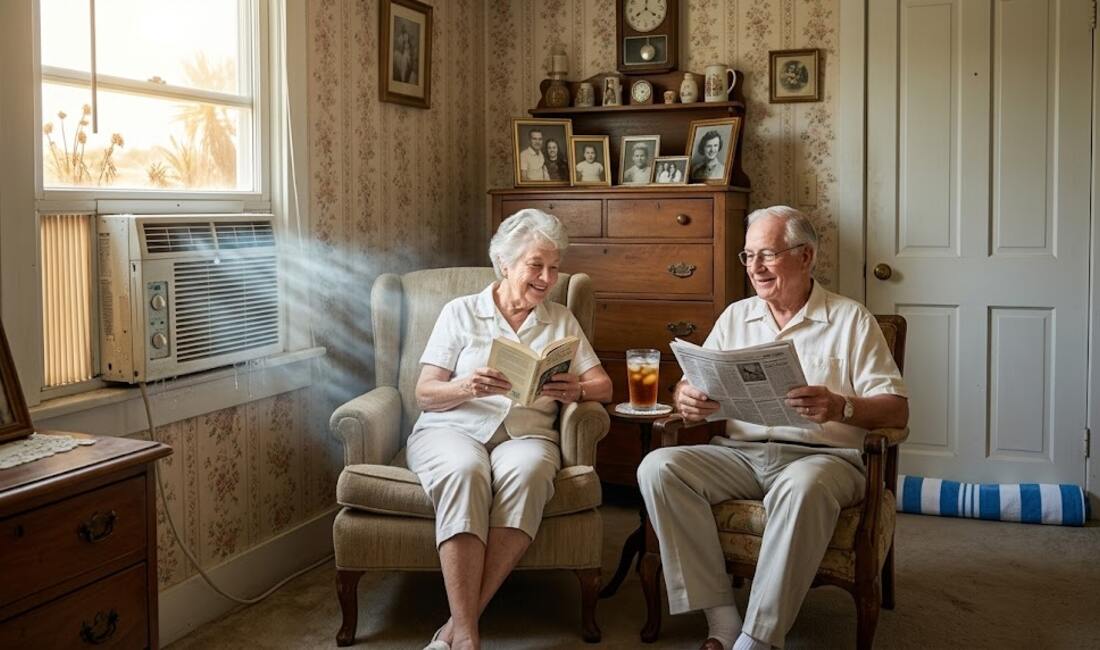
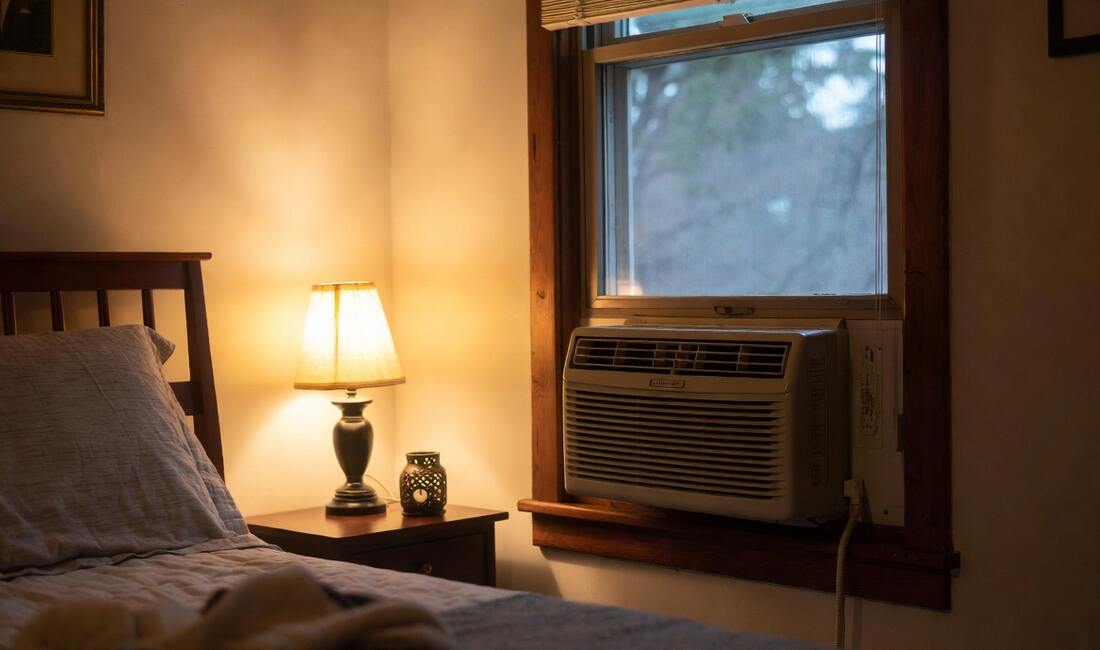
Cool One Room. Sleep Everyone In It.
Pick the room now, not during the emergency. The right room is the smallest bedroom that has a window the unit fits and a door that closes. Smaller is better: fewer cubic feet to cool means the room gets cold faster and the unit sips fewer watts holding it there — which matters enormously if a generator is doing the work.
Then make the room easy to cool:
- Close the door and roll a towel (or a $10 draft stopper) against the gap at the bottom.
- Block the sun — blackout curtains are best, but beach towels and blankets over the windows work the same night you need them.
- Bring the mattresses in. Everyone sleeps in the cool room — that is the plan working, not the plan failing. Children treat it as a campout. Let them.
- Put a thermometer on the wall. A $10 indoor thermometer turns “it feels hot” into a number you can act on.
- Run the unit early evening onward. The mission is the night, not the afternoon. Cool the room before bedtime and hold it there while everyone sleeps.
The garage storage tip: buy the unit in fall when prices drop, store it upright and covered in the garage, and give it a ten-minute test run at the start of each summer. A window unit is one of the few pieces of emergency equipment that costs nothing to keep ready and installs in twenty minutes when the day comes.
📏 Size the Unit — The 20 BTU Rule
Window units are rated in BTUs, and the working rule is simple: about 20 BTU per square foot of room. Measure the room you picked (length × width) and match it here:
- 5,000 BTU — up to about 150 sq ft. A typical bedroom. The workhorse of the One Cool Room plan, and the friendliest to a small generator.
- 6,000 BTU — up to about 250 sq ft. A large bedroom or small den.
- 8,000 BTU — up to about 350 sq ft. A master suite or a small living room.
- 10,000–12,000 BTU — 450 sq ft and up. Big rooms — and big wattage. For emergencies, think hard before going this large; a smaller sealed room is almost always the smarter play.
Three adjustments: add about 10% for a sunny room, subtract about 10% for a shaded one, and add roughly 600 BTU for each person beyond two sleeping in the room — people are little furnaces. And resist the “bigger is better” instinct: an oversized unit short-cycles, cools the air without pulling the humidity out, and in a humid climate the humidity is half the fight.
⚡ Generator Math — Yes, a Small Generator Can Do This
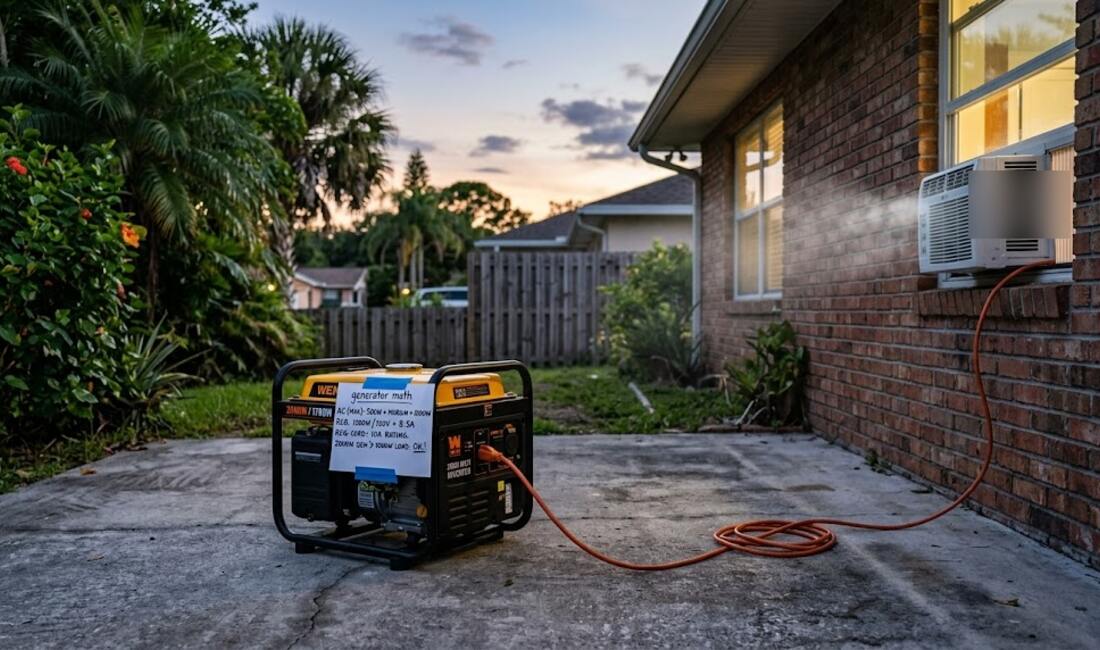
One Window Unit + One Modest Generator = A Cool Night
A 5,000 BTU window unit runs on roughly 400 to 600 watts — but when its compressor kicks on, it briefly demands 1,200 to 1,800 watts for a second or two. That starting surge is the number that matters for generator sizing. A 2,000-watt-class inverter generator handles a 5,000 BTU unit with room to spare, sipping fuel all night.
Want the AC and the refrigerator on the same generator? Both have compressors, and both can surge at the same unlucky moment — so size up and run your actual appliances through the Generator Size & Fuel Calculator before you buy anything. If you are tight on watts, a soft-start kit installed on the AC cuts its surge dramatically — a popular trick borrowed from the RV world.
Battery power stations deserve a mention: a large one (2,000+ watt-hours) can run a 5,000 BTU unit for a meaningful portion of a night silently and indoors-safely, then recharge from a generator or solar panels by day. For medication-fridge households, the battery-plus-generator combination is the gold standard — the full Power & Generators guide covers it.
The rule that is never bent: generators run outside, and only outside — at least 20 feet from the house, exhaust pointed away from every window and door. Never in the garage, even with the door open. Carbon monoxide is invisible, odorless, and kills more people after storms than the storms do.* Put a battery-powered CO alarm in the cool room the same day you buy the generator. This is a $20 device standing guard over everything this page is trying to protect.
* Carbon monoxide facts reflect guidance from the U.S. Centers for Disease Control and Prevention (CDC) and the Consumer Product Safety Commission (CPSC). We encourage you to check these sources yourself. This is general information, not medical advice — ask your own doctor how it applies to you.
🌙 The Overnight Drop — Why the Night Is the Whole Ballgame
Here is the piece most heat advice skips. A hot afternoon is a stress the body plans to recover from — at night. Core temperature is designed to fall in the evening; that drop is woven into how sleep itself works, and it is when the cardiovascular system gets its break from the hard work of shedding heat. Take away the cool night, and the body starts the next hot day already behind.
Stack several of those nights in a row and the deficit compounds — which is precisely why the Harvard researchers defined heat waves by consecutive warm nights, and why the 1995 Chicago disaster was, at its core, a nighttime event: homes that never cooled, night after night, until bodies ran out of margin.
This is also why the One Cool Room plan is built around bedtime rather than noon. Eight cool hours of sleep does more protective work than any amount of afternoon fan-sitting. Cool the room by evening, sleep everyone in it, and each morning the household starts the day reset instead of depleted. The window unit is not a comfort appliance in this plan. It is the machine that gives everyone their overnight drop back.
Know the signs, and make the call early: confusion, dizziness, nausea, a pounding heart, or skin that has gone hot and dry in the heat are emergency signs — call 911, move the person to the coolest place available, and cool them however you can while help comes. And a standing word for this site’s readers: heart, kidney, and breathing conditions — and a long list of common medications — change how a body handles heat. Ask your doctor now, before summer, how your specific situation and prescriptions affect your heat tolerance. That is a five-minute conversation that changes your whole plan.
The Dolores Rule: borrow it from the retired nurse above. Pair up with one neighbor. Every dangerously hot day, you check on each other — a knock, a call, no exceptions. And if one house cannot hold a cool room, both households use the one that can. Half the heat tragedies in the record involve someone who was alone and unchecked. This rule costs nothing and it is the strongest item on this page.
✅ The Setup Checklist — Do This in the Fall
- Pick the room — smallest bedroom, window that fits a unit, door that closes.
- Buy the window unit in the fall when prices drop. Size it with the 20 BTU rule above. Store it upright and covered in the garage.
- Buy the small stuff the same day: blackout curtains, a door draft stopper, an indoor thermometer, and a battery CO alarm. Under $60 total.
- Run the generator numbers in the calculator with the AC included, and test-run the pairing once — ten minutes proves the surge is handled.
- Test the unit each June — ten minutes in the window, then back to the garage or leave it in for the season.
- Set the Dolores Rule with one neighbor before the first heat advisory of the year.
- Have the ask-the-doctor conversation about your medications and heat — once, at your next regular visit.
Total cost for a household that already owns a small generator: about $200. For that, the deadliest weather in America becomes a campout story your grandkids tell.
📺 The Part Nobody Plans For: The Boredom
Be honest about what the cool room actually is on night two: a small room, one lamp, a little refrigerator humming, and absolutely nothing to do. That is not relaxation — that is terribly boring, and boredom is a safety problem, because a bored person drifts out of the cool room and back into the heat. So the boredom gets planned for like everything else on this page.
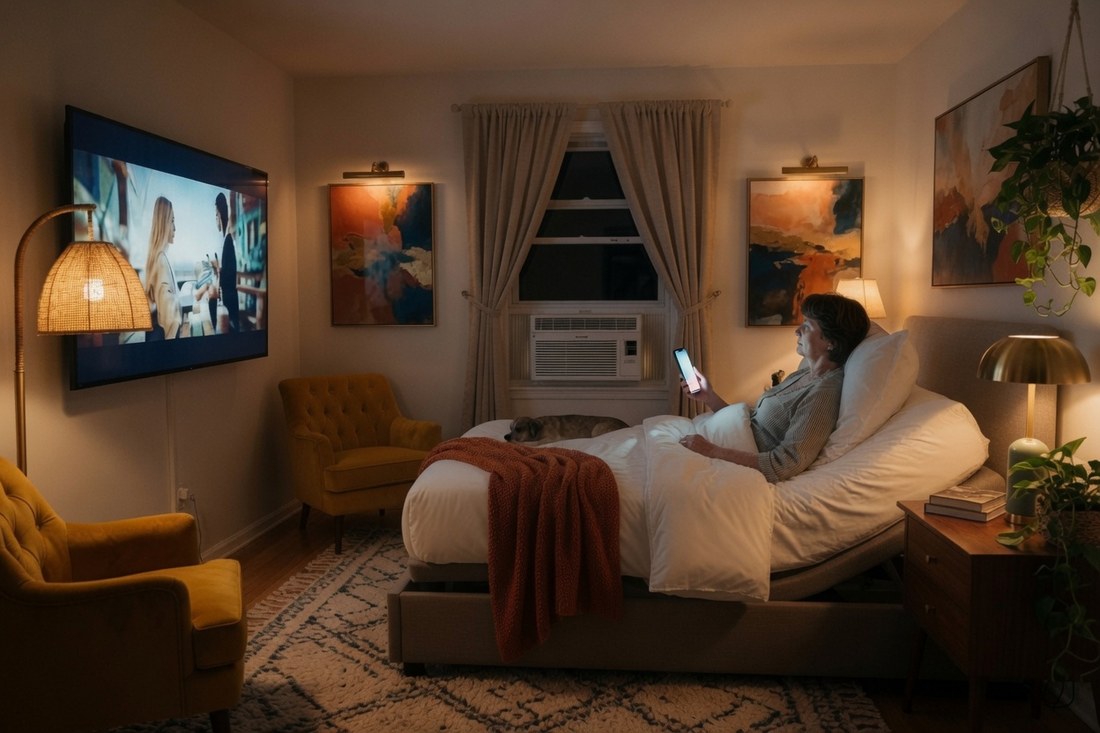
The zero-battery answer: a good book or two that live in the room. Paper never needs charging, and a storm is the best excuse in years to finally read one.
The big-screen answer: your phone can send its shows to a modern smart TV, and it is easier than it sounds. Nearly every streaming service’s phone app carries a little cast symbol — a small rectangle with curved lines in one corner. With the phone and the TV on the same home Wi-Fi, you tap that symbol, pick your TV from the short list that appears, and the show jumps to the big screen while your phone becomes the remote. The TV plugs into the generator like any other small load — a modern set sips less power than the refrigerator.
Two honest footnotes: the Wi-Fi router has to be powered for the phone and TV to find each other (it already earned its spot on the generator back on the soft-starter page), and the very best trick needs doing before the storm — most streaming apps let you download shows and movies onto the phone itself on a calm day, and downloaded shows play with no internet at all. A phone loaded with a season of something is outage-proof entertainment, on the TV or right on the phone in your hand.
The same argument runs the other way round in January, and the winter version is more dangerous because of what people burn indoors to get warm. That one is the one warm room.
The setup rule is the site’s oldest one: pair the phone to the TV on an ordinary afternoon, not by lantern light. The pairing is usually one tap and a yes on the TV screen — but if it fights you, have a friend set it up, or better yet, the grandkids: it will take them four minutes, they will love being the expert, and the cool room gets a movie night waiting inside it. Add it to the fall checklist above, right beside the test run.
Frequently Asked Questions
What size window air conditioner do I need for one room?
About 20 BTU per square foot. A 5,000 BTU unit handles up to roughly 150 square feet — a typical bedroom — and is the friendliest to a small generator. 6,000 BTU covers about 250 square feet, 8,000 about 350. Add ~10% for a sunny room, subtract ~10% for shade, and add ~600 BTU per person beyond two sleeping in the room.
Can a portable generator run a window air conditioner?
Yes — a 5,000 BTU unit draws roughly 400–600 watts running with a brief 1,200–1,800 watt starting surge, well within a 2,000-watt-class inverter generator. Adding a refrigerator to the same generator means both compressors can surge together — size up and run your real numbers in the Generator Size Calculator. A soft-start kit on the AC cuts its surge dramatically.
Is a window unit better than a portable air conditioner for emergencies?
For this job, yes. A window unit hangs its hot side outside and cools far more efficiently per watt — exactly what matters on a generator. A portable unit sits fully in the room and loses a meaningful share of its cooling out its exhaust hose. Portables earn their place only where a window unit physically cannot be installed.
How much power does a 5,000 BTU window unit use?
Roughly 400–600 watts running, 1,200–1,800 watts for a second or two at compressor start, and about 3–5 kilowatt-hours over a full night. It plugs into a standard household outlet — no special wiring at this size.
When should we go to a cooling center instead of staying home?
When the plan stops working: the room cannot be held below roughly the mid-80s, cooling fuel or power has run out, or anyone shows heat-illness signs — confusion, dizziness, nausea, or hot dry skin, which means calling 911, not driving. And anyone with heart, kidney, or breathing conditions, or on regular medications, should ask their doctor before summer how heat affects their specific situation.