
🔘 The Button Nobody Pressed
First, what this page is. A plain explanation of how radar fall sensors work, what they are honestly good at, and where they fail. It is not medical advice and it is not a recommendation to rely on any single device to keep somebody alive. Where it recommends building something yourself, it says plainly what that build cannot be trusted to do.
Now the number that started it.
In a study of real falls among people who owned and wore a personal emergency button, the button went unpressed in about ninety-seven per cent of them.
Not ninety-seven per cent of people who forgot to wear it. Ninety-seven per cent of actual falls, by people actually wearing the thing, who did not press it.
There are ordinary reasons for that and every one of them is worse than forgetfulness. Somebody who hits their head is not deciding anything for the next few minutes. Somebody who slides gently off the edge of a bed at three in the morning does not think of it as a fall at all, and lies there working out how to get up rather than how to call for help. And a great many people do not press it because pressing it means an ambulance, and an ambulance means a conversation with their children about whether they should still be living alone. The button asks a frightened person to make a decision. That is the design flaw.
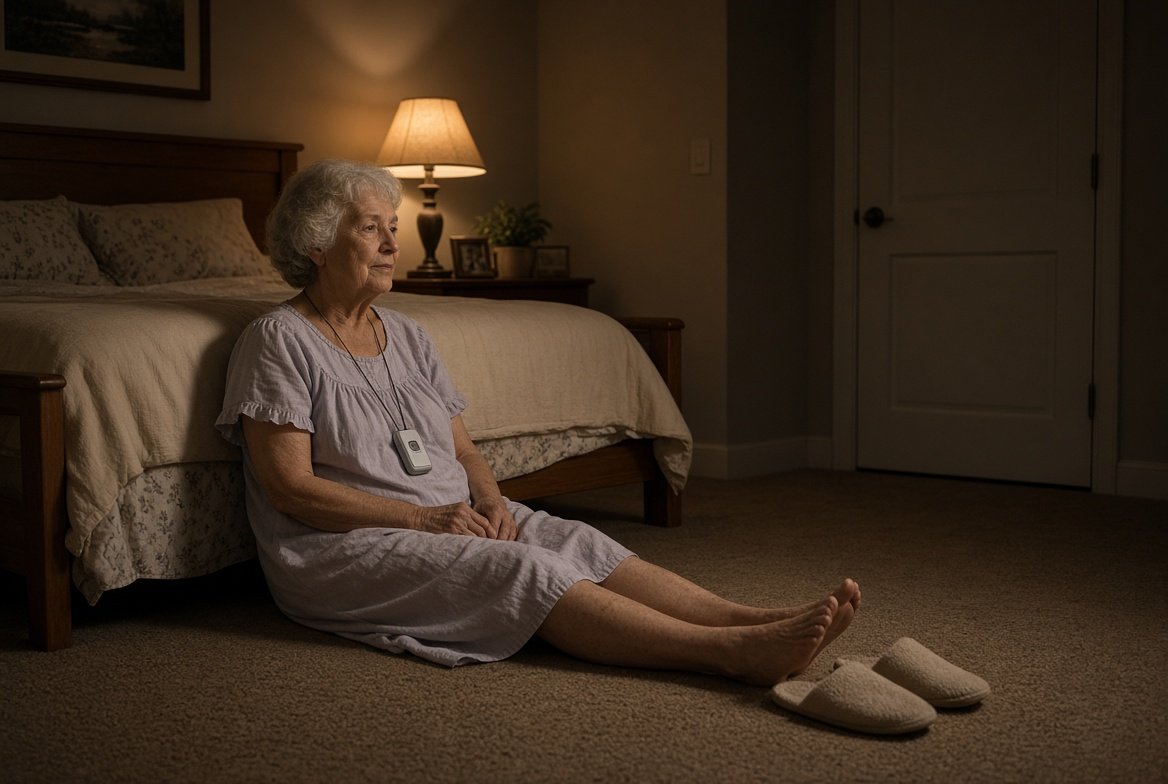
So the interesting question is not how to make a better button. It is what a room could notice without being asked.
📡 What the Radar Actually Is
The technology now shipping for this is sixty-gigahertz millimetre-wave radar. A small box, usually on a wall or a ceiling, throwing out a radio signal and reading what bounces back. From that it works out where a body is in the room, roughly how it is oriented, and whether it is moving. Some units read breathing.
Two things about it matter more than the physics.
There is no camera and no microphone. Nothing is recorded and there is no image to leak. This is the whole reason it gets into bathrooms and bedrooms, where a camera would never be tolerated and where a very large share of falls actually happen.
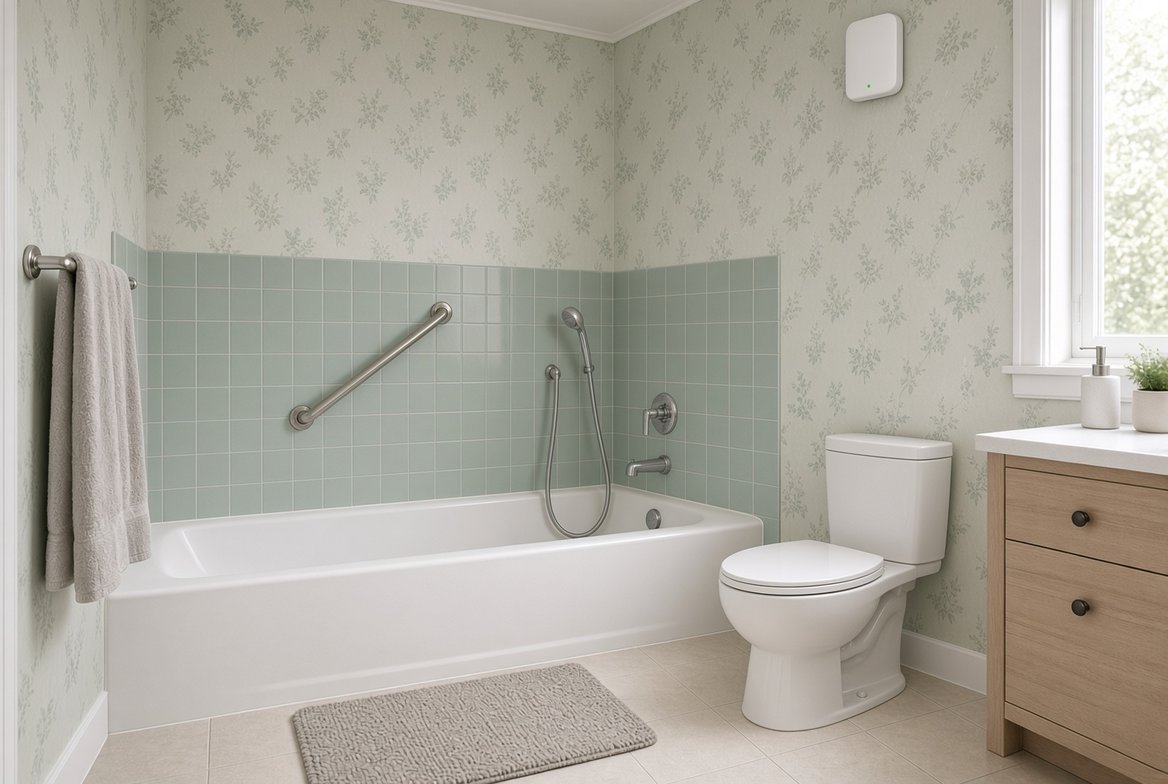
There is nothing to wear. No pendant, no watch, no charging it every night, no remembering it. That removes the failure mode the ninety-seven per cent figure is measuring.
You will also see this described as wifi sensing, and for the moment that is a different and less mature thing. What is actually in the boxes you can buy today is radar.
⏳ The Long Lie, Which Is the Part Worth Paying For
Every product in this category advertises fall detection. The feature that matters more is the one they mention second, if at all.
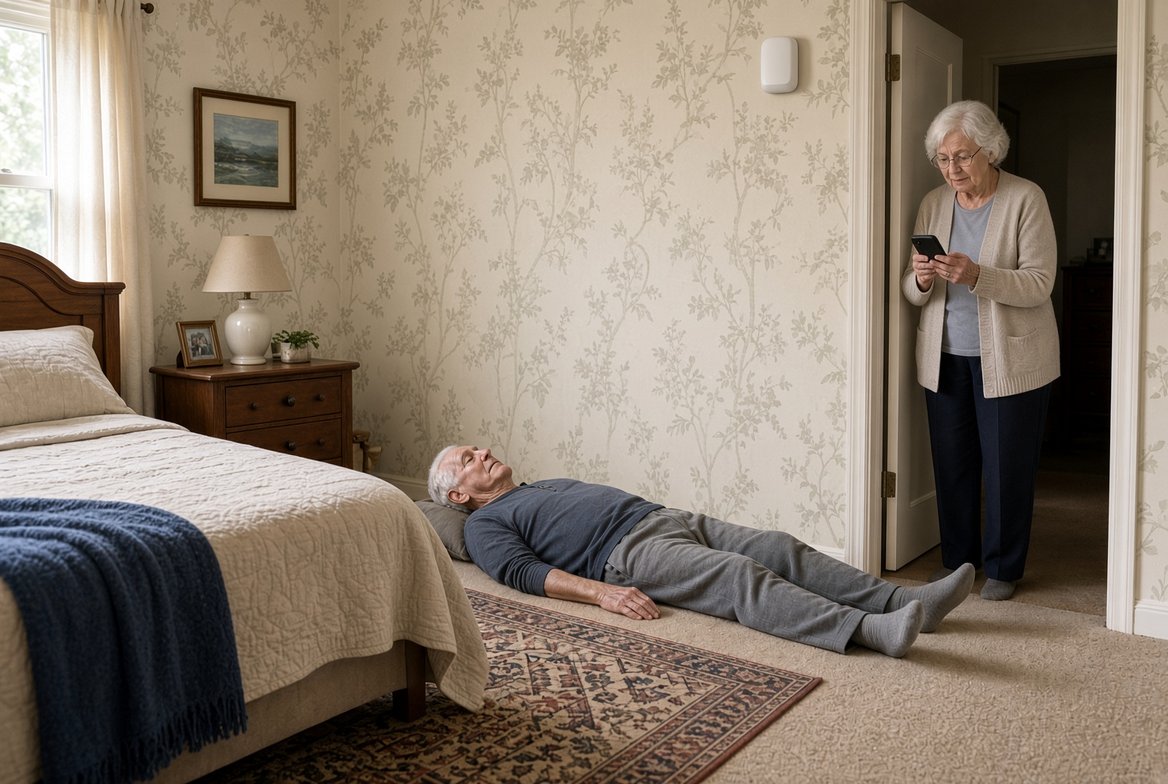
Long-lie detection watches for somebody who has been on the floor a long while, whether or not anything registered as a fall. It is not looking for the impact. It is looking for a person who has been in one place, at floor level, for far longer than a person would normally be.
That matters because the dangerous falls are frequently not dramatic ones. A slow slide down the side of a bed, a sit-down onto a bathroom floor that was two-thirds controlled — an accelerometer on a wrist sees very little in either case. The harm does not come from the impact. It comes from the four hours afterwards: dehydration, pressure injury, a body temperature going the wrong way, and muscle breakdown that can damage the kidneys. Time on the floor is the injury.
If you look at only one line on a product page, look for long-lie or floor-presence alerting rather than fall detection. A device that notices nothing at the moment you go down but raises the alarm twenty minutes later has still done the job that counts.
⚠️ What It Cannot Do, Said Plainly
This is the section most articles on the subject leave out, so it goes near the top rather than the bottom.
These devices work indoors, one room at a time. A sensor in the bathroom knows nothing about the bedroom. Nothing in the house knows anything about the driveway, the garden, the mailbox or the garage. If you go down on the front path, a radar unit in the hall is of no use whatsoever.
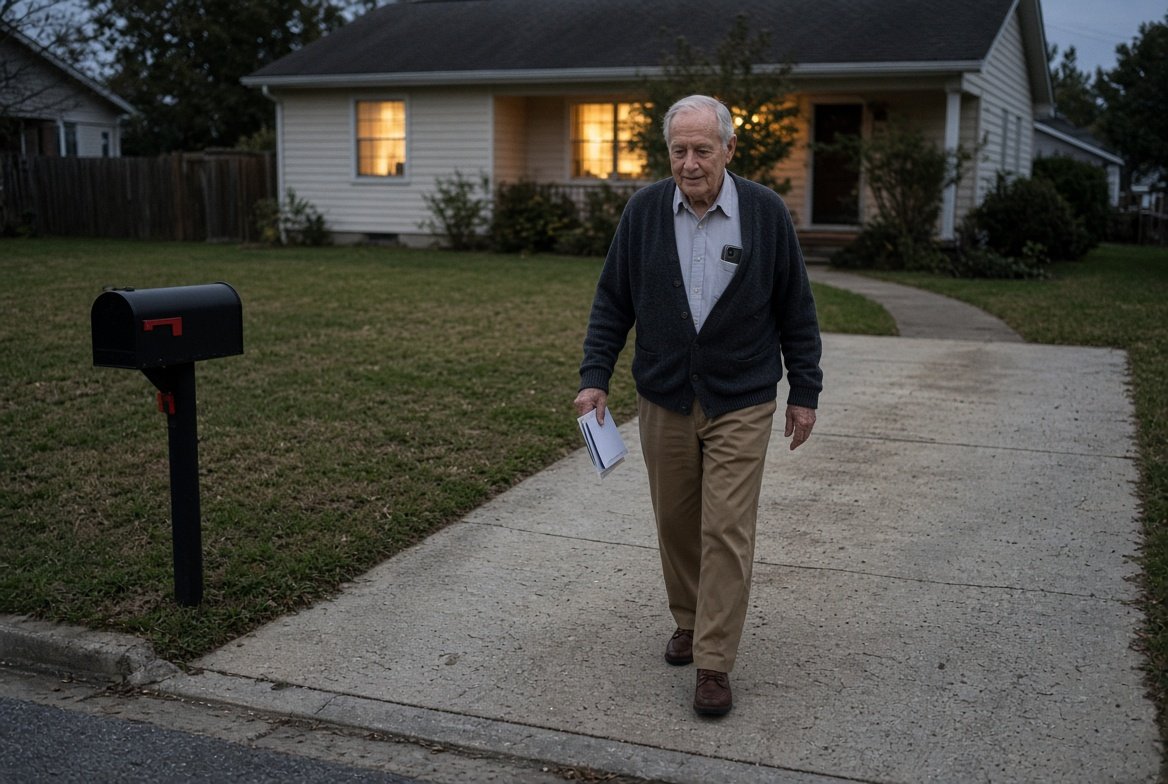
That is not a flaw to be fixed in the next model. It is what radar is: it sees a volume of space and nothing outside it.
Which leaves the driveway, the path and the step uncovered — and in winter that is where a fall becomes a cold-exposure problem as well as an injury. That case is handled on the snow and ice page.
So the honest arrangement for somebody living alone is radar inside and something worn outside — a phone or a GPS pendant for the times you are out of the house. The two cover different ground and neither one covers both. Anybody selling you the indoor box as a complete answer has not thought about your driveway.
💵 The Cost Nobody Quotes You
The price on the box is for one unit. One unit is not a house.
A typical sensor covers roughly thirteen feet in front of it and about six and a half feet to either side. That is one room, and a large room needs two of them. Work through an ordinary single-storey house and the arithmetic goes like this:
That is three units before you have covered a kitchen or a living room. Whatever the advertised price is, multiply it by three and then ask again whether it is worth it. It may well be. But the figure to argue with is the real one.
There is a second cost, and it is the one that can disappear on you. Some of these systems hang their fall alerting off a larger consumer subscription rather than a standalone monitoring fee, with emergency dispatch as an extra tier on top. That is fine while it lasts. It is worth knowing that a life-safety function riding on somebody else's subscription product can be repriced, restructured or discontinued by a company that owes you nothing — and that has happened before in this market to people who had built their arrangements around it.
🛒 What You Can Actually Buy
Products shipping in this category at the time of writing include Vayyar Care, Pontosense Silver Shield, Nomo Smart Care and Milesight VS373. Some are sold to families, some mainly to care facilities, and the market moves fast enough that any list is a snapshot rather than a recommendation.
What to ask before buying anything in it:
- Does it do long-lie or floor-presence alerting, or only fall detection? See the section above; this is the question.
- How many units does my house actually need, given the coverage figures for that model, and what is the total?
- What is the ongoing fee, who charges it, and what happens to the alerting if it stops?
- Who does an alert go to? A family member's phone, a monitoring centre, or both — and what happens if that person is asleep or out of signal.
- Does it work with no internet? A cloud-dependent alarm is not an alarm during the outage when your relative most needs one.
Nothing on this page is a product recommendation. This is a description of how a category works and what to interrogate, not an endorsement of any device in it. Fall alerting is life-safety equipment and the decision belongs with you, the person it is for, and their doctor.
🔧 The DIY Build, and the Warning That Comes With It
There is a build-it-yourself path here, and because there are people reading this who genuinely do build things, it belongs on the page. It also comes with the bluntest caveat on this site.
The part is a sixty-gigahertz millimetre-wave fall sensor module — the Seeed Studio MR60FDA2 is the commonly used one, mounted on a small ESP32 board. It is supported in ESPHome, which means it drops into Home Assistant without writing firmware, costs somewhere in the region of thirty to forty dollars, has roughly a six-metre range, and involves no subscription and no cloud. You write the alerting rules yourself, so an alert can go wherever you want it to go.
For somebody already running Home Assistant, it is an afternoon.
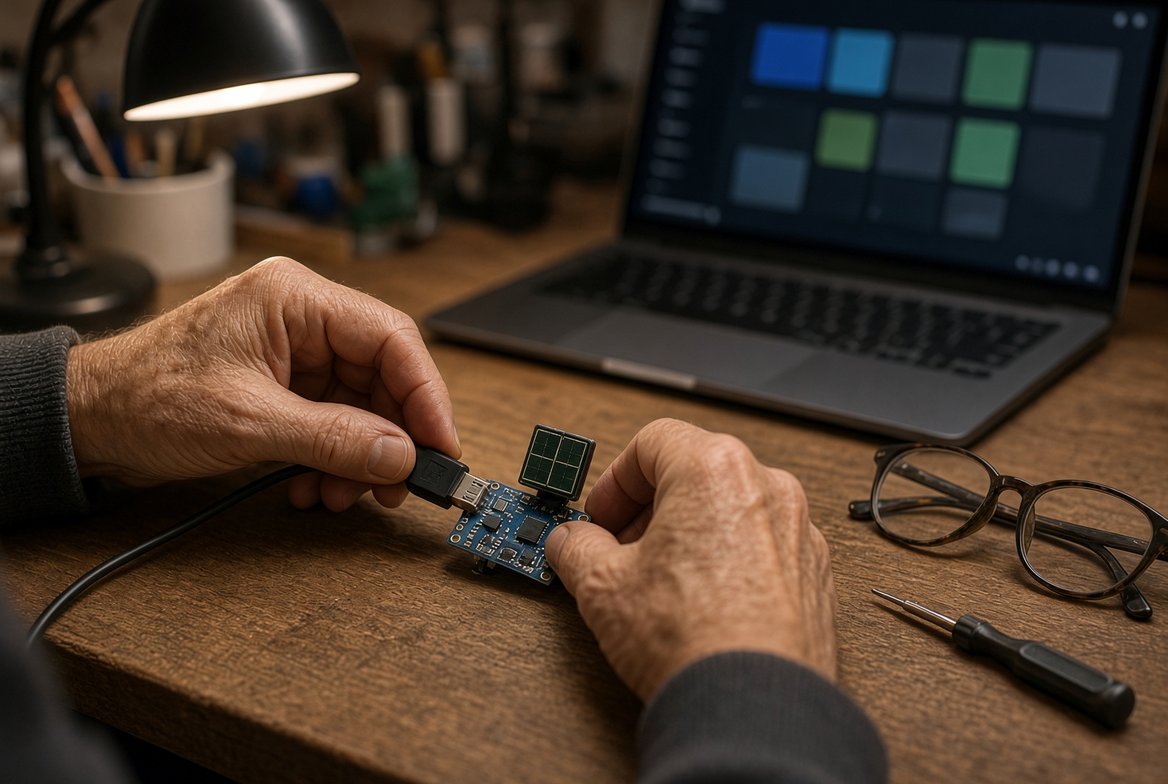
Now the part that decides how you are allowed to use it. Testing of this module reported that it did not reliably detect falls — and, worse, that it reported a still person as not present at all. Read that twice. A person lying motionless on the floor being read as an empty room is exactly the long-lie case, which is the thing you built it for.
So here is the rule, and it is not a disclaimer bolted on the end; it is the design:
- A home-built radar sensor is a supplement. It is never the only thing standing between somebody and a night on the floor. Build it alongside a commercial system, or alongside a worn device, or alongside a person who telephones every morning — not instead of any of them.
- Design it to fail loudly rather than quietly. An alert that fires when it should not is an annoyance. A sensor that silently decides the room is empty is the failure that hurts somebody, and it is the failure this hardware has actually shown.
- Redundancy is the whole principle. Two imperfect systems that fail for different reasons are worth more than one you have decided to trust.
🗓️ The Test, and You Have to Actually Run It
Any fall system, bought or built, is worth exactly what it does on the day. So put this in the calendar monthly, the same way the generator gets started twice a year.
One thing before anybody lies down. Getting down onto a floor and back up again is physical effort, and at our age it is not a small one. If it is not something your own doctor would be comfortable with, do not do it — have a family member or a friend do the lying down while you watch for the alert.
If it reports the room empty while you are lying in it, you have learned the most important thing about your installation, and you have learned it on a Tuesday afternoon rather than at four in the morning.
⚡ Why This One Belongs on the Fifty List
Because the argument against it is always the same and it is always about next year. Nobody buys a fall sensor at sixty-five. They buy one at eighty-two, three weeks after the fall that put somebody in hospital, and by then the conversation is not really about a sensor at all — it is about whether the house is still possible.
The reason it belongs at fifty, or sixty, is that it is the rare piece of equipment that buys time in the direction people actually want. Every other answer to the fall problem — the pendant, moving in with a daughter, the assisted living brochure — asks somebody to give something up. This one asks for a box on a wall.
And it is worth being honest about who this page is for. It is for the person reading it about themselves, not only the person reading it about a parent. That is a harder page to read, and it is the reason to read it early, while it is a piece of household equipment rather than a negotiation.
❓ Questions People Actually Ask
Does a radar fall sensor watch me? Is there a camera?
No. These units use radio waves, not light. There is no lens, no image, and nothing to look at later. That is precisely why they get installed in bathrooms and bedrooms, where the falls happen and where a camera is out of the question. If privacy is the objection in your household — and it usually is, and it is a fair one — this is the answer to it.
Is this better than a pendant or a smartwatch?
It is better at one specific thing: noticing a fall that the person does not or cannot report. That is a large category, and the ninety-seven per cent figure at the top of this page is the measure of it. It is worse at another thing: it only works in the rooms it covers, and it does not leave the house with you. The sensible answer for most people living alone is both — radar indoors, something worn for outdoors.
How many sensors would my house need?
Count rooms, not square feet. One unit covers roughly one ordinary room, and a large room may want two. For most single people the honest minimum is bathroom, bedroom and the hall between them, which is three. Get the coverage figures for the specific model and walk your own house with a tape measure before ordering anything.
Can I build one myself instead of buying?
You can, for about thirty or forty dollars, if you already run Home Assistant. What you must not do is rely on it as the only thing watching. Testing of the commonly used module found it missed falls and, more seriously, reported a motionless person as an empty room. Build it as a second layer, test it monthly by lying still on the floor for ten minutes, and keep something else in place that does not fail the same way.
Will it work when the power or the internet is out?
Ask before you buy, because it varies and it matters. A sensor that routes its alerts through a company's cloud service has nothing to say during an outage. A locally routed system may keep working if it and your network are on backup power. Either way, put the sensor and whatever it talks to on the same battery backup you already use for the router.
What does long-lie detection mean?
It means the system raises an alarm because somebody has been at floor level for an unusually long time, whether or not it saw a fall happen. It is the more valuable of the two features, because the falls that do the most harm are frequently the gentle ones that no impact sensor registers, and because the injury comes from the hours on the floor rather than the moment of landing.
Figures on unpressed emergency buttons, long-lie consequences and device coverage are drawn from published research and manufacturers' own stated specifications. Product names are listed as examples of a category, not as recommendations, and this market changes quickly — verify current specifications, coverage and fees directly with the maker before purchasing. Nothing here is medical advice. Fall risk is individual, and decisions about monitoring for yourself or a family member belong with you and their doctor.