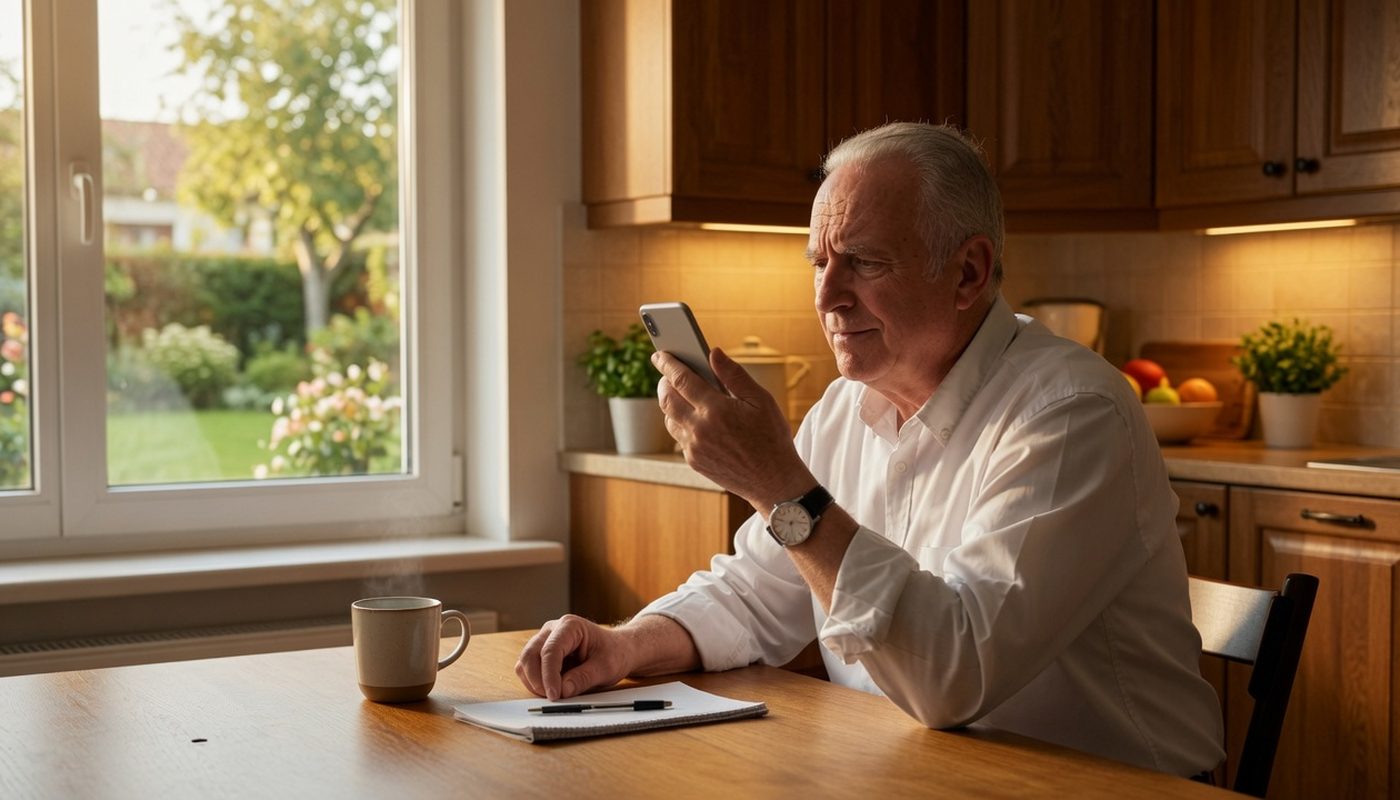
⏱️ The Urgency Is Not Part of the Scam. It Is the Scam.
The story changes every time. A warrant. A frozen account. Unpaid tax. A grandson in a cell. A package that cannot be delivered. A refund that has to be claimed today.
Separately from anybody trying to take your money dishonestly, there is the ordinary matter of what you are paying honestly. Long-standing customers routinely pay far more than new ones for identical service — that is on the phone and internet bill page.
What never changes is the clock. The caller needs you to act before you think, because every one of these falls apart the moment somebody hangs up and checks. That is why the story is always urgent, and always ending in the next few minutes, and always something that cannot wait until Monday.

Which is oddly good news. It means you do not need to spot anything. You do not need to catch him in a lie or know how any of it works. You only need to be slow, and everything below is a different way of being slow.
And the scale is worth knowing, because this is the one crime where older people genuinely are the target. In 2024 the FBI logged 147,127 fraud complaints from people over sixty, with reported losses of $4.885 billion — the most complaints and the most money of any age group, up more than forty per cent in a single year. Violent crime against older people has been falling for decades. This has not.
✉️ The One Sentence That Ends Most of Them
Here it is, and it is worth writing on a card and leaving by the telephone.
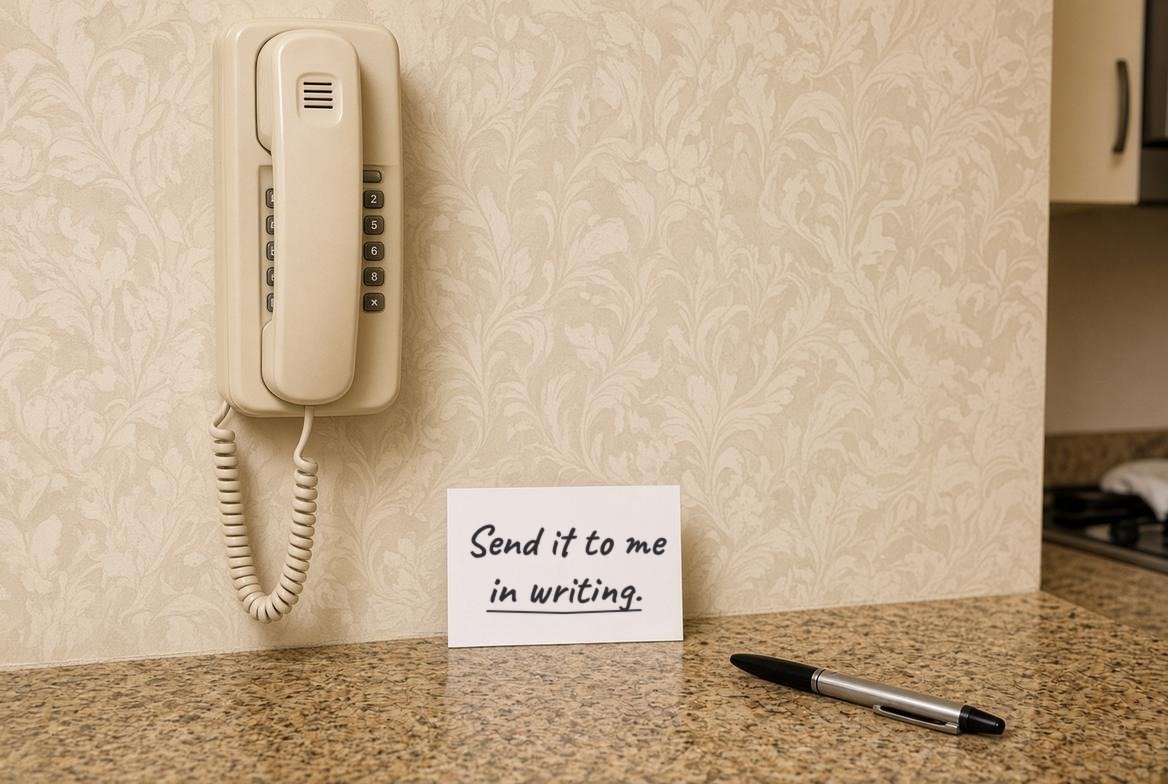
A real creditor can write to you. A real agency generally already has. The IRS puts it in the post before it ever picks up a telephone — so an unexpected call about a tax debt, when no letter has arrived, is a scammer, and the FTC's own advice is to hang up without discussing it further.
A scammer cannot write to you. He needs the money tonight, and a letter is three things he cannot afford: a delay, a paper trail, and a real address.
You do not have to be clever to use it. You do not have to argue, or catch anybody out, or explain yourself. One sentence, and you are done.
The reaction tells you the rest. A man who is genuinely owed money will sigh and send a letter, because that is his job. A man who is not will get angry, or plead, or explain why on this one occasion a letter is impossible. That is your answer, and it arrives in about four seconds.
☎️ Hang Up. Then Ring Back on a Number They Did Not Give You.
This is the part that does the real work, and it has exactly one rule: the number must come from somewhere other than the call.
The back of your card. Your own bill or statement. The agency's own website. Never the number the caller reads out, and never the number showing on your screen either.
Caller ID is not evidence of anything. Scammers fake it routinely, and they usually fake it to a real number. Georgia's Attorney General puts it plainly: you may look up the number that called you, find it genuinely belongs to that agency, and still be talking to a criminal. So looking up the incoming number can come back clean and reassure you about exactly the wrong person.
And one specific line to know, because it is used constantly and it is always false: somebody says they are from your bank, then offers to transfer you to a government officer who will move your money into a safe account for protection. There is no such thing. That sentence is a scam every time it is said, with no exceptions.

Nobody has to be polite about any of this
There is a worry underneath all of it and it is worth saying out loud, because it is the thing that keeps people on the line: the fear of being rude to somebody who turned out to be real.
Let it go. Any genuine agent, clerk or collector in this country understands perfectly well why a person of seventy-five wants to ring back on a number they looked up themselves. They deal with it every week. Not one of them will hold it against you.
The only person who will object is the one you were right about.
🔎 Using a Computer Properly — and the Question Not to Ask It
If the hard part is finding the real number, that is a fine job for a computer or a phone. Type in the name of the agency or the company and ask for its official telephone number. Two minutes. Then hang up and dial that.
Better still, ask somebody to write the four or five numbers you might actually need on a card now, while nothing is happening — your bank, your utility, your doctor's office, Social Security — and tape it inside a cupboard door. Then there is nothing to look up at all.
What not to ask it: whether the caller is a scam.
It sounds like the obvious question and it is the weak one. These numbers are thrown away and replaced every few days, so a fresh one has no history anywhere and comes back clean — which is worse than useless, because it tells you nothing at all while feeling as though it told you something. And since the number on your screen is usually a real agency's number being worn by somebody else, it may come back looking positively respectable.
Use it to find the real number. Do not use it to grade the caller.
Asking for their address
Asking a caller for the address of their nearest office is worth doing, as long as you know what it does. A lazy one will flounder and that tells you a great deal. A competent one has a browser open and will answer correctly in four seconds — and that tells you nothing whatever.
It is a one-way test. Take a wrong answer as proof. Never take a right one as reassurance.
💳 The Payment Method Is the Giveaway, and It Has No Exceptions
If you remember nothing else on this page, remember this one, because it needs no judgement at all and it catches almost everything.
No government agency, no bank, no utility and no legitimate business will ever ask you to pay with gift cards, a wire transfer, cryptocurrency, a payment app, or cash handed to a courier.
Not the IRS. Not Social Security. Not Medicare. Not your electricity company. Not the police. Not a court. Anybody who asks is a criminal, and it does not matter how well the rest of the story hangs together.
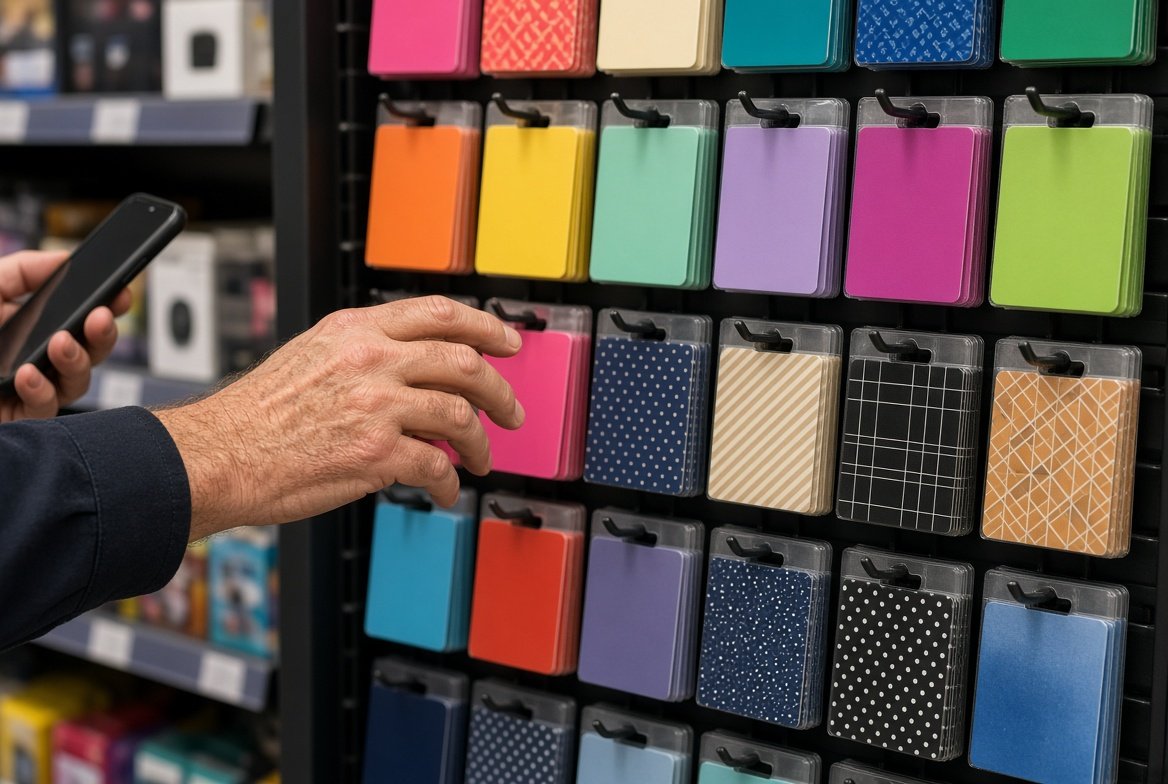
They insist on those methods for one reason: that money cannot be traced and cannot be got back. Once it has gone, it has gone.
A few others worth knowing in the same family. Medicare does not telephone asking for your number to send a new card — cards come automatically and free. The FTC has said outright that it does not have "agents", so anybody claiming to be an FTC agent with a badge number is lying. And no real agency recovering money you lost will ever charge you a fee to release it.
👦 The Grandchild Call — and the Word That Stops It
This is the cruellest one, and it is aimed squarely at people with grandchildren.
The telephone goes late, and a young voice is upset, and it is an accident, or a police station, or a hospital in another state. There is bail, or a fine, or a lawyer, and — this is always in there — please do not tell Mum and Dad. That last part is not embarrassment. It is there to stop you making the one call that would end it in thirty seconds.
It used to rely on a bad line and a frightened voice. It does not any more, and you should know that: a few seconds of somebody's voice from a video online is now enough to make a machine say anything in it. Sounding exactly like your grandson is no longer evidence that it is your grandson.
So agree a word. One ordinary word the family picks together at a Sunday dinner — the name of a dog you had in 1994, a street you all lived on. Not anything on anybody's Facebook. Then any call like this gets one question and nothing else: what's the word?
It costs nothing, it takes one conversation, and it works whatever the technology does next.
And if you have no word agreed and the call comes tonight: hang up, and telephone that grandchild yourself on the number you already have. If nobody answers, telephone their mother. The secrecy is the tell — no real emergency has ever been made worse by the family finding out about it.
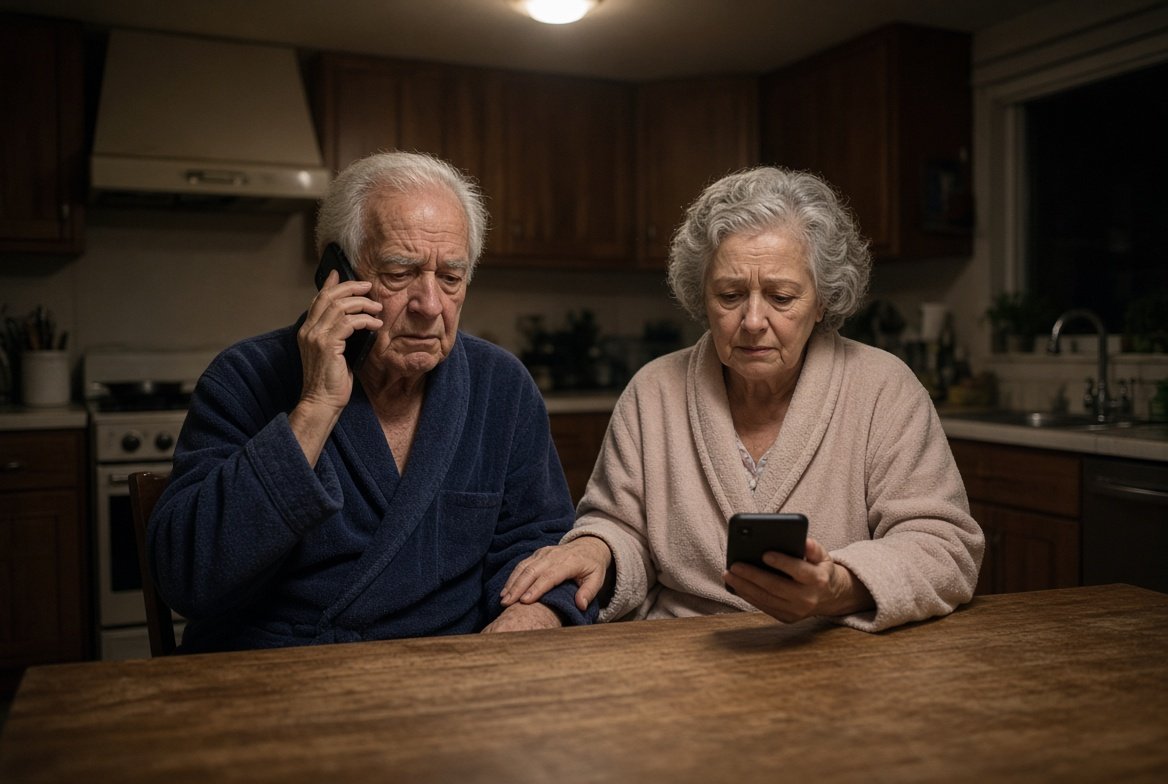
And one thing has changed since this scam was invented, so it is worth saying plainly. The old test was whether the voice sounded right. That test has stopped working. Roughly three seconds of recorded speech — a voicemail greeting, a few words in a video from a graduation or a church service — is now enough to produce a convincing imitation of somebody. The FBI counted AI-assisted fraud as its own category for the first time in its 2025 report, released in April 2026. Which does not change the answer on this page one bit — the word and the call-back still end it — only the reason you need them. There is more on that, and on the other places this technology now reaches you, in the guide to AI after fifty.
📋 If It Has Already Happened, and Where to Report It
First, and this matters more than the reporting: nobody who falls for one of these is a fool. These are written by people who do it full time, tested on thousands of calls, and designed to work on a frightened person in the first ninety seconds. Shame is the thing that keeps people quiet, and quiet is what lets it carry on.
If money has moved, telephone your bank straight away — same day, if you possibly can. Some of it can sometimes be stopped.
Then report it. It will not usually get your money back, and it is still worth the ten minutes, because these are pursued in patterns rather than one at a time.
There is a whole page on just this, because the first two days decide most of it. The order to make the calls in, what can still be pulled back depending on how you paid, the federal freeze that recovered $679 million in 2025 — and the second wave of fraud aimed at people who have already been hit once. After the Scam Already Worked: the first 48 hours →
- Federal Trade Commission — ReportFraud.ftc.gov
- FBI Internet Crime Complaint Center — ic3.gov, for anything involving a computer or the internet
- IRS impersonation — the Treasury Inspector General for Tax Administration, at tigta.gov
- Your state Attorney General's consumer protection office
- National Do Not Call Registry — donotcall.gov, or 1-888-382-1222 from the number you are registering
The registry will not stop a criminal, who was never obeying it in the first place. What it does is quieten the legitimate telemarketing — which means that when the telephone does ring with a stranger on it, that on its own is now worth a second's thought.
📋 Why This Belongs on the Fifty List
Everything else on this site is something you buy while you have the money and the back for it. This one is different. It costs nothing at all, and what you are laying down early is a habit.
The habit is simply this: you are allowed to hang up. On anybody. Without explaining, without apologizing, and without deciding first whether they were real.
Practice it now, in your fifties, when the calls are merely an irritation and you can laugh at them. Say the sentence out loud a few times. Put the numbers on a card in the cupboard. Agree the family word at Christmas while everybody is round the table anyway.
Because the day it matters, you will be tired, or unwell, or eighty-two and recently widowed and lonely enough to want to keep somebody talking. That is not a failing and it is not a weakness of character. It is exactly the day these are written for. A habit set down thirty years earlier is what answers the telephone for you. More on the house and the property →