
💵 The Number on the Advert Is Not the Number on the Bill
Start with the gap, because everything else on this page comes out of it.
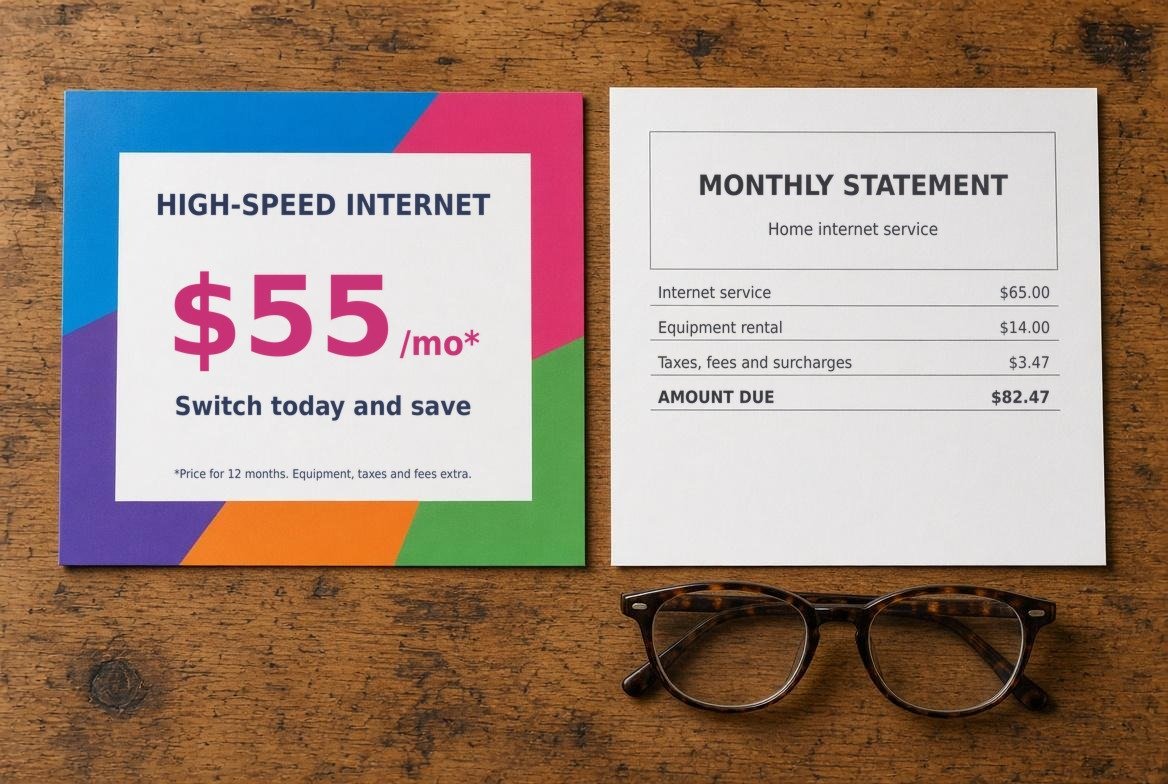
Across 2026, analyzes of what American households actually pay for home internet land somewhere between seventy-five and eighty-five dollars a month. The average advertised price is somewhere in the fifties. The difference is not a mistake and it is not inflation. It is the business model.
Three things account for nearly all of it:
- The promotional rate expires. Introductory pricing typically runs twelve to twenty-four months and then reverts, and the jump is commonly twenty to fifty per cent. One large cable provider's entry plan goes from about thirty dollars to about sixty when the promotion ends. Nothing about your service changed. A calendar did.
- Equipment rental. Five to fifteen dollars a month for a modem and router that you will still be renting in nine years. This is the single largest avoidable charge on most bills, and it is avoidable permanently rather than temporarily.
- Surcharges that are not the price. Broadcast fees, regional sports fees, "network enhancement" charges. These sit outside your rate and can rise on their own, which is how a bill goes up in a year when the advertised price did not.
All of the figures on this page are from 2026 and every one of them moves. Prices, promotions and fees change constantly and vary enormously by address — what is available on your street is not what is available three towns over. Treat these numbers as the shape of the thing and get the current ones from the provider before you decide anything.
🔄 The Longer You Stay, the More You Pay
Here is the part that annoys people once they see it, and it is worth being annoyed about.
The promotional rate is usually reserved for new customers. Somebody moving in next door today, taking the identical service down the identical cable, will pay half what you pay. Not because their service is worse or slower. Because they are new and you are not.

Every other market you deal with works the other way round. The garage that has serviced your car for twelve years does not charge you more than the stranger. In this one, long custom is the thing being charged for.
And it works because it is designed to be invisible. The increase arrives on a bill nobody reads closely, often in stages, and it never announces itself as a decision anybody made. It is possible to pay an extra thirty dollars a month for four years without ever having a moment where you noticed. That is fourteen hundred dollars.
So the useful thing to understand is that the price is not fixed. It is a position. It moves when somebody asks it to, and it moves back when nobody does. You are not being cheated — the terms were in the agreement. But you are being charged for not asking, and the only person who can stop that is you.
📋 The Label They Have to Show You
This one is genuinely useful and almost nobody knows it exists.
Since April 2024, the Federal Communications Commission has required internet providers to display a standardised "broadband label" for every plan they sell — deliberately modelled on the nutrition label on a food packet. It has to state the monthly price, whether that price is an introductory rate, what it becomes when the introductory period ends, the typical speeds, the data allowance, and the additional monthly fees including equipment.
Which turns a genuinely difficult comparison into a simple one.
Ask for the label. Then compare labels rather than advertisements. It is on the provider's website beside each plan, and they must give you one at the point of sale. Everything the advertisement leaves out is on it, in the same format for every company, which is the entire point of it existing. Two labels side by side will tell you more in ninety seconds than an hour on the telephone.
The one thing to look for first: the post-promotional price. That is the number you will actually be paying for most of the years you are a customer, and it is the number the advertising is designed to keep you from seeing.
☎️ The Call That Takes Twenty Minutes
Industry research puts the typical saving from one call to a provider's retention department at somewhere between ten and forty dollars a month. Call it twenty. That is two hundred and forty dollars a year, for a conversation shorter than a haircut, repeated once a year.
Nobody enjoys it. Here is how to make it short.
- Do the homework first, and it is five minutes. Look up what the other providers at your address are offering — not nationally, at your address. You need one real competing number.
- Ask for the retention department by name. The first person who answers usually cannot change your price. The retention department exists specifically to keep customers who are leaving, and that is the desk with the authority.
- Say the true thing, plainly. "I have been a customer for nine years, I am paying eighty-five dollars, and the provider down the road is offering fifty-five. What can you do?" No threats and no theater. That sentence is the whole negotiation.
- Ask them to remove the equipment rental — or tell them you intend to buy your own modem and router. Many providers will waive it rather than lose it.
- Write down the date the new rate expires. Put it on the calendar with the other things that need looking at twice a year. This is the step that turns one saving into a permanent one, because otherwise you are back where you started in twelve months and will not notice.
And if they say no, they say no. You have lost twenty minutes and learned what your options actually are, which you needed to know anyway.

The buy-your-own-equipment point deserves its own line, because it is the most Buy-It-At-50 thing on this page. A modem and router bought outright is a one-time purchase against a charge that never stops. At twelve dollars a month, the rental costs about a hundred and forty-four dollars a year — roughly what the equipment costs to buy once. Check what your provider requires as compatible before you buy anything, and keep the old unit until the new one is working.
📱 The Mobile Bill Is Usually the Bigger One
Now the half where the numbers are frankly startling, particularly for anybody who is not using much data.
The major carriers offer plans aimed at older customers — in 2026 these sit at roughly forty dollars a month for one line on one carrier, and around sixty-five on another. Those are the discounted rates.
Then there are the MVNOs, which is an ugly word for a simple thing: companies that do not own towers and instead buy capacity wholesale on the big networks and resell it. Your calls travel over exactly the same masts. Plans in 2026 start at around eight to ten dollars a month for talk, text and a few gigabytes, and one long-established senior-focused provider starts around twenty.
For somebody who is on wi-fi at home most of the day and uses the phone for calls, texts and the occasional map, the difference between a major-carrier plan and an MVNO is commonly forty to sixty dollars a month. That is five to seven hundred dollars a year for a service that is, in the places it matters, identical.

Four things worth knowing before you switch
- Ask "is that the total?" Most MVNOs include taxes and fees in the advertised price. The major carriers usually add roughly five to twelve dollars on top. That gap is the commonest unpleasant surprise in this whole subject.
- You keep your number. Porting normally takes anywhere from a few minutes to a day, and the old account closes automatically when it completes. Do not cancel the old one first.
- Your phone must be unlocked — and once it is paid off, carriers are required to unlock it on request. One phone call.
- Coverage is the honest caveat. An MVNO rides one particular network, so the question is not "is this company good" but "is that network good where I actually live and where I actually drive." Ask a neighbor on that network before you move.
And the reason this matters more than the internet bill: the mobile plan is the one people set up once, years ago, and never look at again. Plans have changed enormously since. Whatever you signed up for is very unlikely to be the sensible version of itself today.
🏛️ Lifeline — and Who Qualifies Without Realizing
There is a federal program called Lifeline that reduces the monthly cost of phone or internet service, and a great many people who qualify for it have never heard of it.
The discount is up to $9.25 a month on phone or internet service, and substantially more — up to $34.25 — for households on qualifying Tribal lands.
The part worth knowing: you often qualify automatically through a program you are already in. Households receiving SNAP, Medicaid or Supplemental Security Income are commonly eligible without any separate income assessment. There is also an income route based on the federal poverty guidelines.
It is one benefit per household rather than per person, and it applies to phone service or internet service rather than both. Check eligibility and apply through the official program at lifelinesupport.org — and be careful of anything that appears in a search result offering to apply on your behalf for a fee. There is no fee.
Worth saying plainly, because the amount sounds small: nine dollars a month is a hundred and eleven dollars a year, indefinitely, for filling in a form once. On a fixed income that is not nothing, and it stacks on top of everything else on this page.
📋 Why This Belongs on the Fifty List
Because it is the only thing on this entire site that pays you every single month rather than once.
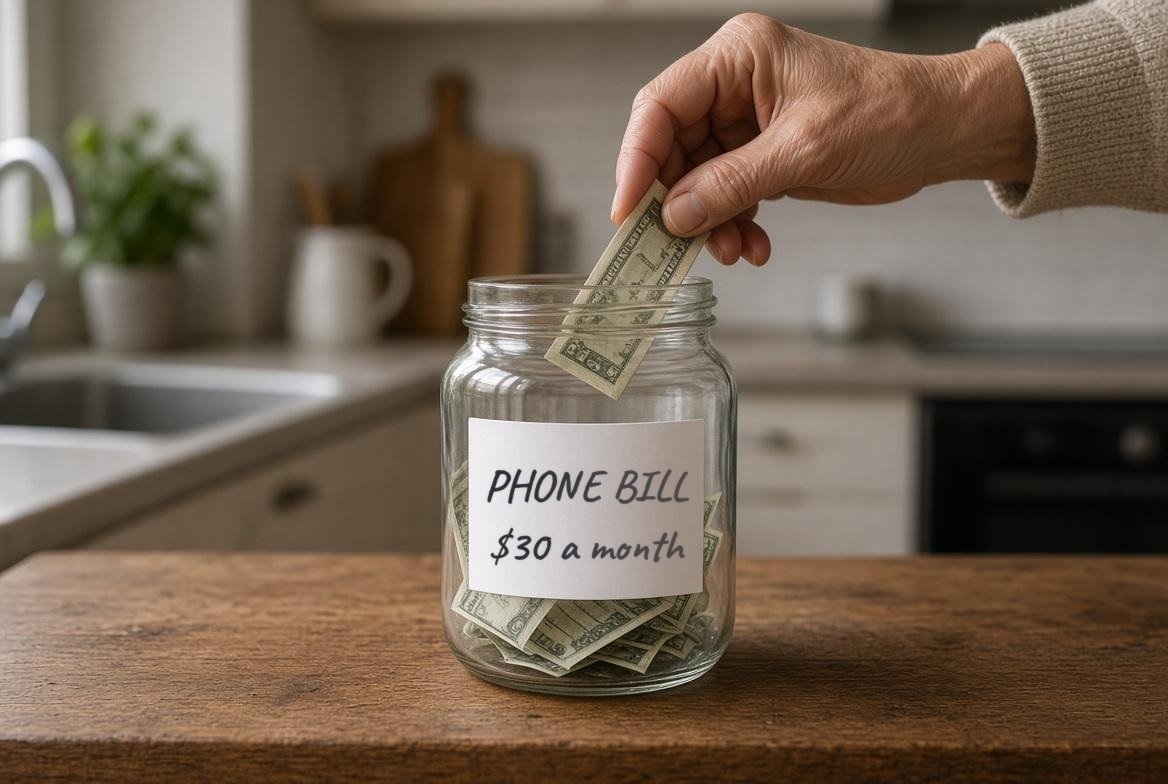
A grab bar is bought once and saves you once, on a day that may never come. Thirty dollars a month off the bills is three hundred and sixty dollars a year, this year and every year after it, whether anything happens or not. Over the twenty years after sixty-five that is seven thousand dollars, and the work involved was two telephone calls and a modem.
And it gets harder rather than easier to fix later, for a reason that has nothing to do with the money. The call requires you to look up a competitor, get past a first line who cannot help, hold a number in your head and push back once. That is a perfectly ordinary Tuesday at sixty. It is a genuinely tiring afternoon at eighty-five, and it is exactly the kind of task that quietly stops getting done — which is precisely why the price keeps climbing for the people least able to argue with it.
So do it now, and then do the thing that makes it stick: put a date in the calendar for the month your new rate expires. Twice a year, ten minutes, with the same look you give the smoke alarm batteries.
Your neighbor who moved in last spring is paying less than you for the same cable. The only difference between you is a phone call.
❓ Plain Answers
The short version of this page, one question at a time — the answer is always the first line.
Why is my internet bill higher than the advertised price?
Internet bills usually run higher than the advert because the promotional rate expires, equipment rental is added, and surcharges sit outside the advertised rate. In 2026 households paid roughly $75 to $85 a month against an average advertised price of about $52 to $56.
Why do new customers pay less for internet than I do?
Internet providers usually reserve the promotional rate for new customers, so a newcomer can pay about half what a long-standing customer pays for identical service. The price is not fixed, and it moves when somebody asks it to.
What is the FCC broadband label?
The FCC broadband label is a standardised plan summary, modelled on a food nutrition label, that internet providers have had to display since April 2024. It shows the monthly price, whether it is introductory, what it becomes afterward, typical speeds, the data allowance and extra monthly fees including equipment.
How do I get my internet bill lowered?
Call the provider, ask for the retention department by name, and tell them plainly what you pay and what a competitor at your address offers. Industry research puts the typical saving from one call at ten to forty dollars a month. Write down the date the new rate expires.
Should I buy my own modem and router instead of renting one?
Buying your own modem and router usually pays off, because bought outright it costs roughly one year of rental. Rental runs five to fifteen dollars every month, forever. Check your provider's compatible list first, and keep the old unit until the new one works.
What is the Lifeline phone discount and who qualifies?
Lifeline is a federal program that takes up to $9.25 a month off phone or internet service, and up to $34.25 on qualifying Tribal lands. Households on SNAP, Medicaid or Supplemental Security Income are commonly eligible. Apply through lifelinesupport.org, and there is no fee.