🚪 The Table Came From Somewhere
There is a good deal on this site about hunting tools at garage sales and second-hand shops. Go early, know what you are looking at, buy the function and not the name. All of it holds.
And before any of that happens, there is a duller job that makes the whole of it easier on whoever is left doing it: one folder, in one drawer, that says where everything is. The folder your family will need is the page about that.
This page is about the same driveway from the other side.
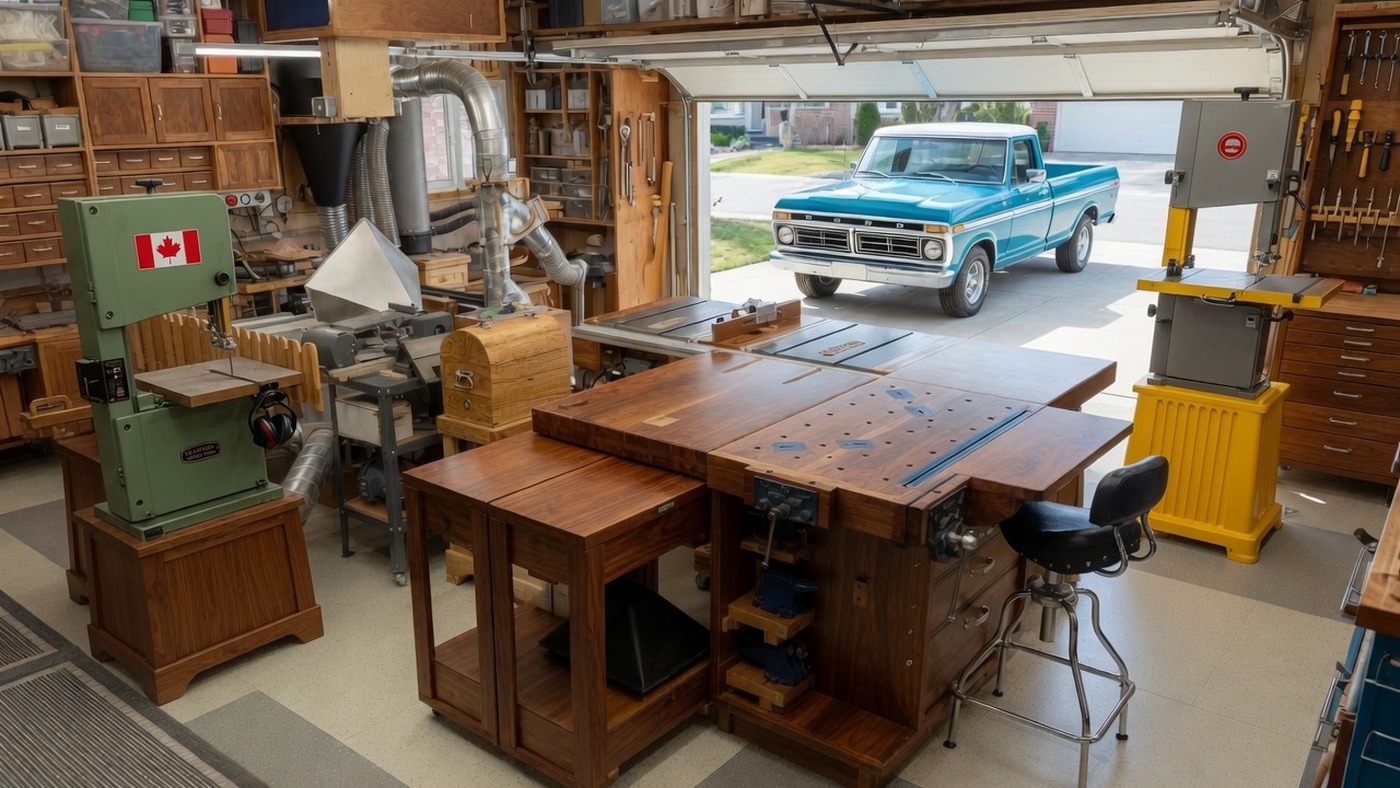
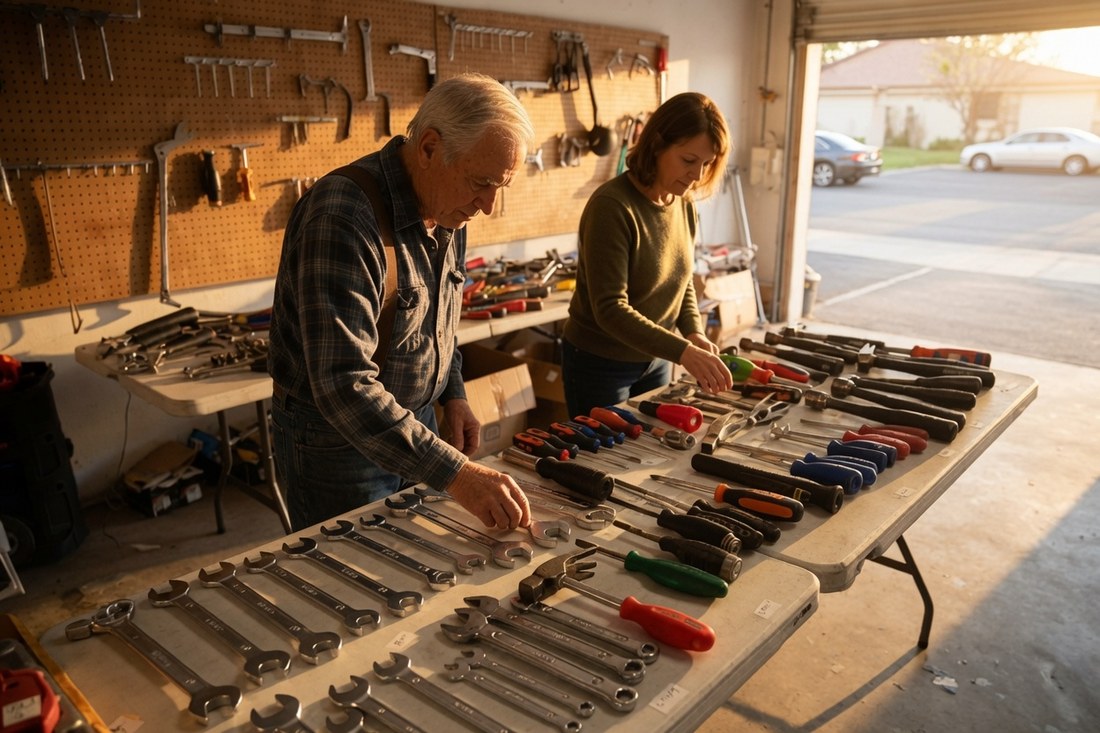
Because that table came from somewhere. Somebody laid those wrenches out in rows. And a fair number of the times you have found a fifty-year-old tool for two dollars, what happened was that a man died, and the people clearing his house had until Sunday, and nobody in the family could tell a Disston from a hardware-store saw.
The bargain you got was somebody’s working life, priced by people who did not know what it was.
That is not a complaint about the price. You paid what was asked and the tool went to somebody who would use it, which is the best outcome available on that particular Saturday. It is a note about who sets the price, and about the fact that one day it will be your bench on the far side of the transaction.
📉 What the Market Kept and What It Threw Away
Here is the part almost nobody expects, and it is worth reading twice, because the resale market has spent the last twenty years running an experiment on exactly the question this whole site is about.
It split the contents of the American house in two. And it split them along precisely the line this site draws.
The status went to nothing
The formal dining set. The breakfront. The buffet, the sideboard, the armoire — what the trade calls brown furniture. The china that came out twice a year. The crystal. The sterling flatware that was a wedding present in 1968.
All of it collapsed.
Dealers and liquidators say it plainly. Old mahogany from a great aunt’s house is described by one Virginia liquidator as basically worthless. Sterling is often worth more melted and sold by the ounce than as a service, and silver plate frequently cannot be given away at all. One Arizona auction house says it turns away around sixty per cent of what it is shown, while the volume of boomer estates coming through its doors roughly tripled in five years.
Goodwill and the Salvation Army now routinely refuse older furnishings. That is the end of the line for an object: the charity will not take it either.
The tools held, and some of them climbed
Now the same twenty years, applied to what was in the garage.
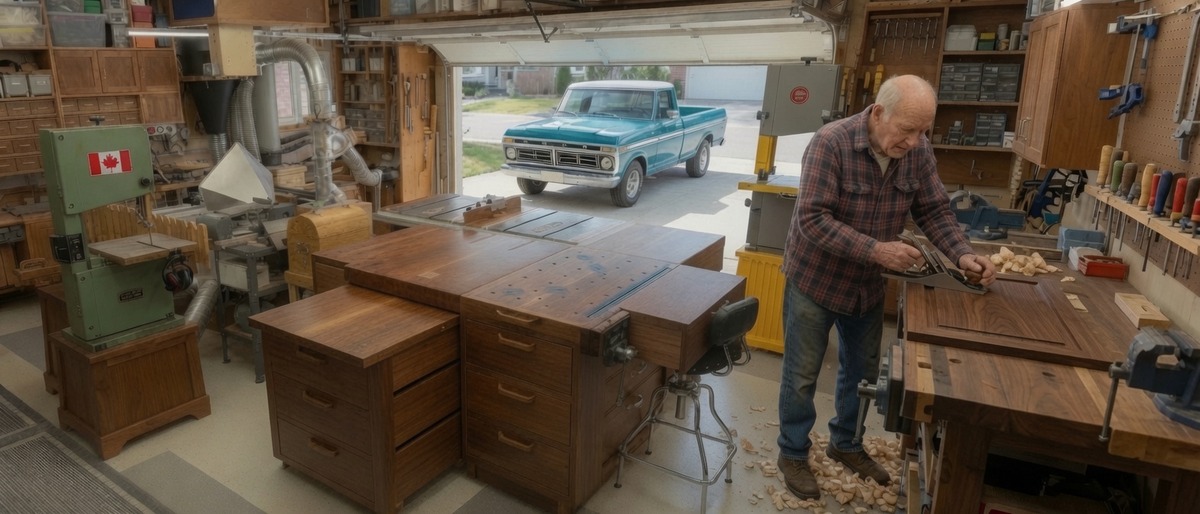
Pre-1950s American hand tools were made with higher-carbon steel that takes and holds an edge better than a great deal of what is sold new today, and the names — Stanley, Disston, Millers Falls — carry real money at auction. A common Stanley bench plane runs twenty to a hundred dollars. A good user-grade No. 4 runs fifty to two hundred and fifty. The scarce ones go a great deal higher; a Stanley No. 1 has cleared three thousand dollars at auction more than once.
The reason is that there are two sets of buyers rather than one. Collectors want them because they are rare. Working woodworkers want them because they are better than the new ones. Two demands hold a floor under the price that a dining table has not had in twenty years.
And here is the sentence to sit with. The tool trade’s own guides say it outright: workshop cleanouts and estate sales routinely contain tools worth fifty to five hundred dollars that sell for scrap prices, because nobody at the sale ever checked.
Not because the family was greedy. Because a plane is a lump of iron with a wooden handle if you have never been told otherwise.
⚖️ Why the China Lost and the Chisels Did Not
There is a reason for the split, and it is the argument this site has been making from the first page.
The china was bought to be seen. So were the silver service and the breakfront. They were bought in a period when a formal dining room was how a family showed it had arrived, and their value was never in what they did — it was in what they said about the people who owned them.
The moment the audience changed, the value went with it. Young households do not entertain that way. They are not polishing silver or hand-washing a service for twelve. So the objects did not become worse; the thing they were for stopped existing.
The chisel was never for saying anything.
A sharp chisel in 1958 did exactly what a sharp chisel does in 2026, and the only question ever asked of it was whether it held an edge. That question has no fashion in it. It cannot go out of style, because it was never in style. It is just true or not true.
Which is the water heater again, thirty years on. Buy the function and the function keeps its value, because function is not an opinion. Buy the name and you are holding a share in somebody else’s taste, and taste is the one asset that is guaranteed to change hands.
Nobody had to argue this. The auction results settled it.
📦 It Usually Is Not Greed
It is very easy to look at a garage sale two weeks after a funeral and see greed. Sometimes that is exactly what it is, and there is no arguing anybody out of what they watched happen in their own family.
But it is worth being honest about the ordinary version, because the ordinary version is far more common and it is the one you can actually do something about.
The ordinary version is that nobody ever told them.
The daughter standing in the garage with a clipboard is not weighing up a Millers Falls brace against a no-name one. She is looking at eleven hundred square feet of objects she has never used, in a house she has to empty, on a deadline set by a realtor, while grieving. Every single thing in front of her looks the same: old, oily, heavy, and nobody’s.
She is not failing a test. Nobody set her the test, and nobody gave her the answers.
The same thing happens two weeks earlier, in the funeral home office, and for the same reason. She is asked twenty questions nobody prepared her for, and every one of them is a price. What that hour costs, and how to answer it in advance, is its own page.
That is the same thing this site says about the attic that seventy-five families used for boxes. They were not lazy and they were not fools. Nobody showed them what they were standing in.
And it points at the fix, which is not a lecture about ingratitude. It is that the only person who can tell her what any of it is, is the man who bought it — and he can only do it while he is here.
🎁 Hand It Over Yourself
The advice that comes out of every estate planner and appraiser who deals with this for a living is the same, and it is short.
Do not wait to be dead.
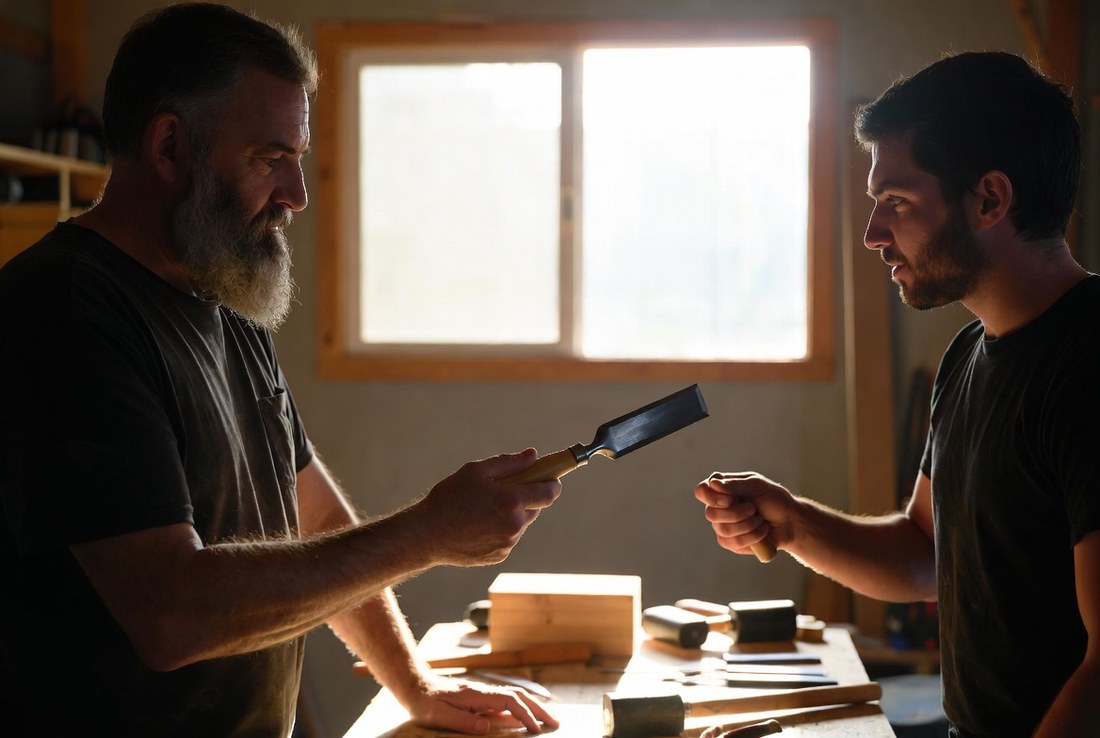
Give the good things away while you are alive. The stated reason is that you get to watch them received, which is true and worth something. But the real reason is the second half, and it is the half that matters here: when you hand it over yourself, you can say why you wanted that person to have that particular thing.
An object handed over with its story attached is an heirloom. The identical object found in a drawer by somebody clearing a house is inventory.
Same object. The difference is entirely whether anybody is still alive who knows what it is.
This is not a new idea on this site, it is the oldest one on it. A man once tried to explain to an eight-year-old what he did for a living and could not make the words work. So he stopped explaining, and he put a small vial of gold-plated screws into the boy’s hand instead.
The explanation is long gone. Sixty-four years later the screws are still here, and so is the story, because the object and the telling arrived together.
The cold corollary, and it is worth saying out loud: the person who should end up with it is the one who shows up. That is not always the person on the paperwork. A will distributes assets. It has never once been able to explain to anybody why the plane mattered.
📋 How to Actually Do It
None of this needs a lawyer, and most of it is an afternoon.
Write down what things are
Not an appraisal. A list, in a drawer, in your handwriting. What it is, roughly what it is worth, and where it came from. Three lines a tool. The list is worth more than the insurance, because the list is the only thing that stops the whole bench being priced as a lot.
Send a photograph before you send the object
This is the advice that saves the most hurt feelings, and it comes from the people who do senior moves for a living. Photograph the thing, send the picture, and ask. You find out who actually wants it before anybody has to say no to your face, and before you have hauled a sideboard across three states to a spare room where it will be resented.
Do not force it on anybody
The same professionals are blunt about this and they are right. A parent who insists a child take the dining set has not given a gift, they have handed over a problem with an obligation attached to it. If they do not want it, they do not want it, and it says nothing whatever about whether they loved you.
Get the two or three real things looked at
Most of what is in a house is worth what it is worth and that is the end of it. But nearly every workshop has two or three items that are worth a hundred times what the rest of the shelf is, and they never look any different. Twenty minutes with a maker’s mark and a search of completed sales will tell you which ones. Then write it on the list.
And the one that costs nothing at all. Take somebody out to the garage and show them. Not a tour — a job. Let them hold the thing while you use it.
Everything above is paperwork, and paperwork is better than nothing. But the only transfer that has ever really worked is the one where somebody stood next to you and watched what the tool was for.
🏠 Why This One Belongs on the List
This site is about buying things at fifty that you will still be glad of at seventy-five. It is a strange page that ends up talking about what happens after that.
But it is the same argument and it always was.
The reason to buy the function rather than the name is that function is the part that lasts. That is true of your money at fifty, it is true of the tool at seventy-five, and the auction results say it is still true the week after you are gone. The good tools you bought carefully are the one part of the estate that will hold its value. The furniture will not. The china will not.
Which puts a curious obligation on the person who bought well. You are the only one who knows. The whole of what you learned — which brands, which years, which of the two saws on that wall is the one worth keeping — lives in exactly one head, and it does not survive you by even an hour unless you deliberately move it somewhere else first.
So do that on an ordinary afternoon, years early, while nothing whatever is wrong.
Write the list. Send the photographs. Hand over the good ones yourself and say why. And take whoever will come out to the garage and give them something to hold.
Because the alternative is already scheduled. There will be a table in the driveway, and rows of things laid out on it, and a price written on masking tape by somebody who never once heard what any of it was for.
Elsewhere on this site, if it is useful:
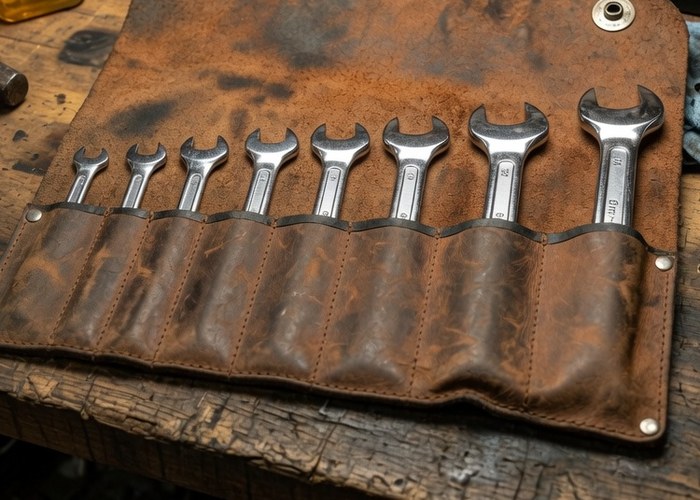
never mind the brand, these are the sizes
Which wrenches, which sockets, which pliers — the list to hunt against at a sale.
Read the guide →
how to tell a good tool from an expensive one
The difference is not the price and it is not the brand, and you can see it in your hand.
Read the guide →
the forty small things that cost people their houses
Not the roof. Forty little jobs across eight years, every one reasonable to have put off.
Read the guide →What This One Buys You
The story arriving with the object, instead of dying a fortnight before it.
Everything in your garage is going to change hands. That part is not optional and no amount of careful buying alters it. What is still entirely up to you is whether it changes hands with somebody explaining what it is, or gets priced at two dollars on a folding table by a person who was never told. That is a decision, it costs an afternoon, and it can only be made early.