🏠 A Word I Have Been Avoiding
There is a phrase for what this whole site is about, and I have gone out of my way not to use it.
Aging in place.
I avoided it because of how it usually arrives. It turns up in a brochure, in a color scheme somewhere between beige and apology, generally in the hands of somebody who would like to sell you a stair lift. It is a phrase people say about you rather than to you.
But it is the right words for the right thing, and refusing to say it does not help anybody find the page. So here it is, said plainly.
Aging in place means staying in your own house. Not moving in with your daughter. Not a facility. Your kitchen, your chair, your own back step.
Nearly everybody wants it. Most people do very little about it, and there is a reason for that which is not laziness.
⚖️ Somebody Is Going to Decide This
Here is the part the brochures leave out, and it is the whole argument of this page.
Whether you age in place is going to be decided. The only thing in question is who does the deciding, and on what day.
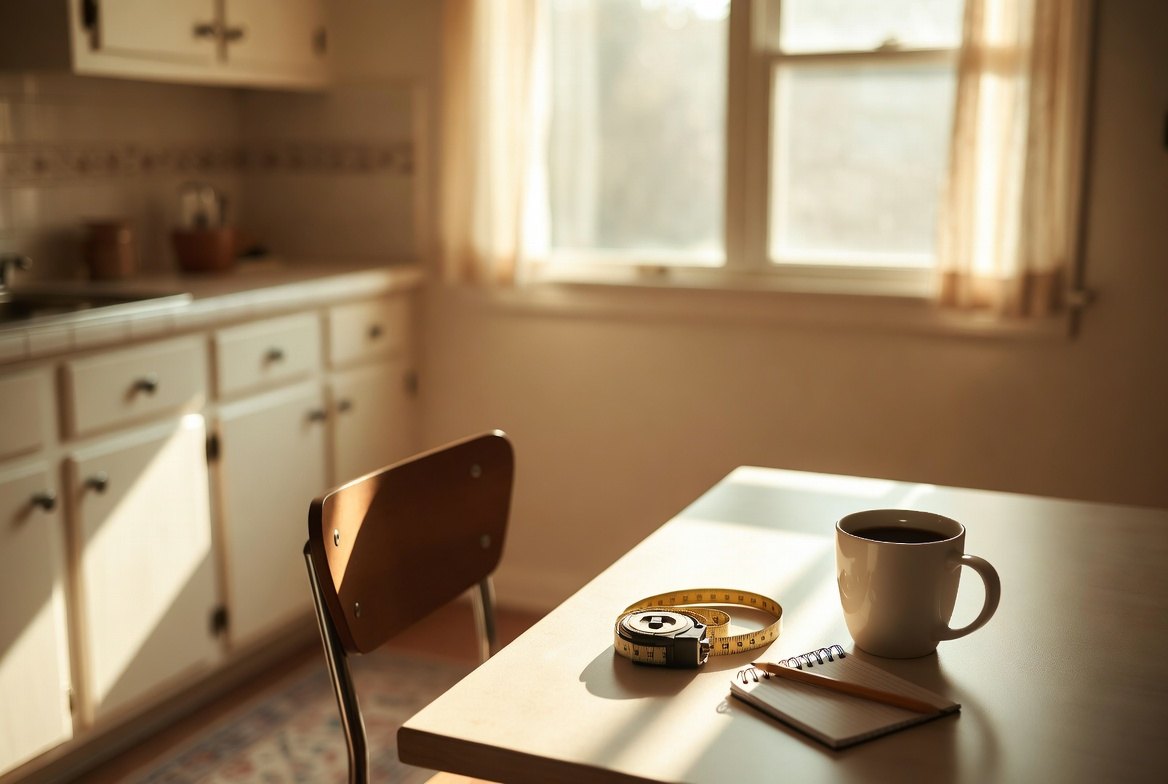
Do it now and it is you, on an ordinary Tuesday, with a cup of coffee going cold and a tape measure. You choose what gets changed. You choose what it costs. You choose who comes to the house and when.
Leave it, and it still gets decided — but it gets decided in a corridor, by your children, in the four days after something happened. They will be frightened, they will be in a hurry, and they will be looking at a house that has not been touched.
They will not decide the way you would have. Not because they do not love you. Because they are deciding under conditions you would not have chosen for them.
That is the entire case for doing it at fifty. Not that you are old. You are not. It is that the choosing is worth more than the fixing.
📉 It Is Not a Cliff, and That Is the Trouble
People picture this as a moment. There is a Before, when you are fine, and an After, when you are not, and somewhere in between a fall or a diagnosis that tells you which one you are in.
It does not go like that, and the way it actually goes is what makes it so easy to put off.
At fifty-five nothing has changed at all. At sixty-two you notice you take the stairs a little differently, and you think nothing of it, because it is nothing. At sixty-eight you have quietly stopped using the top two shelves in the kitchen. Nobody decided that. You did not announce it. You simply reach for the things at eye level now.
At seventy-three you hold the door frame going into the bathroom.
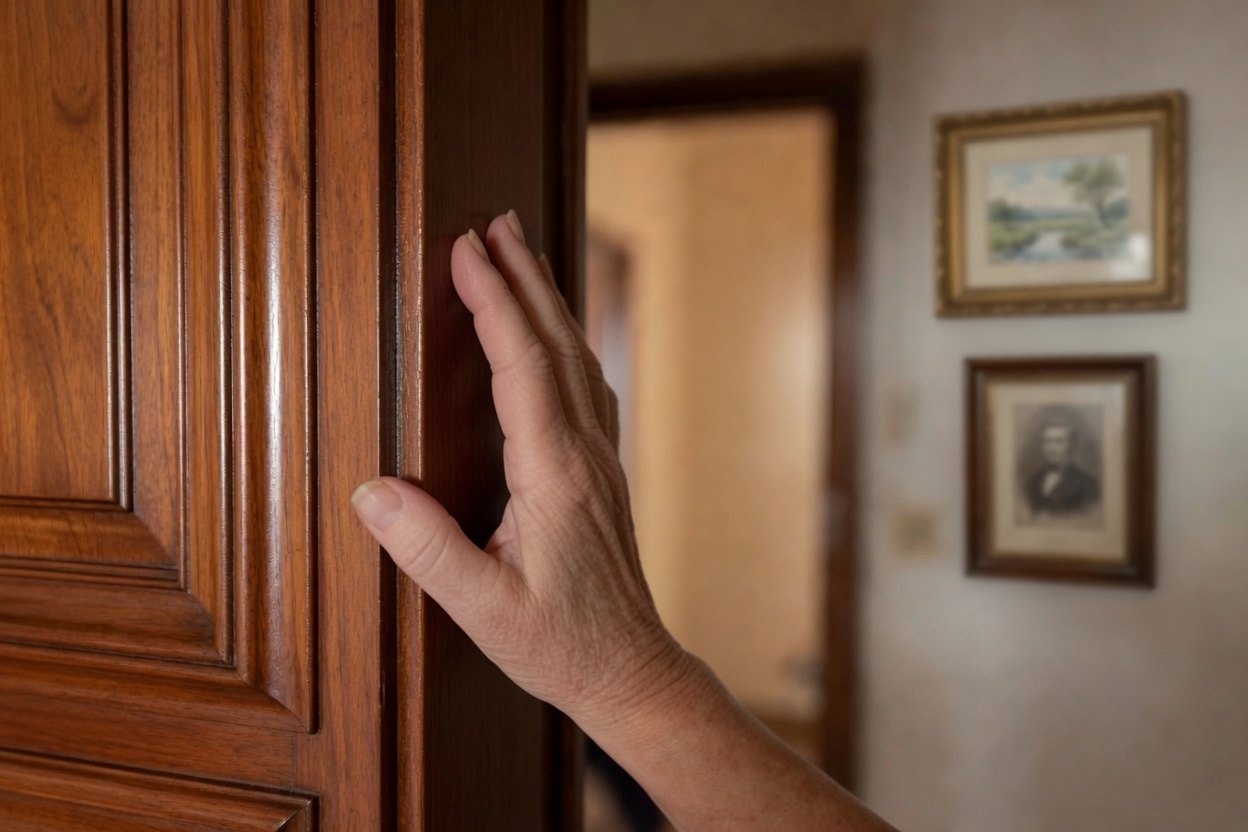
Not one of those was a day. There was never a morning when a thing became true that had not been true the night before, which is precisely why there was never a morning when you thought right, I had better see about the house.
A house that suited you perfectly at fifty is a house you have been quietly working around for eight years, and the working around is so gradual that it feels like nothing at all.
🔧 Four Things, in the Order They Pay
If you did nothing else, do these four. They are in the order I would spend the money.
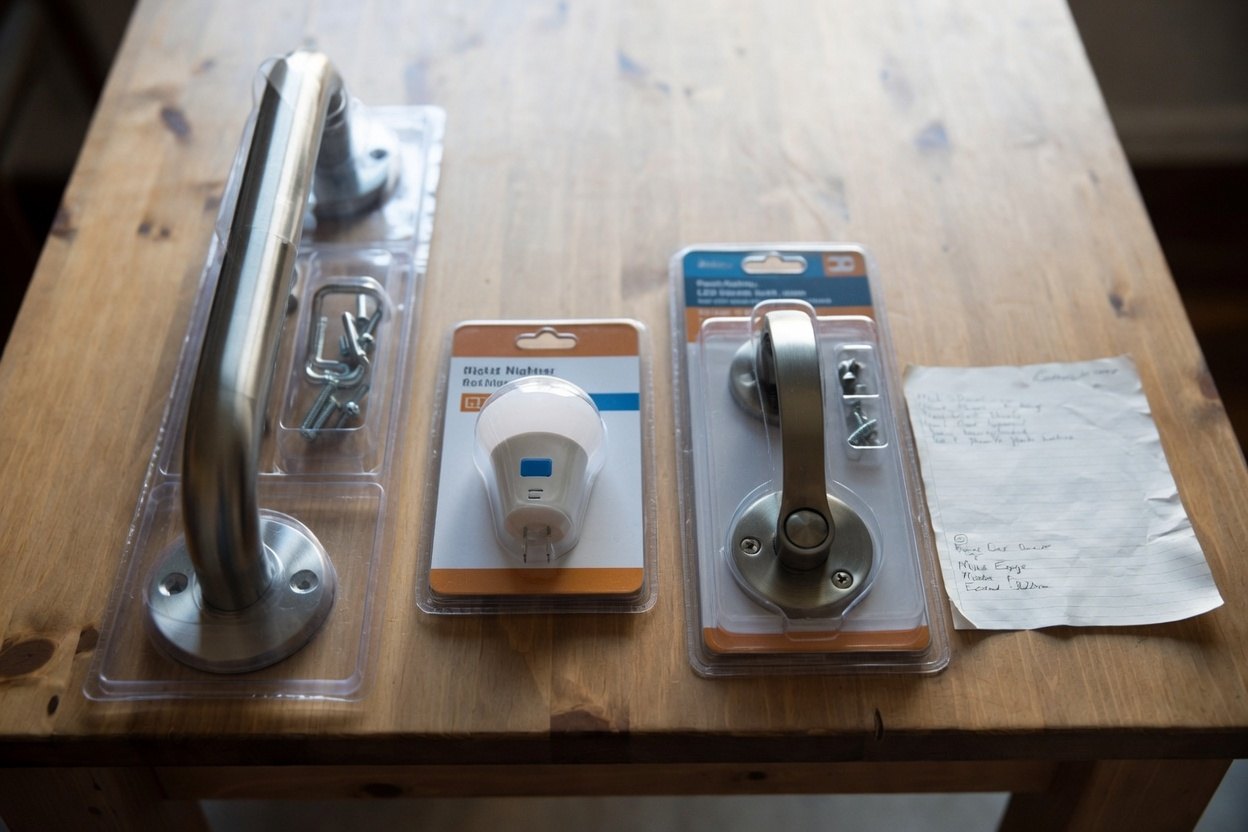
1. Grab bars — in the bathroom, properly anchored
The bathroom is the worst room in the house for this and the cheapest one to fix. A bar costs less than a tank of fuel. What matters is not the bar — it is what is behind the drywall, and that is the part nobody checks.
2. Walk your own house and write down what you find
Ten minutes, room by room, before you buy anything at all. Most of what turns up costs nothing to put right — a rug, a cord, a bulb that has been out since March.
3. Light on the route you walk at three in the morning
Bed to bathroom, in the dark, half asleep. That is the trip, and it is the one people are making when it happens. A few pounds of night lights covers it.
4. Lever handles, and everything else you grip
Round knobs need a grip and a twist. Levers need a forearm, an elbow, or a full hand. It is a small change that quietly removes a daily argument between you and your own doors.
📋 The Rest of It, Room by Room
Beyond those four, the rest of it sorts into three piles: the house, your hands, and the paperwork that matters on a bad day.
The house
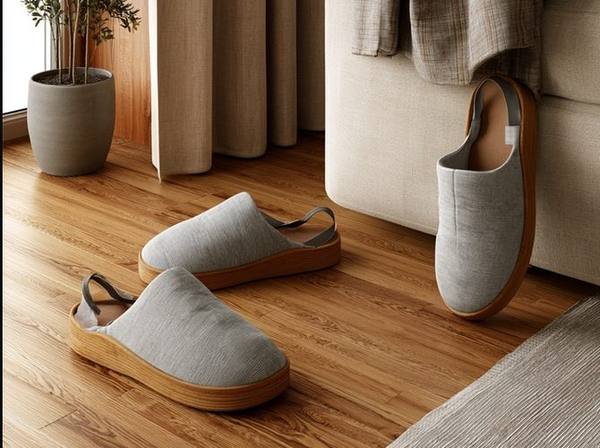
Non-Slip Slippers
The specific sort: a rubber sole, a strap at the back, and real grip. Not the soft flat ones that turn up at Christmas and slide on tile.
Read the guide →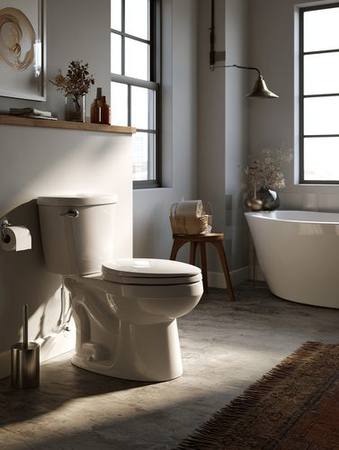
Toilet Height
Seventeen to nineteen inches instead of fifteen — but taller is not automatically better. Work out what actually fits your body.
Read the guide →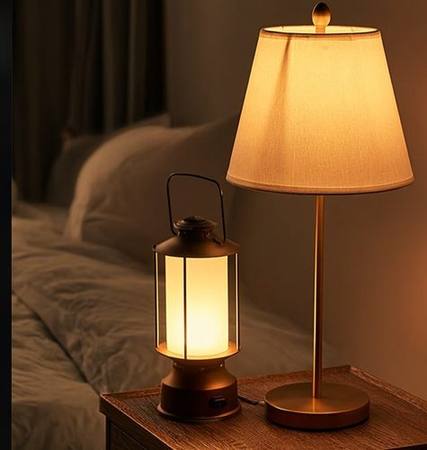
Light That Keeps Working
One lantern in every bedroom and one in each room the family actually sits in. Light is most of the difference between an outage and a bad night.
Read the guide →Your hands
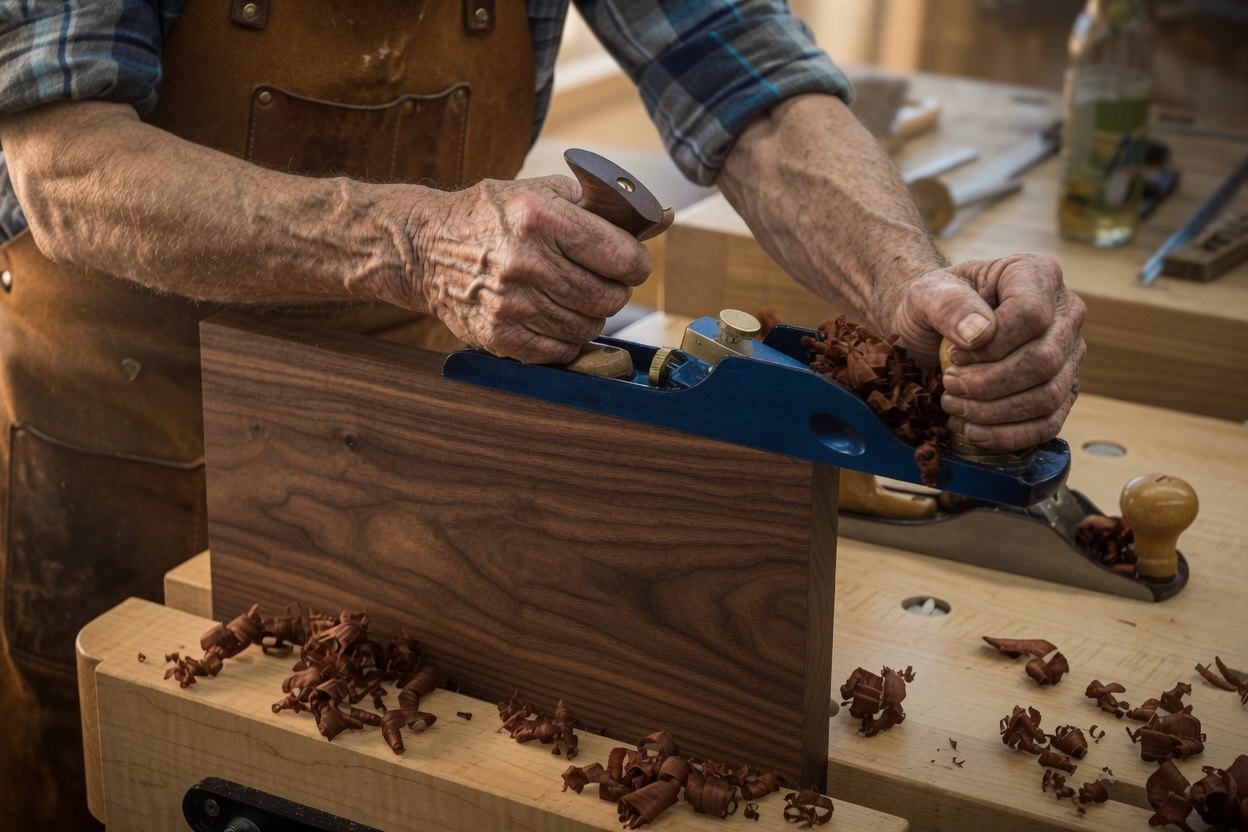
When a Good Tool Starts to Hurt to Hold
Change something about the tool before you change what you are willing to do. Grip, weight, and where the work is actually being done.
Read the guide →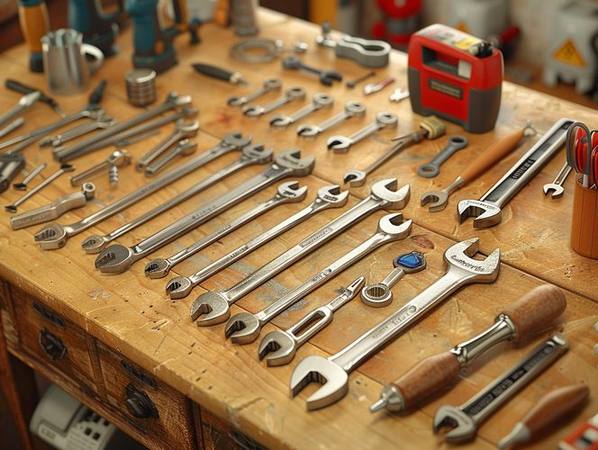
Tools Bought Once
Bought at the age where buying once still pays. Nothing in the drawer with a battery in it waiting to be discontinued.
Read the guide →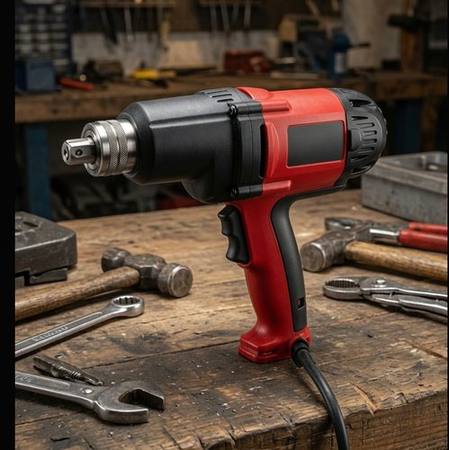
The Ones With No Battery
A cord plugs into any outlet in any house. A discontinued battery platform leaves you holding a paperweight and a charger for nothing.
Read the guide →
Doing Your Own Repairs at Seventy
Most of it you can still do. There is also a short list where the honest answer is to telephone somebody, and that list is on the page.
Read the guide →
Why the Small Repairs Decide Where You Live
Nobody loses a house over one big thing. They lose it over forty small ones that nobody could afford to call anybody about.
Read the guide →The bad-day paperwork

The Card That Speaks for You
Medications, doses, allergies, who to call. The person who needs it is never you — it is whoever is standing over you. Ten minutes to make.
Read the guide →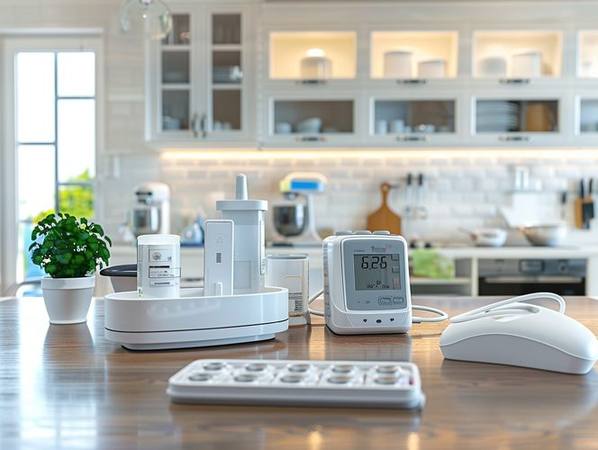
Medication That Has to Stay Cold
What happens on the day the fridge stops. Ask your doctor now, while it is still a theoretical question and not hour thirty-six.
Read the guide →
Knowing Your Own Numbers
What ordinary looks like for you, written down on a day when nothing is wrong. That is the only thing a bad night can be measured against.
Read the guide →
Keeping the Part of You That Decides
Everything above this assumes you are the one doing the deciding. That is not a thing to leave to look after itself either.
Read the guide →🤔 What This Page Will Not Tell You
Two things, so you know what you are reading.
This is not a medical assessment and I am not qualified to give you one. If there is a specific condition in play — a diagnosis, a recent fall, medication that affects balance — an occupational therapist will do in one visit what a website cannot do at all. They come to the house. They watch you use it. That is worth more than every page here put together.
And a house cannot be made safe. It can be made safer, which is a different and smaller word. People fall in well-fitted houses. What the work below buys you is fewer chances and better odds, and anybody promising more than that is selling something.
The reason to do it anyway is the one at the top of this page. It is not that it guarantees the outcome. It is that the decision is yours while it is still yours to make.
What This One Buys You
The choosing, while it is still yours to do.
Every job on this page will get done eventually, by somebody. Done now it is a Tuesday, a tape measure and your own opinion. Done later it is four frightened days and somebody else’s. The work is identical. Only the author changes. More on phone and internet scams →