One Drawer. Always Stocked. That's the Whole System.

Every guide on this site eventually says the same thing a different way: the tool you can't find is the tool you don't own. That goes double here, because the moments these four items earn their keep — a bad night, a bad bug, an evacuation order — are exactly the moments nobody should be digging through closets.
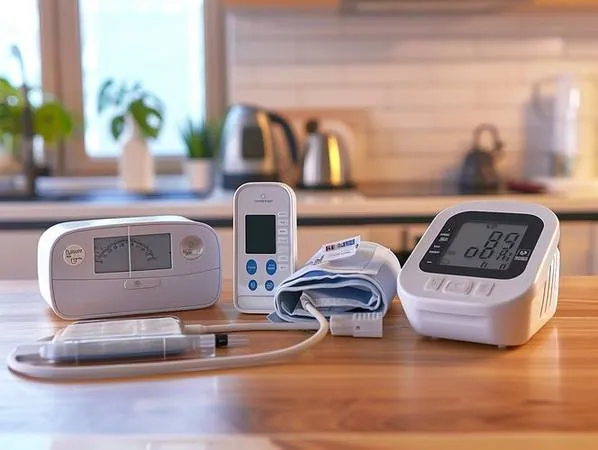
So the system is one drawer, in the kitchen or the hall, holding four things: the blood pressure cuff, the pulse oximeter, the thermometer, and the current 90-day medication bottles. Beside them, two zip bags of spare batteries with the purchase date written on masking tape. These should be available to you at all times — not lent out, not "in the car," not waiting on a battery run. A monitor with dead batteries at 2 AM is a paperweight with a screen, which is why the batteries get their own section below.
Total cost for everything on this page, medications aside: usually under $120. What it buys is the thing this site is really about — being the household that already knows, while everyone else is guessing.
The Blood Pressure Cuff — The Number That Never Announces Itself
High blood pressure is called the silent killer for a boring, terrifying reason: it feels like nothing. Among adults 60 and older, roughly seven in ten have hypertension — and a large share of the people who have it don't know, because only about six in ten of those with it are aware, and only about one in five have it under control. Those aren't scare numbers; they're CDC survey numbers, linked at the bottom of this page.
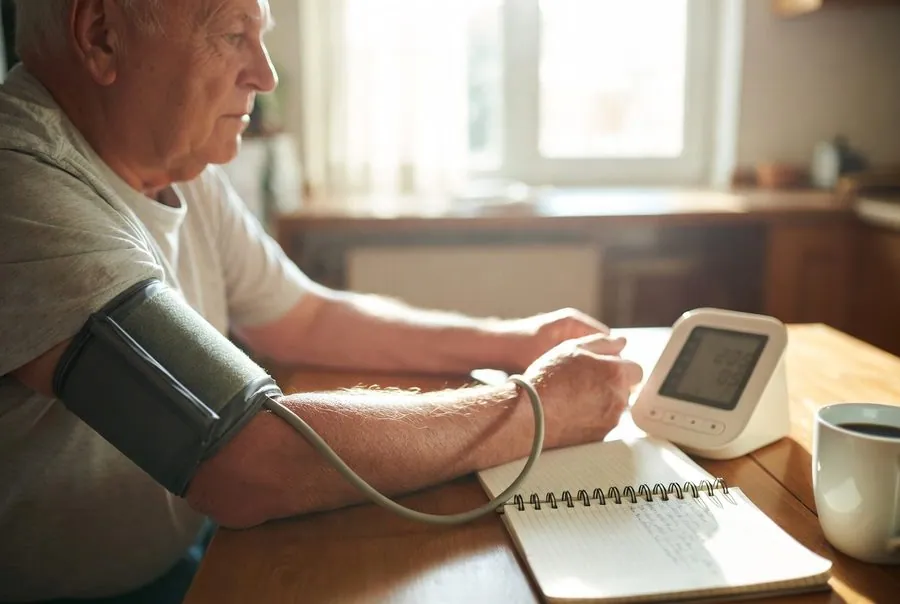
The fix costs about $30 and two minutes with the morning coffee: an upper-arm cuff (upper-arm, not wrist — they're consistently more reliable), the same chair, the same time of day, and a spiral notebook. One reading tells your doctor almost nothing. A month of readings in your own handwriting is a document a doctor can act on in one visit — and self-measured home monitoring is one of the interventions the CDC itself backs for managing blood pressure. See upper-arm monitors on Amazon (affiliate link).
By name: the Omron Silver (model BP5250), an upper-arm cuff that fits arms about 9 to 16½ inches around and is on the US Validated Device Listing — the American Medical Association–backed list of home monitors checked for clinical accuracy. Whatever cuff you buy, look the model up on validatebp.org first; if it is not there, it has not been shown to read true. See the Omron Silver BP5250 on Amazon →
⚠️ A Story, and Then the Facts
The Pulse Oximeter — When "I Feel Fine" Isn't Evidence
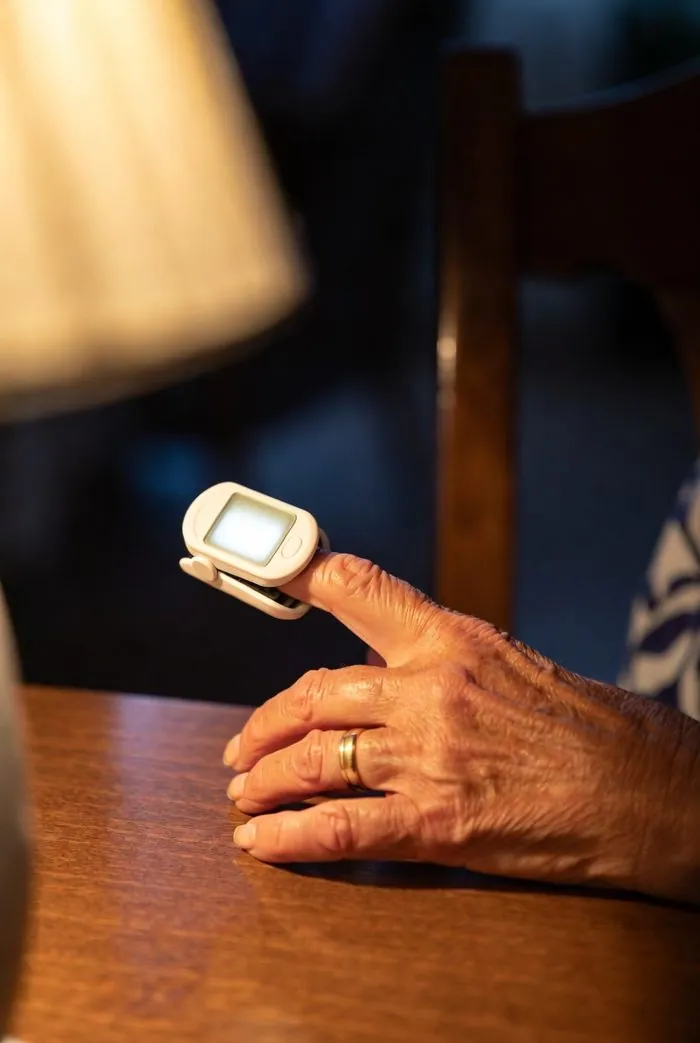
The little clip that reads your blood oxygen earned its place in every home drawer during the pandemic, when doctors documented something unsettling they call silent hypoxia: people who look comfortable, feel comfortable, and report no real shortness of breath — while their oxygen level is dangerously low. Mild drops often produce no symptoms at all. Your body is a poor witness here, and the $25 clip is a better one.
In one published home-monitoring study, 83% of the patients who ended up needing hospitalization went in because of a low home oximeter reading — the device, not the symptoms, made the call. The household rule that makes it work is simple and worth adopting whole: nobody argues with the number. If it's low, you call the doctor, even if you feel fine — especially if you feel fine. See the Zacurate 500 Series oximeter (affiliate link).
Read the box before you buy one. The FDA says pulse oximeters sold as general-wellness or sports products are not reviewed by the FDA before they reach the shelf, and have not been clinically evaluated for medical decisions. A box that says the device is FDA-cleared for medical use has been through that review. Source: FDA, January 2025.
The honest caveat, stated plainly: readings can run less accurate on darker skin tones and on cold or poorly perfused fingers — a limitation the FDA has publicly acknowledged and worked on. Warm the hand, sit still, take more than one reading, and treat the trend as more meaningful than any single number. If the device says fine but the person looks wrong, believe the person and call.
⚠️ A Story, and Then the Facts
The Thermometer — The Two-Dollar Question Every Nurse Line Asks First
Call any doctor's office or nurse line after hours and the first question is the same: what's the temperature? "Warm to the touch" is not an answer anyone can act on. A basic digital thermometer turns a 2 AM worry into a number, and the number decides everything that happens next — wait until morning, call now, or go in. It is the cheapest device in the drawer and the one most often found dead or missing when it's needed, which is exactly the point of the drawer. See digital thermometers on Amazon (affiliate link).
The 90-Day Supply — The Deepest Item in the Drawer
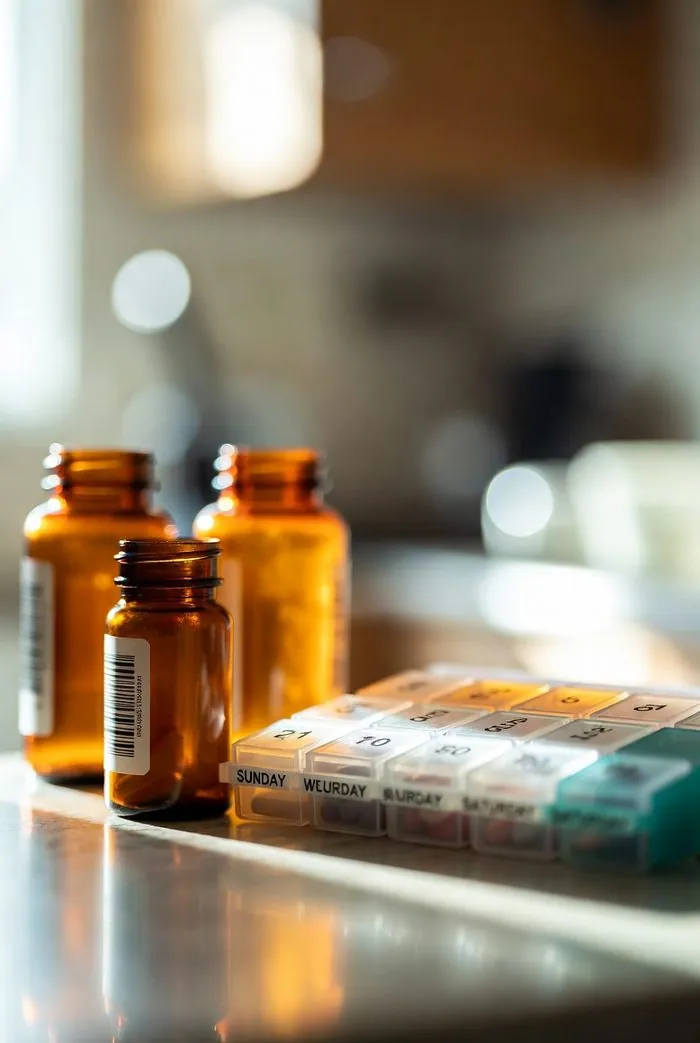
This one isn't bought on Amazon — it's one phone call to your pharmacy or insurer: "Can my maintenance prescriptions be filled as 90-day supplies?" Whether it is available to you is a question for your pharmacist and your own plan — when it is, it is often cheaper per dose, and it quietly solves the single most documented medical problem in American disasters: people separated from their pills.
The record on this is brutal and consistent. After Hurricane Katrina, among evacuees who arrived at shelters with a chronic condition — more than half of them — nearly half lacked their medication. A survey of Houston shelters found about a third of evacuees without the prescriptions they needed. One Louisiana shelter housing over six thousand people had a handful of glucose meters its first week. None of those people planned to be there.
The 90-day bottle is how you make sure the math works in your favor anyway: on the worst day of the year, you're holding weeks of margin instead of days. Pair it with a big weekly organizer so what's in the bottles actually gets taken on schedule — see the EZY DOSE X-Large AM/PM organizer (affiliate link).
⚠️ A Story, and Then the Facts
One thing worth knowing before you need it: if a plan ever refuses to cover something, the refusal is very often not the end of it. Appealed denials are overturned the overwhelming majority of the time, and hardly anybody appeals. The numbers, and the sentence to say on the telephone, are on the page about algorithms and appeals.
🔋 The Batteries — The Part Everybody Skips
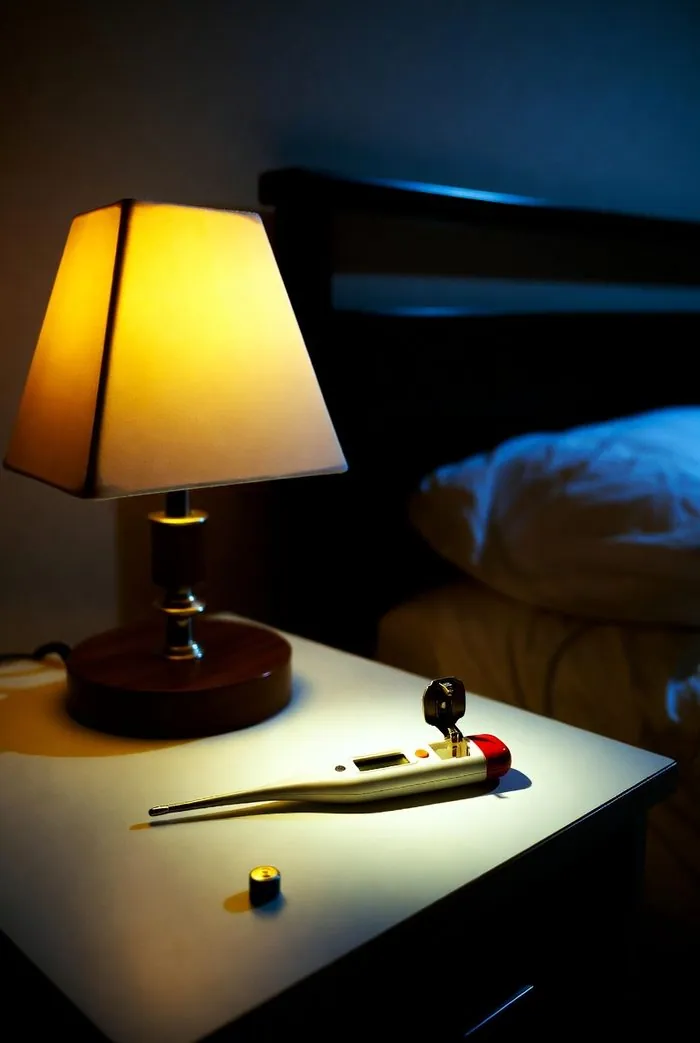
Here is the failure that actually happens, in the only room it ever happens in: the bedroom, at 2 AM, with a fever. The thermometer is right where it belongs — and it's dead. The cuff takes AAs, the thermometer takes a button cell nobody stocks, the oximeter takes AAAs, and none of them warn you on a convenient afternoon. A monitoring device without a working battery is not "mostly ready." It is a paperweight with a screen.
So the rule is as strict as we can make it: spare batteries live in the drawer with the devices, at all times. Two zip bags — one for AA/AAA, one for the button cells your specific devices take (open each battery door once and write the type on the bag). A strip of masking tape on each bag with the purchase date. Twice a year, when the clocks change and you're already checking the smoke alarms, test every device in the drawer and rotate anything old. Alkalines hold most of their charge for years in a cool drawer — the system isn't hard, it just has to exist. See the Energizer AA/AAA combo pack (affiliate link).
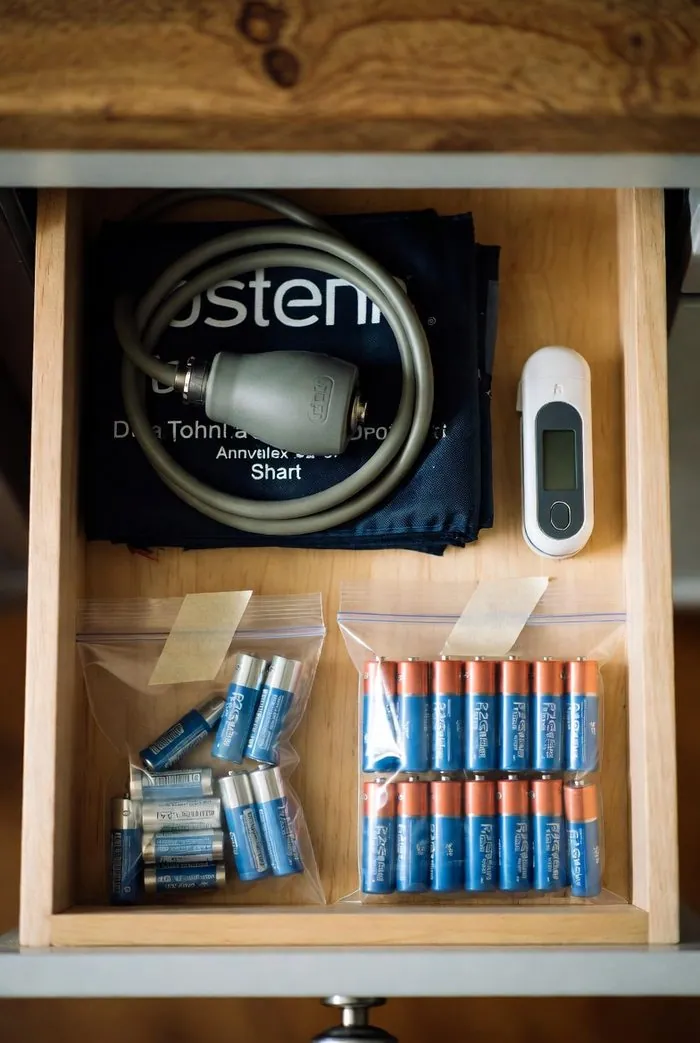
And that's the finished picture: everything in one place, batteries dated, nothing borrowed against. When the drawer looks like this, every story on this page ends the boring way — which is the point.
Your Plan — The Whole Drawer This Weekend
✅ Five Steps, One Weekend
Know your numbers before you need them. Own the batteries before the batteries matter. The drawer does the rest.
The three stories on this page are composite illustrations — Eleanor, Walter, Frank, and Delores are not real people and these specific events did not happen. The documented facts are real: hypertension prevalence, awareness, and control figures from the CDC/NCHS Data Brief 511 and CDC support for self-measured monitoring from the CDC's high blood pressure priorities page; silent hypoxia documented by Yale Medicine, symptomless mild hypoxia by the National Council on Aging, and the 83% home-reading figure from a published home pulse-oximetry study; disaster medication shortfalls from the Katrina shelter burden-of-disease study, the AJPH Houston shelter survey, and Diabetes Care (ADA). For official senior preparedness guidance, visit FEMA Ready.gov Senior Preparedness.
❓ Plain Answers
The short version of this page, one question at a time — the answer is always the first line.
What medical devices should I keep at home?
Keep four things in one drawer: an upper-arm blood pressure cuff, a fingertip pulse oximeter, a digital thermometer and a 90-day medication supply, with spare batteries. Everything except the medications usually costs under $120.
What is the most accurate home blood pressure monitor?
One that has been clinically validated and fits your arm — check the model on validatebp.org before you buy. Validation matters more than brand or price. The US Validated Device Listing, backed by the American Medical Association, lists home monitors that have passed a clinical accuracy standard. The Omron Silver (BP5250) upper-arm cuff is on it. Use an upper-arm cuff rather than a wrist cuff, and take readings in the same chair at the same time of day. Source: US Validated Device Listing.
What size blood pressure cuff do I need?
Measure around the middle of your upper arm and buy a cuff whose range on the box includes that number. Size changes the reading. The American Heart Association reported that people who needed a large cuff read about 5 points high on a regular cuff, and people who needed an extra-large read about 20 points high. A standard adult cuff such as the Omron Silver's fits arms about 9 to 16½ inches around; bigger arms need a large cuff. Source: American Heart Association.
Are cheap pulse oximeters accurate?
Some have never been checked. Look for one labeled FDA-cleared for medical use. The FDA says oximeters sold as general-wellness or sports products are not reviewed by the agency before sale and have not been clinically evaluated for medical decisions. Any oximeter can read low on cold fingers or with dark nail polish, and the FDA has acknowledged accuracy differences on darker skin — so warm the hand, sit still, and take more than one reading. If it reads low, call the doctor. Source: FDA.
Is an upper arm or wrist blood pressure monitor better?
An upper-arm blood pressure cuff is consistently more reliable than a wrist cuff. Use the same chair at the same time of day, and write each reading in a notebook to show your doctor.
How many older adults have high blood pressure?
Roughly seven in ten adults 60 and older have hypertension, and only about six in ten of the people who have it are aware of it. Only about one in five have it under control, according to CDC survey numbers.
Should I call the doctor if my oxygen reading is low but I feel fine?
Yes, if a home pulse oximeter reading is low, call the doctor even if you feel fine, because mild drops in oxygen often produce no symptoms at all. Cold hands and dark nail polish can read low, so warm the hand and take more than one reading.
Can I get a 90-day supply of my prescriptions?
Ask your pharmacy or insurer whether your maintenance prescriptions can be filled as 90-day supplies, which is often cheaper per dose when it is available. It also gives you weeks of margin instead of days if you ever have to evacuate.
How often should I check the batteries in home medical devices?
Test every home medical device and rotate old spare batteries twice a year, when the clocks change and you check the smoke alarms. Keep spare batteries in the drawer with the devices, in bags dated with masking tape.