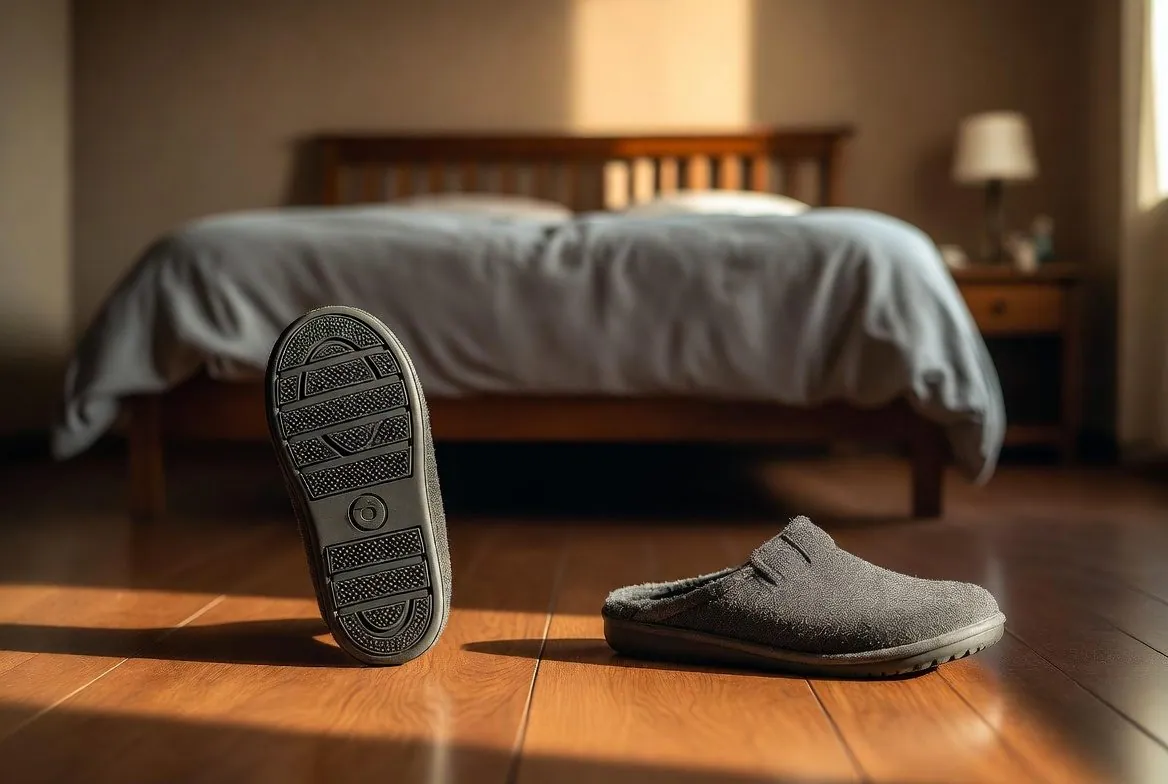
What People Were Actually Wearing When They Fell
The best-known study on this followed 765 older adults in the Boston area for over two years and asked one blunt question every time somebody fell at home: what was on your feet? The answers: more than 18 percent were barefoot, nearly 27 percent were in slippers, and 7 percent were in socks only — over half of home falls happening in exactly the options that feel safest. The researchers' conclusion was just as blunt: older people should wear real shoes at home whenever possible, and the falls that happened in bare or stocking feet came with more serious injuries — fractures, dislocations, torn ligaments.
A newer study did something even more convincing: instead of asking people what they remembered, it reviewed video recordings of 300 real falls in aged-care facilities. When footwear contributed to a fall, socks were the worst offender by a mile — implicated in 74 percent of the falls that happened while wearing them. Barefoot came in at 33 percent, slippers and sandals at 17 percent — and proper enclosed shoes at just 7 percent. One cohort analyzis put walking barefoot, in slippers, or in socks at nearly fourteen times the odds of a fall. Your feet already know this: socks on hardwood is ice skating with extra steps.
⚠️ A Story, and Then the Facts
The Safe-Slipper Spec — Four Things, No Exceptions
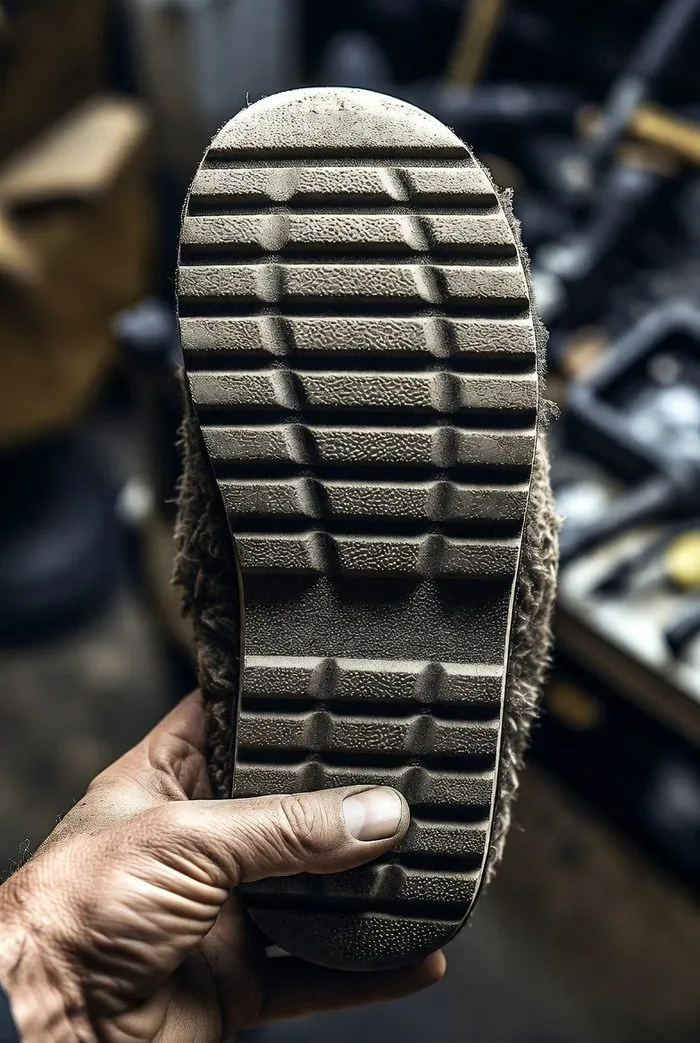
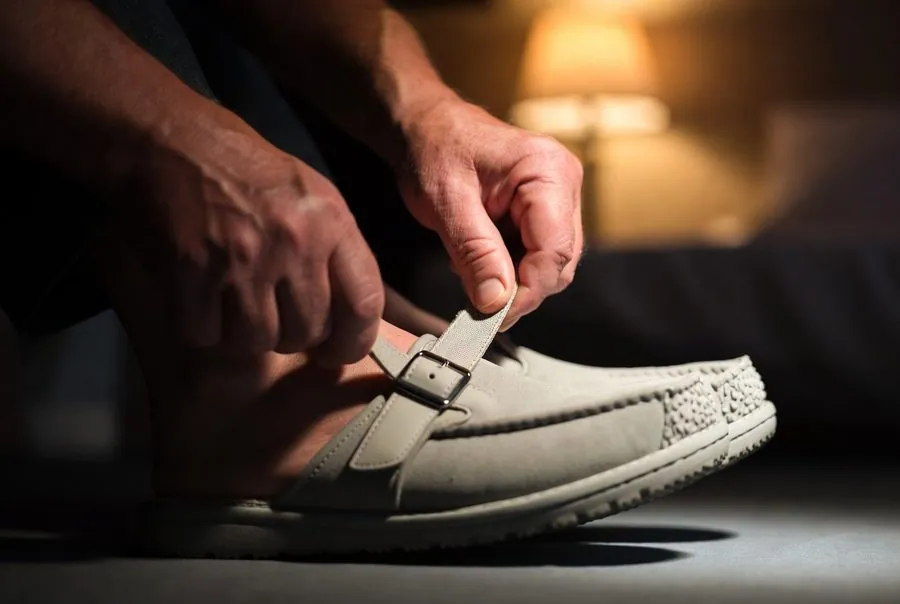
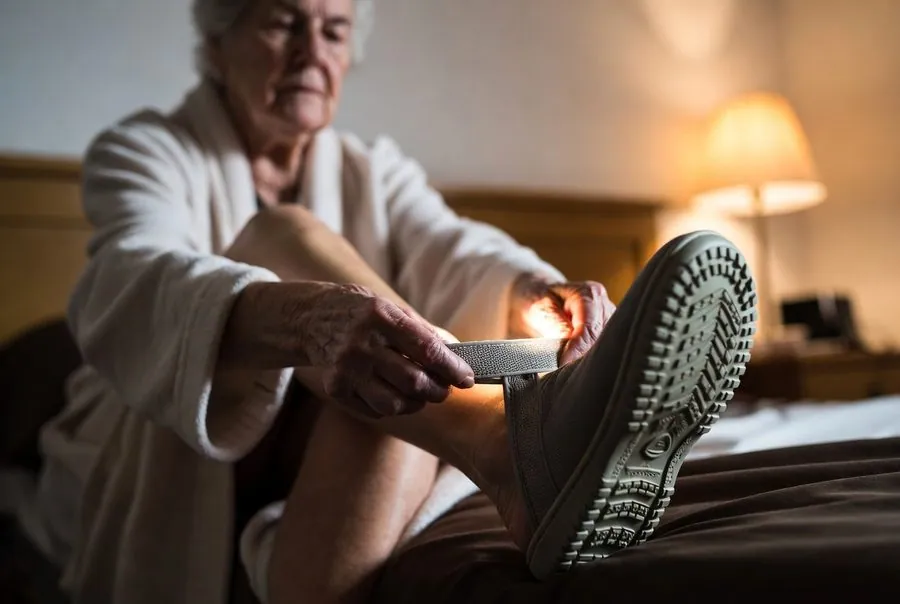
Here is the whole specification, and every word earns its place: (1) a closed back or a strap around the heel, so the slipper cannot stay behind when you turn; (2) a real rubber outsole with tread you can see and feel — flip it over in the store like the man in the photo; if the bottom is smooth fabric or worn glassy, it fails; (3) a firm sole that doesn't fold in half in your hand, because a floppy sole hides the floor from your feet; (4) a snug fit — a slipper you shuffle to keep on is a slipper doing the tripping for you.
And the enemy list, just as specific: backless scuffs, smooth or flattened soles, stretched-out plush pairs two sizes past their memory, socks on hard floors, and bare feet. Research reviews note that footwear changes both the feel of the floor through your feet and the friction where sole meets surface — and that fixation, a back or a strap, is what keeps trip-related falls down. The slipper in your closet right now probably fails at least two of the four.
⚠️ A Story, and Then the Facts
The Five Types Available to You
Every one of these passes the four-point spec. Pick by your feet, not by the picture:
1. Closed-back hard-sole slipper clogs — the default answer and the pair on this page's hero photo. Structured heel, molded rubber outsole, firm footbed; many are rated indoor/outdoor, so the trash-can trip happens in the same shoes. See closed-back slippers on Amazon (affiliate link). By name: for women, the RockDove Teddy Fleece Closed Back Slipper — a closed heel that grips, a memory foam footbed and a rubber sole; for men, the RockDove Tweed Memory Foam Moc, with a closed back and a sturdy rubber sole with anti-skid traction. See the RockDove women’s → See the RockDove men’s →
2. Adjustable-strap slippers — a wide opening and one strap across the top. Built for feet that swell as the day goes on, edema, or bandaged feet: loose at 5 PM, snug at 9 AM, tread all day. See adjustable-strap slippers on Amazon (affiliate link). By name: the Propét Cush ’N Foot — a closed heel, one big hook-and-loop strap, a traction outsole, and widths up to extra-extra-wide; it comes in men’s and women’s versions. See the Propét Cush ’N Foot →
3. Orthopedic and diabetic house shoes — wide toe box, seam-free lining, cushioned but firm sole. For neuropathy and sensitive feet, where a seam in the wrong place is its own hazard. See orthopedic house shoes on Amazon (affiliate link). By name: the Orthofeet Capri, a women’s closed-back moccasin slipper with a rubber outsole, arch support and a fully cushioned lining, in medium and wide. See the Orthofeet Capri →
4. Slipper booties with molded tread — ankle coverage and warmth for cold floors and cold climates. The one rule: a molded rubber sole with tread, never the knit-bottom kind, which are just tall socks wearing a costume. See treaded slipper booties on Amazon (affiliate link). By name: the Acorn Women’s Chinchill bootie, from a Maine company that has made slippers for decades — a warm collar around the ankle and a rubber outsole made for indoor and outdoor traction. See the Acorn Chinchill →
5. Hands-free heel house shoes — the newer style with a spring-back heel you step into without bending over and without crushing the back down. This one matters more than it sounds: a slipper that's hard to put on gets its heel stomped flat within a month — and a crushed-heel slipper is a backless scuff you paid closed-back money for. See hands-free house shoes on Amazon (affiliate link). By name: the Skechers Murette – Scofield, a men’s house slipper built on Skechers Hands Free Slip-ins, so the heel holds its shape and you step straight in. See the Skechers Murette →
⚠️ A Story, and Then the Facts
The 3 AM Trip — Where This Page and the Night Lights Meet
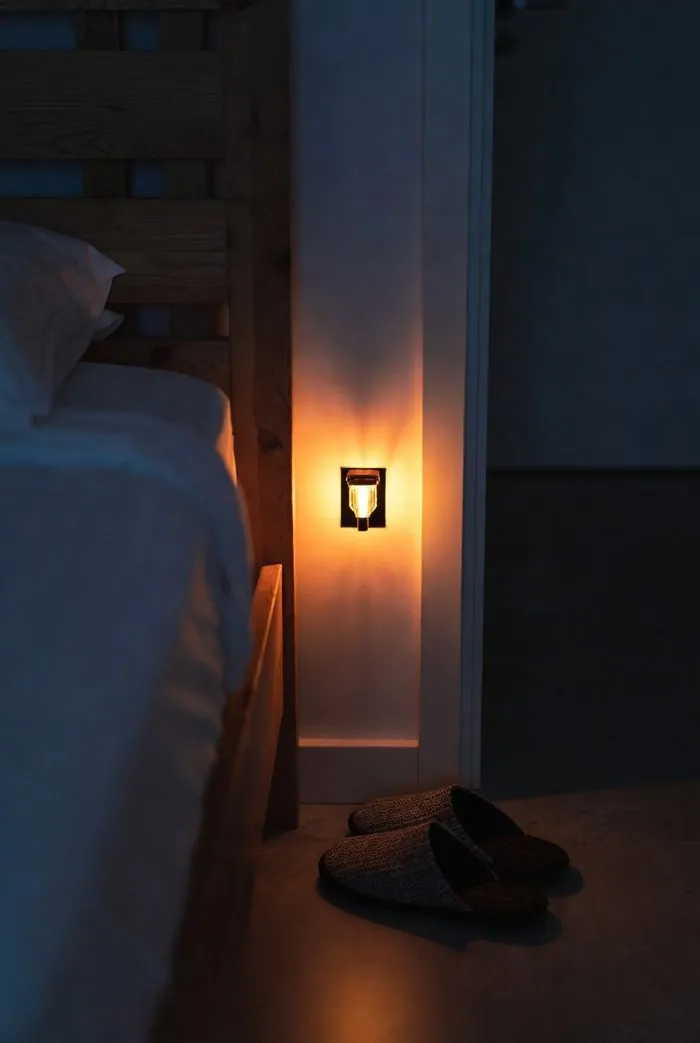
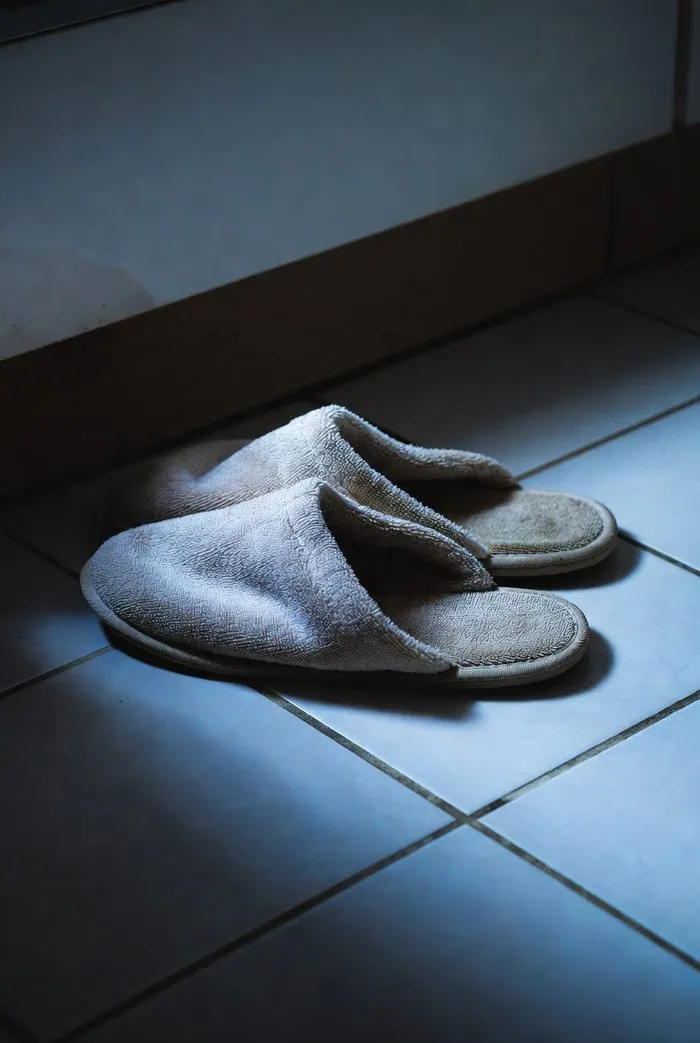
The most dangerous walk in the house isn't the stairs — it's the twice-a-night bathroom trip: dark, half-awake, bare feet on a cold floor. It's the exact walk our motion night lights guide exists for, and the slippers are the other half of the same plan. Light for the eyes, tread for the feet, and neither one requires being awake enough to think.
⚠️ A Story, and Then the Facts
Your Plan — From Scuffs to Steady in One Afternoon
✅ Five Steps
Not glamorous. Absolutely necessary. That was the whole card, and now it's the whole plan.
The four stories on this page are composite illustrations — Gene, Marie, Dot, and Harold are not real people and these specific events did not happen. The research is real: the MOBILIZE Boston footwear findings (18% barefoot / 27% slippers / 7% socks among home fallers, more serious injuries in bare or stocking feet, and the wear-shoes-at-home recommendation) as reported by EurekAlert (Hebrew SeniorLife Institute for Aging Research) and ScienceDaily; the 300-fall video-capture analyzis (socks 74%, barefoot 33%, slippers/sandals 17%, shoes 7%) published in Gerontology; the review of footwear characteristics and fall risk in Optimizing Footwear for Older People at Risk of Falls (PubMed); and the reported odds ratio of 13.7 for walking barefoot, in slippers, or in socks in Gait & Posture (ScienceDirect). For general fall-prevention guidance, see the CDC's older adult falls resources.
❓ Plain Answers
The short version of this page, one question at a time — the answer is always the first line.
What are the best slippers for elderly people to prevent falls?
A slipper with a closed back or heel strap, a rubber sole with real tread, a firm sole that does not fold in half, and a snug fit. Those four things matter more than the brand. By name: the Propét Cush ’N Foot for feet that swell, because the strap opens wide and the widths run up to extra-extra-wide; and the Orthofeet Capri for sensitive feet, a closed-back moccasin with a rubber outsole and arch support. Both are linked in the five types above.
Does Medicare pay for slippers?
Not for ordinary slippers. Medicare Part B does cover therapeutic shoes for people with diabetes and severe diabetes-related foot disease. Under Medicare’s published rule, that benefit pays for one pair of custom-molded or extra-depth shoes a year, plus inserts, and you pay 20 percent of the Medicare-approved amount after the Part B deductible. Whether you qualify, and what your own plan pays, is a question for your doctor, 1-800-MEDICARE, or your Medicare Advantage plan — we cannot tell you what yours covers. Source: Medicare.gov, therapeutic shoes and inserts.
Are memory foam slippers safe for seniors?
The foam inside is fine. The sole underneath is what decides it. Memory foam on the inside is comfortable and does no harm. A memory-foam slipper becomes a fall risk when the whole thing is soft — no back, and a sole you can fold in half that squashes and rolls under your weight. Look for the foam on top of a firm rubber outsole with tread, and a closed back or heel strap.
Are slippers dangerous for older people?
Soft backless slippers are a common factor in home falls; in one Boston study of 765 older adults, nearly 27 percent of home fallers were wearing slippers. More than 18 percent were barefoot and 7 percent were in socks only.
What should I look for in a safe slipper?
A safe slipper has a closed back or heel strap, a real rubber outsole with visible tread, a firm sole that doesn't fold in half, and a snug fit. Turn the slipper over in the store to check the tread.
Is it safe to walk around the house in socks?
Socks are risky on hard floors; in a video study of 300 falls, socks contributed to 74 percent of the falls that happened while wearing them. Proper enclosed shoes came in at just 7 percent.
What slippers are best for swollen feet?
Adjustable-strap slippers, with a wide opening and one strap across the top, suit feet that swell as the day goes on. They stay loose at 5 PM, snug at 9 AM, with tread all day.
How do I avoid falling on the way to the bathroom at night?
Keep slippers beside the bed, heels against the frame and toes pointing out, so your feet find them without looking. Pair them with a motion night light, since the night bathroom trip is the most dangerous walk in the house.