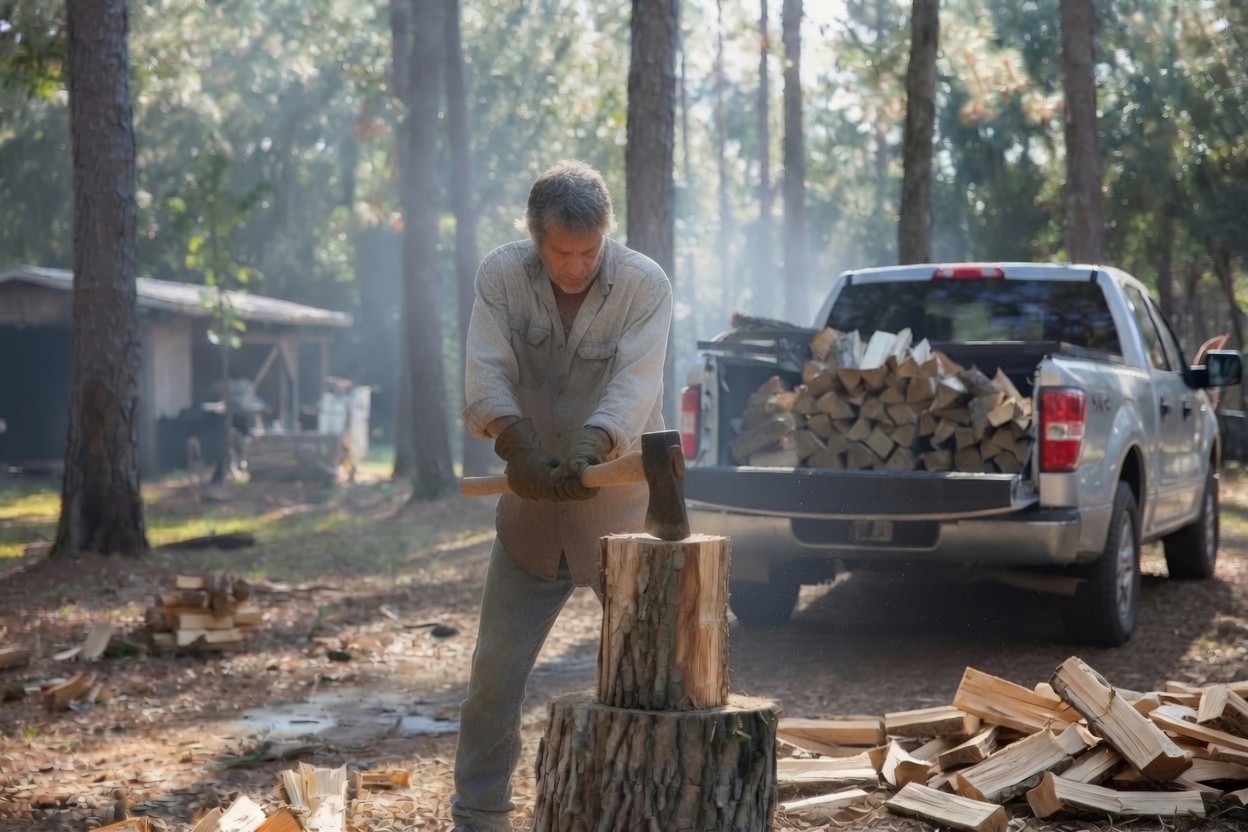
There Are About 250 of Them, and Almost Nobody Has Heard the Term
This page is different from the rest of the site. There is nothing here to buy and no link that earns us a penny. It is a list of things that already exist and that a surprising number of people qualify for without knowing it.
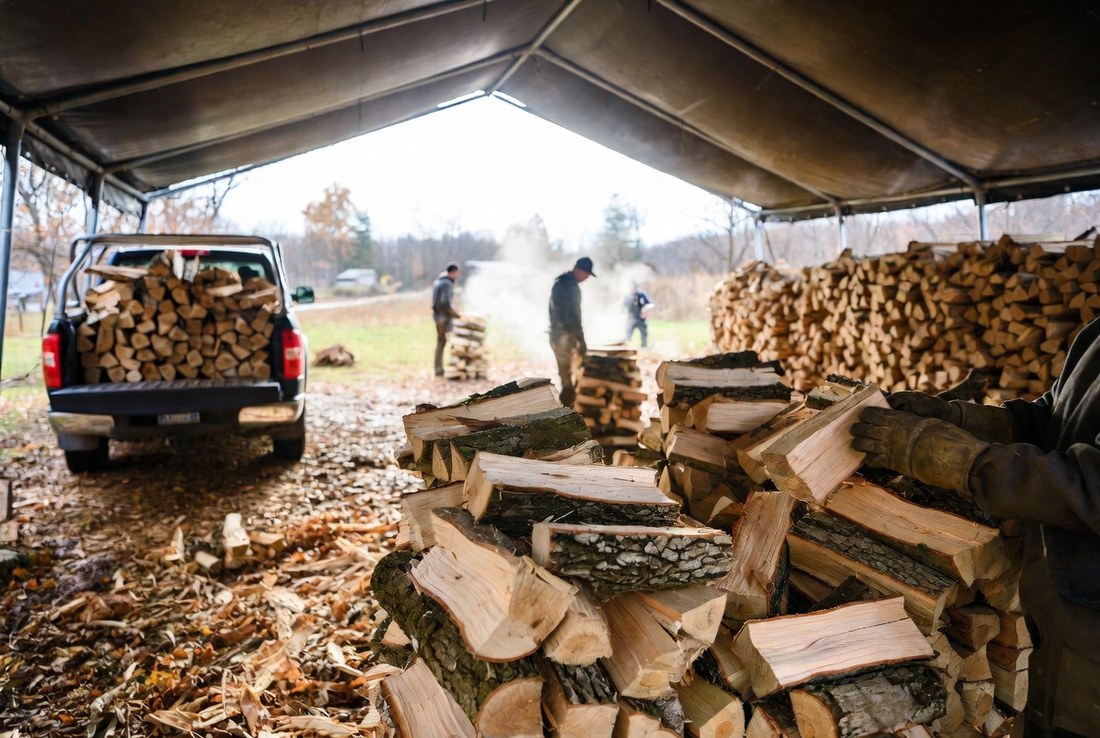
Start with the one that surprised us most. A wood bank works like a food bank, except the thing being banked is firewood.
There are roughly 250 known firewood banks across the United States. They have been running since at least the 1970s, and the practice has roots in Native traditions going back a great deal further. They are run by nonprofits, churches, town governments and tribes; most are staffed entirely by volunteers who split, stack and store wood for people to collect or have delivered. Tribal programs are often much larger, with paid staff, processing enough wood for hundreds of homes.
The need is not small. About 2.3 million American households heat with firewood. One state study found roughly 13,000 rural households energy-insecure, and that around half of energy-insecure homes use wood in some form — as the main heat or as the backup when the oil runs low.
What one actually looks like
- A Massachusetts town program started in 2014. Volunteers have since put in about a thousand hours and delivered a hundred cords to low-income families and elderly people on fixed incomes. Several neighboring towns have set up their own.
- A Vermont outfit began in 2019 with a man and his two sons giving away five loads. It now helps up to 150 families a winter, and the state forestry department set aside 270 cords across two years to supply wood banks like it.
- A Wisconsin group delivered nearly 200 loads of split wood in a single year.
The wood comes from storm-felled trees, utility clearance, mills, state forests and neighbors' yards — timber that was going to rot or be chipped either way.
And One of Them Was Built for Seniors, in 1979
In California, the Senior Firewood Program has been running since 1979. It was started by three men who worked in the milling industry, and the idea was exactly the one you would have had yourself: at the end of the season they took logging trees that could not be sold commercially, split them, and delivered them to elders who could no longer split their own.
It is still going. Over fifty-five volunteers now cut, split and deliver, with a paid coordinator to keep the schedule straight. The people it serves are low-income, sixty or over, living alone or with another older person, and struggling to heat the house.
Forty-six years. Started by three men with a truck and some wood nobody wanted.
That is the model, and it is a small one. Most of these began the same way — somebody looked at a pile of wood going to waste and somebody cold, and put the two facts together.
The Food Box, Which Is Federal and Is Only for People Over 60
Most people know about food banks. Rather fewer know there is a USDA program whose entire purpose is older adults, and that a great many people who qualify have never heard of it.
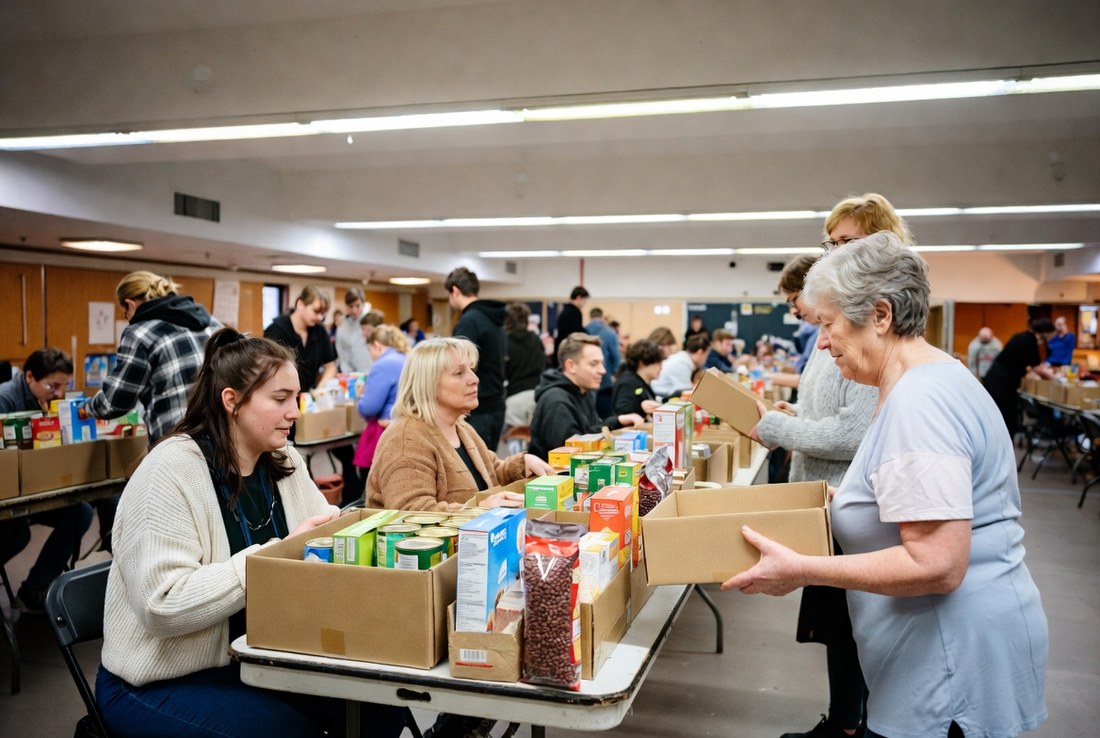
It is called the Commodity Supplemental Food Program — CSFP — and it supplements the diets of low-income people at least sixty years old with USDA foods, distributed through state agencies and Indian Tribal Organizations.
- What arrives: a monthly box, generally sixteen to twenty items. Pasta, canned meat, canned fruit and vegetables, cheese, milk, juice, cereal — shelf-stable, ordinary groceries.
- Who qualifies: sixty or over, with household income at or below 150 per cent of the federal poverty level. And there is a shortcut most people miss: if you already receive SNAP, SSI, a Medicare Savings Program or the Low Income Subsidy, you generally qualify automatically regardless of the income arithmetic.
- Where: USDA authorises all fifty states, DC, Puerto Rico and a number of tribal organizations — but not every one participates. It is a phone call to your state distributing agency, not a national guarantee.
Alongside it sits the Senior Farmers Market Nutrition Program, which issues coupons for fresh fruit, vegetables, honey and herbs, spendable at farmers markets, roadside stands and community farms. For a reader of this site that is the useful one: it buys the raw material for everything on the canning and pickling pages.
And behind both, the ordinary network: Feeding America runs more than 200 food banks and 60,000 pantries, many with delivery or drive-through pickup specifically for older adults. Meals on Wheels operates through more than 5,000 local programs.
One figure worth sitting with, from a food bank that runs the senior program: one in five older adults will experience food insufficiency at some point in their sixties or seventies. Twenty per cent. That is not a small unlucky minority. It is the person two doors down, and possibly, at some point, you.
Why a Grocer or a Wholesaler Can Give Away Food Near Its Date
You asked the right question about this, and the answer is a law most people have never heard of.
The Bill Emerson Good Samaritan Food Donation Act was signed in 1996. It replaced a patchwork of state rules with one federal standard, and it does something simple and powerful: it protects donors, gleaners and the nonprofits that receive the food from civil and criminal liability arising from the nature, age, packaging or condition of apparently wholesome food donated in good faith. Liability remains only for gross negligence or intentional misconduct.
In plain terms: fear of being sued was the main thing stopping shops and wholesalers from giving away good food, and Congress removed it thirty years ago.
And it was widened in 2023, which is the part that answers your question
On 5 January 2023 the Food Donation Improvement Act was signed into law, amending the Emerson Act in two ways that matter here:
- Qualified direct donors can now give straight to people in need, not only through a nonprofit. The list of who counts is exactly the list you were asking about: retail grocers, wholesalers, agricultural producers, processors and distributors, restaurants, caterers, school food authorities and colleges. A wholesaler with pallets coming up on their date can hand them to people directly and be covered.
- Protection now extends to food given at a “good Samaritan reduced price” — a price no greater than what it cost to handle, harvest, process, package, transport and distribute it. Which means a pantry may charge a nominal amount to keep its own lights on without losing its cover.
Why this is worth knowing even if you never donate a thing. If you ever ask a local grocer, farm stand or wholesaler whether their end-of-date produce could go to a senior center rather than a skip, the objection you will hear first is liability. It is the wrong objection, and it has been wrong since 1996. Knowing the name of the Act is often the whole conversation.
Two honest limits. The protection does not cover gross negligence or intentional misconduct, and it does not make anybody's local health rules disappear. This is a plain description of a federal statute, not legal advice — anyone setting up a program should talk to somebody who does this for a living.
It Runs Both Ways, and the Best Ones Say So Out Loud
The thing that will interest you most about these programs is that a good number of them are not charity in one direction.
One Vermont county's firewood project gives a cord to income-eligible veterans, seniors and families — and encourages the people receiving it to help with the program if they are able. Not as a condition. As an invitation.
That is a better arrangement than either pure charity or pure self-reliance, and it is the same shape as the harvest split on our own pickling page: everybody contributes what they have, and everybody goes home with something. A man of seventy who cannot swing a maul for four hours can still run a splitter for one, or keep the log book, or make the phone calls, or drive.
Wood banks are usually short of exactly that. Their two standing problems are volunteers and seasoned wood — and a reader of this site knows more about the second than most of the people running them. Green wood is not a favour. Somebody who understands why it must be split and stacked a year ahead is worth having on a wood bank's committee.
How to Find Yours — It Is Three Phone Calls
- For the food box: ring your state distributing agency and ask whether CSFP operates in your county. Or call your local food bank and ask for the senior food box program by name — they will know it.
- For firewood: search your county name with “wood bank” or “firewood bank”. Two national resources list and support them: firewoodbanks.org and the Alliance for Green Heat.
- For everything else: dial 211, or find your Area Agency on Aging through the federal Eldercare Locator. Every county has one, and its whole job is knowing what exists locally. Most people find out it exists at seventy-five. It is better to know at fifty.
And if nothing exists near you — that is how all of these started. Three men and some wood nobody wanted. A father and two sons with five loads.
Why This Page Is on a Site About Buying Things
Because the argument was never really about buying things. It is about the gap between when something breaks and when help can reach you — and the whole point of closing that gap early is that you are still able to do it.
These programs are the same idea run at the scale of a county instead of a house. Somebody splits wood so somebody else does not have to. Somebody drives a box of groceries to a woman who cannot get to the shop. It is the smoke check off the hill, with a truck.
Learn where they are while you do not need them. That is the whole instruction. If you are fifty-five and healthy, the right use of this page is to find your county's wood bank and go and volunteer at it — because you will know the phone number when a neighbor needs it, and you will know it when you do.
And the day it is your name on the delivery list, it will be somebody you split wood with dropping it off.