The Grid Cuts Your Power Deliberately on the Hottest Day of the Year. To Save Itself.
Rolling blackouts are not accidents. They are deliberate decisions by grid operators to cut power to rotating groups of customers when demand exceeds supply — typically during heat waves, when everyone runs their AC simultaneously. Your power goes out not because anything broke, but because there is not enough electricity to serve everyone. For a senior who loses air conditioning on a 105-degree day, the reason is irrelevant. The heat is the same.
They Told Her It Would Be One to Four Hours. It Was Four Days. Her Insulin Lasted Two.
Margaret was 68 years old and lived in a suburb of Houston. She was a Type 2 diabetic who managed her condition with insulin that required refrigeration. On February 10, 2021, as the Texas ice storm began, her power went out. News reports said rolling blackouts would affect customers for one to four hours, rotating through neighborhoods. Margaret wrapped herself in blankets and waited.
The power did not come back for four days. ERCOT — the Texas grid operator — later confirmed that the grid had come within four minutes and 37 seconds of a complete, catastrophic statewide failure that could have lasted months. To prevent that collapse, ERCOT cut power to 4.5 million customers and held those cuts, unable to rotate because there was not enough generation capacity to give anyone a break.
Margaret’s insulin was in a refrigerator that stopped cooling on day one. By day two, her insulin was compromised. She was rationing injections by day three. A neighbor with a working vehicle — power and heat in their home because they had a whole-home standby generator — drove her to an emergency medical station on day three. Margaret survived. At least 246 Texans did not. The majority of the dead were elderly.
Rolling blackouts are meant to rotate — thirty to ninety minutes and your turn is over. They only rotate while there is enough supply left to hand round; when there is not, the rotation stops and your street is simply the one that is off.✅ Margaret’s neighbor with the generator: Had heat and power throughout the four-day event. Refrigerator running. Insulin cold. Drove Margaret to medical care. Checked on five other neighbors. When asked afterward about the generator, she said: “I bought it after Harvey in 2017. I thought it was for hurricanes. I didn’t know it would save someone’s life during a rolling blackout in February.”
4.5M
Texas homes and businesses cut during 2021 ice storm rolling blackouts
246
Confirmed deaths in Texas during February 2021 — majority elderly
4 min
How close ERCOT came to total Texas grid failure that could have lasted months
$195B
Estimated economic damage from Texas 2021 winter storm (Moody’s)
Texas 2021: The Rolling Blackout That Stopped Rolling
Standard rolling blackout protocol rotates cuts through neighborhoods: your area loses power for 30 to 90 minutes, then gets it back while another area takes its turn. This works when the supply shortage is moderate. Texas in February 2021 was not moderate.
Natural gas wells feeding power plants froze. Gas pipelines froze. Wind turbine components froze. Texas’s generating capacity dropped by approximately 30 percent while demand spiked as electric heaters switched on across the state. ERCOT could not generate enough electricity to rotate blackouts. The cuts became fixed. Neighborhoods stayed dark for hours, then days.
ERCOT officials later testified that the grid came within minutes of a cascading failure that would have required physically restarting every power plant in the state from scratch — a process called a “black start” that takes days and would have left the entire state without power for weeks or months. They chose to maintain the controlled blackouts to prevent that worse scenario. Millions of Texans, including hundreds of thousands of elderly residents, paid the price for avoiding the worse outcome.
How Rolling Blackouts Work — and Why They Can Last Days
The electrical grid operates at 60 Hz. When demand exceeds supply, frequency drops. As frequency drops, generators and turbines trip offline to protect themselves — which reduces supply further, dropping frequency more, tripping more generators. This cascade can collapse a large regional grid in minutes.
To prevent cascade, grid operators monitor frequency continuously. When supply cannot meet demand and frequency begins to fall, operators order utilities to shed load — to cut power to groups of customers. This is a rolling blackout: a deliberate, controlled sacrifice of some customers to maintain stability for the grid as a whole.
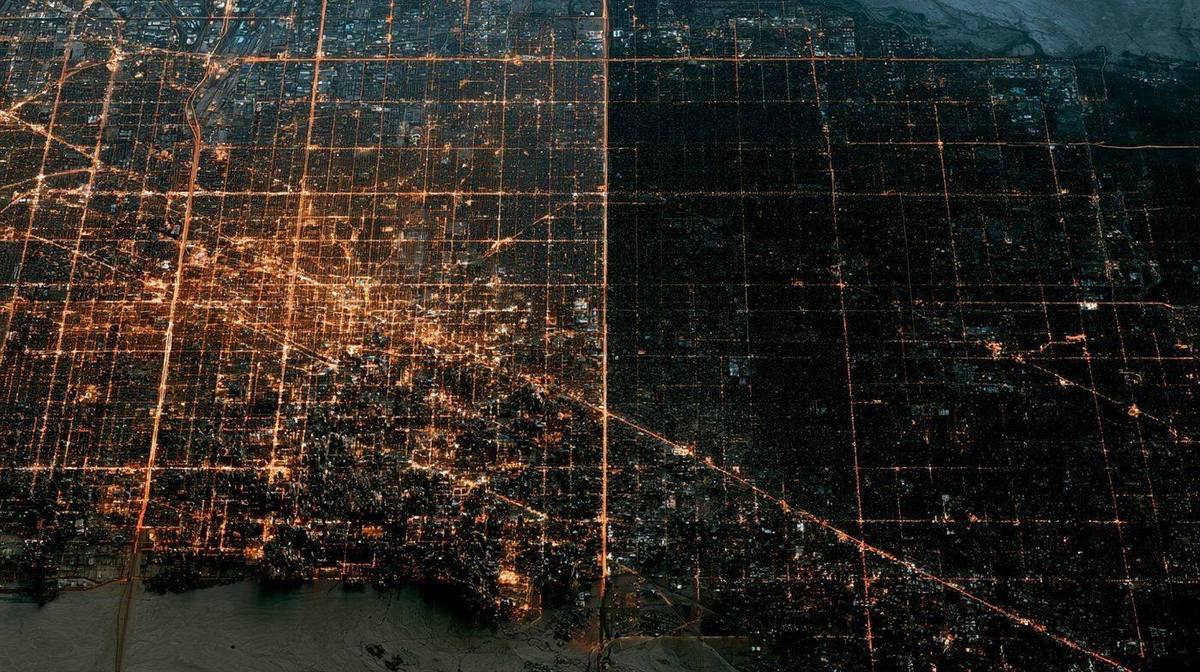
When the supply shortage is large enough that rotation is impossible — there is simply not enough power to give any neighborhood a break — the blackout stops rotating and becomes extended. This is what happened in Texas. It is what could happen in California during a major earthquake that damages generation infrastructure. It is what would happen in any region where severe weather or another cause dramatically reduces generation capacity while simultaneously increasing demand.
Why Rolling Blackouts Are Especially Dangerous for Seniors
Rolling blackouts occur during the weather conditions that are most dangerous for older adults: extreme heat and extreme cold. The same event that stresses the grid to the point of rolling blackouts is the event that stresses the aging human body to the point of medical emergency. They are not separate problems. They arrive together.
The CDC documents an average of 702 heat-related deaths per year in the United States — more than hurricanes, tornadoes, and floods combined. The majority are adults over 65. Losing air conditioning during a heat wave when you are 75 is more dangerous than losing it at 45 because thermoregulation declines significantly with age. A 75-year-old can develop heat stroke in a home that reaches 90 degrees Fahrenheit indoors in 60 to 90 minutes. A 45-year-old in the same conditions may be uncomfortable. The biology is different.
For cold events, hypothermia risk follows the same pattern: older adults develop hypothermia at indoor temperatures that would be merely cold to younger people. A 72-year-old in a home that has dropped to 50 degrees Fahrenheit after two days without heat is not merely cold. They are in a medical situation that emergency rooms document consistently during winter grid events.
The 50–70 Math: Rolling Blackouts Hit When the Weather Is Most Dangerous
Rolling blackouts do not occur during mild weather. They occur during heat waves and cold snaps — exactly when you cannot safely go without AC or heating. At 55, a heat wave with rolling blackouts means you are uncomfortable and call a family member. At 75, the same event means your body cannot regulate temperature effectively, your medical equipment may be affected, and the combination creates a medical emergency that develops faster than you can respond.
Margaret bought her insulin on a payment plan she could manage on her fixed income. She could not buy a generator on a fixed income at 68. The neighbor who drove her to the medical station bought her generator at 61, seven years earlier, when she was still working and had room in her budget. Seven years is the difference between being the one who helps and being the one who needs help.
Medical Equipment During Heat-Wave Rolling Blackouts
Illustration. An oxygen concentrator holds no reserve at all. It draws room air and concentrates it, continuously, and it stops the instant the power does — there is no tapering off, and no few minutes of grace in which to decide anything.For seniors with powered medical equipment, a rolling blackout during a heat wave creates a simultaneous medical emergency on two fronts: the loss of air conditioning creates immediate heat risk, and the loss of power interrupts medical equipment operation. These two threats interact and accelerate each other.
Home oxygen concentrators
A home oxygen concentrator draws ambient air and concentrates the oxygen content. It runs continuously and requires constant power. During a rolling blackout, an oxygen concentrator stops immediately. A senior with a backup portable oxygen tank has a finite supply — typically measured in hours. During a 30-minute rolling blackout rotation, a small backup tank can bridge the gap. During a multi-hour or multi-day non-rotating blackout like Texas in 2021, a small backup tank is not adequate. Seniors on home oxygen need an automatic backup power system, not a portable tank.
Insulin and refrigerated medications during heat events
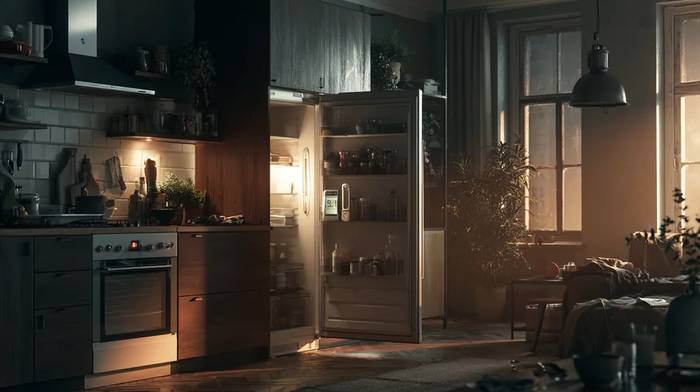
Note the thermometer sitting on the shelf. Insulin kept out of the refrigerator is good only up to 86°F, and a dark refrigerator inside a house already hotter than that is not storage — it is a countdown, which is why the thermometer matters more than keeping the door shut.
Insulin must be refrigerated or kept below 77°F to remain effective. During a summer heat wave rolling blackout, a refrigerator that loses power in a home where the ambient temperature is already above 90°F begins warming rapidly. Insulin stored in an unpowered refrigerator in a hot home may become ineffective within hours — before a 30-minute rotating blackout has even resolved. For diabetic seniors, the combination of heat stress and compromised insulin supply is an accelerating medical emergency.
CPAP machines during heat events
CPAP machines do not pose an acute emergency during a short power outage the way oxygen concentrators do. However, during multi-day Texas-style events, seniors with severe sleep apnea face cumulative cardiovascular and cognitive consequences from untreated apnea over multiple nights. The risk compounds across the duration of the outage.
💡 The specific medical equipment priority during a heat-wave rolling blackout: Air conditioning first — temperature regulation protects the body before any equipment. Oxygen concentrator second — immediate life-support priority. Refrigerator third — medication integrity. CPAP and other equipment after those three. A generator sized for all of these simultaneously is the only solution that addresses all priorities without triage decisions in a crisis.
States at Highest Rolling Blackout Risk in 2026
NERC’s annual reliability assessments identify regions where generation capacity may be insufficient to meet peak demand, creating conditions that could require rolling blackouts. For 2026, the regions NERC has flagged for elevated risk include:
Midwest (MISO): Retiring coal plants and growing demand have reduced reserve margins. NERC has flagged the Midcontinent grid as at elevated risk for capacity shortfalls during extreme summer heat events.
Texas (ERCOT): Despite weatherization improvements after 2021, Texas continues to face capacity adequacy concerns during summer peak events. ERCOT has issued conservation requests in multiple recent summers.
California (CAISO): Solar-driven afternoon-to-evening demand transition (the duck curve) creates stress periods in late summer when solar production drops and residential demand peaks simultaneously.
Southeast (SERC): Growing demand from data centers and electric vehicles combined with retiring coal capacity is creating new stress scenarios in states that historically had reliable summer margins.
If you live in any of these regions and are a senior with medical equipment dependencies, the 2026 summer season warrants specific preparation attention. Use NERC’s public reliability assessment documents at nerc.com to see the specific assessment for your region.
The Grid Cuts Power During Heat Waves to Survive. You Need a Plan to Survive That.
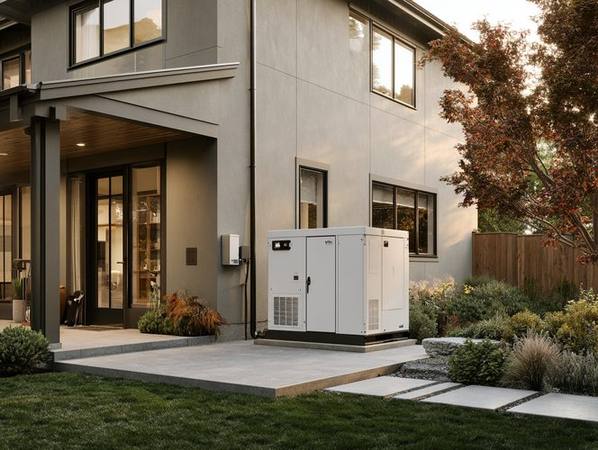
A whole-home standby generator powered by propane keeps your AC running when rolling blackouts cut your neighbors’ power. It keeps your heat running when the winter equivalent happens. It keeps your refrigerator cold and your insulin safe. It starts automatically, requires no action from you, and runs as long as fuel is available. Use our calculator to find the right size for your home.
Yes. California has issued rolling blackouts in 2000–2001, 2020, and came close in 2021. Texas had its worst event in 2021. NERC’s reliability assessments have flagged multiple regions as at elevated risk for capacity shortfalls during peak events. The combination of increasing extreme weather events and aging generation infrastructure is creating more frequent stress scenarios.
Can I run my AC on a whole-home generator during a rolling blackout?
Yes. A properly sized whole-home standby generator can power central air conditioning — which typically requires 3,500 to 5,000 starting watts and 1,500 to 3,000 running watts. Use our generator size calculator to find the right size for your specific AC unit combined with other critical loads in your home.
Can I prepare for rolling blackouts without a generator?
Partially. Battery-powered fans can reduce effective temperature during short-duration rotational blackouts. Insulation and reflective window covers can slow indoor temperature rise. Cooling centers maintained by local emergency management provide air conditioning for people who cannot stay safely at home. But for seniors with medical equipment, temperature-sensitive medications, or mobility limitations, these alternatives are not equivalent to backup power that automatically maintains normal home function.
How long do rolling blackouts last?
In a managed rotation, 30 to 90 minutes per neighborhood. During severe grid stress events like Texas in 2021, days. The determining factor is how large the gap is between what the grid can generate and what customers are demanding. When generation capacity is severely reduced — as when gas wells freeze — the blackouts cannot rotate because there is no power to rotate.
Why are heat waves and cold snaps more dangerous for seniors during rolling blackouts?
Rolling blackouts occur during heat waves and cold snaps — exactly the weather conditions that are most dangerous for older adults. The same event that stresses the grid to the point of rolling blackouts also stresses the human body to the point of medical emergency. Losing air conditioning during a heat wave when you are 75 is more dangerous than losing it at 45 because thermoregulation declines with age.
Will I be warned before a rolling blackout hits my neighborhood?
Sometimes. Some utilities send emergency text alerts before scheduled rolling blackouts. In California, the state has used Flex Alerts to encourage voluntary conservation. In Texas in 2021, the cuts happened faster than the warning system could function. Signing up for utility alerts improves your chances of advance notice, but do not depend on receiving warning in time to take meaningful action.
Founder, Franklyns Bay LLC — Florida resident since 1984 — 25+ years SEO & web publishing — Nature Coast homeowner & 40+ hurricane seasons lived through. Full bio →
Now you know why it happens.
Be the house on the street that barely notices. Start with the generator calculator — it takes two minutes.
General Information Disclaimer: Content on this site is provided for general educational and informational purposes only and does not constitute medical, legal, or financial advice. Statistics cited are drawn from public domain government sources including FEMA, NOAA, CDC, EIA, NERC, DOE, and FERC. Composite narratives represent documented conditions across many real events; no specific living individuals are identified. In any emergency, follow guidance from local authorities and FEMA Ready.gov. Amazon links are affiliate links. Some content on this Site is produced with the assistance of AI tools and is reviewed by a person before publication; see our Editorial Standards and Corrections policy. Full disclaimer →


 Margaret was 68 years old and lived in a suburb of Houston. She was a Type 2 diabetic who managed her condition with insulin that required refrigeration. On February 10, 2021, as the Texas ice storm began, her power went out. News reports said rolling blackouts would affect customers for one to four hours, rotating through neighborhoods. Margaret wrapped herself in blankets and waited.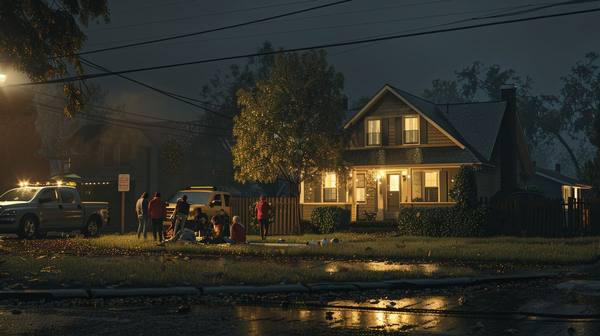
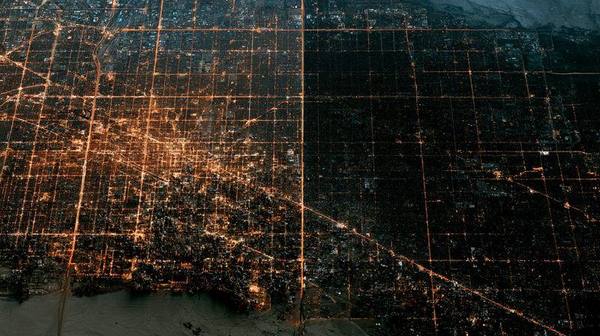 The electrical grid operates at 60 Hz. When demand exceeds supply, frequency drops. As frequency drops, generators and turbines trip offline to protect themselves — which reduces supply further, dropping frequency more, tripping more generators. This cascade can collapse a large regional grid in minutes.
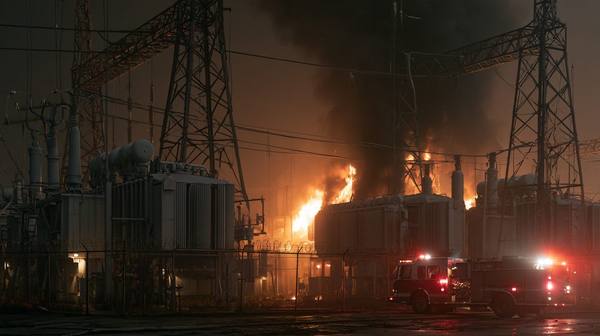 Rolling blackouts occur during the weather conditions that are most dangerous for older adults: extreme heat and extreme cold. The same event that stresses the grid to the point of rolling blackouts is the event that stresses the aging human body to the point of medical emergency. They are not separate problems. They arrive together.
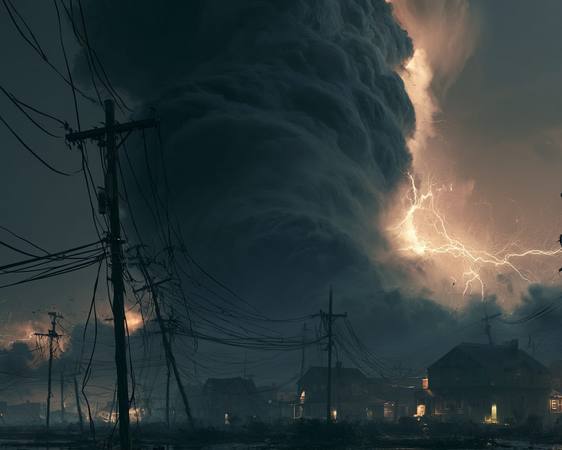 Rolling blackouts do not occur during mild weather. They occur during heat waves and cold snaps — exactly when you cannot safely go without AC or heating. At 55, a heat wave with rolling blackouts means you are uncomfortable and call a family member. At 75, the same event means your body cannot regulate temperature effectively, your medical equipment may be affected, and the combination creates a medical emergency that develops faster than you can respond.