In 1989, a Solar Storm Blacked Out Quebec in 90 Seconds. Scientists Say a Bigger One Is Coming.
A powerful geomagnetic storm induced by a solar flare can send massive electrical currents through transmission lines, overloading and destroying transformers across entire continents simultaneously. In 1859, a solar event called the Carrington Event would have destroyed the entire modern electrical grid. In 1989, a smaller event blacked out 6 million Canadians in 90 seconds. The next major event is a matter of when, not if. For seniors without independent backup power, the consequences are calculable.
Every cause on this page ends the same way: your lights out. These three steps work against all of them.
🚨 Quebec, Canada — March 13, 1989 — A True Story
6 Million People Lost Power in 90 Seconds. No Storm. No Attack. The Sun Did It.
On March 13, 1989, at 2:44 AM local time, Hydro-Quebec’s electrical system began experiencing unusual behavior. Within 90 seconds — ninety seconds — the entire Quebec power grid had collapsed. Six million people lost power. The Northern Lights were visible as far south as Florida, Texas, and Cuba. Transformers in New Jersey were damaged. Electrical anomalies were recorded across the northeastern United States and Europe.
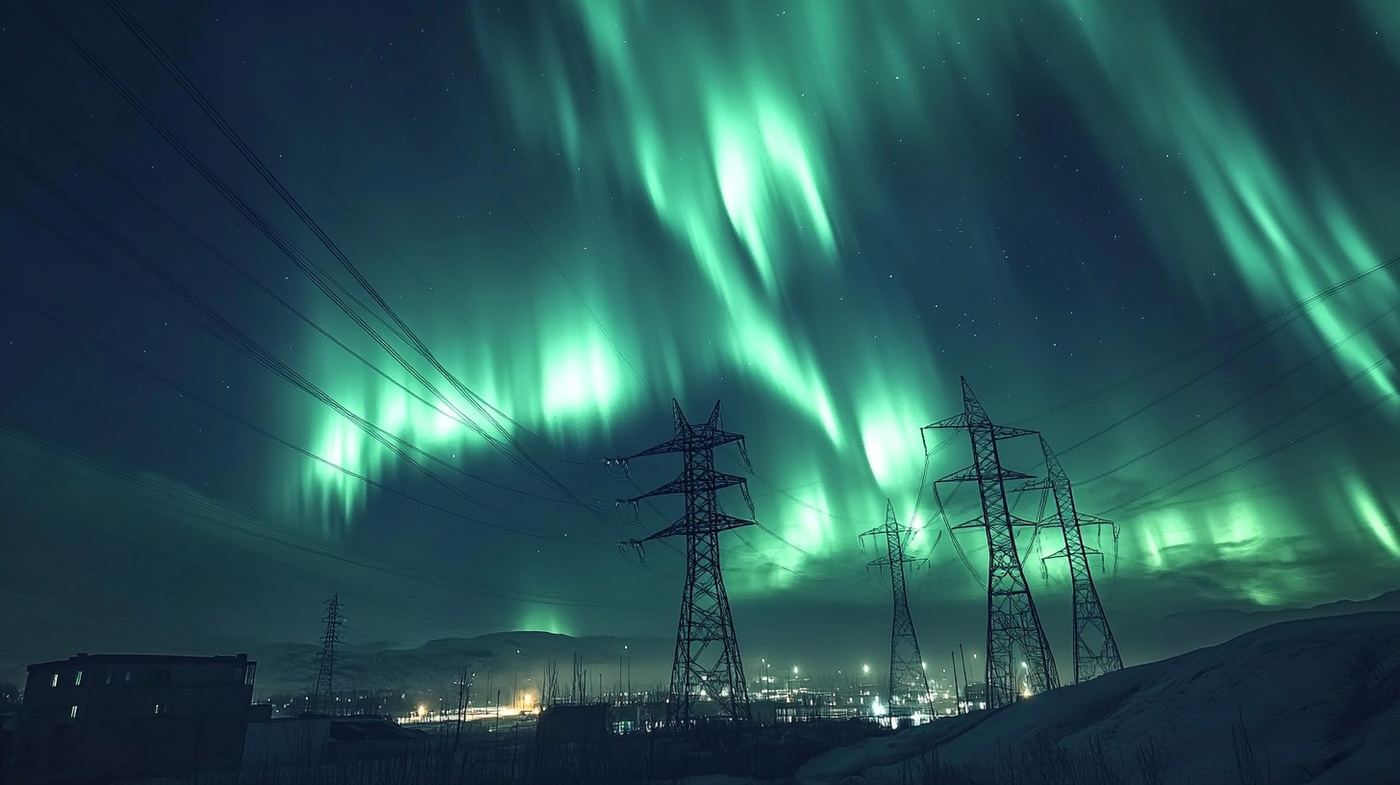
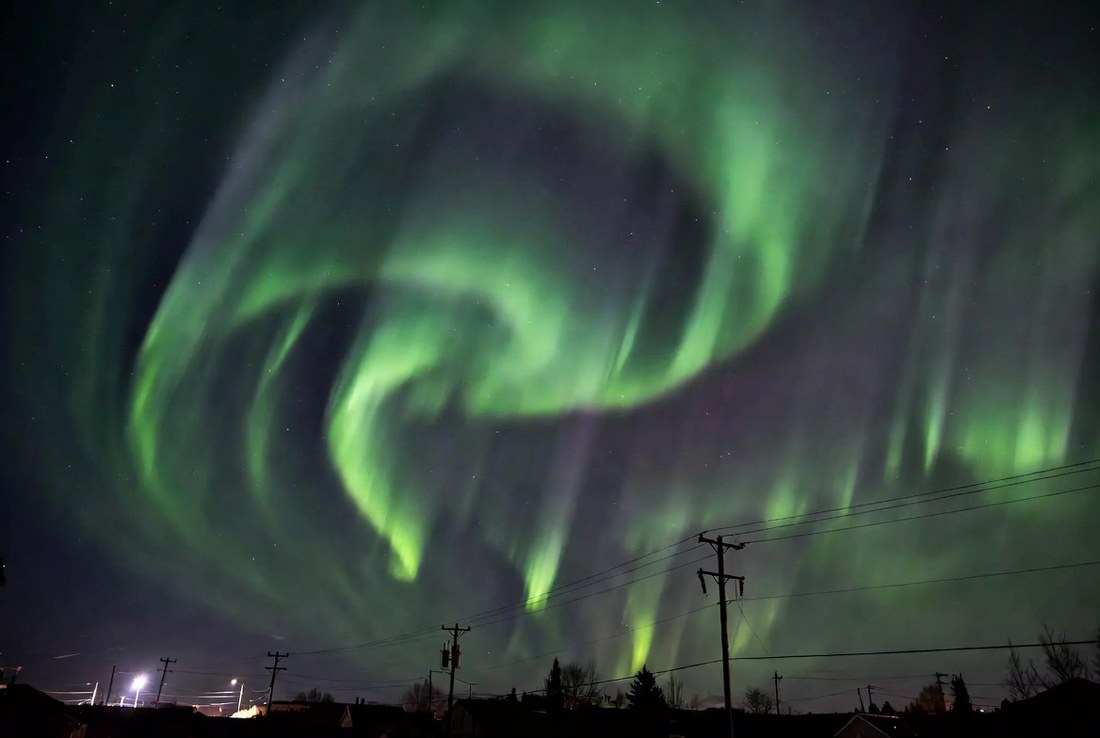
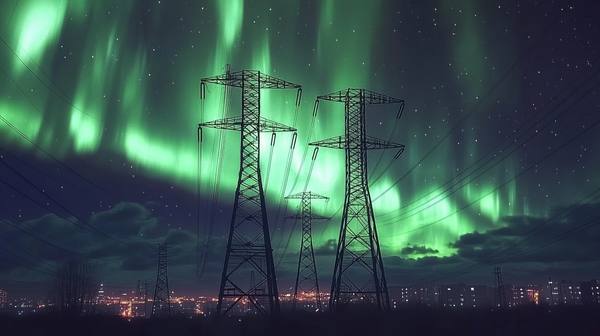
Aurora that far south is not a postcard. It is a symptom. The same geomagnetic storm that lights the sky drives current into every long conductor beneath it — pipelines, rail, and the transmission grid — and in 1989 Quebec went from normal to dark in ninety seconds.
The cause was a geomagnetic storm induced by a solar coronal mass ejection (CME) that had left the sun three days earlier. When the CME reached Earth, it distorted the planet’s magnetic field, inducing massive electrical currents in Quebec’s long transmission lines. Those induced currents overwhelmed transformers throughout the grid, triggering a cascade of failures that took the entire system down in the time it takes to boil a cup of water.
Six million people without power. Hundreds of thousands of them elderly. Hospitals on emergency power. Businesses closed. The restoration effort took approximately nine hours to restore most customers — because the transformers that failed were not physically destroyed, only thermally stressed. Had they been physically destroyed, the restoration would have taken months, not hours.
The 1989 storm was rated at approximately 10 percent of the intensity of the 1859 Carrington Event. Scientists consider another Carrington-level event inevitable.
⚠️ The transformer destruction scenario: A Carrington-level event does not just trip protective relays — it physically destroys transformer windings through induced overcurrents. Transformers destroyed by a geomagnetic storm must be replaced, not reset. With global transformer manufacturing capacity insufficient to replace a large number of US units simultaneously, a Carrington-level event could cause multi-month or multi-year blackouts affecting tens of millions of people.
6M
People lost power in Quebec in 90 seconds during the 1989 geomagnetic storm
90 sec
Time it took for the entire Quebec grid to collapse on March 13, 1989
~150yr
Estimated recurrence interval for a Carrington-level solar event (NASA)
18mo+
Potential recovery time if a major event physically destroys large transformers
The Carrington Event of 1859: What a Full-Scale Solar Storm Looks Like
On September 1–2, 1859, British astronomer Richard Carrington observed and recorded a massive solar flare. Within hours, the resulting CME reached Earth — the fastest transit time on record. The resulting geomagnetic storm was the most powerful in recorded history. Telegraph systems across Europe and North America sparked and gave operators electrical shocks. Some telegraph operators reported that their systems continued functioning even after being disconnected from their batteries, powered entirely by the induced currents from the storm.
Had the Carrington Event occurred today, with modern electrical infrastructure in place, scientists estimate it would destroy large transformers across entire continents. A 2013 study published in Space Weather estimated that a Carrington-level event could affect 20 to 40 million Americans, with blackouts lasting 1 to 2 years and economic losses exceeding $2 trillion.
A 2012 near-miss — a CME that passed through Earth’s orbital path just nine days after Earth had passed that point — was estimated to be Carrington-level in intensity. It missed Earth. Had it been nine days earlier, scientists believe it would have caused the largest power outage in human history.
How a Solar Storm Destroys Transformers
Geomagnetic storms affect the electrical grid through a phenomenon called geomagnetically induced currents (GICs). When a CME distorts Earth’s magnetic field, it causes the field to change rapidly. Faraday’s law of electromagnetic induction means that any conducting loop in a changing magnetic field will have a current induced in it. Long transmission lines act as large conducting loops, and the induced GICs can reach hundreds of amps — far above normal operating levels.
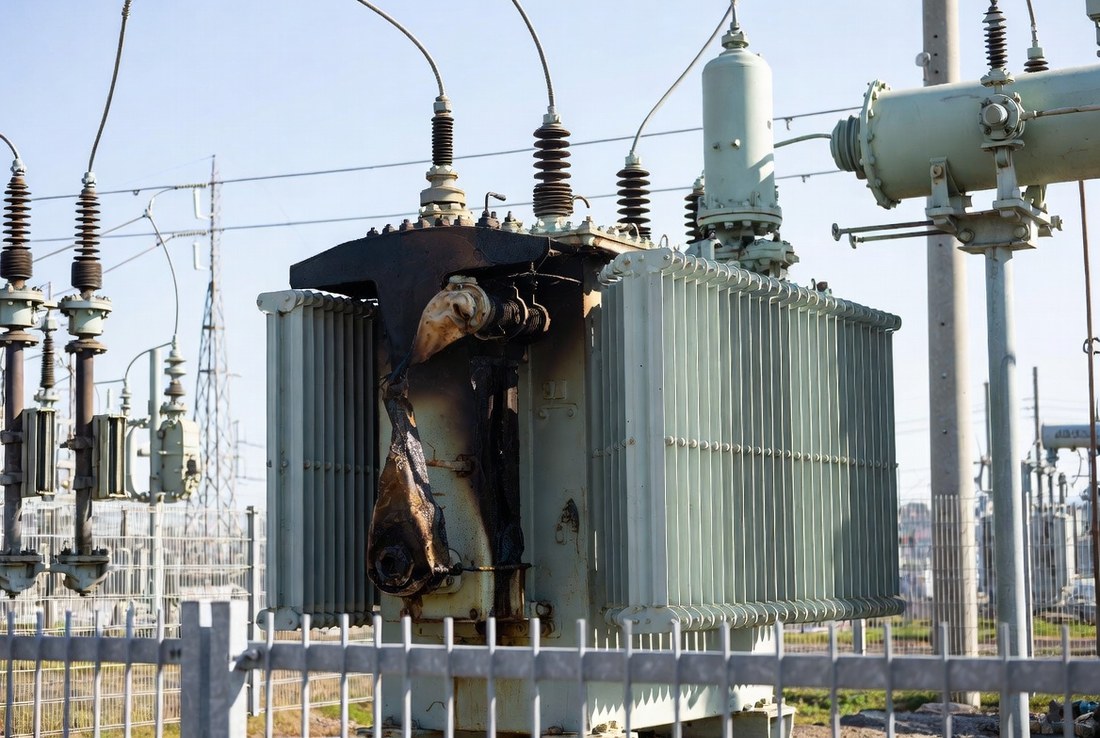
Burned through at the bushing, with the oil down the side of it. A geomagnetic storm does not knock a transformer over — it pushes direct current into a machine built for alternating, the core saturates, and it cooks itself from the inside. And there is no shelf of spares anywhere.
Power transformers are designed to handle alternating current at precisely 60 Hz. GICs are near-DC currents that do not match the transformer’s operating parameters. They cause transformers to saturate — a condition where the core iron cannot handle the magnetic flux and begins heating rapidly. The thermal stress can melt transformer windings in minutes, causing permanent physical damage that cannot be remedied by resetting a protective relay. The transformer must be replaced.
The longer the transmission line, the larger the induced GIC. High-voltage, long-distance transmission lines — exactly the infrastructure that carries power across regions and interconnects the grid — are the most vulnerable. The interconnected nature of the grid, which normally allows power to be rerouted around failures, becomes a liability during a geomagnetic storm: the same storm affects all transmission lines simultaneously.
The 50–70 Math: A Solar Event Does Not Give Warning in Time to Prepare
NOAA’s Space Weather Prediction Center can provide approximately 15 to 60 minutes of warning for a CME arrival after it is detected by the Deep Space Climate Observatory satellite. This is not enough time to install a generator. It is barely enough time to charge a battery station if you happen to be near an outlet when the alert arrives.
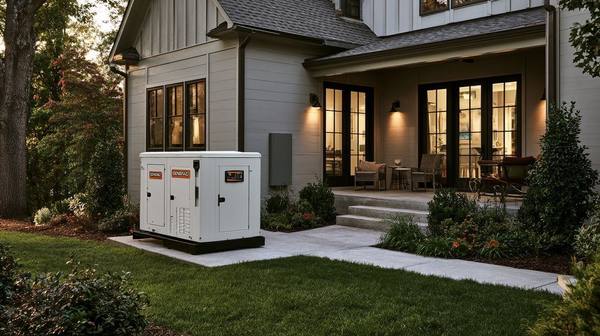
The solar weather threat, like the aging transformer threat, demands continuous readiness rather than event-triggered preparation. A whole-home standby generator powered by propane stored on your property operates completely independently of the utility grid. A geomagnetic storm that destroys transformers across a region does not affect your generator’s propane tank. Your generator keeps running as long as fuel is available.
This is the clearest expression of the 50-to-70 math: at 55, you have time, resources, and mobility to install a generator and establish a propane supply. At 75, when the next Quebec-level event arrives in 90 seconds without warning, you are either powered or you are not. That decision was made at 55, or it was not made.
A coronal mass ejection leaves the sun three days out and still arrives with only minutes of usable warning. Propane in a buried tank on your own land holds no opinion about geomagnetic storms — the fuel never travels through anything that can be knocked down.
The Sun Does Not Check Whether You’re Ready Before It Fires.
A geomagnetic storm arrives with minutes of warning after a CME that left the sun three days ago. Your generator, connected to a buried propane tank on your property, is immune to whatever happens to the grid above it. It starts automatically. It runs your home. The sun’s timing is irrelevant to your medical equipment.
Solar scientists estimate a Carrington-level event occurs approximately once every 150 years. A Quebec-level event (approximately 10% of Carrington intensity) occurs approximately once every 50 years. The last Quebec-level event was 1989. A near-Carrington event missed Earth by nine days in 2012. The scientific consensus is that significant geomagnetic storms are a recurring phenomenon, not a rare anomaly.
Is the US grid better protected against solar events now than in 1989?
Partially. NERC has issued reliability standards requiring utilities to assess their geomagnetic storm vulnerability, and some utilities have installed GIC blocking devices on key transformers. However, implementation has been uneven, the most vulnerable long-distance transmission infrastructure remains largely unprotected, and the strategic spare transformer stockpile remains inadequate for a Carrington-level event.
Where can I monitor space weather alerts?
NOAA’s Space Weather Prediction Center at swpc.noaa.gov provides real-time solar activity monitoring, geomagnetic storm watches, and alerts. Signing up for NOAA Space Weather alerts provides email and text notification of significant solar events. The alerts are available at no cost and are the same information used by utility companies and grid operators.
What is a geomagnetic storm and how does it affect power?
A geomagnetic storm occurs when a solar flare or coronal mass ejection from the sun interacts with Earth's magnetic field, inducing large electrical currents in long transmission lines. These induced currents can overload transformers, causing failures that cascade across interconnected grid systems. The longer the transmission line, the larger the induced current — making long-distance high-voltage transmission infrastructure particularly vulnerable.
What happened during the 1989 Quebec geomagnetic storm?
On March 13, 1989, a severe geomagnetic storm caused Hydro-Quebec's electrical system to collapse within 90 seconds, leaving 6 million Canadians without power for up to 9 hours. Transformers were damaged across North America. NASA satellites experienced anomalies. The Northern Lights were visible as far south as Florida and Texas. The storm was rated at about 10 percent of the intensity of the 1859 Carrington Event.
Founder, Franklyns Bay LLC — Florida resident since 1984 — 25+ years SEO & web publishing — Nature Coast homeowner & 40+ hurricane seasons lived through. Full bio →
Now you know why it happens.
Be the house on the street that barely notices. Start with the generator calculator — it takes two minutes.
A solar storm blacked out an entire province faster than anyone could react, and the honest scientific position is that it will happen again on some Tuesday nobody circled.
General Information Disclaimer: Content on this site is provided for general educational and informational purposes only and does not constitute medical, legal, or financial advice. Statistics cited are drawn from public domain government sources including FEMA, NOAA, CDC, EIA, NERC, DOE, and FERC. Composite narratives represent documented conditions across many real events; no specific living individuals are identified. In any emergency, follow guidance from local authorities and FEMA Ready.gov. Amazon links are affiliate links. Some content on this Site is produced with the assistance of AI tools and is reviewed by a person before publication; see our Editorial Standards and Corrections policy. Full disclaimer →