The Dam Is at Record Low. Your Power Bill Is Going Up. Your Power May Go Out.
Hydroelectric dams provide about 6 to 7 percent of US electricity generation — and in the western states, much more. When prolonged drought reduces reservoir levels below turbine intakes, generation drops. When flooding damages hydro infrastructure, generation stops. When a major hydro source fails unexpectedly, the grid stress that follows can cause outages far from any river or dam. Water and electricity are linked in ways most Americans never think about until the link breaks.
Every cause on this page ends the same way: your lights out. These three steps work against all of them.
🚨 Pacific Northwest — Summer 2021 — Drought and Heat Dome
The Drought Reduced Hydro Output by 14%. The Heat Dome Spiked Demand by 20%. The Gap Was Rolling Blackouts.
In the summer of 2021, the Pacific Northwest experienced both a record drought and a historic heat dome simultaneously. The drought had reduced hydroelectric output from Columbia River dams by approximately 14 percent from normal levels — because reservoir levels were low and water pressure at turbine intakes was reduced. Then the heat dome arrived, pushing temperatures to 116°F in some areas and driving air conditioning demand to record levels.
The gap between what the grid could generate and what customers were demanding was filled by imports from California and other regions — imports that were also strained because California was simultaneously experiencing its own heat event. Some areas experienced rotating outages as utilities struggled to balance supply and demand. Transformers failed throughout the region at three to five times their normal failure rate under the thermal stress.
In the communities that experienced outages, the consequences for elderly residents were immediate. Portland reported 116 deaths during the heat dome period — most among the elderly, many in homes without air conditioning. The interaction of drought-reduced hydro capacity, spiked demand, and aging infrastructure created a perfect storm of grid stress during the period when seniors were most physiologically vulnerable. Having a generator meant having AC. Having AC meant surviving the week.
✅ The lesson from Portland: Among the 116 deaths, investigators found that the majority occurred in older adults living alone in homes without air conditioning or reliable cooling. Homes with functioning AC — whether from a generator during outages or from uninterrupted grid power — did not account for deaths. The single variable that predicted survival was whether the home maintained a safe temperature. A generator is the insurance policy that ensures that variable.
14%
Drop in Pacific Northwest hydro output during 2021 drought
116
Deaths during Portland 2021 heat dome — most elderly, most without AC
65%
Share of Washington state electricity from hydropower — highly drought-vulnerable
1,000ft
Drop in Lake Mead water level since its peak — threatening Hoover Dam output
How Drought Reduces Power Supply
Hydroelectric power generation is directly proportional to water flow through turbines. More water, more pressure, more electricity. Less water — due to drought reducing reservoir levels — means less pressure and less generation. When reservoirs drop to critical levels, turbine intakes may be exposed, stopping generation entirely.
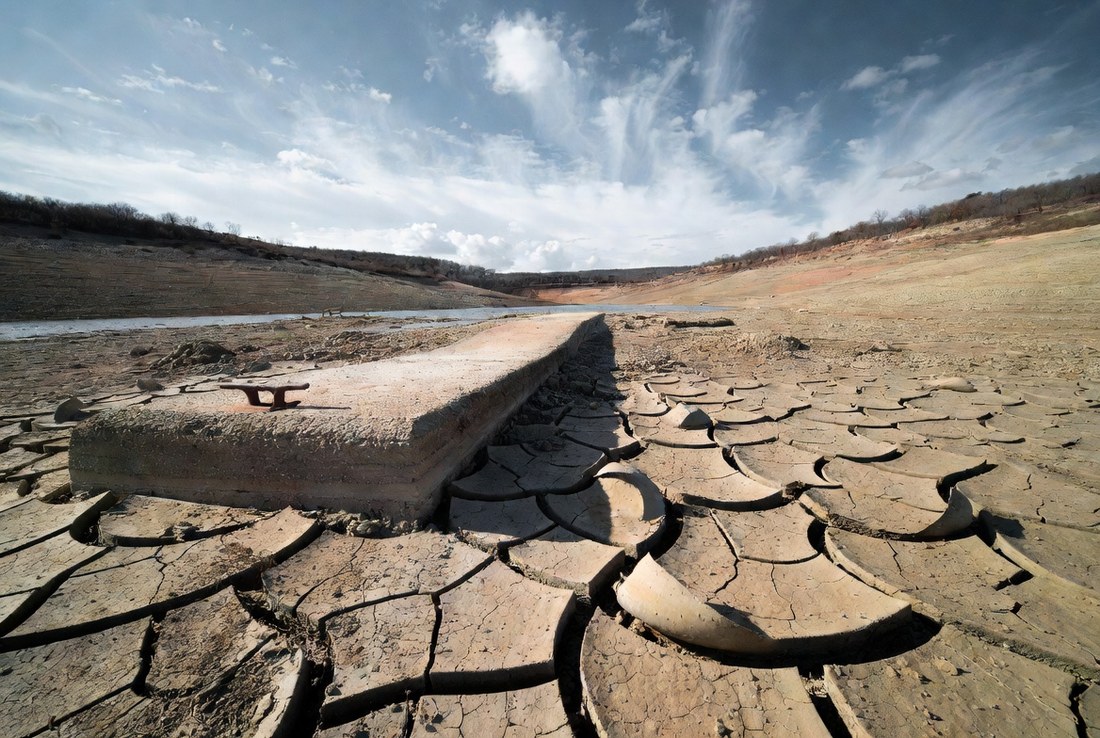
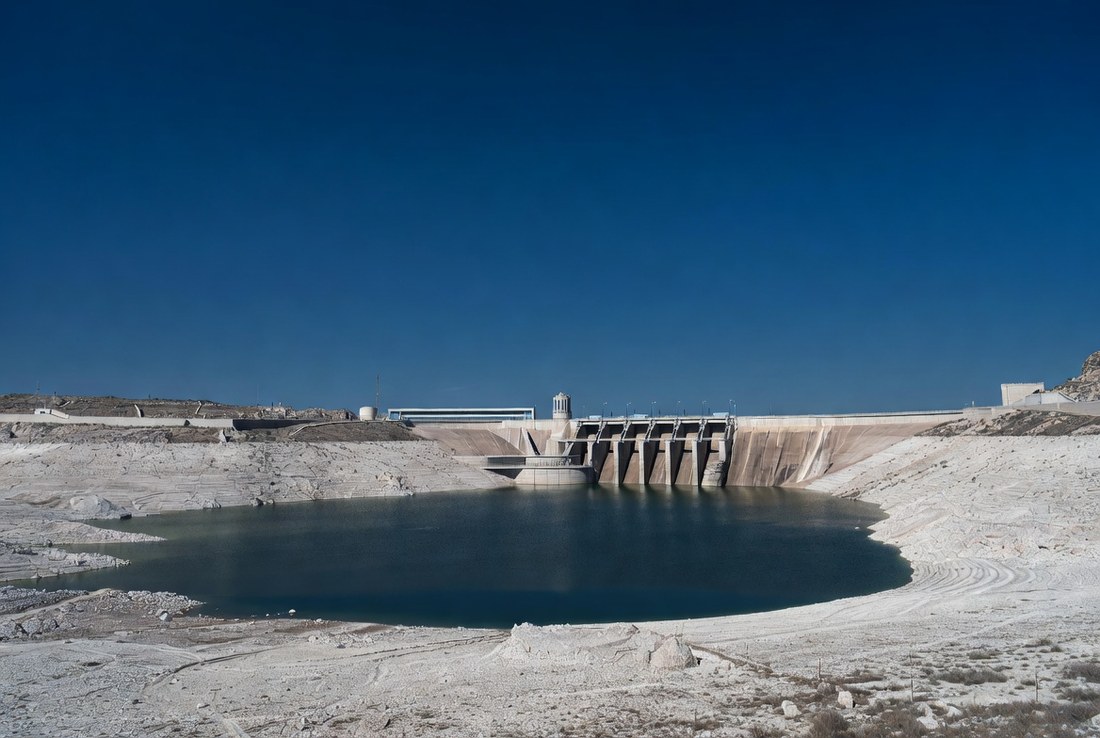
A boat ramp ending in open ground, with the cleat still bolted where somebody once tied up. Less water means less generation at exactly the moment heat drives demand to its highest — supply and demand moving in opposite directions on the same afternoon.
The western United States has been in sustained drought conditions for most of the 21st century, with reservoirs at major hydroelectric facilities declining from historic highs. The Colorado River system, which feeds Lake Mead and Hoover Dam, has been in deficit — consuming more water than natural inflow replaces — for years. NOAA projections suggest extended drought conditions in the West are likely to persist for decades under current climate trends.
The practical consequence is that the Pacific Northwest and Southwest are operating hydroelectric systems at reduced capacity compared to their historical norms. When heat domes, cold snaps, or other demand events stress the grid, the reduced hydro cushion means less margin before the grid must import expensive out-of-state power, reduce supply, or issue conservation requests that can shade into rolling blackouts.
Lake Mead and Hoover Dam: The Western Water Crisis in Numbers
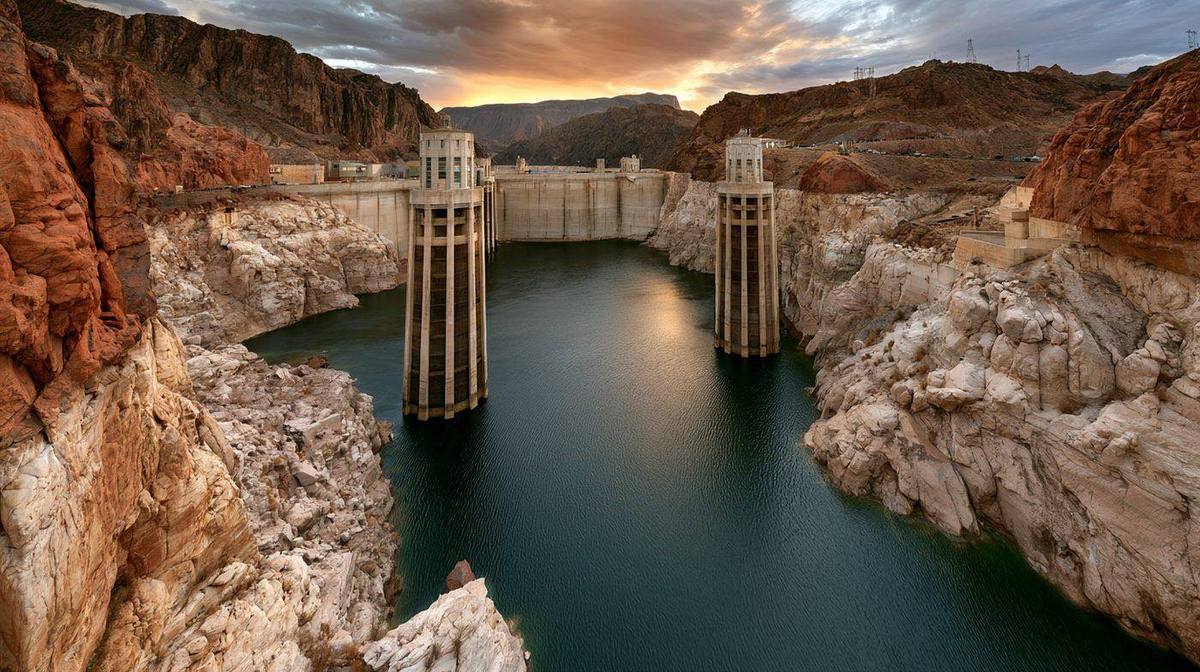
Lake Mead, the reservoir behind Hoover Dam, has declined from a surface elevation of approximately 1,225 feet above sea level at its historic peak to below 1,050 feet — a drop of more than 175 feet, representing the loss of roughly 70 percent of the reservoir’s capacity. The Bureau of Reclamation has declared multiple tiers of shortage on the Colorado River system, reducing water allocations to downstream states.
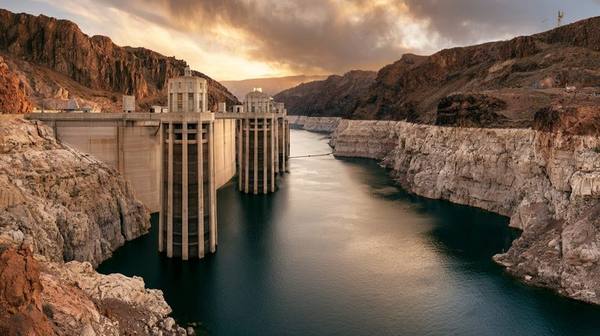
That pale band round the shoreline is where the water used to come to. A hydro dam does not stop when the reservoir drops — it simply generates less, and goes on generating less for as long as the drought lasts. That is the difference between an outage and a condition.
Hoover Dam’s power generation capacity is directly affected by reservoir level. At full capacity, Hoover Dam generates approximately 2,080 megawatts. At reduced reservoir levels, that capacity falls. The Bureau of Reclamation has documented Hoover Dam operating at reduced generation capacity during recent drought years. The Southwest grid, which depends on Hoover Dam as a baseload generation source, must compensate for this reduction through other sources — often natural gas generation that is more expensive and produces more emissions.
Flooding: When Too Much Water Also Fails the Grid
While drought reduces hydro generation, flooding can stop it entirely and damage the infrastructure that distributes what is generated. During extreme flooding, dam operators must prioritize flood control over power generation, routing water through spillways rather than turbines. The 2017 Oroville Dam crisis in California — where emergency spillway failures threatened downstream communities — demonstrated how flood management can rapidly dominate over power generation priorities.
Flooding also directly destroys the distribution infrastructure downstream of dams. Major river flooding consistently takes out distribution poles, substations, and underground cables in affected areas — outages that persist long after flood waters recede because equipment must be dried, tested, and replaced before restoration is safe.
The Drought Does Not Stop for Your Air Conditioner.
A whole-home standby generator running on propane is completely independent of the water levels in western reservoirs and the hydroelectric capacity they determine. When the grid stress of a drought year meets a heat dome, your generator runs your AC and keeps your home safe while utilities manage a shortfall you cannot control. Know your generator size. Have it installed. Be the household that makes it through.
How does drought in the West affect power prices and supply nationwide?
Reduced hydroelectric output in the West forces utilities to substitute more expensive natural gas or out-of-state generation. This increases wholesale electricity prices, which eventually reach customers as rate increases. During extreme shortage events, western grid operators have requested power from eastern interconnections, creating supply stress that can affect pricing and availability across a wider area.
Is hydroelectric power more reliable than solar or wind?
Hydroelectric is traditionally considered more dispatchable than solar or wind because operators can increase or decrease generation by controlling water flow through turbines — unlike solar and wind, which generate only when sun and wind are available. However, prolonged drought eliminates this advantage by removing the water needed to run the turbines. The reliability of hydro depends on adequate water supply, which climate change is reducing in many regions.
Are there states where drought has no impact on power supply?
States with little hydroelectric generation — such as most of the Southeast, Texas, and many Midwest states — are not directly affected by hydro-drought impacts. However, they may be affected indirectly if they import power from hydro-dependent regions, or if drought-related heat events drive demand overload in their own systems. No region of the country is entirely insulated from weather-driven grid stress.
How does drought cause power outages?
Hydroelectric dams generate power when water flows through turbines. When drought reduces reservoir levels, water pressure at the turbine intakes drops, reducing generation capacity. In severe droughts, reservoirs can drop below turbine intakes entirely, stopping generation completely. The resulting supply shortfall forces grid operators to either import power from other regions at higher cost or reduce supply through conservation measures or, in extreme cases, rolling blackouts.
How significant is hydroelectric power in the United States?
Hydroelectric power provides approximately 6 to 7 percent of US electricity generation nationally, but in some western states, the percentage is much higher. In Washington state, hydroelectricity provides over 65 percent of in-state generation. In Oregon, it is approximately 45 percent. The Pacific Northwest's grid is particularly dependent on hydroelectric generation, making drought impacts directly relevant to grid reliability in that region.
Can flooding also cause power outages through hydro infrastructure?
Yes. Extreme flooding can damage hydro infrastructure including intake structures, penstocks, turbine housings, and control facilities. Extreme flooding can also force operators to open spillways rather than route water through turbines, reducing or eliminating generation. In addition, flooding damages the distribution infrastructure downstream of dams, creating grid outages independent of the hydro generation question.
Founder, Franklyns Bay LLC — Florida resident since 1984 — 25+ years SEO & web publishing — Nature Coast homeowner & 40+ hurricane seasons lived through. Full bio →
Now you know why it happens.
Be the house on the street that barely notices. Start with the generator calculator — it takes two minutes.
Drought and reservoir levels move electricity prices and reliability months before anyone reports on it, which is a slow-motion reason to be ready rather than a sudden one.
General Information Disclaimer: Content on this site is provided for general educational and informational purposes only and does not constitute medical, legal, or financial advice. Statistics cited are drawn from public domain government sources including FEMA, NOAA, CDC, EIA, NERC, DOE, and FERC. Composite narratives represent documented conditions across many real events; no specific living individuals are identified. In any emergency, follow guidance from local authorities and FEMA Ready.gov. Amazon links are affiliate links. Some content on this Site is produced with the assistance of AI tools and is reviewed by a person before publication; see our Editorial Standards and Corrections policy. Full disclaimer →