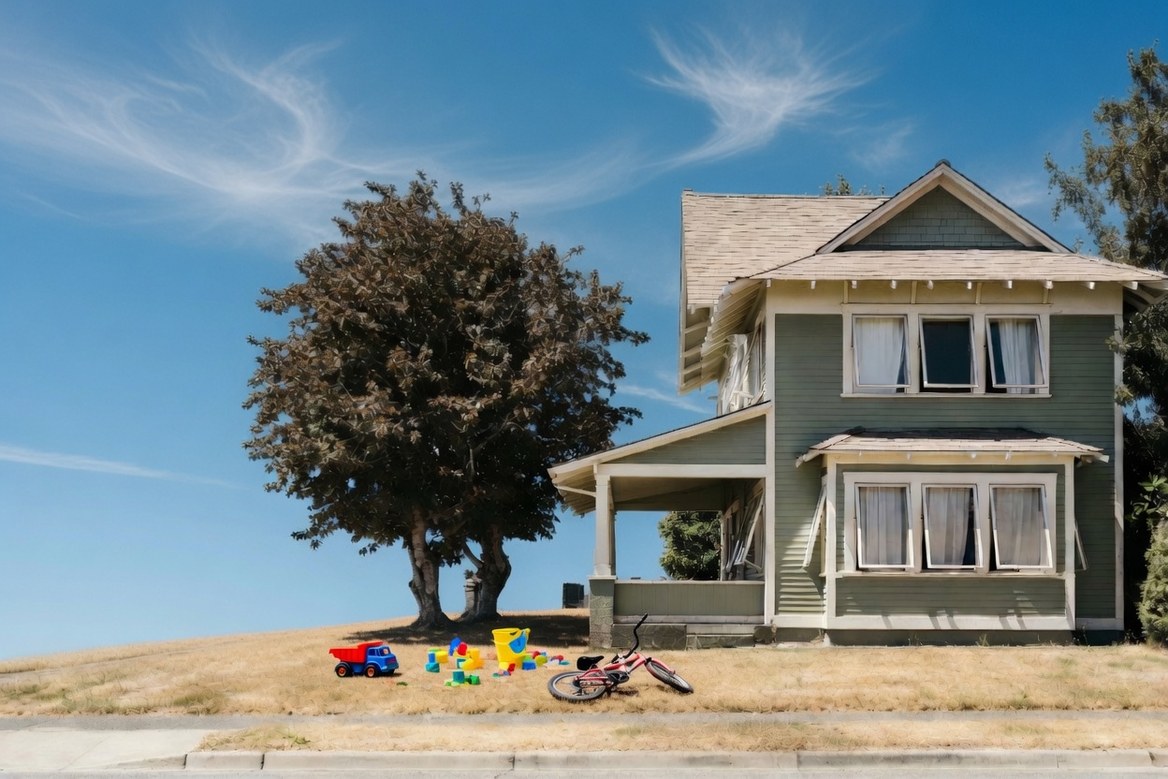
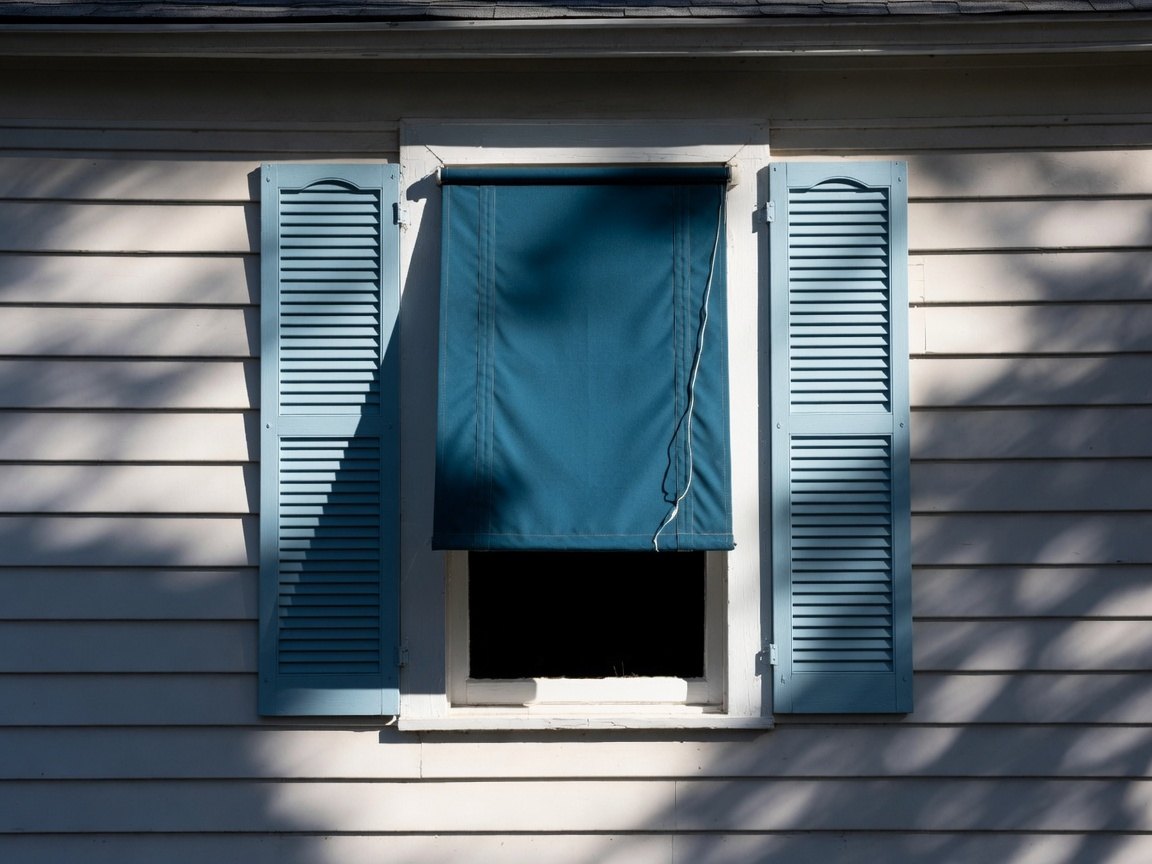
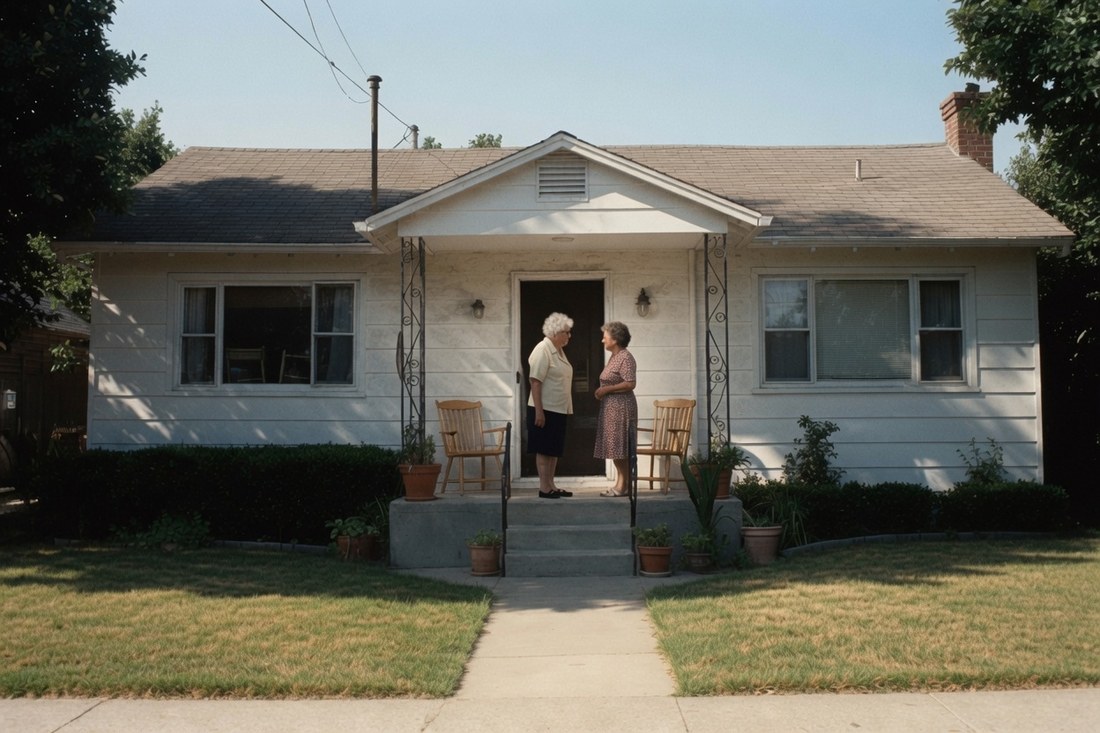
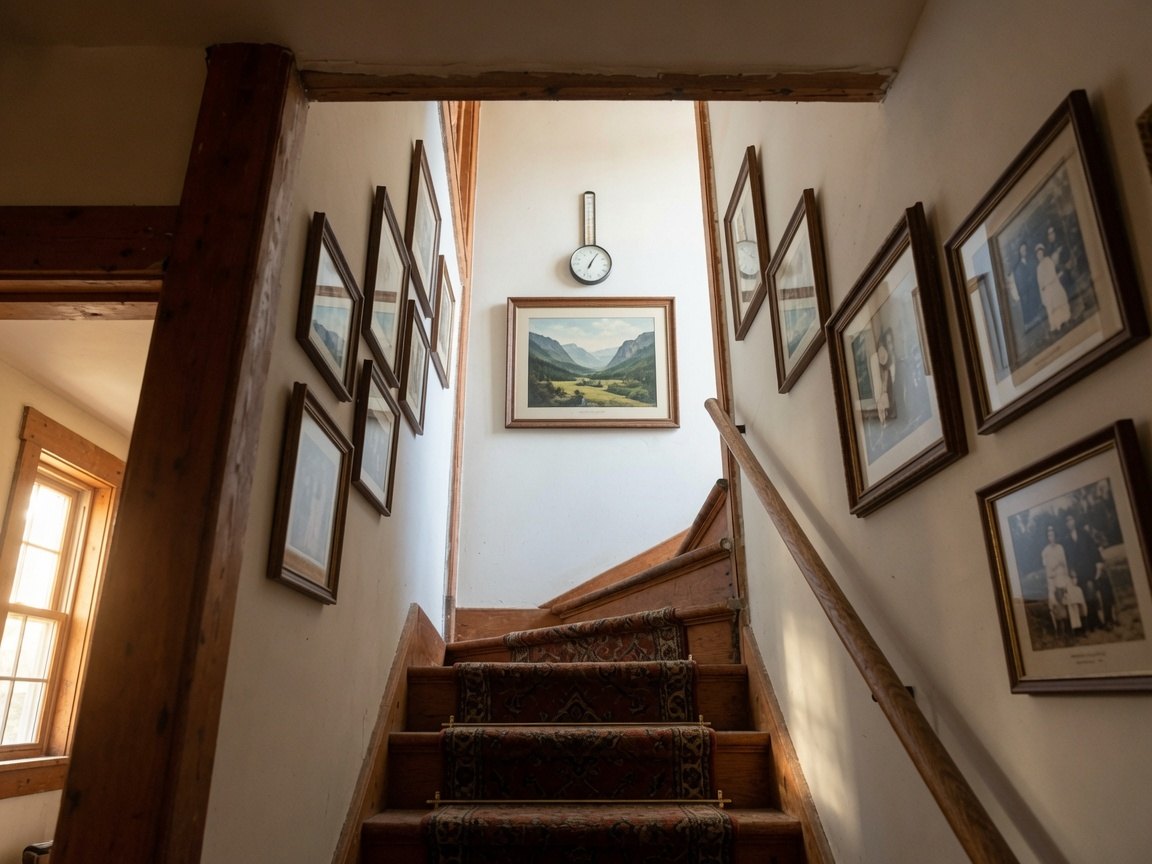
About the photographs on this page. Every image here is an illustration. This page describes a real, dated event, and none of these pictures were taken during it — they are made images used to show what the words describe. Every figure and number below came from an agency review, a utility record or a peer-reviewed study, and not from any photograph.
🌞 The Evening the Marine Air Did Not Come
Start on an ordinary Friday evening in a Portland neighborhood in the last week of June.
The house is a bungalow, ninety years old, good bones. Somebody has the sash windows up at both ends the way you do, because that is how this house has always been cooled and it has always been enough. In the evening the marine air comes in off the coast and the temperature drops and you sleep under a blanket, in June, and think nothing of it.
There is no air conditioner in the window. There never has been. Nobody on this street thinks that is strange, because it is not strange — this is a city where summer means seventy-eight degrees and a complaint about it.
Hold that picture. The open sash, the blanket, the cool that always comes.
Saturday the airport reads 108. Sunday it reads 112. Monday it reads 116.
The old record for that airport was 107, and it had stood for decades. Monday beat it by nine degrees.
But the temperature is not the thing that killed people, and I want to be careful here because this is the part that gets reported wrong.
The thing that killed people was in the house before the heat arrived.
🏠 Go and Look at Your Own House
Every house is built for the weather it expects.
A house in the Pacific Northwest is built to keep heat in. That is the correct design for that climate and it has served people beautifully for a hundred years — insulation, tight construction, windows sized for a grey winter, and in an older place often no ducting at all, because there was never anything to duct.
Now run that house for three days at 112 degrees.
It does exactly what it was built to do. It takes the heat in through the day and it holds it, and because it holds it beautifully it does not give it back at night. That is not a fault. That is the house working perfectly, at the one job you no longer want it to do.
And here is the piece that turned a hot weekend into a mass casualty event. The overnight lows stayed high. Ordinarily a hot day is survivable because the night undoes it — the body gets a recovery window, the house dumps its heat, and you start the next morning from level ground. That week the night never undid anything. Each morning started higher than the last, inside a building that had been charging up like a battery for three days.
By the third day a bungalow with the windows open was not a house with a heat problem. It was an oven with furniture in it.
Fewer than one in ten of the people who died in Multnomah County had air conditioning. Ten death investigations mentioned a cooling unit at all, and seven of those units were broken or unplugged.
That is why it killed. Not the number on the thermometer. The building, and the night that did not come.
📅 What Those Five Days Actually Did
The county did the counting afterwards and the arithmetic is worth reading slowly.
Seventy-two people died in Multnomah County in 2021, and all but three of them died in that single five-day stretch in June.
Seventy-eight per cent were sixty or older.
Seventy-one per cent lived alone.
Read those three lines together and you have the whole shape of it. This event did not sweep through a city taking people at random. It went looking, in a manner of speaking, for exactly one kind of household: an older person, on their own, in a well-built house with the windows open and no way to make cold air.
Heat-related emergency and urgent care visits ran at roughly three times a normal year.
Most of them died at home. Not in the street, not at work, not doing anything foolish. In the chair, in the ordinary room, in the house they had lived in for thirty years without it ever once being dangerous.
And here is the thing about hyperthermia that makes it different from a storm, and worse. There is no bang. Nothing breaks. Nobody hears anything. A neighbor who does not knock has no way on earth of knowing.
🌴 I Live Where It Is Hot
I was not in Portland in June 2021 and I have no business pretending otherwise. Every figure above came out of the county's own final report.
But I live in Florida, and I have sat in a house with no power in August more times than I can count, and I want to tell you the thing that took me a while to work out.
Ninety-five in Florida is not the same animal as ninety-five in Portland. Not because Floridians are tougher. We are not. It is because of three things that have nothing to do with the weather at all.
The first is the house. Down here a house is built to shed heat and it is built with ducts in it, because everybody has always needed cooling. Even with the power off, a Florida house is a building that expects to be hot and is laid out accordingly.
The second is the equipment. Every house has an air conditioner. It may be off, it may be out, but the box exists and the wiring for it exists, and when the power comes back the house recovers in an hour.
The third is the habit, and it is the one that matters most. Down here everybody knows what to do when it gets hot, because everybody has always had to know. You close up the west side in the afternoon. You know which room stays coolest. You drink before you are thirsty. You check on the widow two doors down, and she expects to be checked on, and neither of you finds it peculiar.
Portland in 2021 had none of the three. Not the house, not the box, and — this is the cruel part — not the habit, because there had never in living memory been a reason to build one.
A hundred and sixteen degrees is dangerous anywhere. It is lethal in a place that has never had to think about it.
Which is the reason this page exists, and the reason it is aimed at people who do not consider themselves to live anywhere hot.
❄️ You Cannot Cool a House. You Can Cool a Room.
Here is the practical turn, and it is the most useful sentence on this page.
Stop trying to cool the house. Pick one room and cool that.
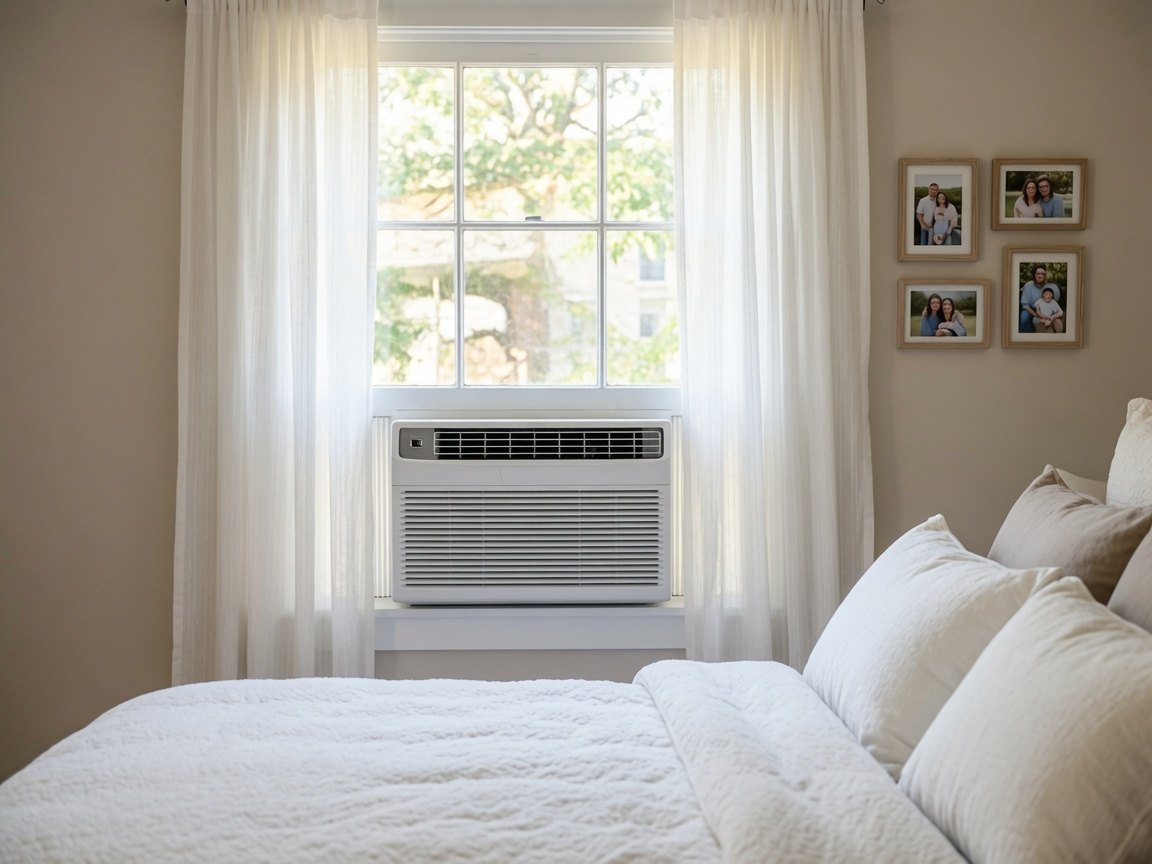
Cooling three thousand cubic feet of air in a building designed to retain heat is a job that will beat any equipment a household can afford. Cooling one bedroom is a job a single window unit or a portable will do easily, and a window unit is a few hundred dollars rather than a renovation.
Pick the room on the north or east side, lowest floor, fewest windows. That is the room. Put the unit there, and in a hot spell that is where people sleep, whatever the usual arrangement of the house is. A married couple of fifty years can share a floor for four nights.
Then close it up in the morning and leave it closed. The instinct in a heatwave is to open everything and let the air move; that instinct is right at ten at night and badly wrong at two in the afternoon, when all it does is invite in more of what you are trying to keep out.
Do the buying in February. A window unit in February is a sensible purchase at a sensible price from a shop with a full shelf. A window unit on the second afternoon of a heat dome does not exist at any price, in any shop, anywhere in the city.
🧓 What This Looks Like at Seventy
Everything above happens to everybody. Here is what changes when the household is older, and none of it is a matter of being frail.
The body's cooling gets quieter with age. Sweating is less efficient, thirst registers later, and a good many common medications alter how the body sheds heat or holds water. The result is that an older person can be in real trouble before feeling especially bad.
Living alone is the single biggest factor in that county's data. Seventy-one per cent. Not because solitary people are more fragile, but because heat gives no signal that anybody outside the house can hear. A fall makes a noise. A fire makes a noise. This makes none.
The night is when it happens. If the bedroom never drops, the body never gets its recovery window, and three nights of that stacks up in a way one bad afternoon never does.
Being asked to leave the house is a bigger ask than it sounds. Cooling centers work, and they only work if a person can get there. If the plan depends on driving somewhere at 114 degrees, be honest about whether that is a plan or a wish.
🛒 What Has to Be in the House Already
Short list. Every item is dull, cheap, and bought months before it matters.
A window air conditioner for one room. The whole argument of this page. Bought in winter, fitted before it is needed, sized for a bedroom rather than a house.
Water, and a reason to drink it. Thirst is a poor alarm at seventy. A jug filled and set where it will be seen beats a resolution to drink more.
A thermometer in the room where somebody sleeps. This is the cheapest item here and possibly the most valuable, because the whole failure mode of this event was people not knowing how hot their own house had become. A number on a wall is not a feeling; it can be argued with.
Somebody who checks. A standing arrangement with one person, agreed in advance, that during a hot spell you speak once a day. Seventy-one per cent lived alone. That is the statistic this fixes, and it costs nothing at all.
One thing this site will not tell you to do, and here I am going to be completely humorless:
⚠️ Never cool a house with anything that burns, and never run a generator indoors.
A generator must run outdoors, well away from the building, with its exhaust pointed away from every door, window and vent — never in a garage, a breezeway or an enclosed porch, and never in front of an open window. Never use a cooking stove, an oven or a barbecue to change the temperature of a room. Carbon monoxide has no smell and no color, and its early symptoms — headache, dizziness, weakness, confusion, sleepiness — are almost exactly what severe heat does to a person anyway, which is what makes it so dangerous in this particular emergency. Install a battery-powered carbon monoxide alarm and test it. If it sounds, or if anyone becomes confused, faint or unusually drowsy, get everyone outside into fresh air at once and call 911 from outside.
❓ The Questions People Actually Ask
Why was the 2021 Pacific Northwest heat wave so deadly?
Because of the housing, not only the temperature. Homes in the region are built to retain heat and most had no air conditioning, so they absorbed heat through the day and did not release it at night. Overnight lows stayed high, so nobody got a recovery window. In Multnomah County 72 people died, 78 per cent of them aged 60 or over, 71 per cent living alone, and fewer than one in ten had air conditioning.
Do I need air conditioning if I live somewhere with a mild climate?
You need the ability to cool one room, which is not the same as air conditioning the house. A single window unit in the bedroom is enough to give an older body its overnight recovery, and that recovery is what the 2021 deaths were missing. Buy it in winter; in a heat emergency they sell out region-wide within a day.
Should I open the windows during a heat wave?
At night yes, in the afternoon no. Open up once the outside air is genuinely cooler than the inside air, and close the house up before the day heats. Opening everything at two in the afternoon feels productive and simply brings more heat inside.
Which room should I use as the cool room?
The lowest floor, on the north or east side, with the fewest windows and the smallest volume. Put the cooling unit there, close the door, and sleep in that room during a hot spell regardless of which bedroom anyone normally uses.
How do I check on an older relative during extreme heat?
Agree the arrangement before the hot weather, not during it: one named person, one call a day, at a set time. Heat produces no sound and no visible emergency, so nobody outside the house learns about it unless somebody has agreed in advance to ask. In the Multnomah County deaths, 71 per cent of those who died lived alone.
🛒 Buy It at Fifty
A window air conditioner costs a couple of hundred dollars and spends eleven months of the year being an ugly object in a garage.
It does nothing, and does nothing, and does nothing — and then for four nights in June it is the reason somebody wakes up.
You cannot buy one on the second afternoon. On the second afternoon there is not one left in the city, and the man who would have fitted it is not answering his telephone.
Buy it in February, when it is the least interesting thing you will do that month.
Elsewhere on this site, if it is useful: the full one-cool-room method · work out your own heat risk · medication that has to stay cold · keeping an eye on the numbers that matter · how much water your household needs · getting through the house at night · what paramedics need to find · the whole argument this site is built on.
What This One Buys You
In this region the danger is a house doing exactly what it was built to do.
Seventy-two people died in one county, seventy-eight per cent of them over sixty, and fewer than one in ten had air conditioning. The fix is not a renovation and it is not a generator. It is one window unit, in one room, bought in February when the shop has a full shelf and nobody is frightened.
🗺️ The Other Regions
The same job in a different climate. Every region fails its own way, and the guide for yours is written to that failure rather than to a general one.