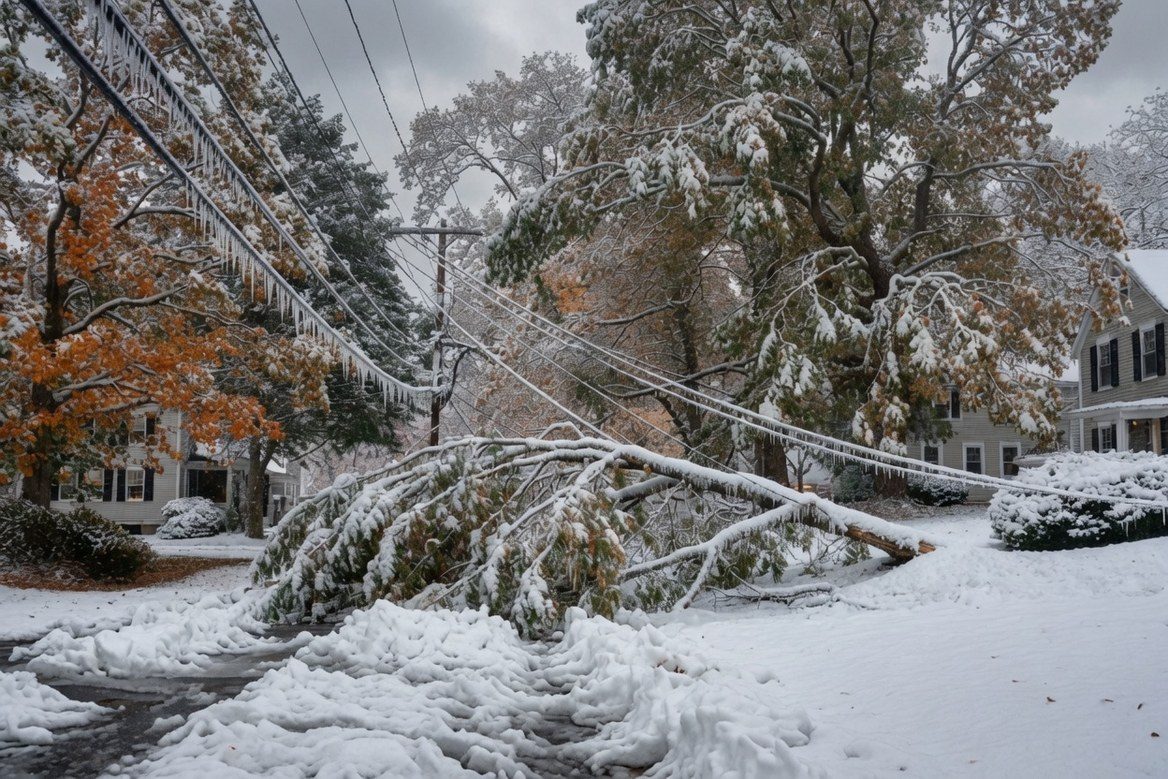
About the photographs on this page. Every image here is an illustration. This page describes a real, dated event, and none of these pictures were taken during it — they are made images used to show what the words describe. Every figure and number below came from an agency review, a utility record or a peer-reviewed study, and not from any photograph.
🛢️ The Oil Man Came on Thursday
Start on a Saturday morning in the last week of October, in a house in Connecticut with a good solid basement and two hundred and seventy-five gallons of heating oil sitting in a tank down there.
The oil man came Thursday. The tank is full. The gauge says so and you looked at it yourself on the way past the washer.
Outside, the maples are still holding most of their leaves and doing it beautifully, the way they do every year in that part of the world. It is the good week for it.
The forecast says snow, which is peculiar for October, and the general feeling on the street is that it will be a novelty and a nuisance and gone by Tuesday.
Hold that picture. The full tank, the leaves, the man who is not worried and has good reason not to be.
By Sunday morning more than three million homes and businesses across the Northeast have no electricity. In Connecticut alone the number goes past eight hundred thousand, which beats every record the state has, including the one set by a hurricane eight weeks earlier.
Some of those houses will not have power again until November.
And here is the part that catches people, and it is the reason for this page.
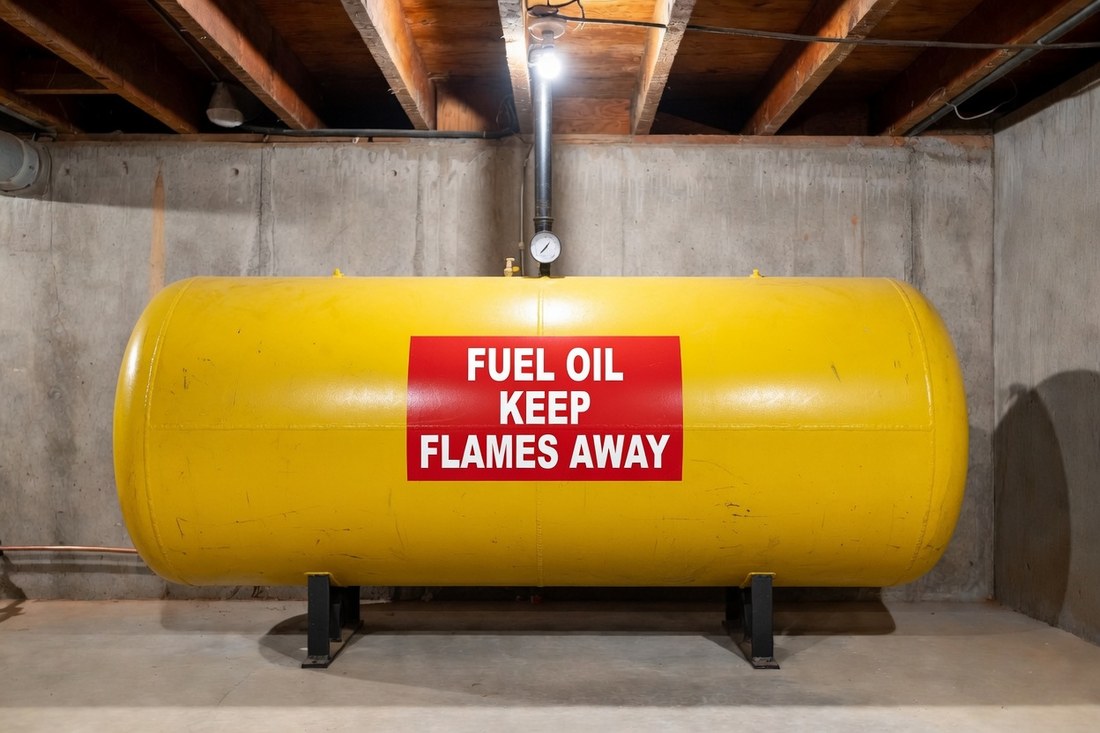
That basement is still full of oil. Every gallon of it. And the house is forty-one degrees.
⚡ Go Down and Look at Your Own Furnace
Almost nobody knows this until the week they find out, and it is the single most useful thing on this page.
Nearly every modern oil or gas furnace and boiler needs electricity to run.
Not to make the heat — the fuel does that. To do everything else. There is a motor that drives the burner. There is a pump that moves oil from the tank up to the nozzle. There is an electric igniter, because oil and gas both need a spark and neither one lights itself. There is a circulator pushing hot water out to the radiators, or a blower pushing warm air down the ducts. And sitting over the lot of it is a control board that will not let any of it happen if it has no power.
What none of that tells you is how to keep one room warm once the furnace has stopped — and the furnace stops, because the blower runs on electricity. That plan is here.
Take the electricity away and every one of those stops. The fuel is still there. The fuel was never the problem.
So the sentence to take out of this page is short, and I would like you to go down to the basement and satisfy yourself about it before winter: a full tank is not a heating system. A full tank plus electricity is a heating system.
Now the good news, and it is genuinely good. The electrical load is small. The pumps and controls on a hot-water system are a few hundred watts; a forced-air system asks more because the blower is the hungry part. Either way this is not a whole-house generator problem. It is well inside what a modest generator will carry, and for the smaller systems, inside what a large battery will carry for a night.
Which makes this one of the cheapest problems on this whole site to solve — but only if it is solved in September, by somebody who is not cold at the time.
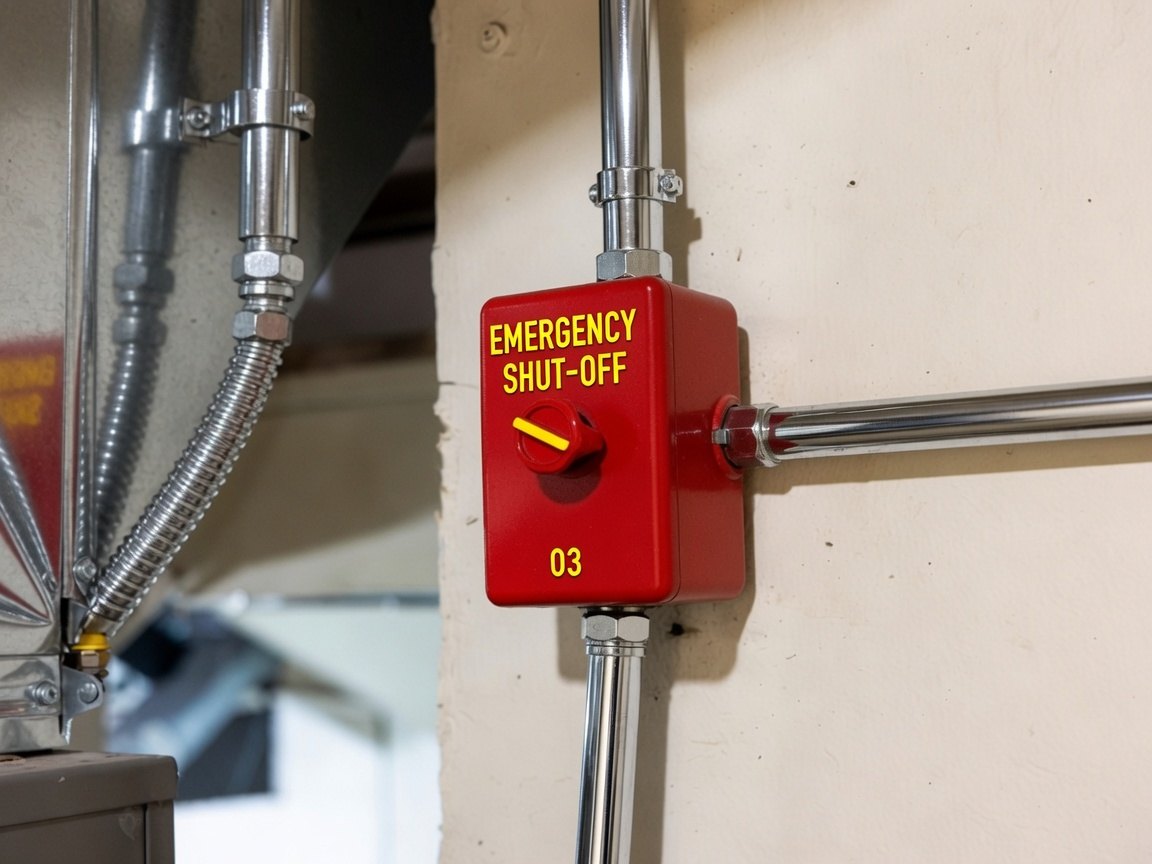
One more thing worth knowing, because it catches people even after the power comes back: an oil burner will often need a manual reset after an outage, particularly if the power flickered rather than failed cleanly. There is a button. Find out where it is now, in daylight, rather than at ten at night with a torch in your teeth.
❄️ What an October Storm Did That a January One Would Not
The storm arrived on 29 October 2011 and people up there still call it Snowtober.
What made it extraordinary was not the amount of snow. It was the date.
Hartford took 12.3 inches. The previous October record for Hartford was 1.7 inches. Concord, New Hampshire took 13.6 against an old record of 3. Worcester took 11.4 against 7.5. Parts of western Massachusetts went over two feet.
And every bit of it was wet, heavy snow falling onto trees that were still carrying their leaves.
A bare branch in February sheds snow. A branch in full leaf catches it and holds it like a hand, and keeps catching, until the branch comes off. In Central Park — which got under three inches — roughly a thousand trees came down, more than Hurricane Irene had managed two months before. Inland, where the snow was measured in feet rather than inches, whole streets went at once.
The ground did not help either. It had been a warm wet autumn, the soil was soft, and a good many trees did not snap at all. They simply leaned over and came out.
Then the restoration, which is the part that decides what a storm actually costs you. Three million customers out. Connecticut past eight hundred thousand, a state record. Seven school districts around Danbury cancelled the entire following week. Some houses waited into November.
A week is a long time to be cold in a house that has no way to make heat and a basement full of fuel it cannot use.
And a house that has gone cold starts losing its plumbing as well. Frozen and burst pipes are the second bill that winter outage sends.
🪓 The Stove Does Not Know the Power Is Out
I was not in New England for that storm, and every figure above came out of a utility record, a weather service report or a federal review rather than out of my memory.
But I heated a stone house through Maryland winters, and there is one thing that experience gives me the standing to say plainly.
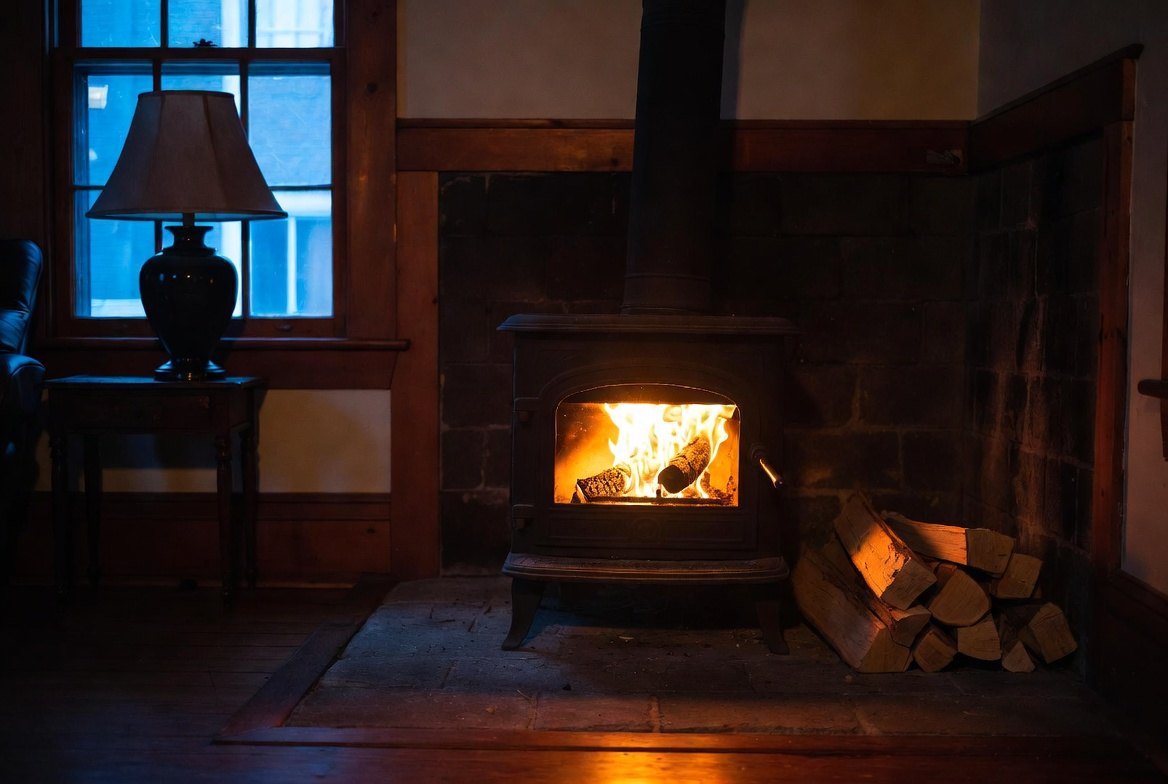
A wood stove does not know the power is out.
That is its entire advantage and it is a considerable one. There is no motor in it. Nothing has to be pumped anywhere, nothing has to be told to start, and no board has to approve the decision. You put wood in it and it makes heat, on the fourth day of an outage exactly as well as on the first.
Ours was a stone house on seven acres, and stone is a hard master — it keeps whatever temperature you hand it, and if you stop giving it heat it will keep cold with the same patience. It went through better than eight cords in a single winter.
Now I am not going to sit here and tell a man in Hartford to put a wood stove in his house. Most people cannot, most houses are not set up for it, and a stove is a real installation with a real chimney and real obligations that this site has written about elsewhere.
What I am telling you is the principle underneath it, because that principle is available to everybody whether they burn wood or not:
The heat that saves you is the heat that has no opinion about the grid.
Which in a modern house usually means one of three things. A generator big enough to run the furnace, which is a smaller generator than most people assume. A battery large enough to carry the burner and circulator overnight. Or a single vented space heater, properly installed by somebody qualified, that does not depend on the house electric.
Any of the three turns a full tank back into a heating system. None of the three can be arranged in the week you need it.
🧓 What This Looks Like at Seventy
Everything above happens to everybody. Here is what changes when the household is older.
Cold does its damage indoors and quietly. Hypothermia is not only an outdoor problem — a house that sits in the forties for several days is enough, and an older body loses heat faster and notices later. The person is often not shivering by the time there is real trouble.
The house starts fighting back. Once it drops far enough, pipes begin to freeze, usually in an outside wall or an unheated space where nobody can see them. That damage announces itself on the thaw, not on the night.
The obvious workaround is the dangerous one. When the furnace is dead and the house is cold, the oven, the gas range and the charcoal grill all start to look reasonable. That is the thinking that fills emergency rooms after every winter outage, and it is the subject of the warning below.
Leaving may not be simple. Warming shelters work and they only work if you can get to one. Trees are down, roads are blocked and it is dark by five. If your plan requires driving somewhere on the second night, be honest about whether that is a plan.
🏠 What Has to Be in the House Already
Short list, and everything on it is bought in September.
A way to run the furnace. The first item and the biggest lever. Find the label on your furnace or boiler, note the watts, and size from that — it is a far smaller number than people expect, and it is the difference between a cold house and a warm one.
Heat the person before the room, and the room before the house. Wool blankets and a sleeping bag rated well below what you think you need will carry a household through nights that no amount of fiddling with the thermostat will.
Know where the furnace reset button is — and the main water shutoff, in case a pipe does let go.
Light that is not a flame, and food that needs no cooking for three days.
Now the one place on this page where I am going to be completely humorless, because this is what actually kills people in a Northeast winter outage:
⚠️ Never heat a house with a cooking appliance, and never run a generator indoors.
Never use a gas oven, a cooking stove, a charcoal grill or a gas grill to heat a room — not for a few minutes, not with a window cracked. Never run a generator inside a house, a garage, a basement, a breezeway or an enclosed porch; it must run outdoors, well clear of the building, with its exhaust pointed away from every door, window and vent. Never burn charcoal indoors under any circumstances. Carbon monoxide has no smell and no color, and its early symptoms — headache, dizziness, weakness, confusion and drowsiness — are almost exactly what being cold, tired and frightened feels like anyway. Install a battery-powered carbon monoxide alarm and test it now. If it sounds, or if anyone becomes confused, faint or unusually sleepy, get everyone outdoors into fresh air immediately and call 911 from outside.
❓ The Questions People Actually Ask
Will my oil furnace work if the power goes out?
No. Nearly every modern oil furnace and boiler needs electricity for the burner motor, the fuel pump, the igniter, the circulator or blower and the control board. The oil in your tank cannot be burned without those, so a full tank produces no heat at all during an outage.
Will a gas furnace work in a power outage?
Generally no, for the same reasons. Modern gas furnaces and boilers need electricity for ignition, controls and air or water circulation. The gas supply usually keeps working, which is exactly what misleads people — the fuel arrives and the heat does not.
What size generator do I need to run my furnace?
Smaller than most people assume. A hot-water system's pumps and controls draw a few hundred watts; a forced-air system draws more because of the blower. Read the watts off the label on your own unit rather than guessing, and size from that figure plus a margin.
Why did an October snowstorm cause worse outages than a winter one?
Because the trees were still in leaf. Wet snow lands on a leafy branch and stays there, loading it until it breaks, where a bare winter branch sheds most of it. In the 2011 storm Hartford recorded 12.3 inches of snow against a previous October record of 1.7, and more than three million customers across the Northeast lost power — some of them for a week or more.
My oil burner will not start after the power came back. What now?
An oil burner often needs a manual reset after an outage, especially if the power flickered rather than failing cleanly. There is a reset button on the unit; press it once. If it does not run, or if it stops again, stop pressing it and call your service company — repeated resets can flood the combustion chamber, which is genuinely dangerous.
🛒 Buy It at Fifty
The fix here is not a renovation and it is not a bunker. It is a machine that costs less than a sofa, sized off a label already screwed to your own furnace, bought in September and started once in the driveway to prove it runs.
It does nothing all autumn. It does nothing all winter, most winters.
Then one Saturday in October the trees come down with the leaves still on them, and it is the difference between a long inconvenient week and a house at forty-one degrees with a basement full of oil you cannot burn.
The same October afternoon is when the rest of it gets decided too — the pipes, and whether you will be the one clearing the drive.
Buy it while the weather is fine and the shop is empty and nobody has told you to.
Elsewhere on this site, if it is useful: what backup power actually costs · size a generator from your own furnace label · what not to put on a generator · wood that will actually burn this winter · light that is not a flame · what in the refrigerator is still safe · medication that has to stay cold · the whole argument this site is built on.
What This One Buys You
In this region the fuel is already in the house and it is not the thing that fails.
Three million customers lost power in a single October weekend and some waited into November. Almost every one of those furnaces was in working order with fuel available. What they wanted was a few hundred watts. That is a small machine and a September afternoon, and it is the whole difference.
🗺️ The Other Regions
The same job in a different climate. Every region fails its own way, and the guide for yours is written to that failure rather than to a general one.