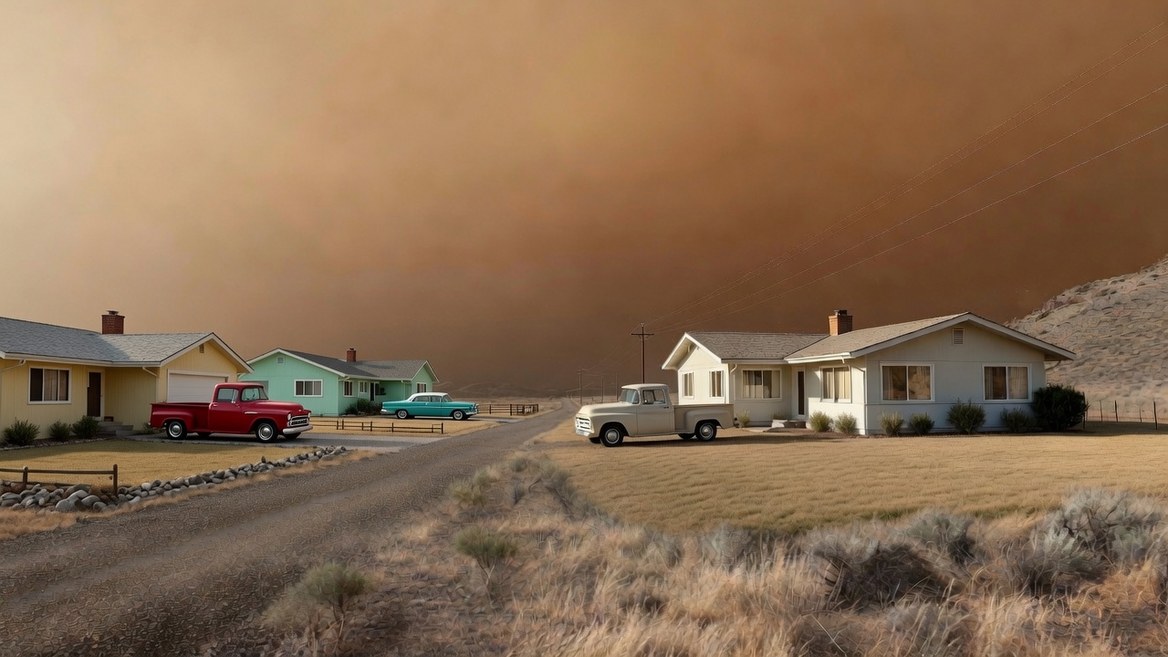
About the photographs on this page. Every image here is an illustration. This page describes a real, dated event, and none of these pictures were taken during it — they are made images used to show what the words describe. Every figure and number below came from an agency review, a utility record or a peer-reviewed study, and not from any photograph.
📱 The Message Comes on Wednesday Evening
This one is different from every other page in this series, and I want to say why at the top.
Every other outage on this site arrives without asking. A derecho gives you the length of a coffee break. A hurricane gives you a few days and a lot of noise. An ice storm gives you a forecast nobody quite believes.
This one sends word ahead.
It is Wednesday evening in a house up a county road in Colorado, and a message comes through from the utility. There is a red flag warning for tomorrow — high wind, no humidity, ground dry as a bone. To keep a line from starting a fire, they are going to switch your power off on purpose at eight in the morning.
That is a Public Safety Power Shutoff, and it is now an ordinary part of life across the Mountain West.
Hold that picture. Wednesday evening, the message, and a whole night and morning still in hand.
Now — most people who read that message start thinking about the refrigerator. Some think about the freezer. A few think about the internet and whether the grandchildren will call.
Very few of them walk over and turn on the kitchen tap while it still works.
And on a house with a well, that tap is the whole business.
💧 Your Well Is an Electrical Appliance
There is no water tower on your property. Nothing up a hill is pushing water down to your house by gravity.
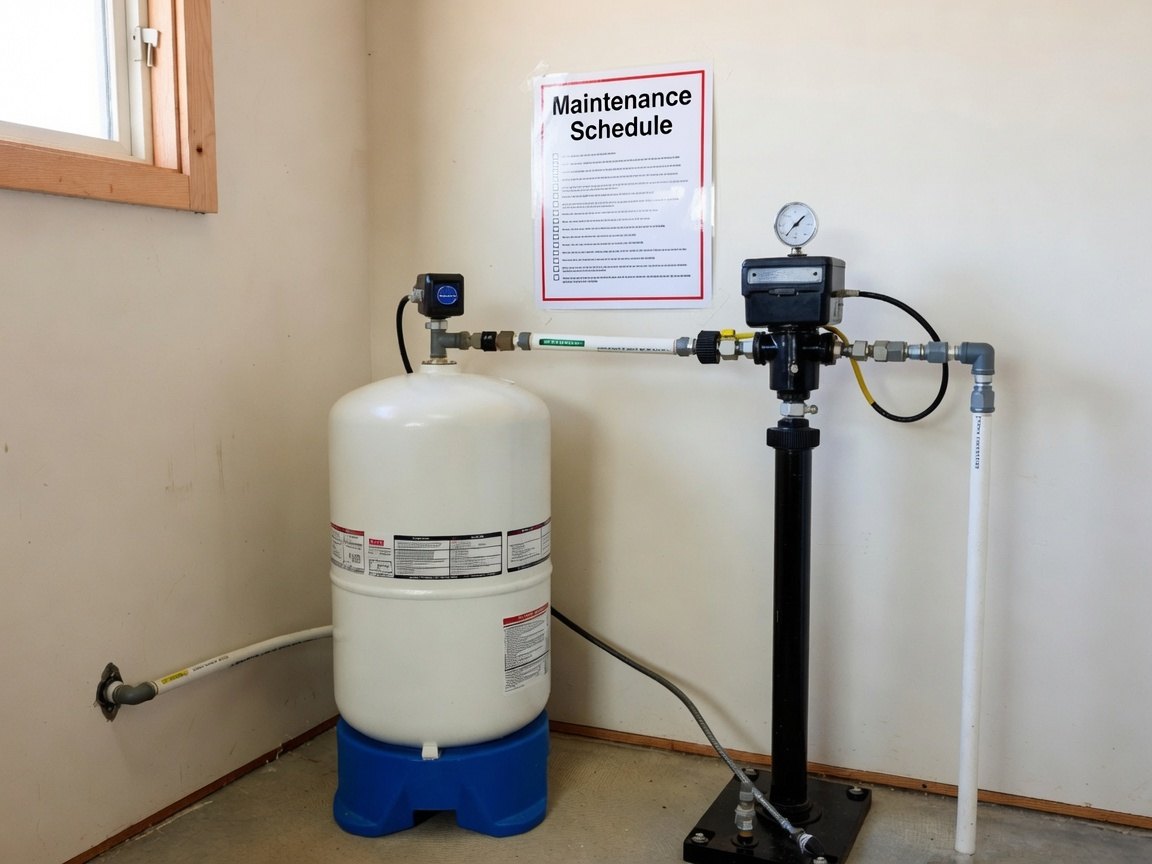
What you have is a pump, several hundred feet down a hole, and that pump is an electric motor. When the power stops, it stops. Not gradually — the pressure tank gives you whatever is left in it, which is a few dozen gallons if you are lucky, and then the taps go quiet.
That much is true of any well anywhere. Here is the part that belongs to this region specifically.
There is nothing to fall back on.
A town that loses pressure gets a boil notice and a distribution point in a supermarket parking lot. Somebody trucks water in and hands it through your car window. That is a genuine failure and it is still a system, and the system knows you exist.
A house on a well, eleven miles out on a county road, is not on anybody's list. There is no notice, because there is no utility to issue one. There is no distribution point, because there is no district. Nobody is coming, and nobody has any reason to come, because from the outside your house does not look like a house with a problem.
You are your own water utility. On the day the power goes off, the water utility has no staff.
And this is not a hypothetical I am constructing. When Colorado legislators went over the shutoffs of the last couple of winters, one state senator's contribution to the record was that rural livestock producers had lost access to their water wells. That is the same sentence as this section, said by somebody in a hearing room.
🔥 What a Shutoff Actually Costs You
The utilities are straight about this and their own wording is worth quoting nearly as they put it: restoration may take several hours to several days.
Not because they are slow. Because of the order things have to happen in.
Nothing starts while the wind is still up. Then a crew has to patrol the whole line — every mile of it, with eyes on it — before anybody re-energises anything, because the entire purpose of the exercise was to keep a damaged line from arcing into dry grass. And the company says plainly that rural, remote and mountainous areas can expect to wait longest, which is exactly the country where the wells are.
Two more things people find out the hard way.
You can lose power without being in the shutoff area at all. During fire weather the utilities also make the lines hypersensitive, so that anything touching a wire drops it instantly. That setting saves ignitions and it also means an ordinary branch can put your road out, and the line still has to be walked before it comes back.
They can happen twice in a week. In December 2025 Colorado had two in five days. Around fifty thousand customers were shut off in the first one, with another sixty-eight thousand out from the wind itself, and when the second event landed on some of the same communities the company warned that certain areas could be without power for more than three days.
So the planning figure is not the length of the wind. It is the length of the inspection that follows it, on the worst roads in the service territory.
🪣 A Day and a Half Is a Gift. Most People Spend It Worrying.
I was not in Colorado for any of this, and every figure above came off a utility's own bulletins and a legislative report.
But I lived a long time on a well, on seven acres in Maryland, and I can tell you exactly what that house taught me about this.
Nobody ever gave me any notice at all.
The power went when it went. A wet snow, a limb, a transformer up the road with somebody else's problem on it, and the well quit in the same second and there was nothing to be done about it but start carrying. Cows want water twice a day and have no interest whatever in the reason they are not getting it.
So when I read that these utilities telephone people the evening before — that they say out loud, we are going to cut your power at eight tomorrow morning — my first thought was that this is the most generous thing a power company has ever done for anybody on a well.
And my second thought was that a great many people are going to waste it.
Because a warning is only worth what you do between the warning and the event, and what most people do between the warning and the event is feel anxious and check the news.
So here is the list. This is the whole page, and it takes about forty minutes.
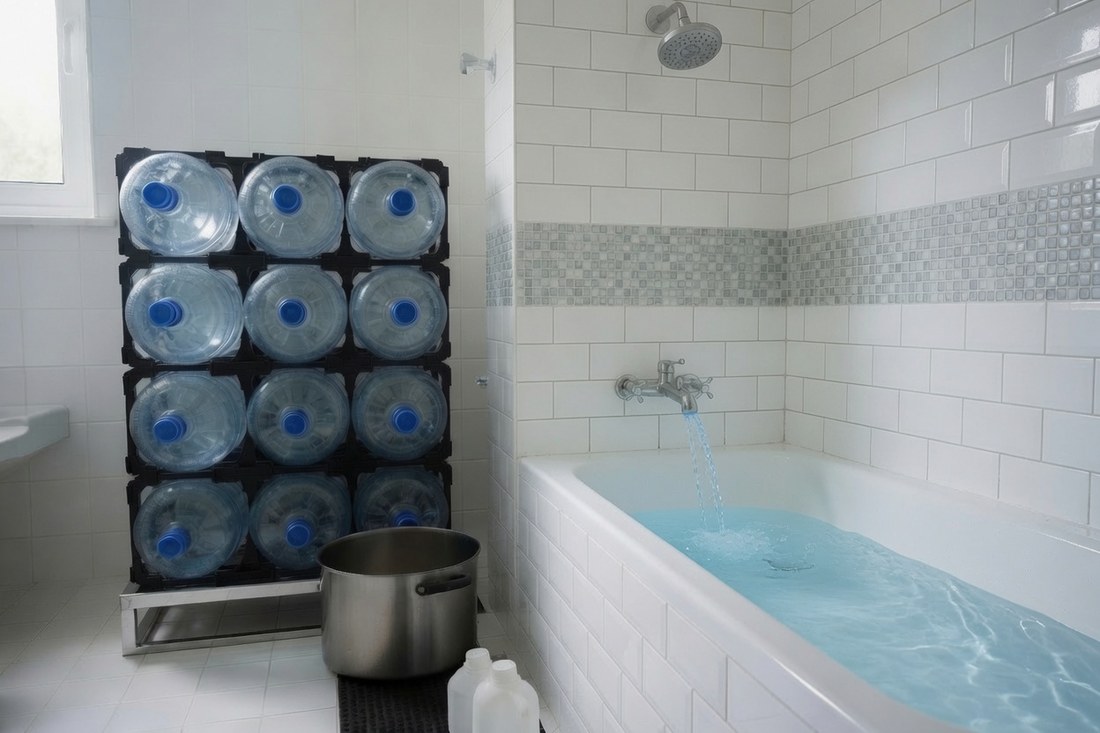
Fill everything in the house that holds water. Both bathtubs. Every pot. Every jug, bucket and canning jar you own. A bathtub holds forty to sixty gallons and it is free, and there is no version of this where you regret having done it.
Fill the stock tank and the troughs before the pump stops, not after. This is the one that goes wrong on livestock places, and it goes wrong because it feels premature at four in the afternoon.
Run the dishwasher and the laundry now. Clean clothes and clean dishes are a comfort out of all proportion on day three, and they cost you nothing tonight.
Charge every battery in the house — telephone, torches, radio, the medical things, the power station if you own one.
Get the refrigerator and freezer cold now and then leave the doors shut.
Fill the vehicle. The pumps at the filling station are electric too, and they are on the same grid you are.
None of that is clever. All of it is free. And the difference between the household that does it on Wednesday evening and the one that does not is the difference between an inconvenient few days and a genuine emergency, in the same weather, on the same road, with the same warning delivered to both.
🧓 What This Looks Like at Seventy
A shutoff is the same length for everybody on the road. It is not the same event in every house, and here is where the difference sits.
Filling is the hard part, not the doing without. Water weighs a little over eight pounds a gallon and a full bucket is not a thing everybody can carry up a step. Fill things where they will be used — a jug on the kitchen counter, not a drum in the barn — and fill more small containers rather than fewer big ones.
Flushing is the part nobody plans for. A toilet takes a gallon and a half or more per flush. That is what the bathtub is for, and it is worth knowing before the second day rather than working it out then.
Medical equipment needs a decided answer, not a hopeful one. Oxygen concentrators and CPAP machines do not run on optimism. If a shutoff is announced and somebody in the house depends on a machine, that is a telephone call to the utility and to the doctor on the Wednesday evening, not a thing to see about on Friday.
The road is the multiplier out here. Eleven miles of gravel in high wind at seventy is not the same errand it was at fifty, and it is the reason the answer is to have the water already in the house rather than a plan to go and get some.
🏠 What Has to Be in the House Already
Short list. All of it dull, all of it cheap, none of it bought in a hurry.
Containers you can fill fast. Collapsible carriers, food-grade jugs, a couple of clean covered buckets. The bathtub is free storage but it is not drinking water; keep those two jobs separate.
Stored drinking water that does not depend on the warning. Because one of these days the outage will be the ordinary unannounced kind, and then there is no Wednesday evening at all.
A way to run the well pump, if you can. A well pump is a real electrical load and sizing it is a job for somebody who can read the plate on your own equipment — but where it is affordable it changes this whole page from a supply problem into an inconvenience.
A gravity filter, so that water you are less sure about becomes water you can drink.
Light that is not a flame, and a battery radio, because out here the shutoff and the fire risk are the same story and you will want to hear it.
Now the one part of this page where I am going to be completely humorless:
⚠️ Generators, fire risk, and carbon monoxide — read this even if you read nothing else here.
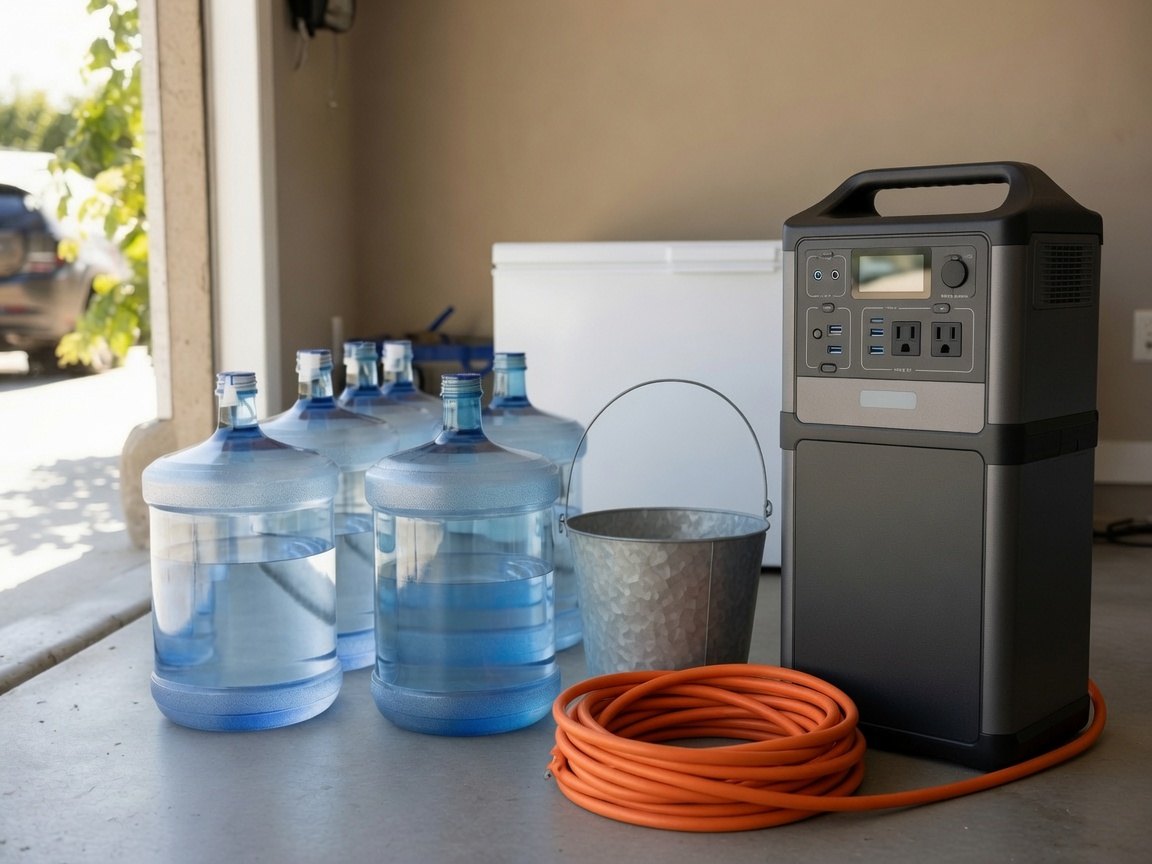
A generator must run outdoors, well clear of the building, with its exhaust pointed away from every door, window and vent — never in a garage, a shed, a breezeway or an enclosed porch, and never in front of an open window. Never heat or cool a room with a cooking stove, an oven, a charcoal grill or a gas grill. Carbon monoxide has no smell and no color, and its early symptoms are headache, dizziness, weakness, confusion and drowsiness. Install a battery-powered carbon monoxide alarm and test it. If it sounds, or if anyone becomes confused, faint or unusually sleepy, get everyone outside into fresh air immediately and call 911 from outside. One point specific to this region: a shutoff happens because fire conditions are extreme, so site and refuel a generator with that in mind — on bare ground or gravel, never in dry grass, never refuelled while hot, and never left running unattended in high wind.
❓ The Questions People Actually Ask
What is a Public Safety Power Shutoff?
It is a planned outage. When wind, low humidity and dry ground create extreme wildfire risk, the utility switches off power to selected lines on purpose so that a damaged line cannot start a fire. Unlike a storm outage it is announced in advance, usually the day before, though the final decision may not come until the evening before it begins.
How long does a public safety power shutoff last?
Plan for several hours to several days, which is the utilities' own wording. Restoration cannot start until the wind and fire risk have passed, and then crews must patrol the entire line before re-energising it. Rural, remote and mountainous areas wait longest. In December 2025 two shutoffs landed on Colorado in five days and some areas were warned to expect more than three days without power.
Will my well pump work during a power outage?
No. A well pump is an electric motor, so when the power stops the pump stops. You have whatever is left in the pressure tank, typically a few dozen gallons, and then nothing. There is no municipal system to fall back on and no water distribution point for houses on private wells.
What should I do in the hours before a planned shutoff?
Fill everything that holds water — bathtubs, pots, jugs, buckets, stock tanks and troughs — while the pump is still running. Then run the dishwasher and laundry, charge every battery in the house, get the refrigerator and freezer cold and leave them shut, and fill the vehicle, because filling station pumps are electric too. It takes about forty minutes and costs nothing.
Can I lose power even if I am not in the shutoff zone?
Yes. During fire weather utilities also make power lines far more sensitive, so that anything touching a line de-energises it immediately. That prevents ignitions, and it also means an ordinary branch can put your road in the dark — and the line still has to be inspected on foot before power comes back.
🛒 Buy It at Fifty
Every other page in this series is about a thing that happened to people without warning.
This one is about a thing that telephones you first.
The buckets cost a few dollars. The forty minutes on a Wednesday evening cost nothing whatever. And the household that spends them is not braver or better informed than the one next door — it simply decided, at some point when nothing was happening, that when the message came it would go and fill things rather than sit and read about the wind.
Decide that now, while it is a dull thought on an ordinary afternoon. That is the whole of this site in one sentence, and this is the one region where you are handed the chance twice.
Elsewhere on this site, if it is useful: how much water your household actually needs · making uncertain water drinkable · running a well pump on backup power · size a generator from your own equipment · light that is not a flame · medication that has to stay cold · a CPAP through the night · the whole argument this site is built on.
What This One Buys You
This is the only outage that tells you it is coming.
A shutoff is announced the evening before, and on a well the water stops when the power does with nothing to fall back on. Forty minutes of filling things, done before the pump quits, is the entire difference between an inconvenient few days and a real emergency — same weather, same road, same warning given to everybody.
🗺️ The Other Regions
The same job in a different climate. Every region fails its own way, and the guide for yours is written to that failure rather than to a general one.