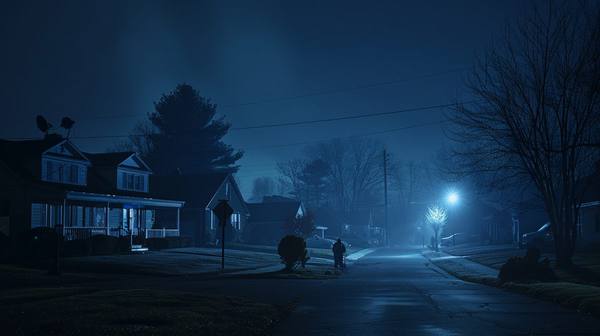
A Software Bug in Ohio Blacked Out New York City for Two Days.
The electrical grid is controlled by software systems that operate power plants, substations, and switching equipment across entire regions. When those systems fail — through bugs, GPS disruptions, communication failures, or operator error — the grid can fail without any physical cause at all. In 2003, a software alarm system that failed to alert operators to a problem cascaded into the largest blackout in North American history. The same vulnerability exists today.
Every cause on this page ends the same way: your lights out. These three steps work against all of them.
🚨 August 14, 2003 — A Software Bug in Ohio Blacked Out 55 Million People
The Operators Couldn’t See the Problem. By the Time They Could, 55 Million People Were in the Dark.
On August 14, 2003, at 2:02 PM, a software bug in FirstEnergy’s alarm system in Ohio caused the system to stop displaying alerts to grid operators. The operators did not know the alarm system had failed. They believed their grid was operating normally. It was not.
Over the next hour and a half, three high-voltage power lines in Ohio sagged in high summer heat, made contact with trees that had not been cleared as required, and faulted. Each fault was supposed to trigger an alarm. None did. The failures caused power to reroute through adjacent lines, overloading them. Those lines faulted and tripped. The cascade accelerated. At 4:10 PM, the cascade went regional.
In nine minutes, the northeastern United States and parts of Canada went dark. 55 million people. Eight US states. Two Canadian provinces. Some customers were without power for up to four days. New York City hospitals operated on generators. Subway systems stopped. Traffic lights went dark. In the August heat, elderly residents across the Northeast were without air conditioning for days. Emergency rooms reported elevated deaths from heat stress among elderly patients who had been without power for 24 to 48 hours before being found.
⚠️ The speed of the 2003 cascade: From the first undetected fault to a 55-million-person blackout: approximately 90 minutes. From the start of the visible cascade to the blackout: nine minutes. There is no time to buy a generator after a control system failure begins. There is barely time to find a flashlight. The preparation must already be in place.
55M
People blacked out by the 2003 Northeast cascade triggered by a software alarm bug
9 min
Time from start of visible cascade to 55 million without power on August 14, 2003
4 days
Maximum restoration time for some customers after the 2003 Northeast blackout
90 sec
Time for the 1989 Quebec geomagnetic storm to collapse the entire provincial grid
What Is SCADA and Why Does It Control Your Power?
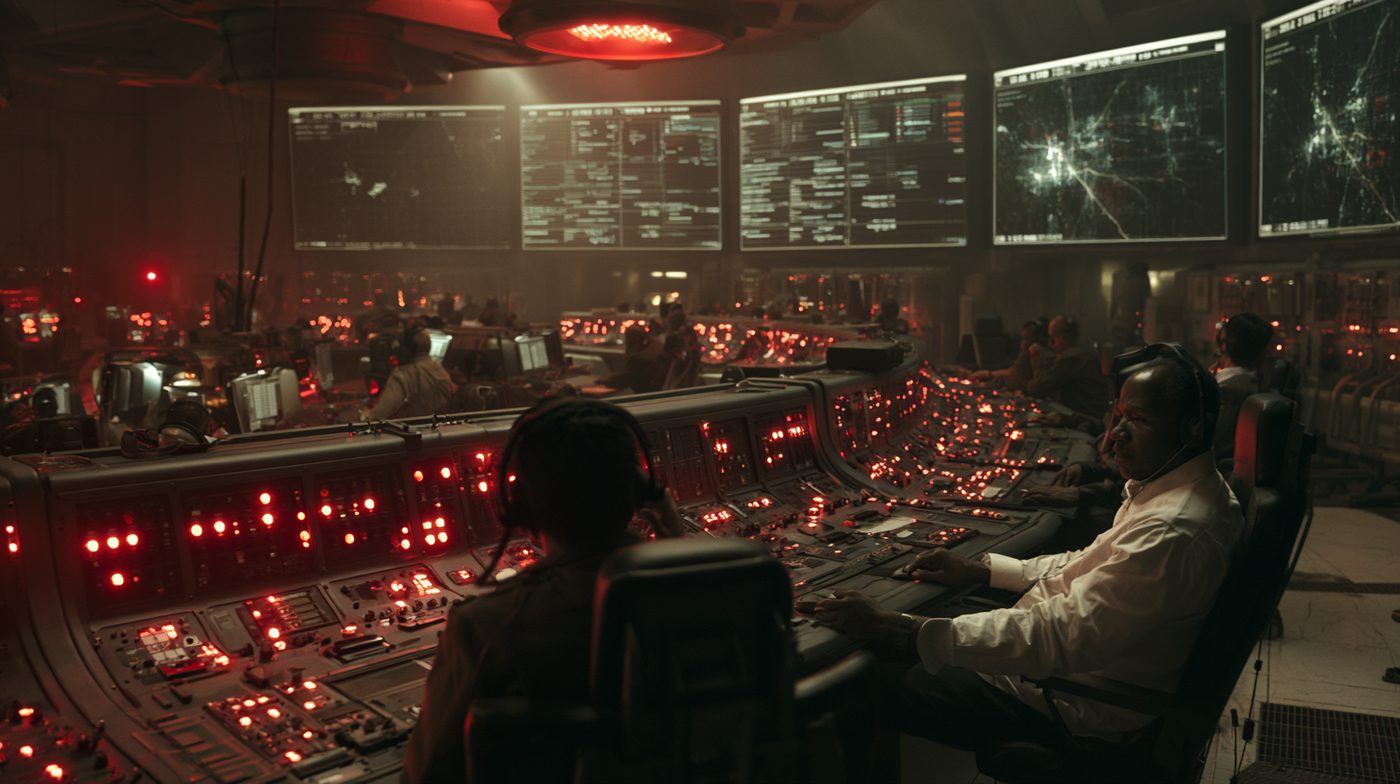
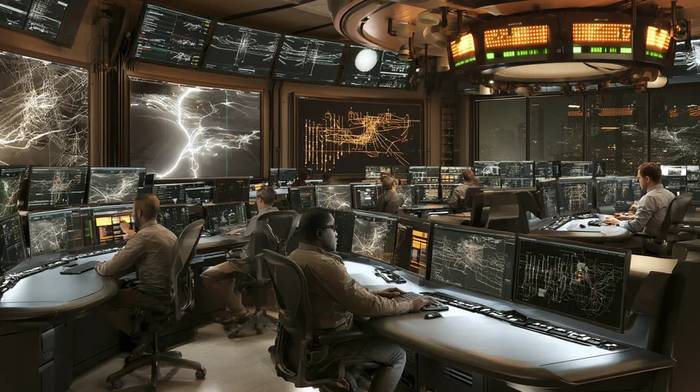
Screens, grid maps, and a handful of operators on a night shift. From that room a utility opens and closes breakers across an entire state without anybody stepping outdoors — which is the efficiency of it, and also the whole of the exposure.
SCADA (Supervisory Control and Data Acquisition) is the software system that utility operators use to monitor and control electrical infrastructure. From a central control room, SCADA allows operators to see the real-time status of every breaker, switch, transformer, and generating unit in their service area — and to control those devices remotely with software commands.
SCADA systems are the nervous system of the modern electrical grid. Without them, operators are flying blind across a network of thousands of pieces of equipment spread across thousands of square miles. With them, a small team of operators in one building can manage the entire grid of a major utility.
The vulnerability is obvious: if the SCADA system provides incorrect information — as the FirstEnergy alarm system did in 2003 — operators make decisions based on false data. If the SCADA system is compromised by a cyberattack, operators may lose visibility and control simultaneously. If the communication network between the SCADA center and field equipment fails, remote control becomes impossible. Any of these failures can prevent the human response that would otherwise stop a cascade before it goes regional.
GPS Timing: The Hidden Dependency Most People Do Not Know About
Modern power grid control systems depend on GPS satellite timing signals to synchronize measurements across the grid. Phasor measurement units (PMUs) — devices that measure electrical conditions across the grid in real time — use GPS timing to ensure that measurements taken at different locations can be compared and analyzed synchronously. This synchronization is essential for the real-time grid management that prevents cascades.
GPS timing disruption — through solar weather interference, GPS jamming (documented in conflict zones and increasingly in civilian areas), or GPS spoofing — can cause measurement synchronization errors that degrade grid operators’ ability to manage the system in real time. This is a vulnerability that DHS has documented and that the power industry is working to address, but the dependency on GPS timing is deeply embedded in modern grid control systems and cannot be quickly replaced.
The 50–70 Math: Nine Minutes Is Not Enough Time to Prepare
The 2003 Northeast blackout went from a manageable Ohio problem to a 55-million-person blackout in nine minutes. You cannot drive to a hardware store and buy a generator in nine minutes. You cannot charge a battery station in nine minutes. You cannot call a generator installer in nine minutes and have them arrive before the lights go out.
Control system failures are among the most unpredictable categories of outage — they can happen on any day, in any weather, in any season, affecting regions far larger than any single storm. The only effective response is to have backup power already in place before any specific failure occurs.
The 55-year-old who installed a generator in April — not because they knew about SCADA systems or grid cascades, but because they understood that power goes out 15 ways and they wanted to be ready for all of them — is the same person who watches their neighbors scrambling in the dark when a software bug in Ohio changes everything on a Tuesday afternoon in August.
A cascade moves faster than a person does. Nine minutes is not time to prepare — it is barely time to notice; a charged battery box is preparation that was finished weeks earlier and does not require you to be awake.
Software Bugs Do Not Warn You Before They Crash the Grid.
A whole-home standby generator starts automatically within 11 seconds of any power failure — whether the cause is a hurricane you saw coming for a week or a SCADA cascade you had no way to predict. The cause is irrelevant to your generator. It starts. Your home runs. Your medical equipment keeps working. Use our calculator to find the right size before the next 9-minute cascade arrives.
Has the US grid been improved to prevent another 2003-style blackout?
NERC implemented mandatory reliability standards after 2003, including standards for control room situational awareness, vegetation management, and real-time monitoring. These have reduced the likelihood of an identical sequence of failures. However, the interconnected nature of the grid means that any large-scale cascade — whether triggered by software failure, weather, or cyberattack — can still propagate rapidly. The grid is safer than in 2003 but not immune to cascade failure.
What is the largest power outage in US history?
The 2003 Northeast blackout is the largest in US history by number of customers affected in a single event — 55 million people in eight states and two Canadian provinces. The longest sustained outage was the post-Maria Puerto Rico outage, where some customers waited nearly 11 months for restoration. Texas in 2021 affected more total customer-hours of outage than 2003, but across a longer time period.
Can a single utility’s control system failure affect customers in other states?
Yes. The 2003 blackout demonstrated this. The interconnected nature of the US electrical grid means that a failure in one utility’s control area can cascade into adjacent utilities’ systems. Grid operators across interconnections are supposed to coordinate their operations — but the 2003 event showed that coordination failures allow cascades to cross state and even national boundaries.
What is SCADA and why does it matter for the power grid?
SCADA stands for Supervisory Control and Data Acquisition. It is the software system that utility operators use to monitor and control electrical infrastructure across their service area — seeing the status of every breaker and switch, controlling equipment remotely, and managing power flow. When SCADA systems fail or provide incorrect information, operators cannot see problems developing and cannot respond correctly, potentially allowing grid failures to cascade.
What caused the 2003 Northeast blackout?
The 2003 Northeast blackout was caused by a combination of a software bug in an alarm system and deferred vegetation management. The software bug prevented operators from seeing alerts about developing problems in Ohio. Meanwhile, power lines in Ohio were sagging in high summer heat, contacting trees, and causing faults. Operators did not see the problem developing, did not take corrective action, and the grid cascaded into failure affecting 55 million people in eight US states and two Canadian provinces.
How fast can a control system failure cause a blackout?
Grid cascades can occur in minutes. The 2003 Northeast blackout cascaded from a manageable local problem to a 55-million-person blackout in approximately nine minutes once the cascade began. The 1989 Quebec blackout collapsed the entire provincial grid in 90 seconds. Control system failures that prevent operators from seeing or responding to developing problems can allow cascades to reach regional scale before any corrective action is possible.
Founder, Franklyns Bay LLC — Florida resident since 1984 — 25+ years SEO & web publishing — Nature Coast homeowner & 40+ hurricane seasons lived through. Full bio →
Now you know why it happens.
Be the house on the street that barely notices. Start with the generator calculator — it takes two minutes.
General Information Disclaimer: Content on this site is provided for general educational and informational purposes only and does not constitute medical, legal, or financial advice. Statistics cited are drawn from public domain government sources including FEMA, NOAA, CDC, EIA, NERC, DOE, and FERC. Composite narratives represent documented conditions across many real events; no specific living individuals are identified. In any emergency, follow guidance from local authorities and FEMA Ready.gov. Amazon links are affiliate links. Some content on this Site is produced with the assistance of AI tools and is reviewed by a person before publication; see our Editorial Standards and Corrections policy. Full disclaimer →