🪑 A Fine Machine, and One Question Nobody Asks
Plainly, first. This page is for educational purposes only. BuyItAt50 is not a stair lift dealer, installer, engineer, doctor, lawyer, tax adviser or financial adviser, and it has no connection to any company that makes, sells, rents or installs stair lifts. It names no manufacturer, dealer or installer, and nothing on it is a statement about any company or any particular product. Prices and program rules quoted here come from the National Council on Aging and from federal agencies, and they vary by home, by state and over time. Whether a stair lift is safe or suitable for a particular person is a question for their doctor or occupational therapist, and installation and servicing belong to a trained professional.
The advertisement is a pleasant one. A woman of about seventy sits in a padded chair and glides up her own staircase, smiling, with a basket of laundry in her lap.
Nothing in that picture is false. A stair lift is a real machine that genuinely helps people, and for a great many of them it is the thing that lets them keep living in their own house.
What the picture leaves out is not a flaw in the machine. It is a question about the person riding it.
How long is she going to need it, and is she going to stay in this house?
That one question decides whether the right answer is to buy a new lift, buy a used one, rent one, or spend a good deal less on something else entirely. It is the question this whole page is built around, and it is an easy one to lose sight of at a kitchen table with a brochure on it.
📏 Straight Stairs, and Everything Else
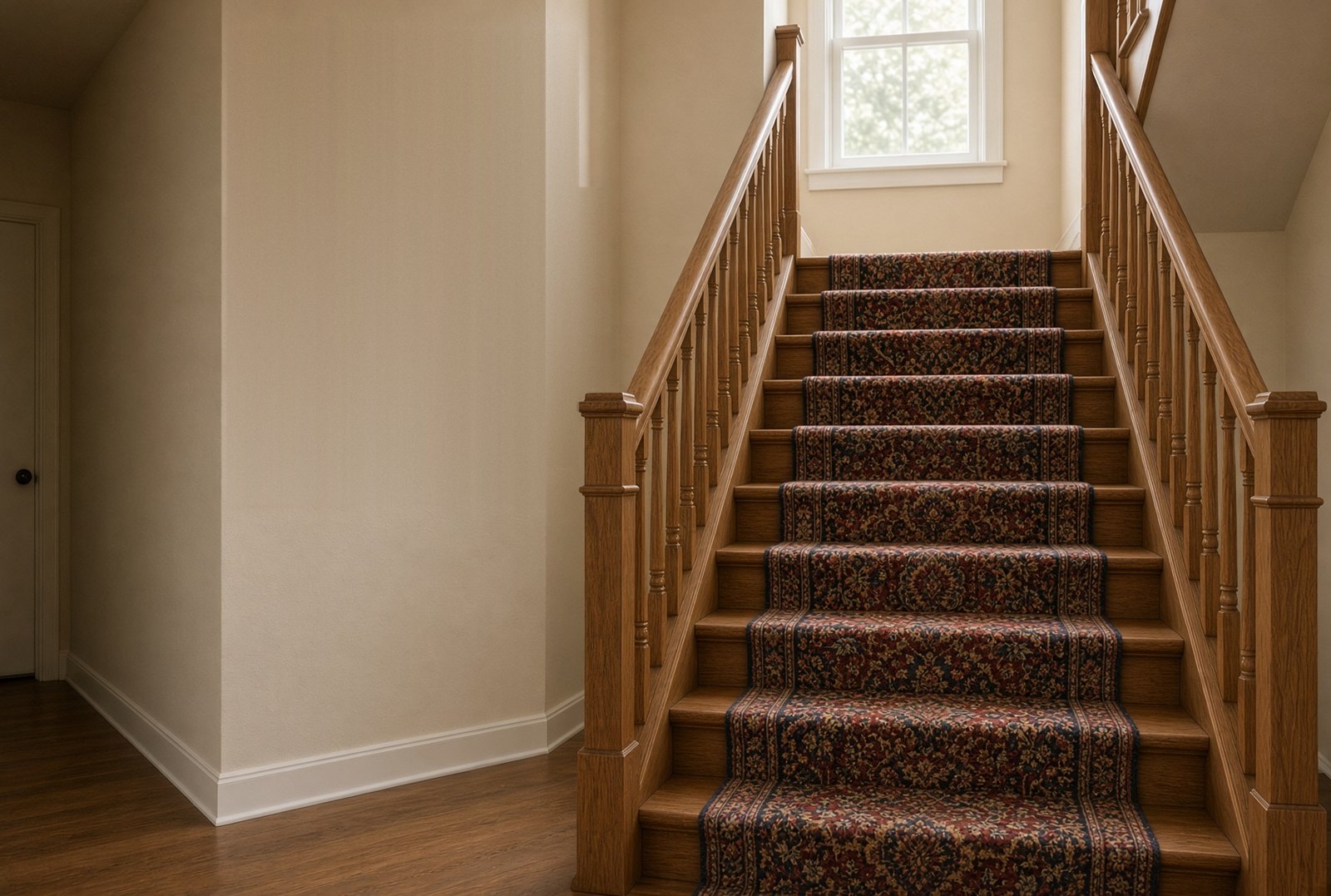
The first thing that sets the price is not the chair. It is the shape of your stairs.
If your staircase runs straight from one floor to the next, with no bend and no landing, you are in luck. A straight lift is the simplest kind, the most common, and the cheapest. New, the National Council on Aging puts it at roughly $2,500 to $5,000 (NCOA).
If your stairs turn a corner, it is a different animal. A curved lift has to be measured and made for that one staircase, which is why it costs the most: $8,000 to $12,000 or more with installation, by the same count (NCOA).
A lift for porch or deck steps outside, built to stand the weather, runs about $4,000 to $8,000 new (NCOA).
Price ranges as published by the National Council on Aging (NCOA). Your own quote depends on your stairs and your installer.
Two plain facts are worth knowing before anybody comes to measure.
A stair lift is fastened to the stair treads, not to the wall, so putting one in does not usually mean opening walls up (NCOA).
And because a curved lift is made to fit one particular staircase, a used one is harder to reuse. NCOA says buying a pre-owned curved lift is possible but trickier, since it may need to be re-fitted to your stairs, and that adds to the installation cost (NCOA).
Put those two together and you have the thing to think about. A curved lift is money spent on this staircase, in this house.
📅 Rent, Buy Used, or Buy New
Here is where the one question starts paying for itself.
A good many lifts are wanted for a season rather than a lifetime. A new hip, a bad winter, a few months of getting back on your feet. For that, NCOA points out that many companies rent standard lifts for about $300 to $500 a month, or $900 to $1,500 for three months, and it warns that installation and a security deposit are often extra (NCOA).
That same organization is plain about the other side of it. Renting generally only makes sense for a short time, because over longer periods the rent can add up to more than buying one outright (NCOA).
You can see why with a pencil. Twelve months at $300 to $500 comes to $3,600 to $6,000. That is about what a new straight lift costs to buy.
So a few months points toward renting. A few years points toward buying.
And in between those two sits the used lift. NCOA puts a used straight lift at $1,500 to $3,000, and says used lifts generally run 30 to 50 percent less than new ones (NCOA). A used lift still has to be put in, though, and professional installation adds roughly $500 to $2,000 to the price of the equipment (NCOA).
Buying used is where a little caution earns its keep. NCOA’s advice is to buy from an established dealer rather than a private seller, to ask whether the lift has been reconditioned, and to ask what warranty comes with it. Reconditioned lifts commonly carry a limited warranty of six months to a year (NCOA).
There is one more number, and it belongs on the page even though nobody puts it in the brochure. When a lift is no longer needed, many companies that sell used lifts will buy them back, but NCOA says you will typically get a fraction of the original cost (NCOA).
None of that is a reason not to buy one. It is a reason to know how long you mean to keep it before you do.
💵 What Medicare Does, and Who Else Might Help
Medicare, usually not
Read this before the visitMedicare does not typically cover stair lifts, because they are not classed as durable medical equipment under Part B. Medicare and most other insurers treat them as a home modification, in the same group as ramps and widened doorways (NCOA).
Some Medicare Advantage plans offer limited coverage or allowances for home safety changes. NCOA says this is not common and is likely to cover only a small part of the cost, so ask your own plan (NCOA).
If anybody tells you Medicare will pay for a stair lift, ask them to show you where it says so, and then check with your plan or 1-800-MEDICARE yourself.
That said, there are other doors worth knocking on, and they are easy to miss.
Medicaid. Many state Medicaid home and community-based services waiver programs offer help with stair lifts. Coverage varies by state, the lift usually has to be essential to staying safely at home rather than moving into a facility, and there are income and savings rules (NCOA).
Veterans. The VA’s Home Improvements and Structural Alterations program pays toward medically justified changes to a veteran’s home, with a lifetime limit of $6,800 or $2,000 depending on the veteran’s situation (VA). Whether a stair lift qualifies, and under which program, is the VA’s decision to make, so the place to ask is the Prosthetic and Sensory Aids Service at your VA medical center.
Your state’s assistive technology program. Most states run one, and NCOA says they may offer low-interest loans or refurbished mobility equipment at reduced cost (NCOA). You can find yours through the AT3 Center.
Your Area Agency on Aging. Local aging offices often know about grants, loans and community programs for home changes (NCOA). The Eldercare Locator finds yours by ZIP code.
Health savings and flexible spending accounts. NCOA says that with a doctor’s prescription, a stair lift typically qualifies as an eligible expense (NCOA). Check with your own plan administrator.
Taxes. The IRS lists “installing porch lifts and other forms of lifts” among the changes made to a home to accommodate a disabled condition that can count as medical expenses, and it notes that only reasonable costs count, not extras chosen for looks (IRS Publication 502). Medical expenses only help if you itemize, and only the part above a set share of your income counts. This one is worth ten minutes with a tax preparer before you rely on it.
🧰 What Costs Less Than a Lift
A stair lift answers one question: how do I get up these stairs? Sometimes that is exactly the right question. Sometimes the better question is whether you need to go up them at all, and how often.
A second handrail. Most staircases have one. The CDC’s own home safety checklist for older adults says to make sure there are handrails on both sides of the stairs, and that they run the full length of the stairs (CDC). The same checklist calls for a light switch at the top and the bottom of the stairs (CDC).
Two hands on two rails is a very different climb from one hand on one rail and the other holding on to nothing.
A handrail is only as strong as what it is fastened to. A rail screwed into drywall alone can pull away at the moment you need it. Have it fastened into solid framing, or have it put in by somebody who does this for a living. The grab bars page explains why the fastening, not the bar, is the part that fails.
A bedroom downstairs. NCOA lists turning a downstairs room into a bedroom, or putting a shower into a first-floor bathroom, as an alternative that can sometimes be a better long-term answer than relying on the stairs at all (NCOA). If the only things upstairs are a bed and a bathroom, that is worth a very long look.
The right walking aid. If the trouble is balance rather than strength, NCOA notes a walker may be enough, and Medicare usually does cover walkers with a prescription (NCOA). The canes, walkers and rollators page explains how that coverage works.
None of these is a substitute for a lift when a lift is truly what is needed. Somebody who cannot manage stairs at all needs a real answer, and a handrail is not one. That is a question for a doctor or an occupational therapist, who can look at the person and the stairs together.
✍️ Before You Sign Anything
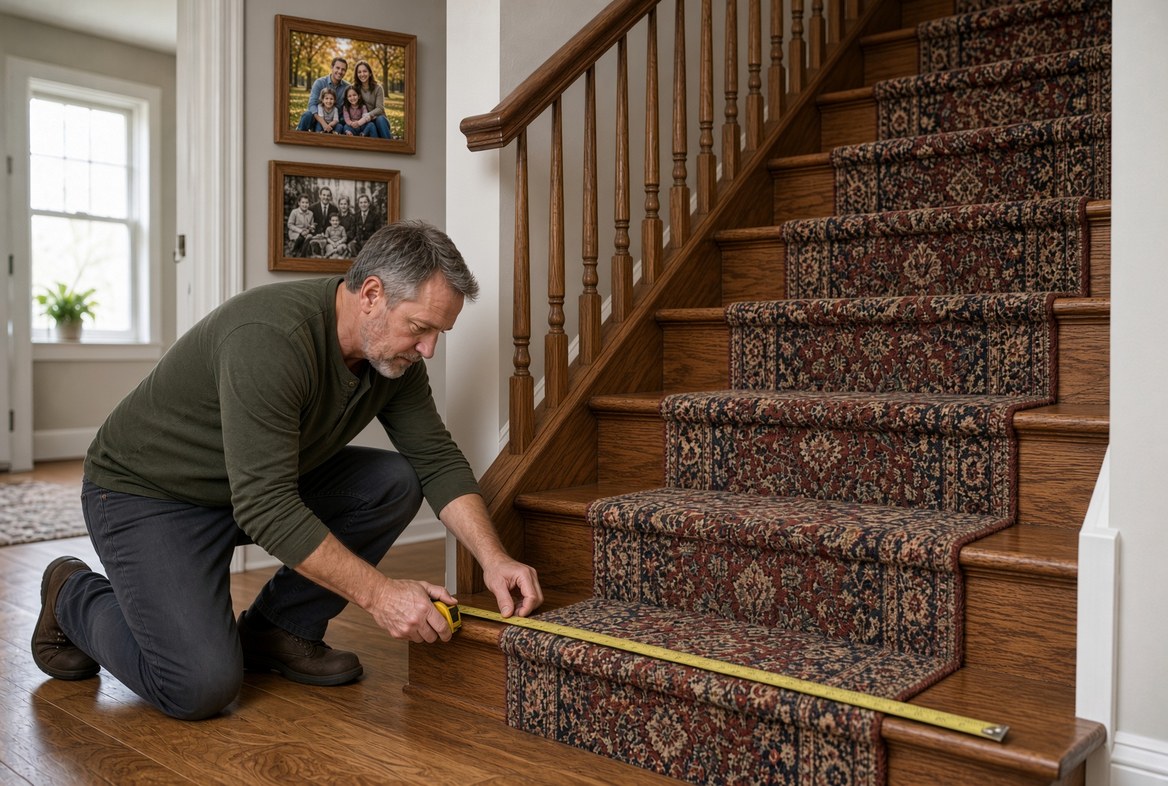
Buying one usually starts with a visit. NCOA notes that a stair lift company or installer will usually come and measure the stairs for you (NCOA). So the figure tends to get written down at your own kitchen table.
There is nothing wrong with that. It is simply worth knowing the rule that goes with it.
The Federal Trade Commission’s Cooling-Off Rule gives you three days to cancel certain sales made at your home, and it applies when you invite a salesperson to make a presentation there. It does not cover every sale, including sales finished at the seller’s own place of business (FTC). The contractor page covers what that rule does and does not do in more detail.
Questions to ask, and to get answered in writing
Ask every one- Is my staircase straight or curved, in your measurement? The answer can change the price several times over.
- What is the total price, installed? Equipment, installation, and anything else, on one line.
- Is this new, used, or reconditioned? For a used lift, ask when it was first installed, who installed it, and whether replacement parts are still available (NCOA).
- What does the warranty cover, and for how long?
- What does servicing cost, and who does it near me? NCOA says a lift should be inspected and serviced once a year by a trained, qualified technician (NCOA).
- What happens when the power goes out? Ask how it runs and for how long.
- Can I rent instead, and what would renting cost in total?
- If I stop needing it, will you buy it back, and for how much?
- Does my town or state require a permit or inspection for this?
Before you buy any model, new or used, you can search it for recalls at CPSC.gov.
A stair lift carries a person up and down a flight of stairs. Do not install, move or repair one yourself. Have it installed by a trained professional and serviced on schedule. If it starts to behave differently — a new noise, a jolt, a seat or belt that does not seem right — stop using it until a qualified technician has checked it.

⚡ Why This Belongs on the Fifty List
Most people at fifty have no use for a stair lift yet. That is exactly why fifty is the time to think about stairs.
Not about the lift. About the house.
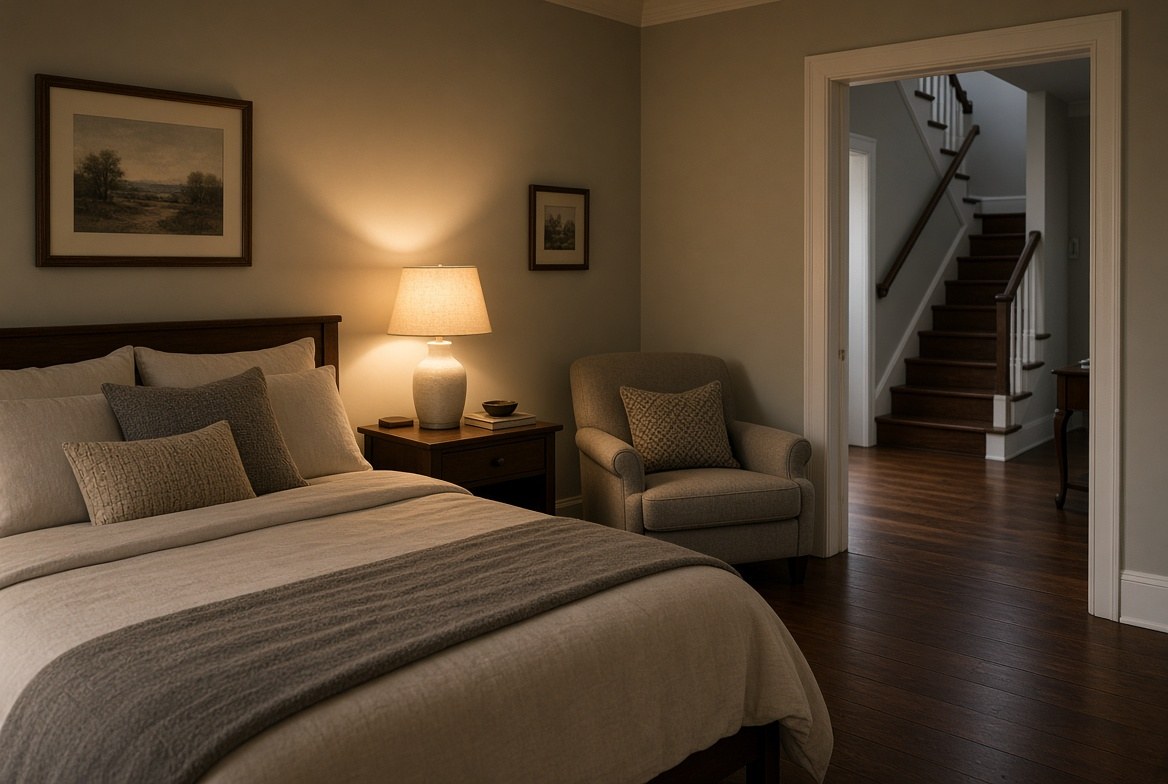
Where is the bedroom? Where is the only full bathroom? If both of them are upstairs, the stairs are going to be climbed every night for the rest of your life in that house, on the good nights and on the others.
A second handrail is an afternoon. A bedroom and a bathroom on one floor is a decision. Both are much easier to make on an ordinary Tuesday than in the week after somebody has a fall.
And if you are choosing a house at fifty-five, count the stairs between the front door and the bed before you fall in love with the kitchen.
The lift will still be there if it is ever needed. It is a fine machine. It is simply a better purchase when it is chosen by somebody who has already decided how long they are staying.
The expensive answer is always available. The cheap ones only stay available to somebody who is not in a hurry.
❓ Questions People Actually Ask
Does Medicare pay for a stair lift?
Usually not. Medicare does not typically cover stair lifts because they are not classed as durable medical equipment. Some Medicare Advantage plans offer limited home safety allowances, and some state Medicaid waiver programs may help, so check your own plan and your state.
How much does a stair lift cost?
It depends mostly on the shape of the stairs. The National Council on Aging puts a new straight lift at about $2,500 to $5,000, a new curved lift at $8,000 to $12,000 or more with installation, and a new outdoor lift at about $4,000 to $8,000.
Is it cheaper to rent or buy a stair lift?
Renting is usually cheaper only for a short time. Rentals commonly run about $300 to $500 a month, often plus installation and a deposit, so a year of renting can cost about as much as buying a new straight lift.
Can I buy a used stair lift?
Yes, and straight lifts are the easiest to find used. A used straight lift typically costs $1,500 to $3,000 plus installation. Buy from an established dealer, ask whether it has been reconditioned, and ask what warranty comes with it. A used curved lift is harder, because it may need to be re-fitted to your stairs.
Are there cheaper alternatives to a stair lift?
Sometimes. Handrails on both sides of the stairs, a light switch at the top and bottom, a bedroom moved downstairs, or the right walking aid can be enough for some people. Whether a lift is needed is a question for a doctor or occupational therapist.
📚 Where This Comes From
Every figure on this page is linked where it appears, and every source is listed again here. This page names no company that makes, sells, rents or installs stair lifts.
- Costs, used lifts, renting, installation, warranties and servicing — National Council on Aging, Used Stair Lift Buyers Guide.
- Medicare, Medicaid, veterans’ programs, help paying and alternatives — National Council on Aging, Medicare and Stair Lifts.
- The VA home improvements program — U.S. Department of Veterans Affairs, Prosthetic and Sensory Aids Service.
- Lifts as a medical expense — Internal Revenue Service, Publication 502.
- Handrails and stair lighting — Centers for Disease Control and Prevention, Check for Safety: A Home Fall Prevention Checklist for Older Adults.
- The three-day cancellation rule — Federal Trade Commission.
- Finding local help — Eldercare Locator and the AT3 Center directory of state assistive technology programs.
- Recalls — U.S. Consumer Product Safety Commission.