📞 The Pitch, and What It Leaves Out
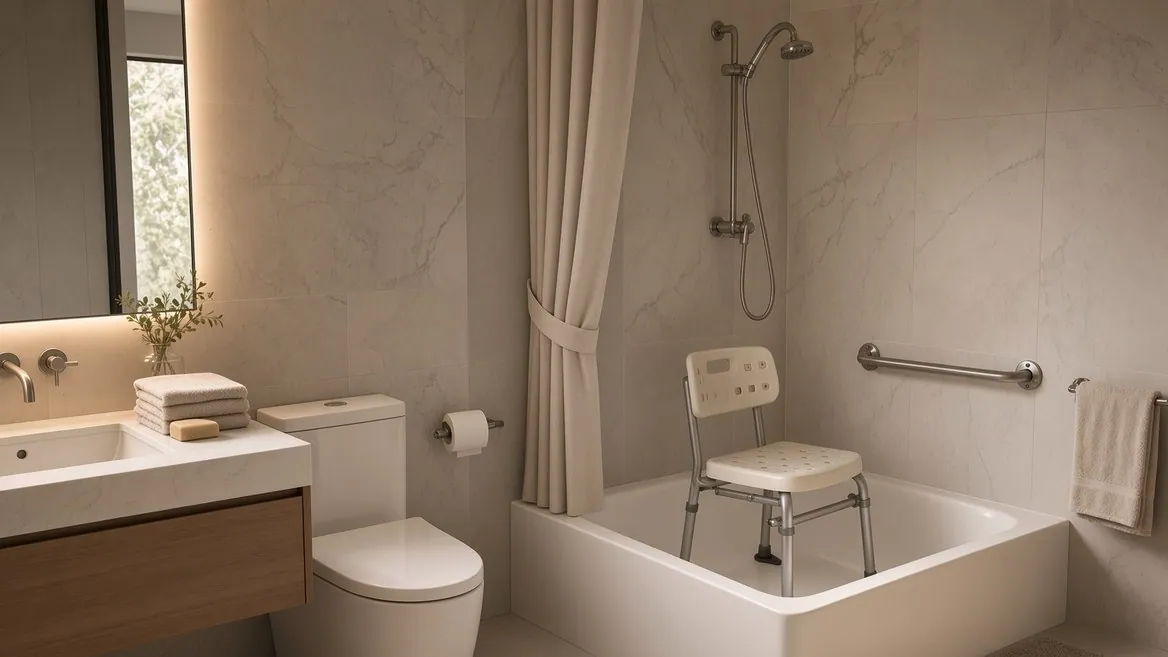
The advertisement is always the same picture. A woman about seventy, smiling, sitting in warm water up to her shoulders behind a little door. Underneath it says something about independence and dignity, and there is a number to call.
Everything in that picture is true. She is safe, she is comfortable, and she got in without lifting a leg over a wet rim. What the picture cannot show you is the twenty minutes on either side of it.
This page names no company and criticises no brand. Walk-in tubs are a real product that genuinely helps some people, and nothing here says otherwise. Every fact below comes from what the sellers themselves publish — the manufacturers' own product listings and the industry's own installer directory. We are not disputing their claims. We are reading them carefully.
🚪 The Door Seals From the Inside
Here is the piece of engineering the whole page turns on, and once you see it you cannot unsee it.
The door on a walk-in tub is held shut by the water pressure inside. That is what makes it watertight, and it is a good design. But it has one consequence that no advertisement mentions:
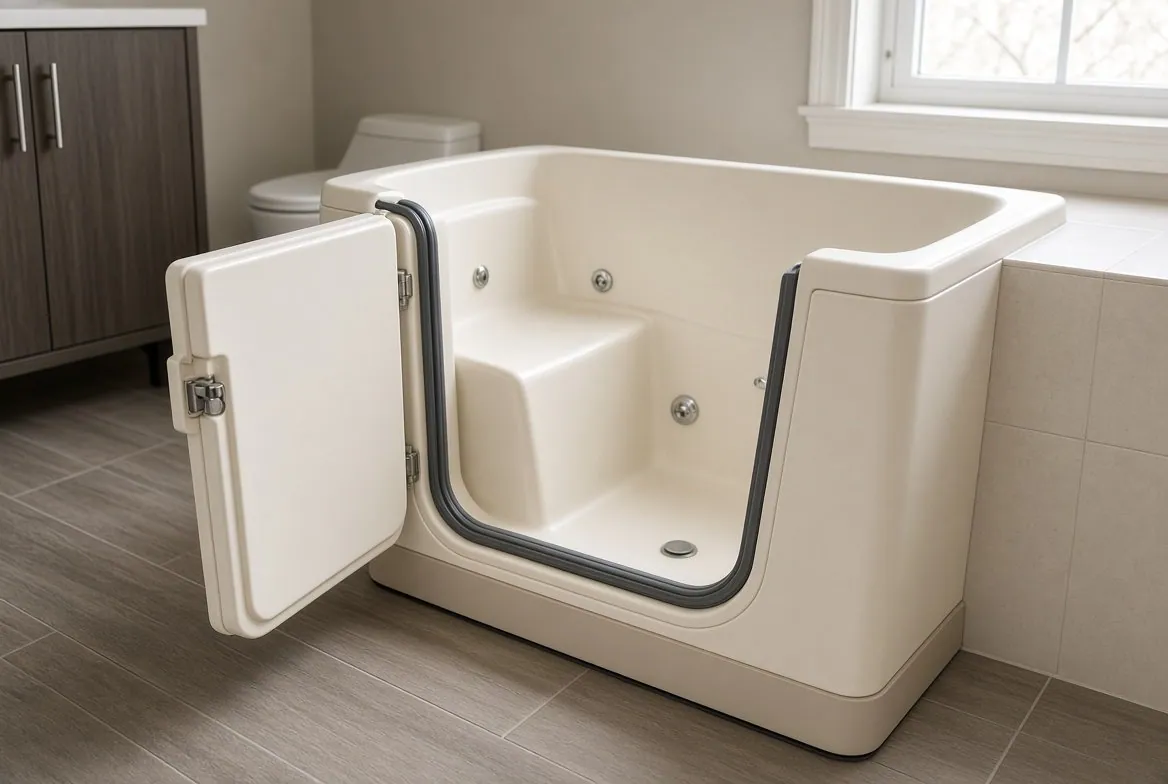
The tub cannot be filled before you get in, and it cannot be opened until it has emptied.
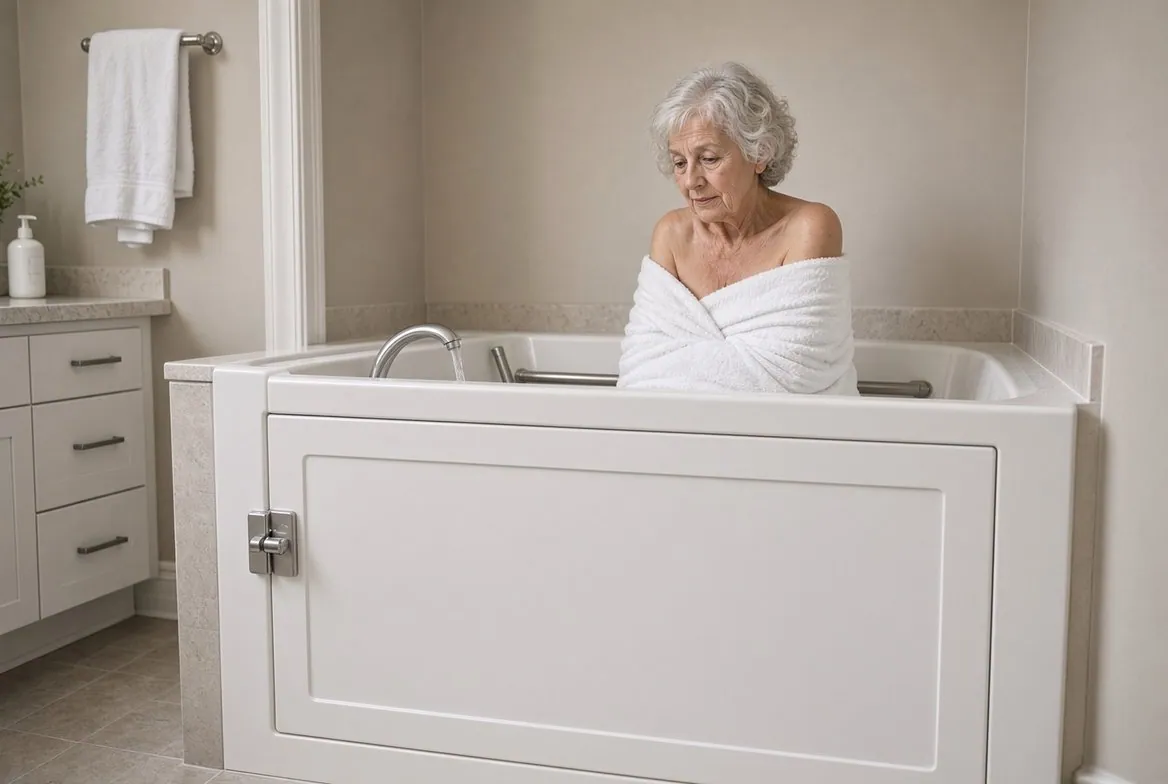
So the bath goes like this. You open the door and sit down in an empty tub. You turn the water on and you sit there, undressed, while it fills around you. You have your bath. Then you pull the plug and you sit there again, wet, while it drains — because the door will not open until the water is gone.
That is not a fault, a defect, or a bad installation. It is how the product works, and it works that way in every one of them.
⏰ How Long, According to the People Selling Them
We could tell you it feels like a long time. Instead, here are the figures published by the industry's own contractor-matching service — a site that exists to sell you an installation, so it has no reason to make this sound worse than it is.
Read the small print on those. Six to eight minutes is the figure with the upgraded faucet — the one sold as an extra. And the ten additional minutes apply to a larger tub or an ordinary drain, which is to say the cheaper version of the same product.
There is a reason it takes that long, and it is simple arithmetic. A walk-in tub holds between forty and eighty gallons. An ordinary bathtub holds twenty-five to forty-five. You are filling something roughly twice the size, through household plumbing, while sitting in it.
And the same industry source gives this instruction, which is worth reading twice: stay seated until the water is completely gone, so you do not open the door on a full tub's worth of water.
Sit down and wait is not our advice about the product. It is theirs.
🔥 The Heated Seat Tells You Everything
If you want one piece of evidence that the wait is a real and known problem rather than our opinion of it, you do not need a single customer review. Go and read the manufacturers' own product listings on any large home improvement retailer's website.
Model after model, from more than one maker, carries the same bullet point in the list of features. Not in the small print — in the sales pitch:
“Heated seat and back keeps you warm while your walk-in tub fills.”
Sit with that for a moment.
Nobody sells a heated seat as a solution to being cold while it fills unless getting cold while it fills is an ordinary part of using the thing. That sentence is not a complaint from a disappointed customer. It is the manufacturer's own answer to a problem the manufacturer knows you are going to have. They are advertising the cure, which is how you know about the disease.
The same listings sell you a fast-fill faucet and, on the better models, "dual drain technology" for "fast, reliable drainage." Nobody markets a fast fill unless the normal fill is slow. Every one of those upgrades is a paid solution to the same twenty minutes.
And they work — that is the honest part. A heated seat and a fast-fill faucet make a real difference. They are also extras, on a product that already costs thousands, to make the basic experience tolerable.
💰 What It Costs, and What Medicare Does
Installed prices run from around four thousand dollars to twenty thousand and beyond, depending on what has to be done to your plumbing and your electrics. The tub itself is only part of it.
Medicare almost certainly will not pay
Original Medicare generally does not cover walk-in tubs. They are treated as a home modification or a comfort item rather than durable medical equipment. A cane, a walker, a wheelchair, a commode — those are DME and are covered with a prescription. A bathtub is not.
Some Medicare Advantage plans carry a modest home-modification allowance, commonly a few hundred to a couple of thousand dollars a year, and generally with prior authorization. Some state Medicaid waivers help with home modifications. Neither is a reason to buy one, and neither should be described to you as "Medicare covers it." If a salesman says that, you have learned something about the salesman.
The tax deduction in the sales pitch
You may be told the tub is tax deductible as a medical expense. That is sometimes true and it is far narrower than it sounds. It only counts to the extent the cost exceeds any increase in your home's value, only if you itemise rather than take the standard deduction, and only above the income floor for medical expenses. For most people, on most installations, the real deduction is a good deal smaller than the pitch implies — and it is a question for an accountant, not for the man in your living room.
🛀 What the Same Money Buys Instead
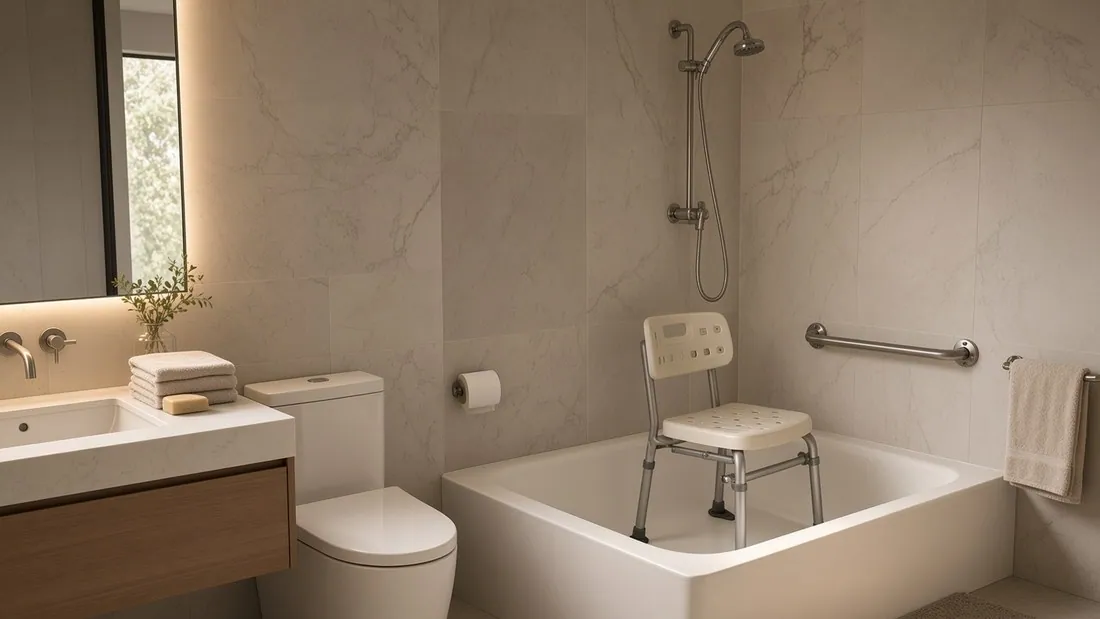
The thing to compare a walk-in tub against is not another walk-in tub. It is the other ways of solving the same problem, which is getting clean safely without stepping over a high wet rim.
- A shower chair and two properly anchored grab bars — roughly $100 to $500. The bars have to go into studs or blocking, not into tile with plastic anchors, and that is a job for somebody who knows what is behind the wall. This is the cheapest real answer and often the best one. See the grab bars page for where they actually go.
- A tub cut-out — roughly $800 to $2,000. A section of your existing tub wall is removed and a watertight step-through insert fitted. You lose the ability to take a deep bath, and you keep everything else about your bathroom.
- A curbless or roll-in shower — roughly $2,500 to $10,000. More work and more money, but it is the option that still works if a wheelchair or a walker arrives later, and it does not ask anybody to sit and wait for anything.
The honest case for the walk-in tub, because there is one. If soaking in hot water is genuinely medicine for you — serious arthritis, chronic pain, a condition where a deep warm bath does something a shower cannot — then a walk-in tub does a thing no shower does, and the twenty minutes may be a fair price. Buy it for that reason if you buy it. Do not buy it because stepping over the rim has got difficult, when three hundred dollars of grab bars and a chair solves that without the wait.
✍️ How It Is Sold, and Your Three Days
This is not usually bought in a shop. It is sold in your living room, by appointment, often after a television advertisement or a mailed card, frequently to somebody sitting alone.

Which means the consumer protections for a sale made at your own home apply in full.
You have three business days to cancel a contract signed in your own home — federal law, $25 and up, for any reason at all. The waiver a salesman may show you does not take that away, and putting one in the contract is itself against the rule.
And there are limits on what he can take as a deposit. California caps it at $1,000 or ten per cent, whichever is less, which is the benchmark to measure any demand against.
All of that, including the lien risk on the installation work, is on the contractor page.
Two more things worth doing before anybody signs anything:
- Ask to sit in one, dry, for the length of a fill. Not a showroom minute — ask to sit in the actual tub, in your clothes, for eight minutes, with nothing happening. That is the honest demonstration and it is the one nobody offers.
- Ask what happens if the power fails while the tub is full, on a model with a powered pump or drain. Get the answer in writing.
📋 Why This Belongs on the Fifty List
Because the bathroom is the one room in the house where the decision gets made for you if you wait.
At fifty-five, standing in your own bathroom on an ordinary Tuesday, you can look at the tub and decide calmly what it should become. Grab bars this year. A cut-out or a proper shower when the bathroom is next due anyway. The cheap answers are all available to somebody who is not in a hurry.
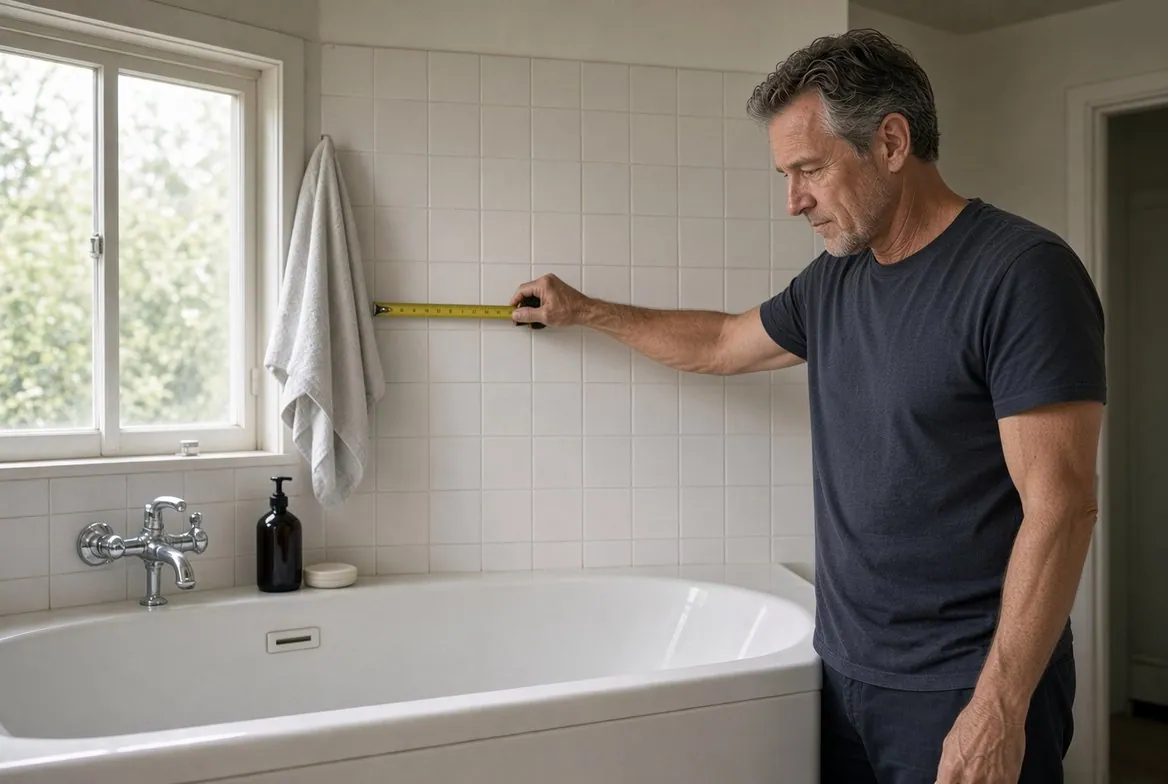
At seventy-eight, six weeks after a fall, with a daughter who has taken time off work and a salesman in the front room who can start on Thursday, the expensive answer is the only one anybody has time to consider. That is not a failure of judgement. It is what urgency costs, and it is the whole argument of this site in one room.
So do the cheap thing early and keep the option open. If a deep hot soak turns out to be what your body actually needs, buy the tub then, with your eyes open, knowing about the twenty minutes and having sat through eight of them dry.
Just do not let the first time you think about your bathroom be a week when somebody else is holding the pen.
The staircase is the same kind of decision. The stair lift page works through it the same way this one does.
❓ Questions People Actually Ask
How long does a walk-in tub take to fill and drain?
The industry’s own contractor-matching services publish about six to eight minutes to fill with an upgraded fast-fill faucet and two to three minutes to drain, and note that a larger basin or a standard drain can add roughly ten minutes. Because the door is sealed by the water, you are sitting in the tub for all of it.
Why do you have to sit in a walk-in tub while it fills?
The door seals from the inside and is held shut by the weight of the water, so the tub cannot be filled before you get in and cannot be opened until it has drained. That is not a fault or a bad installation; it is how the design works.
Does Medicare pay for a walk-in tub?
Original Medicare generally does not. A walk-in tub is treated as a home modification or comfort item rather than durable medical equipment, unlike a cane, a walker or a wheelchair. Some Medicare Advantage plans carry small home-modification allowances with prior authorization, and some state Medicaid waivers help. If a salesman tells you Medicare covers it, you have learned something about the salesman.
What does a walk-in tub cost?
Installed prices commonly run from about $4,000 to $20,000 or more depending on the plumbing and electrical work involved. Prices seen on retail listings for the units themselves include $4,399, $5,802 and $6,431 before installation.
What is a cheaper alternative to a walk-in tub?
A shower chair plus two grab bars anchored into studs runs roughly $100 to $500 and solves the step-over problem, which is the problem most people actually have. A tub cut-out runs about $800 to $2,000, and a curbless or roll-in shower about $2,500 to $10,000.