🚪 The Knock, the Call, the Postcard
Plainly, first. This page is for educational purposes only. BuyItAt50 is not a heating and air conditioning contractor, does not sell equipment, and does not name or recommend any maker, dealer or installer. Nothing here is a reason not to replace a system that is genuinely worn out.
It might come as a postcard. It might come from the technician who came out to look at a weak breaker. It might come from a neighbor who heard it from somebody. It goes roughly like this: “That refrigerant in your unit has been banned. They do not make it any more. You need to replace the whole system before it is too late.”
There is a grain of truth in it, which is what makes it work. The refrigerant rules really did change, and the price of the old refrigerant really is going up.
But the conclusion is wrong. No federal rule requires you to replace an air conditioner because of the refrigerant in it. The rules are about what goes into new equipment. They say nothing about taking yours away.
This page is the plain version, from the government’s own documents, so you can hear that pitch with a straight face and a few good questions.
📝 What Actually Changed
In 2020 Congress passed the American Innovation and Manufacturing Act, which tells EPA to cut the production of a family of refrigerants called HFCs. R-410A, the refrigerant in most home central air systems and heat pumps installed in the last fifteen years or so, is one of them.
In 2023 EPA wrote a rule under that law. The part that touches homeowners says that new home air conditioning and heat pump systems made or imported from January 1, 2025 must use a refrigerant with a much lower global warming potential than R-410A. That is why new systems now come with a different refrigerant, usually R-454B or R-32.
The 2023 rule also set a deadline of January 1, 2026, after which older R-410A split systems could no longer be installed even if they were sitting in a warehouse. That deadline is gone. In May 2026 EPA published a final rule removing it, so equipment made or imported before January 1, 2025 can keep being installed until the supply runs out. The change took effect on July 27, 2026 (Federal Register, May 26, 2026; NAHB).
One caution about your own state. States can set stricter rules than EPA. The National Association of Home Builders reports that New York wrote the original January 1, 2026 deadline into its own law, so R-410A systems cannot be installed there (NAHB). Ask your installer which rule applies where you live, and ask them to show you.
Notice what every one of those rules is about: equipment being made, imported or installed. Not one of them is about equipment already running on the side of your house.
✅ What Did Not Change
Your system is legal to keep. It is legal to run. It is legal to repair.
When EPA wrote the 2023 rule, it was explicit that the rule did not stop the sale of components needed to repair existing refrigeration and air conditioning systems (Federal Register, May 26, 2026, summarizing the 2023 rule). The air conditioning industry’s own trade group put it in one line when the rule was being argued over: it was a rule for new equipment (ACHR News).
If this sounds familiar, it should. It has happened once before. The refrigerant before R-410A was R-22, sometimes called Freon. Its production and import in the United States ended on January 1, 2020. EPA’s answer to homeowners then was the same as it is now: there is no EPA requirement to get a new system or to convert an existing one, and recovered and reclaimed refrigerant stays available for servicing (EPA, Homeowners and Consumers FAQ). There are R-22 systems still running in American houses today.
R-410A is on the same road, a good deal more slowly.
💵 The Part That Is True: the Price
Here is the grain of truth in the sales pitch.
Under the 2020 law, production of HFCs, R-410A among them, is being cut in steps until it reaches 15 percent of its old level in 2036 (NAHB). Less of something usually means it costs more, and R-410A has followed that rule. A system that needs a few pounds added every summer will cost more to keep going every year.
That is not a reason to replace a healthy system. It is a reason to stop a leaky one from leaking.
Fix the leak, do not top it off
EPA’s own adviceAn air conditioner does not use up its refrigerant the way a car uses gasoline. If it needs more, it has a leak. EPA’s advice to homeowners is to ask the technician to locate and repair the leak instead of topping off the system, which avoids paying for the same refrigerant again next summer (EPA).
Only a technician certified under Section 608 of the Clean Air Act may add or remove refrigerant, and it is illegal for anyone to knowingly vent it into the air. Ask to see the technician’s certification card. A legitimate technician will not mind.
The other thing that keeps a system going is the ordinary stuff: a clean filter, a clear space around the outdoor unit, and a tune-up before the hot weather rather than during it. As EPA puts it, the most important thing an owner can do is maintain the system properly.
🏠 The Two Halves of a Central System
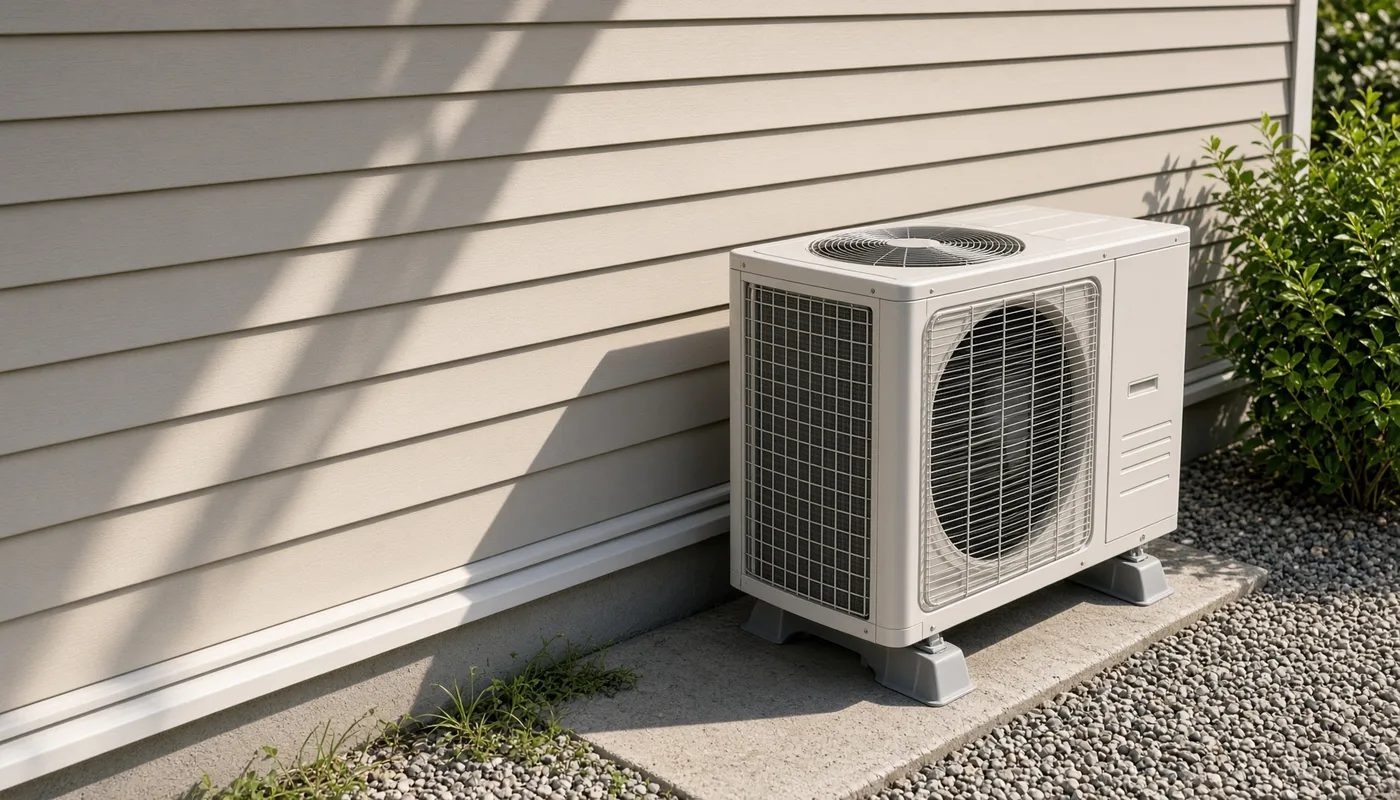
Most central air systems come in two halves. The part outside, with the fan on top, is the condenser. The part inside, usually sitting on top of the furnace or air handler, is the indoor coil. Copper lines run between them, and the refrigerant goes round and round through all of it.
Here is where the change can genuinely cost you money, and where you deserve a straight answer.
The new refrigerants are not something you pour into an old system. Equipment for them is designed and listed for them, because R-454B and R-32 are classed as mildly flammable and come with their own safety requirements. Refrigerant makers themselves say there is no drop-in retrofit of an R-410A system to the new refrigerants (Arkema, a refrigerant maker).
So if one half of an R-410A system dies, the honest choices are usually these:
- Repair it. A failed fan motor, capacitor or contactor is a part, not a system.
- Replace that half with R-410A equipment, if older stock is still available where you live and a matched replacement is sensible.
- Replace both halves with a new system on the new refrigerant.
Every one of those can be the right answer, depending on the age and condition of the half that is still working. What is not honest is being told only the third exists. Ask for the first two priced as well, even if you end up choosing the third.
If you are thinking about a generator, read the soft starter and data plate guide before you replace anything. The plate on the outdoor unit tells you more than most salesmen will.
🪟 Window Units and Portable Air Conditioners
Window units and portable air conditioners come sealed from the factory, with the refrigerant already inside, so nobody has to open them up to install them. The rules treat them differently.
There is no installation deadline for them. Units made with the older refrigerants before the compliance date can be sold until no later than January 1, 2028 (NAHB). The one in your bedroom window is yours to keep running until it quits.
When it does quit, it has to be disposed of properly, because the refrigerant must be recovered before it is scrapped. Your trash hauler or local solid waste office can tell you how they handle appliances.
✍️ If Somebody Says You Must Replace It
Sometimes a system really is done. Old, rusted, leaking, and costing more each year than it is worth. A good contractor will tell you that, and that is a perfectly sound reason to replace it. The refrigerant law is not.
Questions to ask, and to get answered in writing
Ask every one- What exactly is wrong with my system? Which part, and how do you know?
- What would it cost to repair that part? Ask for the repair to be priced even if you are advised against it.
- If it is low on refrigerant, where is the leak, and what does it cost to fix it?
- Which rule are you saying makes my system illegal? Ask for it by name. There is not one.
- Can only the failed half be replaced, and what would that cost?
- What is the total price installed, including any changes to the indoor coil, lines, wiring and permits?
- What warranty comes with it, from whom, and what does it require of me?
- May I see your Section 608 certification and your contractor’s license?
Then get a second written quote from a different company before you sign anything. On a job this size, a second opinion is cheap.
If the sale is made at your home, the Federal Trade Commission’s Cooling-Off Rule may give you three days to cancel. It does not cover every sale (FTC). The hiring a contractor page covers deposits, liens and the rest of it.

Do not open or work on the refrigerant side of an air conditioner yourself. It is under pressure, the new refrigerants are mildly flammable, and federal law requires a certified technician for any work that adds or removes refrigerant. Changing a filter and keeping the outdoor unit clear are the homeowner’s jobs; the rest belongs to a professional.
⚡ Why This Belongs on the Fifty List
At fifty, the air conditioner is an appliance. At seventy-five, in a heat wave, it is a piece of medical equipment. The emergency cooling guide explains why.
That is exactly why it is worth deciding about it calmly, in April, rather than in July with the house at ninety and a man in the driveway telling you it is illegal.
Know how old your system is. Have it looked after every spring. Ask for leaks to be fixed rather than filled. And when it really is time, replace it because it is worn out, on your schedule, with two written quotes on the kitchen table.
A frightened customer pays full price. A customer who knows the rule pays for what is actually wrong.
❓ Questions People Actually Ask
Is my R-410A air conditioner illegal now?
No. EPA's rules restrict which refrigerants can be used in newly made air conditioning equipment. They do not require anybody to replace a system already installed, and parts to repair existing systems can still be sold.
Can I still get my R-410A air conditioner repaired and recharged?
Yes. A certified technician can still service and recharge an R-410A system. R-410A production is being cut step by step under federal law, so expect it to cost more over time, which is a good reason to have a leak found and fixed rather than topped off.
Can I still buy a new R-410A air conditioner?
In most places, yes, as long as the equipment was made or imported before January 1, 2025. In May 2026 EPA removed the January 1, 2026 installation deadline for that older equipment, so it can be installed until supplies run out. Some states have their own rules, so check yours.
Do I have to replace my air conditioner because of the refrigerant change?
No. Replace it when it is worn out, when repairs stop making sense, or when you want a more efficient system, not because somebody tells you the old one is about to become illegal.
What refrigerant do new air conditioners use?
Most new home systems use R-454B or R-32. Both have a much lower global warming potential than R-410A and are classed as mildly flammable, which is why equipment built for them has its own safety requirements.
📚 Where This Comes From
Every source is linked where it is used and listed again here. Refrigerant rules have changed twice since 2023 and may change again; check before you rely on them.
- The May 2026 final rule removing the installation deadline — Federal Register, 91 FR 31284, May 26, 2026.
- What the rule means for homes, New York’s own deadline, window units and the 2036 phasedown — National Association of Home Builders.
- The industry’s view that the rule is for new equipment — ACHR News.
- R-22, leaks, certified technicians and maintenance — U.S. EPA, Homeowners and Consumers FAQ.
- No drop-in retrofit to the new refrigerants — Arkema, a refrigerant maker.
- The three-day cancellation rule — Federal Trade Commission.