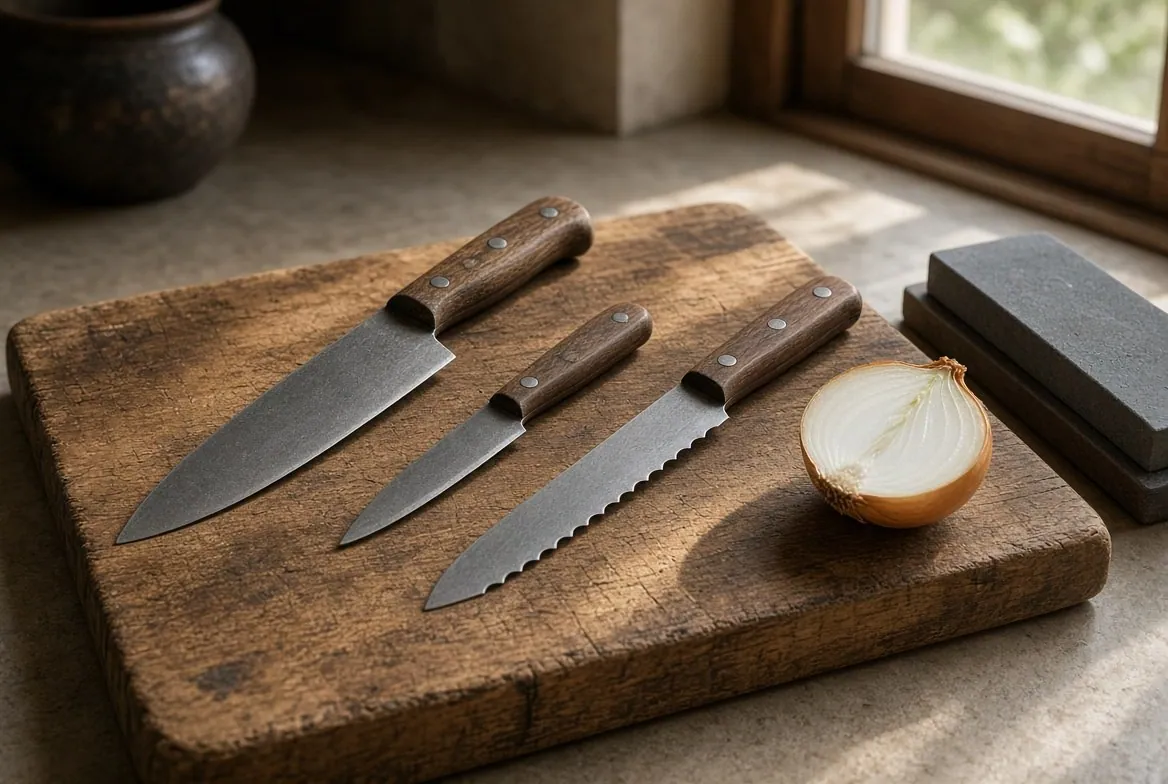
Why a Forged Knife Lasts a Lifetime
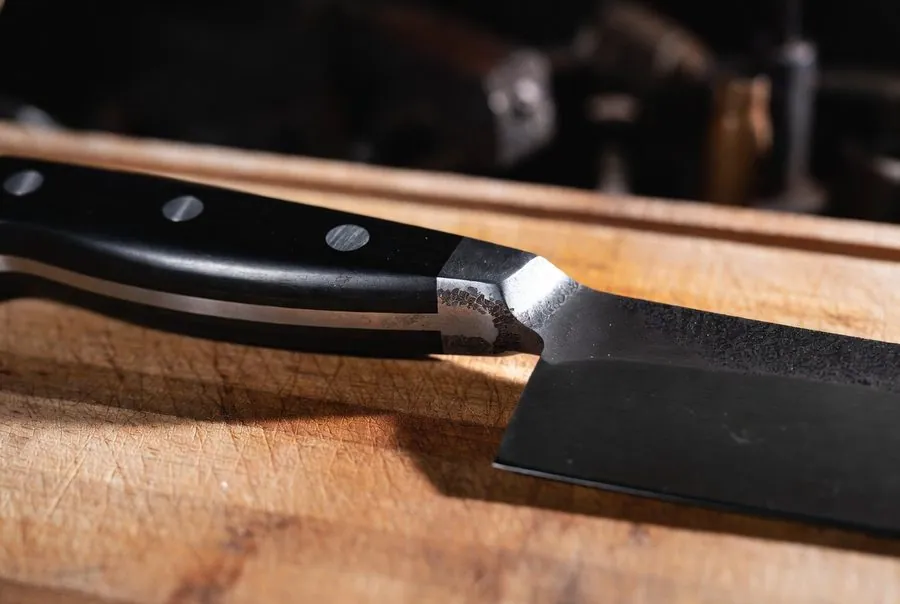

Walk the knife aisle and you're looking at two completely different objects wearing the same shape. A stamped knife is cut out of a sheet of steel like a cookie — light, cheap, a little flexible, made to a price. A forged knife starts as a single thick bar of steel, hammered and shaped, with a full tang running the whole length of the handle and a bolster where blade meets grip. It's heavier, it balances at your finger instead of out at the tip, it takes and holds a serious edge, and there is nothing in it that wears out: no coating to peel, no battery, no electronics, no model year. The steel doesn't care what decade it is.
That's why forged knives are handed down the way cast iron is handed down — and why this page belongs to the same family as our cast iron guide. Sharpening removes a whisper of steel each time; at a home cook's pace, a forged blade has thirty, forty, fifty years of whispers in it. The knife you buy at 50 is not a purchase you'll repeat at 60 and again at 70. It's the last time you'll ever think about it.
The honest exception, stated plainly: Victorinox — the Swiss maker on our homepage card — earned its reputation with a famous line that is actually stamped, and it's the one stamped knife professionals genuinely respect: light, wickedly sharp out of the box, and cheap enough to feel like a misprint. If budget rules the day, it's the smart buy. If you're buying once for the next thirty years — the whole idea of this site — buy forged.
Sharp Is Safe — The Part That Sounds Backwards and Isn't
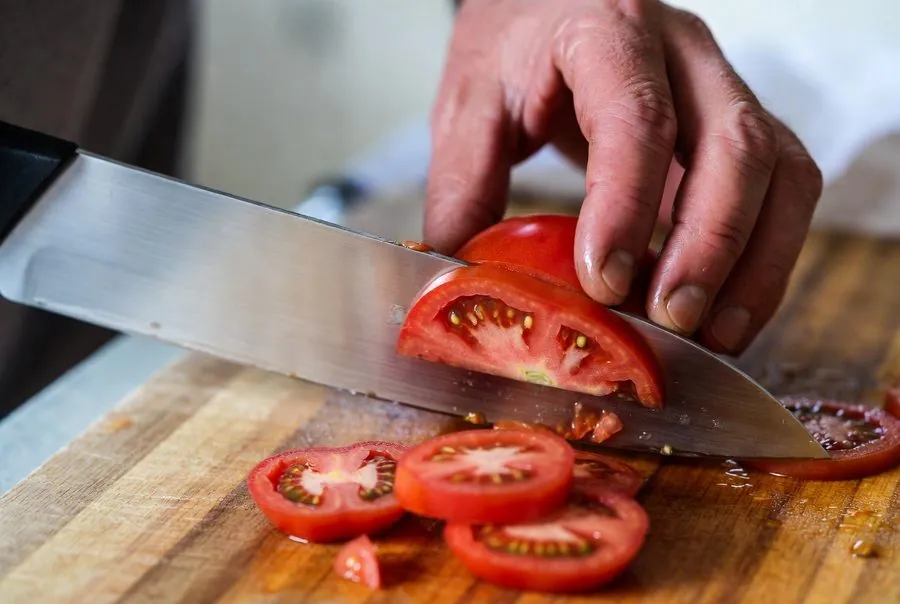
Here is the physics in one kitchen moment: a dull blade can't bite a tomato skin, so you press. The pressure builds, the edge skates sideways, and when it finally breaks through, all that stored force goes somewhere fast — usually toward the hand holding the food. A sharp blade bites immediately, cuts with almost no downward force, and goes exactly where you point it. Consumer-safety injury data backs the intuition: hundreds of thousands of kitchen knife injuries a year, the great majority of them lacerations to fingers and thumbs, and the classic mechanism is the slip under pressure — the dull knife's signature move.
Now add the part that makes this a page for people near fifty and not a page for everybody: grip strength declines with age — it's the same arithmetic behind our easy-grip hardware guide, where the numbers run from a few percent down at 50 to roughly a third down by the late 70s. A dull knife demands force from exactly the hands that have less force to spend, and a tired grip is a loose grip. A sharp forged knife flips the equation: the blade does the work, the hand does the steering. That's what the card on our homepage means by sharp is safe — it isn't a slogan, it's a force budget.
Keeping it sharp is two different jobs, and knowing the difference is most of knife care: honing (ten seconds on the steel that comes with the set, once a week — it straightens the edge, removes nothing) and sharpening (once or twice a year — a good two-stage pull-through sharpener at home, or a professional service for a few dollars a knife, often at the farmers market or the hardware store). Weekly steel, yearly sharpening, and the set never goes dull in the first place.
How to Sharpen Them — The Tools and the Ten Minutes
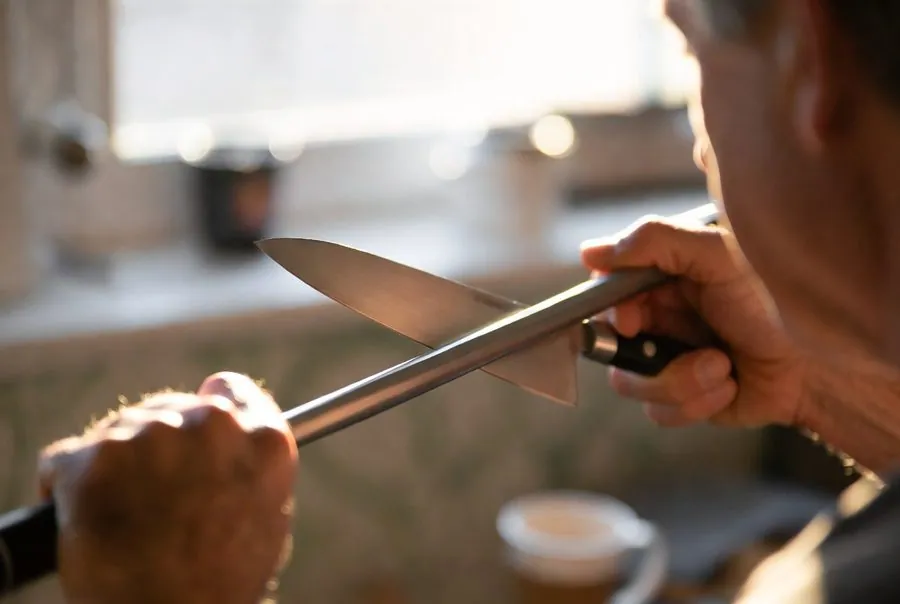
First, the weekly hone — ten seconds, no skill required. The steel that comes with the set doesn't sharpen; it straightens the microscopic edge that rolls over with use. The senior-friendly way to do it: stand the steel tip-down on a cutting board like a walking cane and hold it still — don't wave both hands in the air like the TV chefs.
Lay the blade against the steel at roughly a 15–20 degree angle (about the tilt of two stacked quarters under the spine), then draw the knife down and toward you, heel to tip, like you're carving a thin slice off the steel. Four or five light strokes per side, alternating — the weight of the knife is all the pressure it needs. Sunday, with the coffee. Done.
Then the real sharpening — once or twice a year. Pick ONE of these four tools:
1. The two-stage pull-through sharpener ($15–$30) — the default answer for this site. Two slots — coarse and fine — with the angle built in, so your hands don't have to hold anything steady. Set it on a damp towel so it can't skate, hold the grip with one hand, seat the blade in the coarse slot at the heel, and pull straight back toward you with light, even pressure — five to eight pulls — then the same in the fine slot. Never push forward, never saw sideways. See pull-through sharpeners on Amazon (affiliate link).
2. The electric sharpener ($40–$150) — the easiest on stiff hands. Guided slots, spinning wheels, the machine holds the angle and does the work; you just draw the blade through slowly. It removes a little more steel per session than the manual tools, which matters over decades — but if wrists or grip make the pull-through a chore, this is the tool that keeps the set sharp anyway. See the Chef'sChoice 15XV electric (affiliate link). By name: the Chef’sChoice 15 Trizor XV, engineered and assembled in the USA — three stages, and it takes serrated knives too. It costs more than the range above, about $190, and it reshapes an ordinary 20-degree edge to a sharper 15 degrees on the first pass. See the Chef’sChoice 15 Trizor XV →
3. The whetstone ($25–$50) — the traditional route, and the best edge, honestly earned. A combination stone (coarse side around 1000 grit, fine side around 3000–6000) on a damp towel; soak it if the instructions say so, hold the same two-quarters angle, and sweep the blade across the stone edge-leading, heel to tip, even strokes each side, coarse then fine. It produces the finest edge of anything on this list — and it demands a steady angle held for ten minutes, which is a genuine ask of hands past seventy. No shame in skipping it; that's what option four is for. See whetstones on Amazon (affiliate link).
4. The professional ($5–$10 a knife) — zero skill, zero risk, and the one we actually recommend for a forged set. Farmers markets, hardware stores, and butcher shops sharpen knives, and mail-in services exist for everywhere else. Twice a year, the whole block goes in a towel-lined box, comes back scary-sharp, and a trained wheel removes less good steel than a decade of home guessing. For knives meant to last fifty years, that's the stewardship play.
How you know it worked — and the two rules. The test is a sheet of printer paper held by one corner: a sharp knife slices it in a clean curl; a dull one snags and tears. (The tomato works too — first-pass bite, no pressure.) Never test an edge with your thumb, and never put a kitchen knife to a bench grinder or belt sander — power tools overheat the thin edge in seconds and ruin the steel's temper permanently. The mug-bottom trick you may remember from your grandmother's kitchen does work in a pinch — and it's how knives end up scratched and unevenly ground, so let it stay a memory.
The Full Set — From Butchering to Vegetables, Every Job Covered
The reason to buy a full set instead of one good chef's knife is the same reason a toolbox holds more than a hammer: the wrong blade makes you force it, and forcing is where the danger lives. Here's what a complete block covers, job by job:
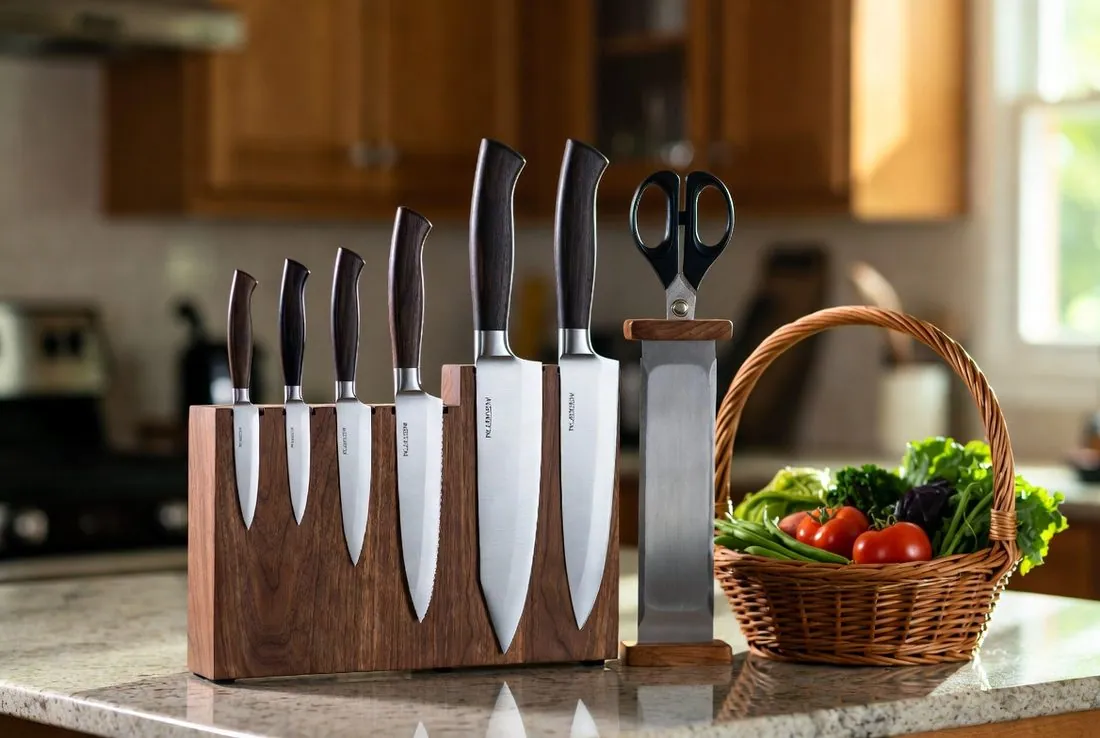
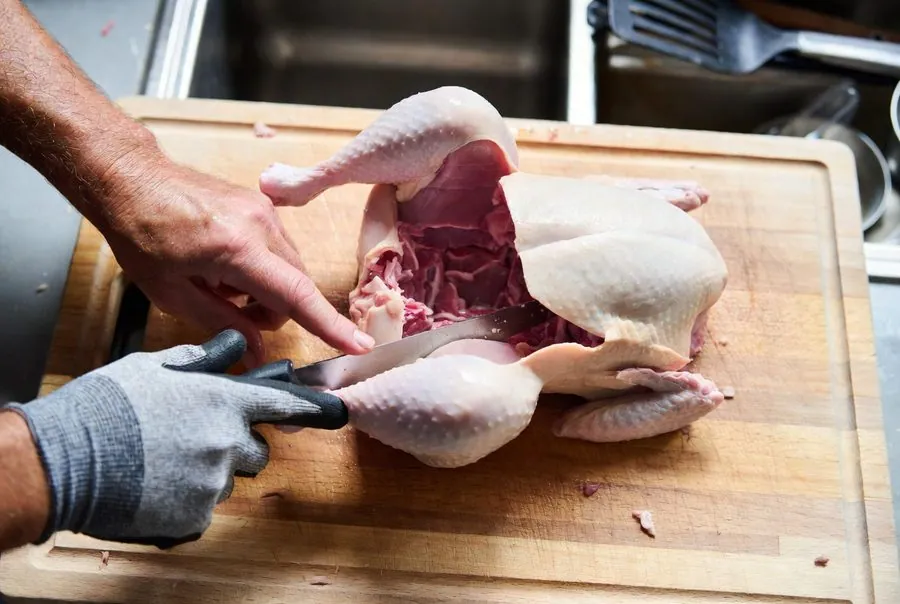
The chef's knife (8") — the workhorse: chopping, dicing, slicing a counter full of garden vegetables. If your garden feeds you, this knife processes it. The paring knife — peeling, trimming, the small close work. The boning knife — the butcher's blade: narrow, rigid or semi-flexible, made for breaking down a whole chicken from the backyard flock, boning out a roast, or processing fish and game into the freezer.
Whole animals are the cheapest way meat is sold, and this is the knife that unlocks that price. The carving knife — long, thin slices off the Sunday roast and the Thanksgiving bird. The bread knife — the serrated one, for crusty loaves and ripe tomatoes when you'd rather saw than press. The utility knife — the in-between blade for sandwiches and small jobs. Kitchen shears — spatchcocking a bird, snipping herbs, opening the packaging that fights back. The honing steel — the ten-second weekly ritual that keeps everything above working like the day it arrived.
One full forged set covers everything from butchering an animal to prepping vegetables for the canner — which is exactly the range a self-sufficient kitchen runs, and exactly why our canning guide and this page assume each other. See the Wüsthof Classic 7-piece set · the Victorinox budget exception · the Wüsthof Classic 5-inch boning knife (affiliate links).
And one glove joins the set: a cut-resistant kitchen glove for the holding hand when you're boning out a bird or working fast — a few dollars of insurance that belongs in the knife drawer the same way work gloves belong by the garage door. See the NoCry cut-resistant gloves (affiliate link).
The 50-to-70 Math
Why buy a good set near 50? Run the numbers the way this site always runs them. A quality forged block set costs a few hundred dollars once. Spread over the thirty years it will actually serve, that's pennies a week — against the drawer of $30 knife sets that go dull, get replaced, and go dull again, each one demanding more force than the last. The forged set is cheaper by 60 and it was safer the whole way.
But the deeper reason is the one the card states in six words: a real hazard with reduced hand strength. The knives don't age — your hands do. The set you buy and learn at 50, hone weekly, and sharpen yearly is the same set waiting in the block at 70, still biting the tomato skin on the first pass, still asking almost nothing of your grip.
You'll have spent twenty years building the habits — the claw grip on the holding hand, the steel on Sunday — on equipment that never changed underneath you. And when the day comes that you're done with them, they don't go in the trash. Like the skillet, they go to whichever grandkid learned to cook standing on a chair in your kitchen.
Your Plan — Sharp for the Next Thirty Years
✅ One Purchase, One Habit
One set, bought once, kept sharp with two small habits — covering everything from the backyard bird to the last tomato of the season, on the exact hands you'll have at 70. Sharp is safe, and forged is forever.
Safety context on this page reflects U.S. consumer-product injury surveillance: kitchen knives account for hundreds of thousands of emergency-visit injuries annually, the large majority lacerations to fingers and thumbs, with slips during cutting the classic mechanism — see this summary of CPSC NEISS knife-injury data and the dull-blade slip mechanism, and the plain-physics explanations of why dull blades require more force and slip at, e.g., Cozzini Bros. professional sharpening. Grip-strength decline figures referenced here are covered, with their CDC/NHANES sources, on our Easy-Grip Home Upgrades page. Nothing on this page is medical or professional safety advice; a deep cut that won't stop bleeding is an emergency — treat it like one.
❓ Plain Answers
The short version of this page, one question at a time — the answer is always the first line.
What is the best knife sharpener for arthritic hands?
An electric sharpener — the machine holds the angle and does the work, and you only draw the blade through slowly. By name: the Chef’sChoice 15 Trizor XV, engineered and assembled in the USA, with three stages and a slot that handles serrated knives. It costs about $190. The cheaper route is a two-stage pull-through sharpener set on a damp towel, or paying a professional $5 to $10 a knife twice a year. Source: product specifications.
What is the best budget chef’s knife?
The Victorinox Fibrox Pro 8-inch — a stamped Swiss knife that professionals genuinely respect. It is light, very sharp out of the box, and has a non-slip handle that is easy to hold with a weaker grip. It is the honest exception to this page’s forged-knife rule: if the budget will not stretch to a forged block set, start here.
Is a sharp knife safer than a dull one?
Yes, a sharp knife is safer, because a dull blade needs pressure, skates sideways and slips toward the hand holding the food. A sharp blade bites immediately and goes where you point it.
What is the difference between a forged and a stamped knife?
A forged knife starts as a single thick bar of steel with a full tang and a bolster, while a stamped knife is cut from a sheet of steel. Forged knives are heavier and take and hold a serious edge.
How often should I sharpen my kitchen knives?
Hone kitchen knives on a steel once a week and sharpen them once or twice a year. Honing straightens the edge and removes nothing.
What is the easiest way to sharpen kitchen knives at home?
A two-stage pull-through sharpener, at $15–$30, is the simple home answer, because the angle is built in and your hands do not have to hold anything steady. An electric sharpener is easiest on stiff hands, and a professional charges $5–$10 a knife.
Can good knives go in the dishwasher?
No, hand wash and dry good knives, because dishwasher heat and detergent wreck handles and rattling wrecks edges. Store them in a block or on a magnetic strip, never in the drawer pile.
How can I tell if my knife is sharp?
Hold a sheet of printer paper by one corner: a sharp knife slices it in a clean curl, and a dull one snags and tears. Never test an edge with your thumb.