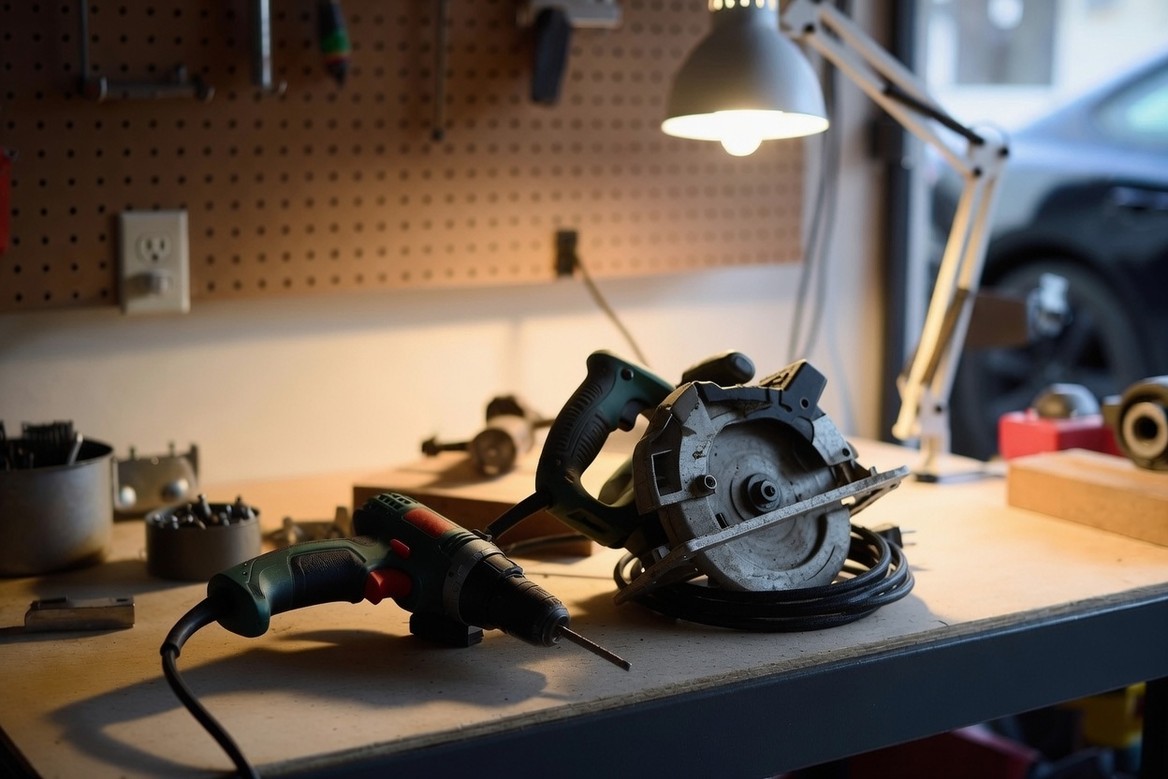
Walk into any hardware store and the power tool aisle is forty feet long. It does not need to be. A drill, a circular saw, a jigsaw and a sander will do the overwhelming majority of what a household ever asks of a power tool, and if you buy those four properly you will not be back.
The reason to buy them corded is not nostalgia, and it is not about the electricity. It is about what each thing is made of. A corded tool is a motor, a set of brushes, a bearing and a cord — and every single one of those is a part a person can replace at a bench for a few dollars. Brushes wear out; you push two new ones in. A cord frays at the strain relief; you fit another. A tool built like that does not really die. It gets repaired, or it sits waiting for somebody who will.
A battery pack is the opposite of all of that. It is a sealed unit full of cells that lose capacity whether you use them or not, and it cannot be opened, repaired or refilled by the person who owns it. It has an expiry date that started running the day it was manufactured, and when the platform is discontinued there is nothing to do but throw a perfectly good tool away.
And the honest other side of it, because there is one. Cordless genuinely wins in three places and it is not close: up a ladder, out on a roof, and anywhere a cord across a floor is a trip hazard. If you are working at height or in a room where somebody else is walking about, the cord is a real risk and the battery is the right answer. What this page argues is that for bench work, garage work and the hundred small jobs inside a house, the tether costs you almost nothing and buys you thirty years.
Below: each tool, what it is actually for, roughly what to pay, and the one feature on each that is worth paying for.
The wider case for corded over cordless — the running costs, the second-hand market, and what happens in a power cut — is set out on the corded tools page. This one is the buying list.
Corded Power Tools
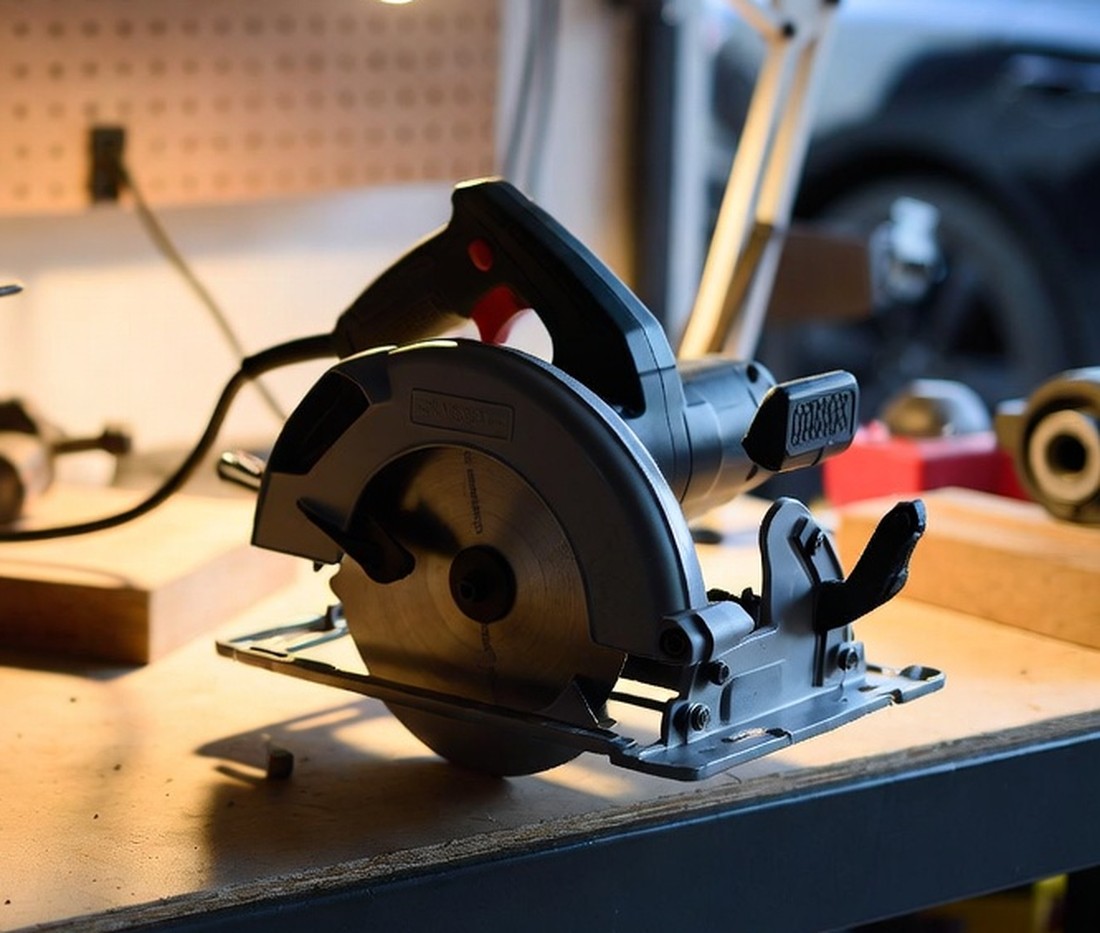
Why corded, in one line: a corded drill bought in 1990 still works today, and an 18-volt cordless bought in 2010 is a paperweight whose battery platform was discontinued. The tool was fine. The platform failed it. Nobody has ever inherited a battery. The full case for corded over cordless — the running numbers, the sell-off, and what it means in an outage — is on its own page, so it is not repeated here. What follows is the buying list. Corded tools are meant to last — that is not nostalgia, it is engineering.
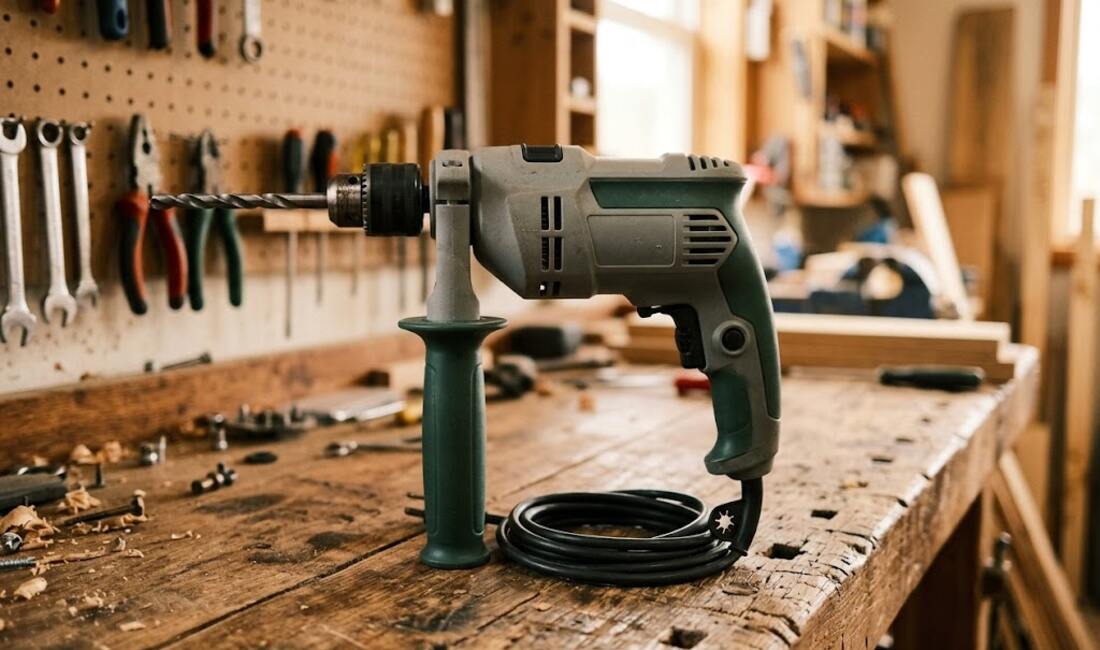
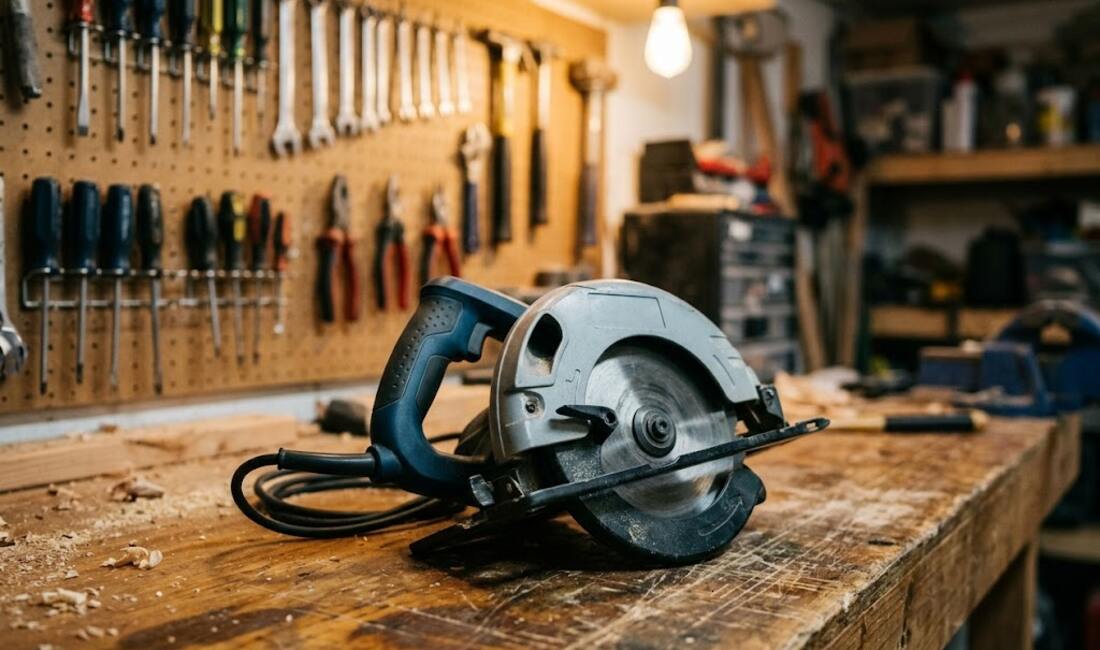
A corded drill/driver bores holes and drives or removes screws. Variable speed trigger: start slow for control, speed up once moving. Reverse switch backs screws out. The chuck opens and closes to hold different bit sizes — a 1/2-inch chuck accepts any standard bit. Corded means wall power. No battery to die, no platform to get locked into. A good corded drill bought in 1985 still works today. Look for 7 amps or higher.
- Drilling holes in wood — shelves, fences, decking, framing, furniture
- Driving screws — deck screws, drywall screws, cabinet screws
- Removing stripped screws — reverse plus slow speed gives you the torque a screwdriver gave up on
- Drilling into masonry with a carbide bit — concrete anchors, brick wall mounts
- Mixing paint or joint compound — a paddle mixer bit turns it into a power mixer
- Pumping water with a bilge pump attachment — drill-powered water pumps move water fast; useful after flooding
- Driving a hole saw — cuts perfect circles for doorknob holes, pipe pass-throughs, vent openings
- Wire brushing rust — a wire brush wheel strips rust off metal faster than any hand work
- Driving lag screws with a hex adapter — lag screws for deck ledgers drive in with a 1/2-inch hex socket in the chuck
- The cord is the limitation — needs an outlet or extension cord. Doesn’t work in a power outage without a generator.
- No impact function — for driving long screws into hard wood, an impact driver is better
- Torque can twist your wrist — when a large bit grabs suddenly, use two hands and brace yourself
- Not a hammer drill for serious masonry — for heavy concrete work, use a dedicated rotary hammer
1/2-inch chuck, 7-amp or higher, variable speed, reversible. Brand is secondary. Dewalt, Makita, Porter-Cable, and Skil all make solid corded drills that last decades. Test used units: plug in, trigger forward and reverse, listen for grinding. If it runs smooth both ways, buy it.
A corded impact driver is a specialized power tool that combines rotation with rapid hammering pulses — up to 3,000 impacts per minute. When a screw meets resistance, the impact mechanism fires: a weighted hammer inside the tool strikes an anvil in short bursts, converting that hammer energy directly into rotational force at the bit tip. The result is massive driving torque with almost zero reaction force transmitted to your wrist. A regular drill fights back when a screw gets tight — the drill body tries to spin in your hand. An impact driver absorbs that reaction internally. One finger on the trigger drives a 3-inch deck screw through hardwood. That is the entire value proposition for older hands.
- Driving deck screws — 2” through 4” screws into lumber, hardwood, composite decking — no pre-drilling required in most cases
- Lag screws and structural fasteners — the impact mechanism drives 3/8” lag screws that would require a wrench and body weight with a drill
- Long drywall screws — drives into studs cleanly without the drill body twisting when the screw seats
- Sheet metal screws into metal studs — the impact punches through sheet metal where a drill would skip and strip
- Removing stuck screws — reverse plus impact mode breaks loose screws that a drill would spin out of
- Fence and gate hardware — carriage bolts, hinge lag screws, hasp hardware in treated lumber
- Loosening rusted bolts outdoors — with a hex socket adapter, the impact mechanism breaks loose corroded bolts that would shear off with steady torque
- Driving screws one-handed — because there’s no reaction torque, you can brace with one hand and drive with the other — impossible with a drill
- Driving screws at awkward angles — the short body fits into spaces a drill won’t, and the impact means you don’t need two-handed leverage
- Self-tapping screws into metal — the impact mechanism punches the screw tip through without the bit skipping across the surface
- Removing lug nuts in an emergency — a 1/2” hex adapter and the correct socket will break loose most car lug nuts for a roadside tire change. Always re-torque lug nuts to manufacturer spec with a torque wrench before driving — impact tools can under- or over-torque, and a loose wheel is a fatal hazard.
- Loud — the impact mechanism is significantly louder than a drill. Wear hearing protection for extended use. The neighbors will know you’re working.
- Not for precision driving — the impacts make fine control difficult. For delicate screws, switch to a regular drill or ratchet screwdriver. An impact driver can strip small screws instantly.
- Requires impact-rated bits — standard screwdriver bits will shatter under impact. Buy bits labeled “impact rated” or “impact ready” — they’re hardened differently to absorb the hammer blows.
- 1/4” hex chuck only — most impact drivers accept only 1/4” hex shank bits. They do not accept round-shank drill bits. For drilling holes, switch to the drill.
- The cord — same limitation as any corded tool. Needs an outlet. Doesn’t work in a power outage without a generator.
Look for: variable speed trigger, forward/reverse switch, at least 1,400 in-lbs of torque, 1/4” hex chuck. Anything in that spec range from Dewalt, Makita, Porter-Cable, or Bosch will drive anything a homeowner encounters. Buy a set of impact-rated bits at the same time — Phillips #2 is the workhorse, but get a full set including Torx T20 and T25 for deck screws. A used corded impact driver is worth buying if it runs cleanly in both directions with no grinding. Test it: hold a screw against a piece of scrap wood and trigger it — if it drives clean and seats without stripping, buy it.
A corded impact wrench uses the same rotating-hammer mechanism as an impact driver but scaled up dramatically for heavy fasteners. Where an impact driver handles screws and small bolts, an impact wrench handles lug nuts, large hex bolts, and structural fasteners that would require a breaker bar and your full body weight to move by hand. The tool delivers hundreds of foot-pounds of torque in rapid hammer pulses. You hold it with one hand, pull the trigger, and bolts that have been rusted on for twenty years come loose. The 1/2-inch square drive accepts standard impact sockets in every size you’ll need.
- Removing and installing lug nuts — tire changes without a floor jack or breaker bar; one trigger pull per nut
- Large structural bolts — deck ledger lag bolts, carriage bolts, heavy bracket hardware
- Seized outdoor fasteners — rusted bolts on gates, equipment, trailers, and lawn machinery
- Generator and equipment maintenance — large drain plugs, housing bolts, mounting hardware
- Breaking loose frozen plumbing unions — with the right socket adapter, large threaded unions that won’t budge by hand give way immediately
- Driving large lag screws into concrete anchors — with a hex adapter, drives anchors that would take 30 minutes by hand in seconds
- Loosening overtightened machine bolts — on equipment that was assembled with an air tool and has never come apart since
- Requires impact-rated sockets — chrome sockets will shatter under impact wrench torque. Use only black oxide impact sockets.
- Easy to overtighten — the tool applies far more torque than most fasteners need. Use a torque wrench for final tightening on critical fasteners like lug nuts.
- Loud — louder than an impact driver. Hearing protection for any extended use.
- Heavy — corded impact wrenches are heavier than drivers. One-handed use over your head gets tiring fast.
1/2-inch square drive, 300 ft-lbs minimum torque, variable speed trigger, forward/reverse. Ingersoll Rand, Dewalt, and Chicago Pneumatic make reliable corded units. Buy a set of impact sockets (1/4” through 1” SAE and 8mm through 24mm metric) at the same time — the wrench is useless without them. A used corded impact wrench in good condition is worth buying — test it in both directions and listen for consistent impact sound.
An angle grinder spins an abrasive or cutting disc at 10,000+ RPM at a 90-degree angle to the motor shaft. That spinning disc cuts, grinds, polishes, or removes material depending on what disc is mounted. A thin cutting disc slices through steel, aluminum, copper pipe, rebar, and bolts. A grinding disc removes welds, smooths rough cuts, and shapes metal. A wire cup removes rust and paint. A diamond blade cuts tile, concrete, and brick. The 4.5-inch size is the most useful for a homeowner — powerful enough for real work, small enough to control with two hands.
- Cutting metal rod, pipe, and bolt stock — faster and cleaner than a hacksaw for anything over 1/4-inch diameter
- Removing rust from metal surfaces — a wire cup or flap disc strips rust down to bare metal in seconds
- Cutting ceramic and porcelain tile — a diamond blade makes curved cuts that a tile saw can’t
- Grinding down weld beads and sharp edges — smooths rough cuts and removes burrs from cut metal
- Cutting through seized or rusted bolts — when no wrench will move it, a cutting disc removes it in seconds
- Sharpening lawn mower blades — a grinding disc puts a working edge back on a dull blade in two minutes
- Cutting concrete anchors flush — when a bolt is set in concrete and sticks up too far, a cutting disc removes it flush with the surface
- Removing old mortar from brick — a mortar raking disc cleans out joints for repointing without damaging the brick faces
- Polishing metal with a flap disc — progressively finer flap discs bring bare metal to a near-mirror finish
- The most dangerous tool in the shop — a disc that shatters at 10,000 RPM becomes shrapnel. Use only discs rated for angle grinders. Never use a circular saw blade. Eye protection and gloves are not optional — they are mandatory every single time.
- Kickback is real — if the disc binds in a cut, the grinder kicks back hard and fast. Keep your body out of the disc’s line of travel. Two-handed grip always.
- Sparks travel far — a 4.5-inch grinder throws sparks 10+ feet. Clear flammables from the entire area before starting.
- Discs wear and need replacement — a worn cutting disc is a dangerous disc. Replace before it gets too thin.
4.5-inch disc size, 6 amp or higher, paddle switch (not a sliding switch), with a tool-free guard adjustment. Dewalt, Makita, and Bosch make reliable corded grinders. Buy a variety pack of discs: thin cutting discs (for metal), grinding discs, flap discs (for finishing), and a wire cup (for rust removal). Never use a disc that is chipped, cracked, or older than its expiration date.
A random orbital sander spins a round sanding pad in small random circles while also rotating it. That combination of motions means no single scratch line ever repeats — which is why it leaves no swirl marks in wood the way a straight-line or circular sander does. You move it slowly across the surface and let the tool do the work. The dust collection port connects to a shop vac or the built-in bag to keep the work area clear. Light enough to use with one hand for most jobs, which matters when your other hand is holding the workpiece steady.
- Smoothing wood before painting or staining — start with 80 grit, move to 120, finish with 220 for a paint-ready surface
- Removing old paint from wood — 60 grit removes paint fast without gouging; step up through the grits to finish
- Smoothing wood filler and spackle — 120 grit levels filled areas flush with the surrounding surface
- Scuff-sanding between paint coats — 220 grit lightly abraded between coats helps paint bond and eliminates brush marks
- Refinishing furniture — removes old finish and prepares bare wood for stain or paint
- Removing rust from flat metal surfaces — with 60 or 80 grit, strips surface rust from sheet metal, tool surfaces, and flat brackets
- Smoothing concrete patch and floor leveler — once cured, a 60-grit disc knocks down ridges and trowel marks
- Sanding fiberglass and body filler — works on automotive and marine filler the same way it works on wood filler
- Slow material removal — for removing a lot of wood or paint fast, a belt sander or angle grinder is faster. The orbital is for finishing, not heavy stock removal.
- Dust gets everywhere — even with dust collection, fine sanding dust escapes. Wear a dust mask rated N95 or better. Sand outdoors when possible.
- Pressing too hard slows it down — let the tool’s weight do the work. Pressing hard loads the pad and slows the random motion that prevents swirl marks.
5-inch pad, variable speed, hook-and-loop disc attachment, dust port. Dewalt, Makita, and Porter-Cable all make solid corded orbital sanders. Buy a sanding disc assortment pack: 60, 80, 120, and 220 grit, at least 10 discs of each. The hook-and-loop attachment means disc changes take three seconds. Avoid the cheapest sanders — a worn pad bearing causes vibration that defeats the random orbital motion and leaves swirl marks.
A heat gun is an electric tool that blows a concentrated stream of very hot air — typically between 120°F and 1,100°F depending on the setting. That hot air softens, shrinks, loosens, dries, or melts whatever it’s aimed at. The variable temperature is the critical feature: low heat (around 250°F) shrinks electrical tubing and loosens adhesive stickers without scorching; medium heat (around 500°F) softens paint for scraping and bends PVC pipe; high heat (700°F and above) loosens rusted bolts, strips multiple layers of paint, and welds certain plastics. A heat gun looks like a hair dryer but runs four to ten times hotter. It is not a hair dryer. It will melt plastic, ignite wood, and burn skin on contact. It is also one of the most genuinely useful tools in the shop for the specific jobs nothing else handles well.
- Stripping paint from wood and metal — heat softens the paint until it bubbles, then a putty knife removes it cleanly in long strips — faster than sanding, no chemicals
- Shrinking heat shrink tubing on electrical splices — the low setting shrinks the tubing evenly in seconds for a waterproof, professional connection
- Removing stickers, labels, and adhesive residue — 30 seconds of heat softens the adhesive so the sticker peels off cleanly with no tearing or residue
- Bending PVC pipe — heat a section evenly until it softens, bend to the angle you need, hold until it cools and sets — no fittings required
- Loosening stuck bolts and fittings — heat expands the metal around the bolt, breaking the rust bond so it turns with normal tool pressure
- Softening old putty and caulk for removal — heat the putty until it softens, then the putty knife removes it cleanly without gouging the surface
- Removing vinyl flooring and floor tiles — heat the tile from above until the adhesive softens, then slide a floor scraper underneath and it lifts cleanly
- Thawing frozen pipes — low heat setting only, held at least 6 inches from the pipe, moving constantly — never stationary. Open a faucet before you start so steam pressure has an exit. Stop immediately if you smell burning or see discoloration. Do not use on pipes inside walls where you cannot see the full pipe length.
- Drying wet wood before painting or gluing — a slow pass removes surface moisture so paint adheres and glue bonds properly
- Removing dents from plastic bumpers and panels — heat the plastic until it softens slightly, push from behind, the plastic reforms to its original shape
- Welding plastic bags and sheeting — low heat fuses polyethylene edges together — useful for patching tarps or creating waterproof seams
- Starting charcoal without lighter fluid — aim a heat gun at the bottom of a charcoal chimney for 60 seconds and it lights without chemicals or paper
- Loosening stripped screw heads — heat the screw until it expands, let it cool slightly, then try the screwdriver again — the thermal cycle often breaks the corrosion bond
- It will burn things — wood ignites around 480°F. Most heat guns exceed this on high. Keep it moving. Never hold it stationary on any combustible surface.
- It will melt things you didn’t intend to melt — plastic window frames, vinyl siding, wiring insulation, painted surfaces nearby. Shield adjacent materials with aluminum foil or a heat deflector.
- The nozzle stays hot after you turn it off — the element cools slowly. Set it down pointing away from everything, or hang it by the cord. Never set it flat on a surface immediately after use.
- Lead paint warning — heating paint in homes built before 1978 can vaporize lead. Use a respirator rated for lead, or test the paint first with a lead test kit before using heat to strip it.
- Not for soldering — a heat gun cannot deliver the localized heat needed for solder joints. Use a soldering iron for electronics.
Variable temperature with at least two settings — low (around 250°F) and high (around 750°F) — is the minimum. A fully variable dial is better. Look for 1,500 watts or higher — underpowered heat guns take forever to reach working temperature. Every major tool maker offers a reliable homeowner heat gun, and the standard homeowner models share the same virtues — inexpensive, reliable, parts available. Nozzle attachments are useful: the deflector nozzle spreads heat for paint stripping, the concentrator nozzle focuses heat for shrink tubing and bolt work. Buy a heat gun that comes with both or has them available separately. Find them used at garage sales and estate sales — heat guns have no moving parts and last indefinitely if not physically damaged.
An extension cord moves an outlet to wherever you need it. The gauge (wire thickness) determines how much current it can carry without voltage drop — which matters because voltage drop reduces tool power and generates heat in the cord. A 12-gauge cord carries 20 amps safely at 50 feet — enough for any corded tool you own. A 16-gauge cord — the cheap one — starts dropping voltage under load at 25 feet, which makes your drill run slow, your saw bog down, and your cord get warm. Buy the right gauge once and never think about it again.
- Powering every corded tool on this list — drill, impact driver, angle grinder, sander, heat gun, all of them
- Reaching from garage to driveway, yard, or roof — 50 feet gets you to the far end of most residential lots
- Generator power distribution during outages — runs from a generator outside to appliances inside through a window or door gap
- Temporary power to outbuildings and work areas — shed, detached garage, work area without its own outlet
- Running power to a generator outside during an outage — a 50-foot 12-gauge cord reaches from an outdoor generator to appliances inside through a window or door gap; 12-gauge handles the load without voltage drop
- Temporary power to a shed, carport, or work area — before you run permanent wiring, a 12-gauge extension cord provides reliable temporary power for tools and lights
- Emergency refrigerator power during repair work — move a refrigerator away from the wall for repairs without unplugging — the 50-foot length gives you full slack to work
- Powering outdoor holiday lighting — 12-gauge handles multiple light strings without the voltage drop that dims lights and stresses cheaper cords
- Never use a cord that is coiled under load — a coiled cord acts as an inductor and generates heat. Unroll the full length before plugging in any tool.
- Damaged insulation is a fire and shock hazard — inspect the cord before every use. Any crack, cut, or exposed wire means the cord is done. Replace it.
- Do not run through doors or windows pinched in the frame — insulation damage from pinching is invisible until it fails.
- Outdoor use requires an outdoor-rated cord — look for a W in the cord designation (e.g. SJTW). Indoor cords used outdoors deteriorate in UV and moisture.
50 feet, 12-gauge (12 AWG), three-prong grounded, outdoor rated (W designation), orange or yellow. Southwire and Husky make reliable cords at reasonable prices. The bright color is not optional — you need to see it on the ground before you trip over it or run over it with a lawnmower. Buy two: one for the garage and one for the generator. A cord you have to hunt for is a cord that slows every job down.
A soldering iron heats a metal tip to a precise temperature — typically 600–750°F for electronics work — which melts solder (a tin-lead or tin-silver alloy) to permanently join two metal surfaces. When done correctly, a solder joint is electrically and mechanically stronger than the wire itself. Temperature control is the critical feature: too cold and the solder won’t flow properly, leaving a cold joint that looks connected but fails under vibration. Too hot and you damage components, burn insulation, or lift pads on circuit boards. A dial or digital temperature station gives you repeatable, consistent heat for every joint.
- Repairing lamp cords and appliance wiring — splice broken wires with a permanent solder joint instead of wire nuts that vibrate loose
- Replacing switches, sockets, and plugs — solder connections on lamp sockets, power plugs, and appliance connectors
- Automotive wiring repairs — trailer wiring, accessory wiring, battery terminal repair
- Electronics repair — replacing capacitors, resoldering loose connections on circuit boards, fixing broken headphone cables
- Cutting and sealing synthetic rope and webbing — the hot tip melts through nylon and polyester cleanly and seals the end to prevent fraying simultaneously
- Burning decorative patterns into wood — pyrography (wood burning) with a soldering iron produces fine, controlled line work
- Repairing plastic eyeglass frames — very low heat on a thick tip can fuse broken plastic frame pieces together at the break
- The tip oxidizes and stops tinning — a black, non-shiny tip won’t transfer heat properly. Clean it on a brass wire tip cleaner frequently during use and re-tin it with fresh solder before storing.
- Solder fumes are harmful — work in a ventilated area. The flux in rosin-core solder produces fumes that irritate respiratory passages over time.
- Cold joints look like good joints — a dull, grainy solder joint is a cold joint. It will fail. Good joints are shiny and smooth. If it looks dull, reheat it.
Weller WE1010 or Hakko FX-888D — those are the two benchmarks for homeowner and hobbyist use. Both are temperature-controlled stations, not pencil irons. Buy rosin-core solder (60/40 tin-lead for general use), a brass wire tip cleaner (not a wet sponge — the thermal shock from a wet sponge shortens tip life), and a third-hand clamp or helping hands tool to hold work steady. A Weller or Hakko station bought today will outlast you if you keep the tips clean.
🧰 The Rest of the Toolkit
This started as one very long page and was split into four, because nobody reads twenty-six thousand words in a sitting. Each part stands on its own.
❓ Plain Answers
The short version of this page, one question at a time — the answer is always the first line.
Should I buy corded or cordless power tools?
For bench work, garage work and jobs inside a house, corded tools are the better buy, because they can be repaired and never lose a battery platform. Cordless wins up a ladder, out on a roof, and anywhere a cord across a floor is a trip hazard.
What power tools does a homeowner really need?
A drill, a circular saw, a jigsaw and a sander will do the overwhelming majority of what a household ever asks of a power tool. Buy those four properly and you will not be back.
Is an impact driver good for people with arthritis?
An impact driver drives screws with almost no wrist torque, which makes it transformative for limited grip or arthritis. It needs impact-rated bits, because standard screwdriver bits will shatter under impact.
What extension cord do I need for power tools?
A 50-foot, 12-gauge extension cord handles any corded tool without voltage drop. A cheap 16-gauge cord starts dropping voltage under load at 25 feet. For outdoor use, look for a W in the cord designation.
What should I look for in a corded drill?
Look for a corded drill with a 1/2-inch chuck, 7 amps or higher, variable speed, and a reverse switch. Test a used one by running it forward and reverse and listening for grinding.
Is it safe to strip old paint with a heat gun?
Heating paint in homes built before 1978 can vaporize lead, so test the paint first with a lead test kit or use a respirator rated for lead. Wood ignites around 480°F, so keep the heat gun moving.