What a Dutch Oven Actually Is

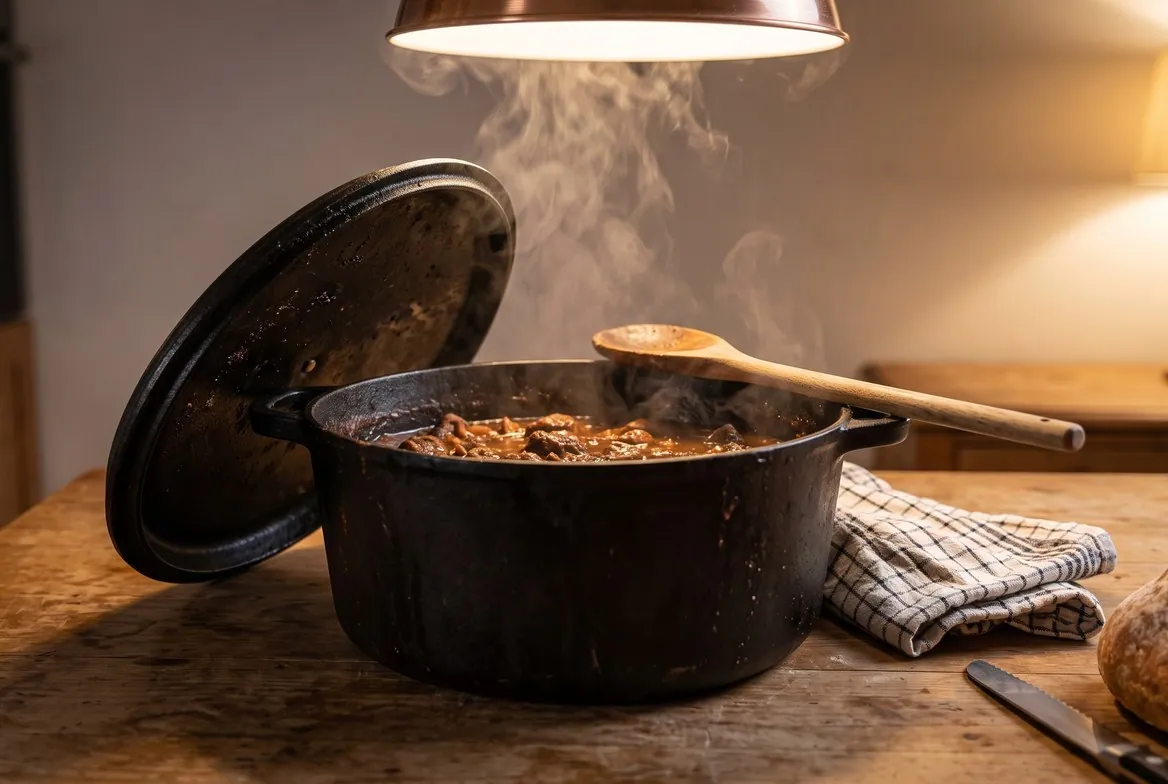
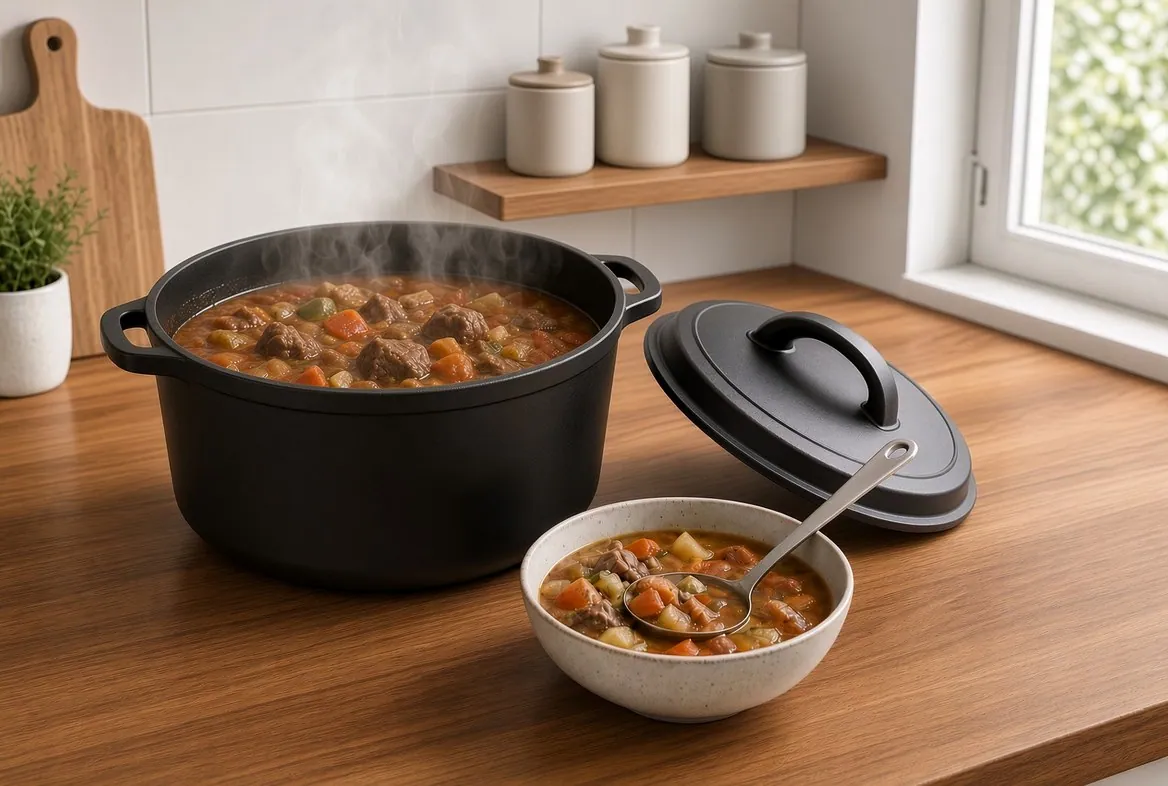
Strip away two hundred years of recipes and here's the object: a deep pot cast from thick iron, with walls a quarter-inch or more and a heavy lid that sits down tight. The thick walls soak up heat and hold it dead steady — no hot spots, no temperature swings when you drop cold food in. The heavy lid traps heat and moisture inside.
Put those two together and you haven't bought a pot; you've bought a small, sealed oven with handles. That's not a figure of speech — it's the name. Long before kitchens had wall ovens, this pot sitting in the fireplace coals was the oven, and everything from the family's daily bread to the Sunday roast came out of it.
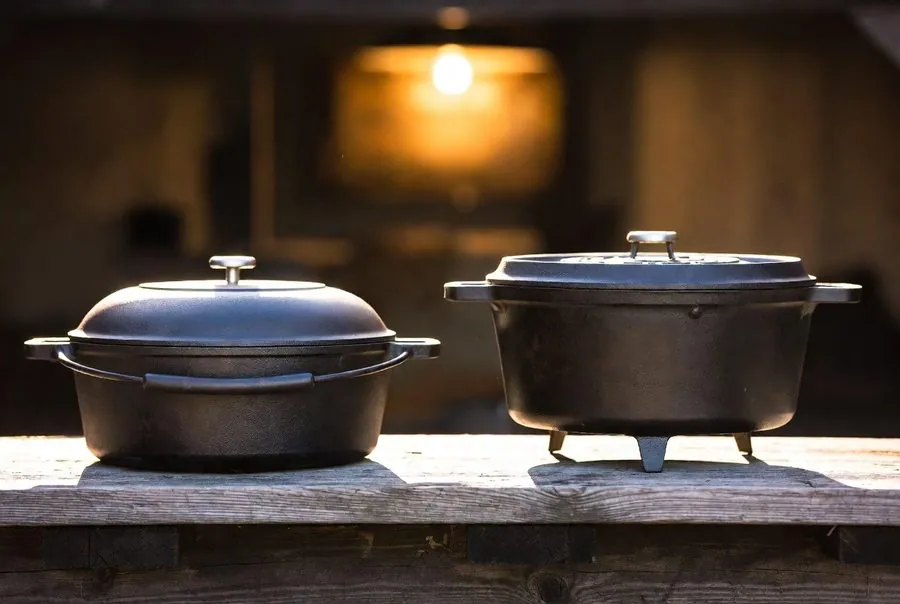
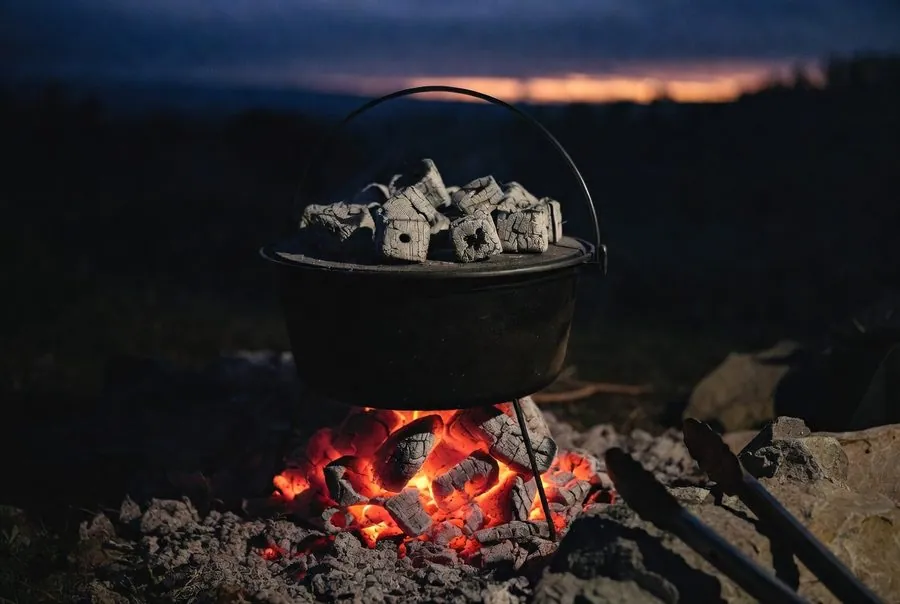
It comes in two branches of the same family. The kitchen Dutch oven has a flat bottom and a domed lid, and lives on your stovetop and in your oven — this is the one on our homepage card. The camp Dutch oven has three short legs and a flanged, rimmed lid, built to stand over coals with more coals shoveled on top — the original American model, the one that fed wagon trains and hunting camps, and the reason a pot can bake biscuits with browned tops a hundred miles from the nearest kitchen. Both are the same idea: iron below, iron above, food in the middle, and time doing the work.
A Handful of the Ways You'll Use It
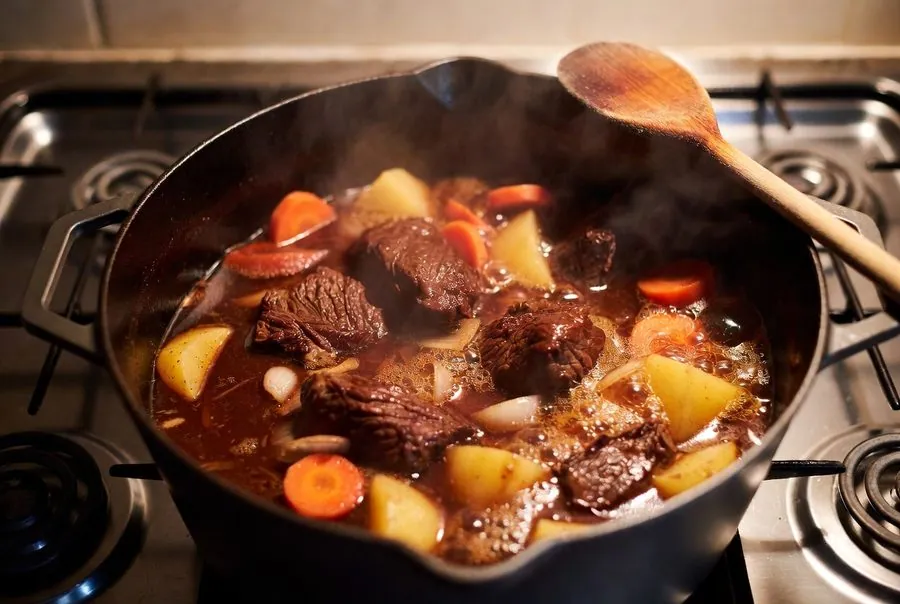
1. Braises and stews — the headline act. Pot roast, chili, beef stew, chicken and dumplings: brown the meat right in the pot, add the liquid, lid on, into a low oven, and walk away for three hours. The steady heat turns cheap tough cuts — chuck, shanks, pork shoulder — into the tender ones, which means the pot pays for itself at the meat counter, every single week.
2. Bread — real, crackling, bakery-crust bread. The use that surprises everybody, and big enough that it gets its own section below.
3. Frying, done steadier. Those thick walls are exactly what fried chicken wants: the oil temperature barely dips when the chicken goes in, so the crust crisps instead of soaking. Deep walls also mean less spatter on the stove — and on you.
4. Soups and the Sunday pot. A 6-quart pot makes soup for the week or feeds the whole table when the grandkids show up — then the leftovers store right in it, lid on, in the refrigerator.
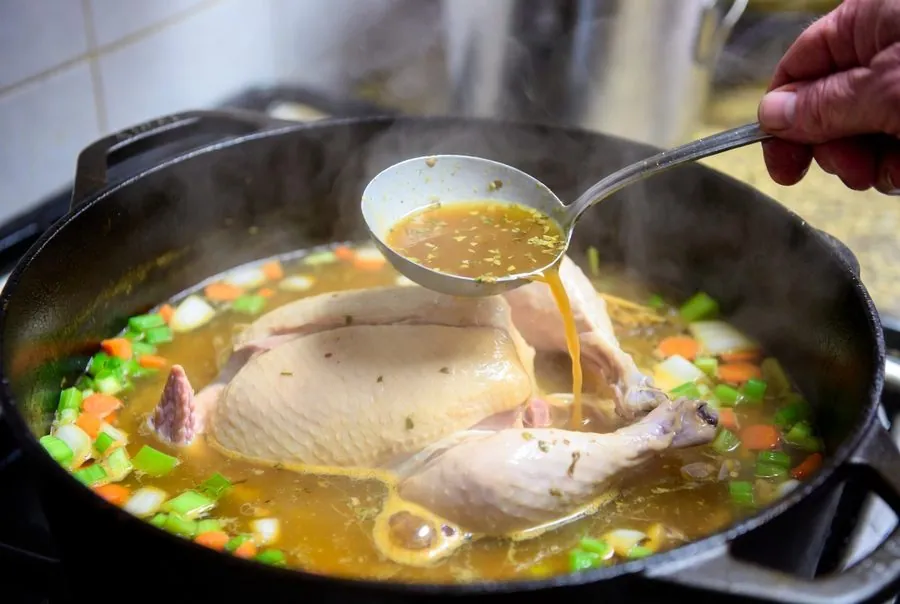
5. One-pot whole meals. Sear, sauté, simmer, bake — in sequence, in the same vessel. One pot to wash, which matters more at 75 than it did at 45.
6. The outage kitchen. This is the card's quiet promise and a serious one for hurricane country: a Dutch oven doesn't care where its heat comes from. On a propane camp stove in the carport during a week-long outage, it does everything it does indoors — stews from the thawing freezer, beans, rice, even bread — turning an emergency into an inconvenience with dinner at the end of it. (Outdoors or in real ventilation for any flame, always.)
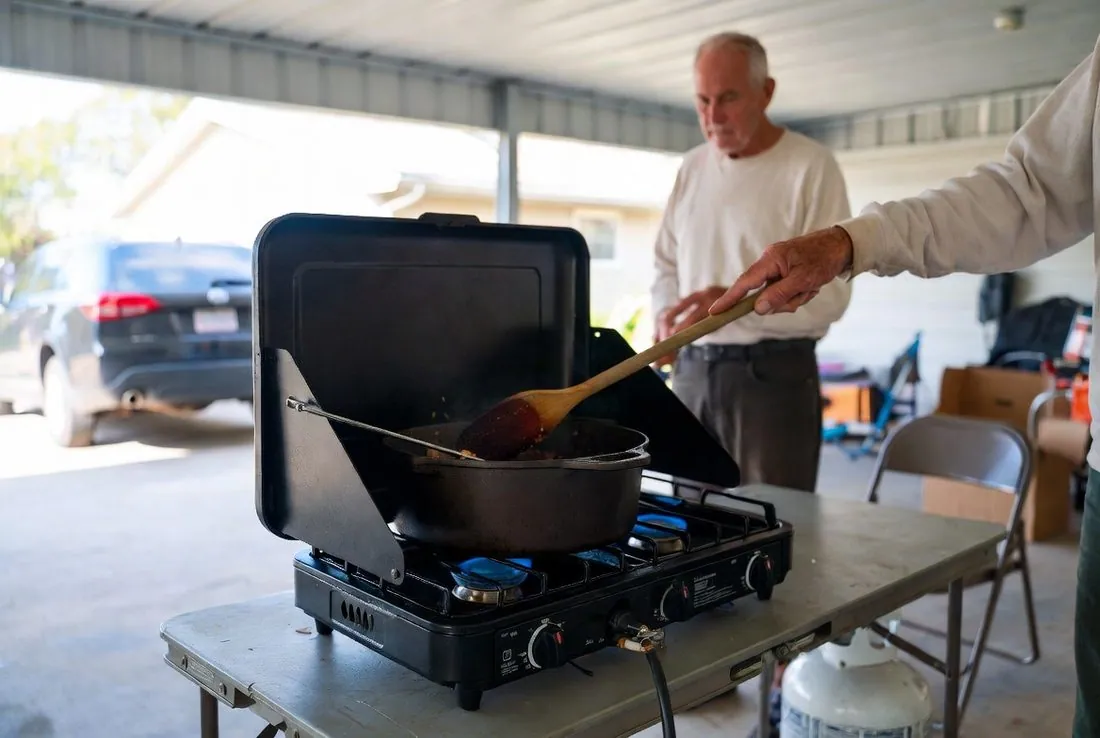
7. The pantry partner. Everything you put up in jars — tomatoes, green beans, stock — lands in this pot on the way to the table. The garden grows it, the jars keep it, the iron cooks it.
The Bread & Biscuits Secret — Why This Pot Bakes Better Than Your Oven
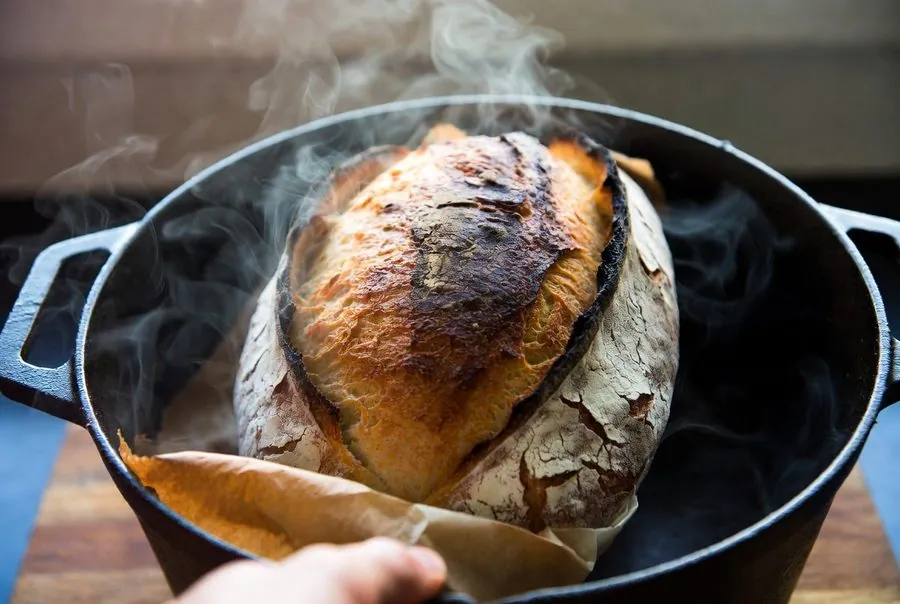
Here's the secret, and it's pure physics. Great bread crust — the crackling, blistered, deep-brown crust from a real bakery — needs steam in the first minutes of baking. Steam keeps the surface soft so the loaf can spring up tall, then bakes into that glassy crust. Professional bakeries have ovens that inject steam on purpose. Your home oven does the opposite: it vents moisture out as fast as it can. That's why home bread so often comes out pale and dull no matter how good the dough was.
The Dutch oven fixes it with no plumbing at all: preheat the empty pot in the oven until it's ripping hot, set the risen dough inside, and clap the lid on. The loaf's own moisture turns to steam, the tight lid traps it, and for half an hour your five-dollar-a-loaf bakery crust develops in a sealed iron cloud. Lid off for the last stretch to brown, and out comes sourdough that makes the neighbors ask questions.
This is the whole engine behind the famous no-knead method — wet dough, an overnight rise on the counter, no machine, no kneading, and the pot doing everything a bakery's steam oven does. If you keep a sourdough starter, this pot is where it earns its keep; if you don't, the overnight yeast version is the easiest impressive thing you will ever bake.
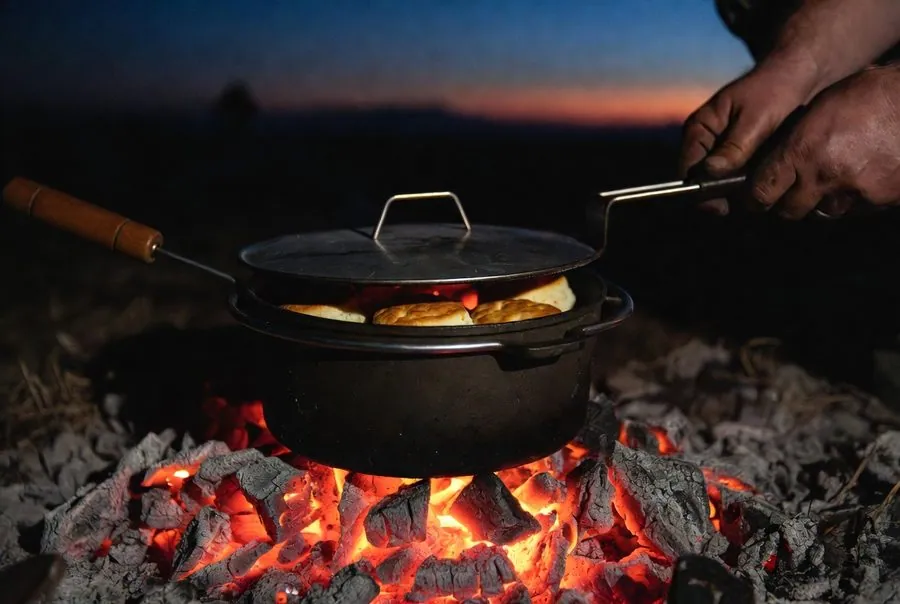
And the biscuits — that's the older story. In a camp Dutch oven, coals go under the legs and on top of that flanged lid, so heat comes from above as well as below — which is exactly what biscuit tops need to brown. Drop biscuits, cobblers with bubbling fruit and golden crusts, cornbread with a fried-crisp edge: for a couple of centuries of American camps and homesteads, that lid full of coals was the broiler.
In the kitchen version, the same pot bakes biscuits sitting shoulder to shoulder so they rise tall instead of spreading — and a cobbler in cast iron keeps a crowd's dessert hot at the table for half an hour after it comes out of the oven.
Which One to Buy — Bare, Enameled, or Camp
Bare cast iron — the card's pick and the buy-once pick. Same seasoned black iron as your skillet, cared for the same way (our cast iron guide covers it all), happy on the stovetop, in the oven, or over a camp stove flame. Inexpensive, indestructible, and the one that gets handed down. The classic American foundry versions are everywhere and modestly priced — and like the skillet, the vintage ones (Griswold, Wagner) still turn up at estate sales, smooth as glass and better than new. See the Lodge 5-quart Dutch oven (affiliate link).
Enameled cast iron — the low-maintenance branch. The same iron wearing a glass coat: no seasoning to maintain, no rust to mind, and it shrugs at acidic cooking — tomato sauces and wine braises all day. The trade: the enamel can chip if dropped or banged, it shouldn't go over open coals, and the famous French names cost ten times what honest budget versions do — and the budget versions have gotten genuinely good. If the seasoning ritual is the reason you'd leave the pot in the cupboard, buy enameled and use it daily instead. See the Lodge Essential Enamel 6-quart (affiliate link).
The camp Dutch oven — the outage and outdoors specializt. Legs and a flanged lid for cooking with charcoal or coals; the lid on many models flips over into a griddle. If hurricanes, camping, or a fire pit are part of your life, this is the second Dutch oven, not the first. See the Lodge 6-quart camp Dutch oven (affiliate link).
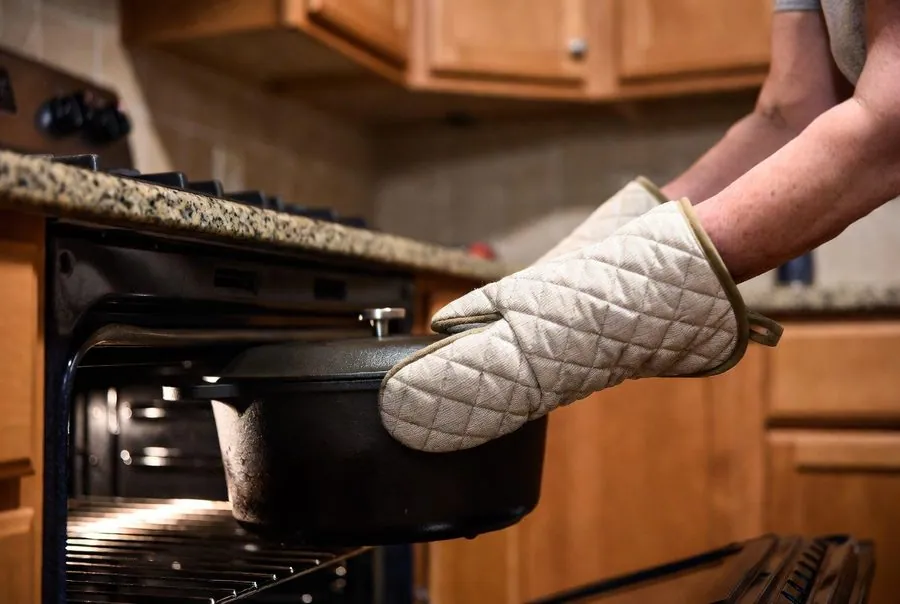
Size — and an honest word about weight. The 5-to-6-quart is the sweet spot: whole chickens, family stews, one standard loaf. But cast iron is heavy and it does not apologize — a big 7-quart pot can top 15 pounds before the stew goes in. Buy the size your wrists will still like at 80, favor pots with two big loop handles you can get whole hands through, and make lifting a two-handed, elbows-in job out of a low oven — never a one-wrist swing off a high shelf.
A 4½-quart does nearly everything the 7 does, eight pounds lighter, and the loaf doesn't know the difference. A pair of Lodge silicone assist-handle holders (affiliate link) beats a folded dish towel that slips.
Your Plan — One Pot by Sunday
✅ From Box to Braise
One pot, bought once near 50: braising the cheap cuts, baking the Tuesday sourdough, browning the biscuit tops, and simmering through the hurricane week on a camp flame — still doing all of it, unchanged, at 80. That's the whole card, delivered.
General guidance on this page reflects long-established cast iron and baking practice; for the care and seasoning routine, vintage-brand notes, and the lifetime case for bare iron, see our own Cast Iron Cookware guide. Weight figures are typical manufacturer-listed ranges for common sizes and vary by model. Nothing here is professional safety advice: open flames belong outdoors or in genuinely ventilated spaces, hot cast iron holds its heat far longer than it looks like it does, and a 15-pound pot of hot liquid deserves two hands and your full attention every time.
❓ Plain Answers
The short version of this page, one question at a time — the answer is always the first line.
What size Dutch oven should I buy?
A 5-to-6-quart Dutch oven is the sweet spot for whole chickens, family stews and one standard loaf. A 4½-quart does nearly everything the 7 does, eight pounds lighter, if weight is the deciding vote.
Why do people bake bread in a Dutch oven?
A preheated Dutch oven with the lid on traps the loaf's own moisture as steam, which gives bread a crackling, bakery-style crust. Take the lid off for the last stretch to brown.
What is the difference between enameled and bare cast iron Dutch ovens?
Enameled cast iron needs no seasoning, does not rust and handles acidic cooking, while bare cast iron is inexpensive, indestructible, and happy over a camp stove flame. Enamel can chip if dropped or banged and should not go over open coals.
What is a camp Dutch oven?
A camp Dutch oven has three short legs and a flanged, rimmed lid, built to stand over coals with more coals shoveled on top. Heat from above as well as below is what browns biscuit tops.
Can you cook in a Dutch oven when the power is out?
A Dutch oven works on a propane camp stove during a power outage, cooking stews, beans, rice and even bread. Keep any flame outdoors or in real ventilation, always.
How heavy is a cast iron Dutch oven?
A big 7-quart cast iron Dutch oven can top 15 pounds before the stew goes in, and a loaded one runs twelve to sixteen pounds. Lift it with two hands and two mitts, kept at waist height.