🚢 An Essay — Nothing to Buy on This Page
A Hull Is Made to Bend. Furniture Is Made to Stay.
Same tools. Same hands. Entirely different consequence for getting it wrong.
🚢 An Essay — Nothing to Buy on This Page
Same tools. Same hands. Entirely different consequence for getting it wrong.
The first thing about a piece of furniture is that it is made to stay. To stand strong and not move, and to hold up whatever it is supposed to hold up. The drawers and the doors should fit according to the design and the function. That is the whole job, and it is a good job, and a man can spend a lifetime getting better at it.
A boat moves.
The boards in the hull and the keel take what the water gives them. A hull is made to bend and not break. It is more of a living thing than a piece of furniture is. It groans while it holds the water out. It takes a pounding that no piece of furniture will ever be asked to take, in the harshest weather there is — and it does that without letting its crew die.
You use the same tools to put both of them together. The chisels are the same chisels. But everybody down inside that hull, and everybody standing on that deck, has their life depending on that vessel being able to navigate the roughest water while it protects them.
Some people say ships have personalities, and they are not being sentimental about it. Two ships put together the same way will not react exactly the same. Wood is not uniform. Nothing is laid up twice in precisely the same order. Weight ends up distributed a little differently. Each one comes out with its own little quirks, and the people who work them learn what those quirks are.

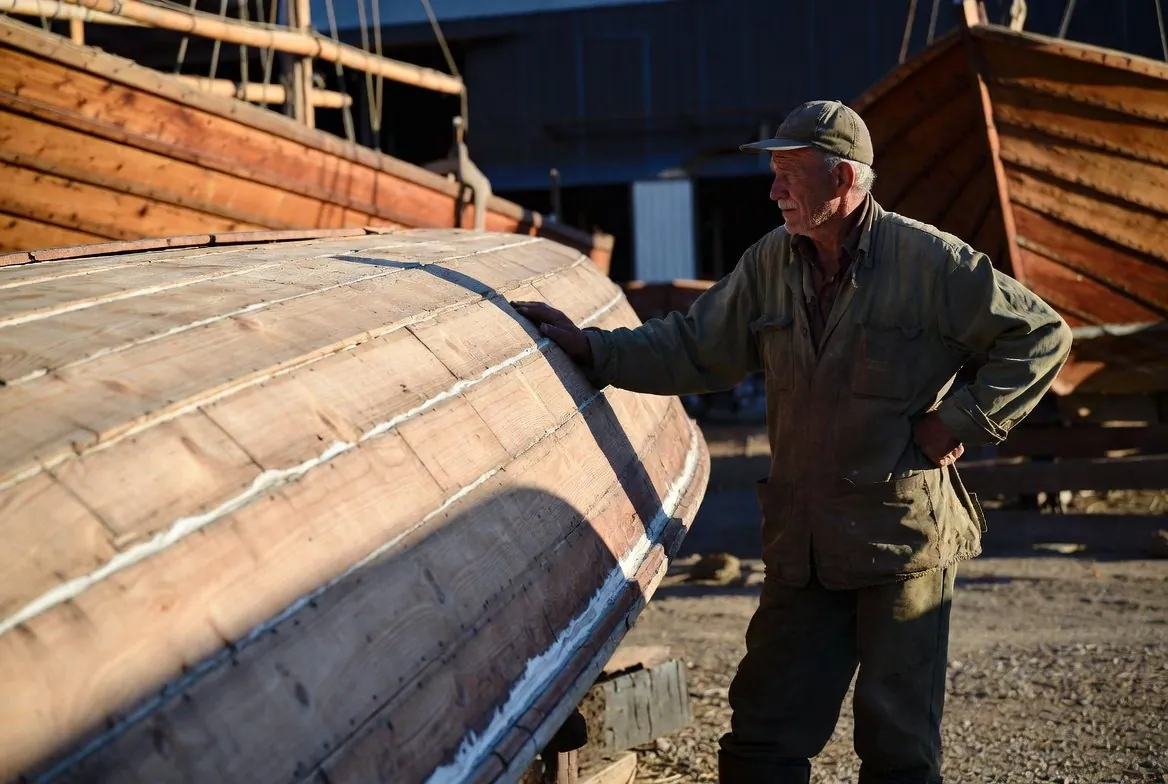
I have watched old ship's carpenters meet a vessel for the first time. They lay their hands on her. As if they could tell something about her that way — and, in the same motion, as if to show her a certain respect. I never saw a man do that to a bookcase.
After the Navy I was hired on as a veteran to work at the docks in Coronado, on the Navy's wooden boats, fiberglass boats and small craft. Hull cracks were most of my work.
In traditional wooden construction, repeated movement and changes in moisture will open splits along the planks and the chines over time. That is not a defect. That is a hull doing what a hull does, for years, until something has to be put right.
The sequence went like this:
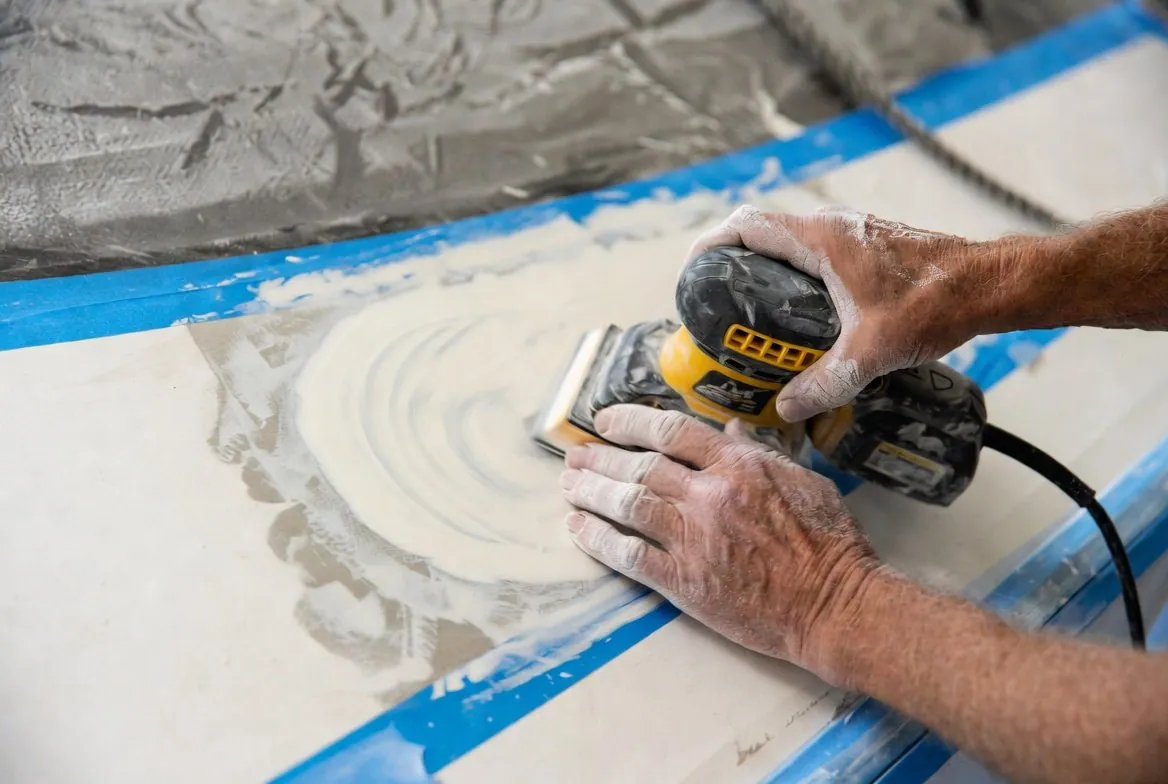
This is an account of how the work was done, not a repair manual. A crack in a hull is structural. If you have one, that is a job for a qualified boatyard, working to the specification for that vessel — not for a page on the internet.
That one line in the middle of the list is the difference between a craftsman and a man with a bucket of resin.
You do not decide how much glass goes on. You read what the specification says — how many layers, how far the coverage extends, and which way the fibers run. Direction matters as much as quantity, because the fibers carry the load along their own length. Lay them the wrong way and you have added weight and thickness and almost no strength where the strength was supposed to go. It will look perfect. It will be wrong.
And then there is the part the blueprint does not cover:
“If the particular damage gave me doubt, I would lay a couple of extra layers.”
Spec is the floor, not the ceiling. When the damage told him something the drawing did not, he built past the number. Nobody was going to inspect those two extra layers, and nobody was going to thank him for them. They went on because men were going to stand on that deck.
Because it is where the rest of this site comes from.
Every page here tells you to buy the good one, to check the function instead of the name, to put the grab bar in before the fall and the second layer of jars on the shelf. That advice did not come out of a product review. It came from a working life where the standard you built to was the standard somebody else was going to live with.
A man who has laid glass to a blueprint on a hull that had to carry people through weather does not buy a twenty-dollar chisel set. Not out of snobbery — out of knowing exactly what the cheap version does when it is asked to do the job. And when he is not certain, he adds the extra layer, buys the bigger cord, keeps the second jar. Same instinct, applied on land.
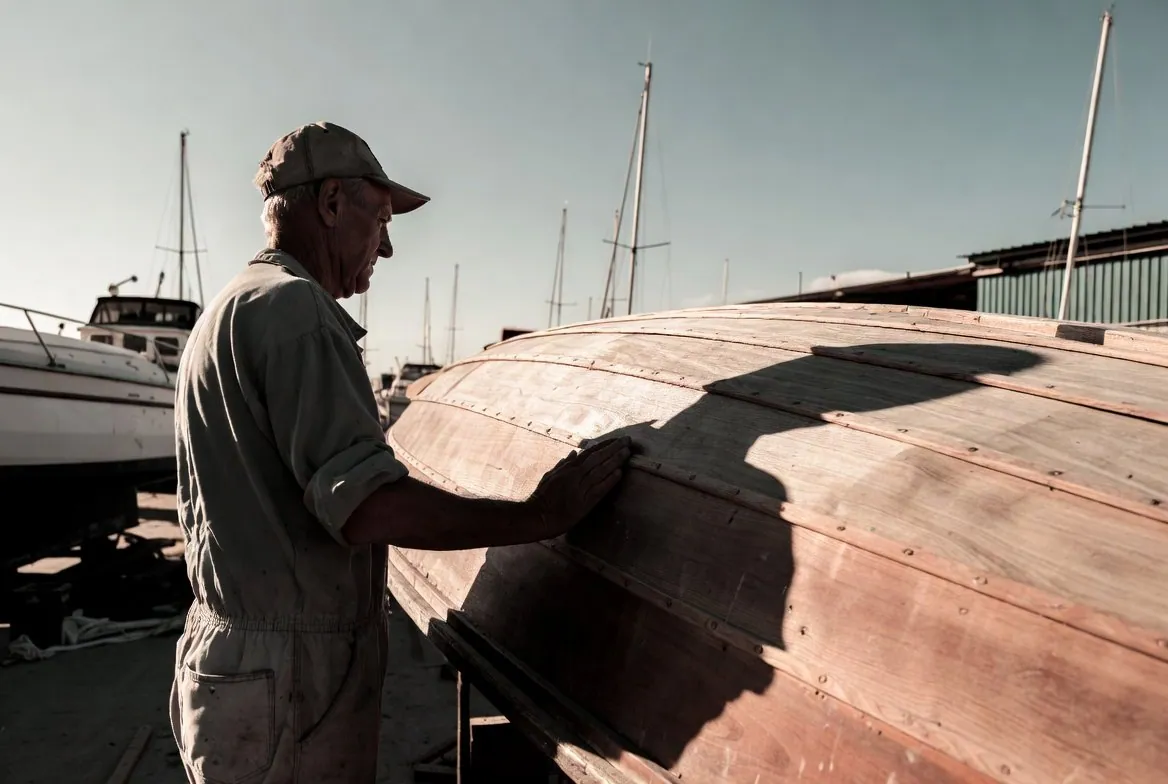
A ship's carpenter can build furniture. But not all furniture carpenters can build the hull of a ship.
That is not a boast, it is geometry. A hull has to be lofted — drawn out full size — and every plank spiled, its true shape taken off the boat and transferred to the stock. Nothing in a hull is a right angle. No two planks are the same shape, and the bevel on a single plank changes along its own length. Furniture is repeatable geometry. A hull is unique at every station. The skill runs one direction only.
If you want the practical version of all this, it is in the Grandfather Toolkit and in what those tools do to your hands. This page is just where it came from.
What This One Buys You
The standard you build to is the standard you live with.
The habit of laying an extra layer when the damage gives you doubt is the same habit as the extra jars, the bigger cord and the grab bar installed fifteen years early — and it is worth far more on land than it costs.