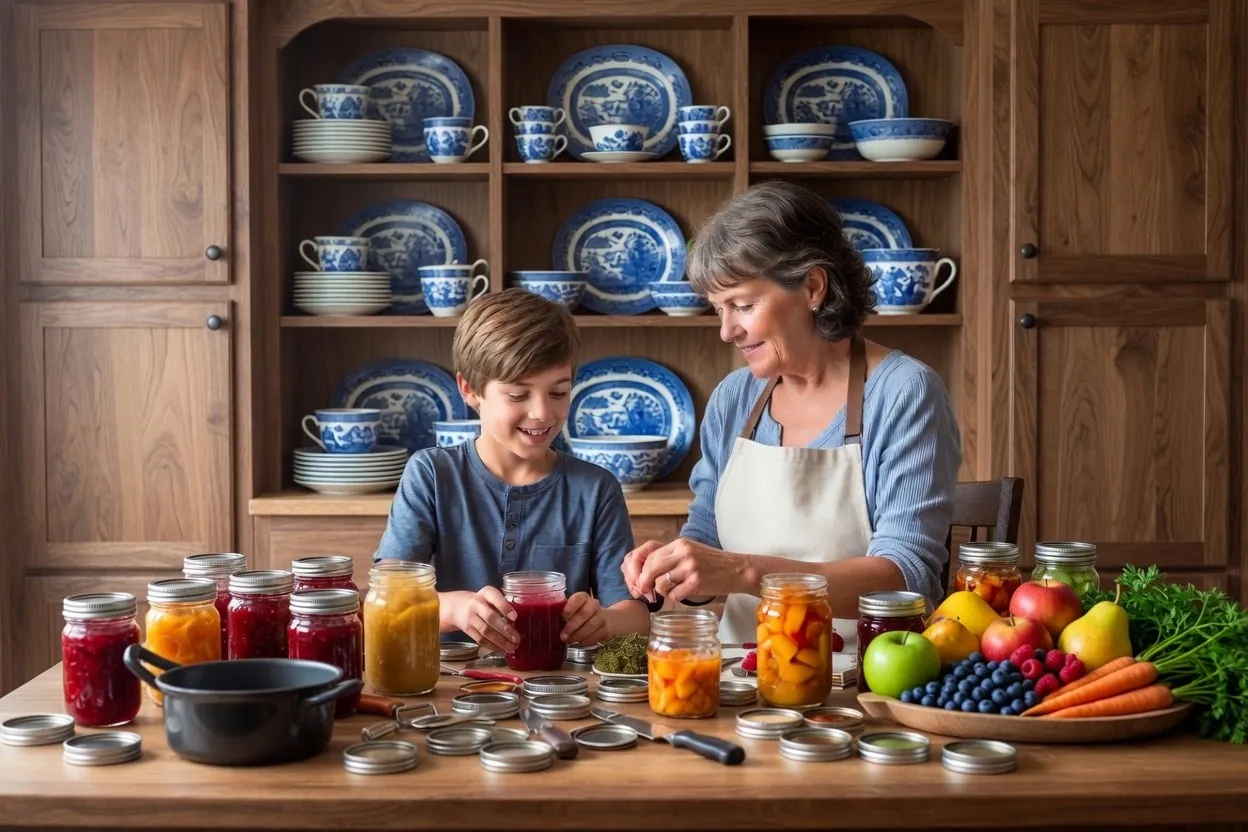
I grew up at my grandmother’s elbow, a mile up in the air.
The place was called Lake of the Woods. There had been a real lake once, but by the time I came along it had shrunk to a pond. It sat a little over five thousand feet up, in a fold of the San Emigdio Mountains called Cuddy Canyon — and near about everything up there wore that one family’s name. Cuddy Creek. Cuddy Valley. The canyon itself. An Irishman named John Cuddy had ridden in back in the 1850s and never left; the log cabin he raised still stood a mile or so west of us, better than a hundred years old already when I was a boy. His people spread out from there and homesteaded half the mountain.
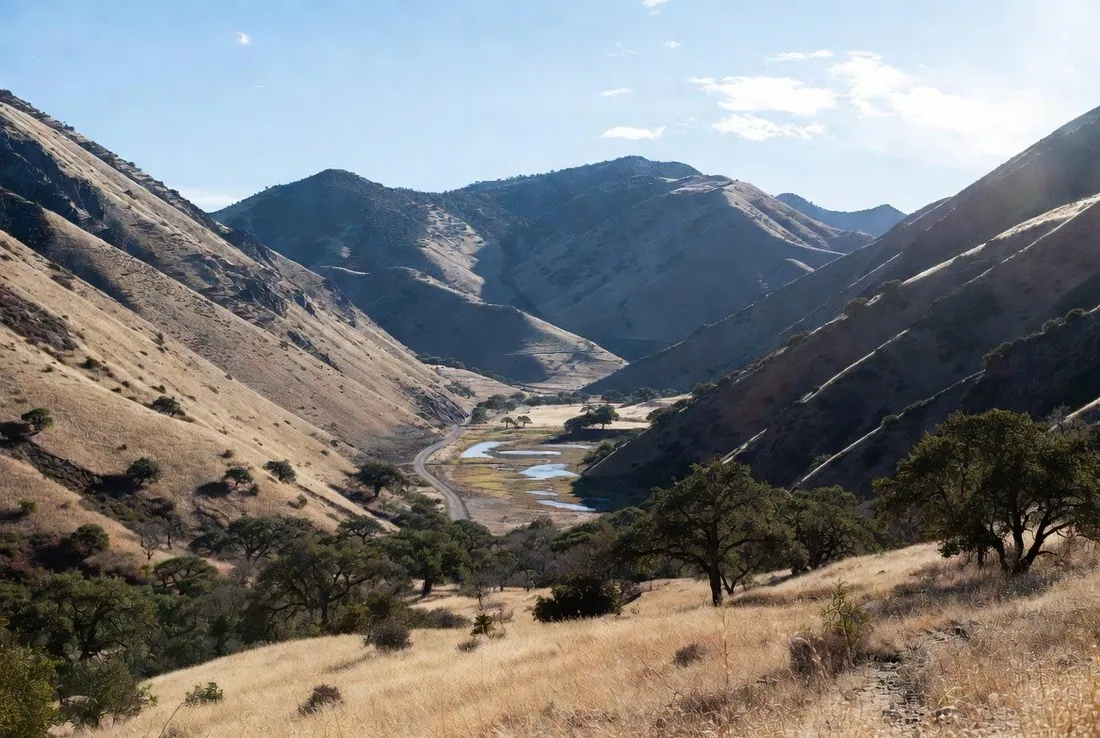
They were ranchers, the Cuddys — cattle and sheep and turkeys — and the part I always liked best was how they got a herd to market. Every so often they’d gather the cattle up in a high meadow, and the whole neighborhood would turn out to help drive them clear down to the railroad at Mojave. That was how it worked up there: a job too big for one family was simply a job for all of them. John’s son Don took the ranch over in time, ran it as a dude ranch for city folks, and served as the first forest ranger the government ever posted to that country.
It was Don’s wife, Florence, who gave the lake its name back in 1925, hoping the mountain springs would fill it. For a few good years they did — until the earthen dam gave way, and rather than build it back they bulldozed what was left.
That did not empty the lake so much as gentle it down into the big cattail pond I grew up beside: loud with frogs on a summer night, its cattails the kind a boy could swat against a tree until they burst into a snow of fluff you learned in a hurry not to breathe. We were just the latest people trying to make a life where the pavement gave out, on ground the Cuddys had already worked the better part of a century.
And it did give out. It was ninety minutes down the mountain to a real grocery store in good weather — and it felt like twice that. A storm could snow you in for days, or wash out a road and keep it washed out for weeks. So the people on that hill kept what they needed and made what they couldn’t buy. There were maybe sixty families up there, mostly cabins, and only six of us kids in the whole neighborhood. Every one of the six knew how to can, because every one of us had spent our summers helping our folks do it.
The mountain was full of things that didn’t much care whether we could manage or not. Mule deer came through the garden at first light like they held the deed to it. Coyotes sang the whole valley to sleep at night. A black bear would find the berries before you did, and now and again a bobcat slipped along a fence line at dusk. There was a bigger cat up there too — the kind you didn’t speak about lightly with children in the room. And if you looked up at the right moment, you might catch a condor riding the air over San Emigdio on a ten-foot spread of wing, like something left over from an older world.
That was the house my grandmother taught me to keep.
Her name was Emma, but her friends called her Fern.
She taught me to sew — I still make my grandchildren teddy bears to this day. She taught me to cross-stitch, which I understand now was really her teaching me patience: something done slow, and on purpose, until it turns into something beautiful. She taught me to garden, from turning the ground the minute it thawed after the last frost to setting flowers in among the vegetables to pull the good bugs in and send the bad ones packing — so you never had to put poison on food you meant to eat.
She showed me how to cut up a whole chicken, how to peel a potato, how to set beans to soak overnight. She even taught me to make a rhubarb cobbler, because I loved rhubarb and she loved me — and a cobbler is simple enough that a child cannot ruin it, so it became the first thing I ever cooked for myself that was not bacon and eggs.
And in every bit of it, there was a little give and take. The stitches didn’t have to be perfect — they just had to look good. The rows didn’t have to run straight as a string — they just had to be tended well enough to produce. She was an easy teacher in most things, and being her grandson, I could get away with a fair amount.
But there was one thing she watched me over like a hawk, and cut me no slack at all.
Canning.
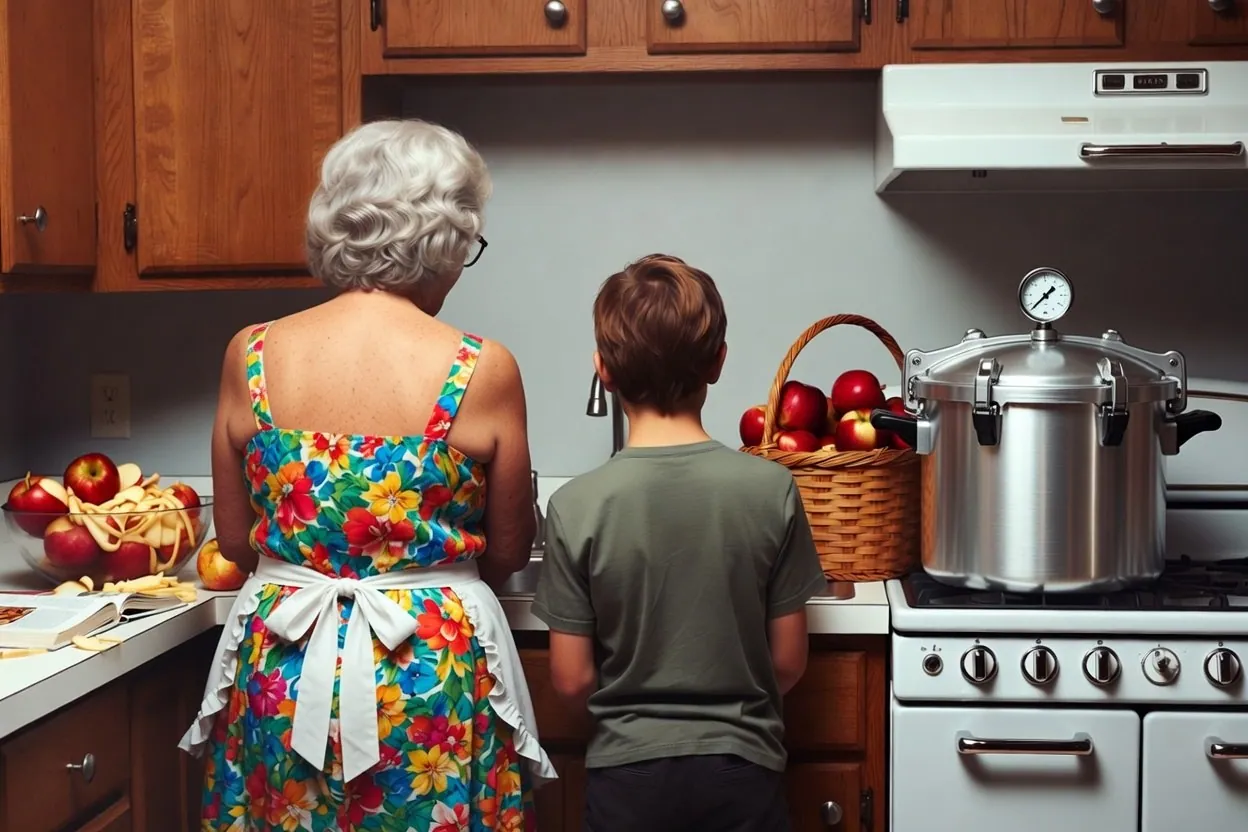
She had her reasons, and I’ve spent a lifetime proving her right. Canning is about the most rewarding thing you can do with a garden — you are taking July and setting it on a shelf for January. It is also the one thing in that whole kitchen you cannot do halfway, cannot do off a feeling, cannot fudge and hope it comes out right. So when it came time to fill jars, the easygoing grandmother stepped out of the room, and a different one took her place: read the recipe, follow the recipe, no shortcuts, no eyeballing, every single time.
Some sixty years later, I still can. And I still do it exactly the way she stood over me and made me do it — with the Ball jar book laid open on the counter to whatever I’m putting up that day, my finger working down the directions, one step at a time.
The honest truth is I could probably do most of it from memory by now. In fact, I know I could. But I don’t, and I never will, and here is why. You get distracted. Somebody comes to the door. A pot boils over. A lid rolls off the counter and under the stove. And when that happens — and across sixty years, it happens — being able to look back down at that open book and find your exact place again is worth more than all the pride there is in doing it blind. It is priceless. And it is, flat out, the safest way there is to can.
Let me tell you about that book, because after sixty years it is not much of a book anymore. The pages have gone soft and warped from the kitchen steam, and along the edges, where my thumb has turned them ten thousand times, the paper has worn fuzzy as cloth. In the spots I read the most, the ink is smeared pale from my own finger dragging down the line to hold my place.
And the pages keep a record of everything I have ever put up — a shadow of applesauce on one, apple butter on another, the purple ghost of blackberry preserves, the sticky gold thumbprint of a peach. You could read my whole canning life off those stains if you knew how. That book has lain open on my counter for six decades, and in all that time it has never once let me down or steered me wrong. A body could do a good deal worse than to keep something that dependable within arm’s reach.
And while I am confessing my kitchen, I ought to confess the pot too, so I am not fooling anybody. In sixty years I have used exactly one canner — an All American — and I have never once wanted another. I will not pretend it is cheap; it is one of the priciest canners on the shelf, and it will make you swallow hard at the register. But here is what nobody tells you standing there: every other pressure canner seals with a rubber gasket, and a gasket is a part.
It dries, it cracks, it hardens with age, and sooner or later you are hunting one down some October afternoon only to find the right one is no longer made. The All American has no gasket at all. It seals metal to metal, machined so fine you snug it down with wing nuts and it simply holds — nothing to wear out, nothing to ever replace.
It is cast aluminum, made in one Wisconsin foundry the same honest way since 1930, and the folks who make it will tell you plainly they still hear from people canning on the ones their mothers bought in the 1940s. Mine will outlast me the way my grandmother’s outlasted her. That is Buy It At 50 sitting there in one heavy pot: you save up, you buy the right one once, and you are finished. Worth every penny, and a good deal more.
She has been gone a little over thirty years now, and I still set that book on the counter the way she showed me. Here is the thing about canning that took me the better part of a life to say plainly: the canning itself was never the hard part. Anyone can learn to fill a jar and watch a gauge. The hard part — the only part that ever truly mattered — is getting the recipe right, and then doing exactly what it tells you, every single time, without once talking yourself into a shortcut. That was the whole of her lesson, and in all these years I have not had to change a word of it.
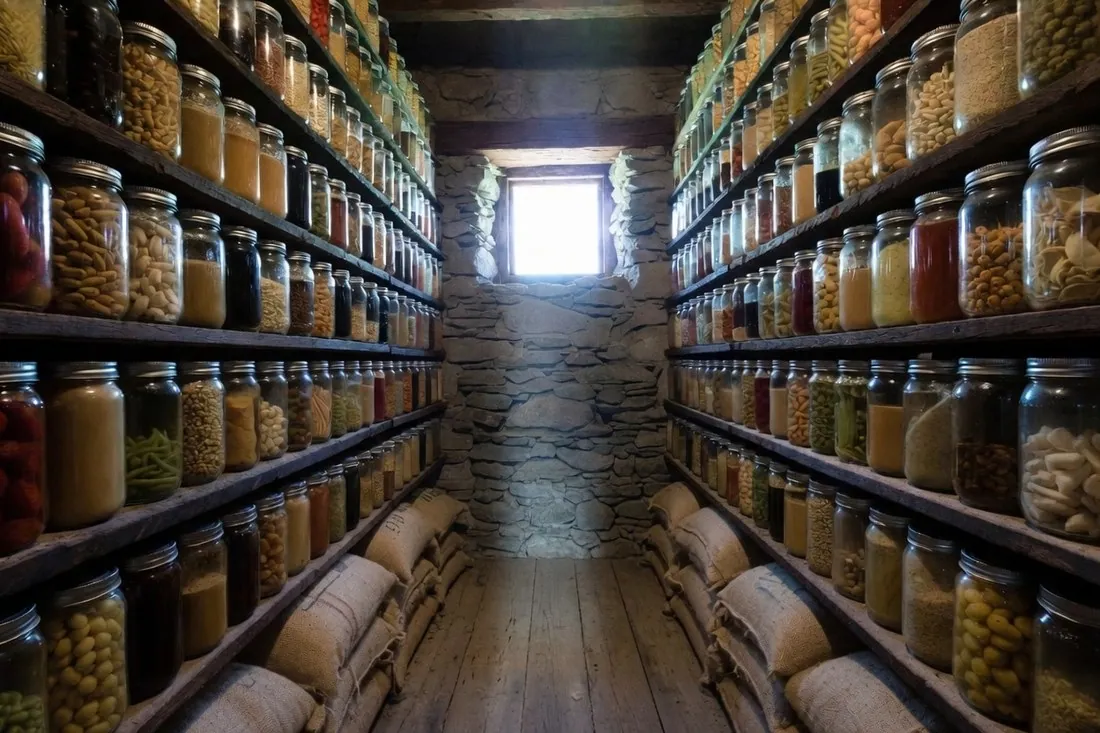
That carefulness ran through everything she did. When my grandfather built the pantry down in the basement, she had him set the shelves only two jars deep — no deeper. It was extra work for him, but he was of the generation that lived by happy wife, happy life; he was the first man I ever heard say it, and if Fern wanted two jars deep, then two jars deep is what he built. I asked him once why it mattered, and he only said it was the way she saw things.
I understand it now. Two jars deep, and nothing ever hides at the back of a row to be forgotten a year past its prime; every jar stays where she could see it, reach it, and check its seal at a glance — and with canned food, what your eye can catch is the whole of your safety. She gave up a little shelf space for the certainty that nothing on her shelves was ever a mystery. The books tell people to do it exactly that way now. She just knew.
And there is a gift buried in all that care. Because I have followed her book to the letter, my green beans taste exactly like her green beans — not close to hers, but hers — and I can set a jar on the table long after she left us and taste her whole kitchen. That is what the recipe truly keeps. Follow it exactly, every single time, and you are not only putting food by; you are keeping the one who taught you, jar by jar.
That is the whole reason this website will hand you the gear and then hand you the book. Everything else in a kitchen has some give in it. Canning is the one thing that doesn’t — and the woman who taught me that was right about it for sixty years. I’m not about to start arguing with her now.