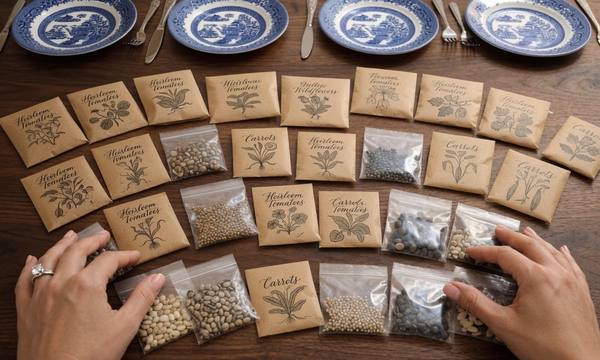

✅ The Easiest Crops to Save Seed From
These are self-pollinating — each flower pollinates itself before it even opens, so they rarely cross with a different variety even when grown close together. Start here if you're new to seed saving.
Tomatoes
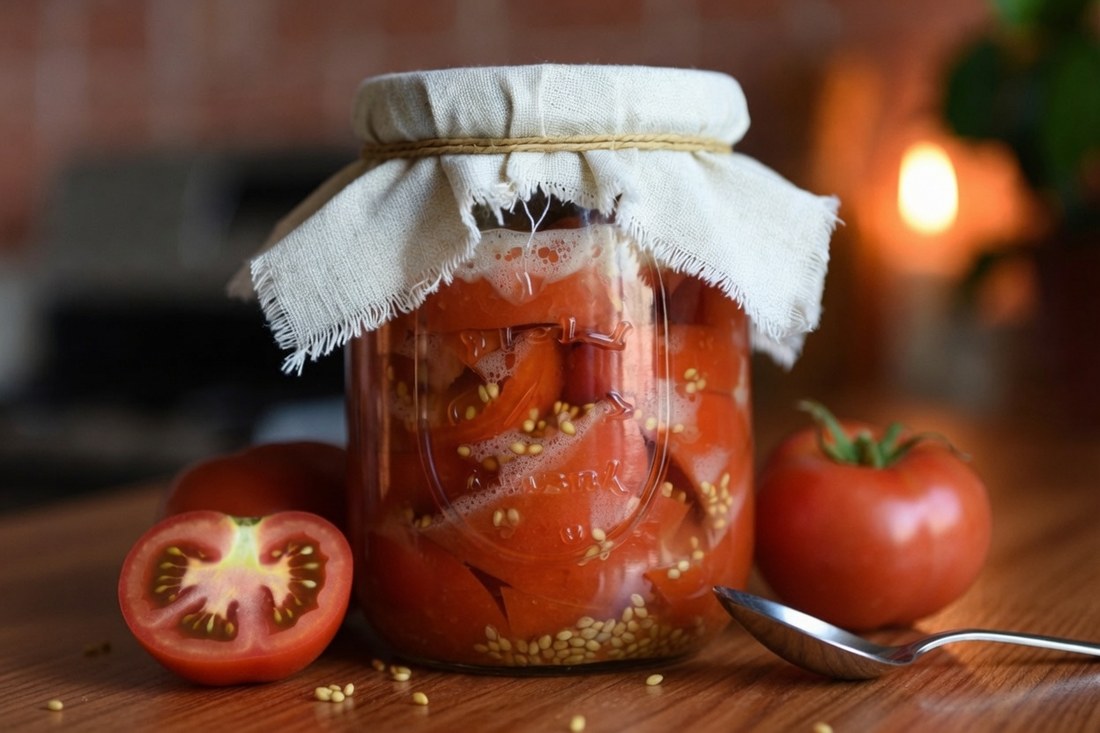
| Method | Wet processing (fermentation) — scoop seeds and gel into a jar with a little water, let sit 2–3 days until a mold film forms on top, then rinse clean. Fermentation removes the germination-inhibiting gel coating and kills some seed-borne diseases. |
| Isolation | Minimal — 10 ft between varieties is generally enough. |
| Storage life | 6–10 years, among the longest-lived garden seeds. |
Peppers (Hot & Sweet)
| Method | Dry processing — let a few peppers fully ripen past the eating stage to their final color, cut open, scrape out seeds, spread to air-dry for a week. |
| Isolation | Mostly self-pollinating but bees do visit pepper flowers occasionally; 25–50 ft between varieties is a safe minimum if purity matters. |
| Storage life | 2–3 years typically. |
Beans & Peas
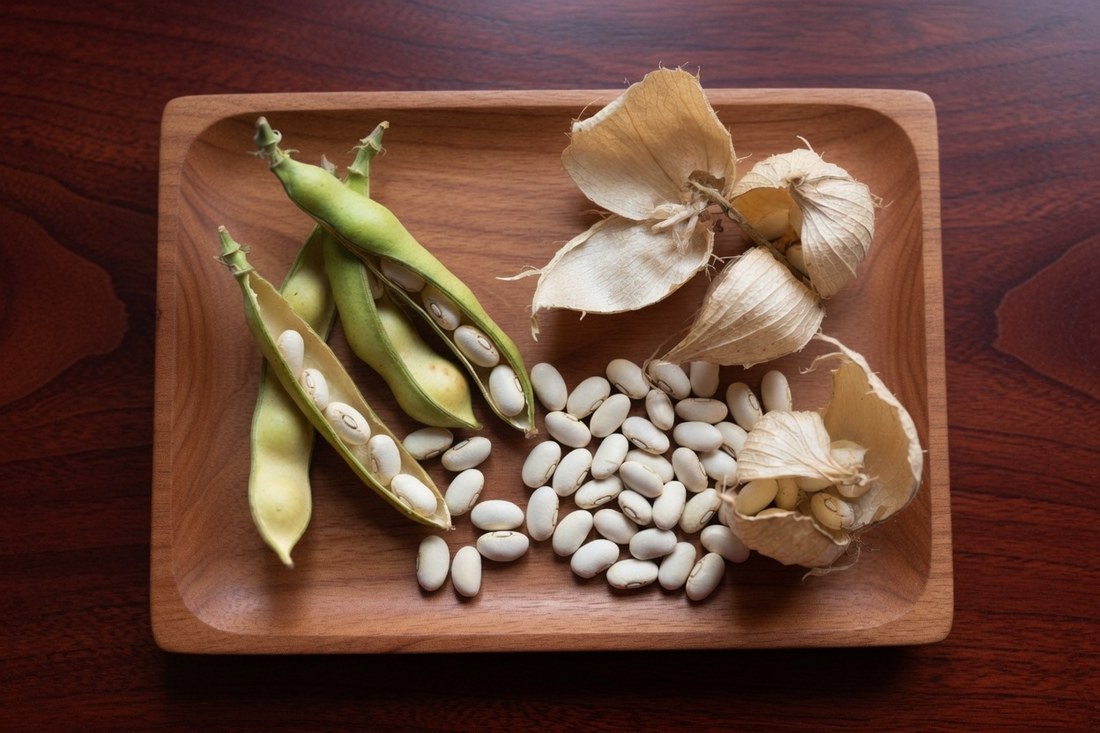
| Method | Dry processing — the simplest seed saving there is. Leave pods on the plant until they're brown, dry, and rattle, then shell out the seed by hand. |
| Isolation | Self-pollinating before the flower even opens; different varieties can be grown right next to each other with minimal crossing risk. |
| Storage life | 3–5 years. |
Lettuce
| Method | Let a few plants "bolt" (send up a flower stalk) past the eating stage; small fluffy seed heads form, similar to a dandelion. Shake or rub the dried heads over a container to release seed. |
| Isolation | Self-pollinating; 10–20 ft between varieties is plenty. |
| Storage life | 2–6 years. |
⚠️ Crops That Take a Little More Care
These cross-pollinate readily via insects or wind, so keeping a variety pure for seed saving means either isolating it by distance from other varieties of the same species, or hand-pollinating individual flowers.
Squash, Pumpkins & Zucchini
| Method | Let a fruit mature well past the eating stage (a zucchini left to grow into a hard-skinned, oversized squash), scoop out seeds, rinse off pulp, air-dry a week. |
| Isolation | ¼ mile between varieties of the same species (C. pepo, C. maxima, C. moschata) to prevent crossing, or hand-pollinate individual flowers and tape them shut. Different species generally won't cross each other. |
| Storage life | 4–6 years. |
Cucumbers & Melons
| Method | Let cucumbers ripen well past edible (yellow and oversized) before harvesting for seed; wet-process like tomatoes (ferment, rinse, dry). Melons: scoop, rinse, dry — no fermentation needed. |
| Isolation | ¼ to ½ mile between varieties, or hand-pollination, to prevent crossing. |
| Storage life | 5–10 years for cucumber, one of the longest-lived seeds. |
Corn
| Method | Let ears dry fully on the stalk until husks are brown and kernels are hard, then strip kernels off by hand. |
| Isolation | The most demanding common crop — corn is wind-pollinated and needs ½ mile to 1 mile of separation between varieties, or staggered planting dates. A single backyard garden usually can't isolate two corn varieties at once. |
| Storage life | 1–2 years; corn seed is shorter-lived than most. |
📍 The practical workaround: If isolation distance isn't realiztic in a typical backyard, grow only one variety per cross-pollinating species per season, or hand-pollinate a few flowers and tape or bag them shut before they open. Either approach guarantees pure seed without needing acres of separation.
🕑 The Two-Year Crops (Biennials)
A handful of common vegetables don't flower and set seed in their first year at all — they need to be overwintered and go through a cold period before they'll bolt and flower the second year.
Carrots, Beets, Onions & Cabbage Family
| Year 1 | Grow the plant normally; harvest most of the crop to eat, but leave several of your best specimens in the ground (or dig, store cool, and replant in spring in colder climates). |
| Year 2 | The plant bolts, flowers, and sets seed. Carrots and onions form seed heads similar to dill or a flower umbel; harvest once dry and brown. |
| Isolation | Onions and brassicas (cabbage, broccoli, kale) cross readily with other varieties of the same species — isolate by distance or grow only one variety per species at a time. Carrots also cross with wild Queen Anne's Lace growing nearby. |
| Storage life | Onion seed is notably short-lived, often only 1–2 years; carrots and brassicas typically 3–4 years. |
Biennials are usually the last category a beginning seed saver tackles — perfectly reasonable to buy fresh seed for these every year or two while focusing saved-seed effort on tomatoes, beans, peppers, and lettuce instead.
💬 The First Time You Grow Something from Your Own Saved Seed
“The first tomato I ever grew from my own saved seed tasted exactly like the one I had saved it from the year before. I know that sounds obvious. But I had read so much about seed saving going wrong, varieties crossing, loss of vigor, all of it, that when that first tomato came off the vine and tasted exactly right I stood in the garden and laughed. I had grown that. From something I had dried and stored in a jar on my counter all winter. That is a different feeling from growing a plant from a packet you bought at the hardware store. I cannot explain the difference. You have to do it once to understand it.”
“I grow beans. Mostly I grow beans because they are the easiest seed to save and the most satisfying. You let the pods dry on the vine, you shell them, you put them in a jar. That is the whole thing. I have a bean variety I have grown for nine years from the same original seed stock. I have given that seed to seven different people. One of them moved to another state and grew them there. That bean variety that was almost impossible to find when I started is now growing in four states because I saved seed and shared it. I find that genuinely extraordinary for something that required almost no effort from me.”
“My husband had a pepper he loved that the seed company stopped selling. He was upset about it in the way he got upset about things he cared about, which was quietly and for a long time. I had saved seed from it the previous year without thinking much about it. I planted those seeds the next spring and grew his pepper. He did not know I had the seed until the first fruit came in. I have never seen him react to a vegetable the way he reacted to that pepper. We have grown it every year since from saved seed. It will not disappear again because I will not let it.”
🎓 What the Cooperative Extension Service Says
Extension offices across the country have published guidance on heirloom seeds worth knowing — especially because they're more balanced about trade-offs than most gardening blogs.
The Honest Trade-offs
⚠️ NC State Extension is candid: Heirlooms can't be beaten for flavor and variety — but heirloom tomatoes are often thin-skinned and don't keep as long after harvest. Some heirloom cucumbers are more susceptible to powdery mildew. Heirloom peppers may crack more easily. F1 hybrids genuinely outperform heirlooms on yield, disease resistance, and uniformity. The choice is about strategy, not right vs. wrong.
The reader accounts on this page are composite voices drawn from common, real experiences — the names are not those of real individuals, and these are not customer testimonials. Individual results vary.
The "Grow Both" Approach
NC State Extension explicitly recommends growing some hybrids for disease resistance and some heirlooms for flavor and seed saving, in the same garden. Many experienced gardeners do exactly this — a few reliable hybrid varieties for consistent production, and a rotating set of heirlooms to save seed from.
Free Extension Publications
• University of Maine Extension Bulletin #2750 — "An Introduction to Seed Saving for the Home Gardener" — Free PDF, one of the most complete guides any Extension system has published.
• University of Minnesota Extension — Saving Vegetable Seeds
• WVU Extension — Seed Saving (includes Appalachian heirloom variety names)
☀️ Drying Methods — Wet vs. Dry Processing
Every crop above falls into one of two basic processing methods.
Dry Processing
Used for beans, peas, lettuce, and corn. The seed develops dry on the plant; wait until it's fully mature and brittle, then separate it from the pod or seed head and spread it on a screen or plate to air-dry for another week before storage.
Wet Processing
Used for tomatoes, cucumbers, and squash, where the seed is embedded in wet flesh. Tomatoes and cucumbers benefit from a short fermentation (2–3 days in a jar of water at room temperature) before rinsing — this strips the germination-inhibiting gel coat and kills some seed-borne pathogens. Squash and melon seed can simply be rinsed clean without fermenting. After rinsing, spread seed on a paper plate or screen (not paper towel, which seeds stick to) and air-dry for a full week, stirring occasionally.
✅ The snap test: Seed is fully dry and ready for storage when it snaps cleanly rather than bends (for larger seed like beans and corn), or feels papery and brittle rather than leathery (for smaller seed like tomato and lettuce). Storing seed before it's fully dry is the single most common cause of mold ruining a saved batch.
🫙 Storing Seed in Mason Jars — Doing It Right
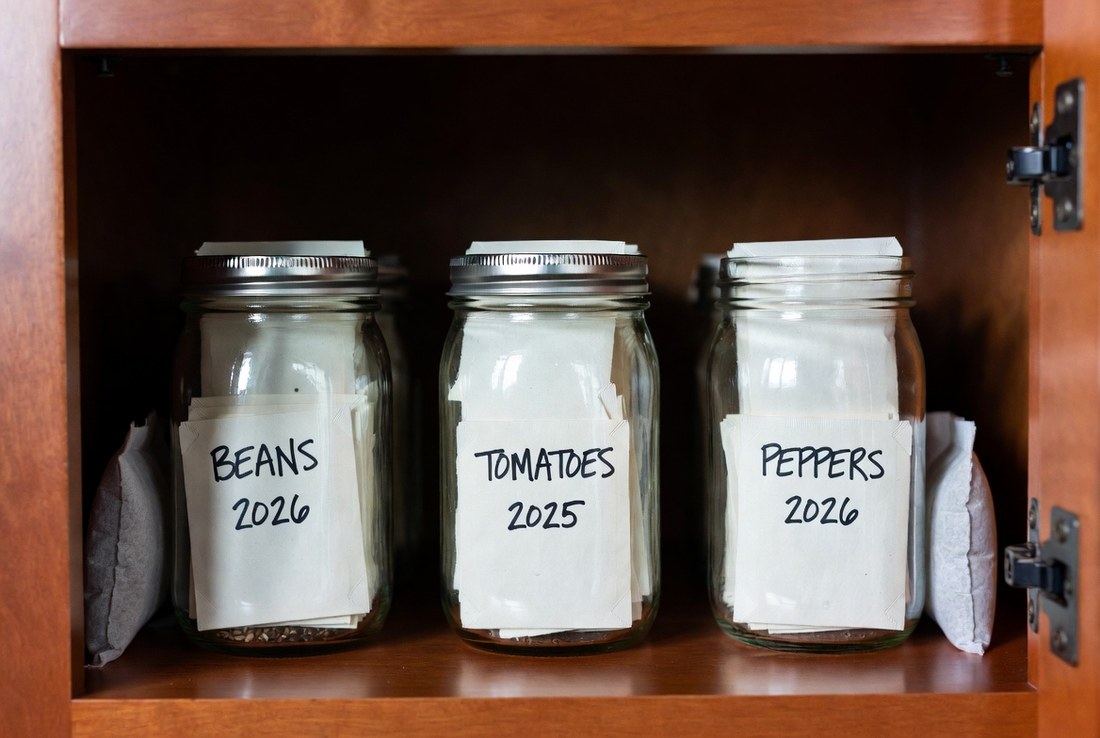
- Small mason jars with two-piece lids — quarter-pint or half-pint. Tight seal matters more than jar size.
- Paper envelopes inside the jar to separate varieties — several envelopes fit in one larger jar, each clearly labeled.
- A silica gel packet in each jar. Reusable; dry it in a low oven when it changes color. Dry powdered milk in a coffee filter works as a substitute.
- A waterproof label on every jar and envelope: crop, variety name, and year saved.
Keep jars cool, dark, and dry — dryness matters more than cold. A closet, spare-room cabinet, or dry interior space all work. Avoid damp basements, garages with temperature swings, or anywhere with direct sun.
Germination test for old seed: Place 10 seeds between two damp paper towels, seal in a plastic bag, keep somewhere warm for a week. If 7 or more sprout, the batch is reliable. If fewer than half sprout, treat it as backup, not your main planting.
🖨️ Printable Seed-Saving Log
One of these per variety you're saving — the labeling step is the one people skip and regret a year later.
Before Saving
Processing
Storage
❓ Plain Answers
The short version of this page, one question at a time — the answer is always the first line.
What are the easiest vegetables to save seed from?
The easiest crops to save seed from are self-pollinating ones like tomatoes, peppers, beans, peas and lettuce. They rarely cross with a different variety even when grown close together, so start there if you are new to seed saving.
How do you save tomato seeds?
Save tomato seeds by fermenting them in a jar with a little water for 2–3 days until a mold film forms, then rinsing them clean. Air-dry the seed for a full week on a plate or screen, not paper towel.
How far apart do corn varieties need to be for seed saving?
Corn is wind-pollinated and needs ½ mile to 1 mile of separation between varieties, or staggered planting dates. A single backyard garden usually can't isolate two corn varieties at once, so grow only one variety per season.
Why won't my carrots or onions make seed the first year?
Carrots, beets, onions and the cabbage family are biennials, so they only flower and set seed in their second year after going through a cold period. Leave several of your best plants in the ground over winter.
How do I store saved seeds so they last?
Store saved seed in small mason jars with two-piece lids, a silica gel packet and a label with crop, variety and year, kept cool, dark and dry. Dryness matters more than cold.
How can I tell if old seeds will still grow?
Place 10 seeds between two damp paper towels, seal them in a plastic bag and keep them somewhere warm for a week. If 7 or more sprout, the batch is reliable; if fewer than half sprout, treat it as backup.