
👥 Where the Community Lives Online
The heirloom seed community online is large, active, opinionated in the best way, and genuinely generous with knowledge. Members post photos of their harvests, ask questions about seed saving technique, share leftover seed for the cost of a stamp, and argue warmly about which Cherokee Purple tomato strain is the best. Here's where most of the action is.
Facebook Groups
Free Heirloom Seeds Community
One of the most active seed-sharing groups on Facebook. Members post free seed offers constantly — usually asking only for a stamped envelope or a small trade in return. Everything is open-pollinated and non-GMO. If you have seed you want to give away or want to try something new without spending money, this is where to start.
Visit on Facebook →Heirloom Vegetable Gardening
A large group focused on growing heirloom vegetables specifically — not just the seed, but the whole growing experience. Members post variety recommendations by climate zone, discuss results, share photos of unusual finds, and help diagnose problems. Very active during growing season.
Homesteading for Beginners
A broader homesteading group where heirloom seeds and seed saving come up constantly. Good if you want context beyond just seeds — the discussions often connect seed saving to food preservation, chickens, and other topics already covered on this site.
Tomato Lovers / Heirloom Tomatoes
Multiple Facebook groups exist entirely around heirloom tomatoes — the most popular and most passionately discussed heirloom crop. Members share seeds of rare varieties, post extraordinary photos, and debate the merits of Brandywine vs. Cherokee Purple vs. Mortgage Lifter with genuine intensity. Search "heirloom tomatoes" in Facebook Groups to find the largest ones in your area.
Reddit: r/vegetablegardening, r/seedsaving, r/homesteading
Reddit's gardening communities are large and unusually helpful. r/vegetablegardening has millions of members; heirloom seed discussions are common and well-answered. r/seedsaving is smaller but entirely focused on exactly the topics covered in the seed saving guide — wet processing, isolation distances, storage life, specific varieties. Good place to ask a specific question and get real answers from experienced growers within a few hours.
r/seedsaving on Reddit →Seed Savers Exchange Member Network
The online exchange platform run by Seed Savers Exchange (seedsavers.org) lets members list their saved seed for other members to request. It's not a social network exactly, but it functions like one — you can see what other gardeners in your region are growing and offer your own saved seed in return. Annual membership unlocks the full exchange.
SeedSavers.org →✅ What actually happens in these groups: Someone posts a photo of an extraordinary harvest from a variety you've never heard of. Forty people comment asking where to get seed. The original poster says they have extra and will mail it to whoever sends a stamped envelope. You send the envelope, you get the seed, you grow it, and a year later you're the one posting the photo and offering seed to the next forty people who ask. This is how heirloom varieties survive and spread, and it happens every day in these groups.
💬 What People Say When They've Done This for a While
These are the kinds of things gardeners say once they've been saving seed for a few years. They come up again and again in the communities above, with different details but the same shape.
“I have 23 varieties of tomato in my collection right now. I have not spent money on tomato seed in four years. I started with five packets from Baker Creek and one from the seed swap at my library. I have given seed to my neighbor, my daughter, two women at my church, and a stranger who asked about my garden at the farmers market. The stranger grew the Mortgage Lifter this past summer and texted me a photo of her first harvest. I don't know her name.”
“My grandmother grew Rattlesnake Beans every year. When she passed I thought that variety was gone. I found it three years later on the Seed Savers Exchange member listing from a gardener in West Virginia. I have grown it every year since. My granddaughter helped me shell beans this fall. She is six. She knows what Rattlesnake Beans are.”
“I used to spend around $80 on seed every spring. I did that for about 15 years. I did the math one winter. Then I switched to heirlooms. This year I spent $14, on onion seed and one new pepper variety I wanted to try. Everything else came from my own jars. I cannot explain why I waited so long.”
“The power was out for five days last August after a big storm. My freezer food was my main worry. The garden wasn't. The garden was fine. It was producing while everything else was a problem. I keep thinking about that. The garden doesn't need the grid.”
“I made my own seed packets. I designed them on my computer, printed them on card stock, folded them and wrote the variety and year on each one. My daughter saw them on the shelf and thought I'd bought them from a store. There's something about making something with your own hands that matters more than I knew it would.”
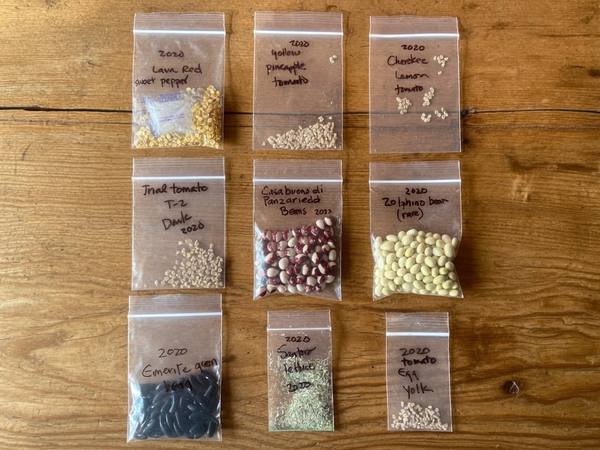
📋 From the record — why the seed swaps matter. The United Nations’ Food and Agriculture Organization has estimated that a large share of the world’s food-crop diversity was lost over the 20th century as agriculture consolidated around a handful of commercial varieties. One often-cited 1983 survey found that of the vegetable varieties sold commercially in 1903, only a small fraction were still available eighty years later. In fairness, the scale is debated — a peer-reviewed University of Georgia study corrected a math error in the original figure and argued the overall count of available varieties held steadier than the famous “93% lost” headline suggests. But the direction is not in dispute: countless old, regional, open-pollinated varieties did vanish from the commercial catalogs, surviving only where gardeners kept saving and sharing them. That is exactly what the seed libraries, swaps, and giving communities on this page do — keep the genetic library alive one envelope at a time. The members are real; the reason their work matters is on the record.
The reader accounts on this page are composite voices drawn from common, real experiences — the names are not those of real individuals, and these are not customer testimonials. Individual results vary.
🫙 Seed Swaps — The Best Thing You've Never Heard Of
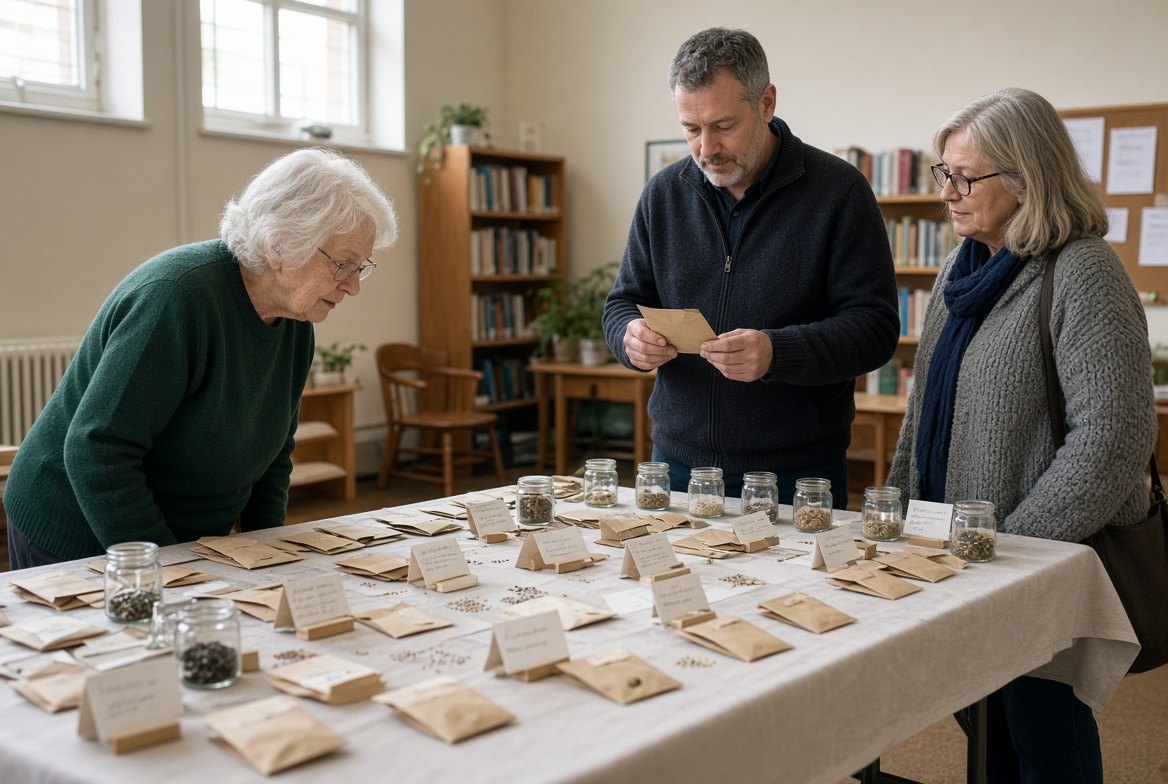
A seed swap is exactly what it sounds like: people show up with seed they've saved (or surplus seed they bought and didn't use), spread it out on tables, and trade freely. No money changes hands. You take what you want, leave what you brought. Most swaps are free to attend.
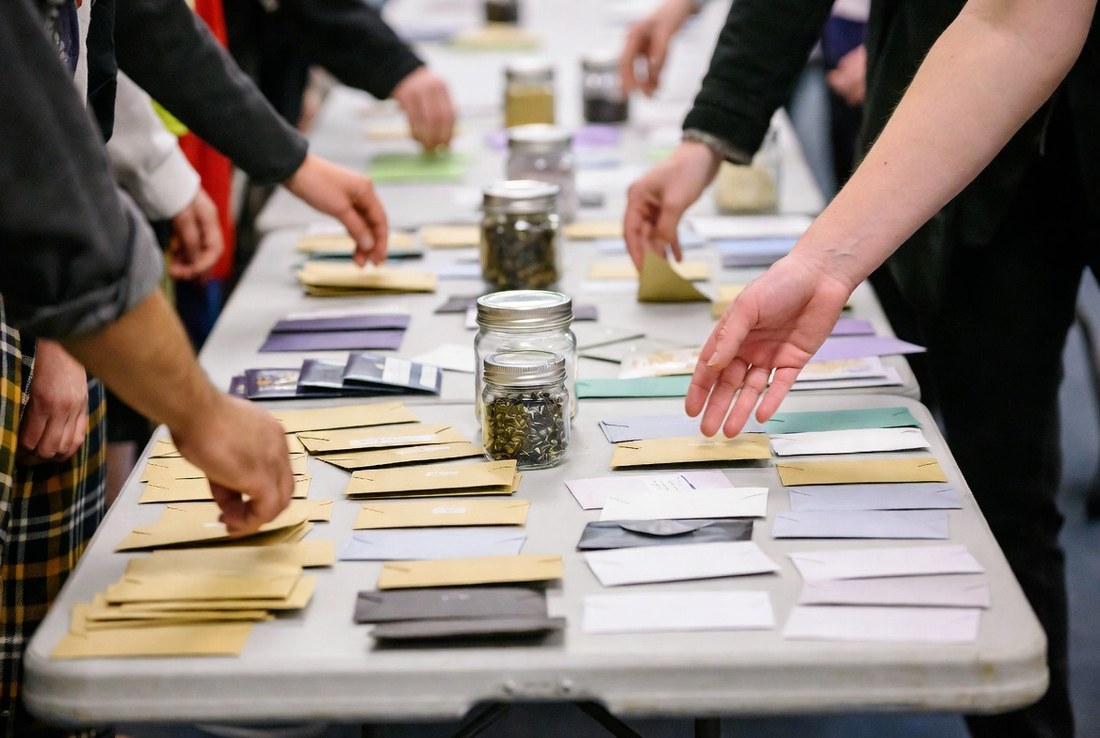
They happen at: public libraries, Cooperative Extension offices, community gardens, farmers markets, churches, and garden clubs. The last Saturday in January is National Seed Swap Day, organized nationally, with events in most states. Seed Savers Exchange runs them at their Heritage Farm in Decorah, Iowa and at partner locations around the country.
🔍 How to find one near you: Search "[your city or county] seed swap" or "[your city] seed library." Most public libraries now maintain a seed library — a small collection of donated seed packets that anyone with a library card can borrow. You take a packet, grow it, save some seed at the end of the season, and return a packet. It's a genuine public resource and most people have no idea it exists.
🛒 Buy Heirloom Seeds on Amazon — What to Look For
Amazon has a large and legitimate heirloom seed market. Many reputable small seed companies sell there alongside the big collection vaults. It's a reasonable place to start, especially if you want variety packs that give you several crops to try at once. A few things to check before buying:
- Look for "open-pollinated" or "OP" on the listing — "non-GMO" alone doesn't mean you can save the seed and get the same plant again.
- Avoid "F1" or "hybrid" seed vaults — those are one-generation seeds, not save-able.
- Check the pack date or "current season" labeling — seed deteriorates; you want fresh-dated stock.
- Bigger seed counts don't mean better — a 30,000-seed vault costs less per seed but gives you more than you'll ever use of varieties you may not want. A 30–50 variety assortment at reasonable quantities is more useful for a home garden.
Open Seed Vault — 32 Variety Heirloom Collection
32 open-pollinated vegetable varieties including tomato, pepper, cucumber, squash, beans, lettuce, carrot, and more. Individual packets, current-season seed, non-GMO. One of the most consistently well-reviewed starter collections.
See on Amazon →55-Variety Heirloom Seed Collection
One of the largest variety-count collections available — 55 types covering most common garden crops. Open-pollinated and non-GMO. Good starting vault if you want to try a wide range and narrow down what grows best in your conditions.
See on Amazon →Heirloom Tomato Seed Assortment
Tomatoes are the easiest heirloom crop to save seed from and the one that most gardeners start with. A dedicated tomato assortment gives you several varieties to grow side-by-side and find your favorites before committing to saving just one.
See on Amazon →Silica Gel Packets (Reusable)
The one supply you actually need besides seeds. A small silica gel packet in each mason jar absorbs residual moisture and can double or triple how long your saved seed stays viable. Reactivate them in a low oven when they change color.
See on Amazon →✅ What to Do Next
If you've read this far and you're ready to start, here is the shortest possible version of what to do:
- This week: Join one Facebook group above and spend 20 minutes reading what people post. Don't ask anything yet — just see what the community actually talks about. You'll learn more in 20 minutes than in an hour of general reading.
- Before next season: Order a starter collection — tomatoes, beans, and peppers give you the three easiest crops to save seed from in one order. The seed saving guide tells you exactly how to handle each one.
- Check your library: Search your public library's website for "seed library." You may be able to get your first free heirloom seed without buying anything at all.
- Read Ruth's story: A 68-year-old who never buys the same seed twice — how she made it simple, what she actually does, and why the gallon tin on her kitchen shelf matters as much to her as anything else in the house.
📚 Community Resources Referenced
- • Seed Savers Exchange — seedsavers.org
- • Reddit r/seedsaving
- • Free Heirloom Seeds Community on Facebook
- • Amazon affiliate links marked with →; prices and availability vary
Page last reviewed: June 2026 | Author: Franklyn Galusha

❓ Plain Answers
The short version of this page, one question at a time — the answer is always the first line.
What is a seed swap?
A seed swap is an event where people bring seed they have saved or did not use, spread it on tables, and trade freely with no money changing hands. Most swaps are free to attend and happen at libraries, Cooperative Extension offices, community gardens, churches and garden clubs.
When is National Seed Swap Day?
National Seed Swap Day is the last Saturday in January, with events in most states.
What is a seed library?
A seed library is a small collection of donated seed packets that anyone with a library card can borrow, and most public libraries now keep one. You take a packet, grow it, save some seed at the end of the season, and return a packet.
What kind of seeds can I save and replant?
Open-pollinated seed is the kind you can save and replant to get the same plant again, and non-GMO alone does not guarantee that. Avoid F1 or hybrid seed, which is one-generation seed and not save-able.
How do I keep saved seeds dry?
A small silica gel packet in each mason jar absorbs leftover moisture and can double or triple how long saved seed stays viable. Reactivate the packets in a low oven when they change color.
Where can I find heirloom seed groups online?
Heirloom seed growers gather in Facebook groups, on Reddit communities like r/seedsaving, and on the Seed Savers Exchange member network. Members often mail free seed for a stamped envelope.