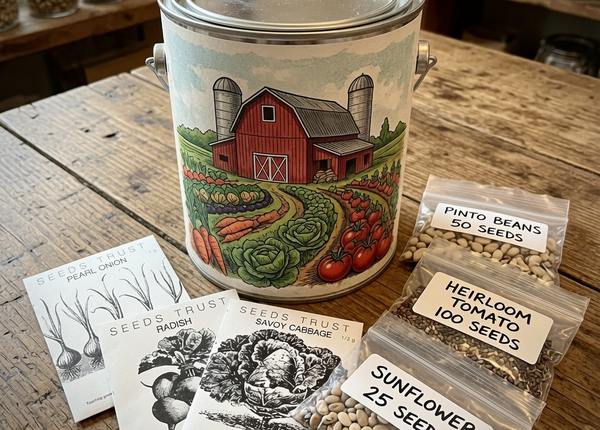
Ruth retired at 63 from a job she liked well enough but never loved — twenty-two years as an office manager for a small insurance company in central Missouri. She was good at details. Good at organizing things. Good at keeping records that other people couldn't be bothered with. She took those skills home with her when she left, and her garden has been the better for it ever since.
The garden started small. A few tomato plants the summer after she retired, two rows of green beans, a patch of zucchini that got away from her the first year the way zucchini always does. She bought seed packets from the rack at the hardware store, the same way she always had, and didn't think much about it. But she started reading. That's another thing Ruth does — she reads. And what she started reading about, that first full summer of retirement, was heirloom seeds.
“I realized I had been paying for the same tomato seed every single spring for thirty years. And I didn't have to. I just didn't know any better.”
The concept made sense to her immediately, the way things that are genuinely logical always do. Open-pollinated varieties breed true. Save the seed from your best plant, dry it properly, store it right, and you have free seed for next year. And the year after. And the year after that. The initial purchase is the only purchase. She thought about how many times over the years she had stood at that hardware store rack in March, picking up the same varieties in the same little envelopes and paying for them again, and she felt, she said later, a little bit foolish. But only for a minute.
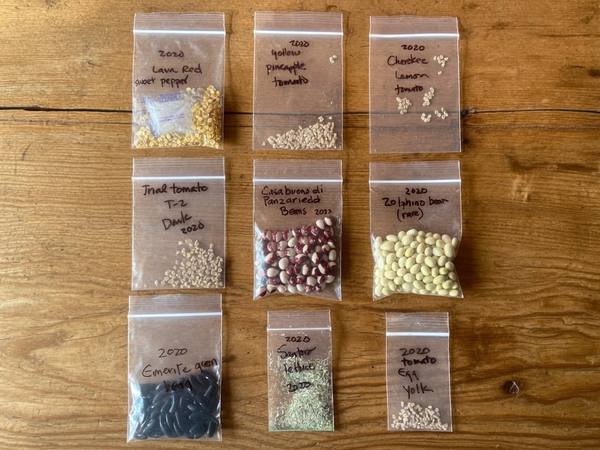
She ordered her first real heirloom seeds that fall from Seed Savers Exchange — Mortgage Lifter tomato, Dragon Tongue beans, Forellenschluss lettuce, Chioggia beets. She chose varieties that people had grown and saved and passed down for decades, and she liked that history. She liked knowing that the tomato she was planting had been grown by a man in West Virginia during the Depression, that his neighbors said it was so productive he paid off his mortgage selling plants to them, that the seed had traveled forward through time from hand to hand to her little backyard in Missouri.
That winter she did something that is very Ruth: she sat down at her computer and designed her own seed packets.
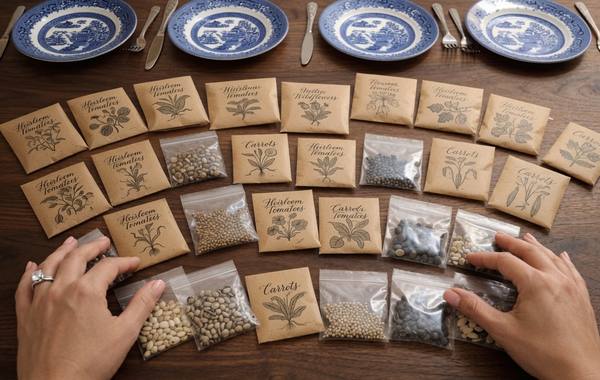
 She had an inkjet printer, a ream of card stock, and decades of experience making things look organized and right. She found a font she liked online, a clean serif that reminded her of old catalogs from her grandmother's era. She designed a simple template — the variety name large across the top, the crop and year below it, planting notes in small type down the side. She printed them on card stock, folded them into packets the size of a small envelope, and tucked a small square of labeled paper inside each one with the seed count and the date she saved them.
✅ What Ruth uses to print her own seed packets at home: A standard inkjet printer, card stock (not regular paper, which doesn't hold up), a simple word processing template she made herself, and a paper cutter for clean edges. The whole setup cost her nothing beyond what she already owned. She stores the printed packets inside a one-gallon tin on her kitchen shelf, organized by crop family, with a small silica gel packet tucked in beside them.
The gallon tin had been sitting empty in her garage for two years, leftover from a painting project. She liked how it sealed, how it kept light out, how it looked when she set it on the kitchen shelf next to her cookbooks — substantial, like something her mother might have kept. She printed a label for that too, a simple one that said Garden Seeds — Ruth's in the same font as the packets, taped it to the front, and called it done.
Her daughter saw it on the shelf during a visit and thought it was something from a store. Ruth told her what it was and where everything in it had come from, and her daughter went quiet in the way people do when something turns out to be more than they expected.
By her second summer Ruth had stopped buying seed almost entirely. She saved tomato seed from five different varieties, dried it on paper plates on the dining room table through September, and sorted it into her printed packets with a small spoon. She saved beans the easy way — left a few pods on the vine until they went papery and rattled, then shelled them out by hand while she watched television in the evenings. She let two heads of lettuce bolt and flower all the way to seed, which her neighbor asked about over the fence, and she explained it, and the following spring her neighbor planted some of the same Forellenschluss lettuce from seed Ruth gave her.
“Giving away seed is one of the best things about it. You grew it. You saved it. Now somebody else is going to grow it. That tomato keeps going.”
Her garden is about 400 square feet now — four raised beds she built herself at a height that keeps her from kneeling, positioned to get full sun from eight in the morning until late afternoon. She grows tomatoes, peppers, three types of beans, lettuce, a short row of radishes that she succession-plants every few weeks, onions, carrots, beets, and two hills of butternut squash at the back edge where they can sprawl without getting in the way of anything else. She estimates she grows about 60 percent of the vegetables her household eats from June through October.
She is also, she is careful to point out, not especially skilled at computers. She can navigate a browser, use a word processor, send email, and operate her inkjet printer. That is all the technology her seed packet system requires. She designed the template herself in about an afternoon and has used it every year since with only small adjustments. The printer sits on a little table in the corner of her spare bedroom, and every August and September she runs a small batch of fresh packets for that season's saved seed, updates her planting notes, and refills the gallon tin.
She has not bought tomato seed since her second year. She has not bought bean seed in three years. She orders fresh onion seed most years because onion seed is genuinely short-lived and she's had batches go spotty in storage, which she considers a fair trade given how little it costs and how long everything else lasts. She spent about $28 on seed this past spring, total — a few packets of things she wanted to try, and the onion seed. Everything else came from the tin on the shelf.
She calculated once, sitting at the kitchen table with a notebook, what she had spent on seed in the fifteen years before she retired — back when she bought fresh packets off the rack every spring without thinking about it. She didn't write the number down because she found it annoying. But she has a very good head for numbers, and she remembers it.
Ruth does not think of herself as a prepper. She does not think of herself as especially self-sufficient or remarkable in any way. She thinks of herself as someone who found something she loves to do and found a smarter way to do it. The garden is the center of her day — she is out there by seven in the morning in good weather, coffee in hand, doing whatever the garden needs before the heat of the day settles in. In the evenings she reads about it. In the winter she plans it. She has been doing this for five years now and says it is the most useful thing she knows how to do.
When the power went out for four days after a severe storm last summer — she'd had a chest freezer of food that she was worried about, a generator that ran but drank gasoline faster than she liked, and a lot of time to think — she was glad for the garden. The fresh food it was producing at the height of summer meant she wasn't dependent on what was in that freezer. The seed in the tin on the shelf meant that whatever happened, she had next year's garden already put away. That was a steadier feeling, she said, than most people her age are accustomed to having.
“I have five years of tomato seed in that tin. I have next year’s beans and the year after that. Nobody can take that away from me. Nobody can run out of stock on it. It’s just mine.”
She gave seed to her neighbor again this spring. She gave some to a woman at her church who wanted to start a garden and didn't know where to begin. She left a small jar of Cherokee Purple tomato seed at the library's free seed exchange, the same library she goes to twice a week, with a handwritten card describing what the variety was and where it came from. She likes that it keeps moving. She likes that something she grew in her backyard in Missouri will now grow in someone else's backyard, in a garden she will never see, from seed she saved from a plant she started from a packet that came from a man in West Virginia who grew it through the Depression.
That is the part, she said, that you don't get from the hardware store rack.