A Tornado on a Wednesday Afternoon
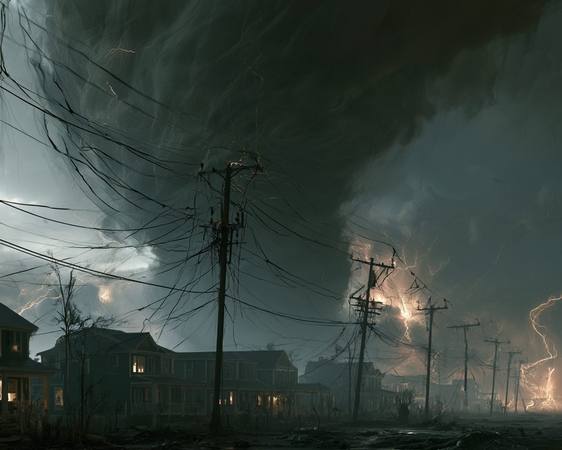
The tornado touched down at 4:22 PM on a Wednesday in late April, moving northeast through a mixed rural-residential community outside a small Tennessee city. It was on the ground for fourteen minutes and tracked a path approximately 300 yards wide. It destroyed eleven homes completely, damaged forty-three more, and took down the primary distribution line serving the eastern end of the county road where most of the affected households were located.
The tornado itself killed no one in this community. The recovery is where lives were at risk.
The distribution line that went down served 340 customers. The county is rural. The utility's crew headquarters was an hour and twenty minutes away. Mutual aid crews from neighboring counties arrived on day three. Restoration of the main feeder — the line serving the highest customer count — was completed on day four. The individual laterals serving the spurs off the county road — where the remaining 80 or so customers lived — took until day eleven.
Among those waiting were three elderly households whose situations became serious before the utility crews arrived at their specific addresses.
The Man Nobody Knew
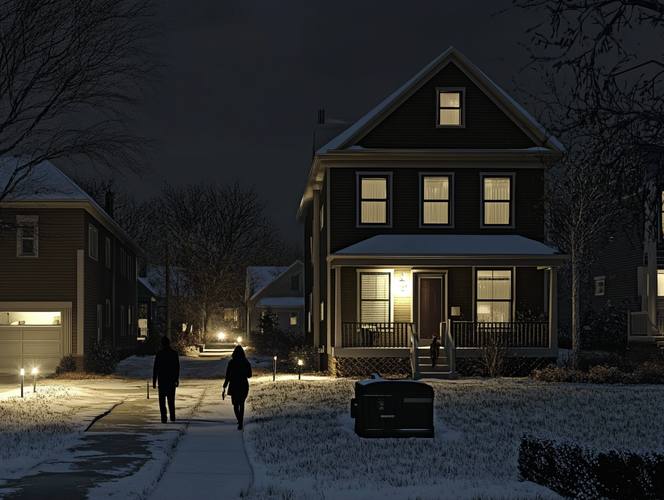
Thomas was 67 years old and had retired three years earlier from a career in industrial facilities management. He and his wife Linda — a retired ICU nurse — had moved to the county road from Nashville specifically for the quiet. They were not unfriendly, but they were not the block-party type either. They waved from their driveway. They brought cookies at Christmas. They largely kept to themselves.
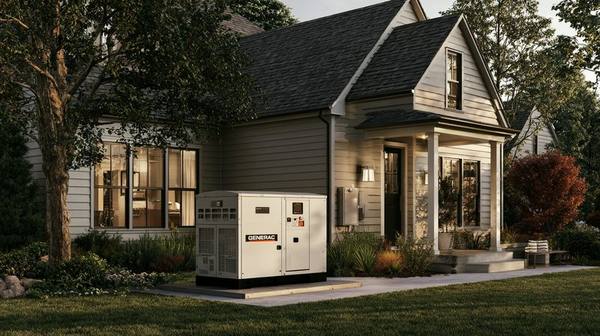
Thomas had spent his career managing backup power systems for industrial facilities. He understood generator sizing, load calculations, and the importance of fuel storage in a way that most homeowners never have reason to think about. When they moved to the county road, installing a whole-home propane standby generator and a 500-gallon buried tank was the third thing he did after painting the porch and replacing the water heater. It was not a preparedness hobby. It was professional habit.
Linda had spent thirty years as an ICU nurse. Her go-bag — which she maintained out of nursing school habit — included a blood pressure cuff, a pulse oximeter, three days of common medications she had seen patients run out of in emergencies, and a waterproof notebook with the phone numbers of every physician she had worked with who might answer an after-hours call.
Neither of them thought of themselves as particularly prepared. They thought of themselves as people with relevant professional backgrounds who had applied what they knew to where they lived.
"I just did what I would have done for a commercial facility. You size the backup power for your critical loads, you store enough fuel to last through the expected event plus a margin, and you maintain it. I had never thought about the fact that my neighbors might need it too."
Eleven Days: What the Generator Made Possible
The tornado came through at 4:22 PM. By 5:30 PM Thomas had walked the county road to assess what had happened. Three households immediately concerned him.
Margaret, 78, lived alone and used a home oxygen concentrator. Her portable backup oxygen had run out on day one. Thomas and Linda's generator ran her concentrator for all eleven days. Linda checked on her twice daily, monitoring her oxygen saturation with the pulse oximeter, and called her physician on day three when her readings showed she was not tolerating the stress of the situation as well as expected. The physician prescribed a short course of medication that Linda helped her obtain from a functioning pharmacy thirty miles away.
Harold and Ruth, both in their mid-seventies, had no backup power, no stored food beyond what was in their now-warming refrigerator, and a well pump that required electricity. Thomas's generator ran a 100-foot extension cord to their well pump controls on day two, restoring their running water. Linda inventoried what food in their refrigerator was still safe and helped them transfer it to Thomas's running refrigerator. They ate most of their meals at Thomas and Linda's kitchen table for eight of the eleven days.
A third household — a 70-year-old man named Frank who had COPD and used both a nebulizer and a sleep oxygen system — appeared at Thomas and Linda's door on day two having slept the previous night without his oxygen. Linda assessed him and determined he was not in immediate crisis but would be if he went another night without treatment. His equipment ran off their generator for the duration.
✅ What Thomas and Linda’s Preparation Made Possible
What Changed After the Storm
The county road has a community Facebook group — mostly used for lost dog alerts and complaints about the speed limit. On day twelve, after power was restored, Thomas posted a brief message: "If anyone on the road needs help in the next storm, come to our place. We have a generator and Linda is a nurse."
The response surprised him. Forty-three comments. People he had lived next to for three years introducing themselves for the first time. An offer from a neighbor with a large tractor to clear fallen trees faster than his chainsaw could manage. An offer from a woman half a mile away who had a ham radio license and could reach the outside world when cell towers failed. An offer from a retired firefighter to coordinate welfare checks on elderly residents during future events.
What emerged was not a formal emergency plan. It was something simpler: people who had been neighbors for years finally knowing what the person three doors down was capable of and how they could help.
"I had lived on that road for three years and I did not know Thomas existed except as a truck that went in and out of a driveway. After the tornado I learned that he had run a large hospital's backup power system for fifteen years, that his wife was an ICU nurse, and that between them they had quietly been capable of managing a medium-sized medical emergency since the day they moved in. I could have known that on day one."
Become That Neighbor Before the Storm Comes
FEMA consistently documents that neighbor-to-neighbor assistance saves more lives in the first 72 hours of any disaster than official government response. This is not a criticism of FEMA or local emergency management — it is a reflection of geography and timing. Official resources take time to mobilize and deploy. Neighbors are already there.
Thomas and Linda did not set out to be community resources. They set out to take care of themselves. Their preparation happened to be the kind that scales — a generator can run multiple devices, a nurse's skills apply to multiple patients, a full pantry can feed multiple people.
You do not need professional backgrounds in facilities management or ICU nursing to be the person on your street who has power when everyone else does not. You need a generator, a relationship with a propane supplier, and the willingness to say yes when a neighbor knocks on your door.
⚡ Your Plan to Become That Neighbor
This story is a composite narrative drawn from documented tornado recovery experiences across rural Tennessee, Kentucky, and Mississippi. Names are fictional. Events reflect documented conditions from FEMA tornado after-action reports, Red Cross disaster response data, and EIA rural outage statistics. FEMA's finding that neighbor-to-neighbor assistance is the primary life-saving resource in the first 72 hours of any disaster is documented in multiple after-action reports including those for Hurricanes Katrina, Harvey, and Maria. For official tornado preparedness guidance, visit FEMA Ready.gov Tornadoes.