
The Storm Nobody Took Seriously
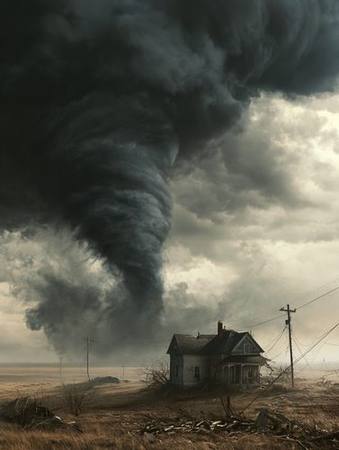
Robert was 74 and his wife Helen was 71. They had lived in their farmhouse outside a small Kentucky town for 32 years. They had seen ice storms before — a day without power here, an overnight outage there. Nothing they could not manage with candles and a wood stove.
The February storm the forecasters were calling for looked like more of the same. Half an inch of ice accumulation, they said. Maybe three-quarters. Robert picked up two bags of rock salt and a case of canned soup at the hardware store and called it done.
The ice that fell was not half an inch. It was an inch and a half. By the time the sleet stopped on a Tuesday night, every tree on their road was bent double and most of them had dropped branches onto the power lines. The line serving their farmhouse — a single distribution circuit running five miles off the main road — went down at 11:47 PM. It would not come back for fourteen days.
"We thought it would be out until Thursday. Thursday came and went. So did Friday. I called the utility and they said they were working on it. They were working on everything at once and we were at the end of a very long list."
What Fourteen Days Without Power Actually Looks Like
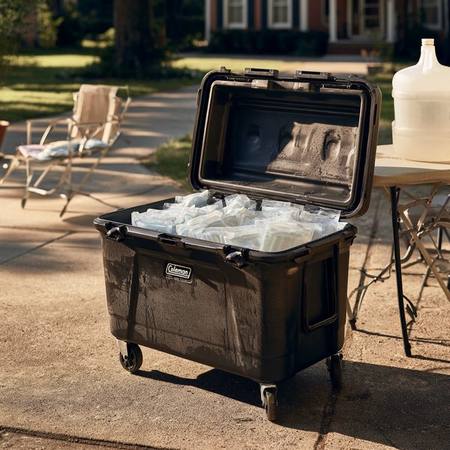
Robert had a wood stove that could heat two rooms adequately. That part they managed. What they had not anticipated was every other system in a modern home failing simultaneously.
Their well pump required electricity. No pump meant no running water — no flushing toilets, no washing hands, no cooking water from the tap. They had a few gallons of bottled water from a previous storm, which lasted them about two days. After that, Robert was melting snow on the wood stove and boiling it. This worked. It was time-consuming, exhausting work for a 74-year-old man with mild arthritis.
Helen used a CPAP machine for her sleep apnea. She had not used it the first night — she assumed the power would be back by morning. By the third night without it, she was waking repeatedly, exhausted during the day, and developing the headaches that accompany significant oxygen desaturation. Robert had bought a portable battery station the previous autumn — a 500Wh unit he had picked up on sale for $389. He had charged it once, put it in the closet, and more or less forgotten about it.
On the fourth night, he found it. It had 78% charge remaining. He plugged in Helen's CPAP. It ran. She slept. For the remaining ten nights, Robert charged the battery station each day from the truck's 12-volt outlet — a slow but effective process — and Helen used her machine every night. Her headaches resolved by day six.
"I bought that battery thing because it was on sale and I thought maybe it would be useful someday. I had no idea it would be the most important thing I owned. If I had not bought it, Helen would have gone two weeks without her CPAP. Her doctor told us afterward that could have caused real cardiac stress."
Their cell phones became the critical link to the outside world. With no internet, they relied on a hand-crank emergency radio Robert had owned for years. Local emergency management broadcasts told them which roads were open, where warming centers were located, and when crews were expected in their area. The radio cost $34. They used it every single day.
What Actually Saved Them
Robert and Helen did not have a sophisticated preparedness system. What they had was accidental: a battery station bought on a whim, a hand-crank radio sitting in a drawer, a wood stove that had always been more aesthetic than functional, and enough canned food from normal grocery shopping to last through two weeks of disrupted cooking.
✅ The Four Things That Got Them Through
Budget options on Amazon → · Top-rated on Amazon →
Budget options on Amazon → · Top-rated on Amazon →
No wood stove? Portable options on Amazon → · Top-rated indoor heaters →
Budget options on Amazon → · Top-rated on Amazon →
What They Wish They Had Prepared
Robert and Helen spoke with their county emergency management office in the spring following the storm. They identified four gaps in their preparation that could have made the fourteen days significantly easier — and one that could have prevented the most dangerous element entirely.
⚠️ What Was Missing
What You Can Do Right Now — Starting With $400
Robert and Helen's story is not exceptional. Ice storms knock out power to rural and suburban communities across the entire United States every winter. The customers who wait longest are almost always the ones at the end of long rural distribution circuits — which describes most people who live outside city centers.
You do not need to spend $15,000 on a whole-home generator to protect yourself. The $389 battery station was the most important thing Robert and Helen owned. Start there.
⚡ Your Action Plan — Three Levels
Ice storms are not getting less common. The areas experiencing significant winter storm events are expanding southward — into states and regions that have never historically planned for multi-day ice-storm outages. If you live in rural or suburban Kentucky, Tennessee, Arkansas, Georgia, or the Carolinas, the distribution circuit serving your neighborhood was not designed with fourteen-day ice storm restoration in mind. Plan accordingly.
"If you asked me before the storm whether we were prepared, I would have said yes. We had a wood stove. We had some canned food. We had lived here for thirty years and gotten through every storm before. I was wrong. We were not prepared. We were just lucky that I had bought that battery thing on sale."
This story is a composite narrative drawn from documented experiences of seniors during winter ice storms across the rural United States, including events in Kentucky, Tennessee, West Virginia, and Virginia. Names are fictional. Events and conditions depicted reflect documented outcomes from FEMA after-action reports, CDC cold weather health data, and EIA outage statistics. For official preparedness guidance, visit FEMA Ready.gov Winter Weather.